Following the Wasabi museum we went to a park where previously the Matsomoko guitar factory once stood. They don’t make them in that factory anymore but there are other guitar plants in the area, which is unusual.
They found ways of making mass produced electric guitars using computer controlled lathes which was unusual in the 60s and 70s. They could make and sell them cheaply. They weren’t seen as good as Fendors etc but as these guitars such as Westone became popular and people like Kurt Cobain played them, they became more popular.
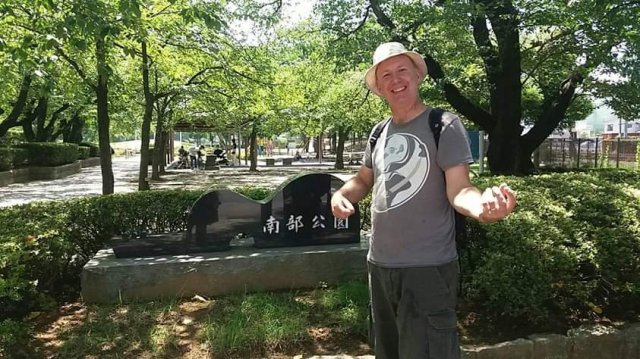
Anyway Peter’s first guitar that he still has now was an Aria Pro 2 made in the Matsomoko factory. So it was a pilgrimage of sorts. I don’t get it but I think guitar officienados would. The park is Nanbu Park and there is a marble guitar shaped statue there. Google translate did not help me find out what it said.
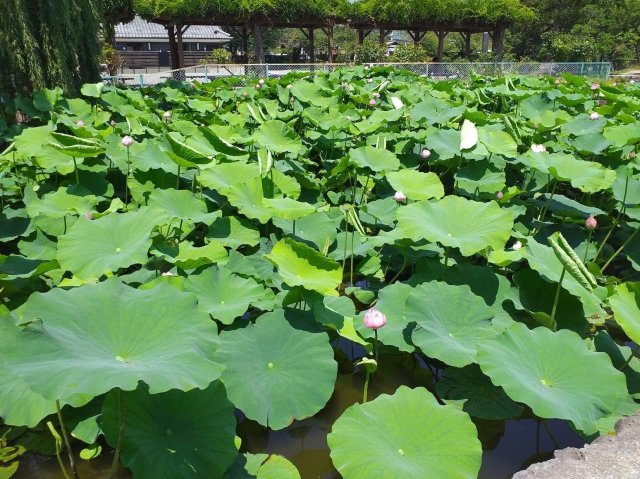
Following this we headed to the castle. The lotus flowers were just about to bloom which makes us hopeful that when we return to Tokyo there will be a quite la spectacular sight around Uneo Park.
Matsomoto Castle is registered as a World Heritage Site, it is one of the most complete and oldest castles in Japan. Unusual as built on the plains and not on a hillside. Around the castle were many volunteers ready to explain things to visitors in their native language. We were approached and were ready to be regaled with lots of interesting facts. However, he just really wanted to talk about Japanese weather systems, but that was interesting. I think a lot of foreign dentists and professors visit as he wanted to know if Pete was one! (obviously not me!)
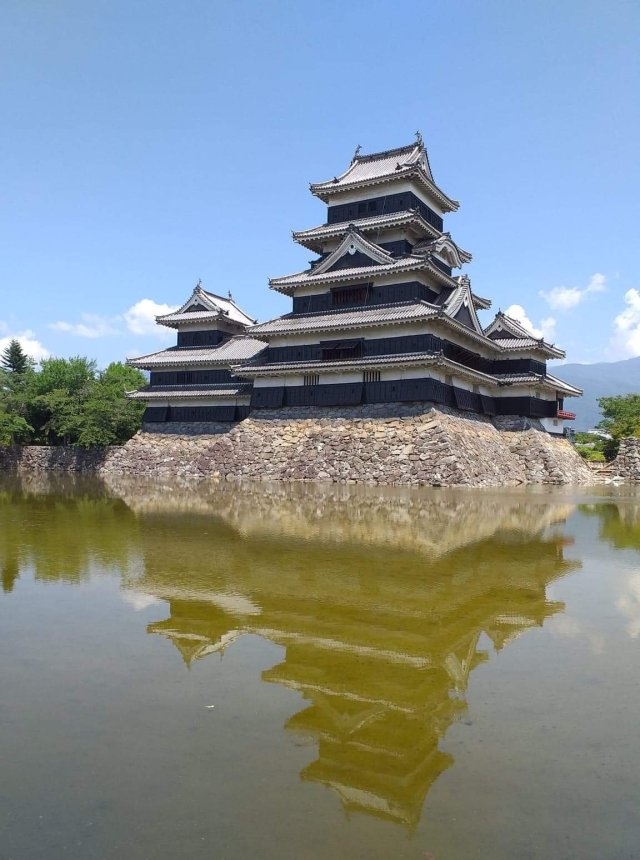
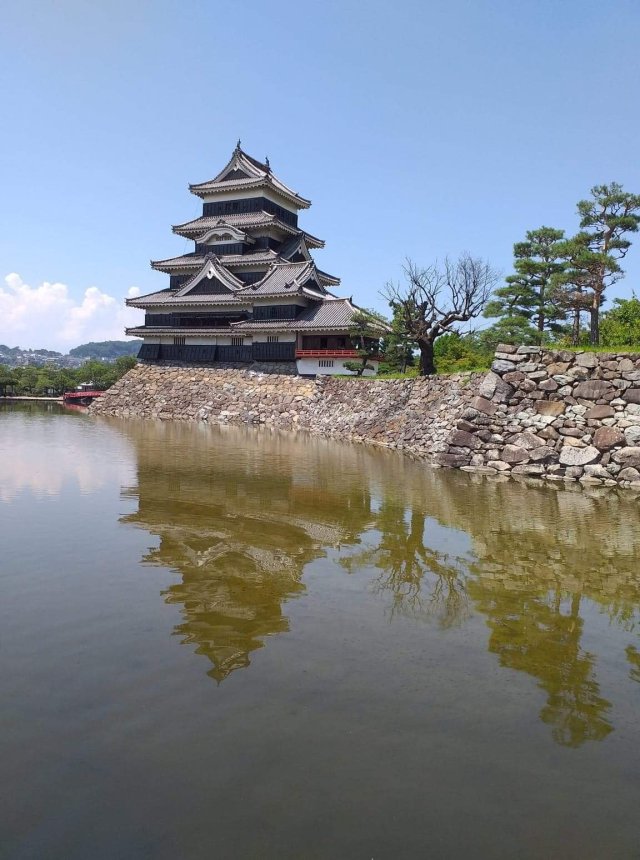
The castle or hirajiro did look like something from anime or manga…….. Not that I am really conversant in any of those two things.
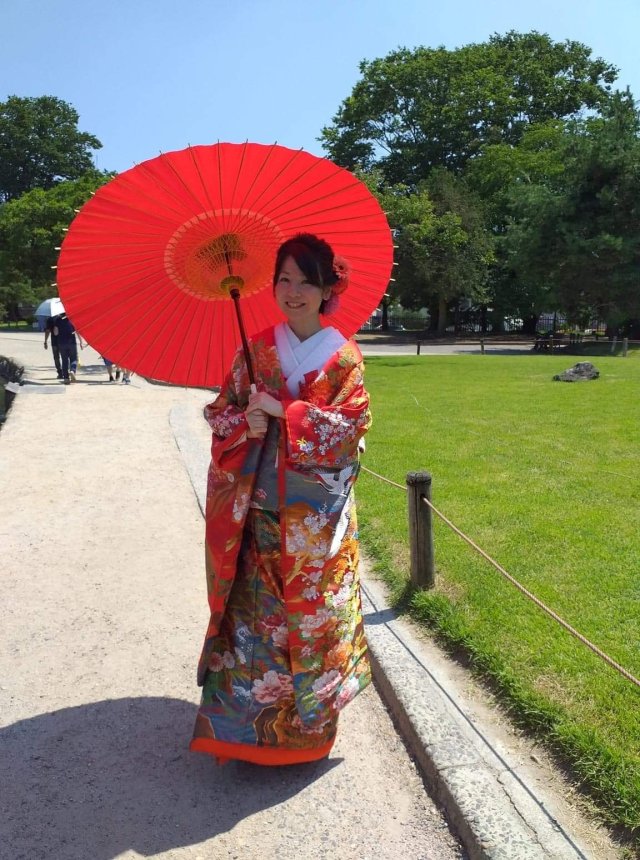
The setting was beautiful and we saw someone in traditional dress willing to be photographed.
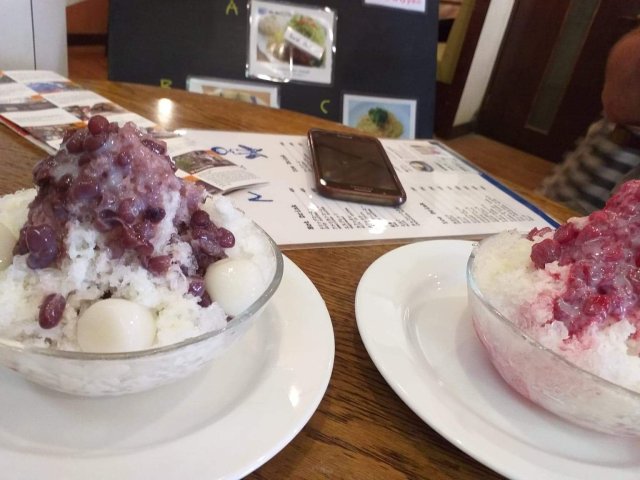
Getting really hot we decided to throw caution to the wind and have a shaved ice dessert. These are called kakigori and are sweetened with condensed milk and various flavours. Pete had one with strawberry syrup but I went a bit more traditional and had mine with sweetened red beans, with added rice balls. May sound odd and a bit alien but they were truly gorgeous!
We walked along the northern banks of the Metoba River where there was a quaint pedestrian lane called Nawate-dori. This name, a combination of the words for rope (nawa, 縄) and riverbank (dote, 土手), comes from the fact that this was once a narrow spit of land running between the river and the southern moat of nearby Matsumoto Castle. You can’t escape frogs on this lane, frog sculptures and every shop selling something with a frog theme.
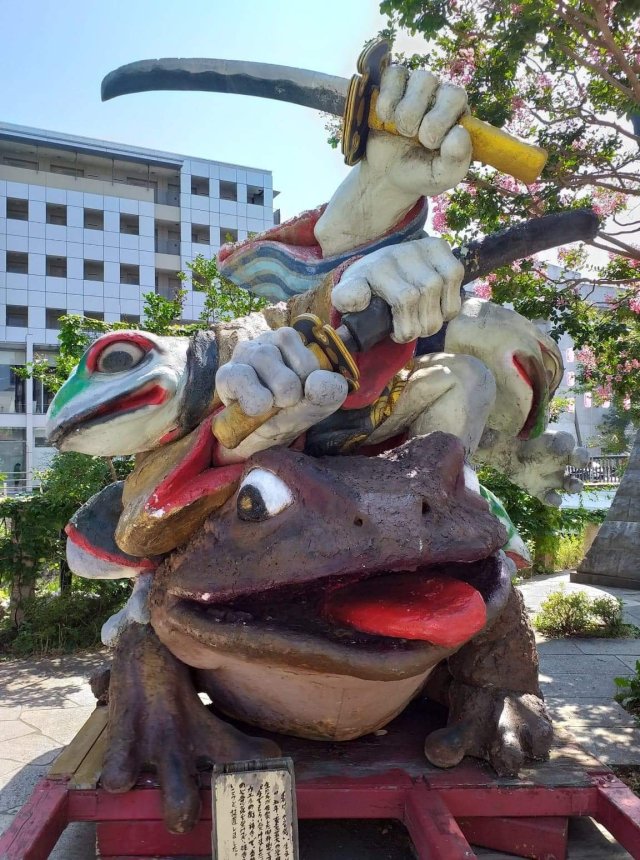
When the Yohashira Shrine was built:
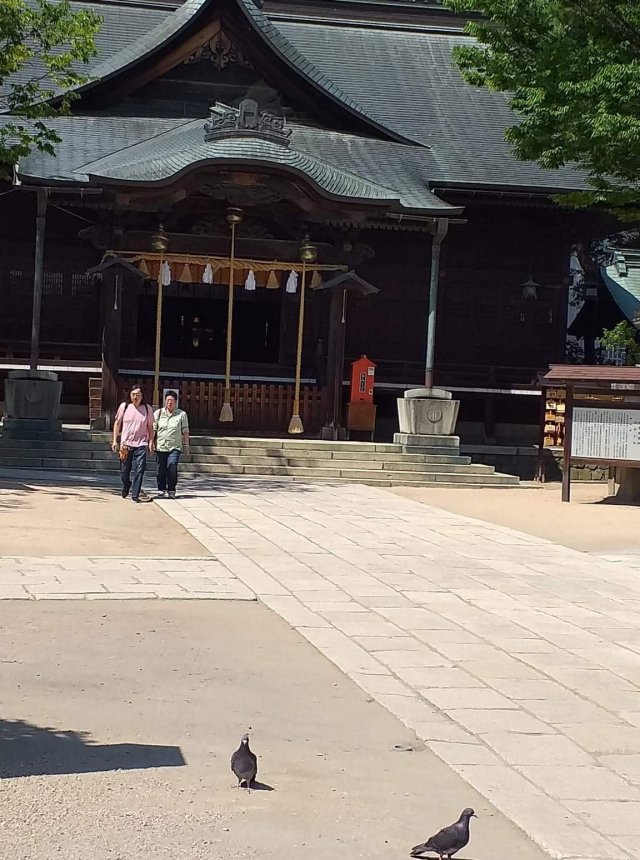
The area between the river and shrine became a pathway for pilgrims. The shrine’s keepers, began promoting various forms of entertainment to attract visitors, it was apparently very noisy with the sound of croaking frogs from the river, music being played and children’s laughter. But in 1959 a typhoon hit the area and the river in this part of the city was full of debris, so the frogs moved further up where the water was cleaner.
They couldn’t bring the frogs back but they cleaned the area and named it Kaeru Machi’ (‘Frog Street’) to remember better times. I was a bit disappointed as I had thought there may be frogs coming onto the street from the river.
We headed to Nakamachi Street which is known for its traditional storehouses, called kura, which are characterized by their black-and-white, criss-cross patterned walls. The street was beautiful and we could have bought Japanese handicrafts, such as pottery, lacquerware, and wooden crafts if we had a small fortune on us.
The landmark of Nakamachi is the kurassic-kan, a restored sake warehouse which is open to the public. Every so often they have culture days and we were so lucky to be there on that day. There was lots to choose from but we went for the tea ceremony. I was so excited as having experienced the coffee ceremony in Ethiopia this seemed to be another great beverage experience.
They had a volunteer who spoke English, Junka. Junka later told us she had studied English Literature at university but had gone on to work in finance for 48 years. Finishing work she had decided to return to her home city and put something back.
Junka led us into the kurassic-kan – which was just like images/films I had seen of old Japanese houses, with tatami mats on the floor and low lying tables. We were welcomed in by two other women, one who ran the kurassic-kan and another who taught a group of kimono clad girls the intracacies of the tea ceremony.
We were told that the process of learning about the tea ceremony took time and some of the girls had been studying the art for three years. Junka explained that she had never got the hang of it so if we struggled during our short snapshot into the art we shouldn’t worry too much.
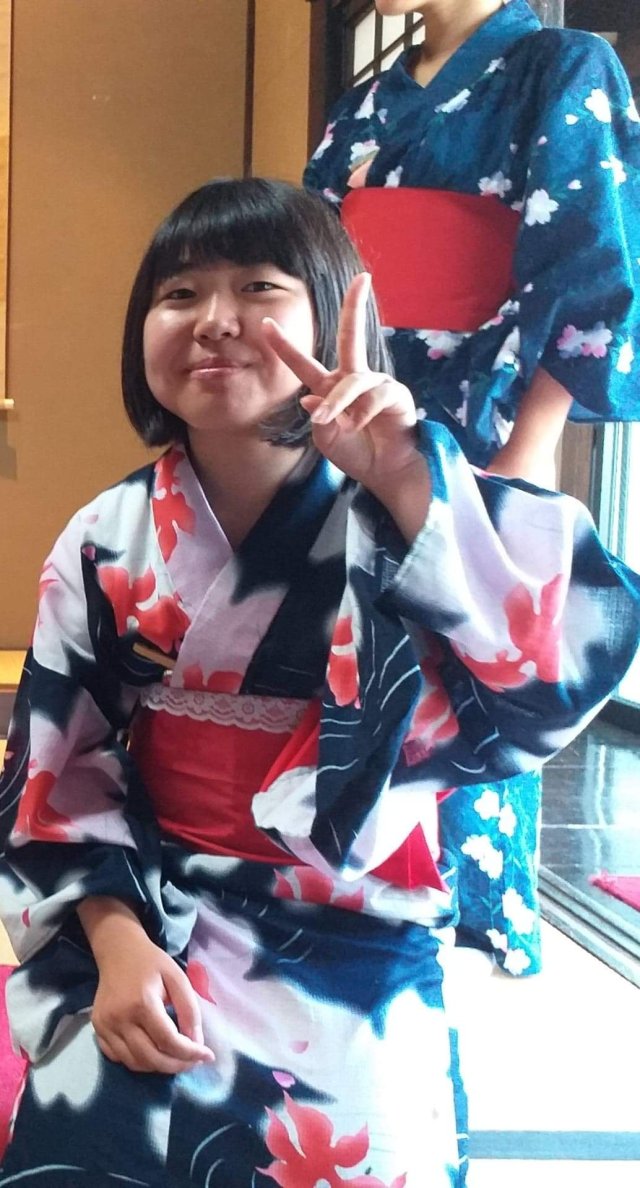
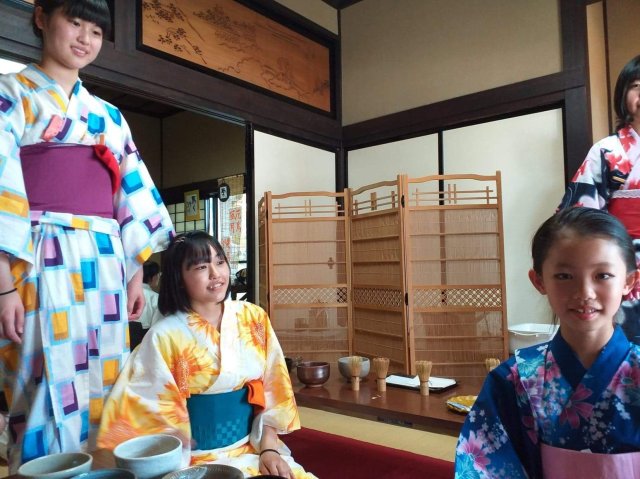
First we had to go through the tea ceremony under their tuition and then we would have the chance to see it done properly.
They heaped praise on Pete, I was a bit all fingers and thumbs. We were told that it was essential every part was completed properly as every aspect of the tea ceremony is steeped with meaning.
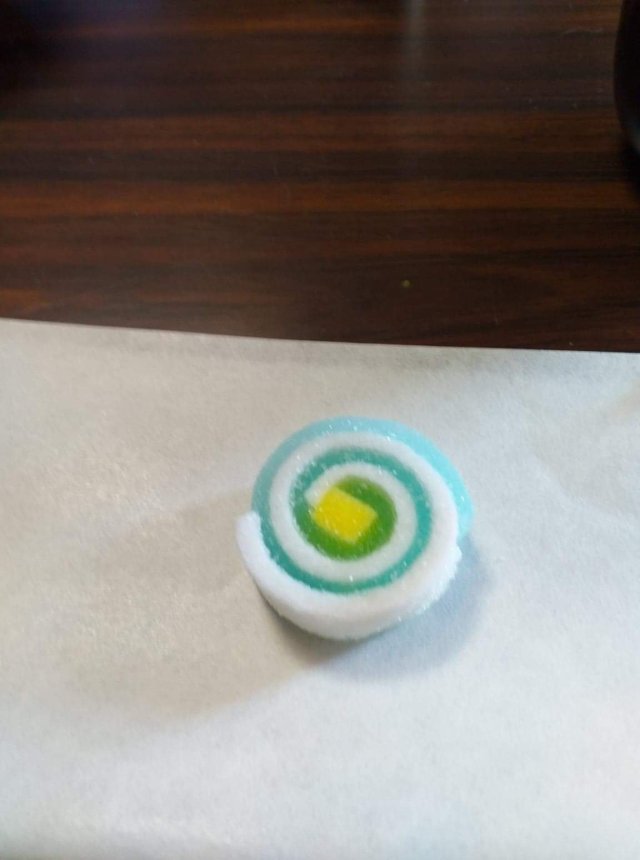
A sweet is eaten first….. When we watched them do it we had a far more superior sweet. The sweet is to off set the bitterness of the matcha.
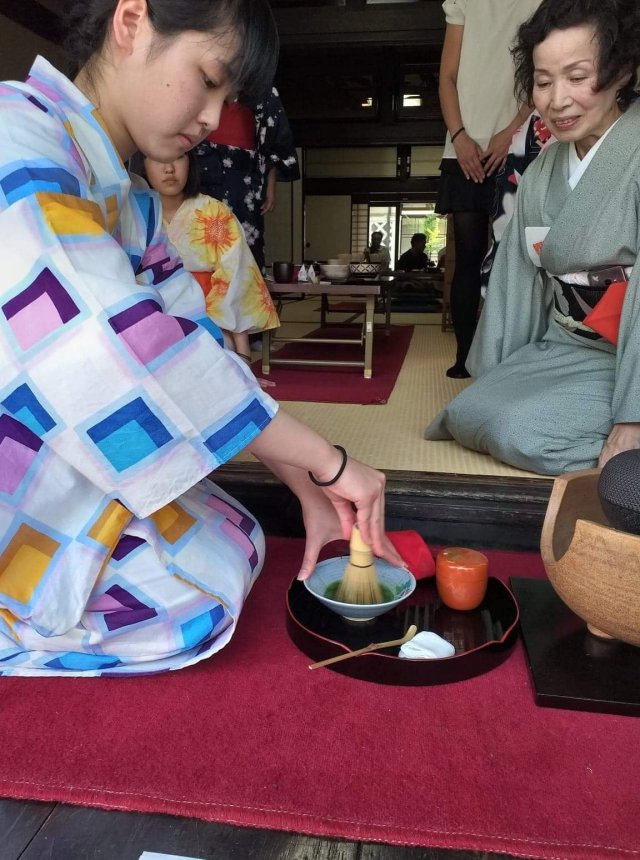
We then had to put the matcha tea in a bowl. Sounds pretty straightforward but you have to do it with a spatula type thing (chashaku) the matcha tea is stored in a special cannister, natsume . So how you hold the spatula etc is important and try as hard as I could I kept getting it wrong.
There are many places tourists can have traditional tea ceremony but how traditional they are varies. As this was part of the girls training and part of the city’s culture House every aspect had to be done correctly, not by us, they expected us to be rookies but by expected far more from the girls.
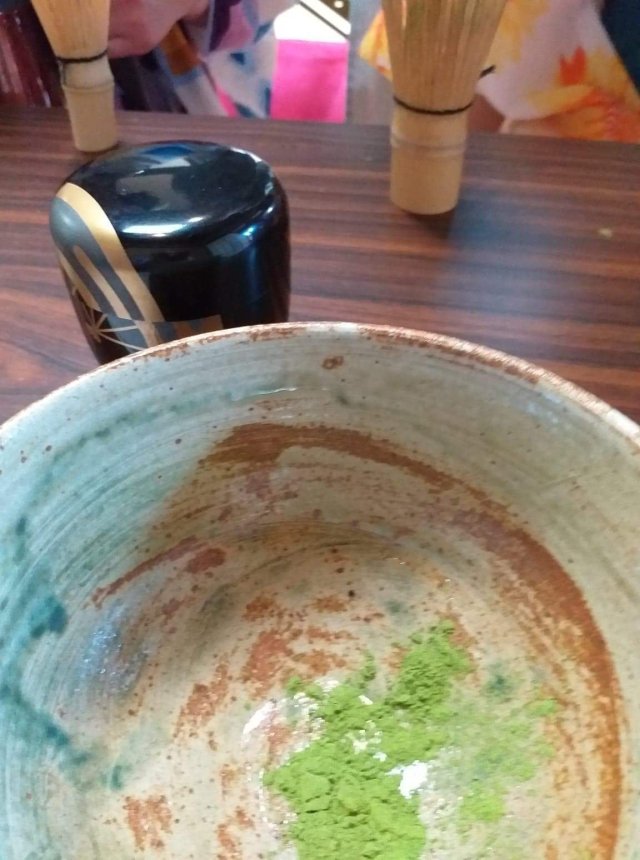
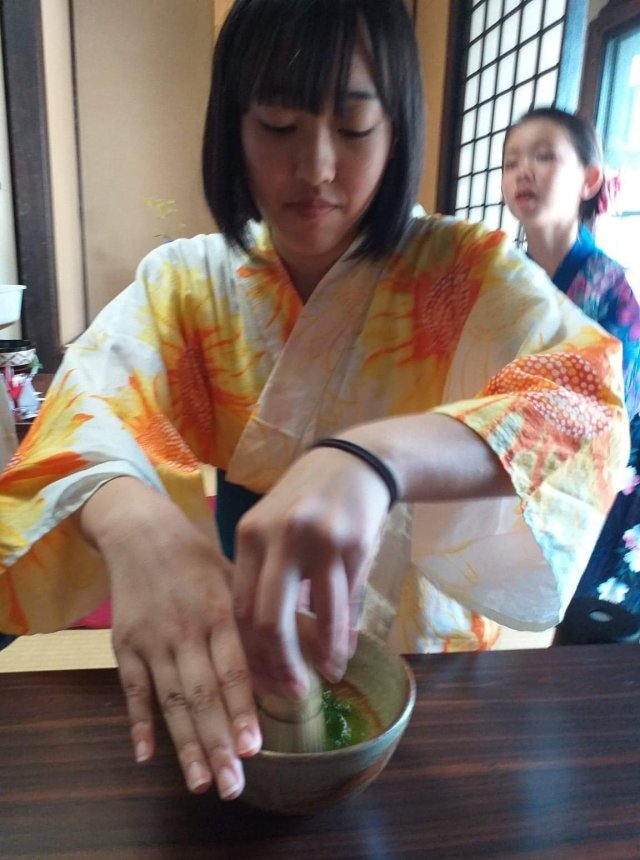
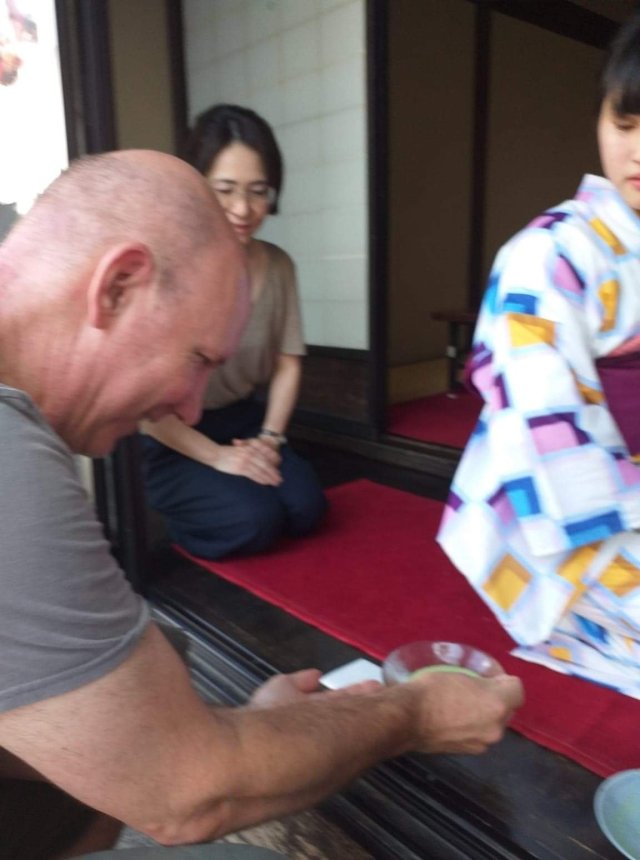
The next part is the water is added. Then it is whisked using a chasen. Again how this done is very prescriptive but Pete was again good at it.
Then to drink it….. The tea bowl was placed in front of you, with its front facing us. We had to pick it up with our right hand and place it on our left palm. With our right hand, we had to turn it clockwise by around 90 degrees so that its front wasn’t facing us. There’s lots more to it but it was much better watching the girls doing it. In the photos you can see their teacher keeping a watchful eye and from time time correcting them when they hadn’t done it properly.
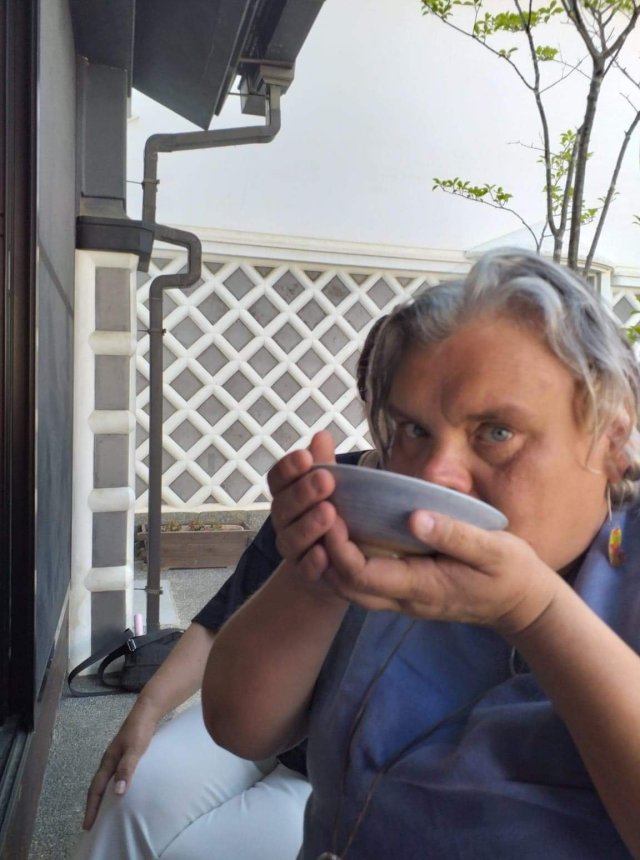
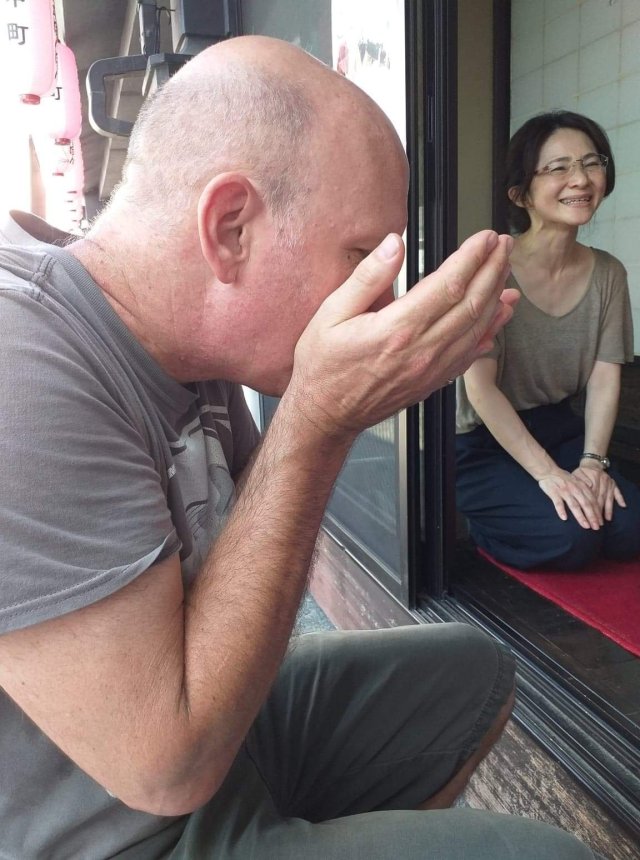
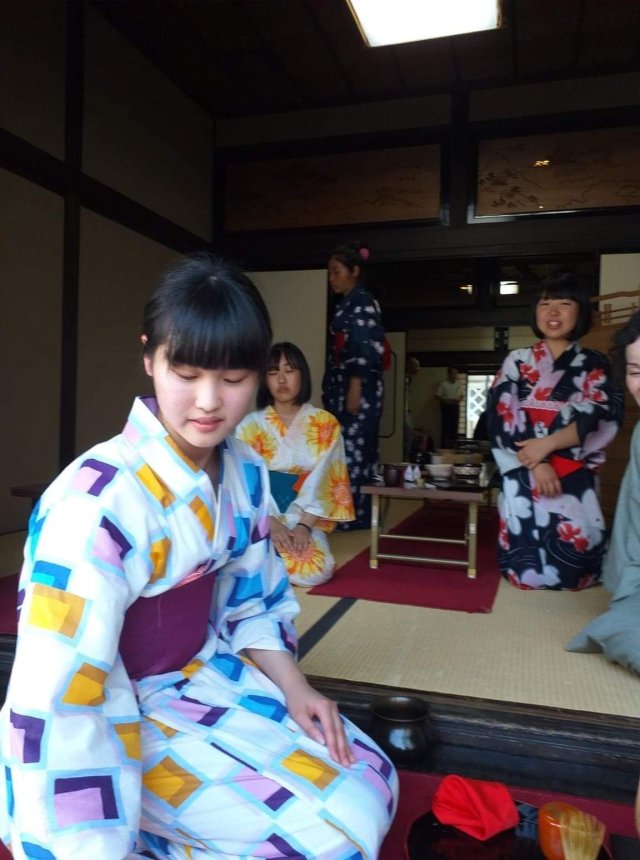
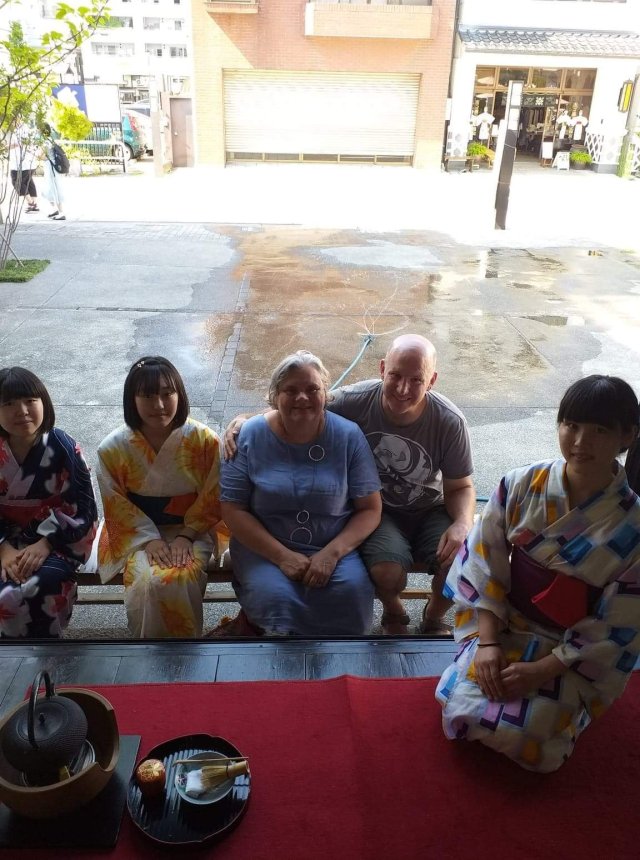 We paid a fraction of the price a ‘proper’ tea ceremony would cost but the experience was great as in was in some ways very formal and others informal, with lots of laughter. We were so lucky to be in Matsomoto on one of their culture days. Junka kept thanking us and we kept thanking her and the girls, which would then set off another round of thanking.
The day wasn’t done yet and there was still time to visit the Matsomoto City Museum.
The leaflet they have for the museum is funny it states Matsomoto Museum encourages all its citizens to make the most of the museum as a place of intellectual interaction….. Well we did go to the museum but I don’t think by this stage of the day there was much intellectual interaction going on!
What was great about the museum was that it was cold!
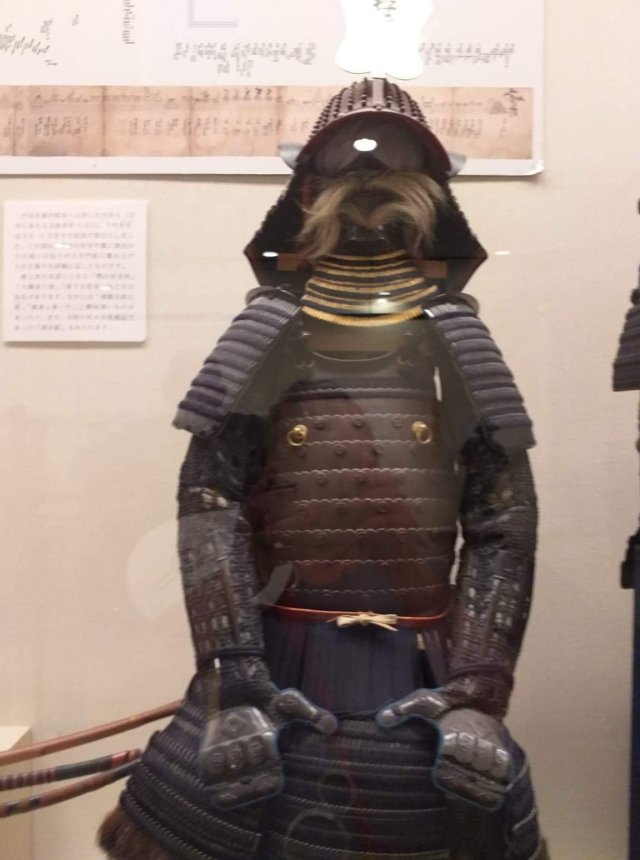
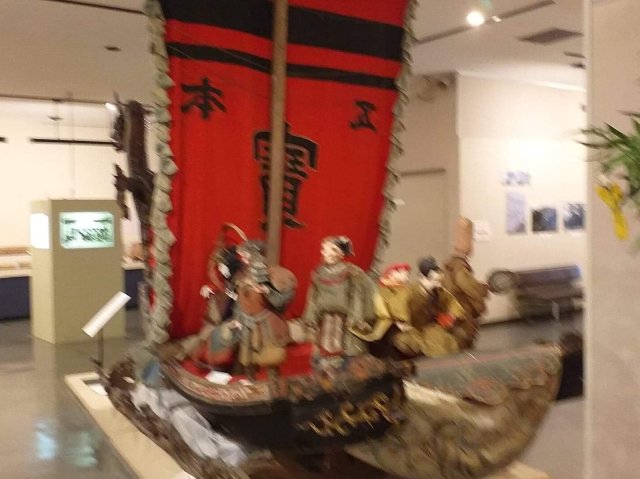
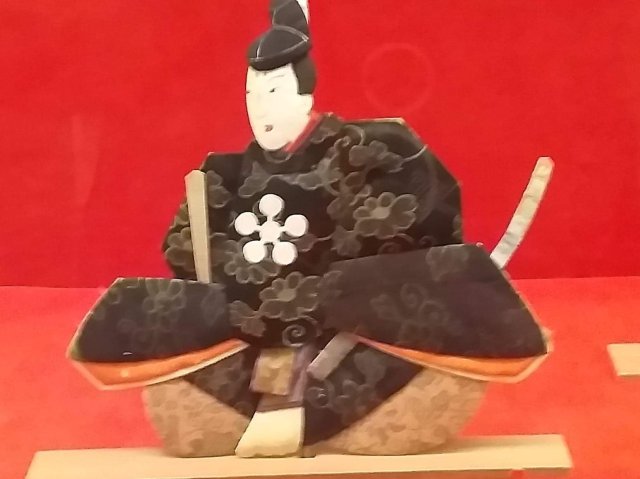
Having looked at all the exhibits, had a cold drink, felt chilled out enough we headed home.
 Random Acts of Travelling