Climbing on board with the numerous commuters, there was a slight guilty pleasure knowing we were on holiday and not heading towards the daily grind.
I0kOne stop later and we were in Kyoto, bought an unlimited bus pass for 600 yen, about 4 pounds equivalent, and began our exploration of Kyoto. The whole transport system is very much geared to tourists and hopping on and off the bus to see various sights is fairly simple. On the downside as Kyoto is further south, the temperatures were much higher and at times it felt oppressive. We had plenty to drink and tried as often as possible to find shade, go into areas of air conditioning but today there were moments when I felt a bit overwhelmed by it.
Our first stop was Kinkakuji ( Golden Pavilion) a a Zen temple in northern Kyoto, whose top two floors are completely covered in gold leaf. Formally known as Rokuonji, the temple was the retirement villa of a shogun, and according to his will it became a Zen temple of the Rinzai sect after his death. It is a world heritage site and one of the most visited places in Japan. We were lucky to get there early as very soon it was heaving with hoardes coming off tourist coaches.
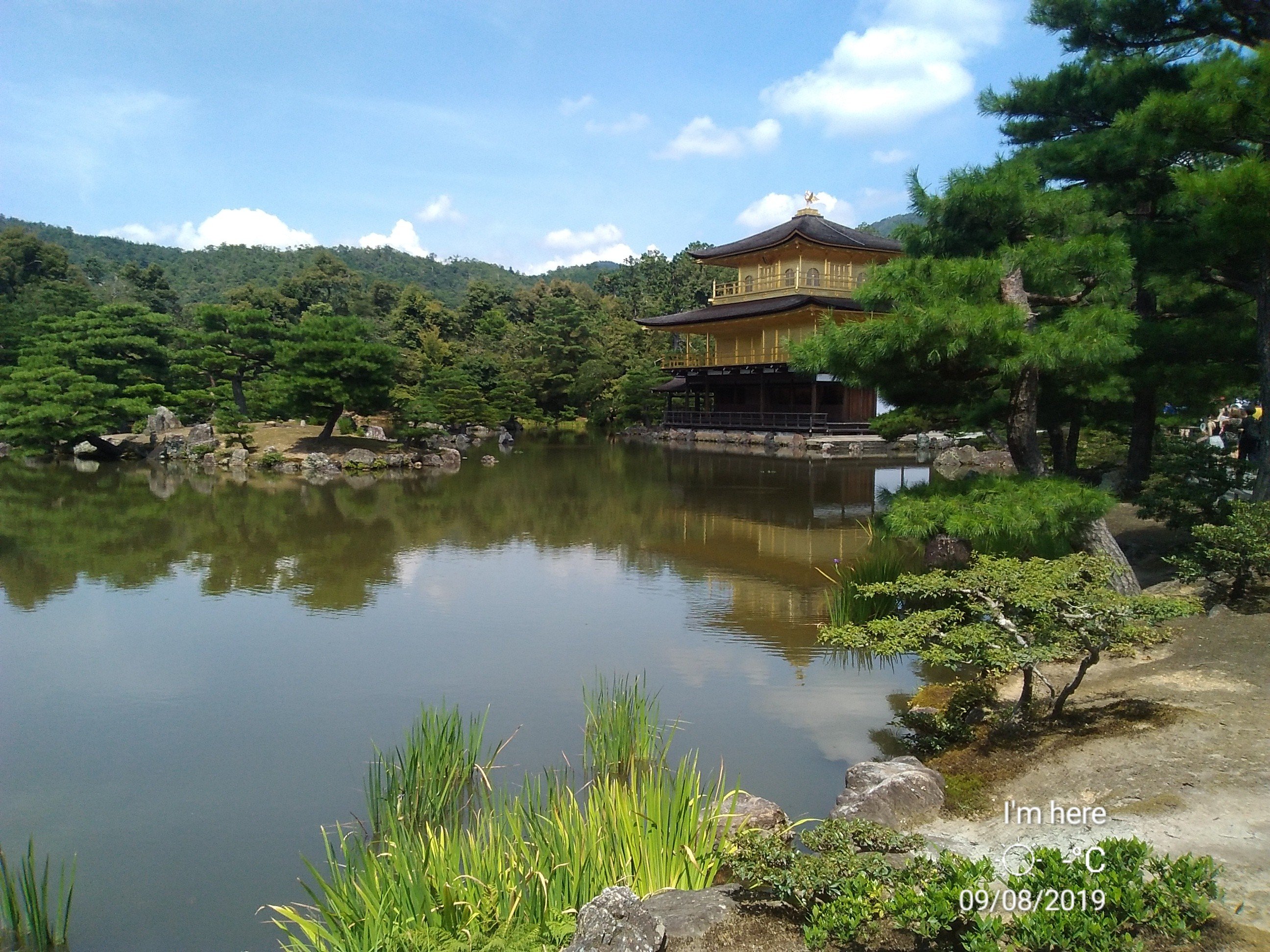
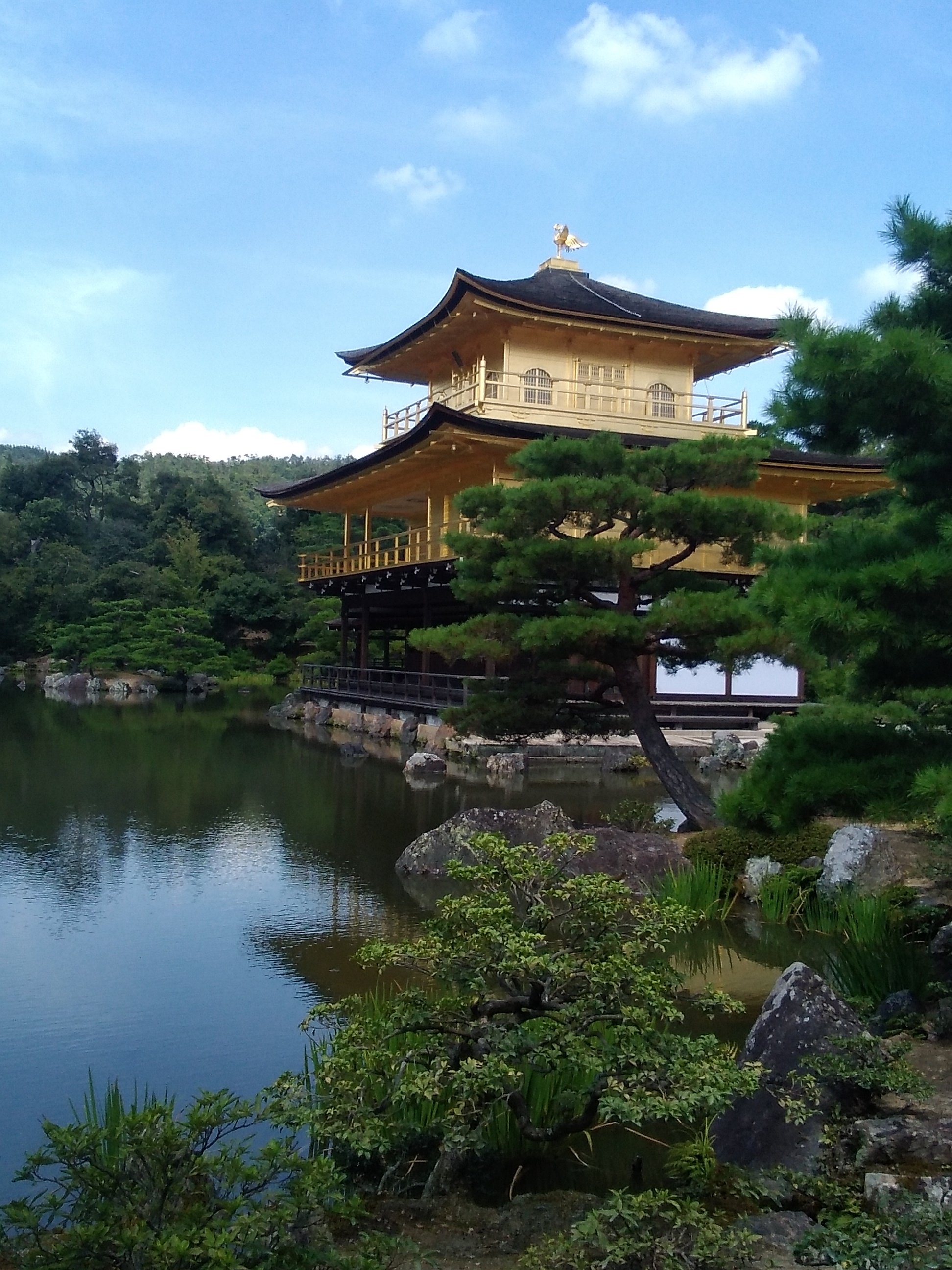 The first two levels are covered in gold leaf, sparkling in the sunlight it was a magnet for selfies and group poses.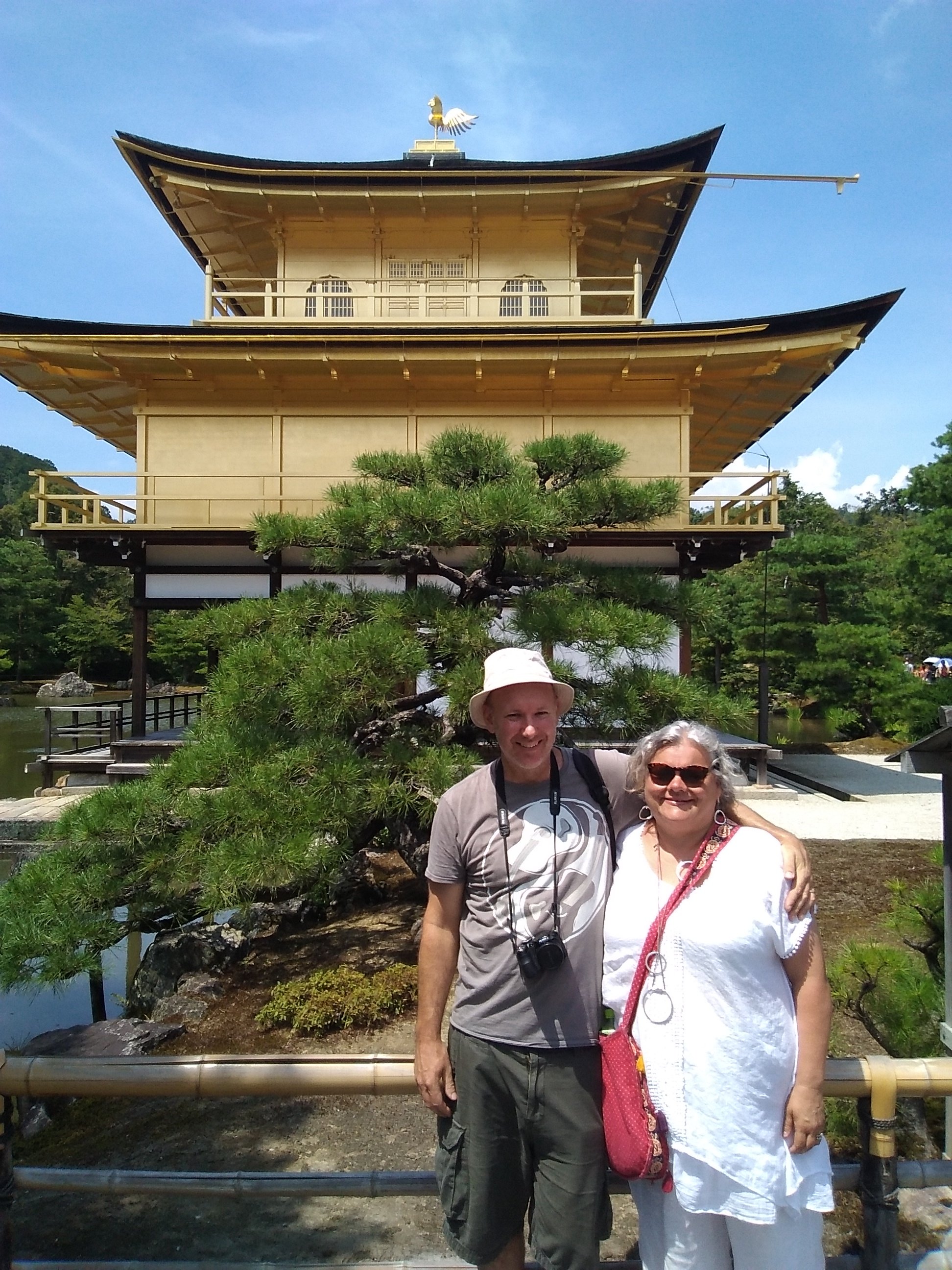
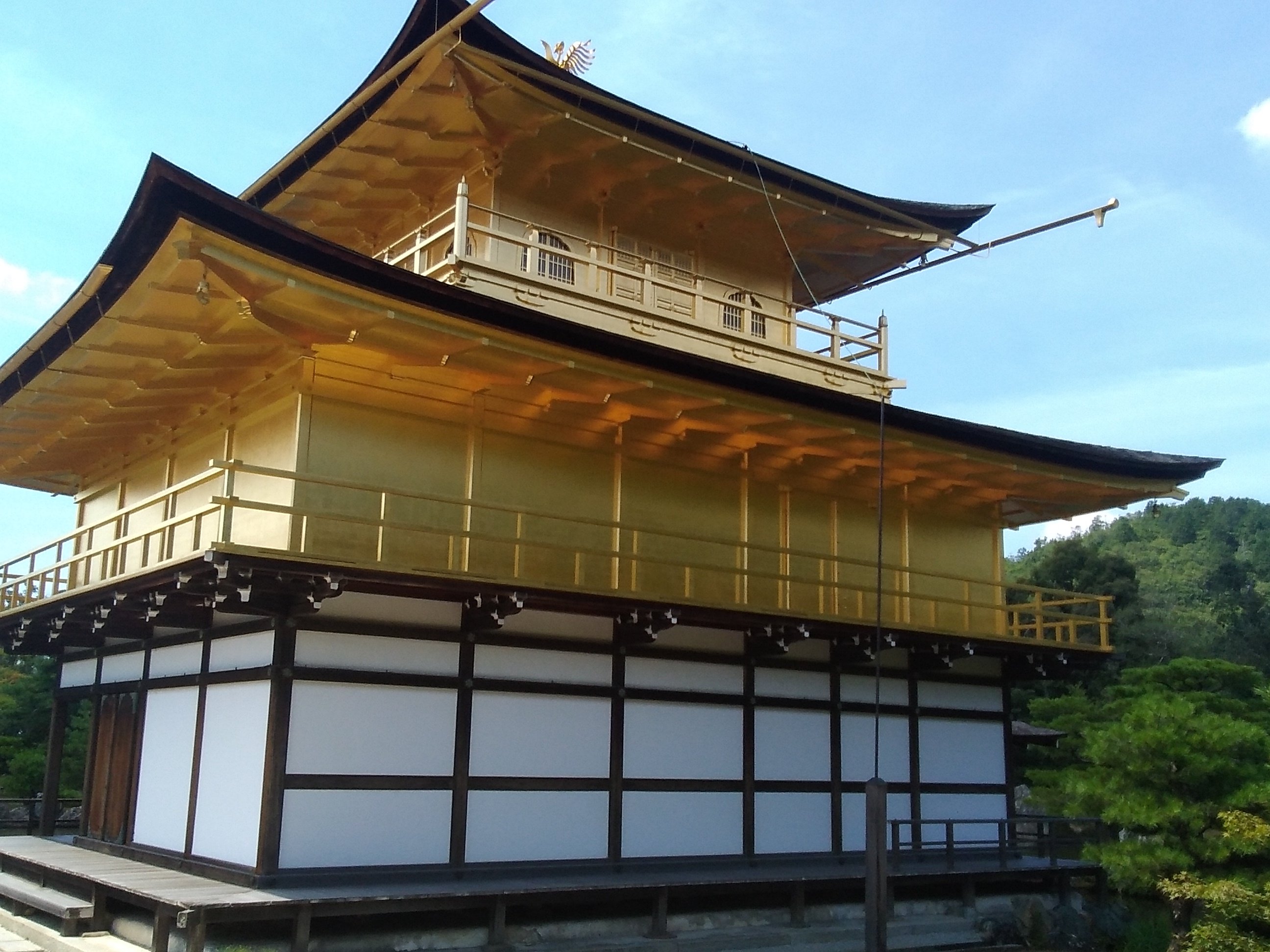
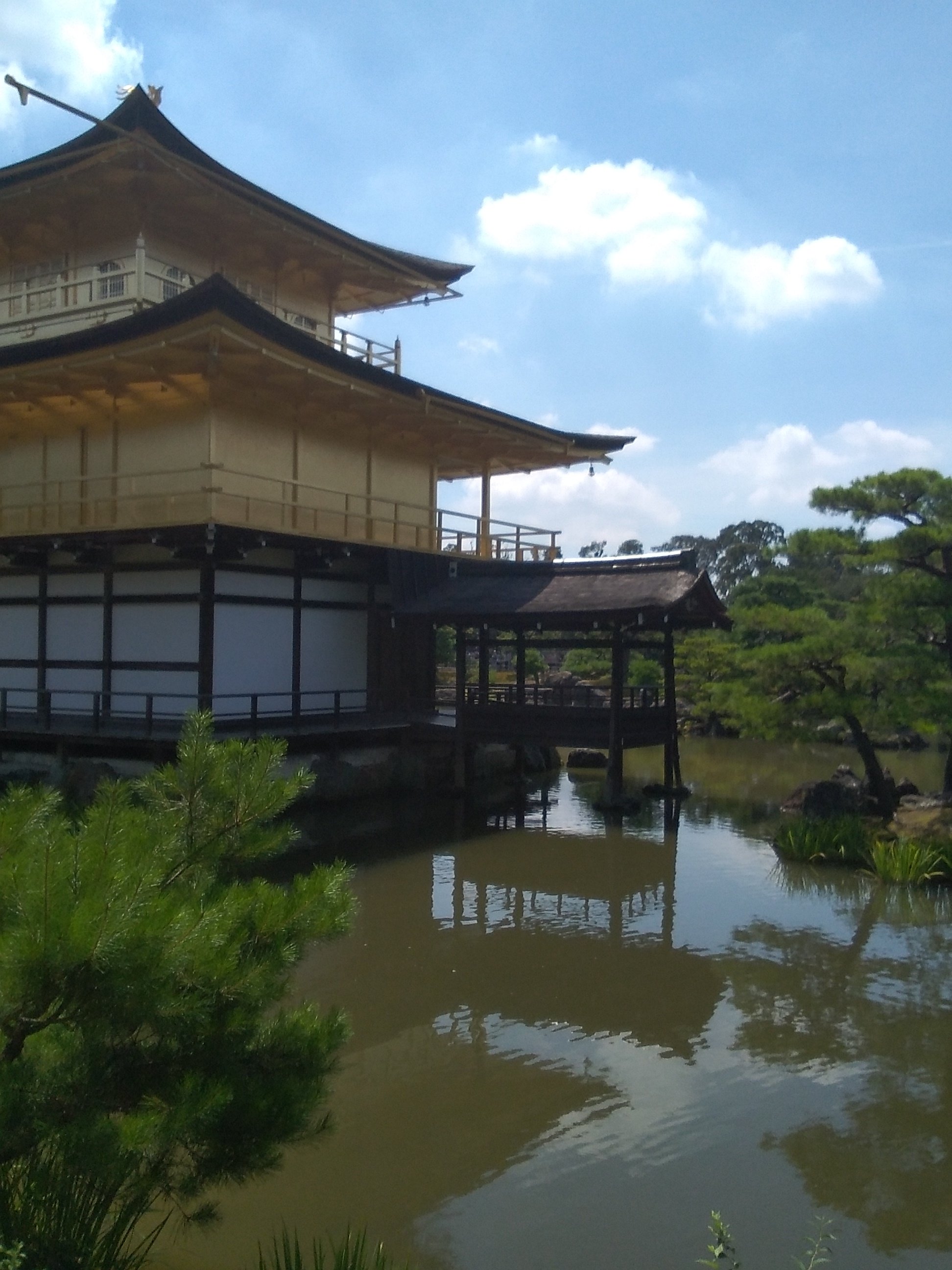 …. Of course we were no different!The gardens were also beautiful which set me off googling if there was a particular design. According to Wikipedia :
The Golden Pavilion is set in a Japanese strolling garden (回遊式庭園kaiyū-shiki-teien, lit. a landscape garden in the go-round style). The location implements the idea of borrowing of scenery (“shakkei”) that integrates the outside and the inside, creating an extension of the views surrounding the pavilion and connecting it with the outside world. The pavilion extends over a pond, called Kyōko-chi (鏡湖池Mirror Pond), that reflects the building. Not certain if I get all that but the design was beautiful and particularly as it relatively only covers a small space.Stopping in a shaded area gave me time to people watch, which is my wont. Since coming to Japan we have hardly seen any animals domestic or otherwise. According to the Japan Pet Food Association (JPFA), 18.3% of Japanese households owned a pet in 2009: 12.3 million dogs and 10 million cats, up from 9.1 million and 6.2 million respectively in 1994. In fact, there are now more pers than children in Japan. The statistics now will undoubtedly be similar. But despite the numbers of domesticated animals we have haven’t really seen any. Until today…
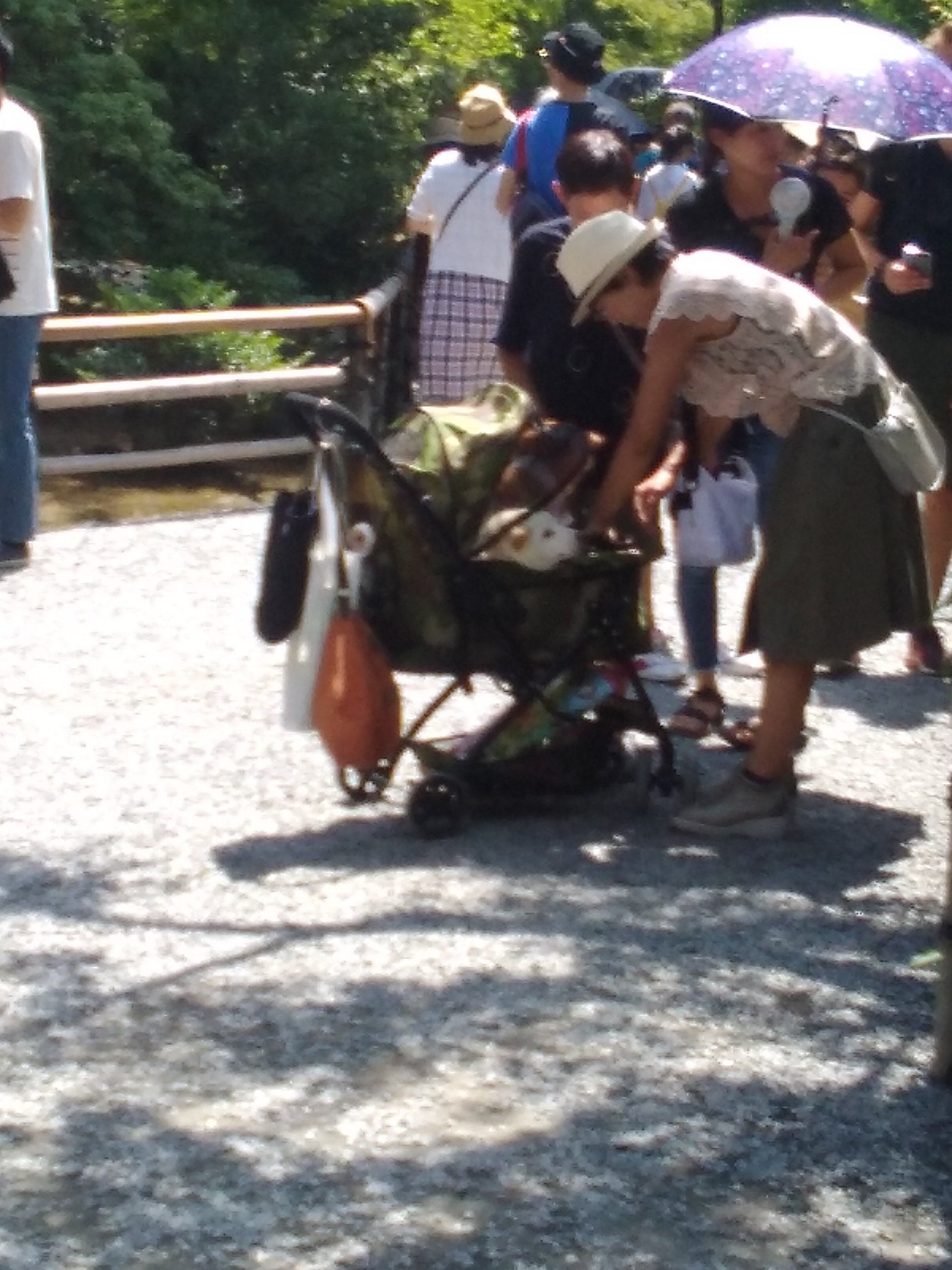 Two dogs in a pram with frocks on! Not necessarily a surprise as during one shopping excursion we had seen a aisle with dog dresses and a sizeable section of dog nappies. The pram part seemed surreal but before we left the shrine I saw the owner feeding them lovingly with 600 yen match green tea ice cream!
Many shrines and temples are said to be particularly good at bestowing certain types of blessings or goriyaku. In recent years, these temples and shrines have come to be known as “power spots.” I don’t know if this shrine is known for this but both Pete and I had a go throwing money towards one shrine within the park. Pete managed to get the ‘offering’ in the bowl and is now convinced that a million pounds is coming his way. I was not so lucky….. But hopefully he will share. But he also had two attempts so that may negate the ‘win’.
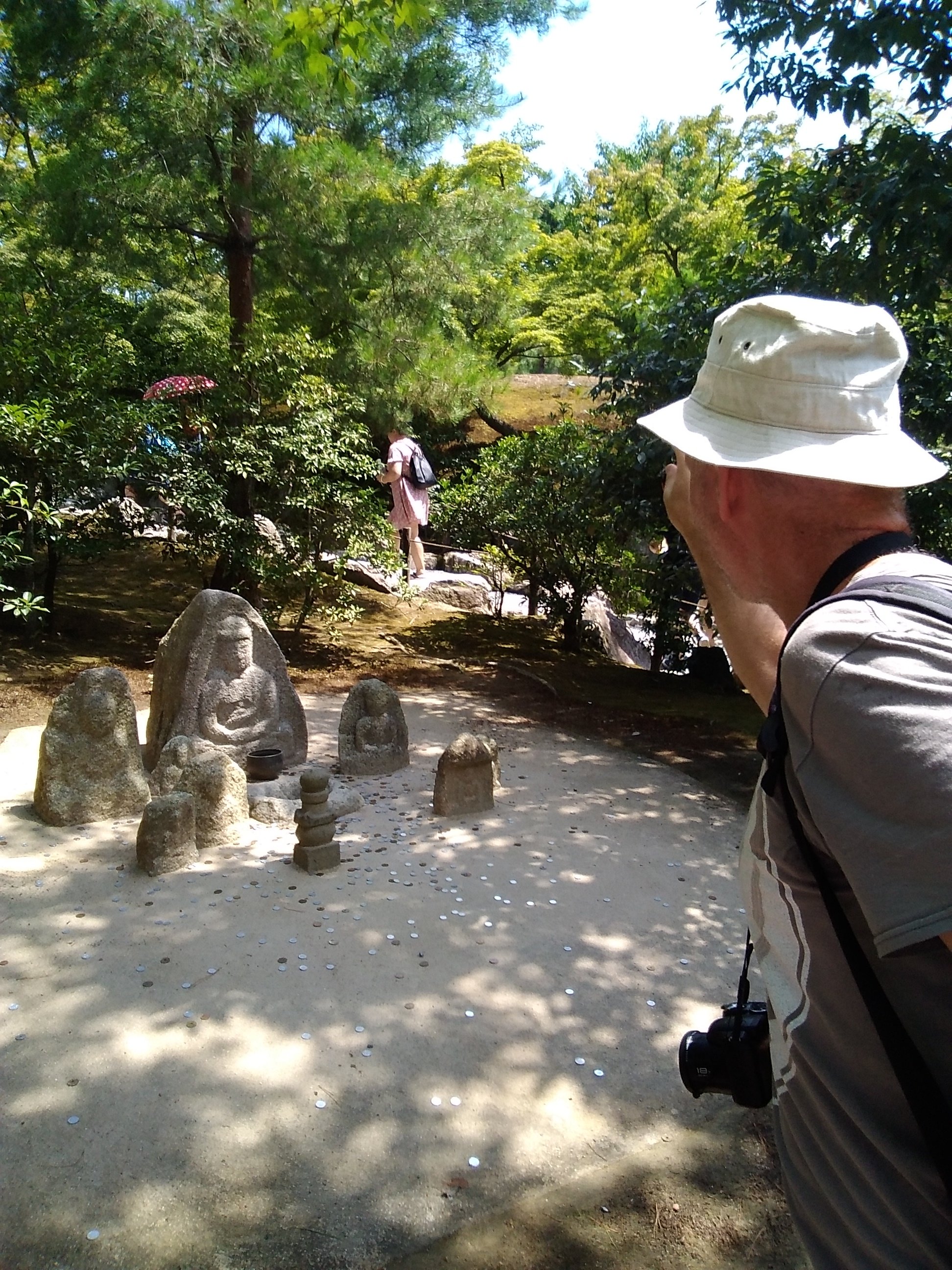
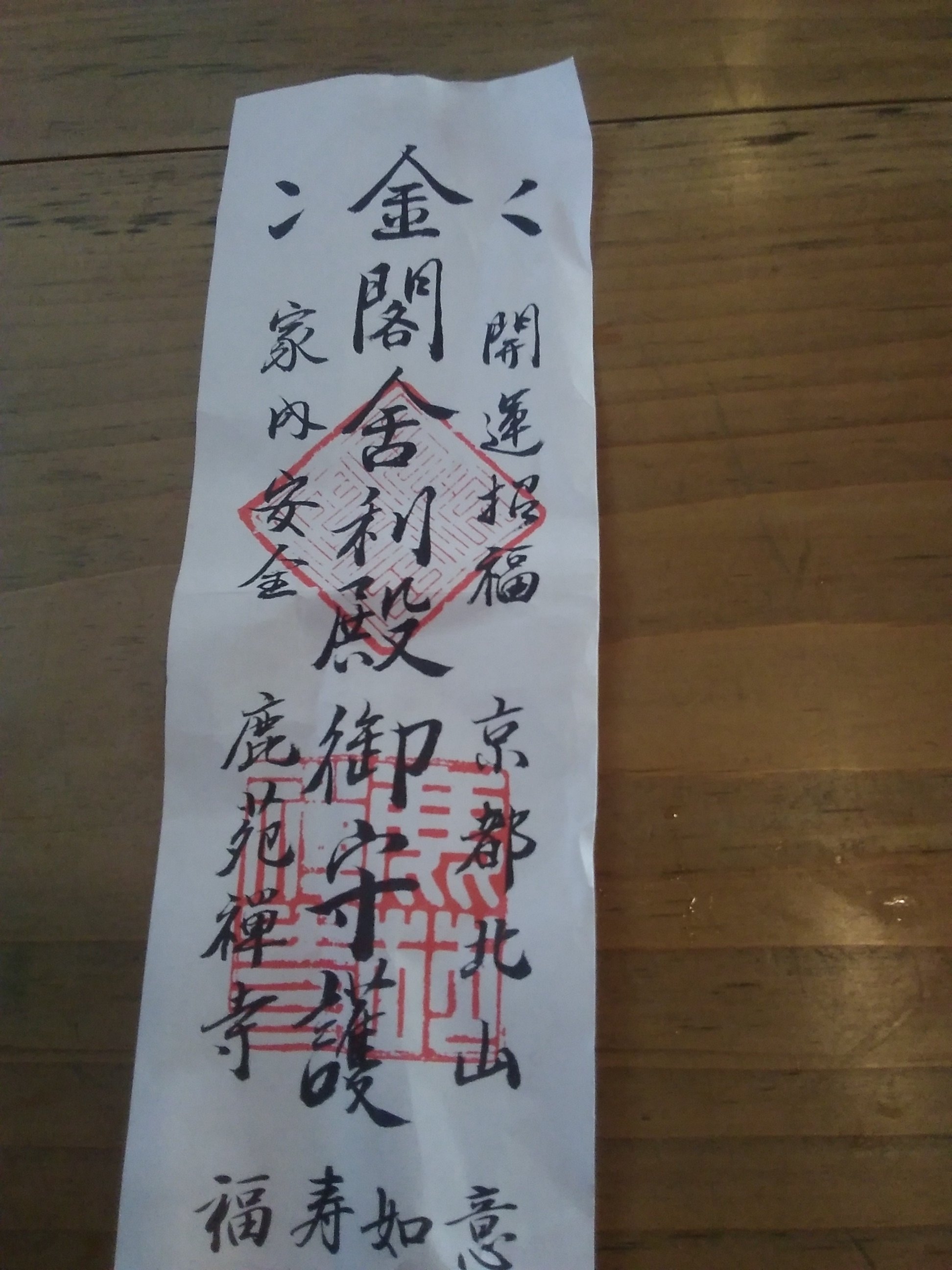
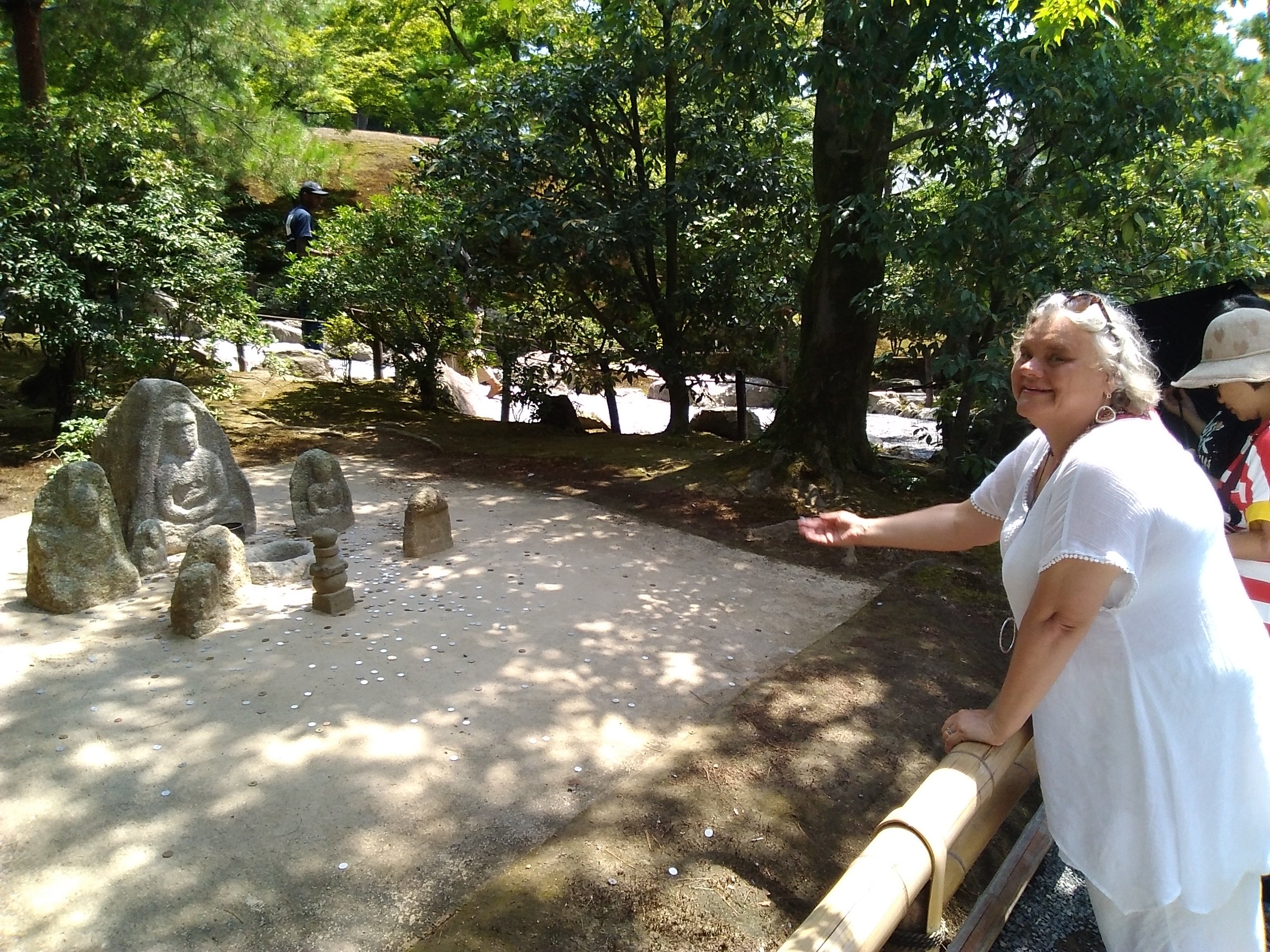 Another thing that we have found at shrines are stalls which sell ‘offerings’ – you can’t take photos but they are linked to health, wealth and happiness.
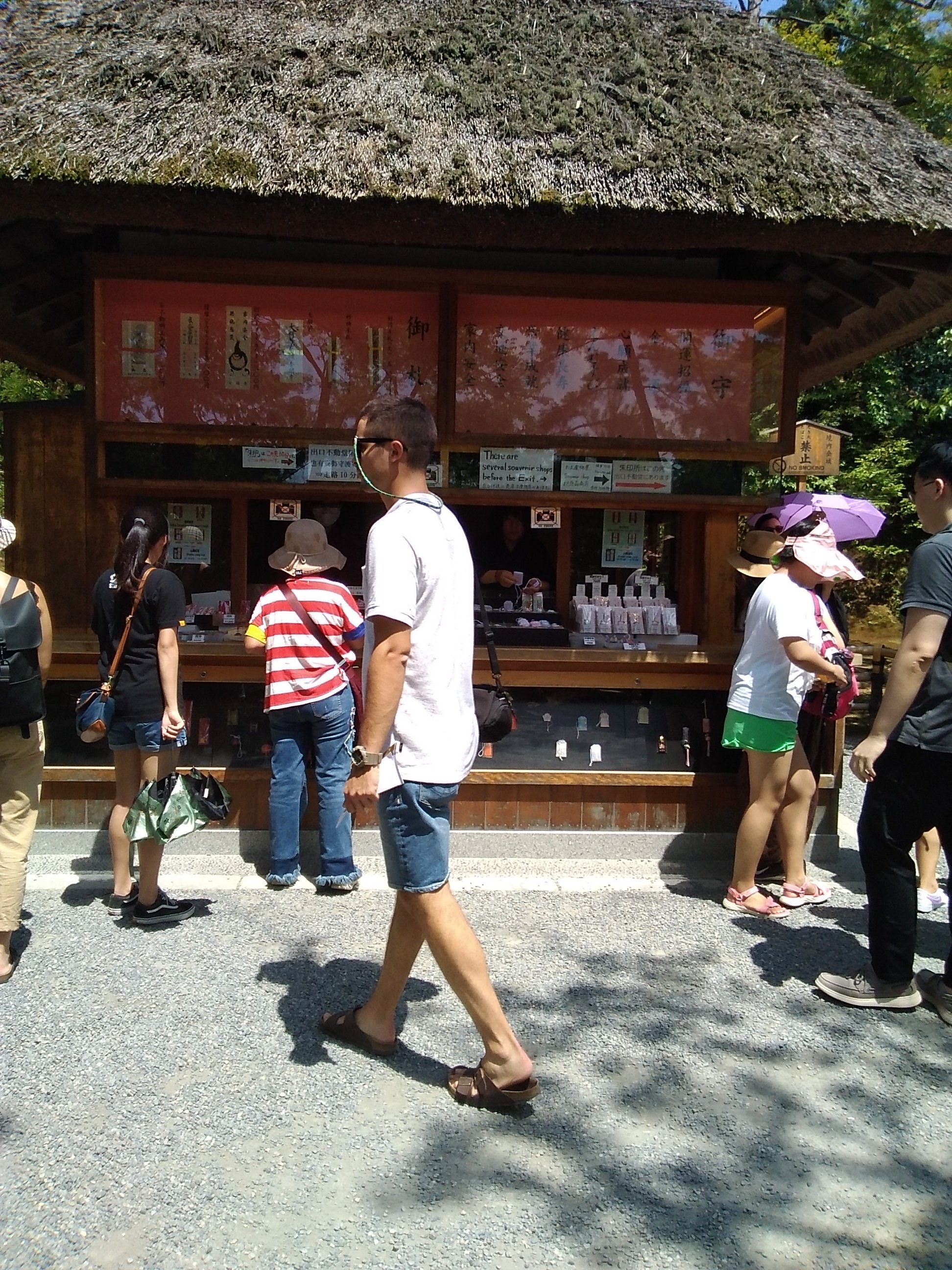 But after you have bought them there is a thing like a bin next to it. In fact there is a notice telling people it isn’t a bin.
 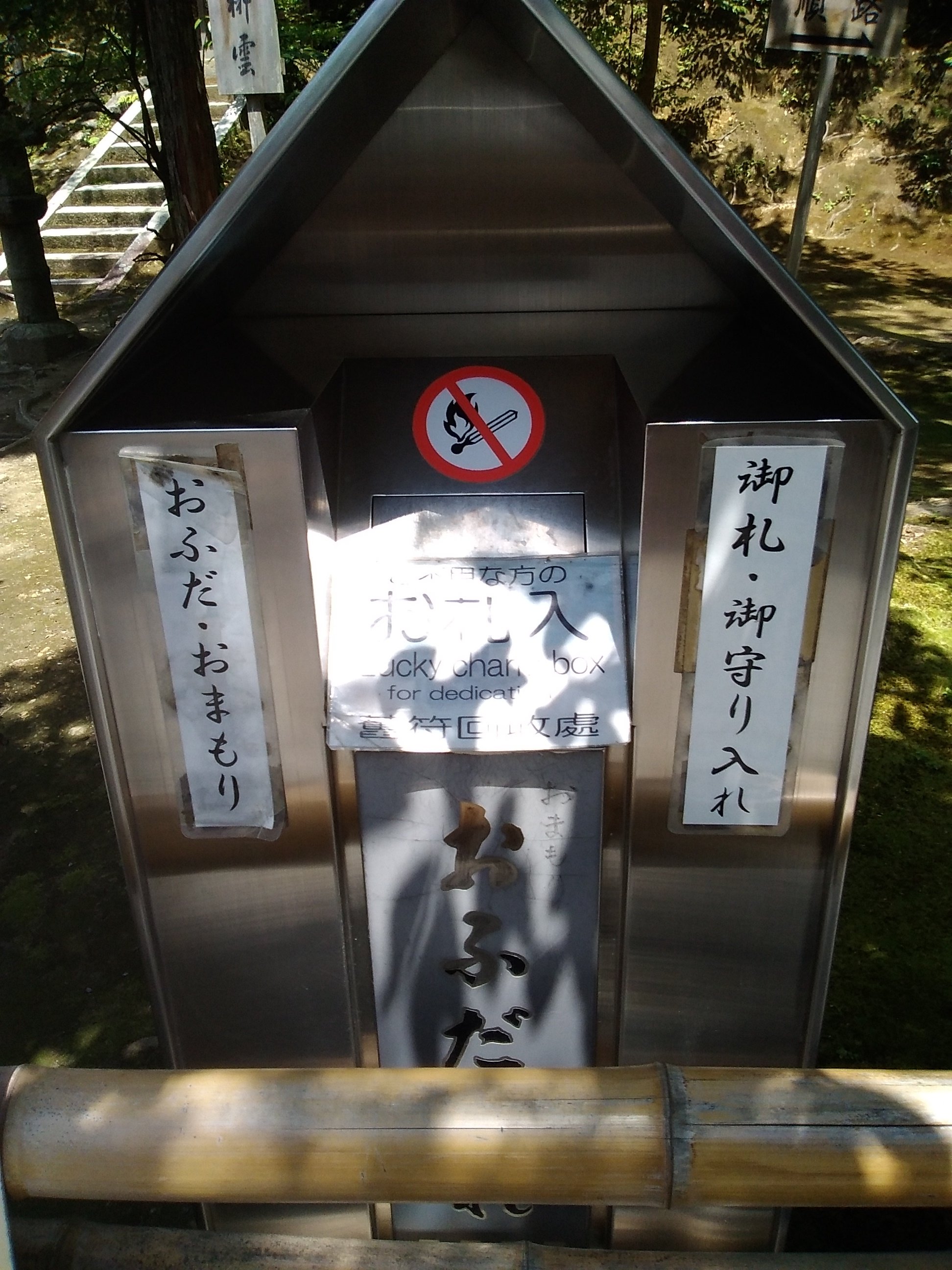 So my confusion is this, if you buy an offering (which are not cheap) and then put them in the ‘bin’…..what next? Do they collect them and re-sell them, is there a divine sanctified landfill specially for offerings? I mean they can’t really bin them can they?
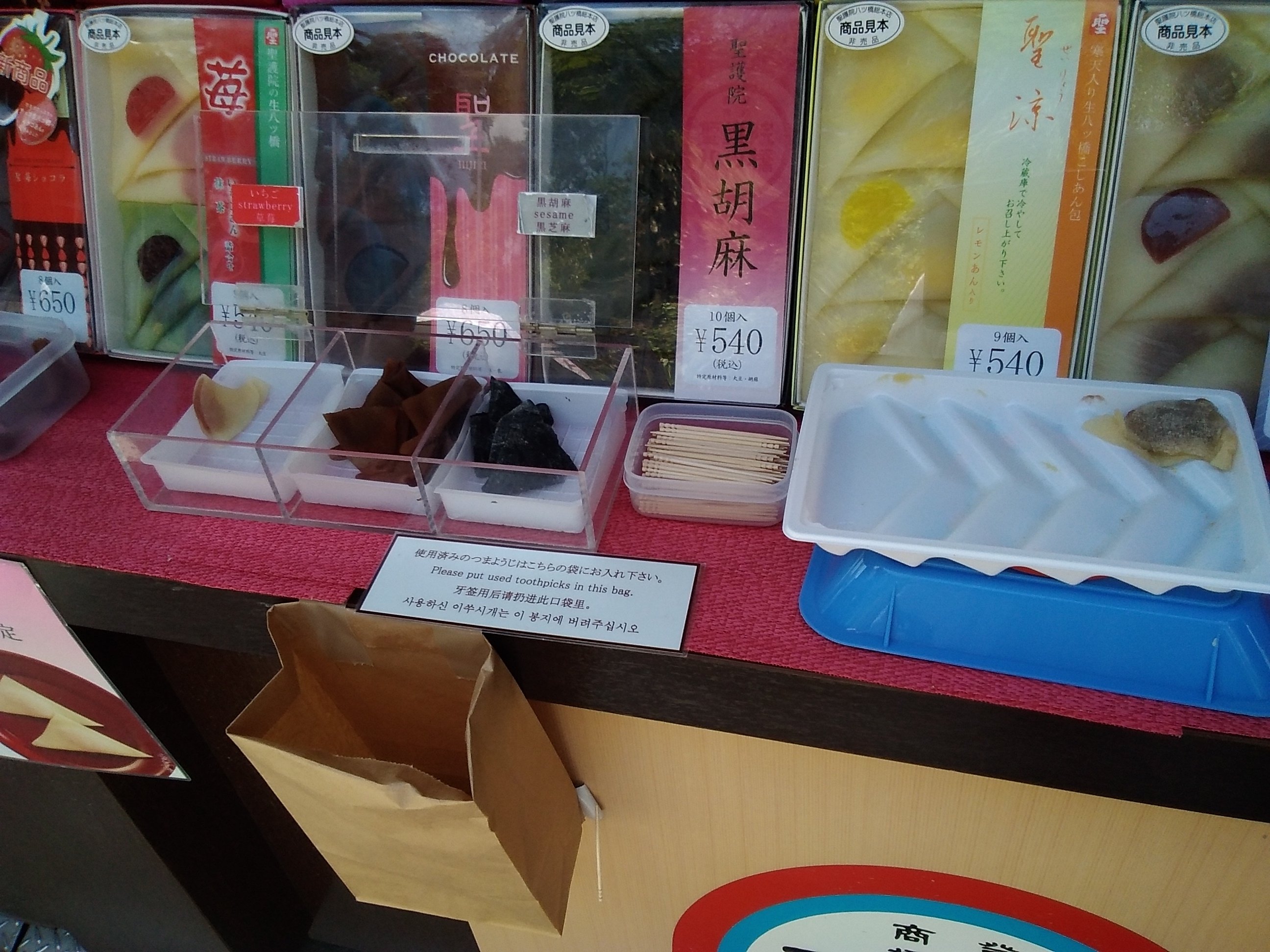
As we left the shrine there were lots of things to buy but what was great was that there were also lots of things to taste, yum yum! There were all kinds and the sample sizes were big, so we worked through about 8 or 9 different types.
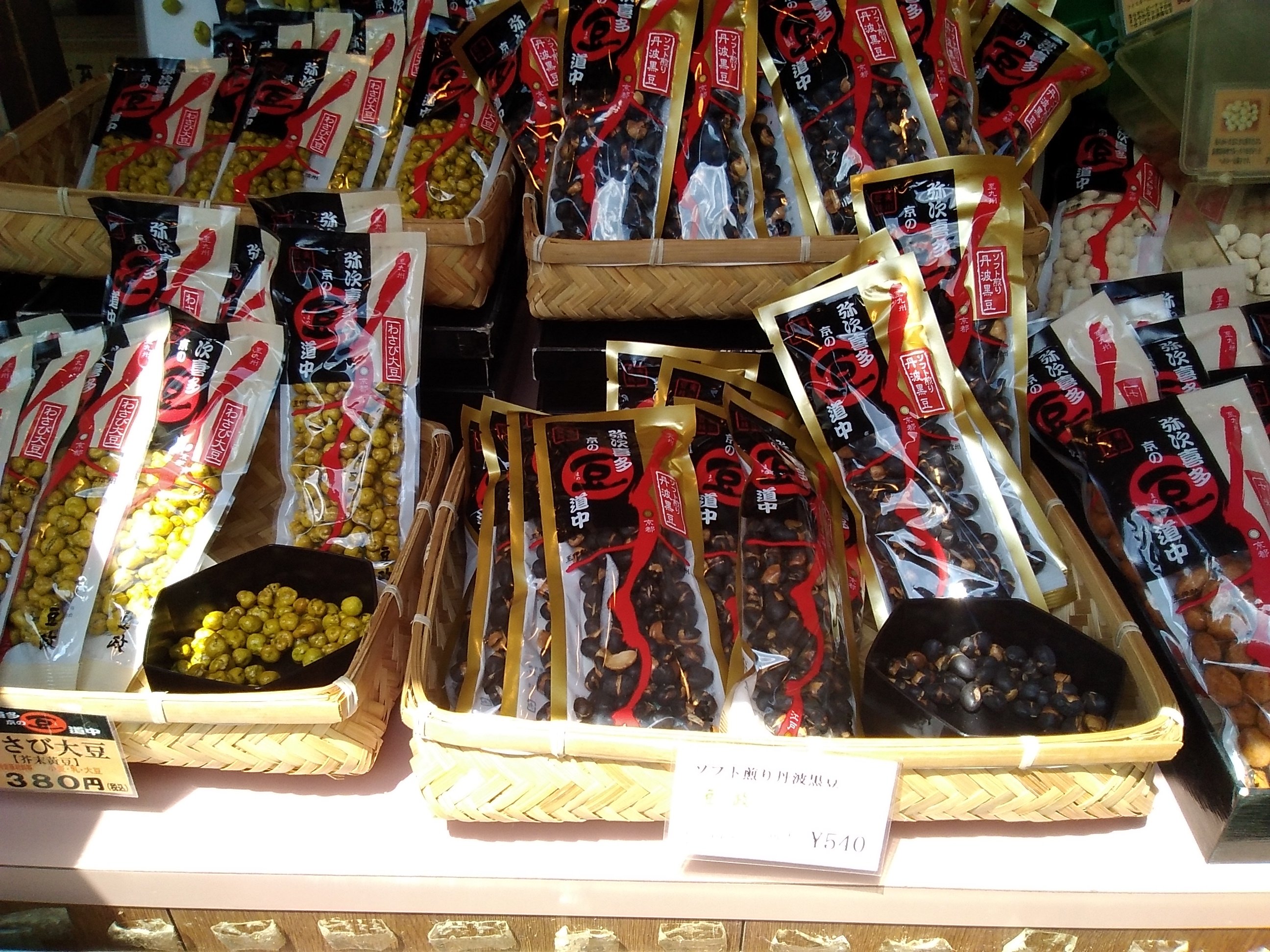
 Round the corner they had more savoury type snacks, many with a fair dollop of wasabi. Having munched through both it felt like we had, had a light lunch.
  And then we headed to the next place on our list.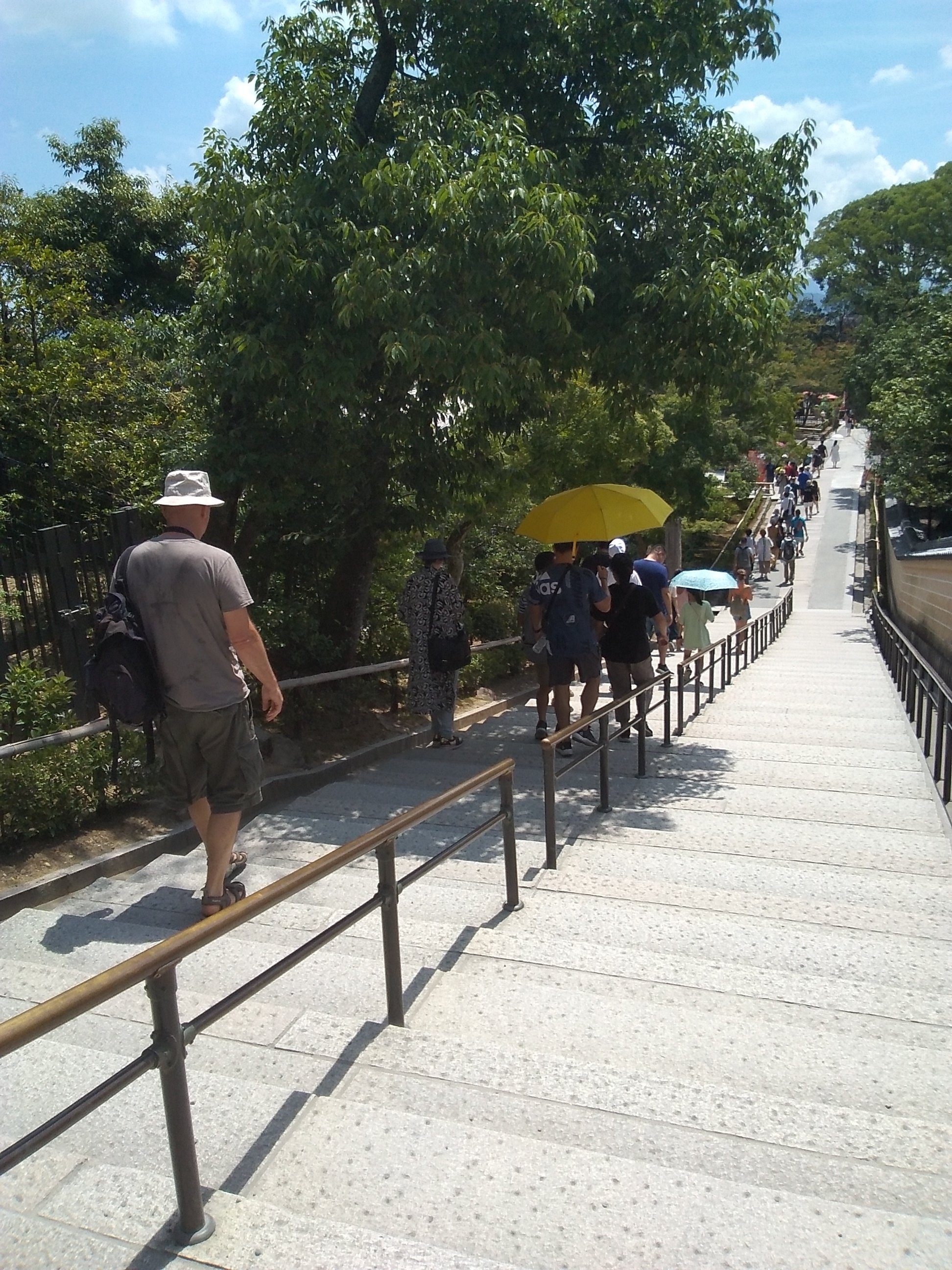
 Random Acts of Travelling