Leaving Kyoto we headed quite late at night towards Yamashiro forest Park. We had been recommended the site by some German travellers we had met. The roads in the dark were quite hair raising at times. On our way back down in the morning the roads were fine and couldn’t see why we had been so stressed. The website for the place was intriguing:Come and listen to the chirping birds and the soft tricking streams at the serene and green Yamashiro Forrest Park. I was very interested in the ‘tricking streams’. 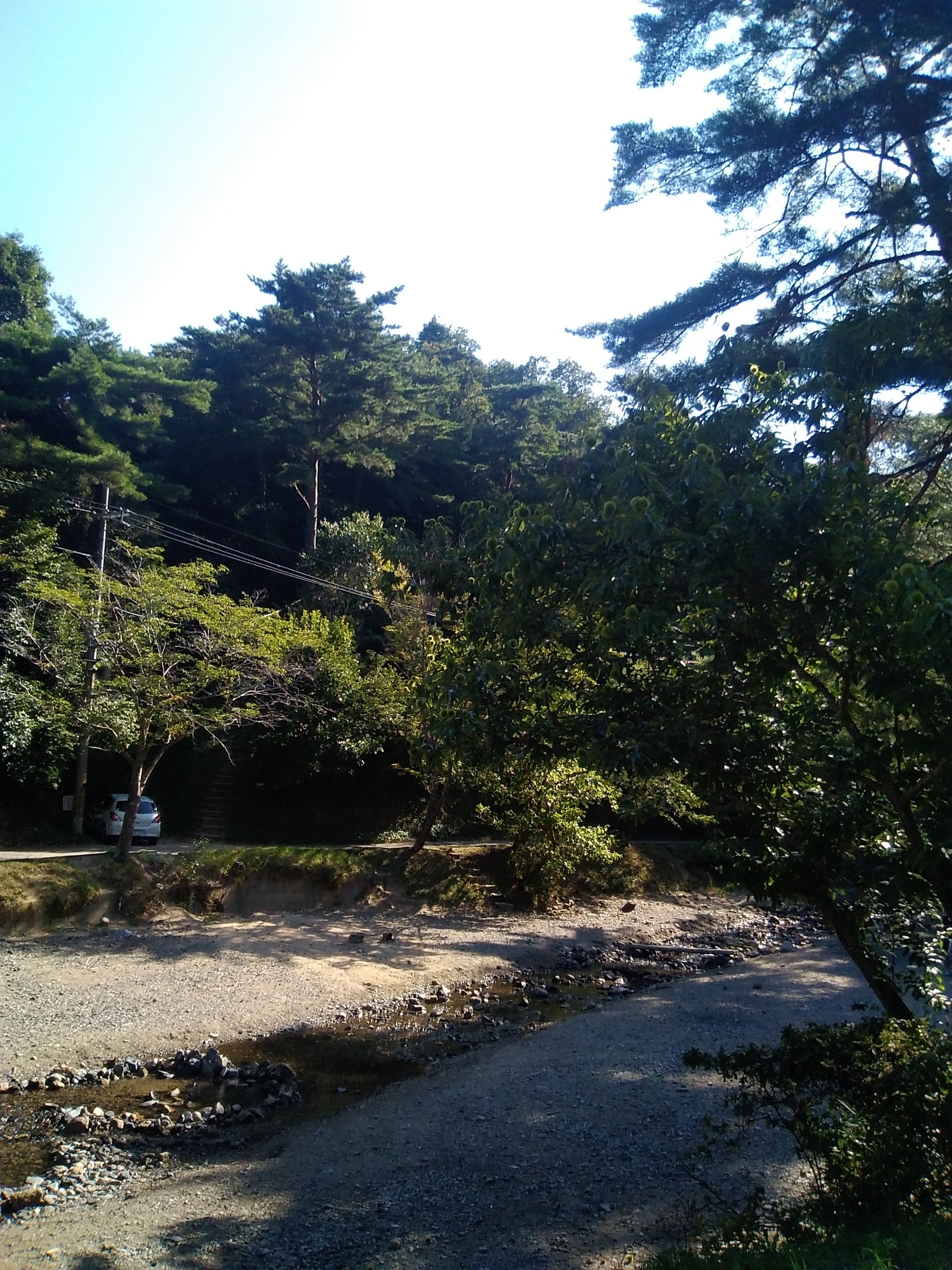
The tiny bit of heaven was being able to have a shower, our first since Tokyo! Although there had been showers on the campsite by the lake, in honesty the lake was a better prospect. Having a hot shower after such a long time was exhilarating. I felt I was loosing layers off my body. We have been keeping clean but it has been pretty basic.
We decided not to drive into Nara. We knew the parking fees were going to be exorbitant and again travelling into an unknown place can be stressful. So we did what we had done for Kyoto, find the nearest train station, park up and travel on from there. Again like Kyoto we were able to get an unlimited bus pass very cheaply once we got there.
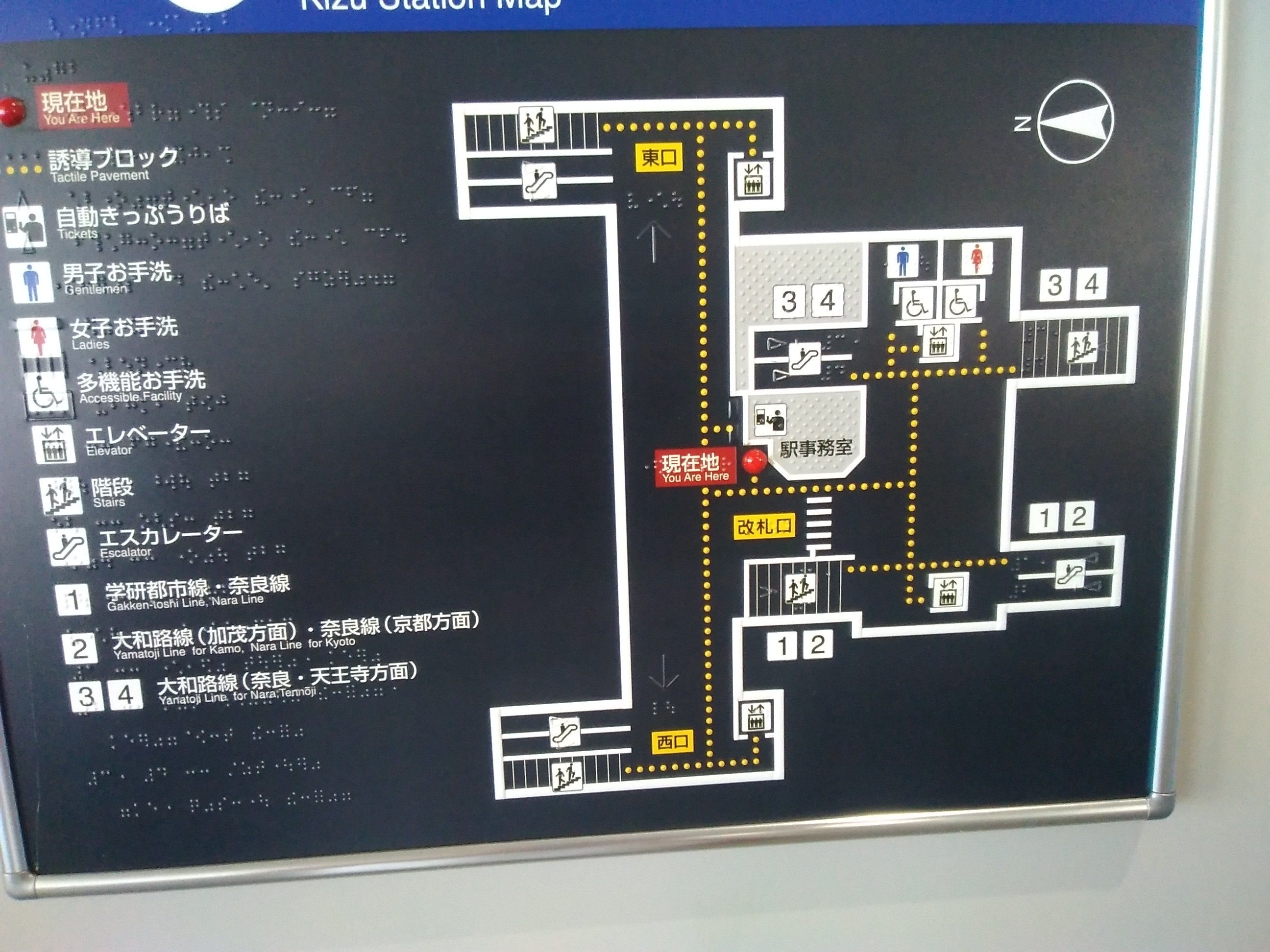
One thing I have obviously noticed as we have been travelling round is how geared up they are for the visually impaired, it would seem certainly from a transport point of view that there is a lot provided.
Nara once was the capital of Japan and is home to some of Japan’s largest and oldest temples. The biggest pull into Nara is the Todaiji Temple. It was built in 752 as the lead Buddhist Temple in Japan.
I was quite excited to see the deer that live around the Temple. As we neared the Temple on the bus road signs started signalling that deers were in the area.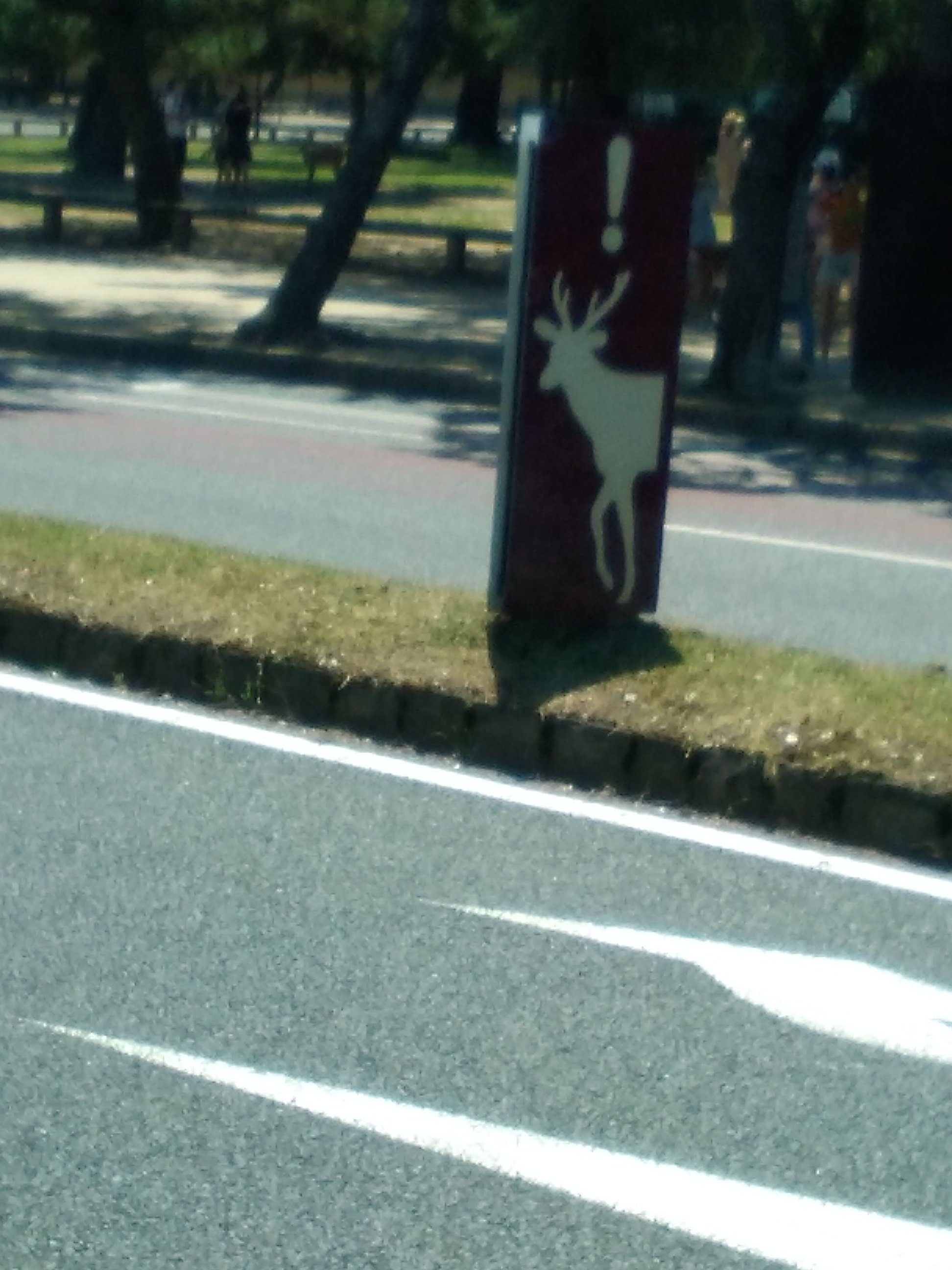 The Nara deer are symbols of the city and are famous throughout Japan. The deity enshrined in one of thee temples therein is Takemi Kajichi no Mikoto, said to have ridden to Nara upon a sacred deer from Kashima Shrine in Ibaraki Prefecture. Because of this legend, deer were thought of as sacred animals–the helpers of gods–and have been carefully protected for many years. Even today, Nara’s deer are carefully protected as “natural monuments. ‘
They did pretty much swan about as if they owned the place.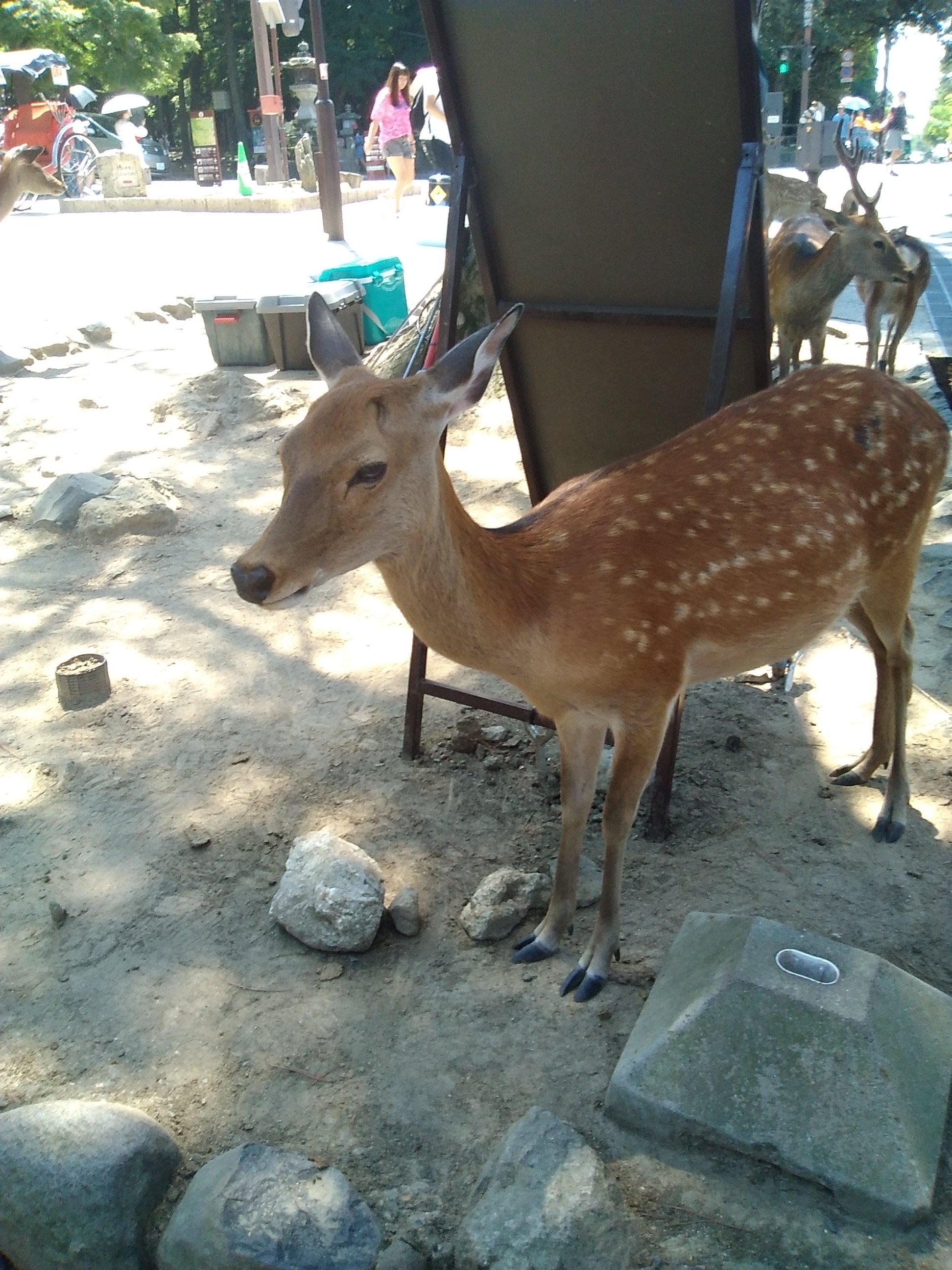
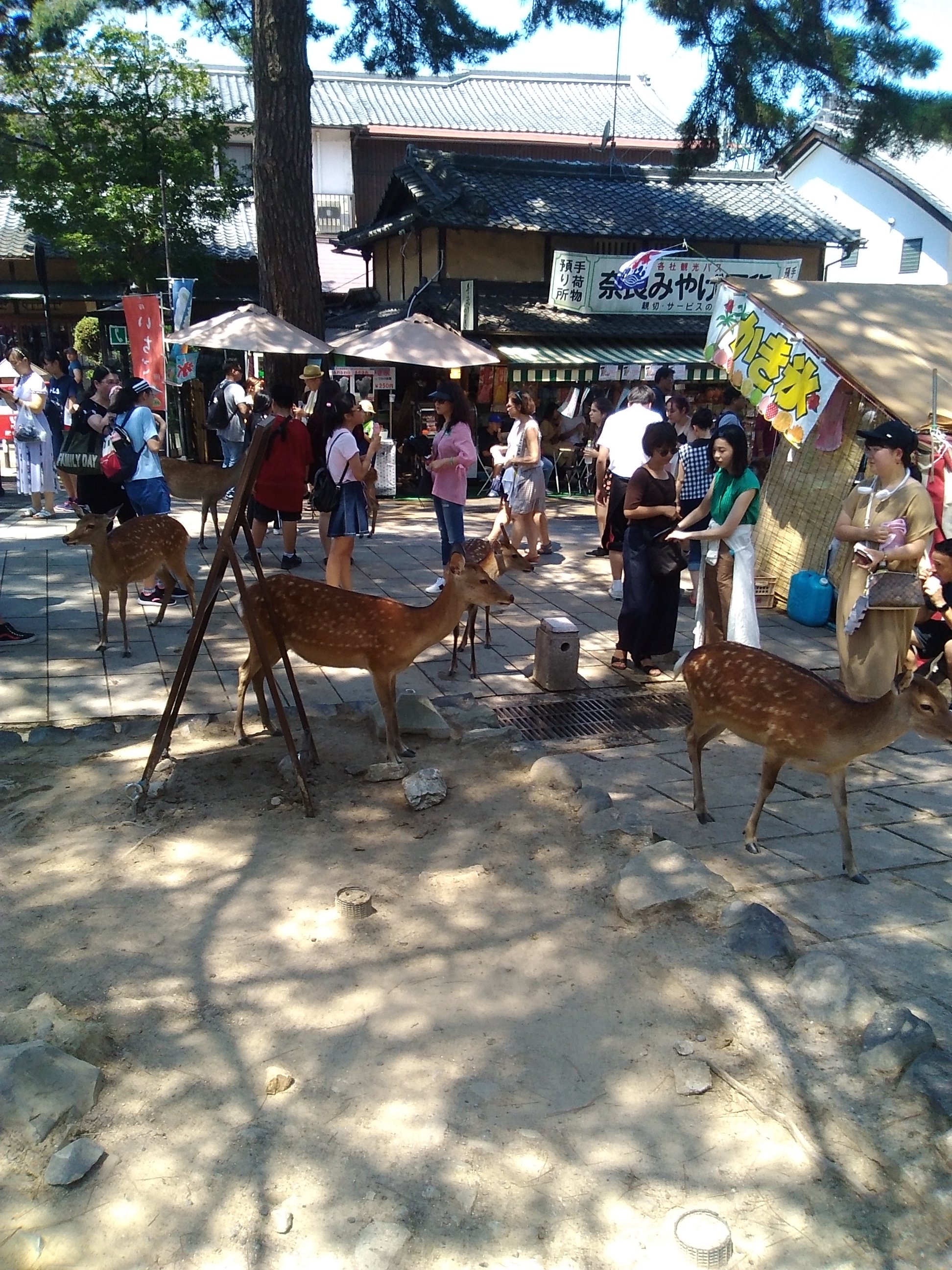 There are noticeboards along the way that stress that the deer are wild animals, so they need to be treated accordingly. That said there were stalls where you an by deer crackers or shika senbei. They are made of wheat flour and rice bran. These treats are made without any sugar for the health of the deer, making them completely safe for visitors to offer the animals. Deer crackers are a registered trademark of the Foundation for the Protection of Deer in Nara, and a portion of their profits goes to efforts to protect the deer. I bought a pack for 150 yen.
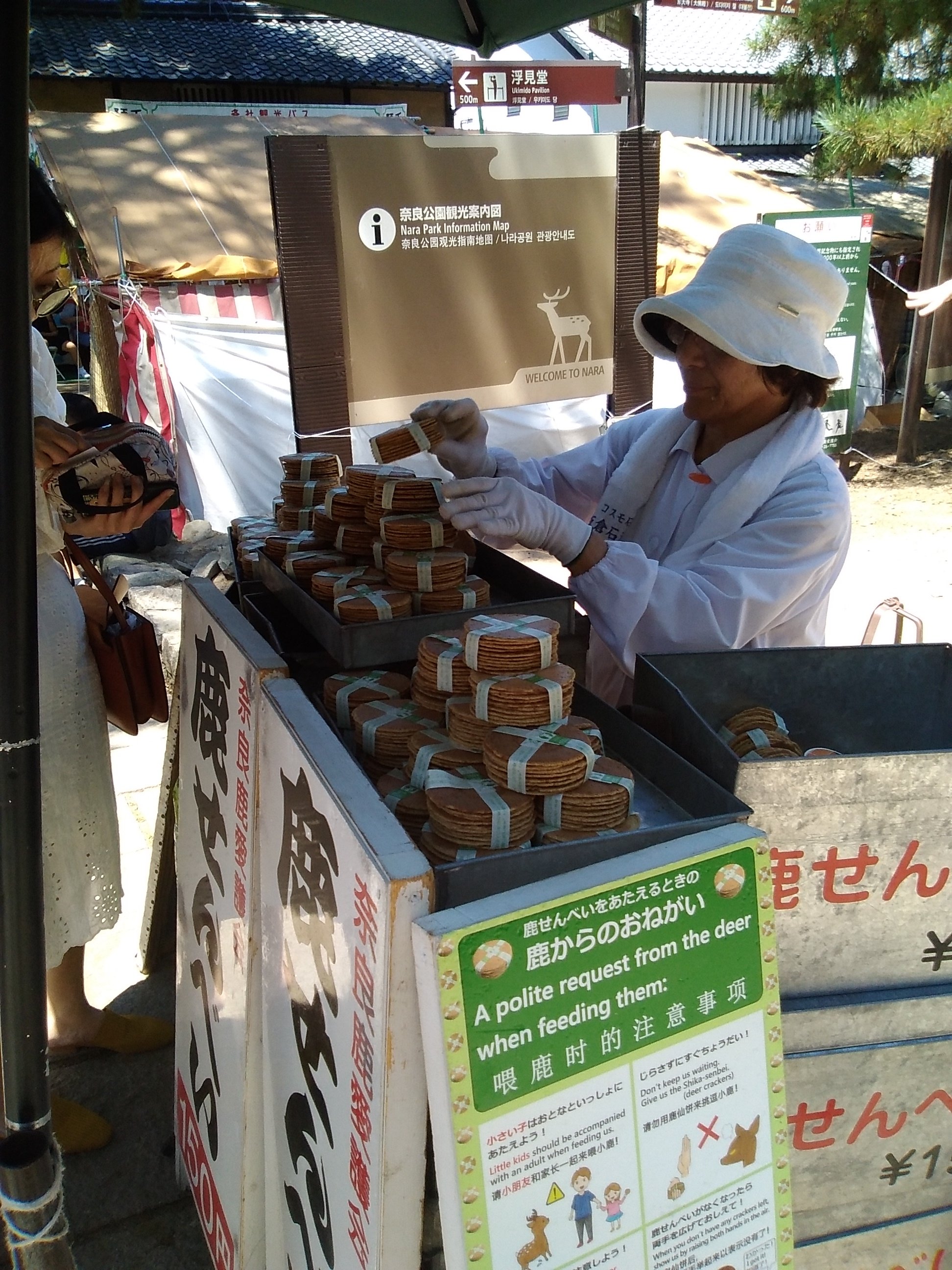 The route to the temple is lined with little food stalls and shops, so I waited until I had passed these before I fed them.
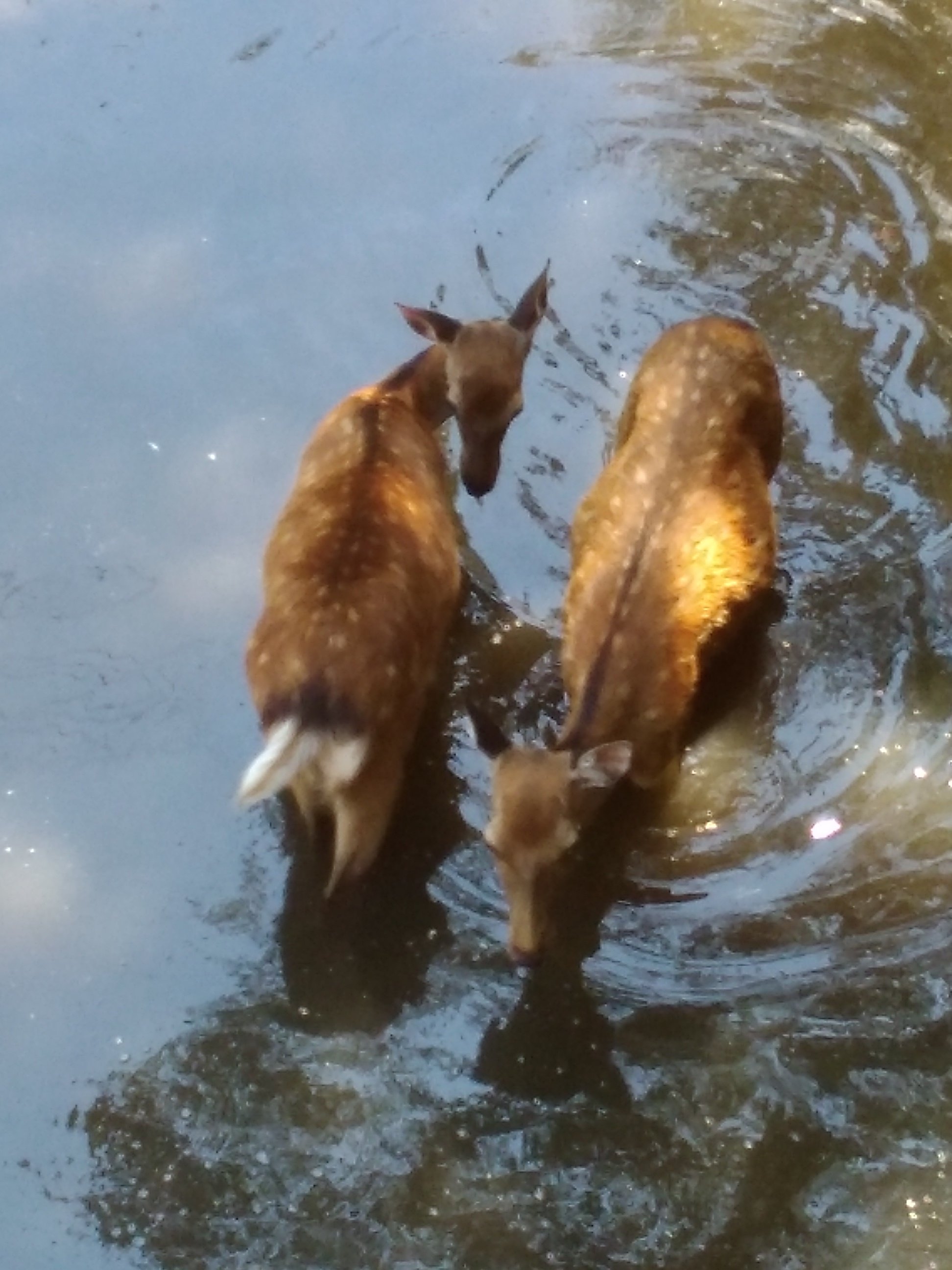
As per normal here it was a very, very hot day and even the deer were feeling it. Sheltering in shops, sitting in streams. 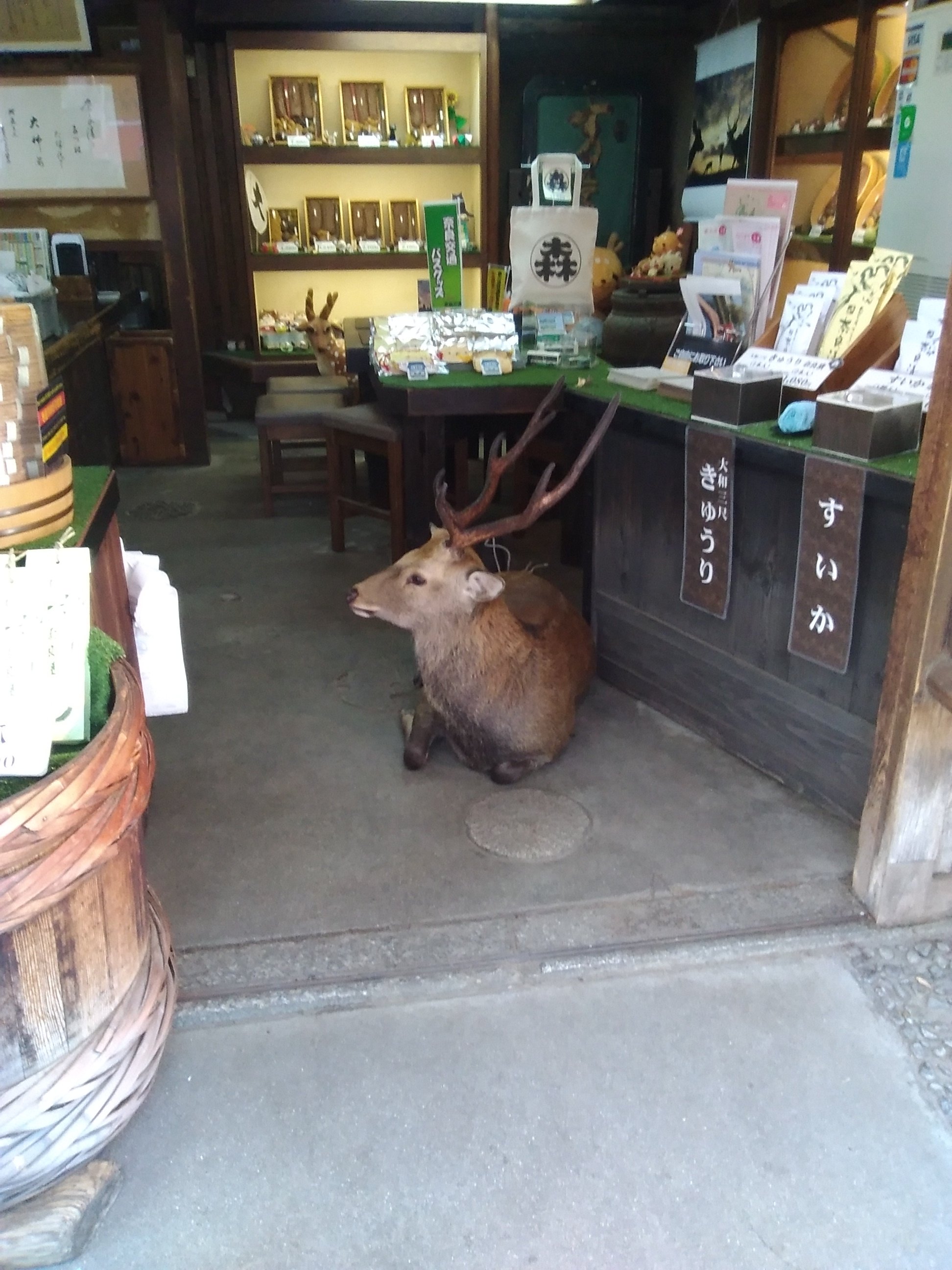
 Because of their special status they are not removed from the shops. Although I know there is a religious element, it is all so very lucrative financially as there were so many things you could buy linked to the Nara deer, headbands, biscuits, t-shirts, keyrings etc.
When we got to a more open area I decided to feed them, it was a bit frenzied. You are advised that once the food has all gone you must left both hands in the air, opened out and this will signal there is no more. I did this and they just dispersed, pronto! Cupboard love! 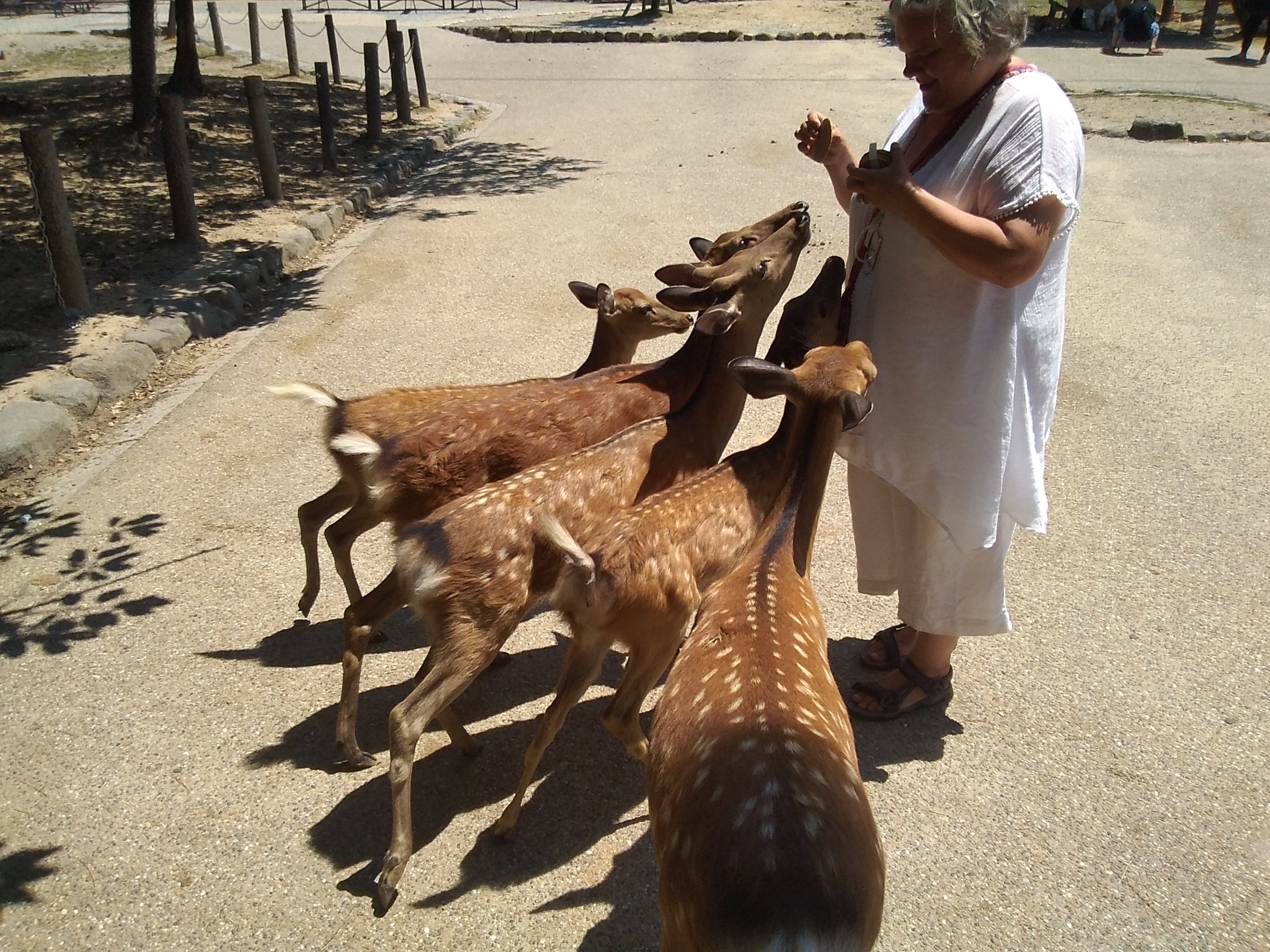
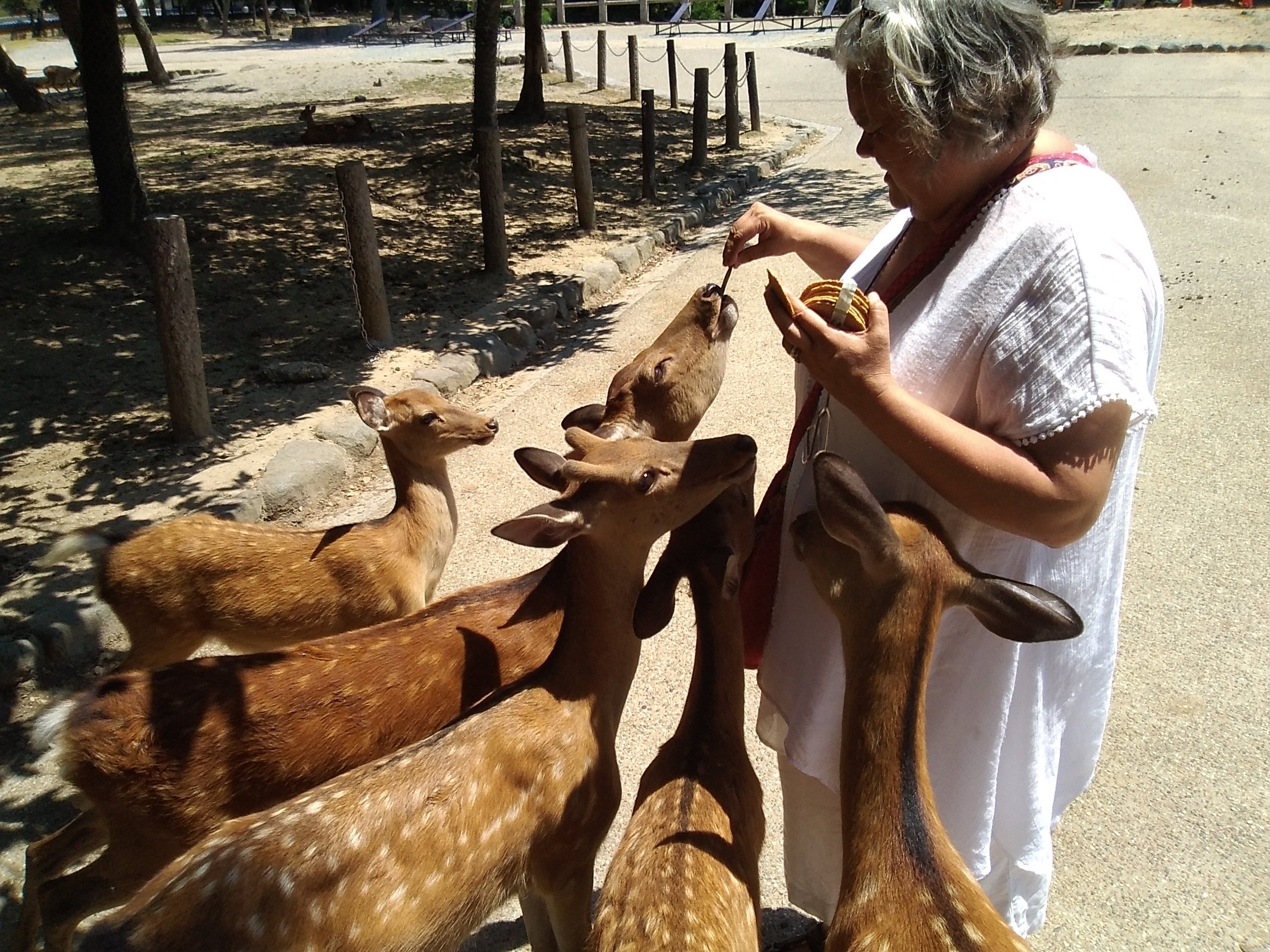
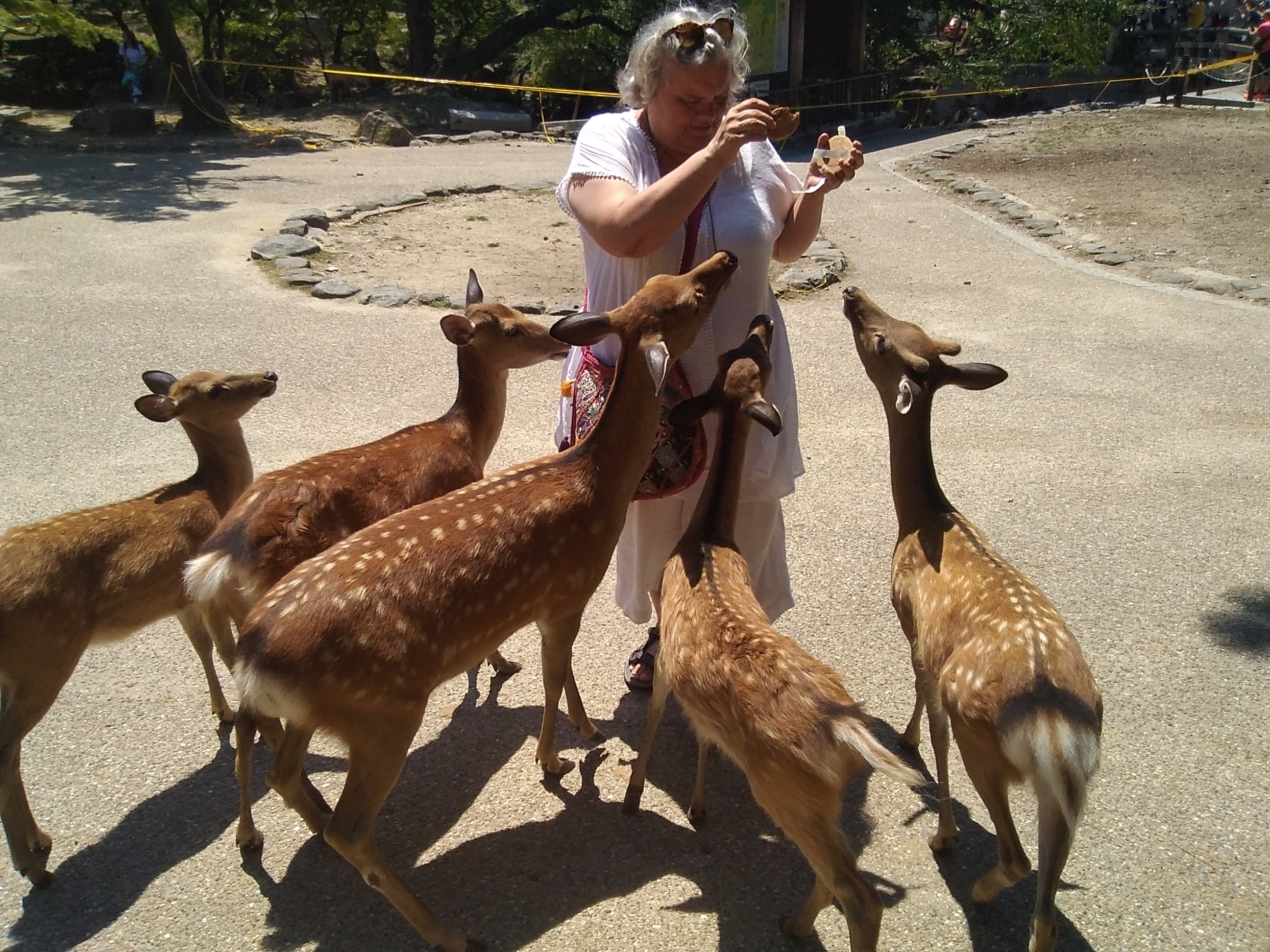 There were very cute. I know I shouldn’t say it but they were so lovely, I wanted to take one home, along with the snow monkeys etc. They just seemed to crop up all over the place.
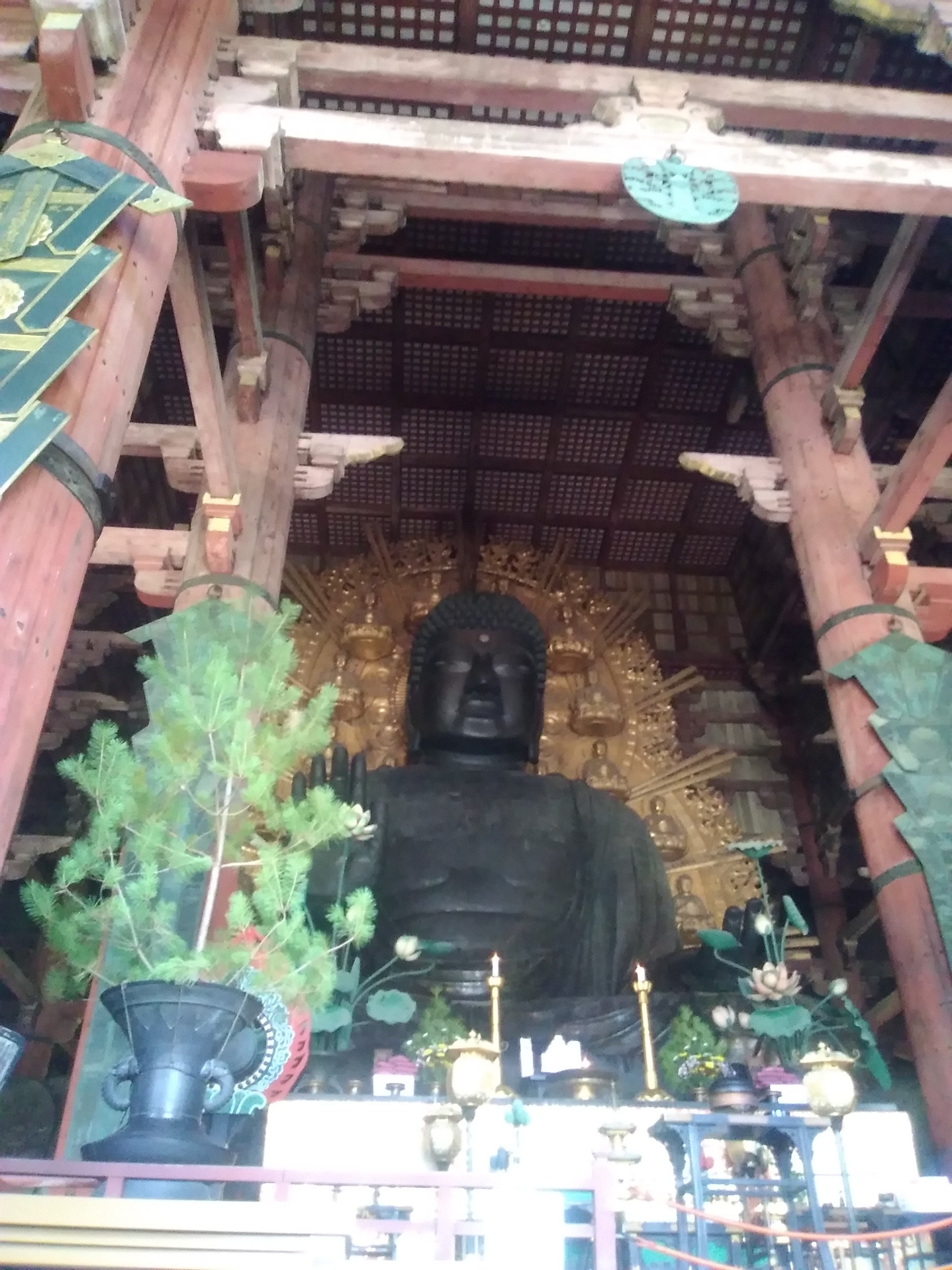
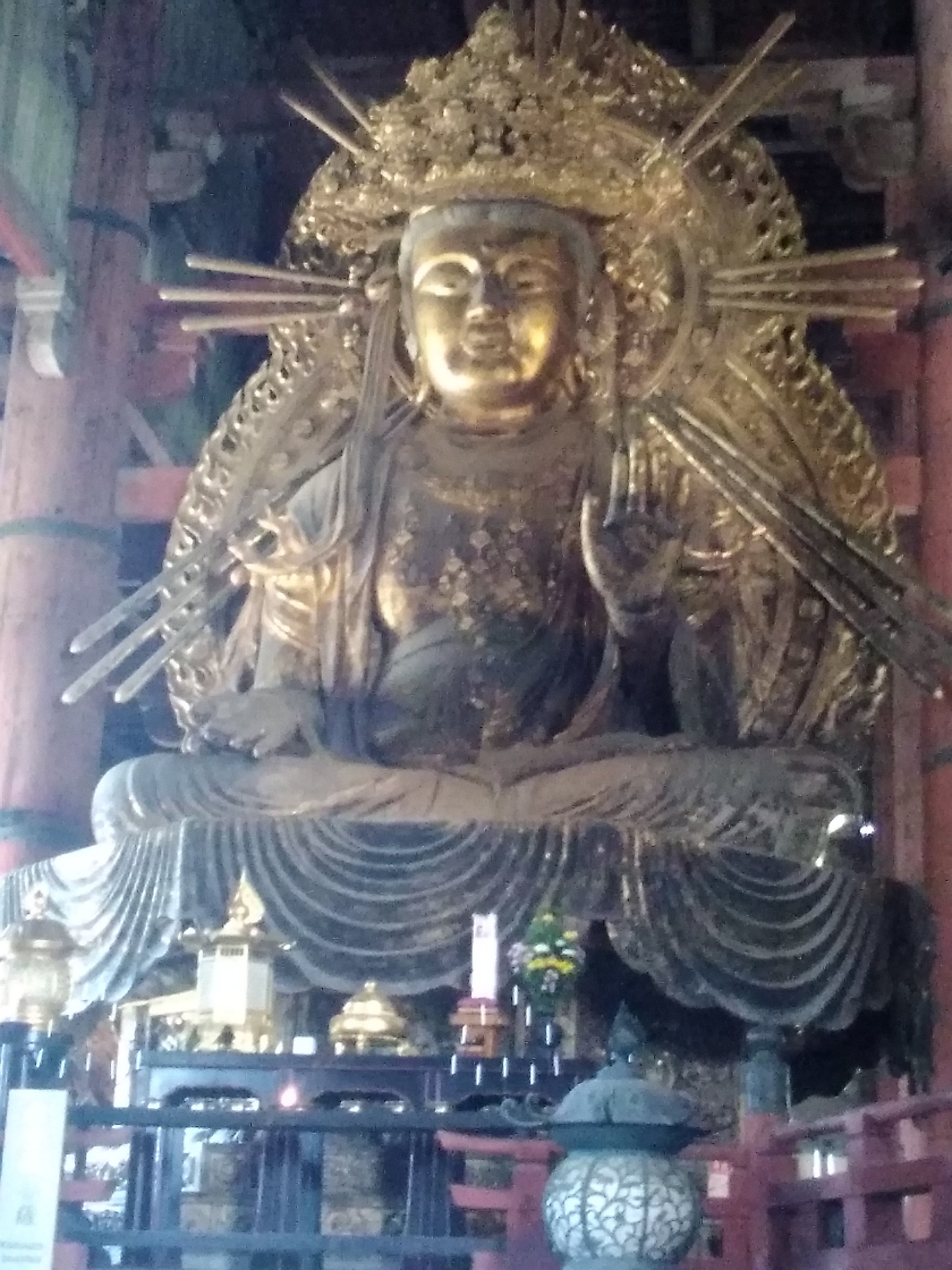
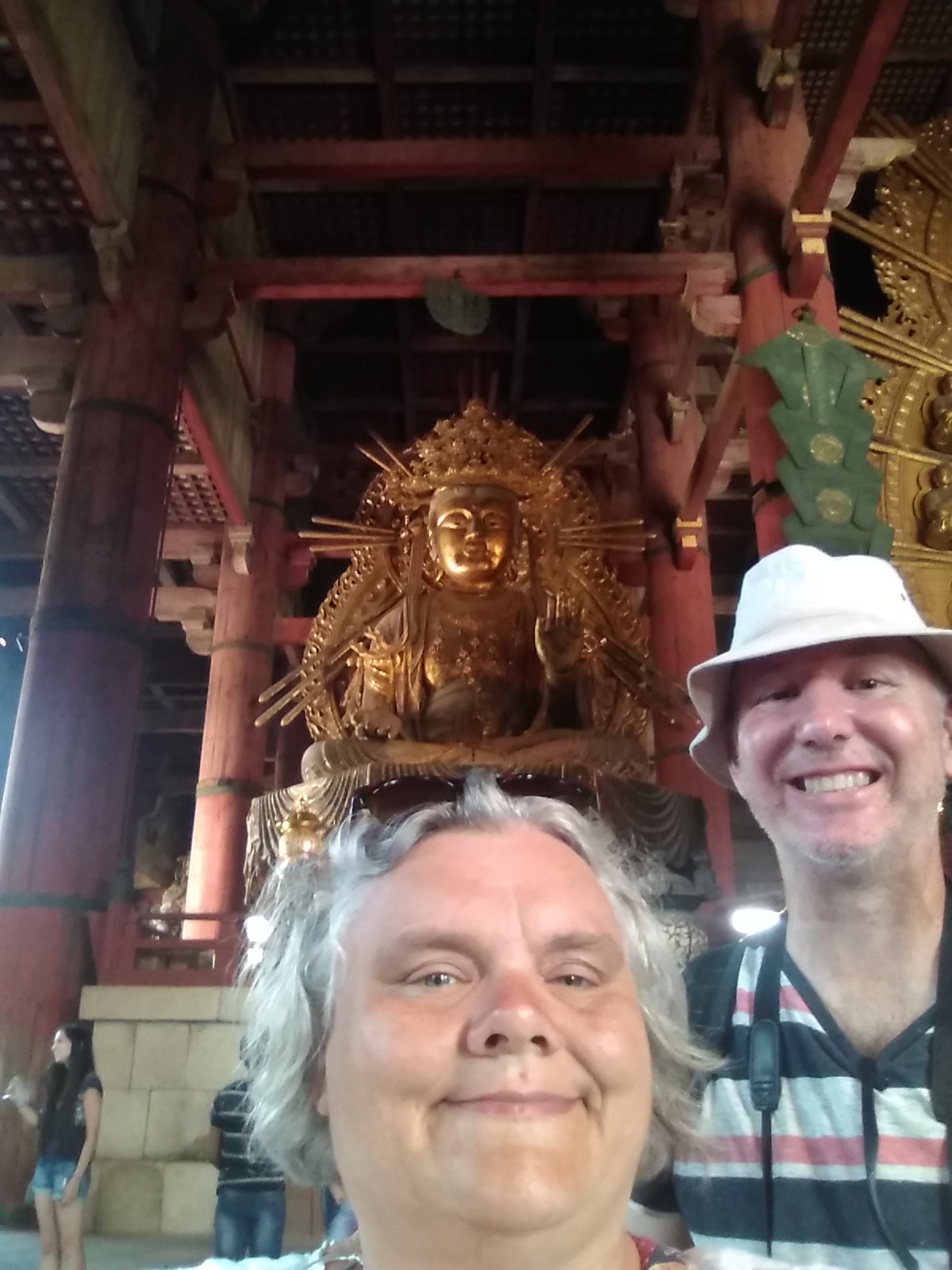
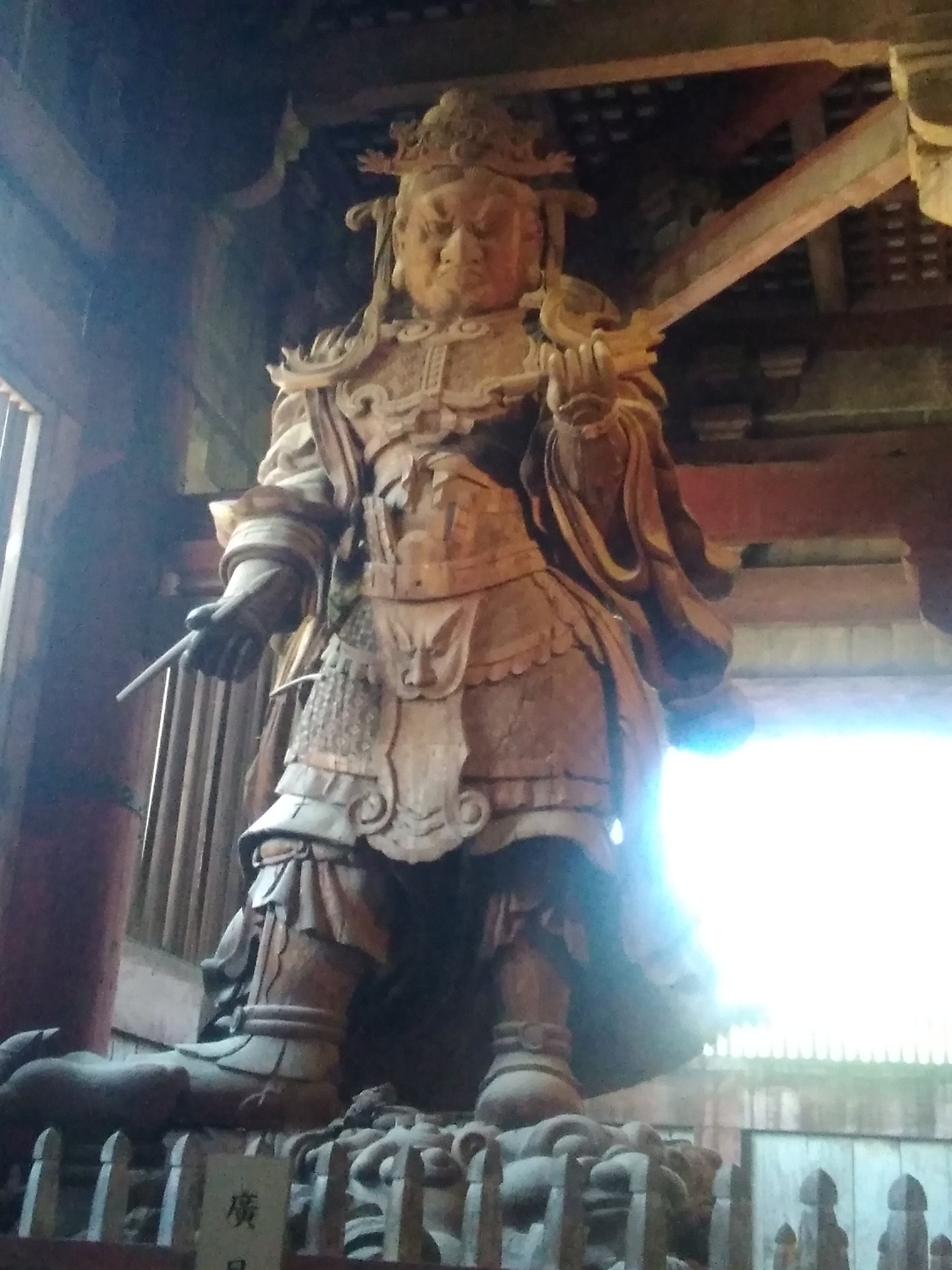
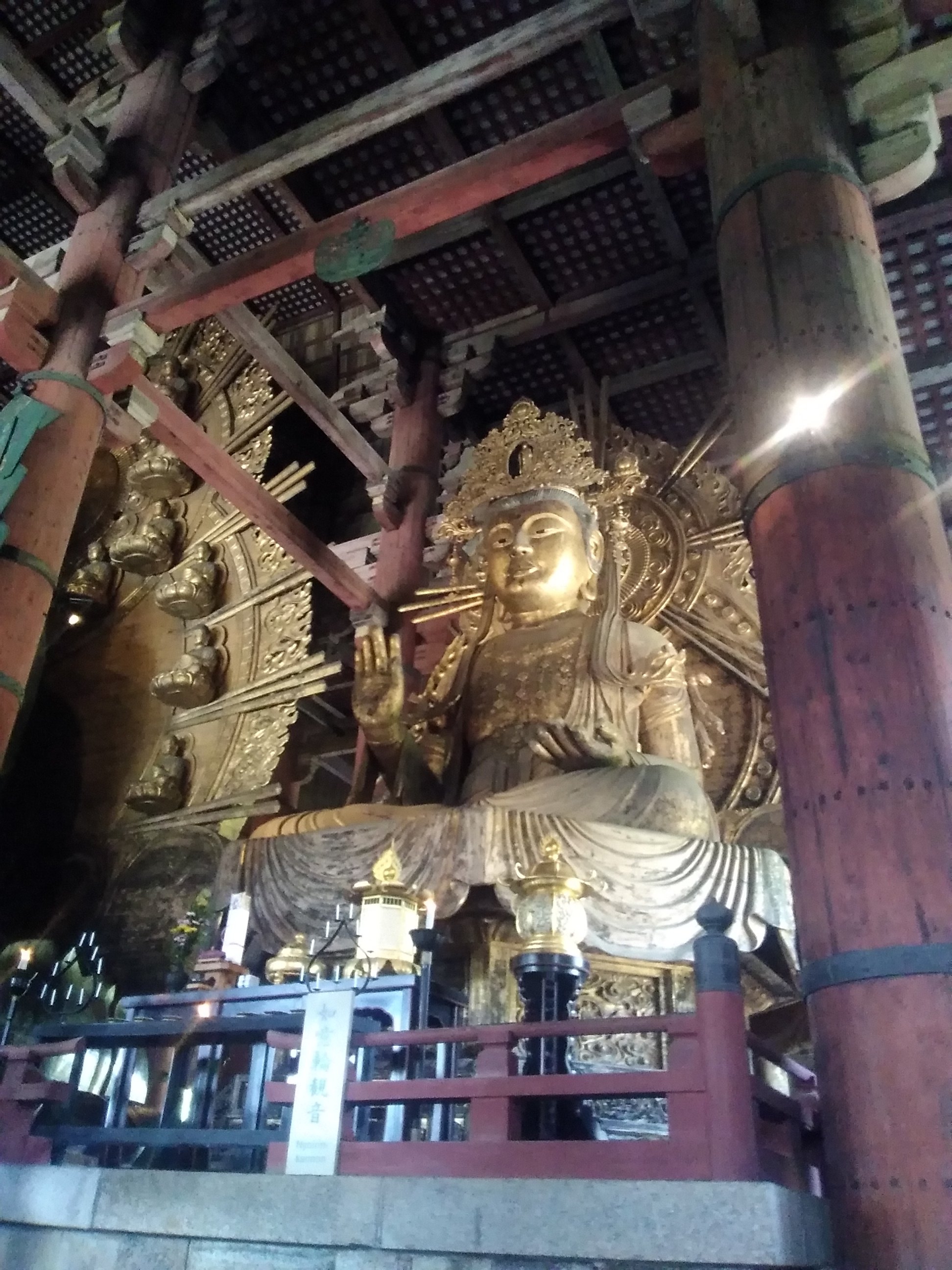
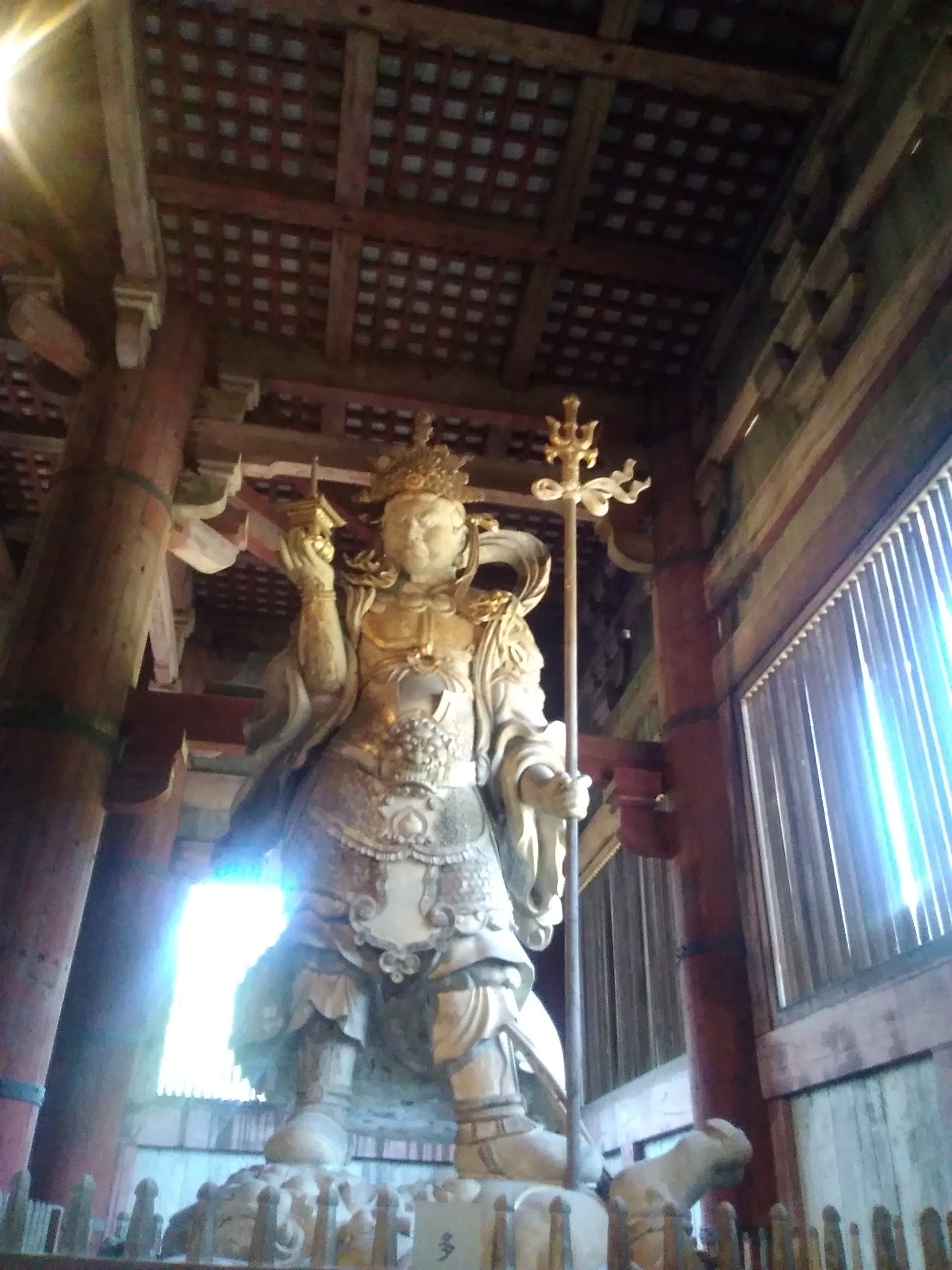
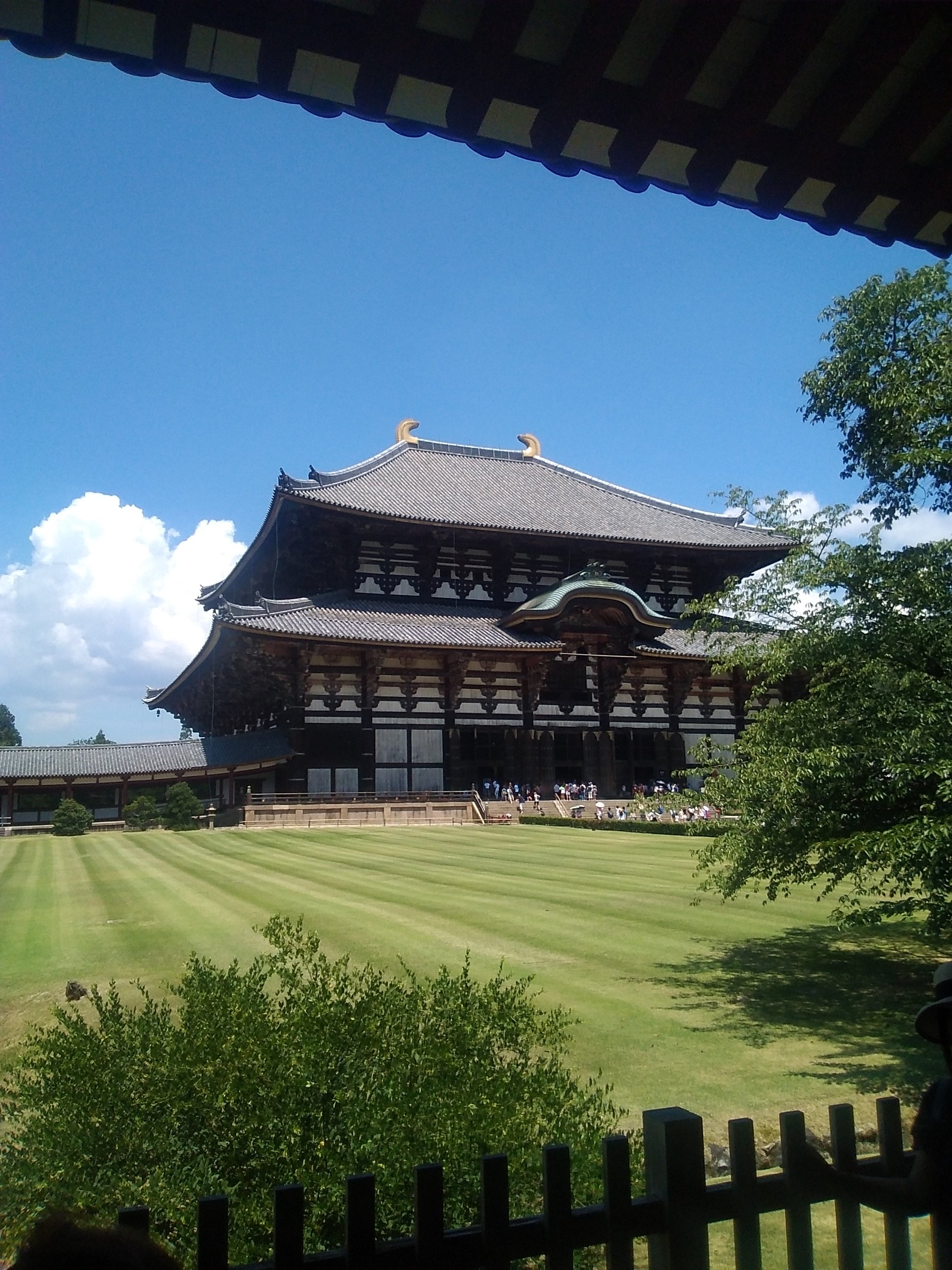 Until recently, Todaiji’s main hall, the Daibutsuden (Big Buddha Hall), held the record as the world’s largest wooden building, despite the fact that the present reconstruction of 1692 is only two thirds of the original temple hall’s size. The massive building houses one of Japan’s largest bronze statues of Buddha (Daibutsu). The 15 metres tall, seated Buddha represents Vairocana and is flanked by two Bodhisattvas.
The scale of everything was utterly unimaginable and the thought that they were constructed so many years ago is boggling. We went to the museum prior to going to the temple to find out more. Apparently at the time it was built Japan’s population was 2.6 million and half the population were involved in constructing it. The numbers are mind blowing but the organisation involved is also amazing. 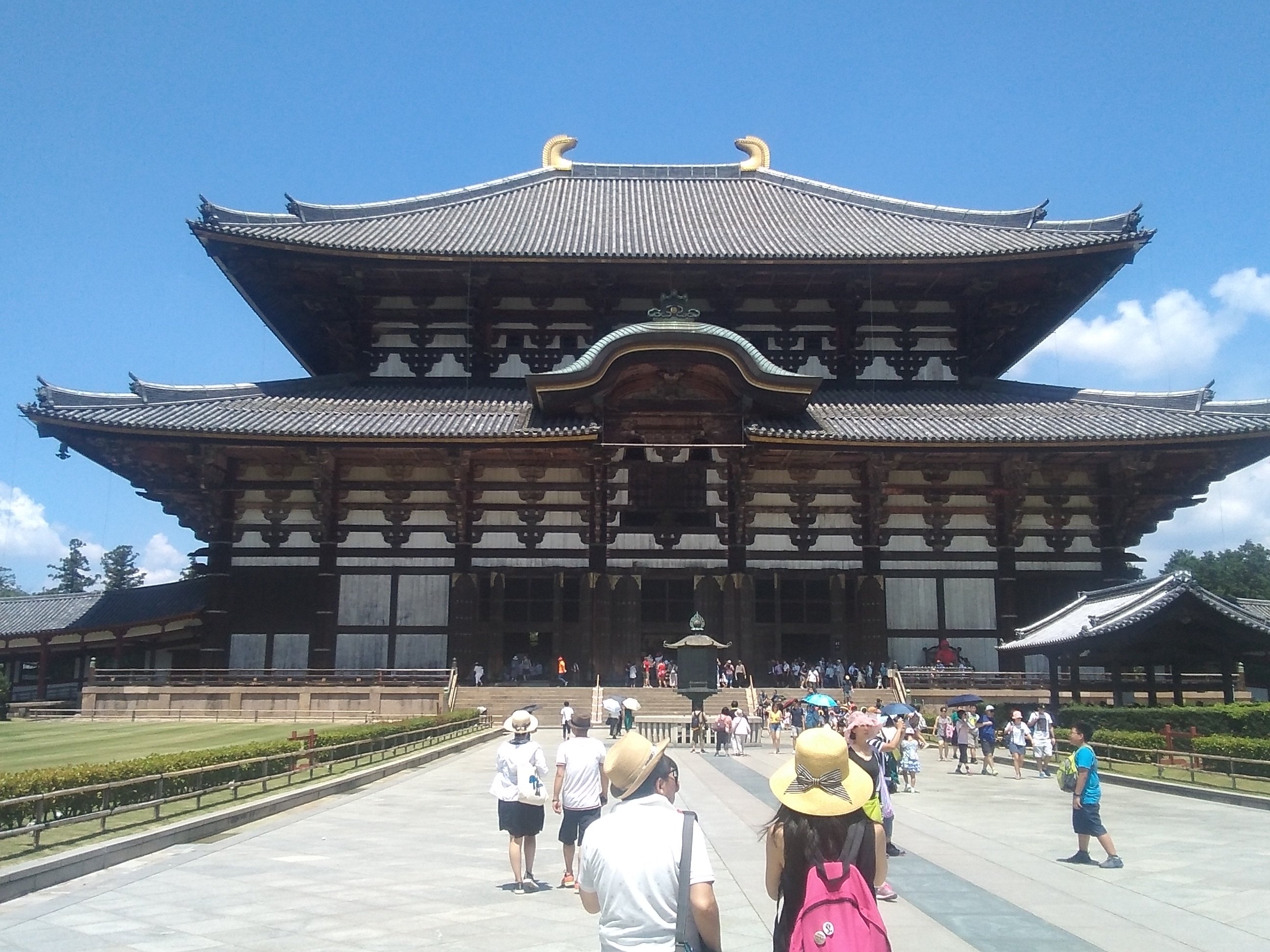
Dimensions of the Daibutsu
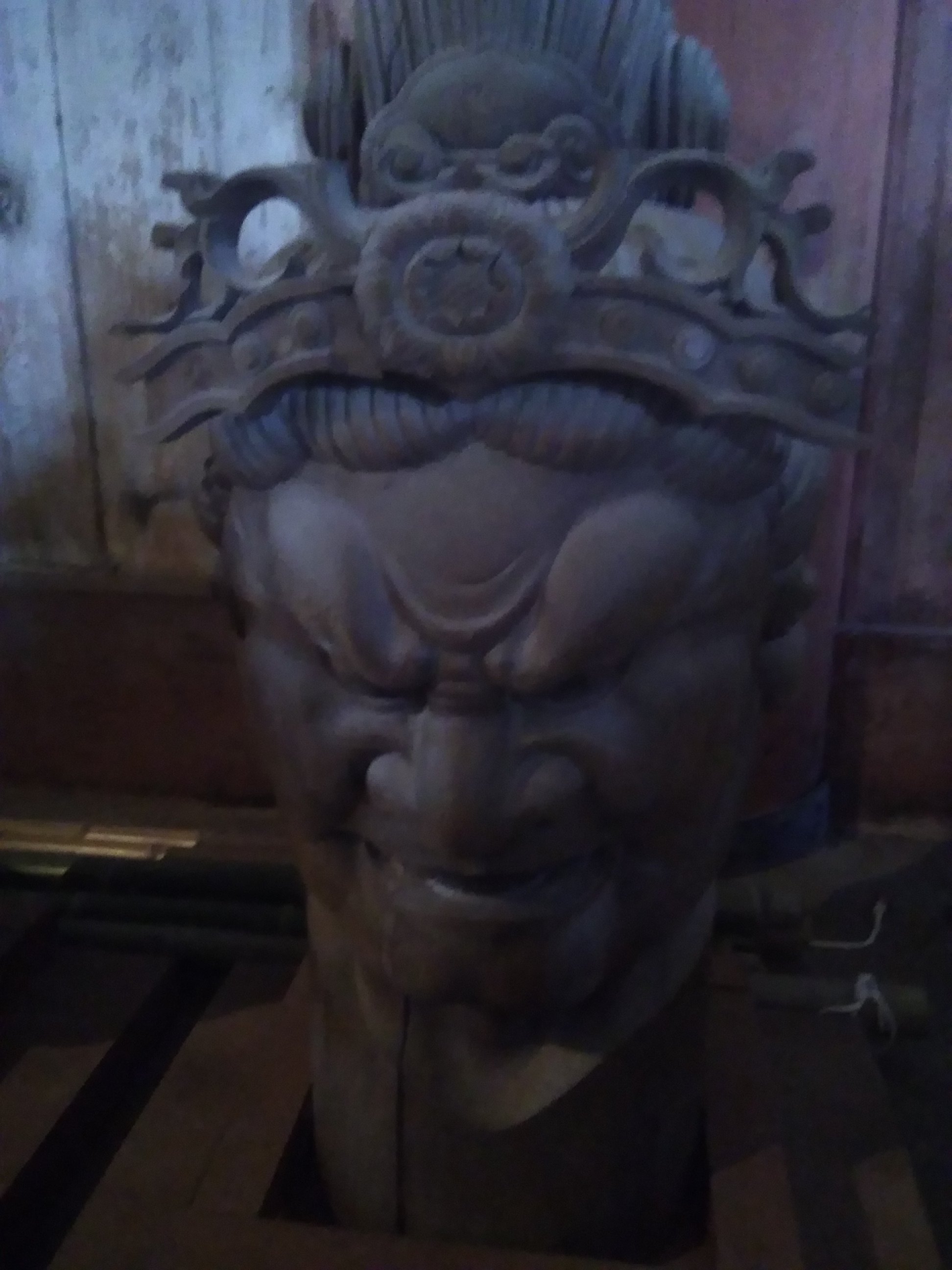
The temple gives the following dimensions for the statue:
- Height: 14.98 m (49 ft 2 in)
- Face: 5.33 m (17 ft 6 in)
- Eyes: 1.02 m (3 ft 4 in)
- Nose: 0.5 m (1 ft 8 in)
- Ears: 2.54 m (8 ft 4 in)
The statue’s shoulders are 28 metres across and there are 960 six curls atop its head. The Birushana Buddha’s golden halo is 27 m (87 ft) in diameter with 16 images each 2.4 m (8 ft) tall.
Recently, using x-rays, a human tooth, along with pearls, mirrors, swords, and jewels were discovered inside of the knee of the Great Buddha; these are believed to be the relics of Emperor Shomu.
The statue weighs 500 tonnes. So basically we are talking massive!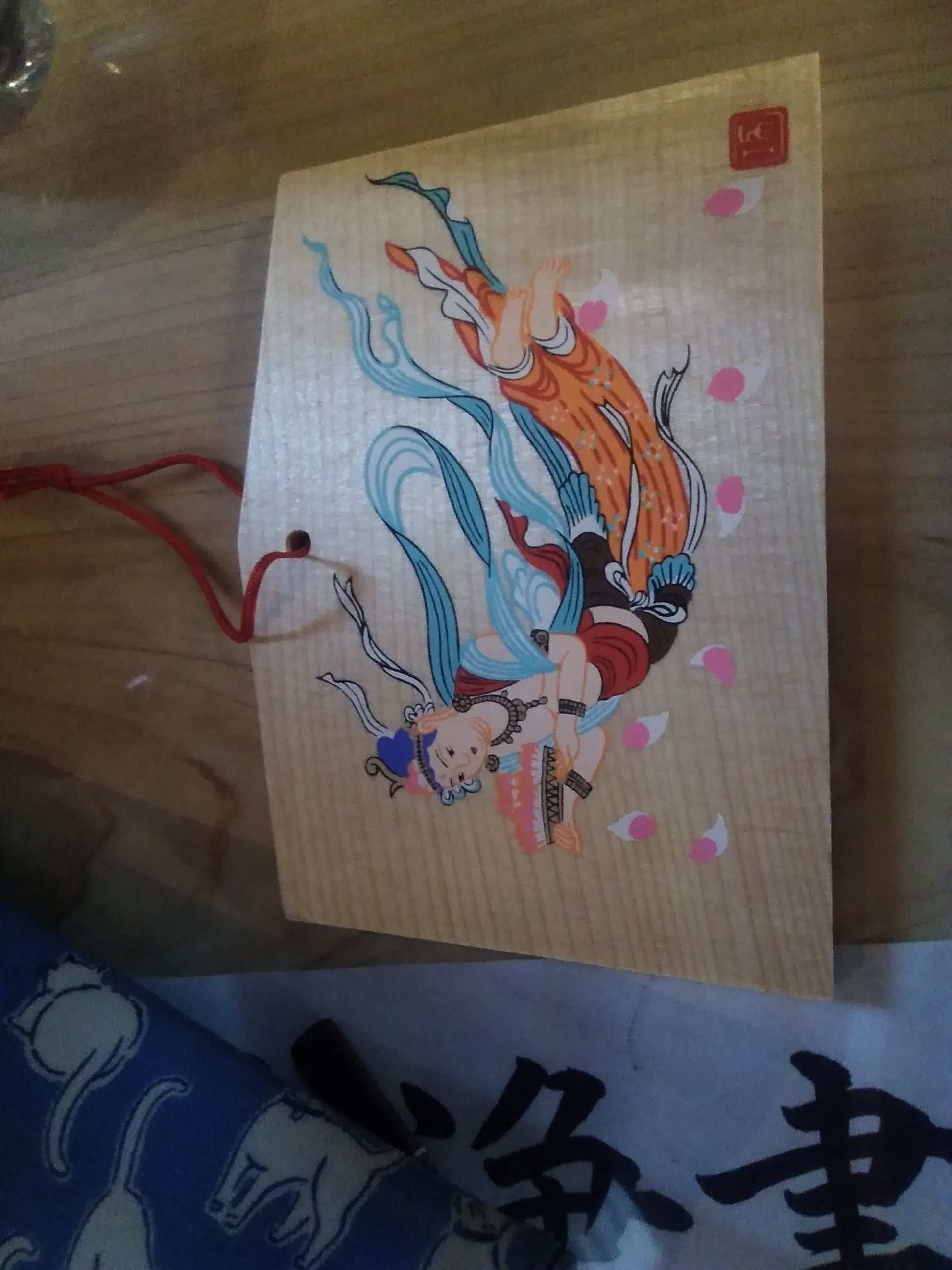
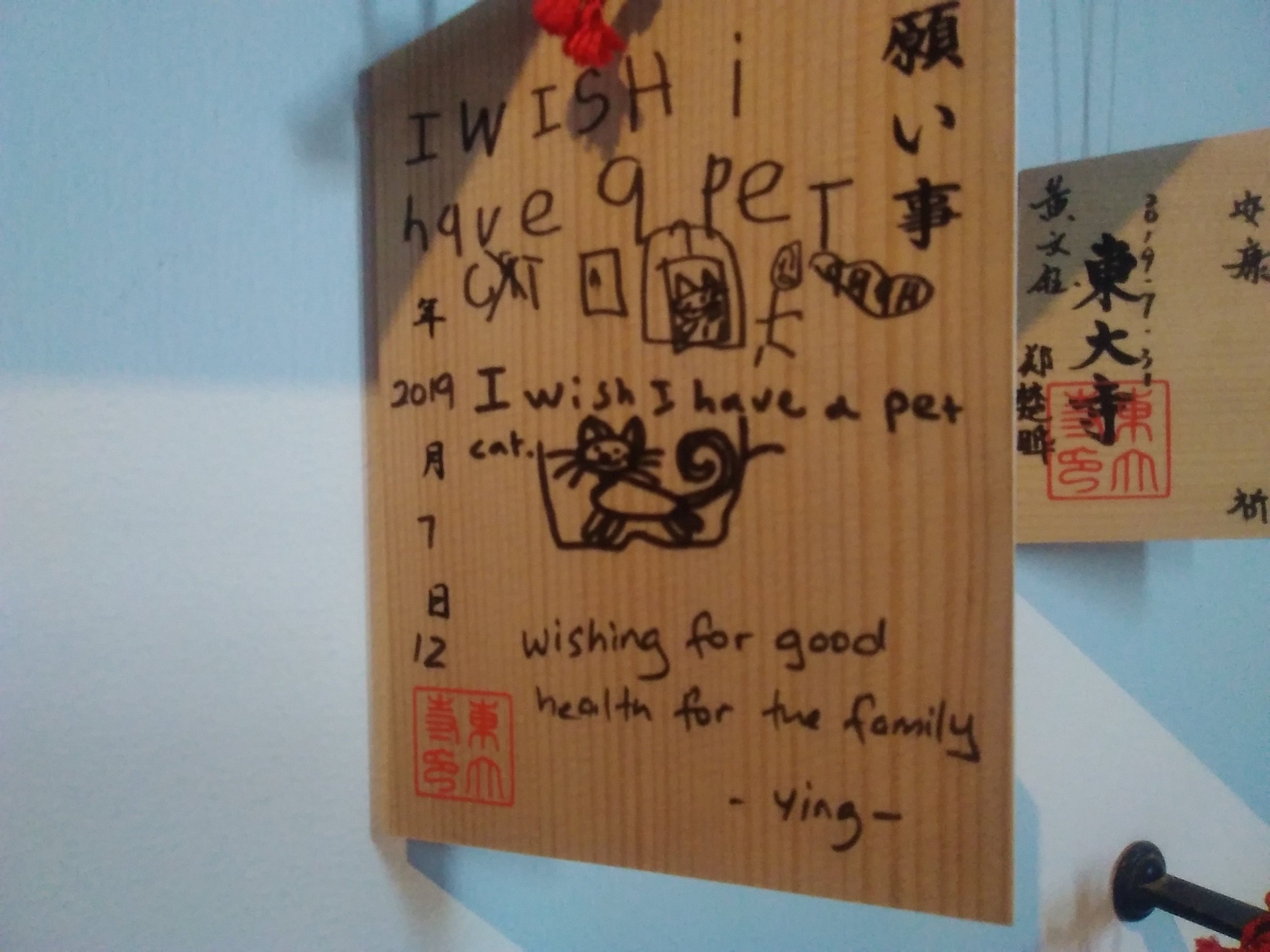
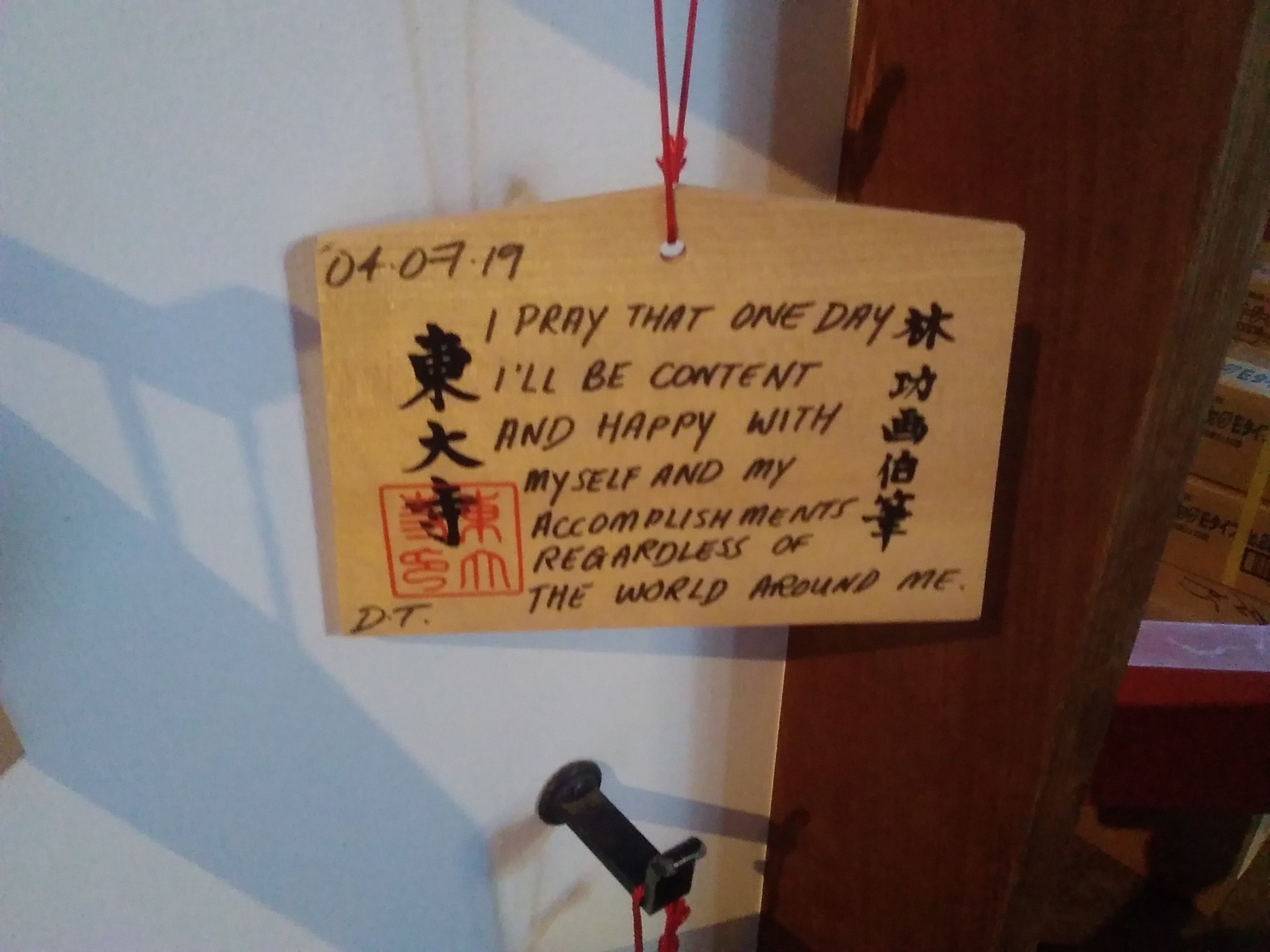
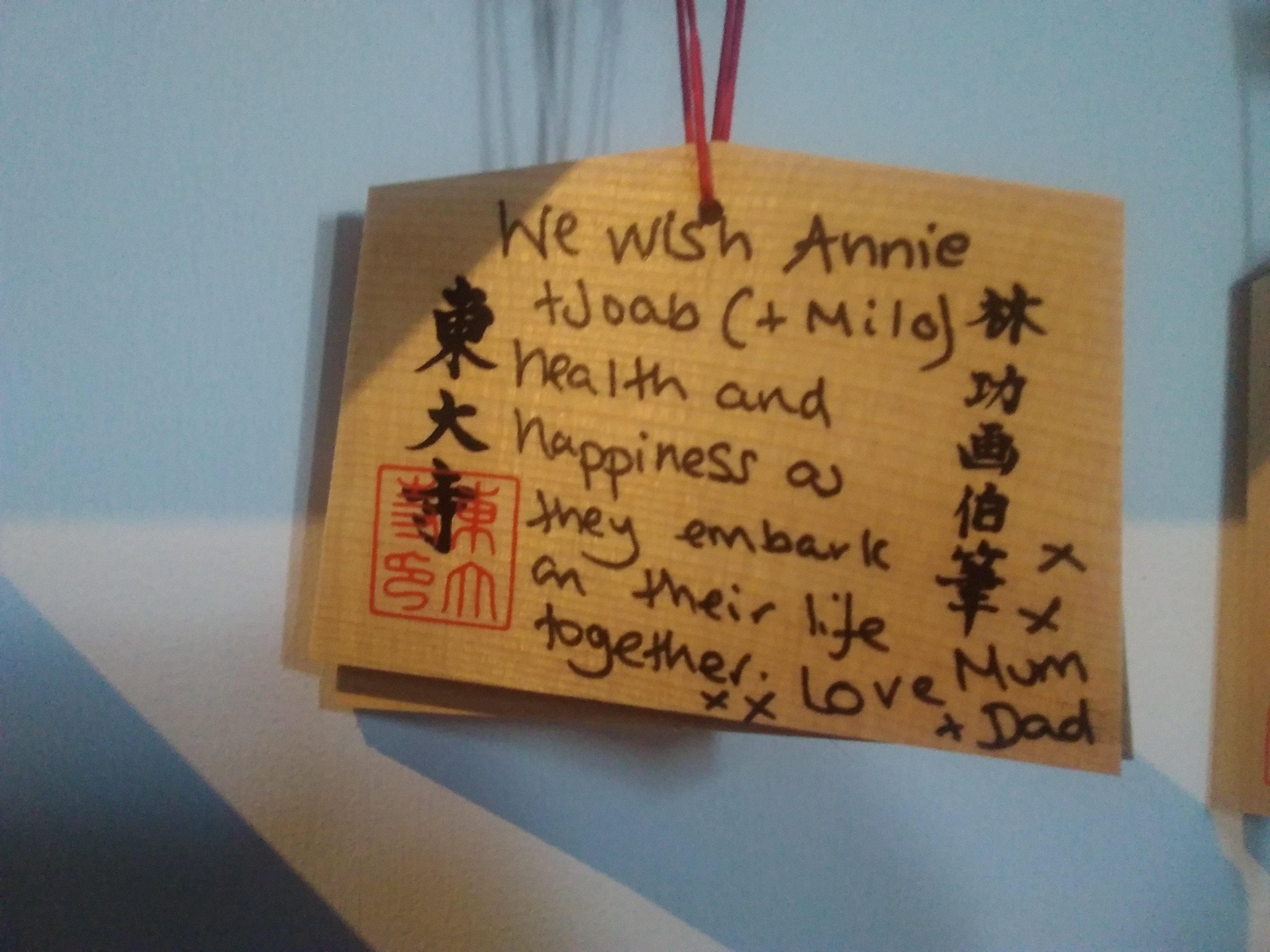 In this shrine I decided to make an ema. Ema literally means picture-horse. They are small wooden plaques, common to Japan – we have now seen them in many shrines, in both Shinto and Buddhist ones. You write prayers or wishes. The ema are left hanging up at the shrine, where the kami (spirits or gods) are believed to receive them. Typically they are 1 5cm wide and 9 cm high, they often carry images or are shaped like animals, or symbols from the zodiac. It gets its odd name picture-horse from the Shinto practice , in ancient times people would donate horses to the shrines for good favour; over time this was transferred to a wooden plaque with a picture of a horse, and later still to the various wooden plaques sold today for the same purpose.
I made one for Annie and Joab. Once inscribed with a wish, Ema are hung at the shrine and then they are ritually burned at special events, symbolic of the liberation of the wish from the writer.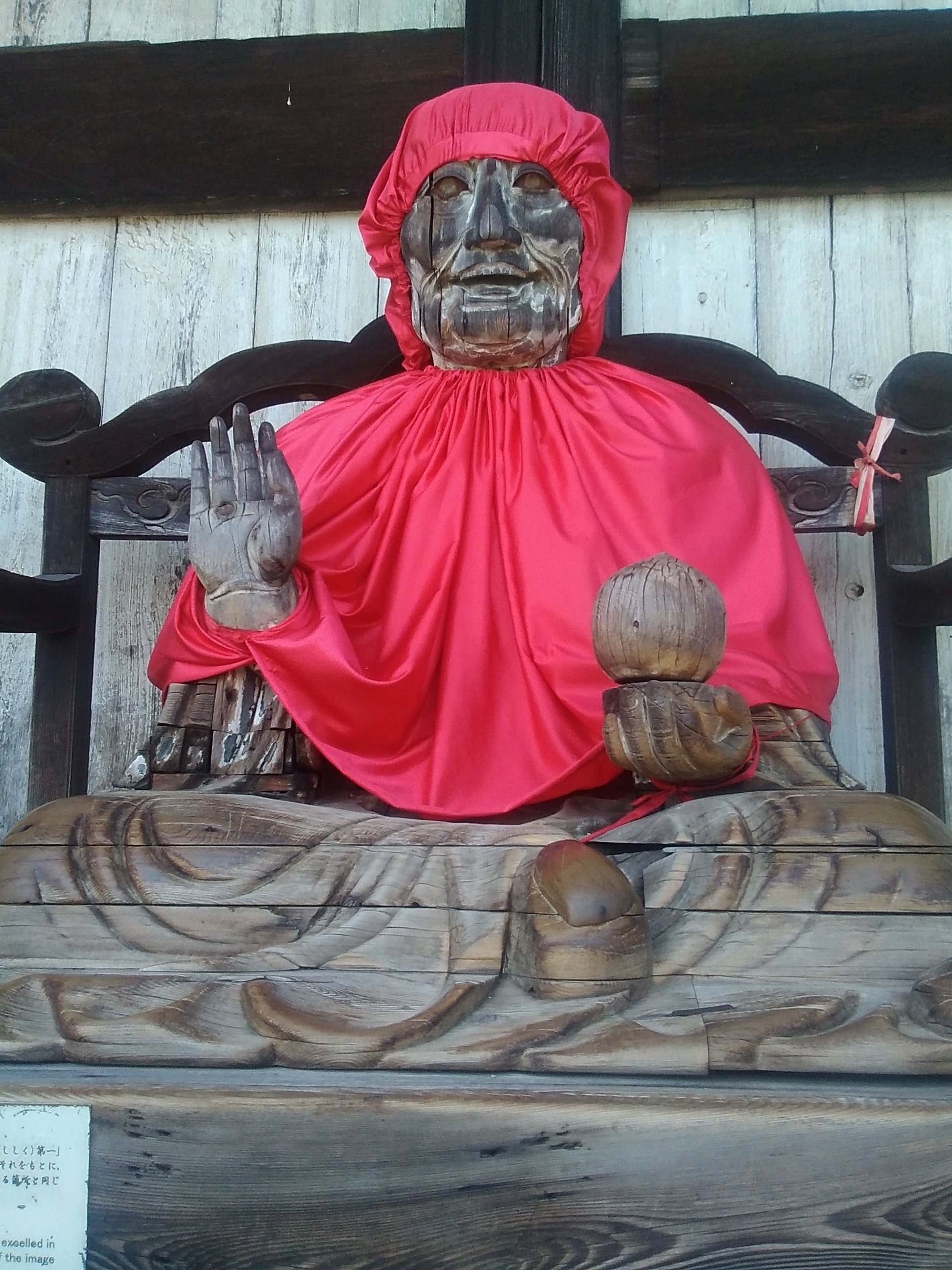 We have seen a lot of statues round Japan with red bins on them. These tend to be much smaller and almost child-like. The Ojizo-sama statues are one of the most popular Japanese divinities and are seen as the guardian of children, particularly of children who died before their parents. … This practice is said to have begun when grieving parents put their child’s bib on the statue in hopes it would protect the child in the other world. But this one was much bigger so no idea why it hada red cloak or hat. It did say if you rubbed part of Statue eg a knee if you have a bad knee then you rub your knee you can be healed. Typically Pete did this, when I pointed out his knees were fine he then wondered if it worked in reverse!
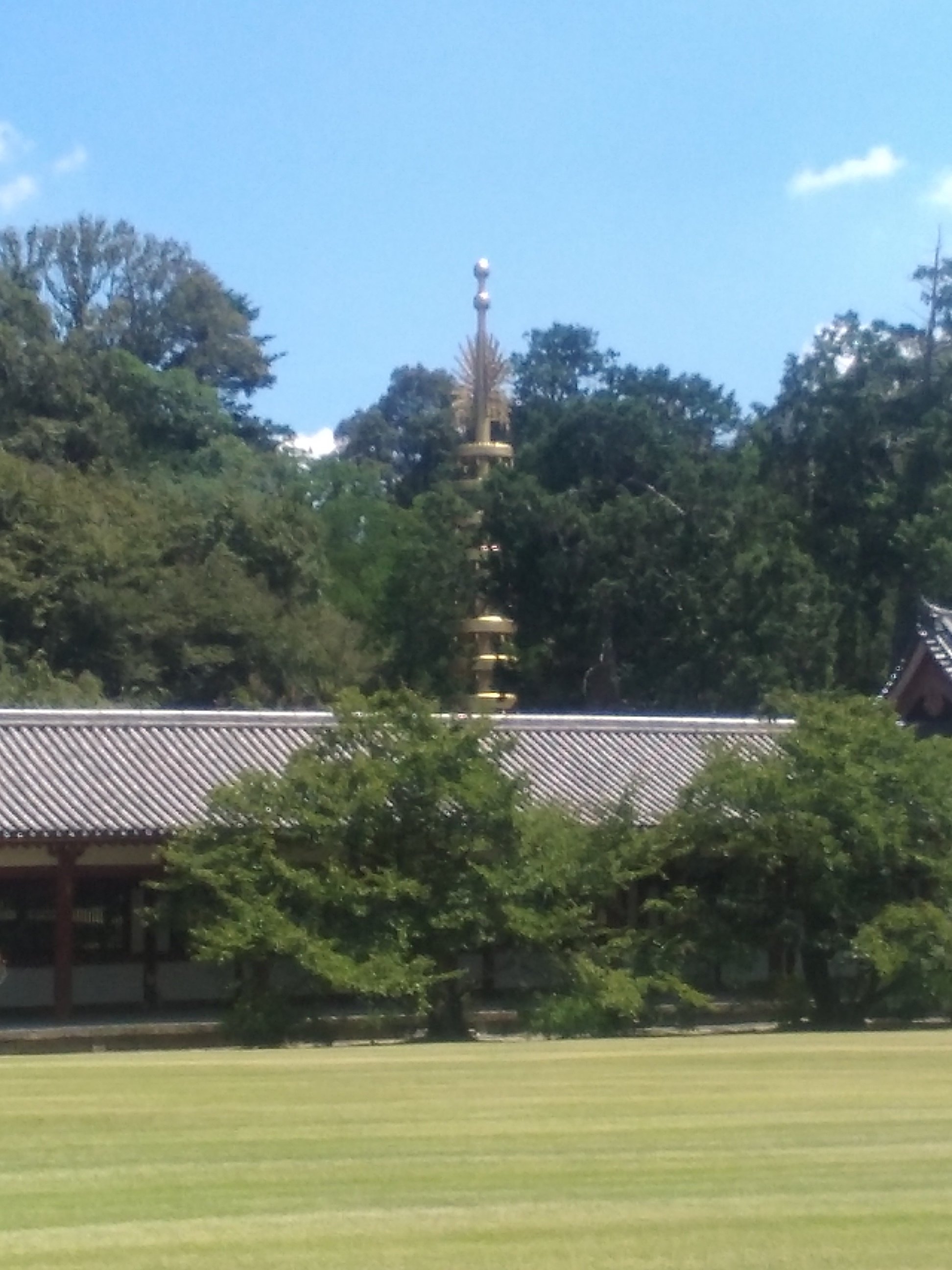
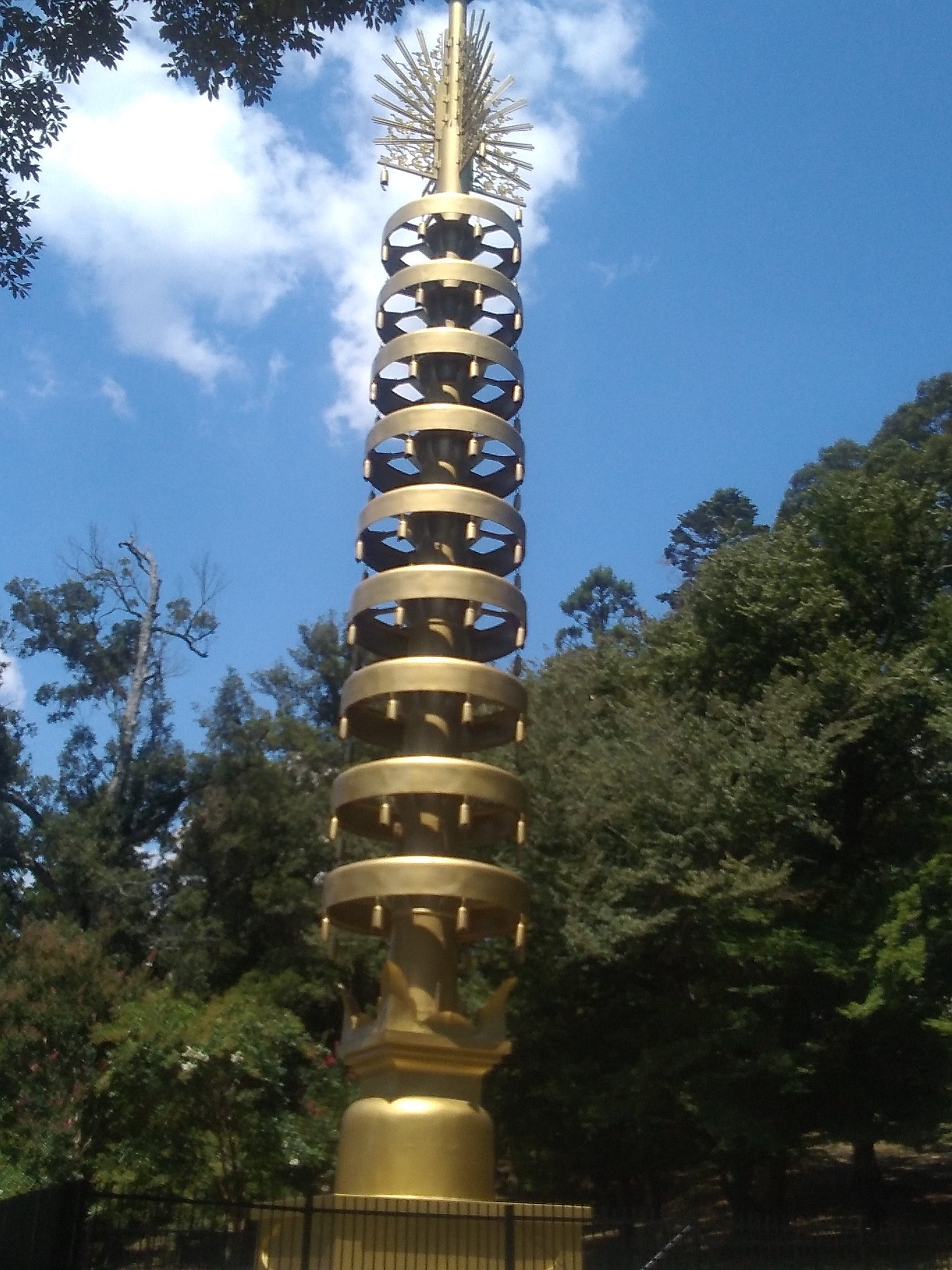 This golden tower is in the park area and was built from the donations of a 1000 priests, I think it is like a good wish conductor which is why it looks like a transmitter.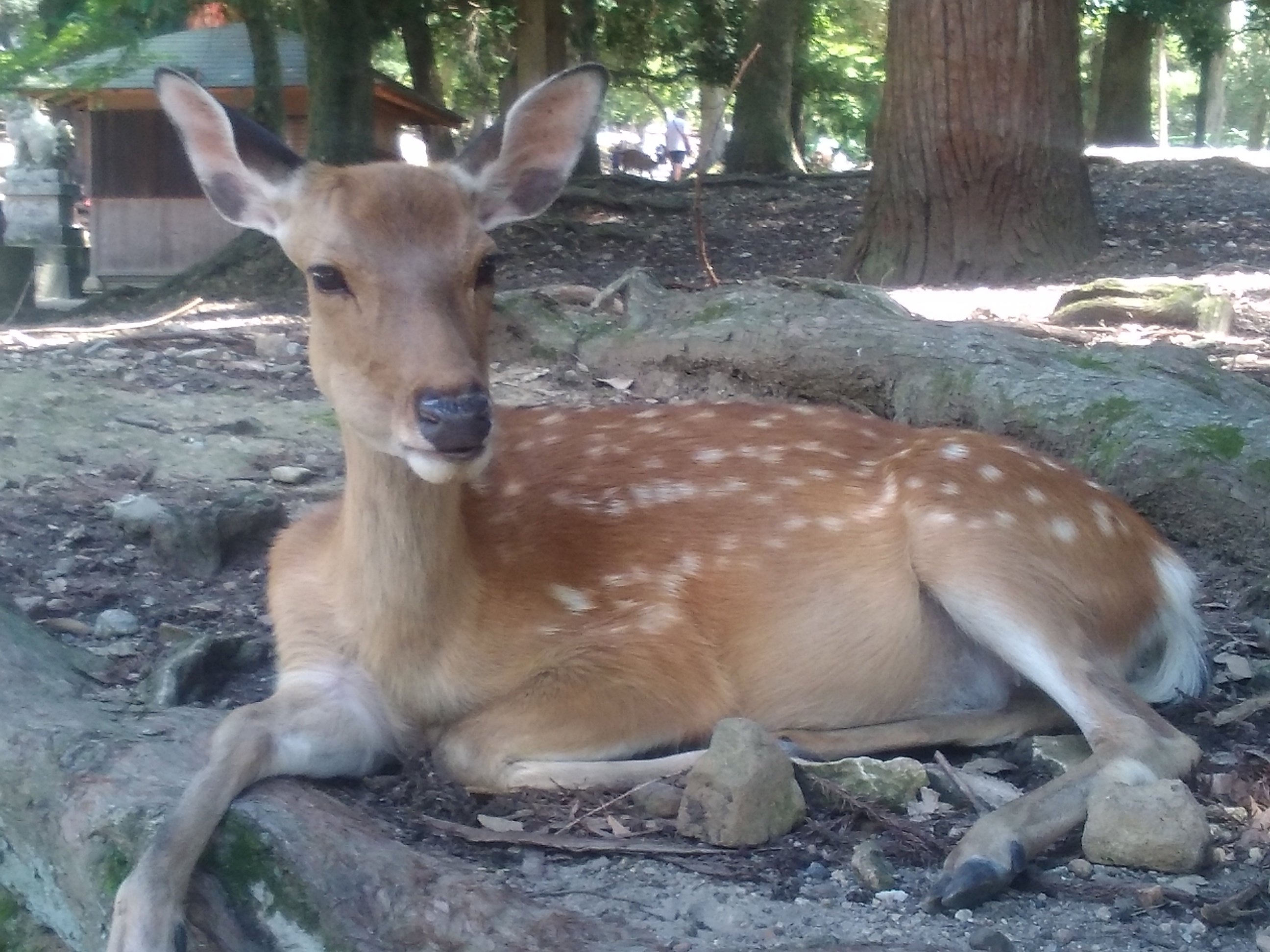
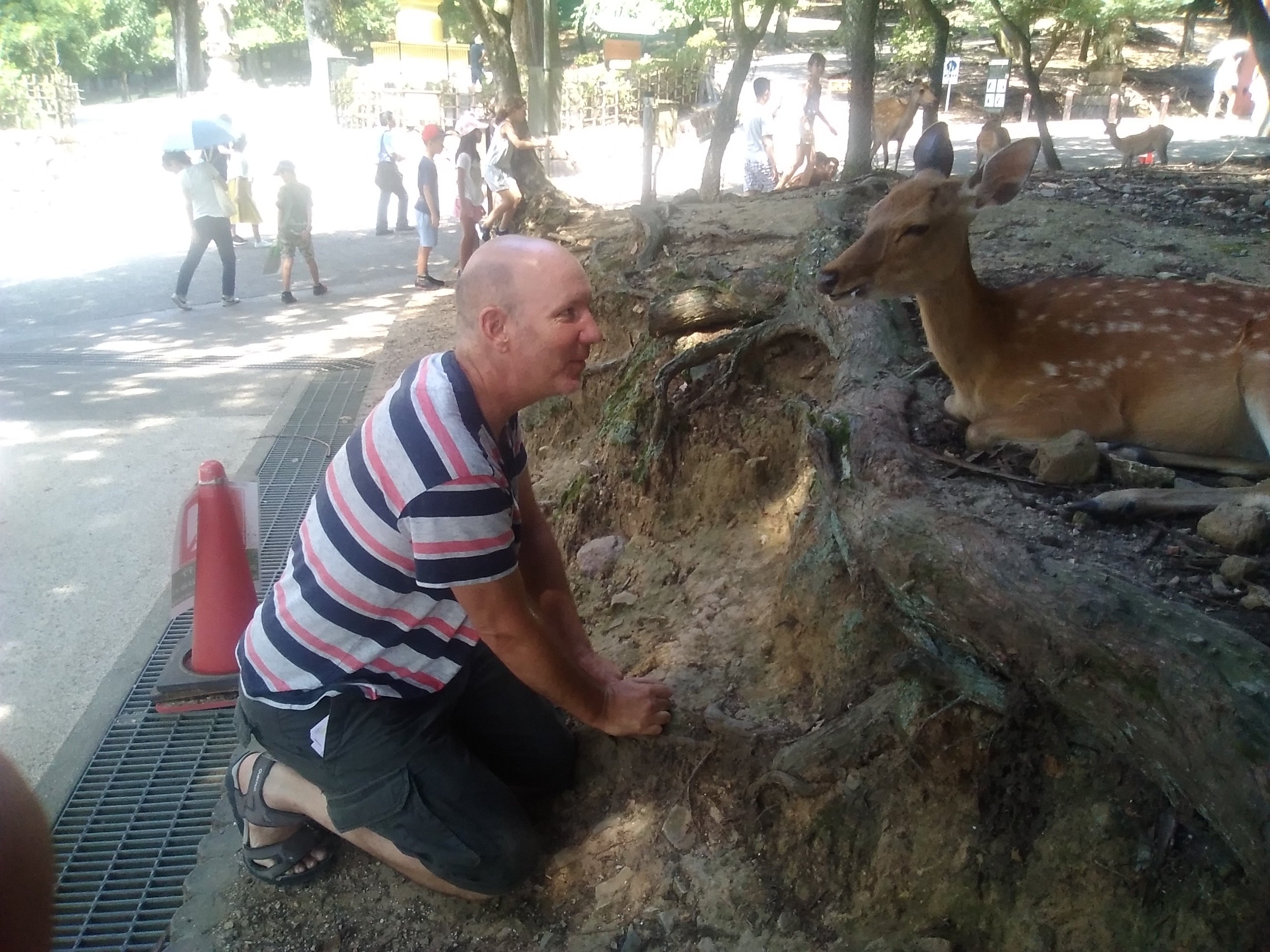 We said goodbye to the deer and headed off for a drink and then the station.
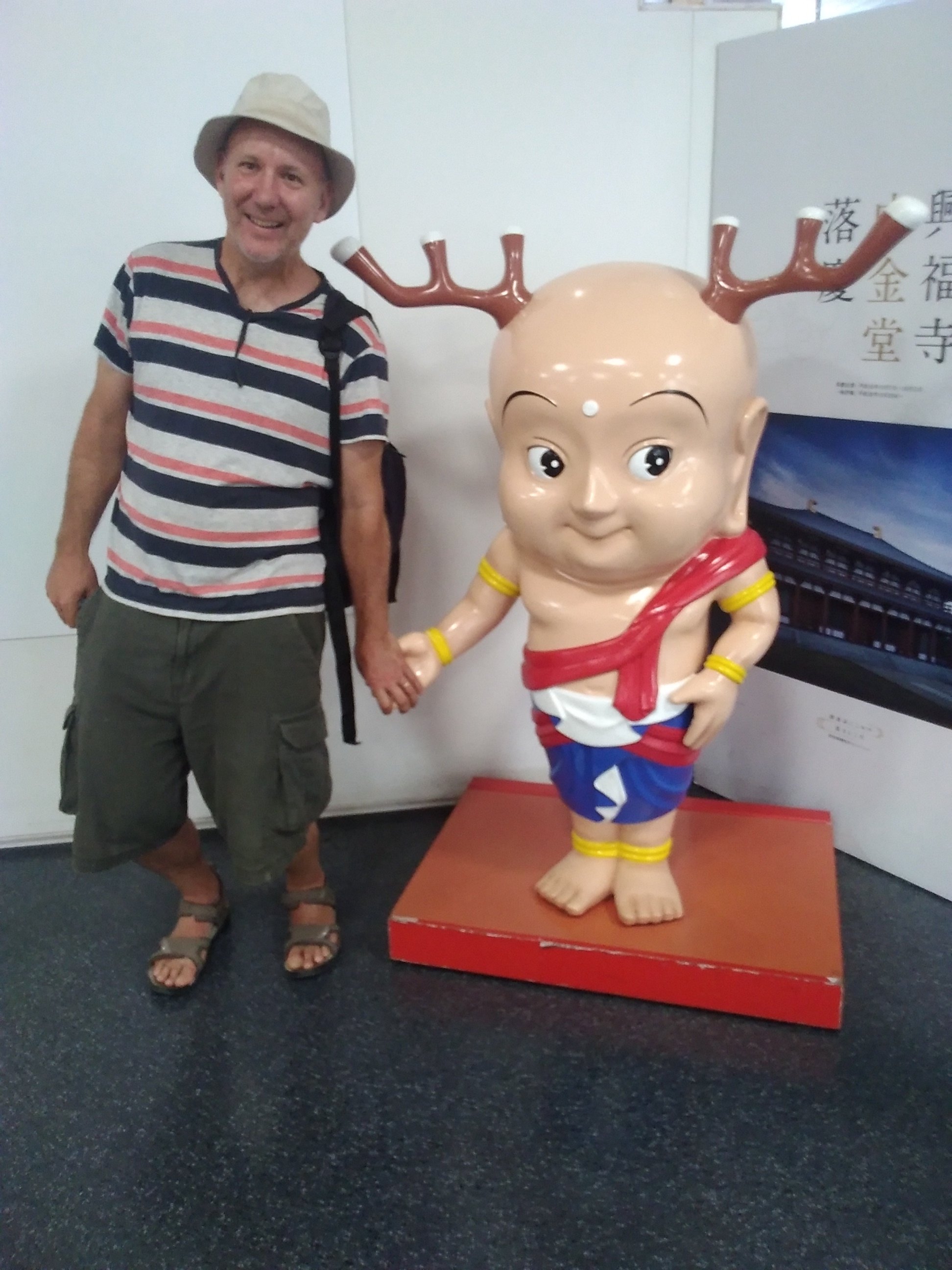 They have this statue in the station – we saw a lot of merchandise with a similar mix of Buddha and a deer. Odd!
 Random Acts of Travelling