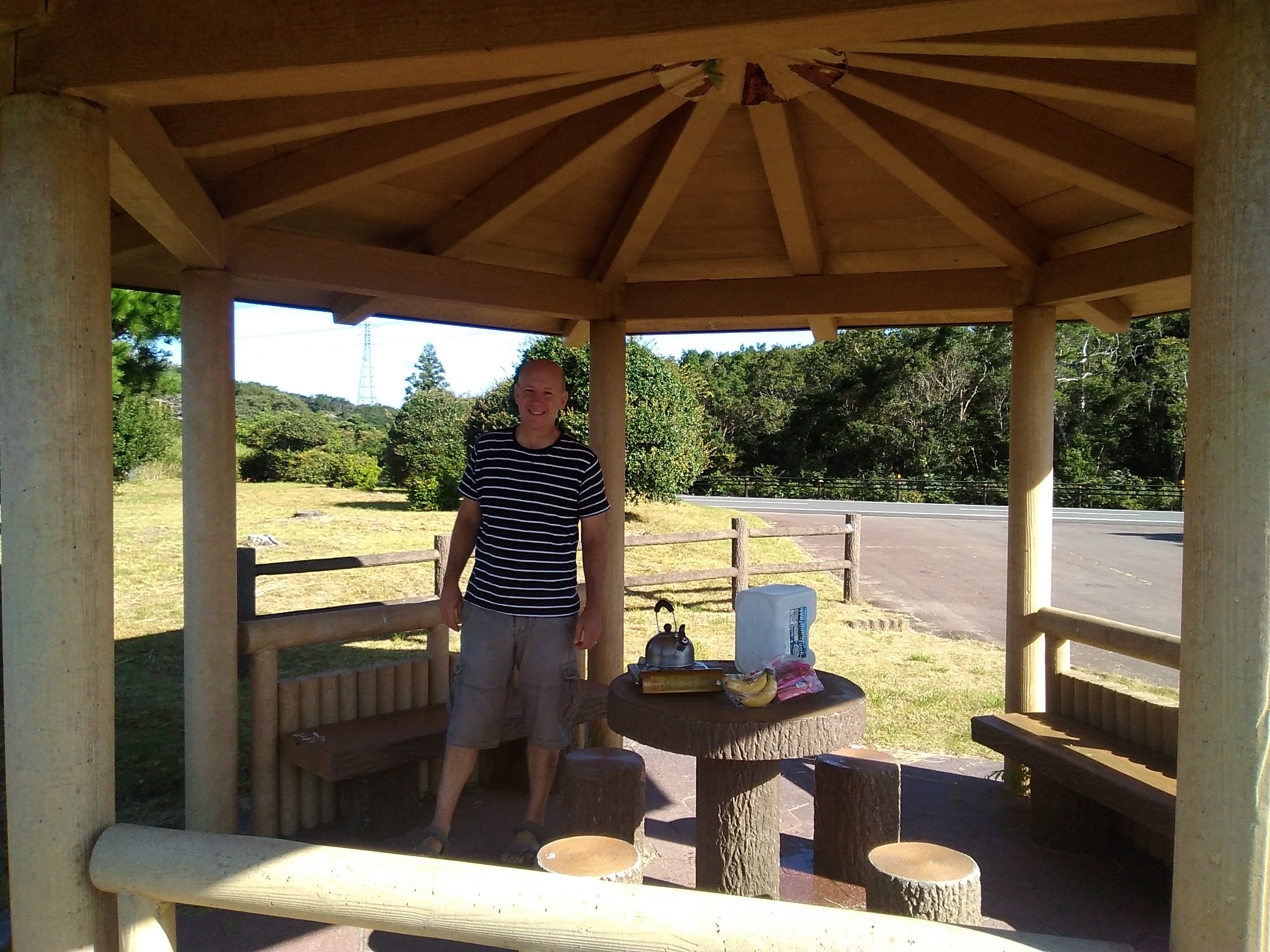
On the way to the beach we had breakfast here at an observatory point, on Mount Hakoda, on the Pearl Road. It’s 23.8 kilometres long and winds it’s way from Toba to the mountains to Shima. From here we could see the sea and islands down below. What a perfect spot for breakfast. The michi had been so full the night before, we decided that we would return here to make tea and relax.
It was great, somewhere to cook, relax and look at the scenery as the day ended. Occasionally we would hear motorbikes whizzing past, it’s a popular route for motorbikes, a bit like The Snake Pass.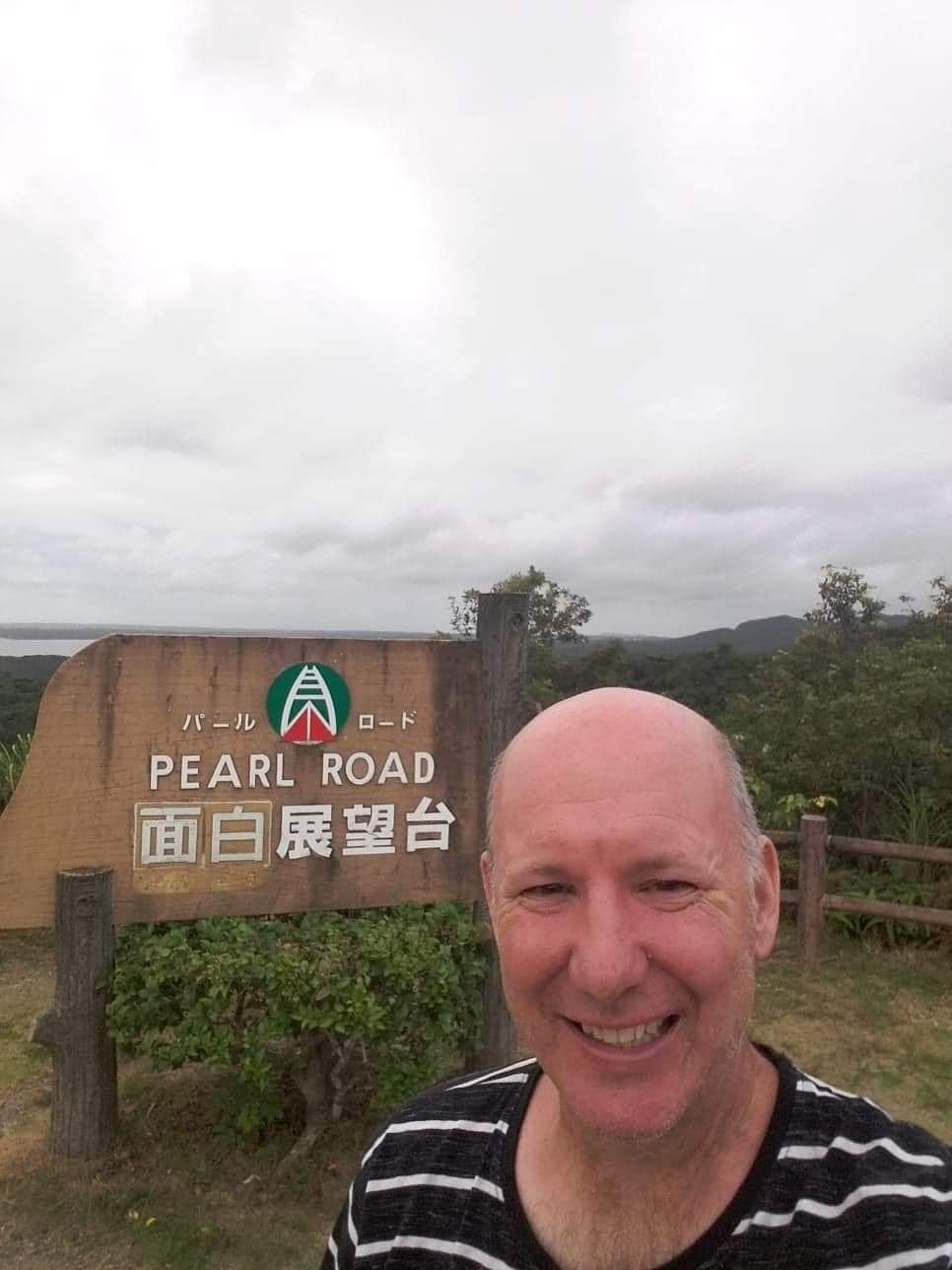
We had a lovely tea, tucked ourselves in for the night. Because we were high up it was slightly cooler but not much. So snuggled up and happy we were, we sent Annie a photo. We eventually managed to sleep.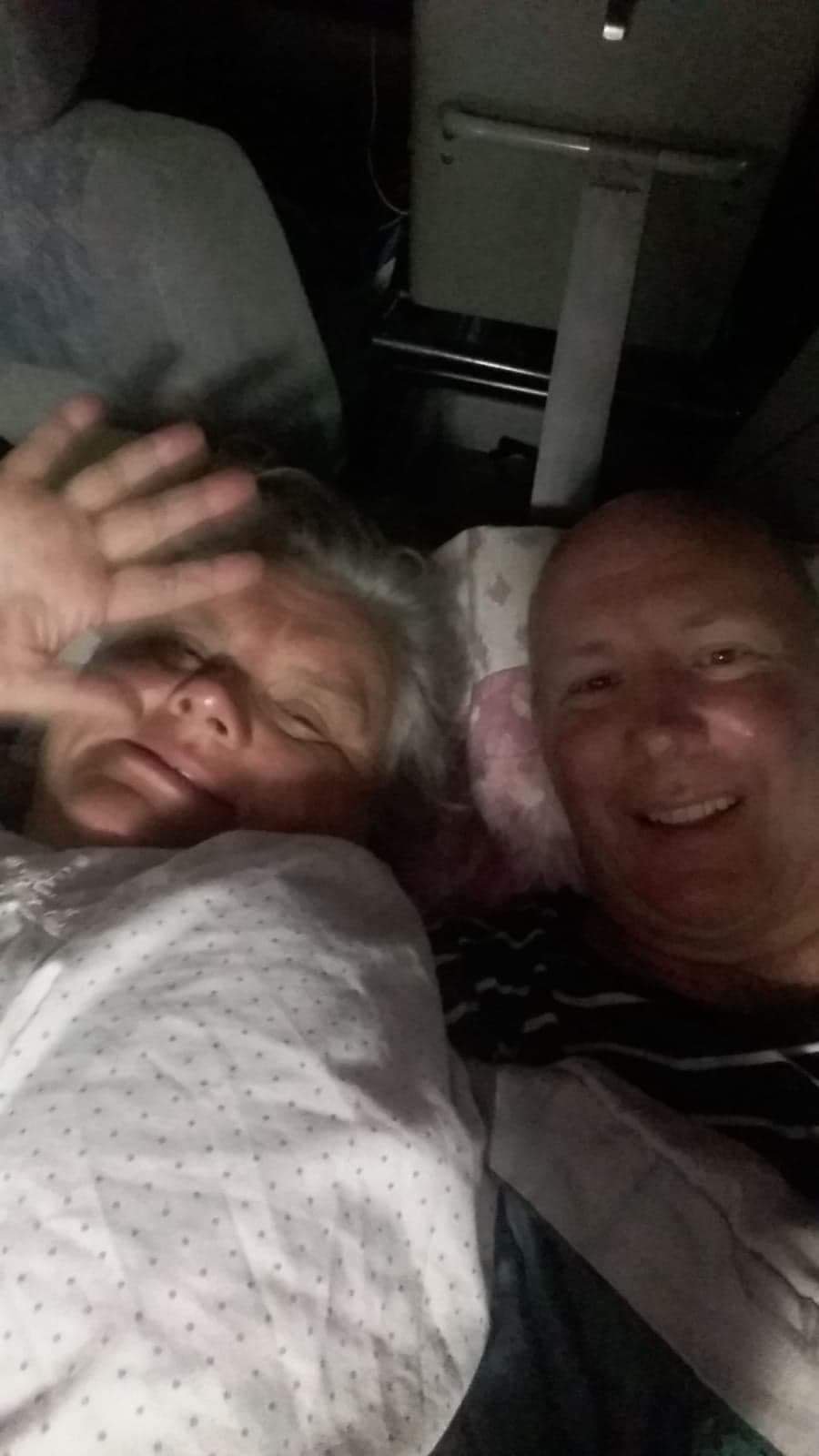
The next thing we knew we were woken up by an absolute cacophony of noise, cars racing along the road, braking abruptly into the car park, giggling youth, the list goes on. It was just after midnight!
Pete peeked out of the window, about 6 or 7. Pete could see one that looked like a Lamborghini (?). But far more people milling about. My bladder went into overdrive and I needed to head to the loos. Put a top over my nighty (as you notice from. Photo 7and walked determinedly to the Ladies. No one looked in my direction, they were all intent on looking at their phones, no doubt looking at video footage of their drives.
So again I googled it, was this normal? Would the police be involved (we haven’t seen many).
Of course the Top Gear site proved helpful:
While street racing around Tokyo has died down, it doesn’t mean it’s not prevalent in other parts of Japan. … Formed in 1987, Midnight Club was an illegal Vmax street racing society where you could only join if your car hit 160mph. To be competitive, you had to have a 200mph car.
We knew they weren’t a threat, it in some perverse way we were seeing a ‘cultural experience’ first hand. The noise of the cars was fine with me but the sound of high pitched giggling of the youths as they replayed their videos was very much something else.
I think they stopped around 3 in the morning, but not certain. We woke up considerably more bleary eyed. We packed up and headed to Heda on the Izu peninsula. A slight detour but still on route to Tokyo.
To limit our driving we cut out 190 kilometres by getting a ferry from Toba to Irago. Balancing the cost of petrol etc it made sense and added to that only took 55 minutes.
On the way to the ferry terminal we passed this odd shop!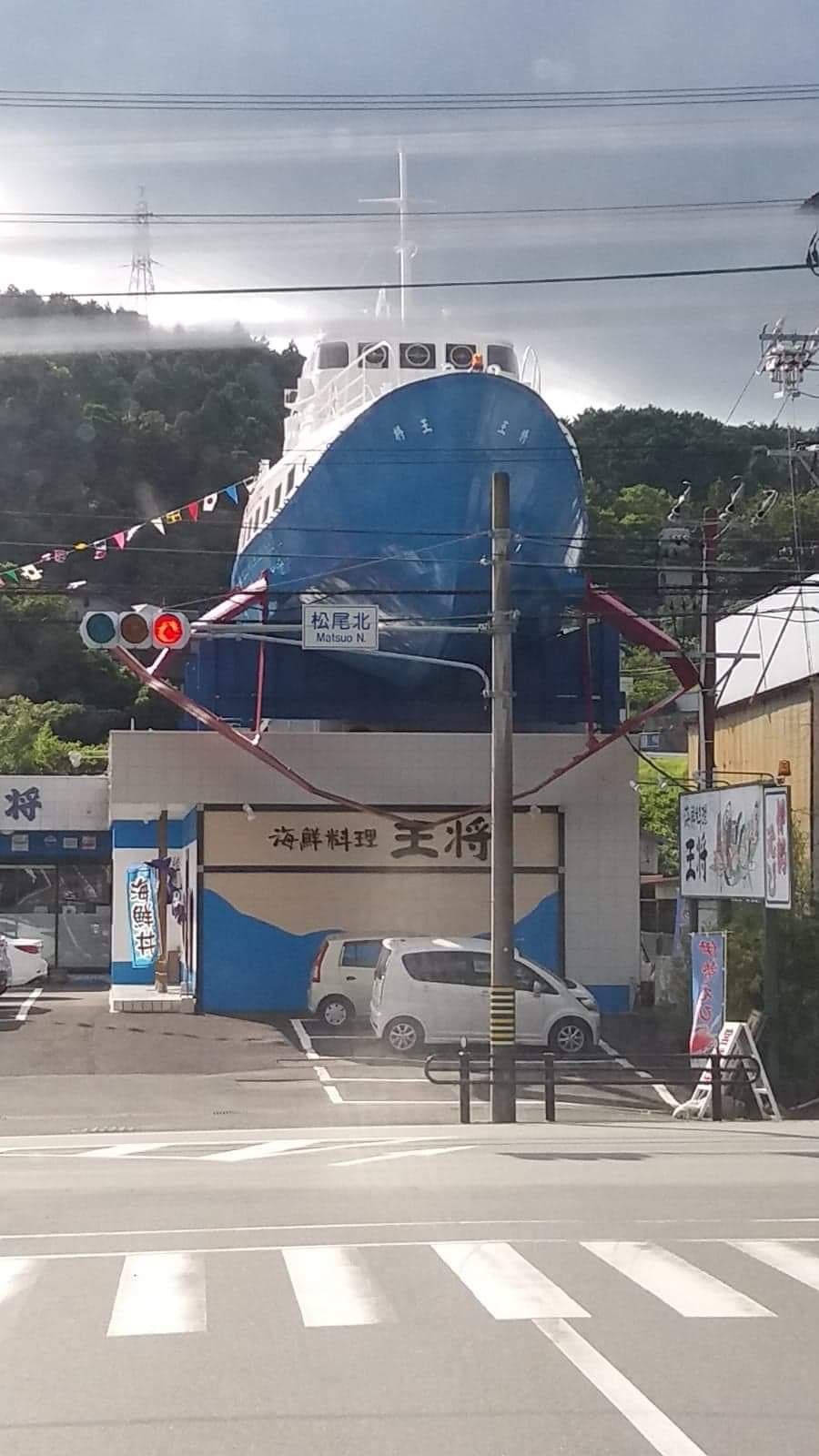
The journey was lovely and painless. Although I did leave the dongle at the ticket office and whilst Pete ran back for it the Captain handed it back to me. Typical of me! We have carried it round with us when we think that we need to use Google translate – which isn’t as often as we thought as we have become very good at miming and gesticulating.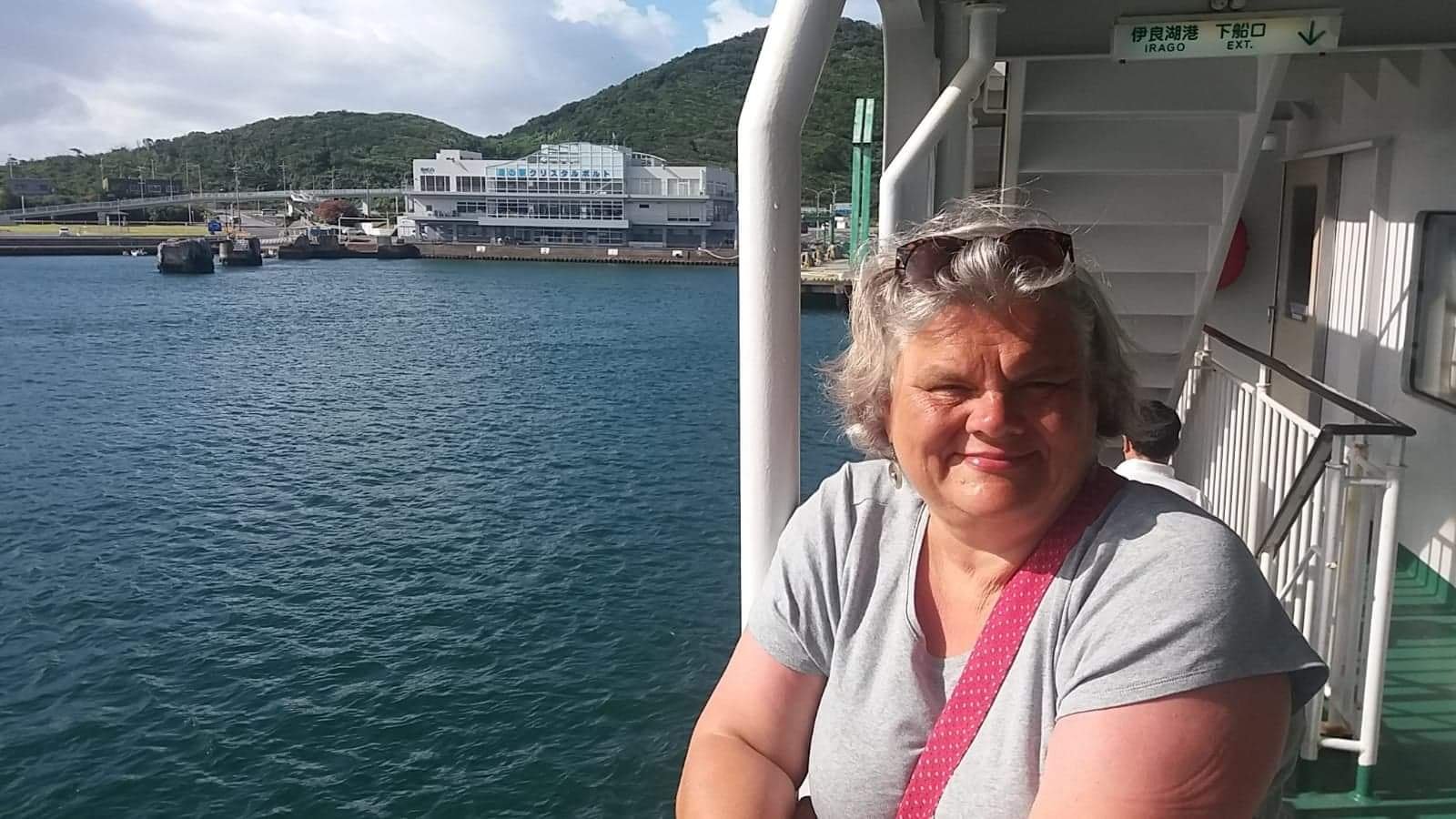
Even though it was 55 minutes we did have time to scoff our favourite mochi – dango mochi. It’s sweet and savoury as it’s covered in a sweetened soy sauce. Yum! 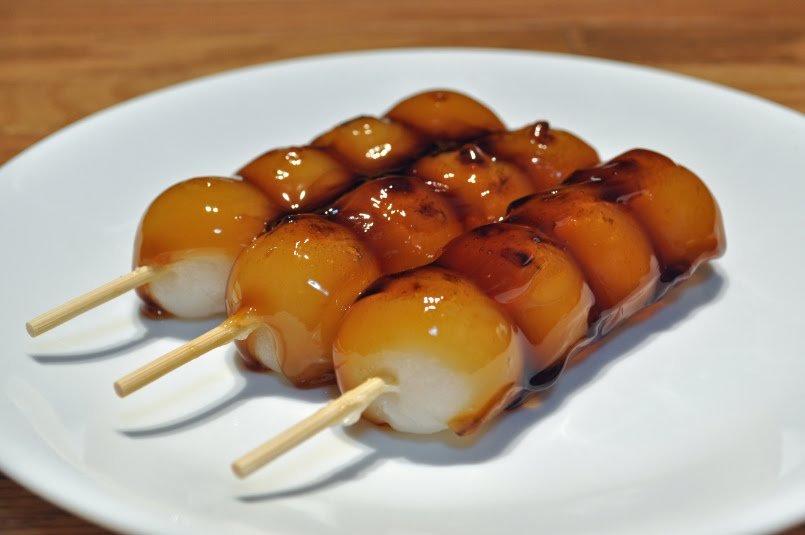
Pete pretty drove non stop to Heda. The reason we chose Heda primarily was because there was only one michi on the east of the peninsular and one on the west, Heda being on the west. Heda is tiny, only 2,700 inhabitants, very remote, with the nearest real transport links 50 km away. 1
What we hadn’t realised was that it was quite popular place. There were street food sellers,
a little museum, a spa, a cafe making home cooked food, a shop and also offices. We got a place but to indicate how busy it was there were two pa111 they all have a ubiquitous red stick they wave around. 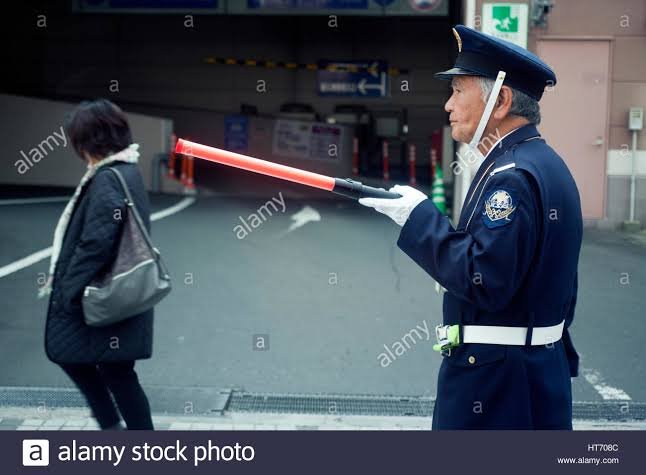 I didn’t want to photograph them in case they got too handy with their red stick so have used a stock photo. So we hadn’t parked exactly how they wanted us to – we needed to reverse in. But it did give the parking attendant lots to do, as well as show off his knowledge of ‘straight, straight, straight’, ‘left, left, left’ etc.
As they had a spa they also had a free foot spa, which was heaven after the journey. 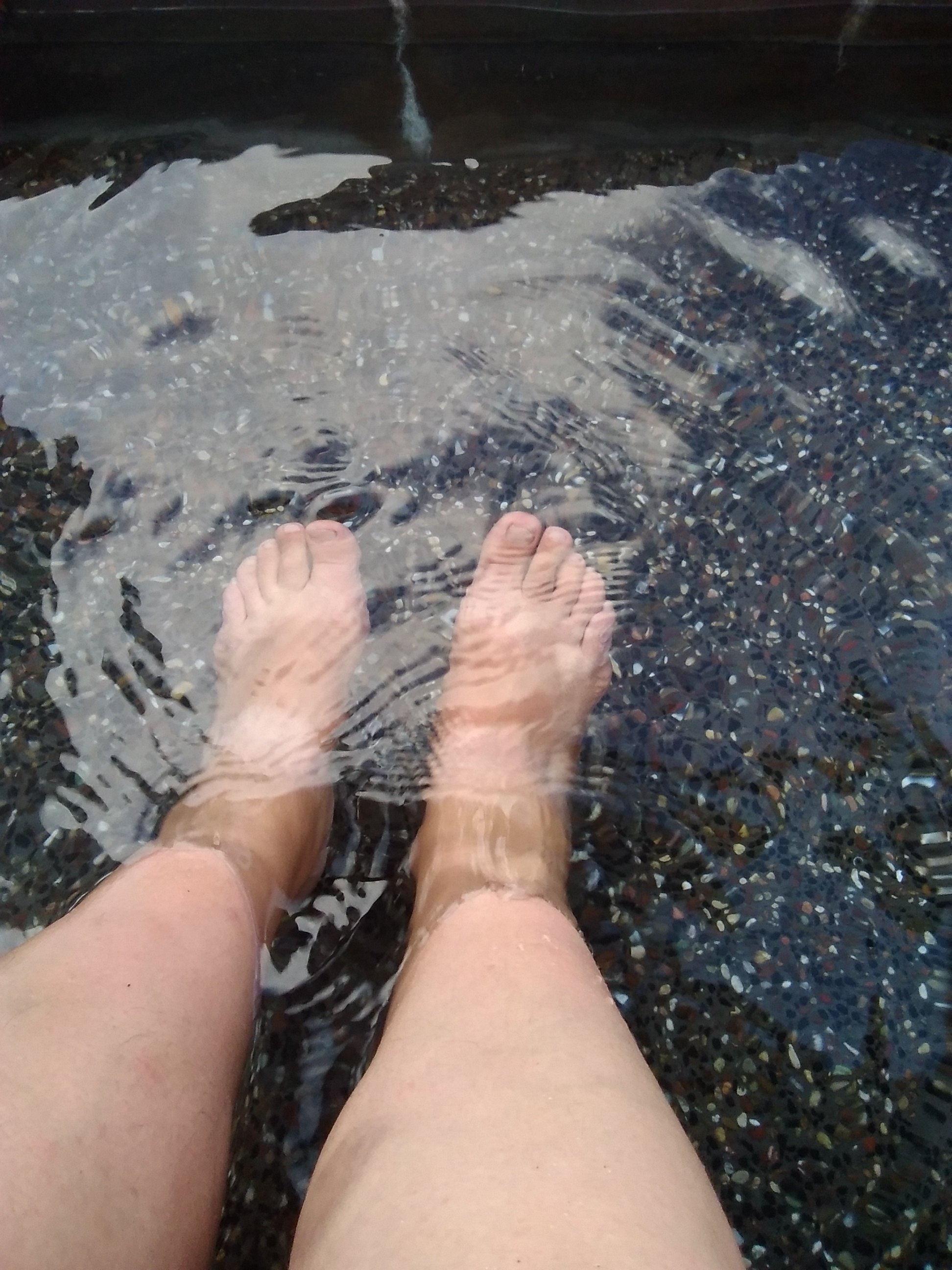 My feet getting quite stripy!
Had a quick look at the museum, shop etc. The museum of such had quite a bit about the town’s links with Russia but very little in English (but why should there be).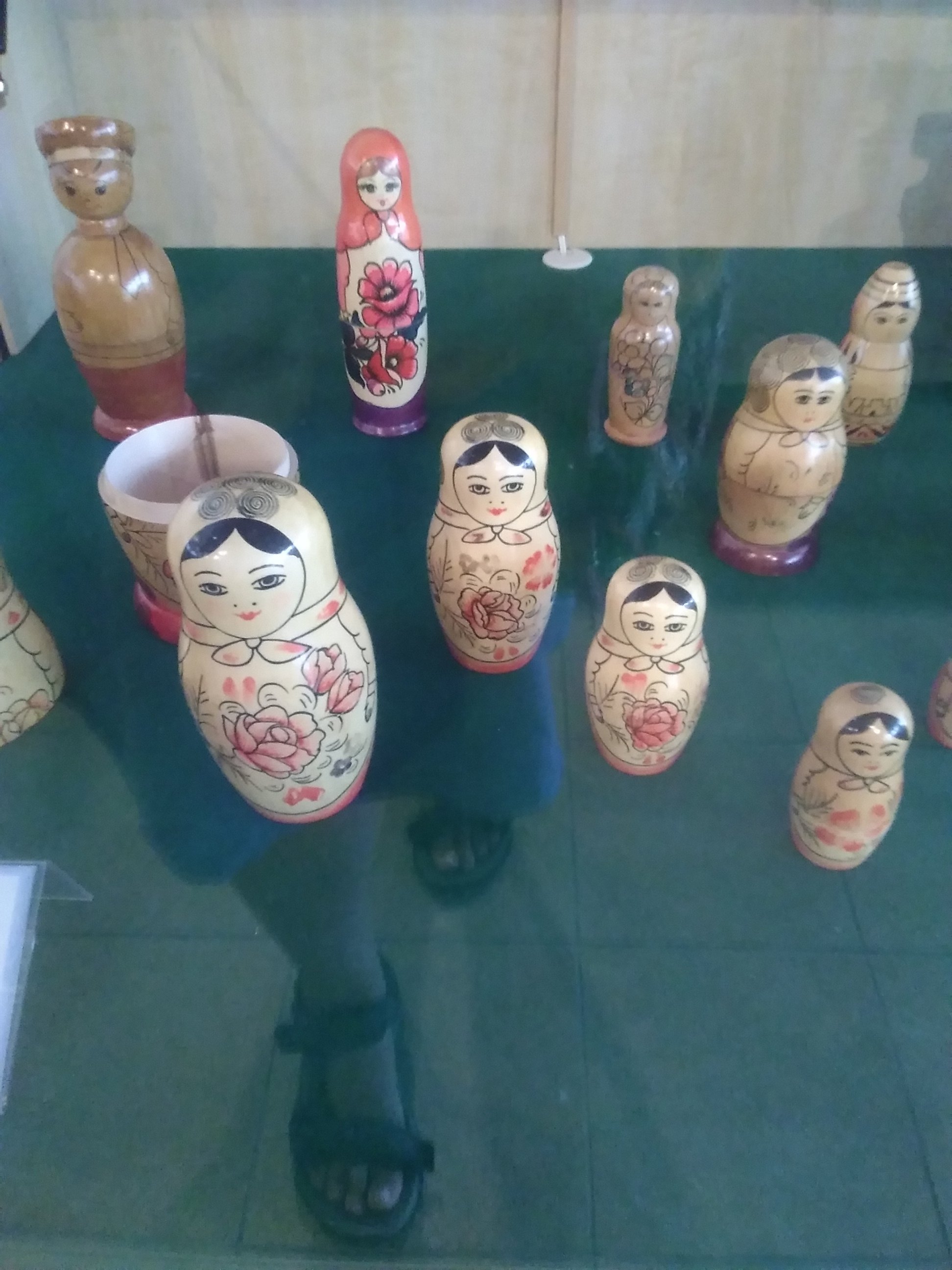
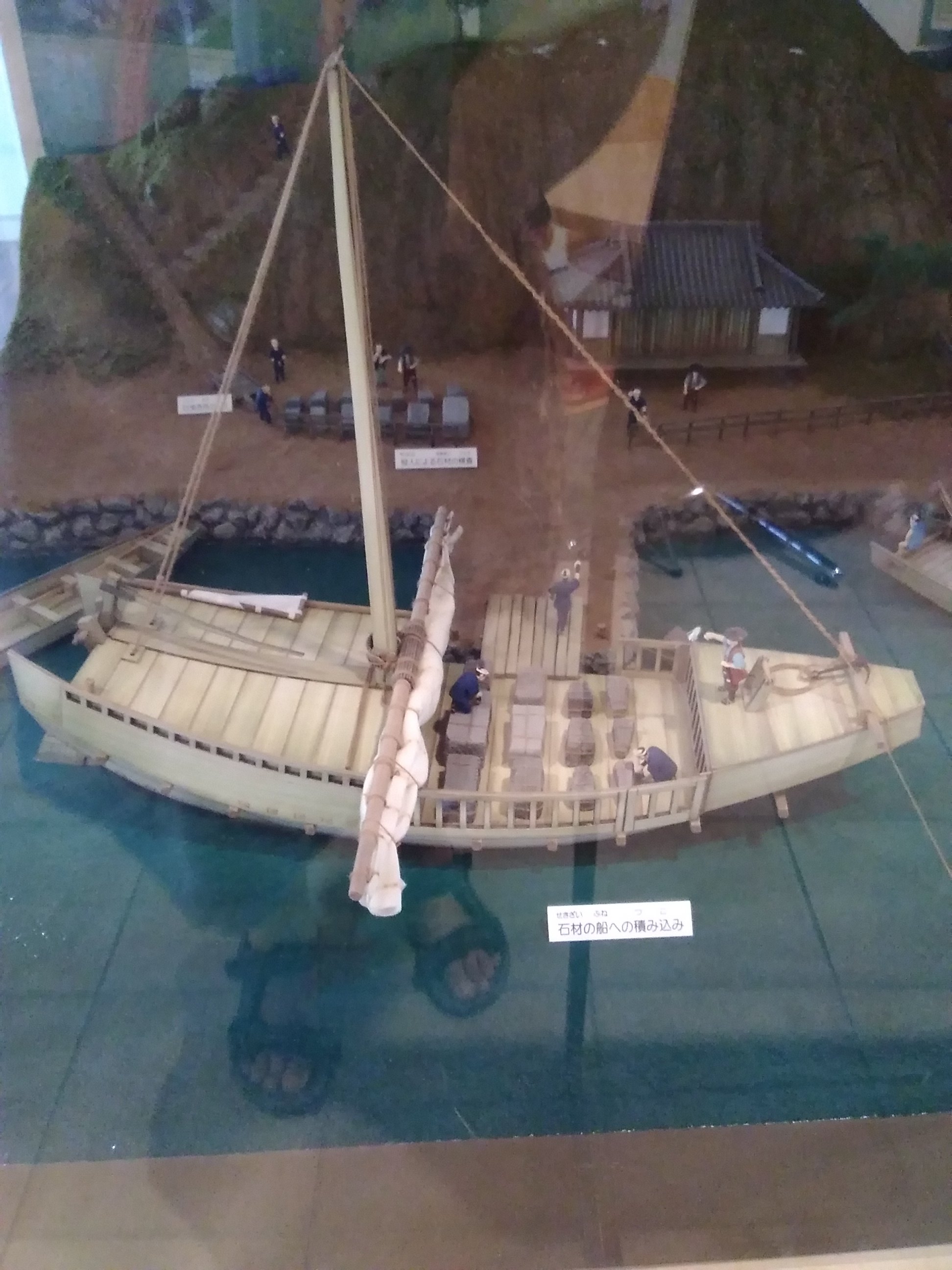
A fleet of Russian ships perished in a tsunami in 1852, there were some survivors, they were looked after by the people of Heda, who also built them a new schooner. Tokens of gratitude were sent from Russia to the people of Heda. It’s odd as when we got to the port there seemed a real Eastern bloc feel.
We had a bite to eat and walked to the port. Getting a drink on route we found these lazy tree frogs.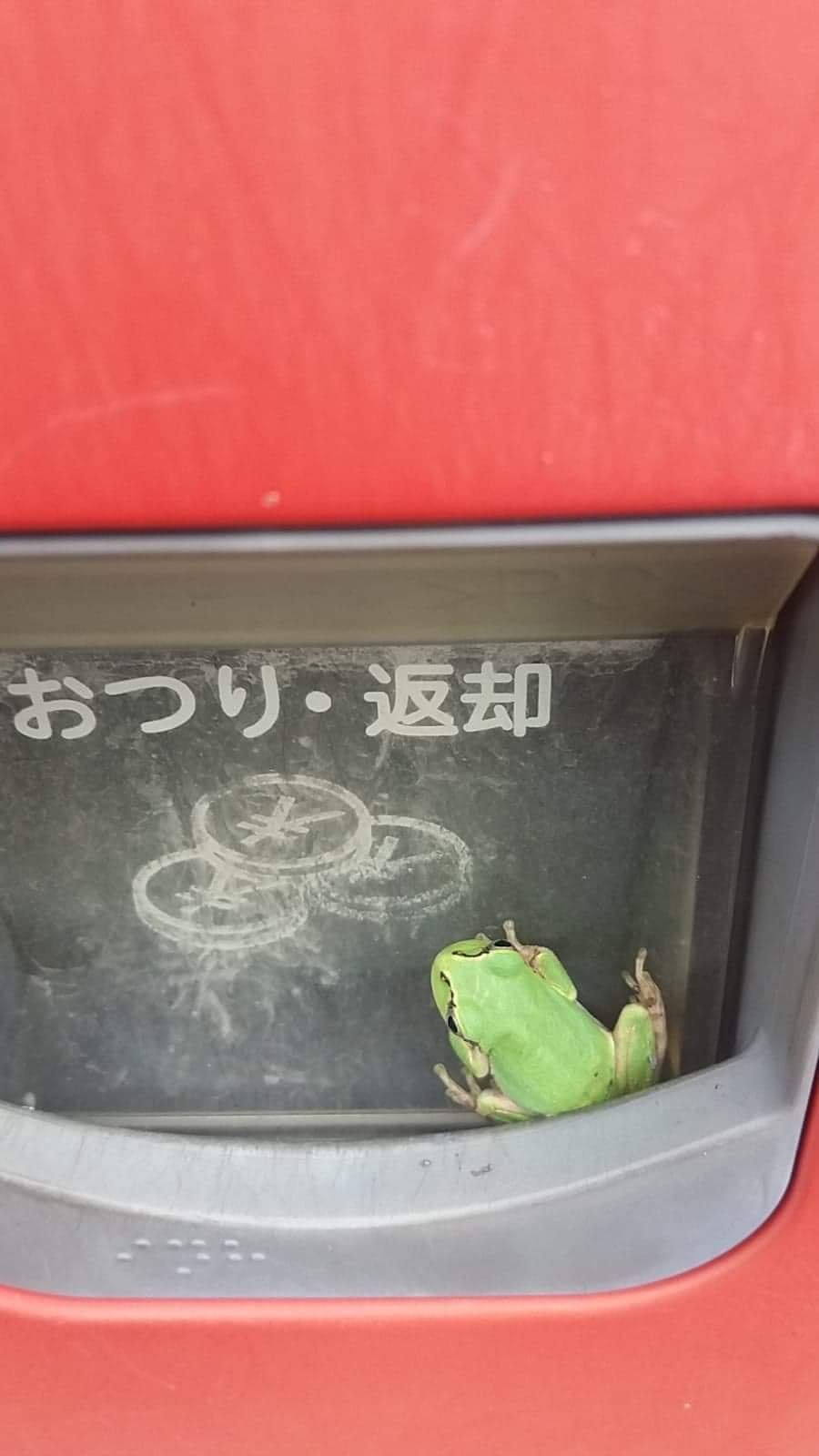
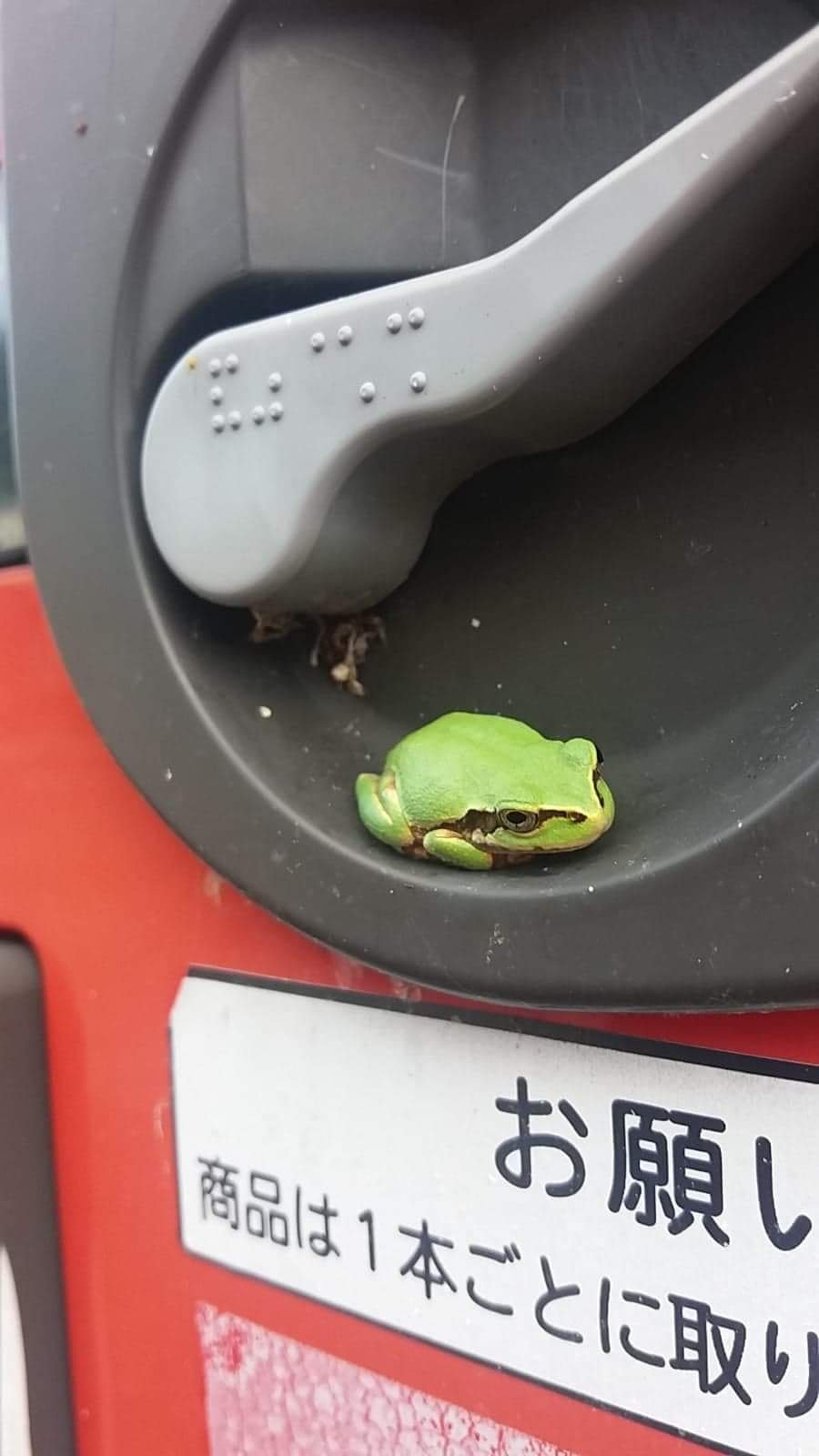 Apparently the calling behaviour of these frogs has help to develop an algorithm for WiFi systems, I find that very hard to believe as they just seem to loll around drinks machines.
The port was buzzing, so many people, all genders and ages fishing. We saw some lovely little blue fish in the harbour.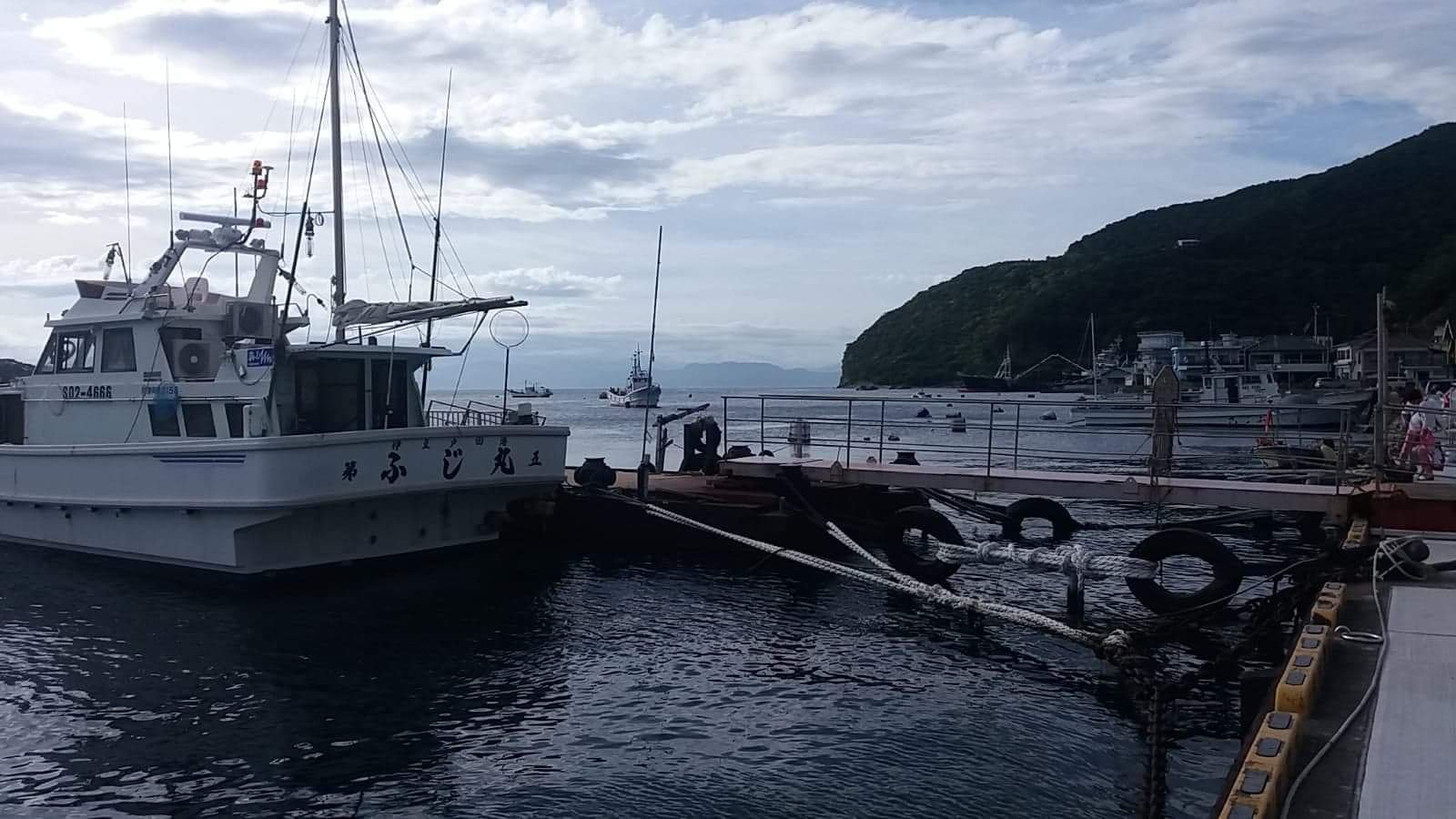
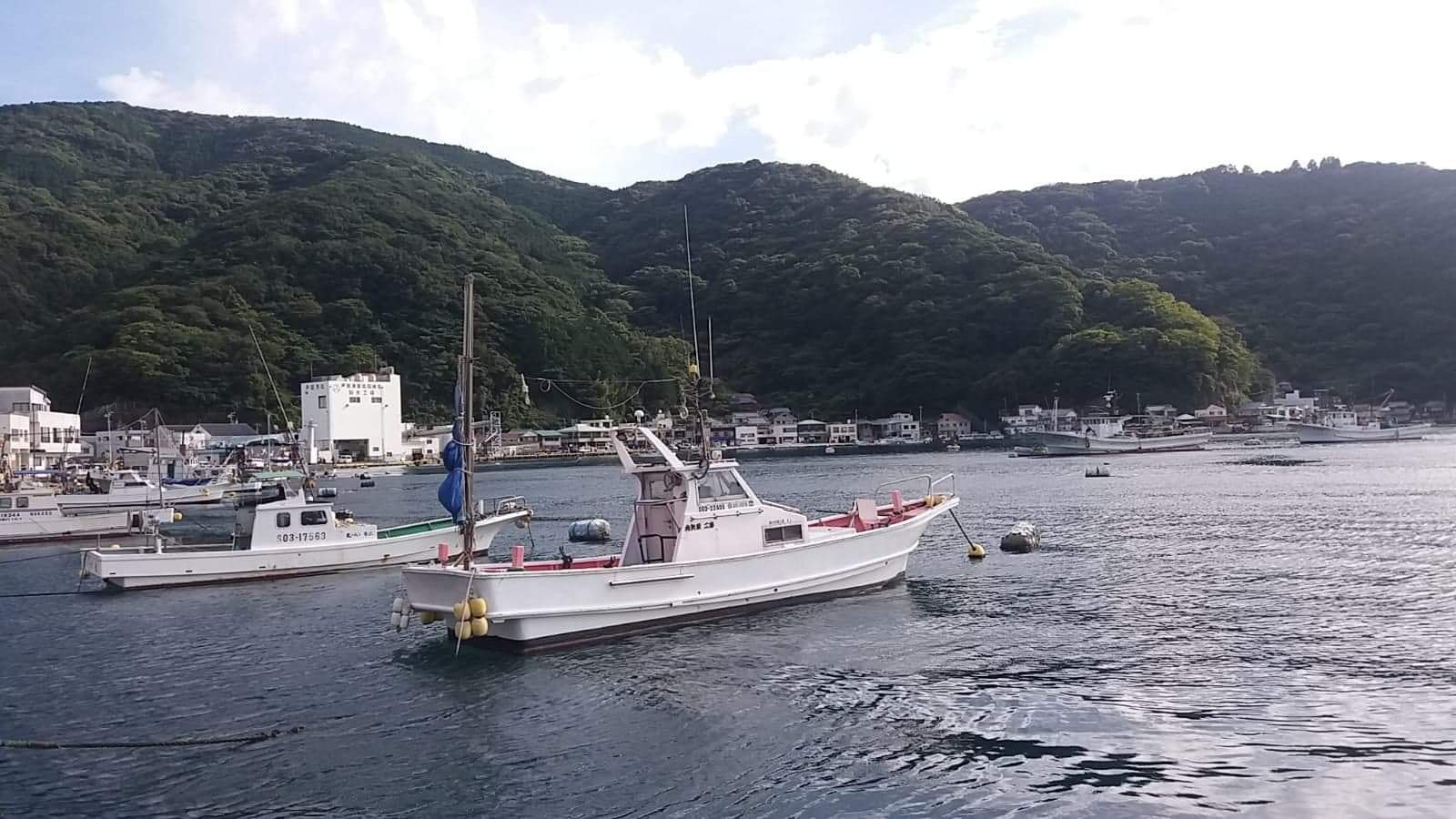 Heda is the centre of spider crab fishing, you couldn’t get away from it. Spider crabs taka-ashi gani, are caught here as the Surago Bay is so deep.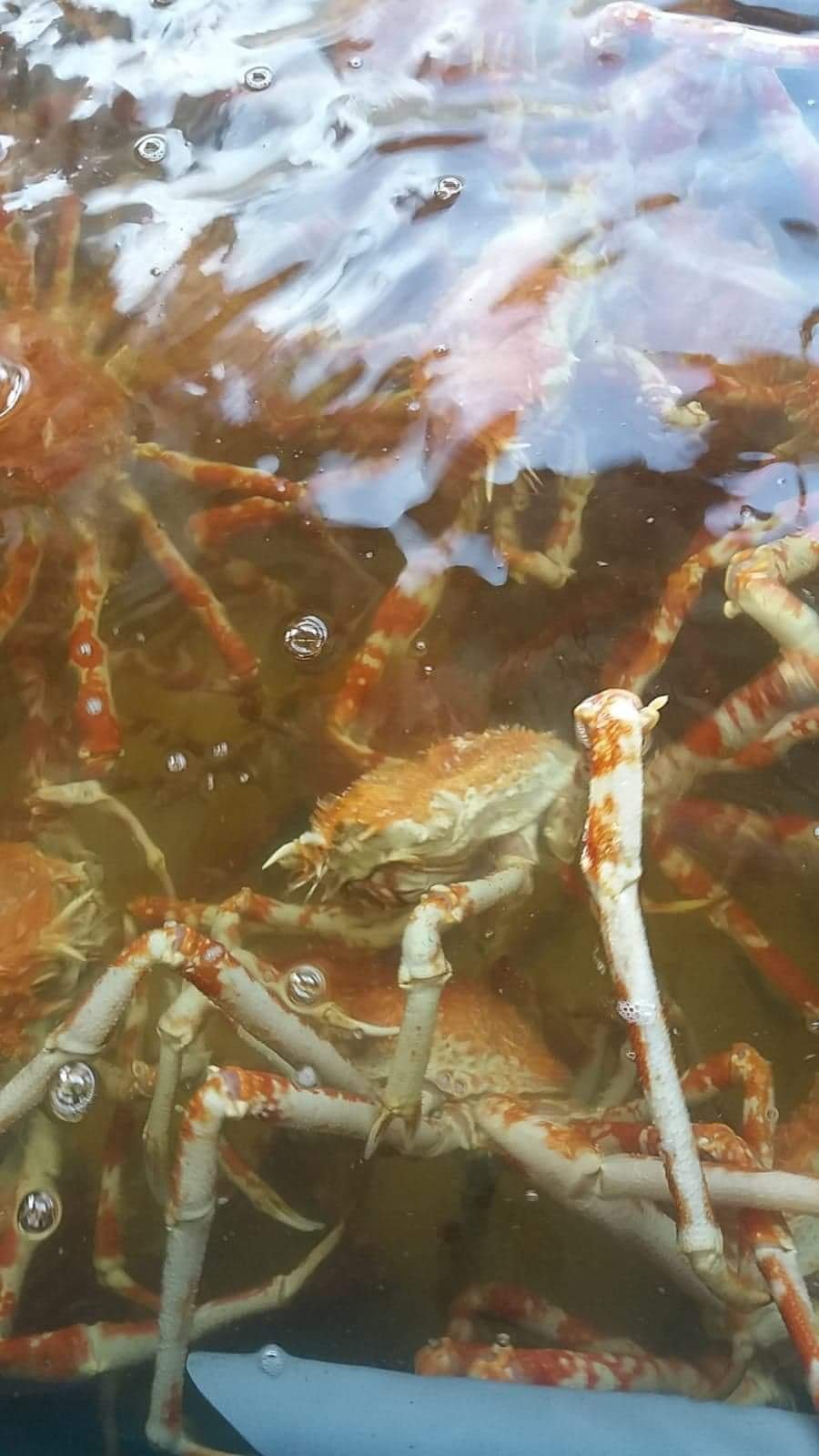
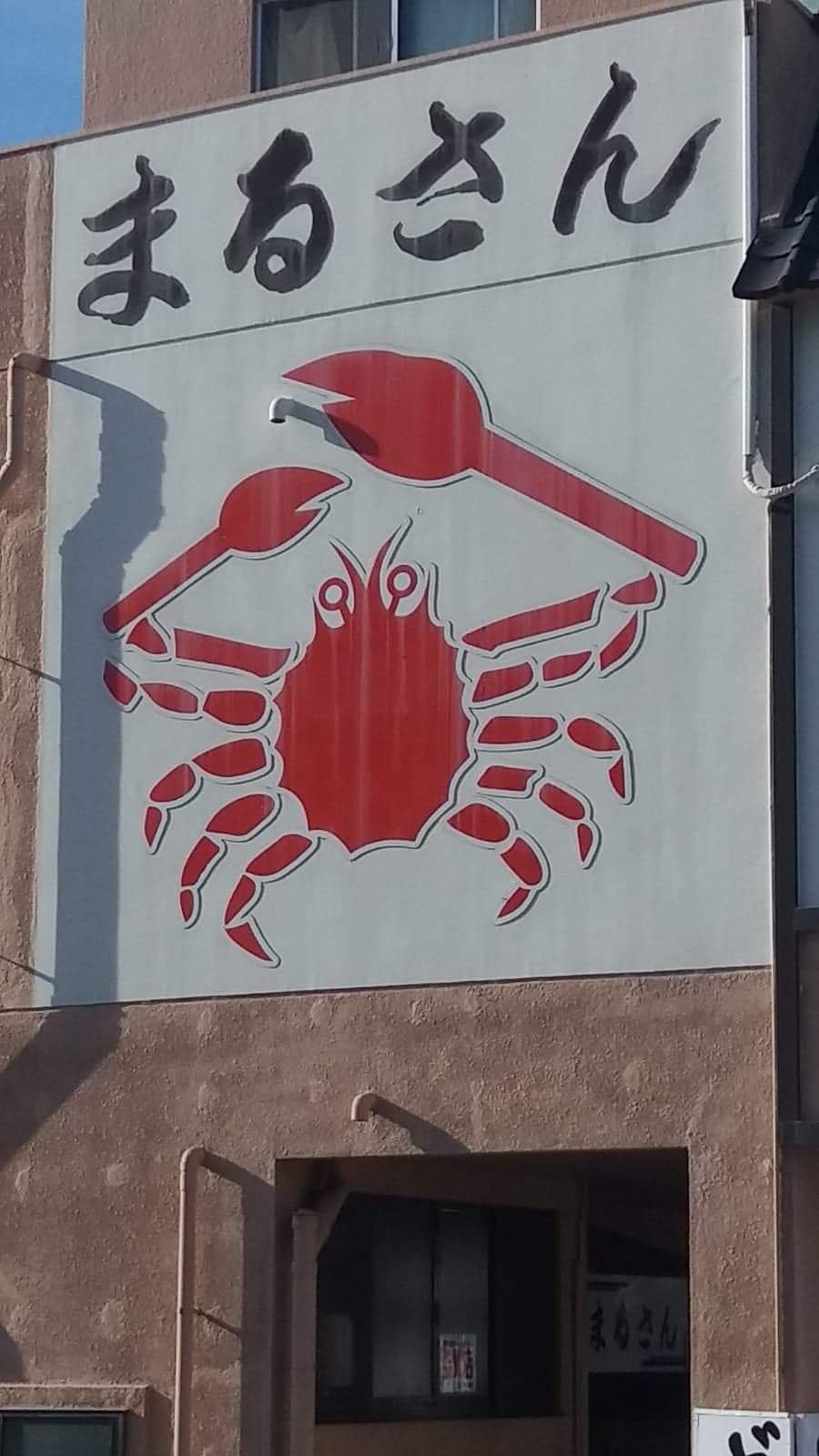
These are the largest crabs in the world and claw to claw they can reach a length of 5.5 metres. It all seems awful, seeing these beautiful creatures in a tank, though realistically no worse than factory farming. But all the same not nice.
As the michi did seem very busy we went up Heda Pass to a campsite. Darumayamakogen Camping Ground was right on top of the mountain. No room at the Inn! Quite a few people on the campsite got involved in translating what we were saying. What was great was that the receptionist, who was really sweet said we could park at the Mount Fuji Observation Area and use their facilities.
Sorting that out we went to Observation area and the clouds started dispersing and we could see Mount Fuji.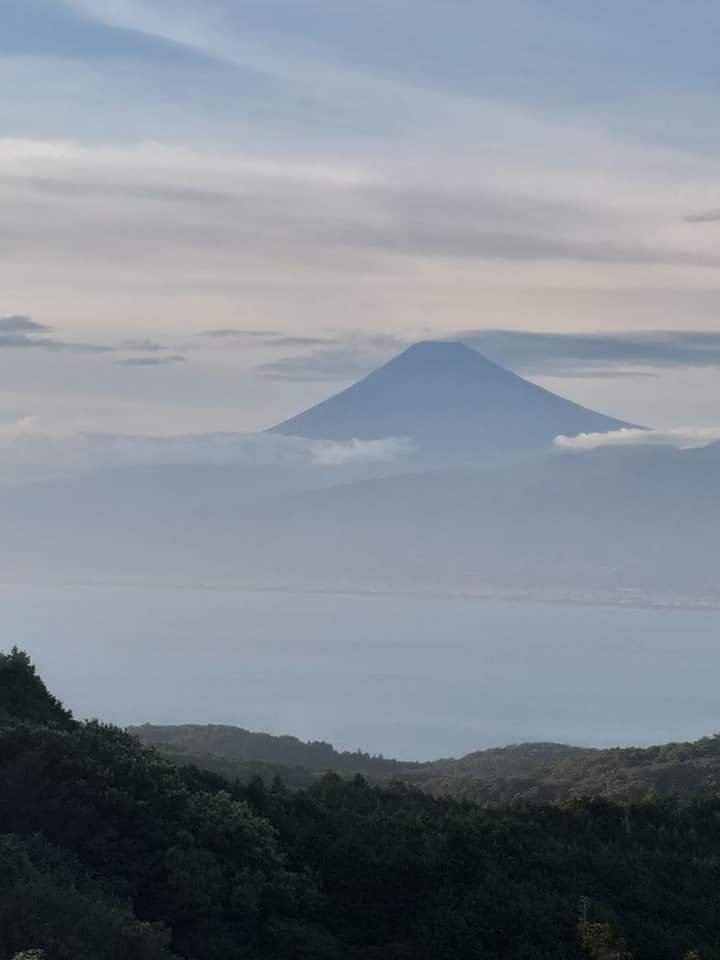
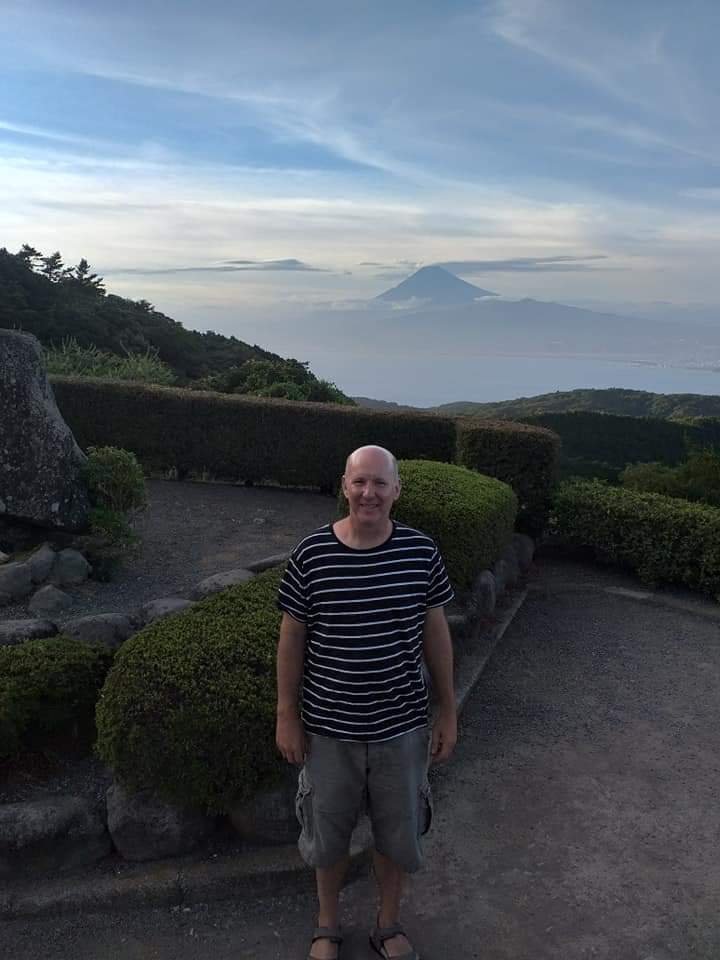
We showered, I made an aubergine and tofu salad, going to bed Happy and very clean.
 Random Acts of Travelling