Woke up in a proper bed today – what luxury. Had a little look at what was on TV. We started watching a channel dedicated to learning English. One was related to language on twitter etc. Things like SMH meaning shaking my head which I have never heard of before. Phrases such as ‘head off to’ and little cartoons with origins of words such as ‘curfew’ meaning to cover the fire, when lights in town were non electric and had to be physically put out. Such detail in language learning. 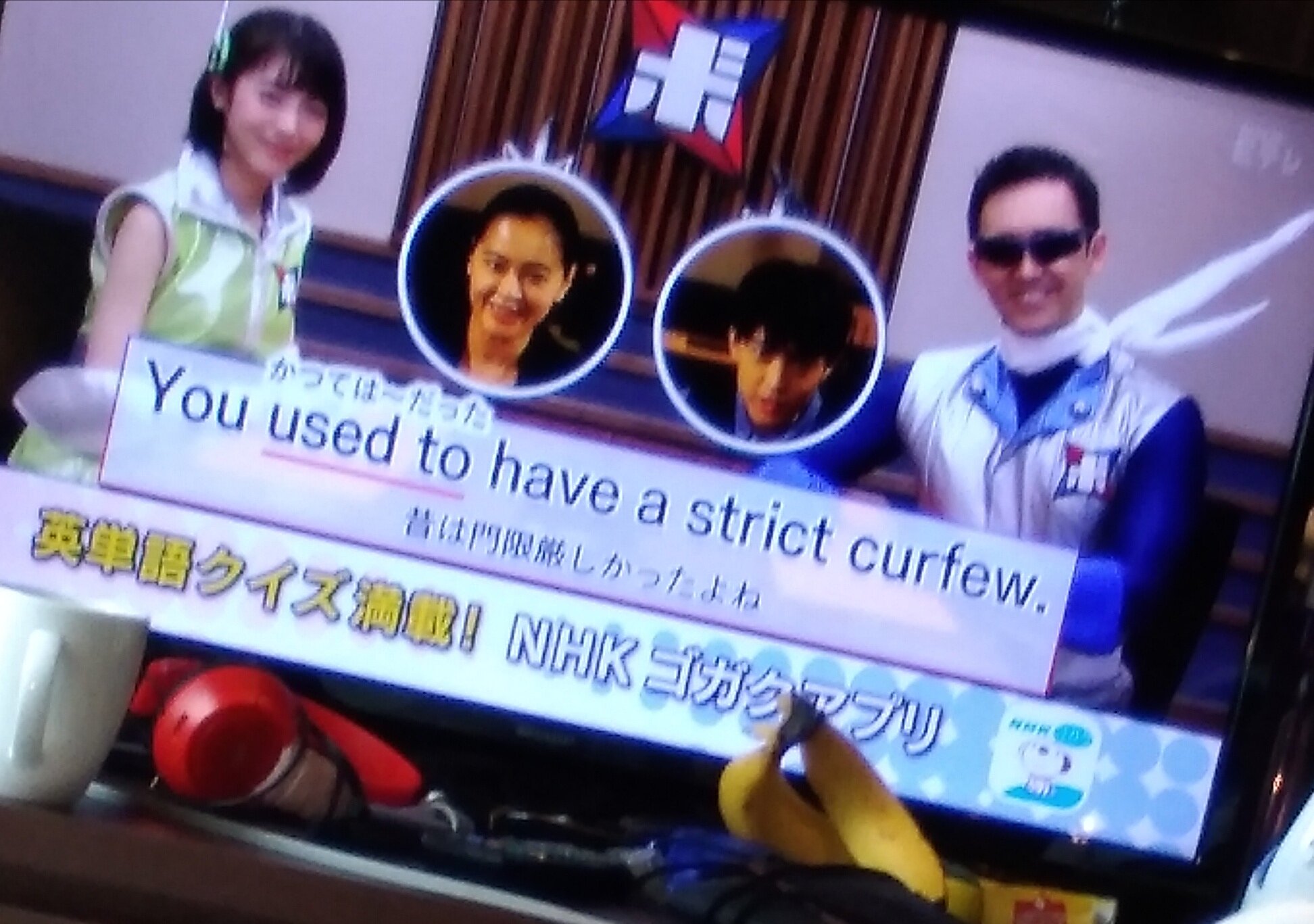
We walked to Ueno Park, at one point there was quite a bit of a group gathering with excitemen. Wondering what all the fuss was about we decided to move in closer. There were a number of cat,the first time we have seen cats being just that, cats. 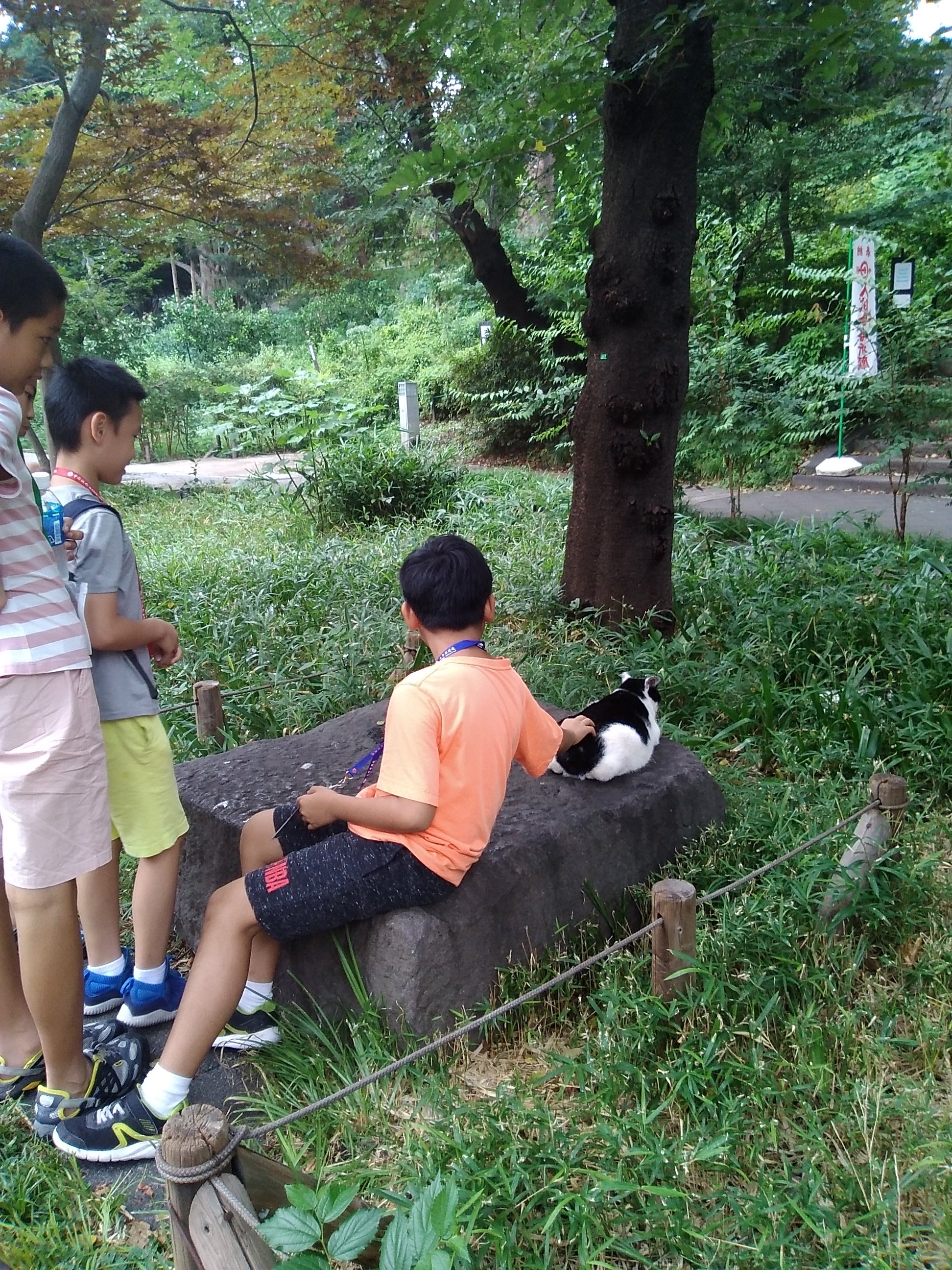
passing Shinobazu Pond and indeed quite a few of the lotus had flowered. It was lovely as what we hadn’t realised was that there are viewing platforms going into the pond so that you can have a much more immediate experience of the flowers. 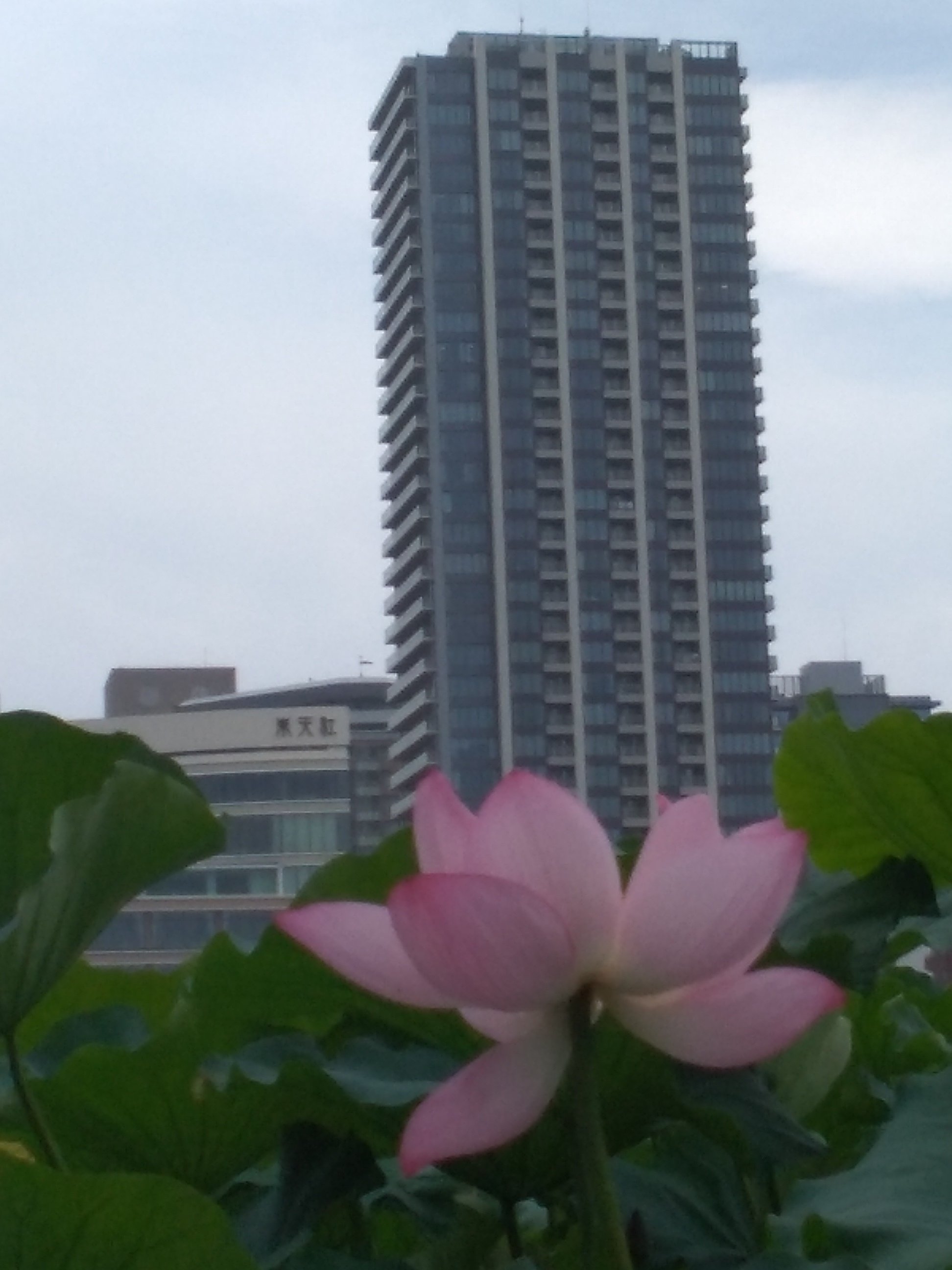
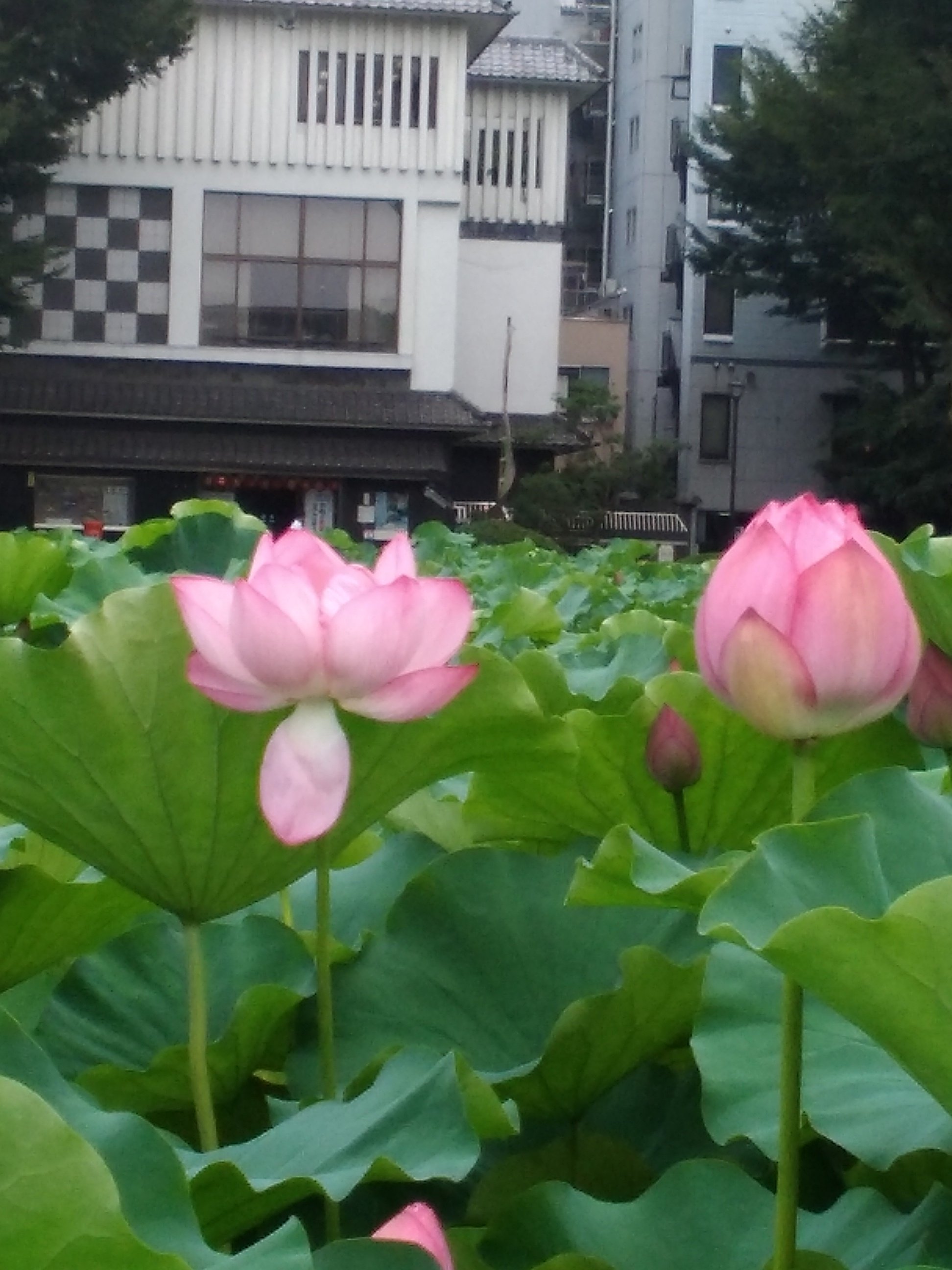
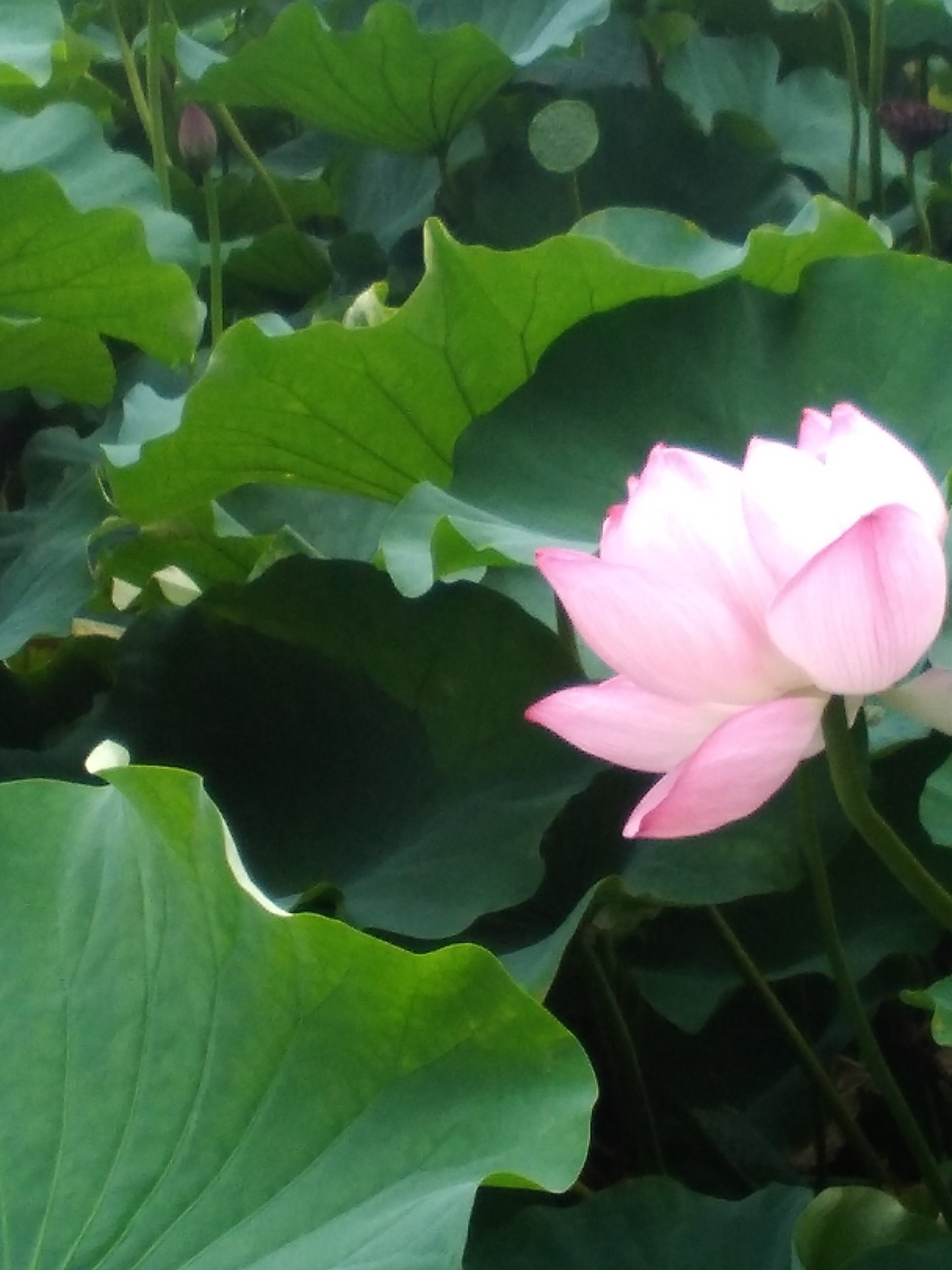

There is even something quite spectacular about the leaves. 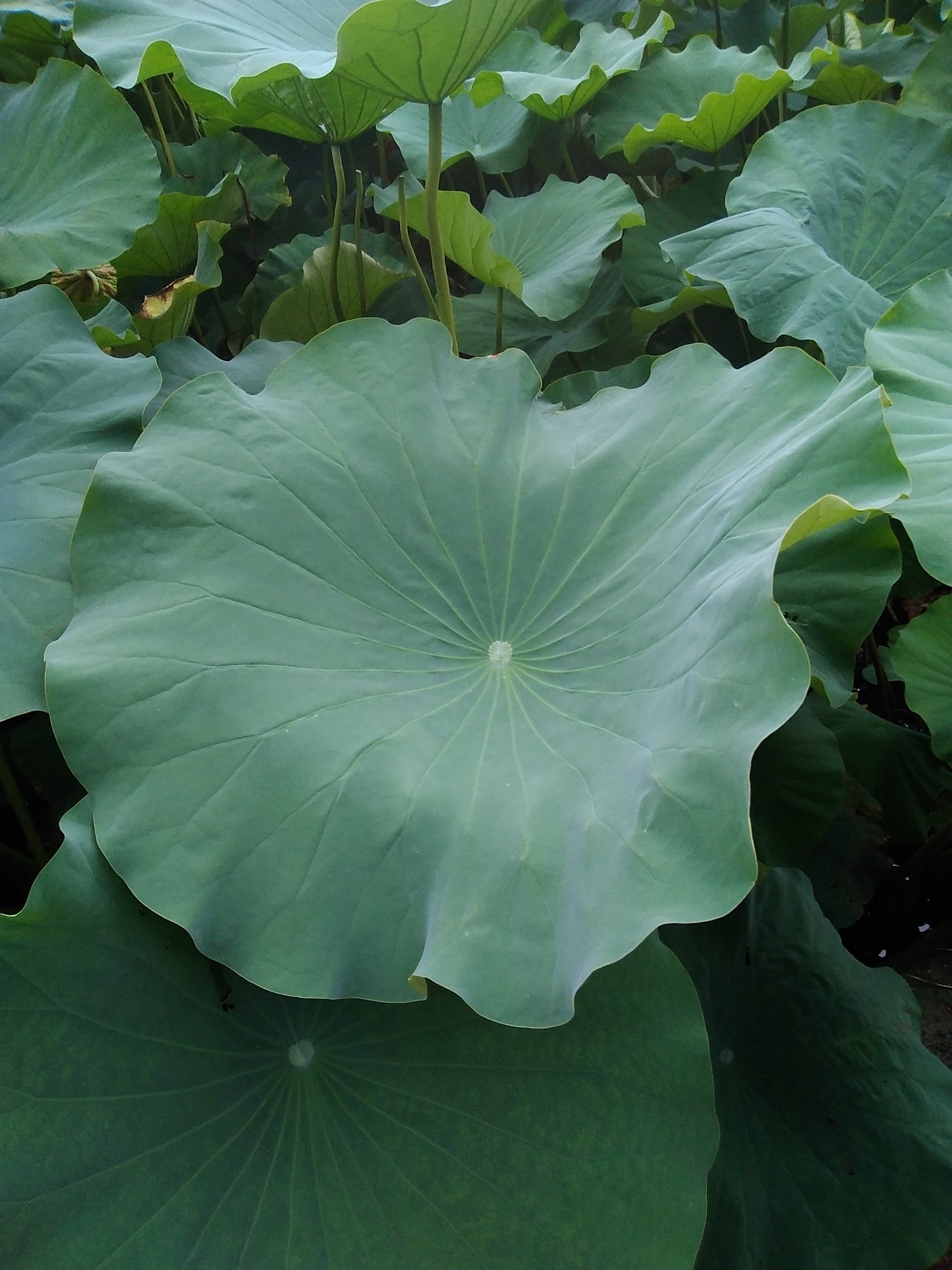 To the left of the pond is Shitamachi Museum – our destination. What a name to conjure with and have a few sniggers.
The museum is about preserving the culture and tradition of the old style shitamachi area in Taito. Shitamachi has nothing to do with anything linked to scatology but rather it means downtown.
We were really lucky as there was a Goodwill Visitor guide who had brilliant English and showed us round the museum, including showing us parts that other visitors would not have been party to.
We had a photo taken with Kenji our guide (the photo makes us all look a tad strange as we are all looking in different directions. We are all wearing hatten jackets – which both men and women can wear. Oh dear – what a trio!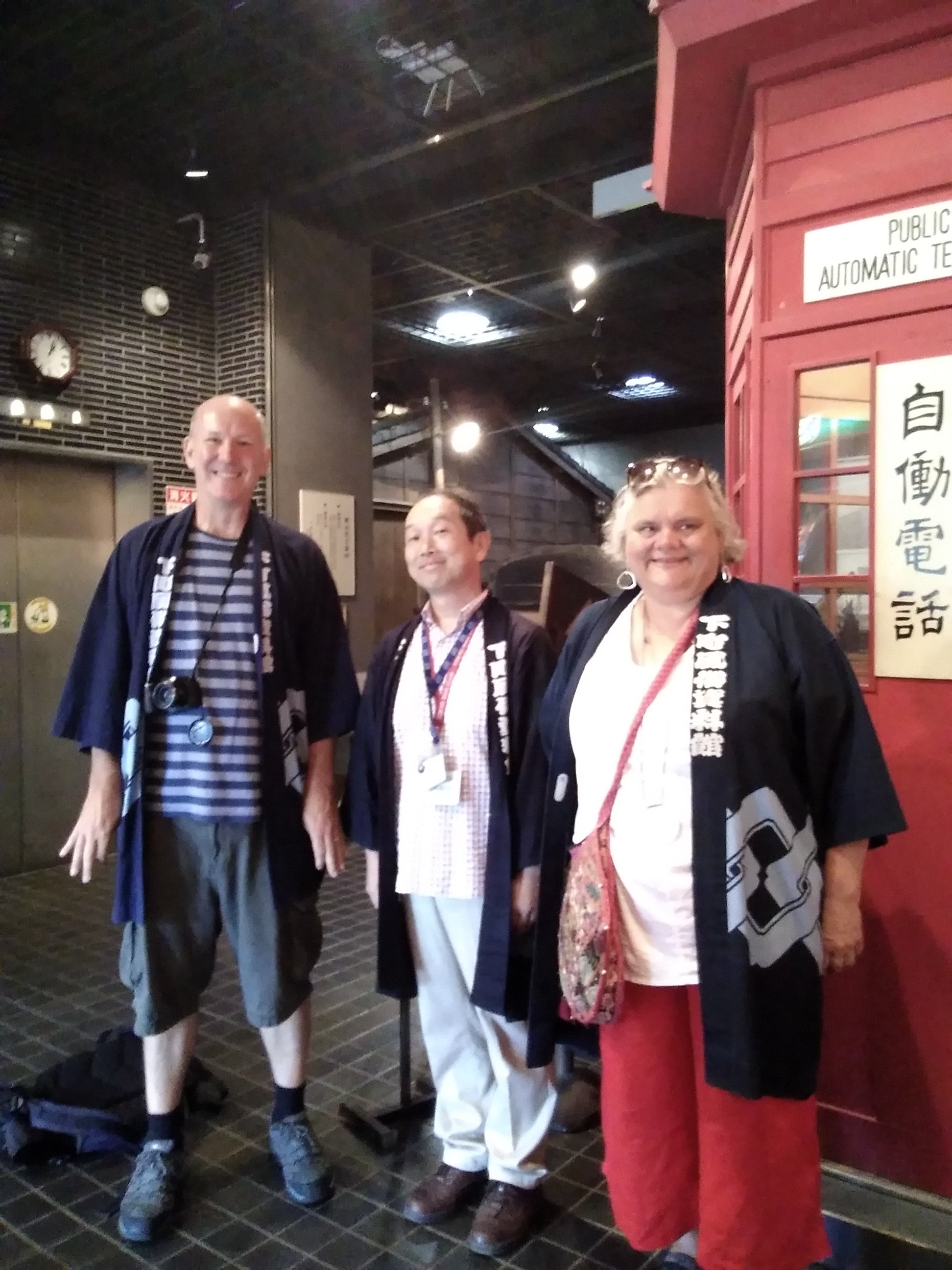 Kenji was great and answered all of our questions. We had many questions and he answered all with good humour. His English was good, he said he had visited London, the Cotswolds, Edinburgh and Inverness. Kenji was yet another Japanese person who hadn’t heard of Sheffield. Realistically I wouldn’t expect them to but there is always the hope. If you say not too far from Manchester then everyone knows… Ah yes Manchester United. It’s been the same wherever I have travelled. I remember in Makele, Ethiopia when passing a corrugated ‘shed’ there was suddenly a lot of cheering and whooping, they were watching Manchester United. But by making that link I feel a bit disloyal as there is more than the Woodhead or Snake Pass that separate Manchester and Sheffield as two very distinct places.
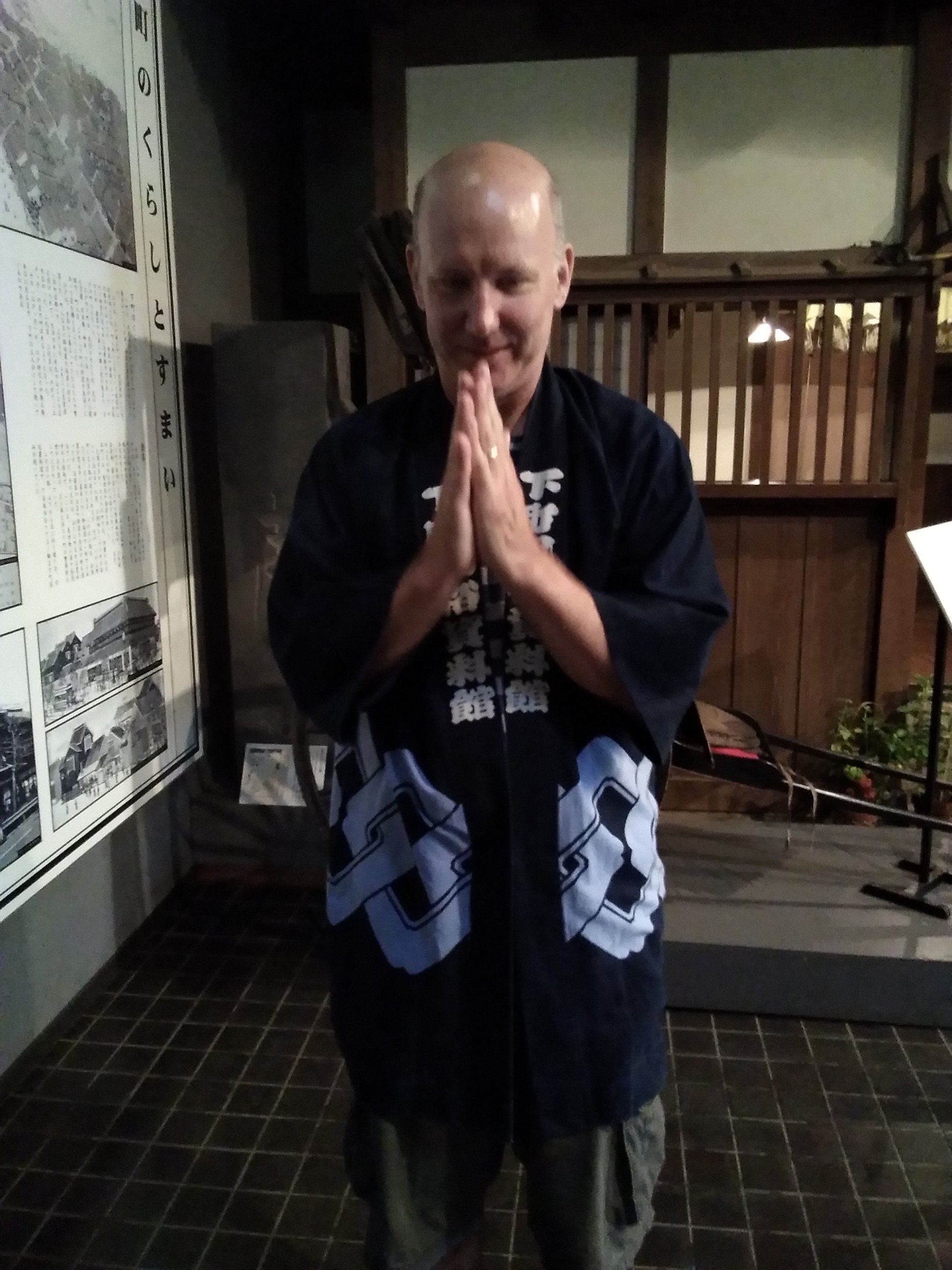 Kenji showed us the merchant’s house first, where hanao were made. Hanao are the thongs that are used in either wooden sandals geta or zori straw sandals. This area has been a footwear manufacturer for many generations.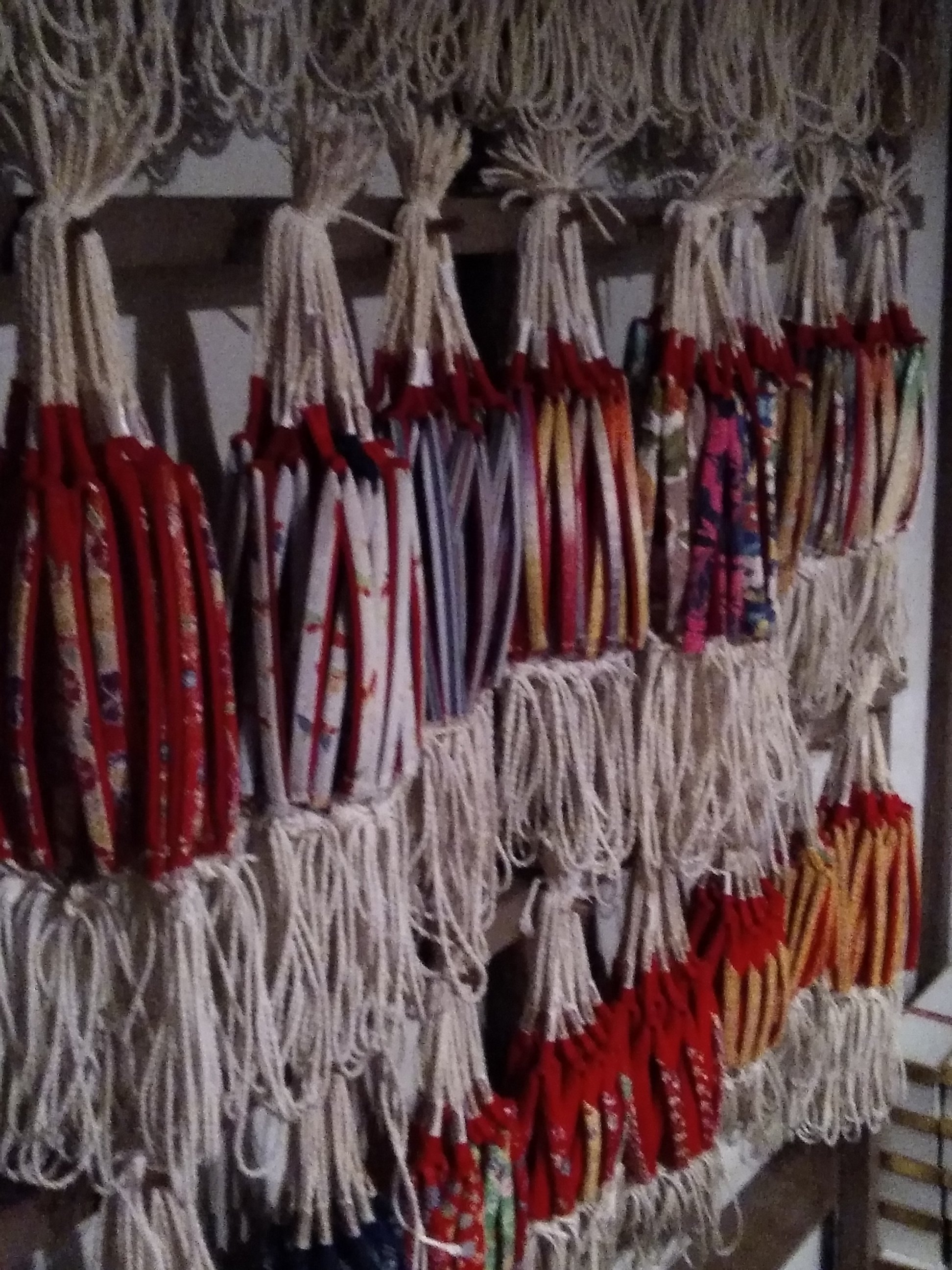
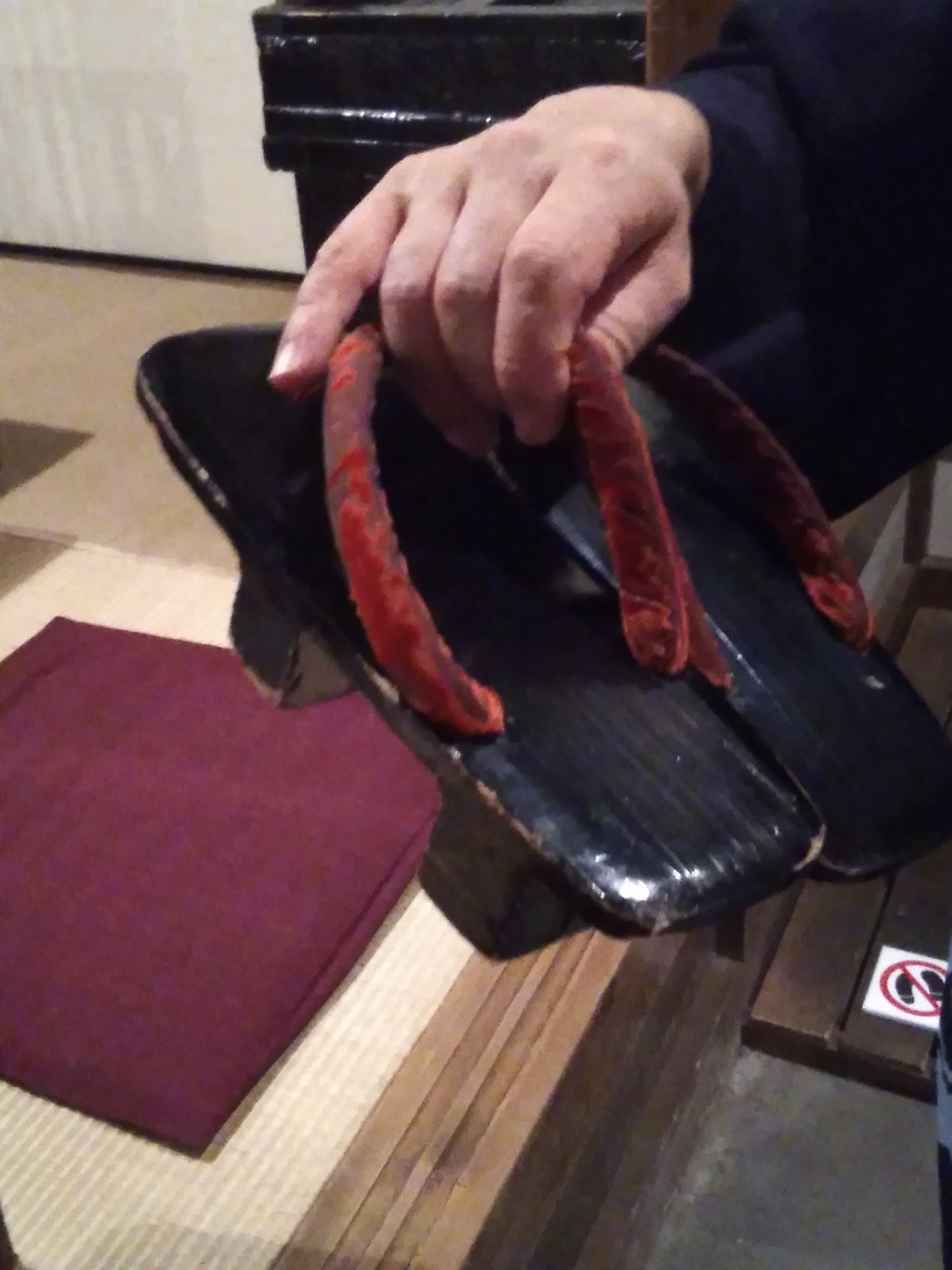 So what we hadn’t realised was that hanao are interchangeable and that different ones would be worn for weddings, dating, funerals, the seasons and ‘fashion statements’. This small merchants sold 1000 hanao a day.
Kenji also told us about some of the good luck ‘talismans’ in the shop, like the maneki neko, the cat with the moving paw. 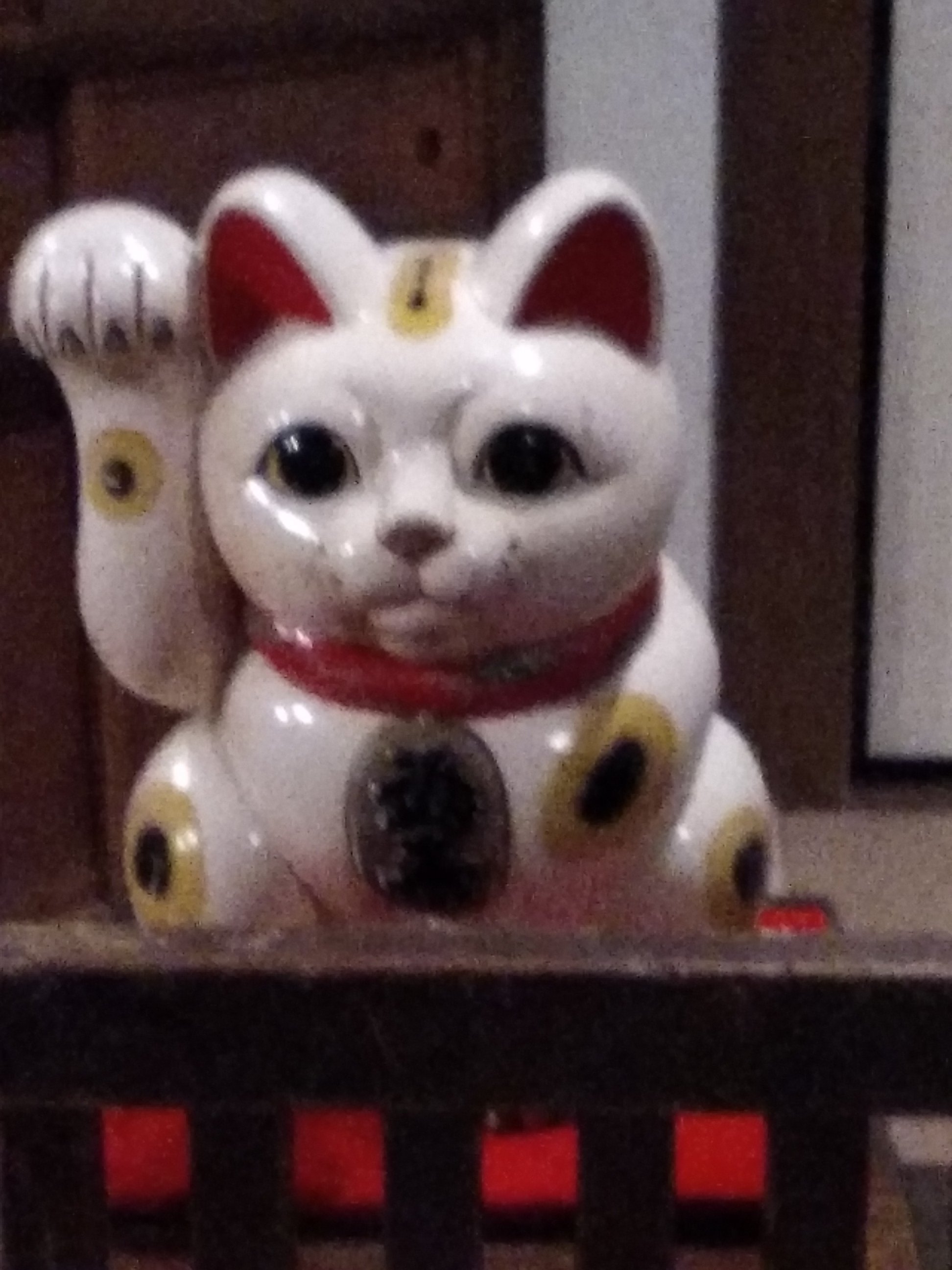 Kenji said that the maneki neko was supposed to bring good luck or bring in business. The cat has a raised right paw which is said to bring luck and a raised left paw is said to bring money.
The other thing in the corner of the room (terrible photograph) is a fukuyose kumade. I was interested as we had seen a huge one in the Tokyo Metropolitan Observatory.
Kenji explained that every year in November these are sold at the torinoichi Festival market to bring thanks for a successful year and pray for a good year to come.
The bamboo pole is a rake, symbolic of raking in good fortune. He said old ones are taken to the shrine and new ones are bought for the new year. This one was quite small but it was worth around 260 pounds. To be honest when I have seen them elsewhere I just thought it was a load of tat thrown together….. Whoops!
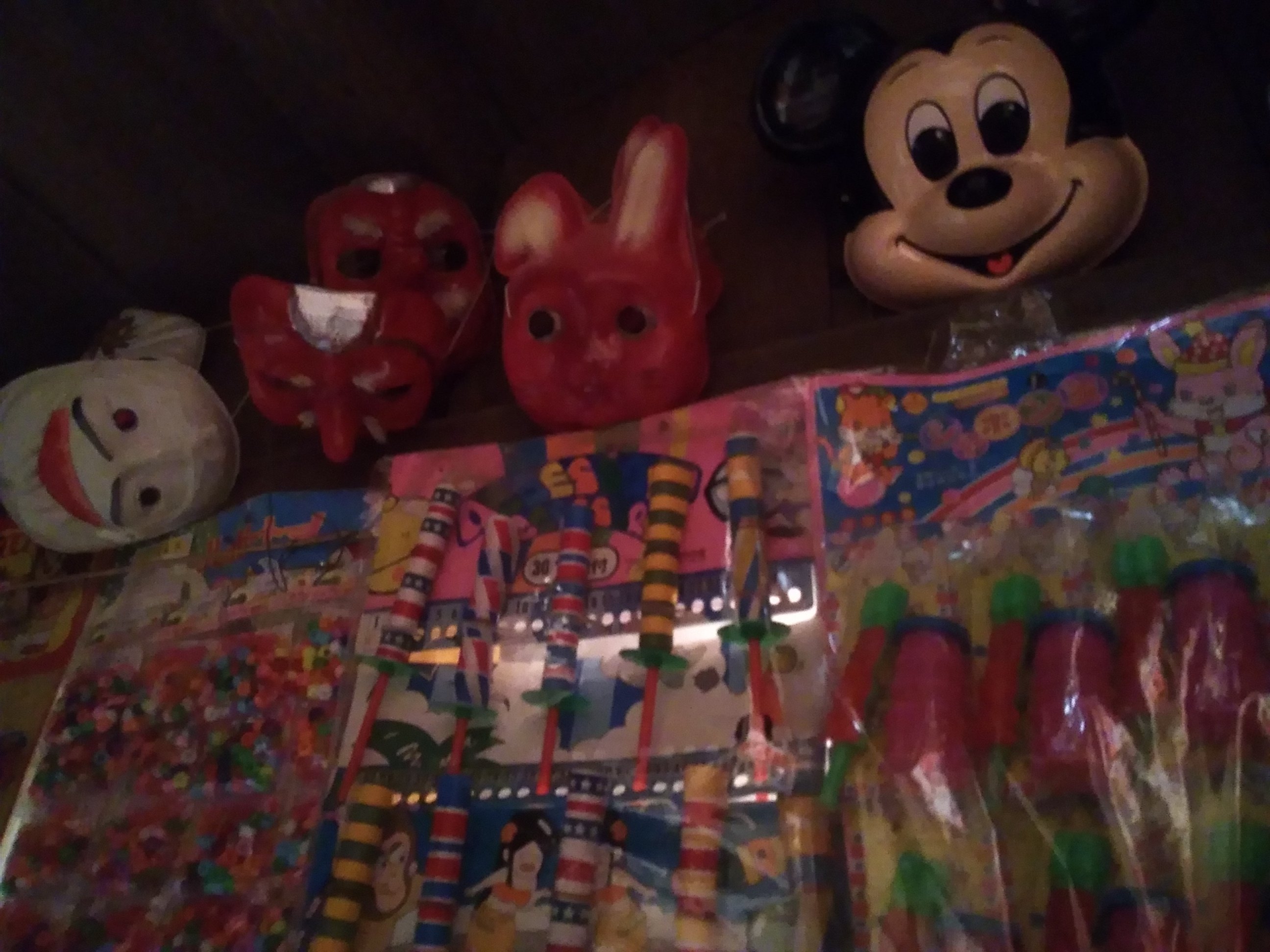
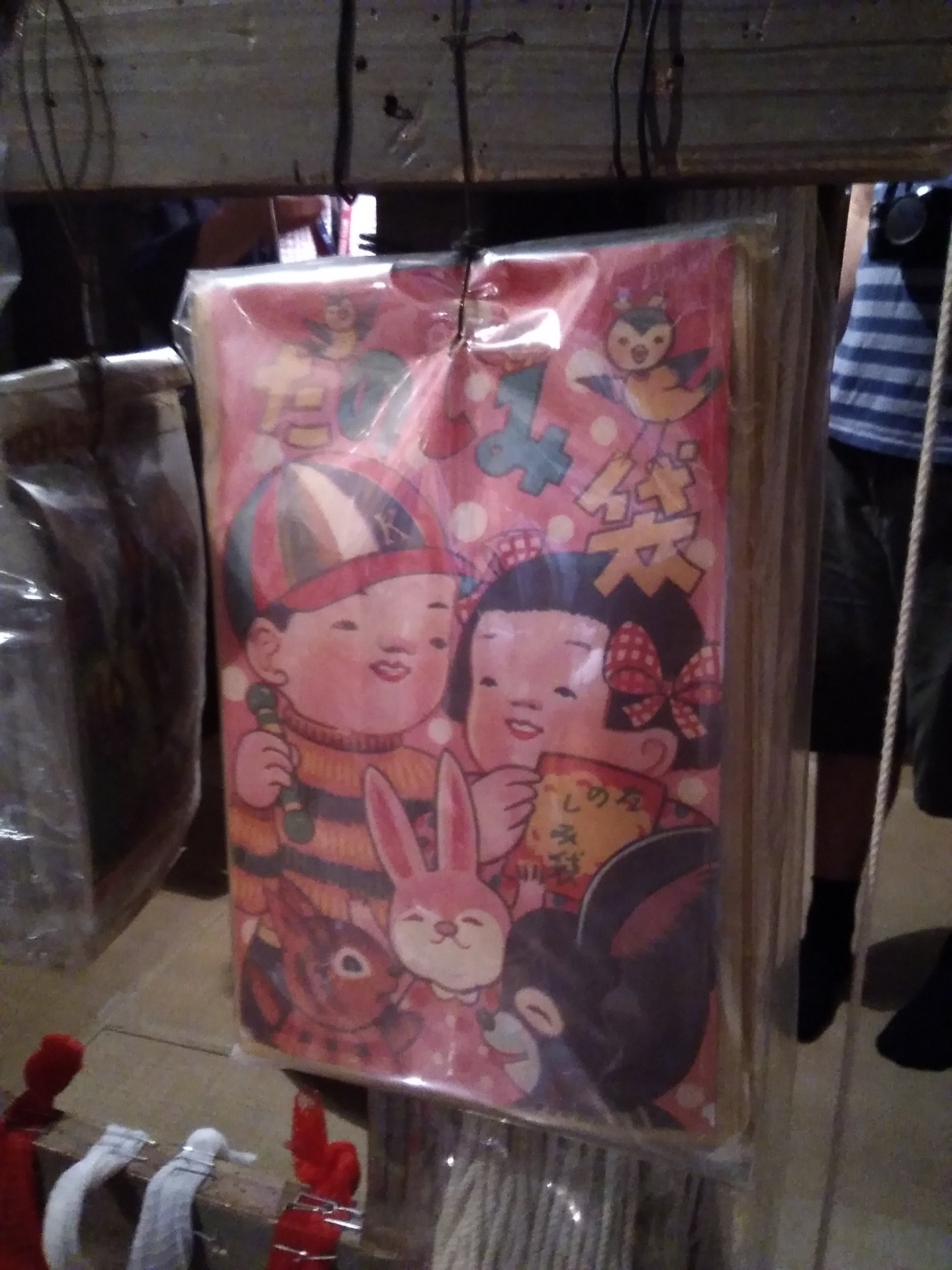
Kenji then showed us a toy shop and family living quarters. He opened things up and so we got to see bits other visitors wouldn’t have been able to see. 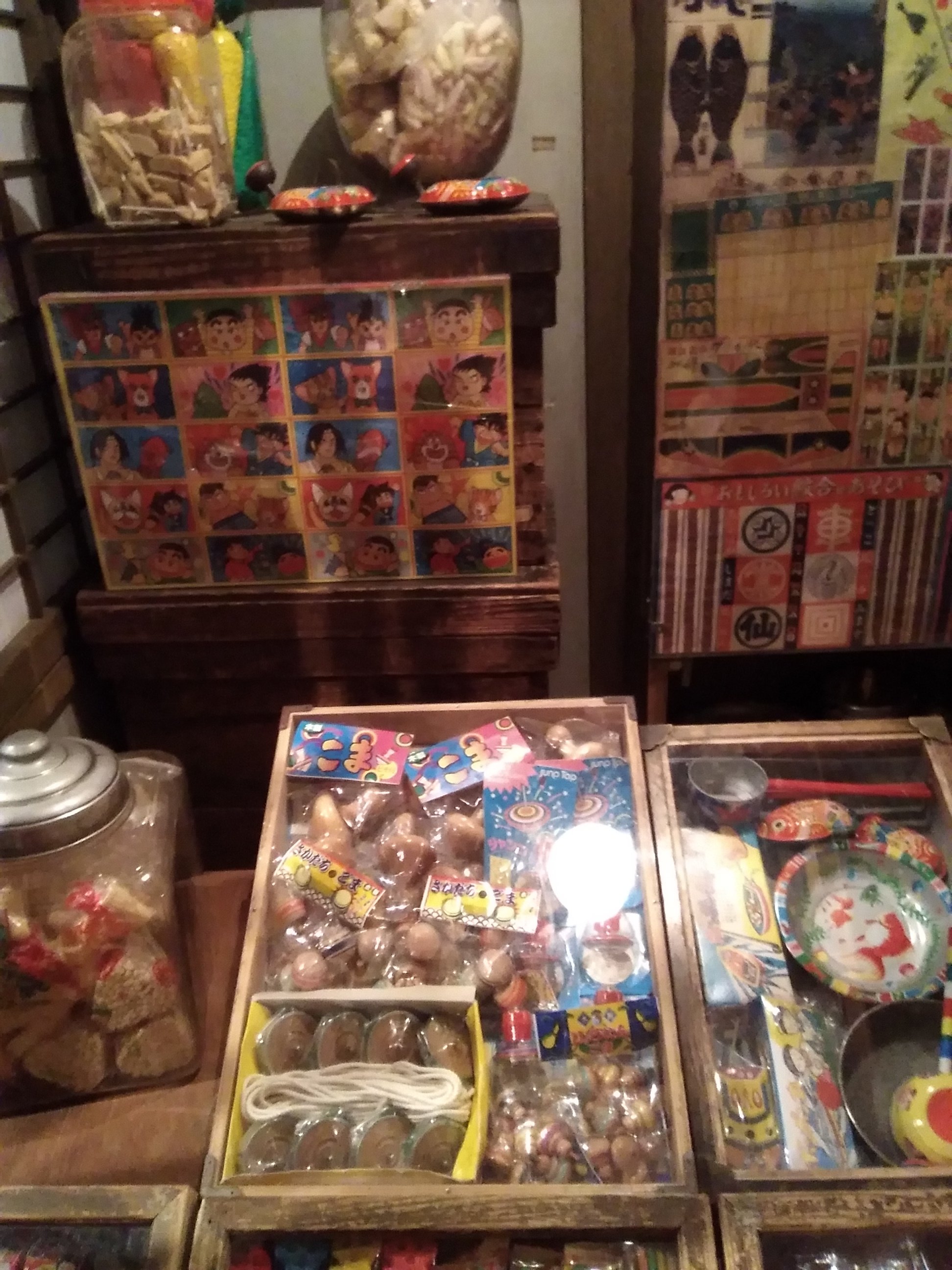
Another thing he showed us were wind chimes. He explained that wind chimes would only ‘come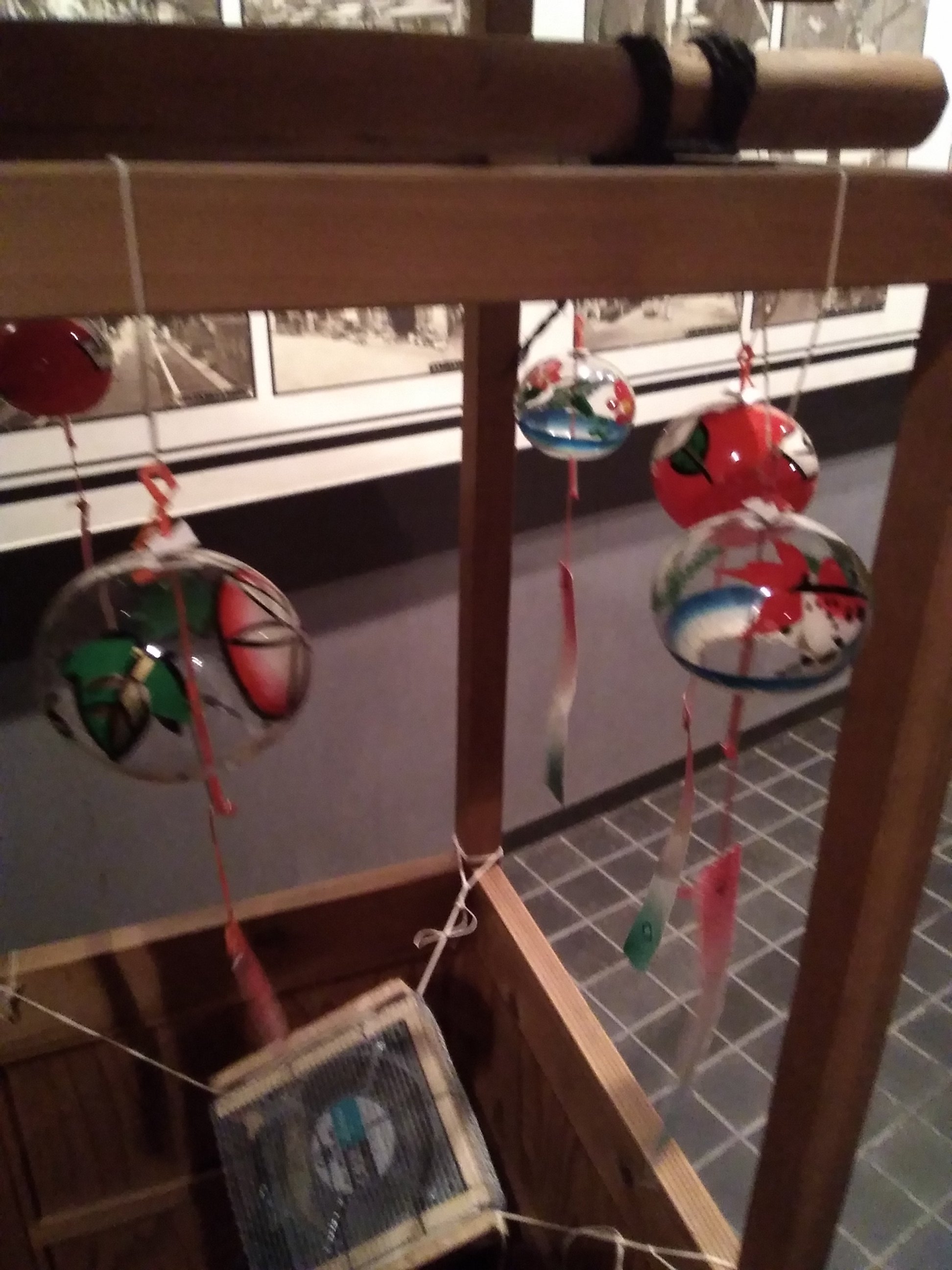 out’ at a specific time of year to herald the start of the summer.
Outside the coppersmiths house hung dried tangerine skin. 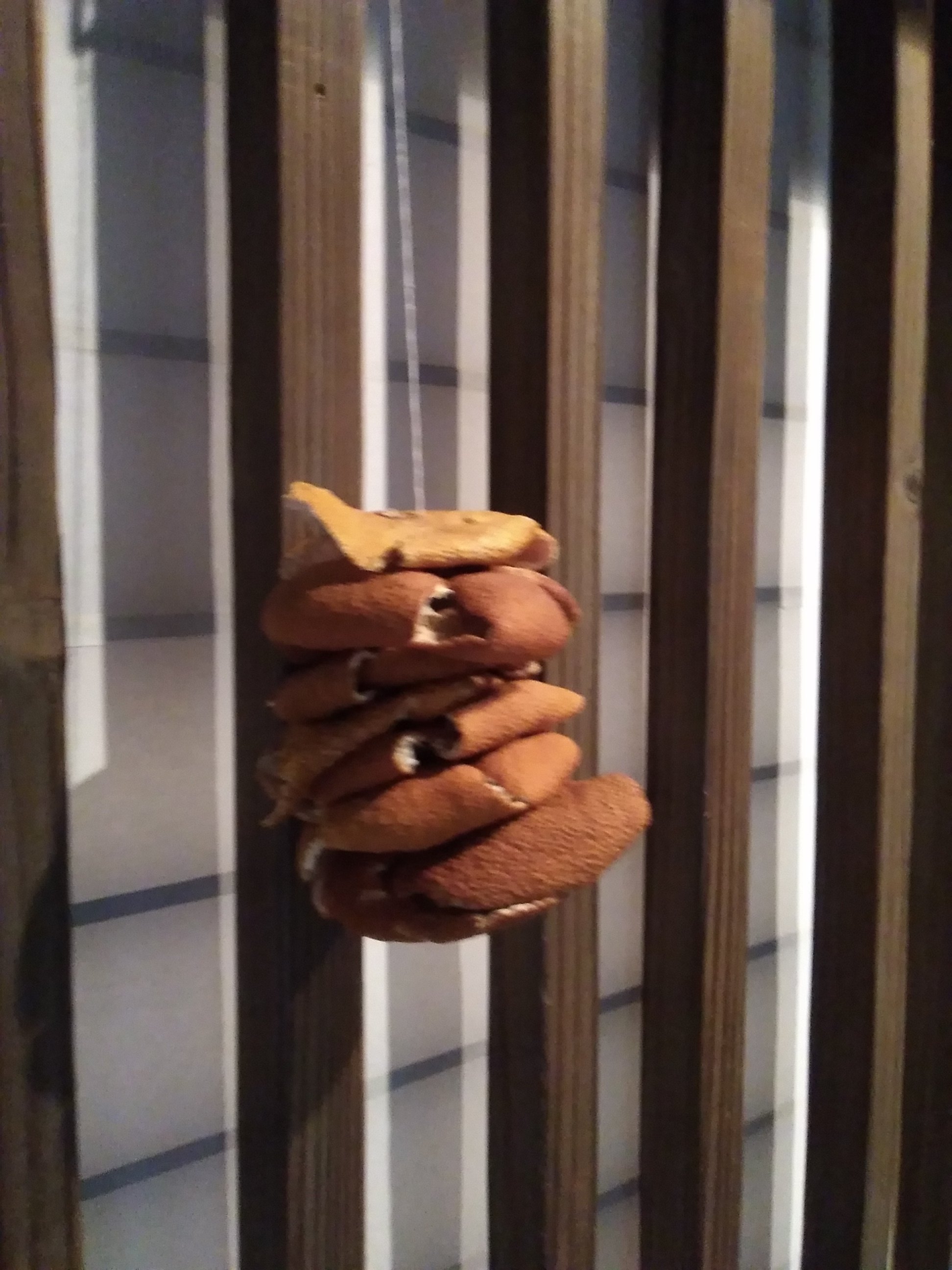 This was powdered and then made into tea when the inhabitants had colds. Pete says he’s going to try it but I think he will probably stick to Beechams.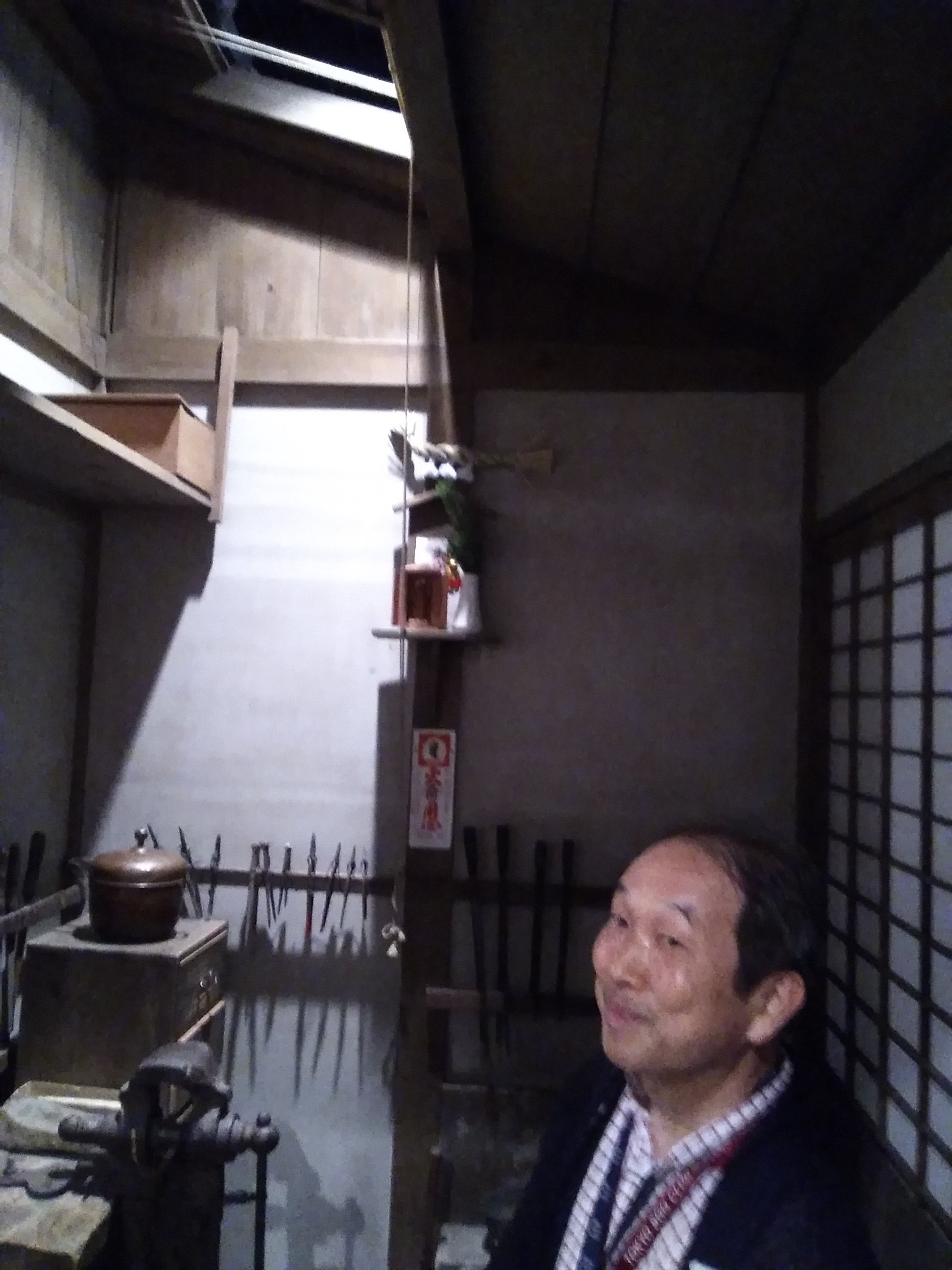
Kenji showed us a replica of a shrine. 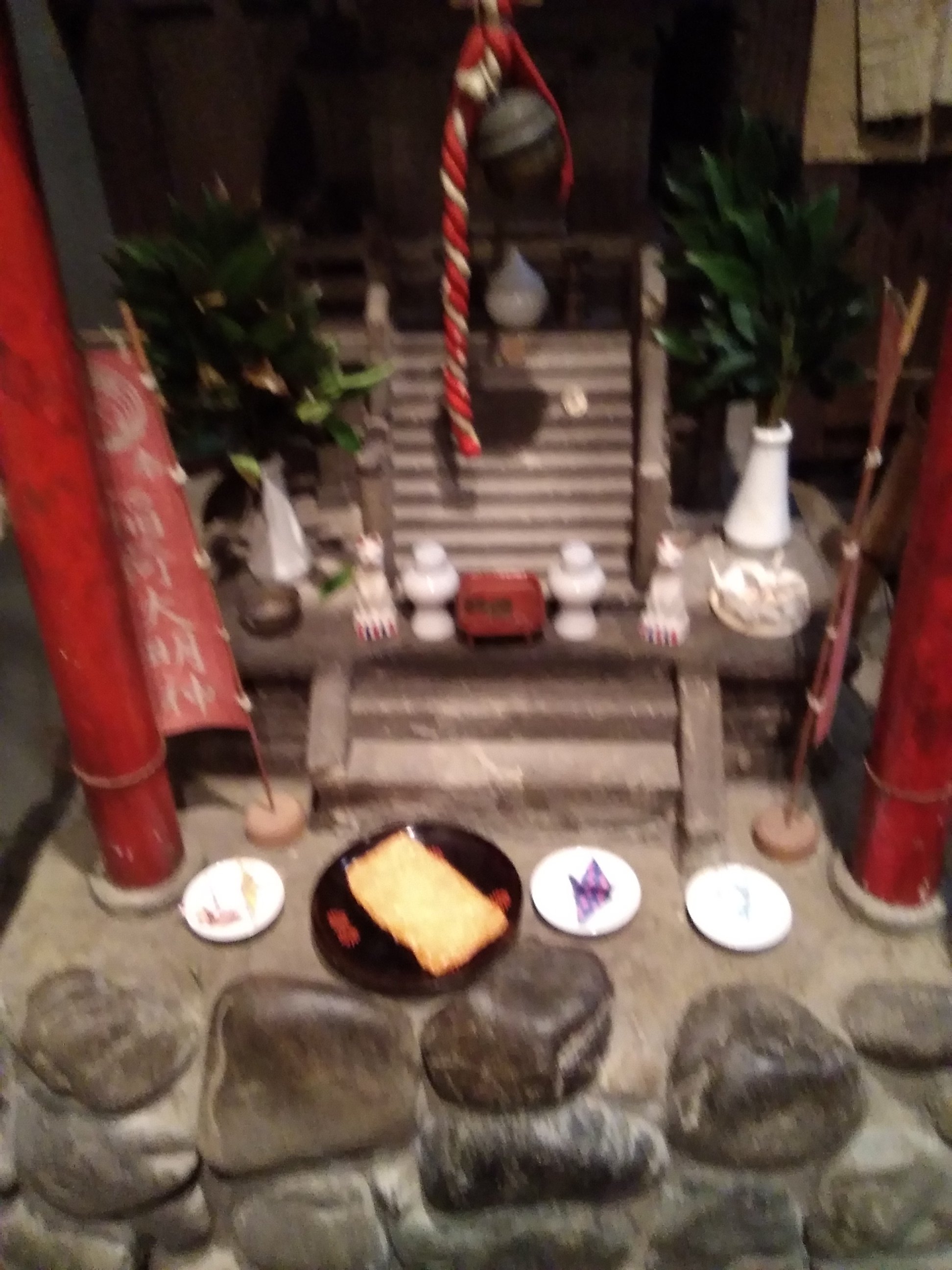 He explained that this particular shrine was linked to Inari, the God for the Neighbourhood. I thought Inari is what I like to eat off the conveyor belt at Yo Sushi, I didn’t realise it meant so much more than the cheapest vegetarian option available! So Inari is the god of agriculture but also success in business, which would have been important in this area, doka-ya, where there were lots of little businesses. At the shrine for Inari there will always be a statue of some kind of a fox and this will be given a plate of the food Inari. As apparently foxes like Inari.
After this Kenji asked if we would like to find out our fortune. He explained that there are different types of fortune:
- (大吉, dai-kichi): great blessing
- (中吉, chuu-kichi): middle blessing
- (小吉, shou-kichi): small blessing
- (吉, kichi) blessing
- (半吉, han-kichi): half-blessing
- (末吉, sue-kichi): future blessing
- (末小吉, sue-shou-kichi): future small blessing
- (凶, kyou): curse
- (小凶, shou-kyou): small curse
- (半凶, han-kyou): half-curse
- (末凶, sue-kyou): future curse
- (大凶, dai-kyou): great curse
So wonderful news… I had good luck.
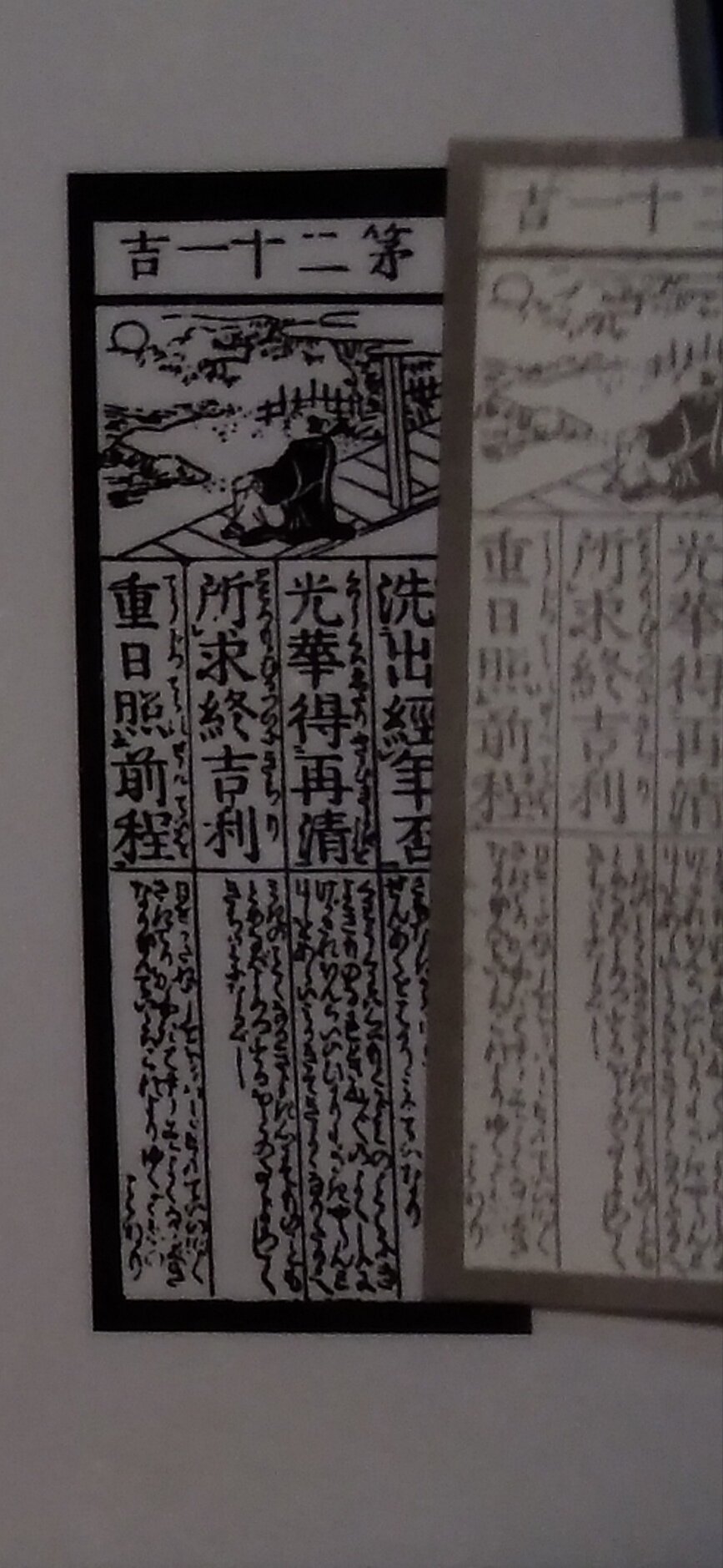
To ensure that I was fully aware of all the wonderful things that are coming my way he gave me an English version of the fortune telling.
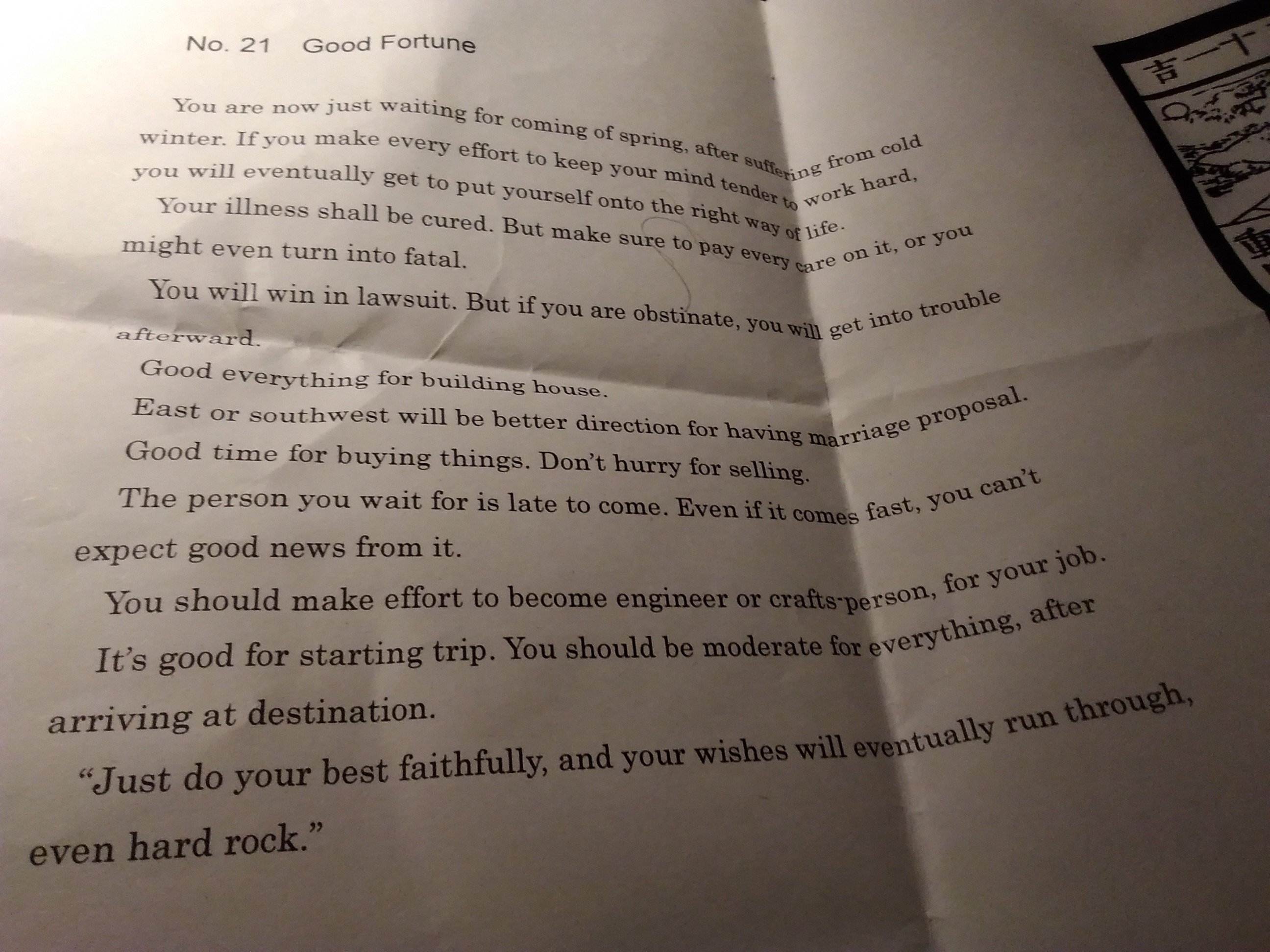
What we have seen when we have visited shrines in Japan are these little sheets of paper folded and tied to branches of trees, traditionally it had to be pine. Ones with bad luck would be tied to the pine branches, this relates to a pun, as in Japanese the word for pine is matsu and wait is also known as matsu. So if you tied your bad luck to the tree, the bad luck would stick by the tree or rather wait by the tree and not follow the person. Kenji said that people nowadays often leave behind the good fortune ones too but he didn’t go into why, but I would have thought you would want to keep the good fortune as close to you as possible. My fortune telling also gives me career advice, to train to be an engineer or crafts person instead, indeed food for thought!
After this we had planned to rejuvenate ourselves by visiting Momi No Yu cafe. It’s a foot spa cafe, you put your feet in a hot ‘spring’, have a healthy tea and just relax.
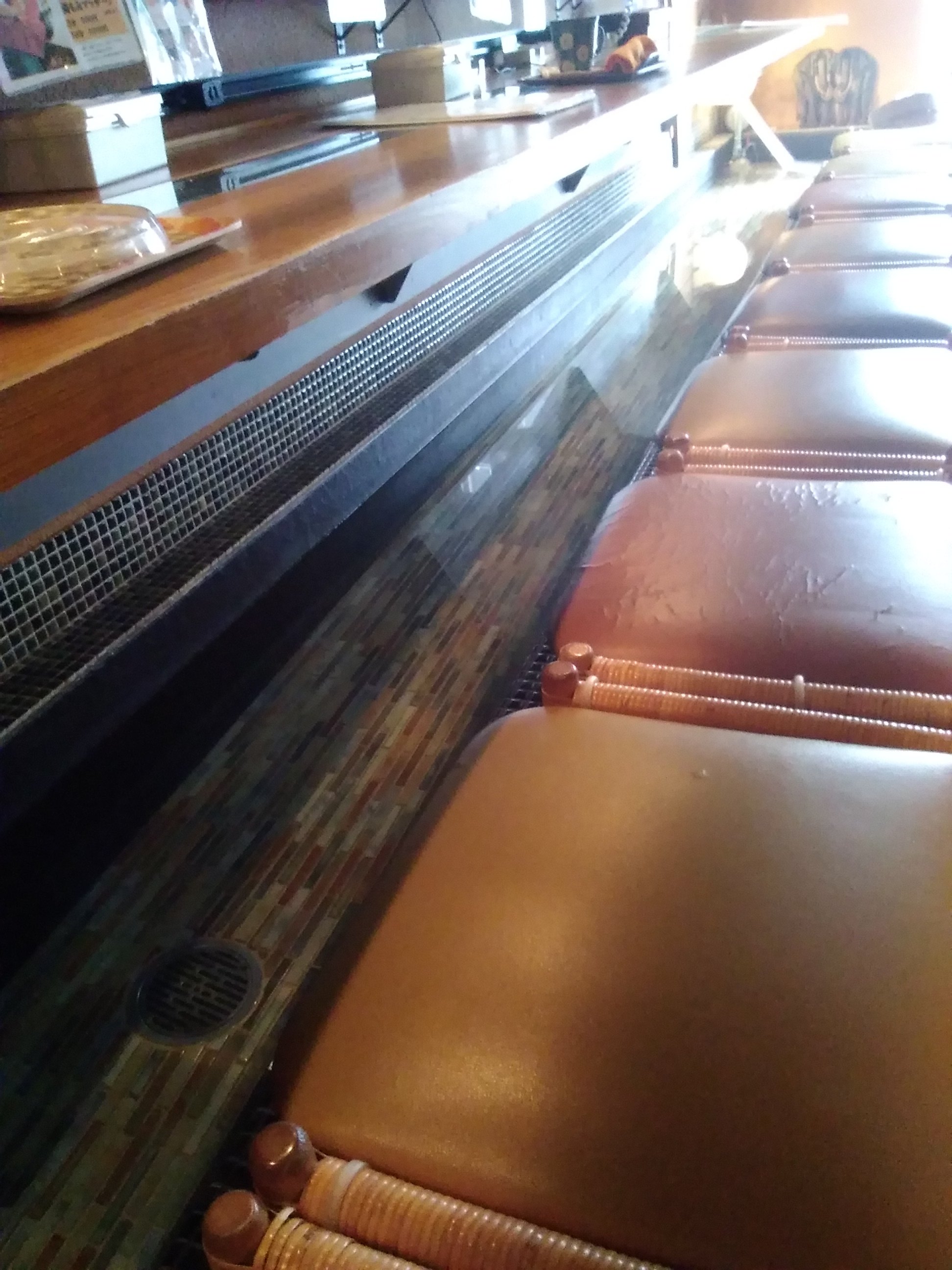 You put your bags inside the chairs. First you clean your feet and then you can put them in the water, which felt great. Then they bring you a cold cloth to cool yourself with. Pete got quite attached to his, throughout the visit!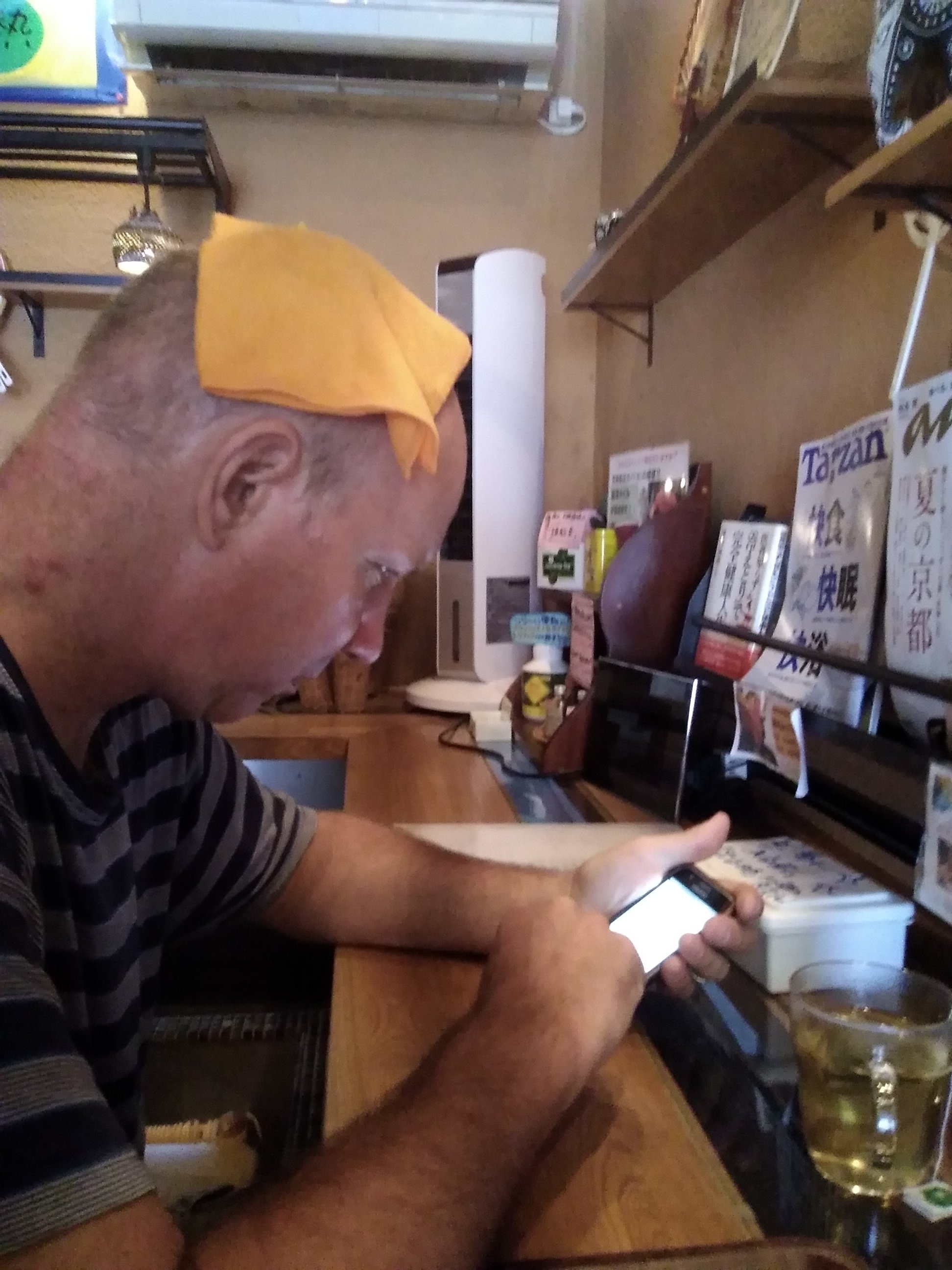
I had gotukola tea, which is good for memory and aids sleep. So hopefully I will feel the benefits soon. Pete had Wen wen tea, it didn’t say what that one was for. I will need to pay close attention to him to see if anything seems different.
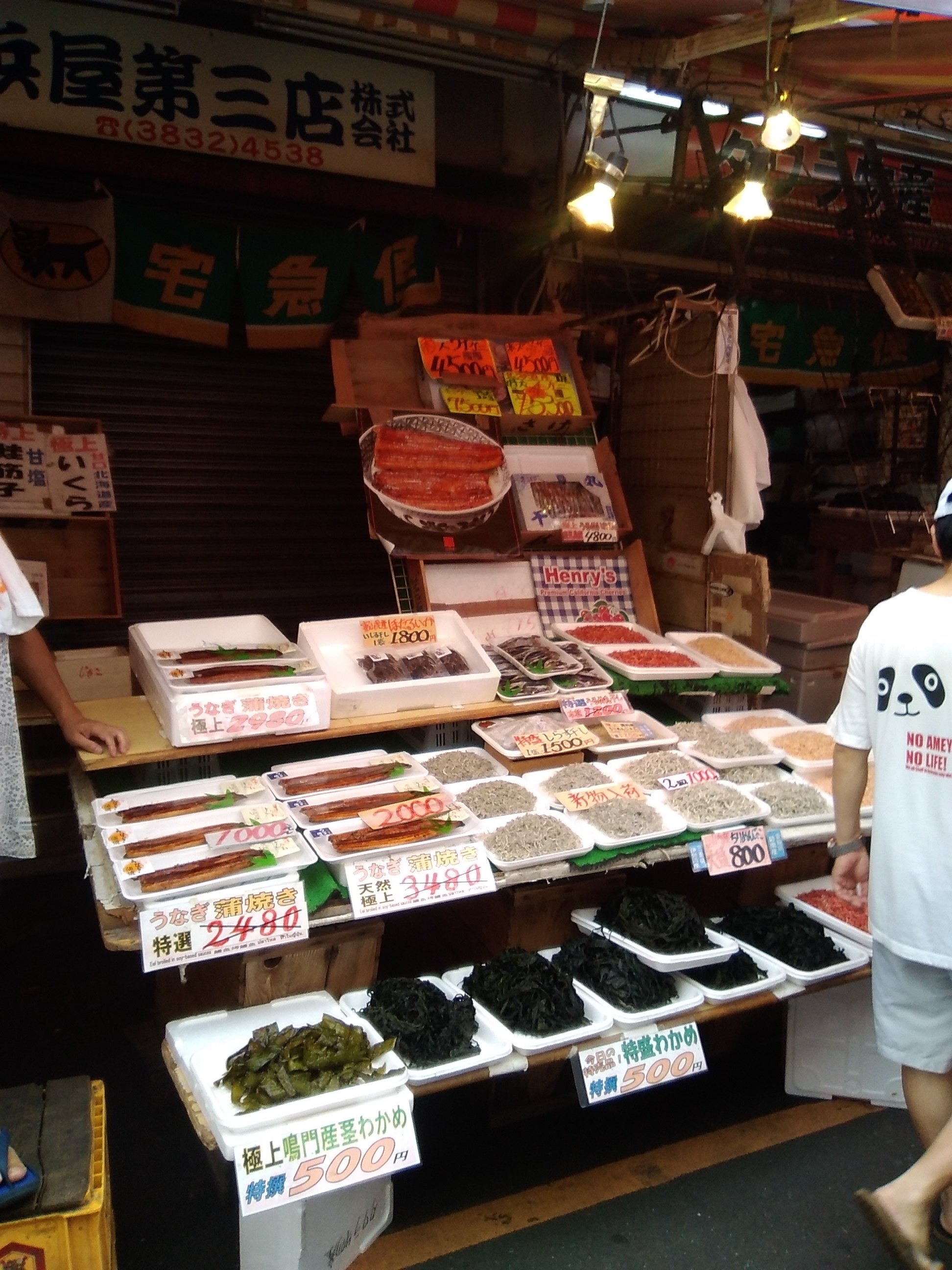
This brief sojourn gave us the energy needed to tackle Ameyoko Street, a bustling Warren of shops close to Ueno Park.
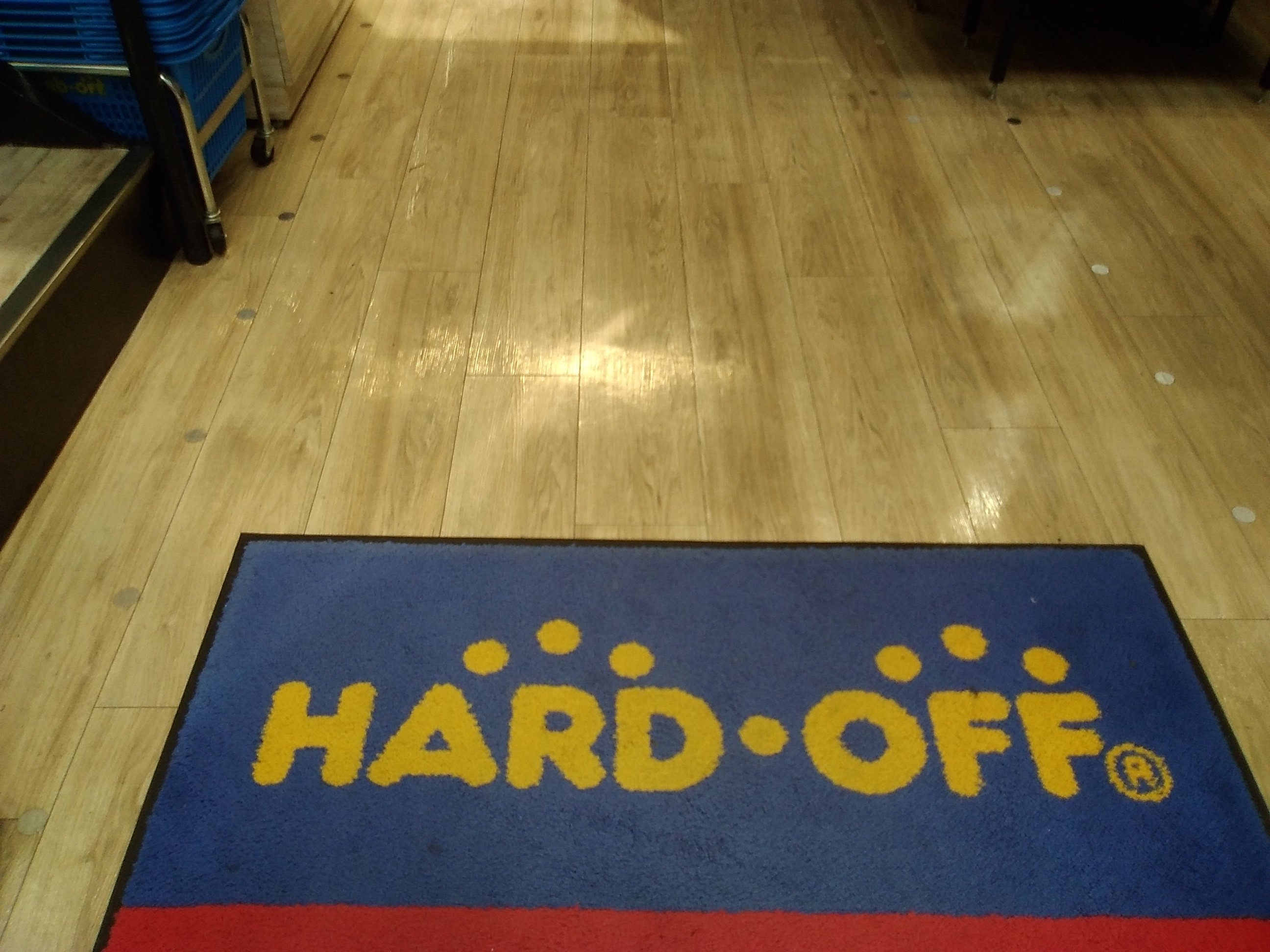
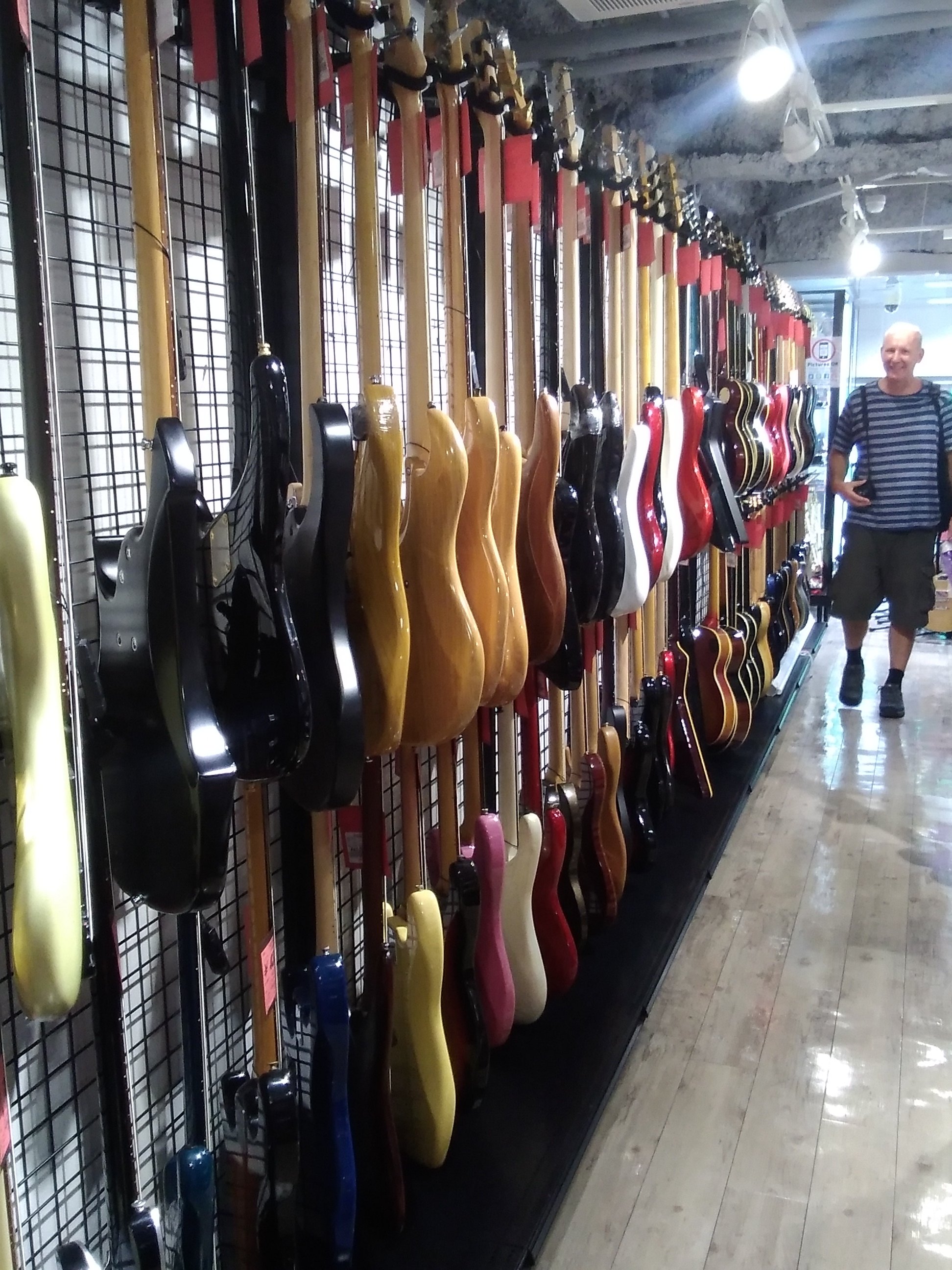
Pete was drawn to Hard Off (interesting name) and you can see why.
They seem to sell literally everything.
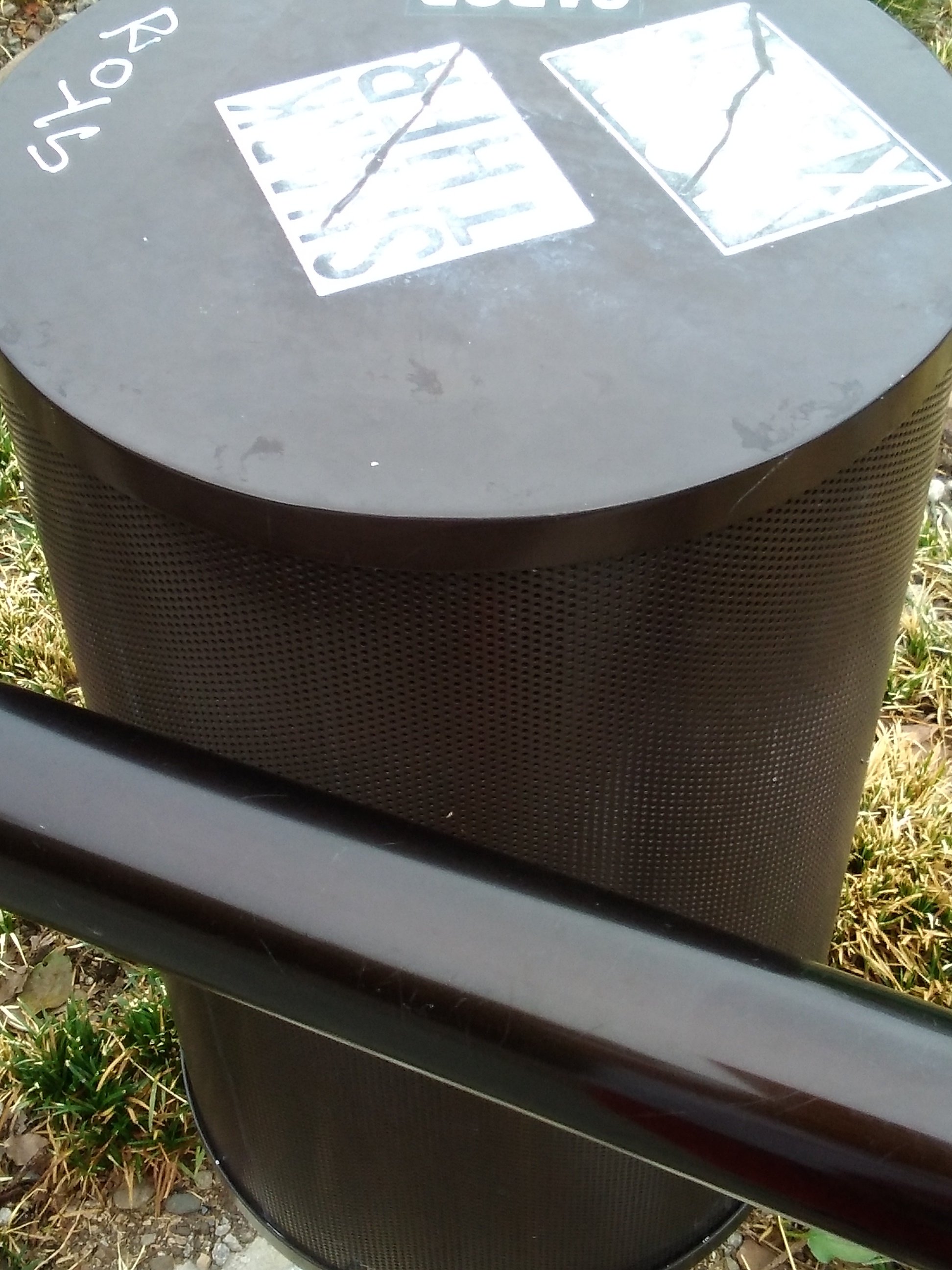
 One of the places Pete has been keen to see is one of the gambling places. There was a large one next to the street so we went in. It was utterly deafening and the punters can smoke in them. You can’t smoke publically in Japan, only in designated smoking areas, you can’t walk around with a fag, it is illegal. The upshot is no fagbutts littering the floors. In Ueno Park, a recording of dos and don’ts of smoking is blasted from these metal containers.
  The gambling place was like no place I have ever visited.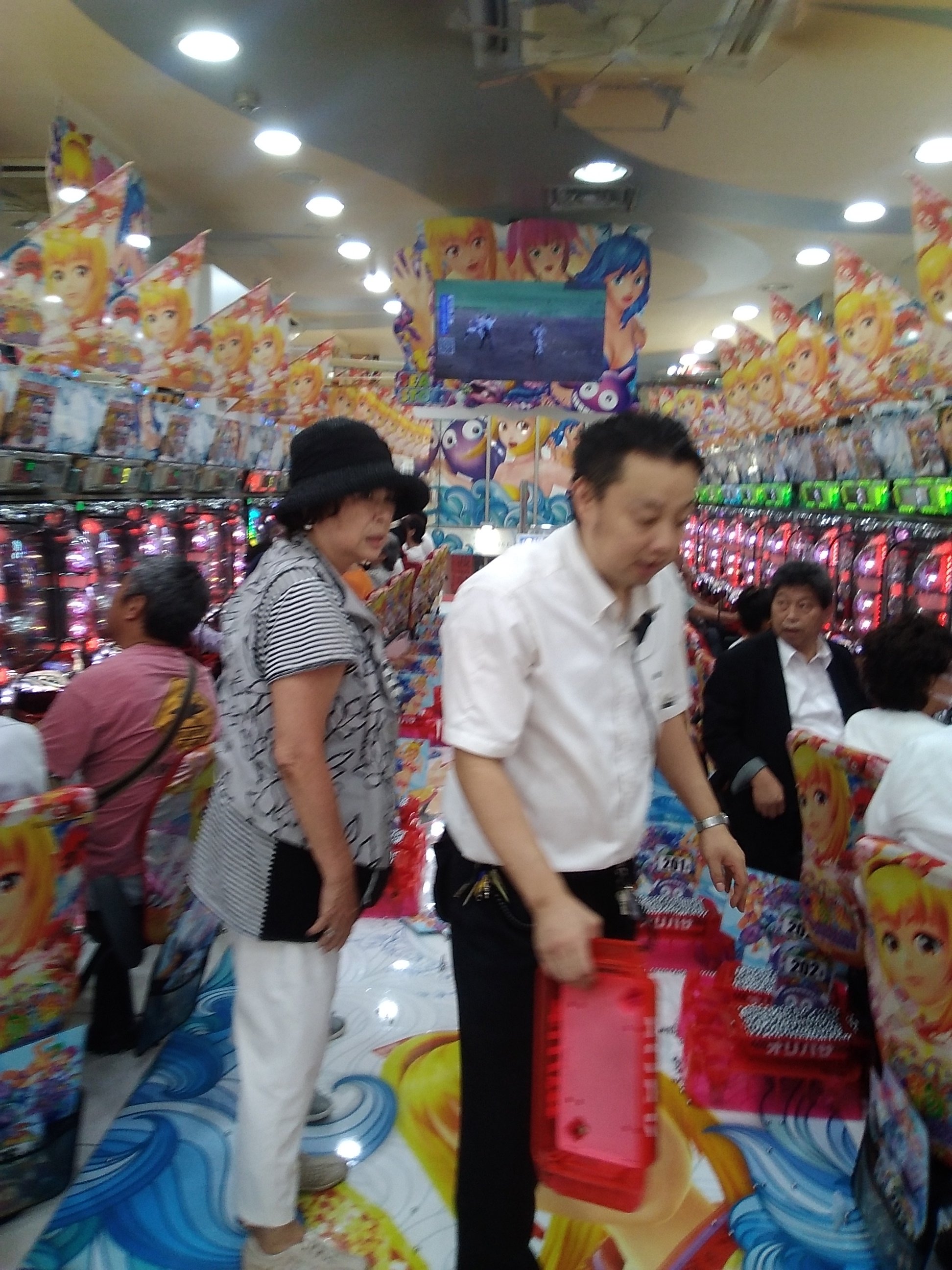
The noise was the sound of hundreds of metal balls going through the machines. We asked one of the people working there how much did it cost to play and exactly how do you play it. The starting price was 1000 yen, around 7 pounds and he handed us a laminated A4 sheet with the instructions. 1000 yen is far more than we would normally gamble with, it’s normally 2p in the slots at Whitby!
We found out the game is called Pachinko. Japan Visitor explains it well:
Commonly mistranslated as ‘vertical pinball,’ pachinko is a noisy, smoky, time-consuming, and hypnotic form of gambling that plays a huge part in the Japanese economy.
Newcomers to Japan often ask just what those garishly lit, cheaply built buildings with names like Stardust, Paradise, and Omega are. Churches? Banks? No, they are pachinko halls, an integral feature of the Japanese cityscape.
To be honest it seemed really stupid but the same glazed look they had on their faces would match mine which I am determined to win some utterly ridiculous piece of tat at the arcades in Whitby.
We then headed to the edge of Ueno Park for a ‘picnic’ of sushi and bananas. Our friends Lyn and Jack had given us a book about Ueno Park, fiction but based on the homeless who congregate there, which Pete had read before we came out. Looking at this part of the park there seemed to be quite a few people who seemed a bit disenfranchised.
Apparently there is quite a sizeable homeless population in this area, which you wouldn’t expect in this area. The problem spiked in the 1990s when the economy slowed down. Word on the street is that now Tokyo has won the Olympic bid, these homeless people will be shipped out of the capital.
A bit of a day of contrasts as after this we looked at the shops that there is no way we could afford to buy anything. Shinjuku Takashimaya Times Square was the most notable. I would put it akin to Harrods. 8 floors of a lot of expensive things. One floor puzzled us as they had Coq Sportif amongst some very posh brands, as if this was a clothing line that people dream of. What was really odd was when we went down some ‘grubbier’ side streets there was a tiny scruffy shop – it was Super Dry. Whereas when I have seen this clothing line in the UK its been in a prime location. So really these things are not based on one thing being better than another.
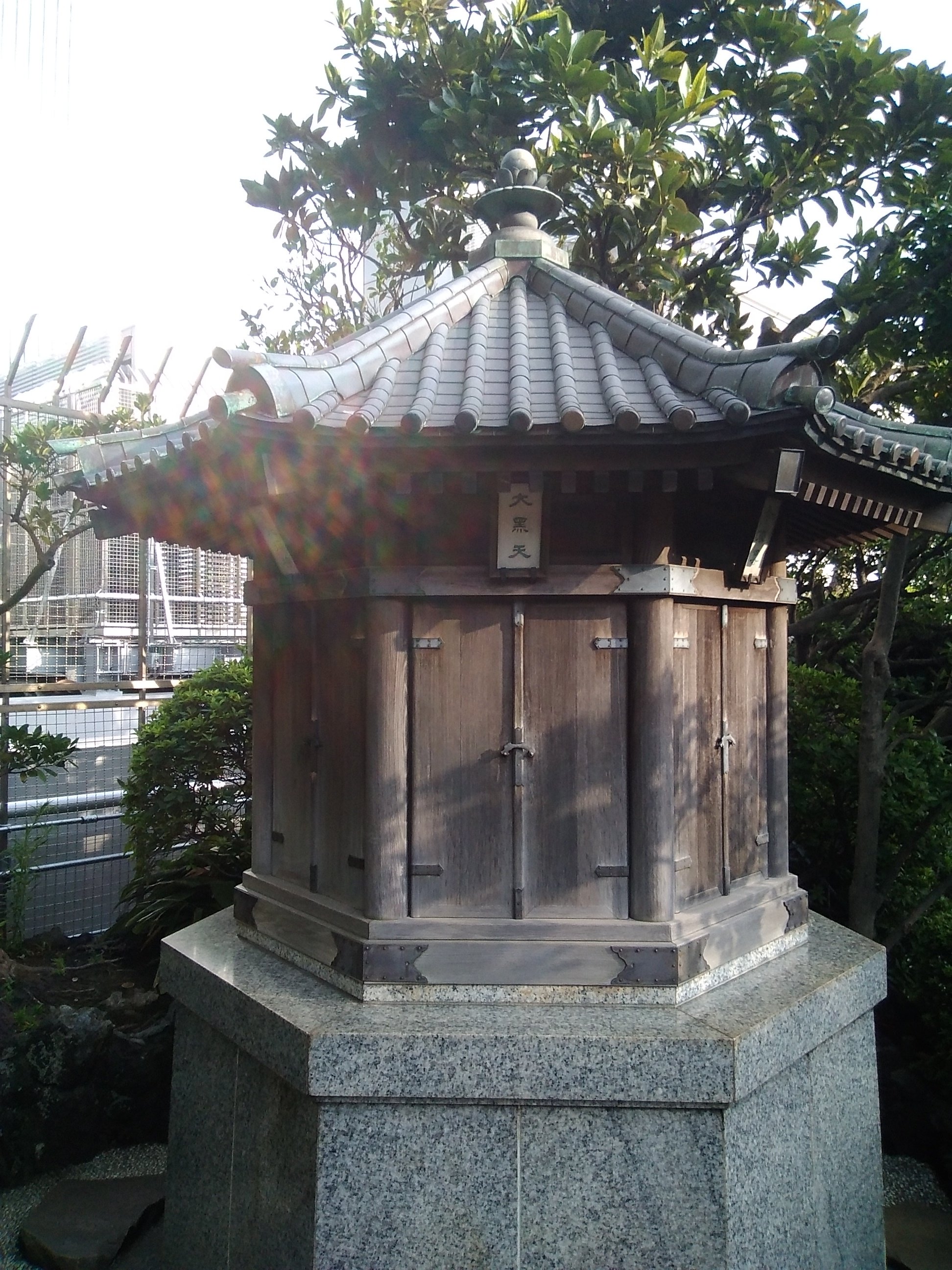
We decided to go to the top floor to see if we could see the roof garden.
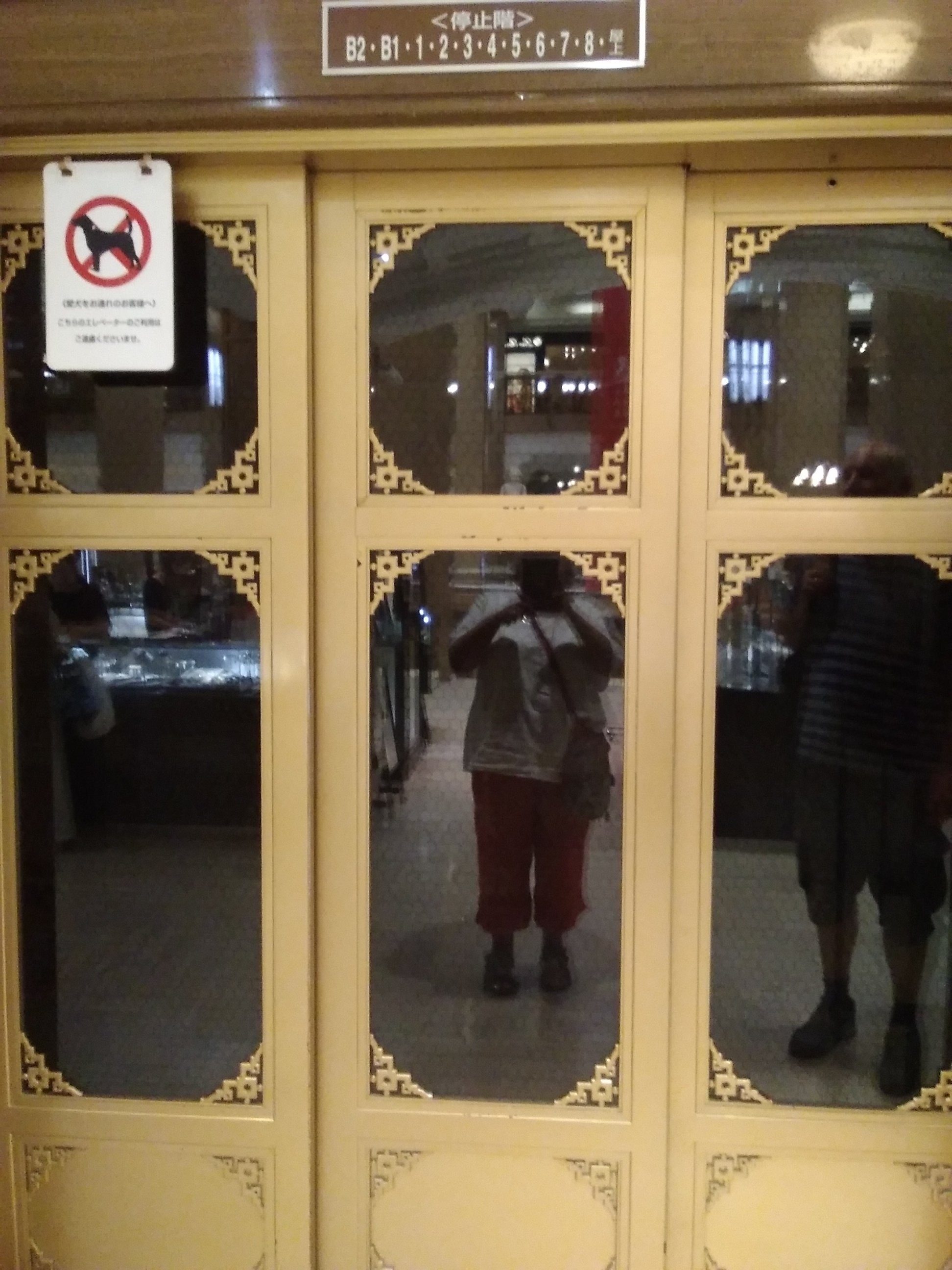 Very, very posh lifts. They actually employ young women to press the buttons….. And what a meal they make of it. All of them in uniforms that harken to the 1950s topped off with a pill box hat. At each level they would get out, elegantly move one arm up and down while calling gently that the lift was either going up or down.
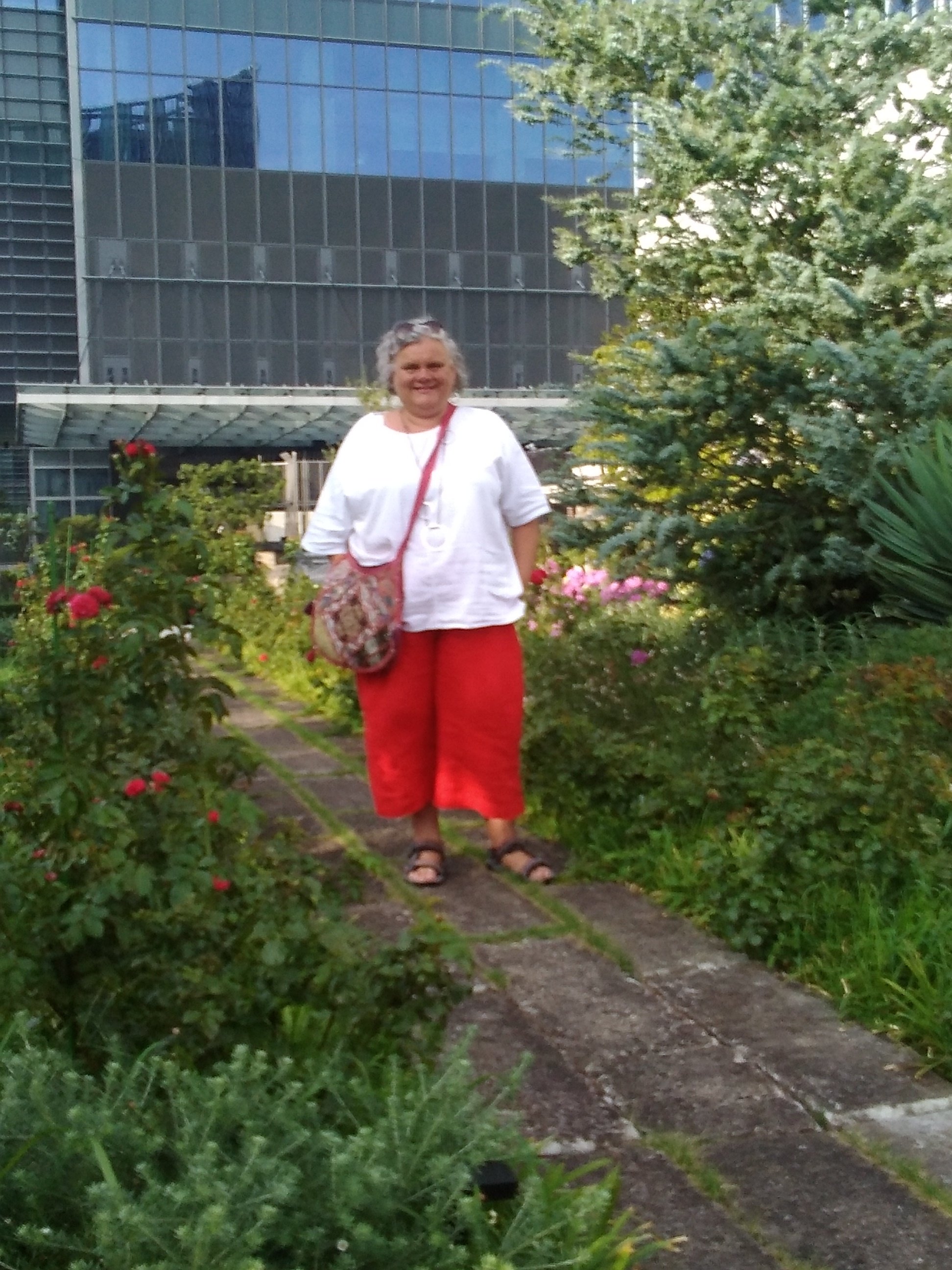
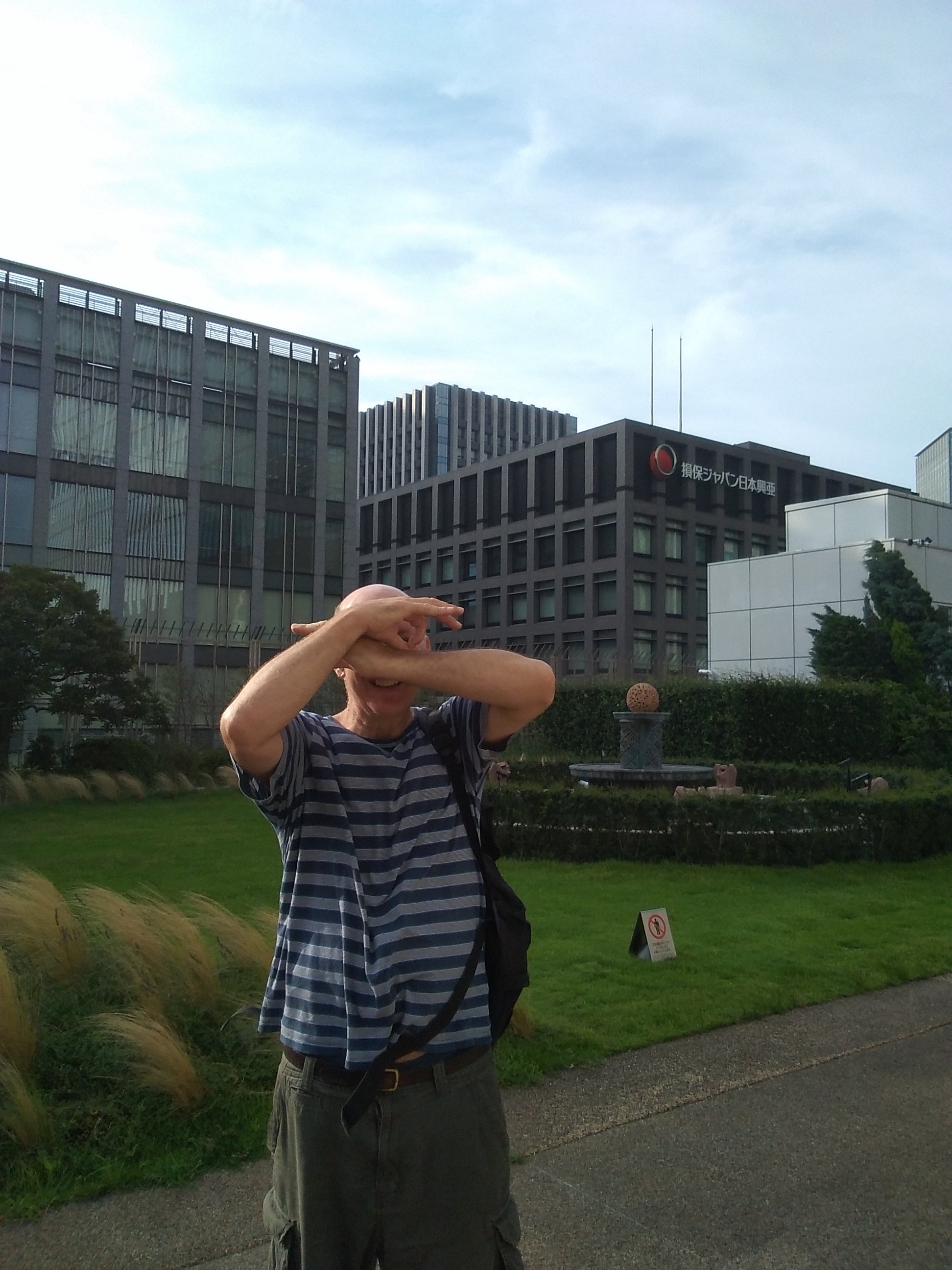
 So we got to the top floor, very windy and saw the garden and a bit more of how the other half live.
 S
S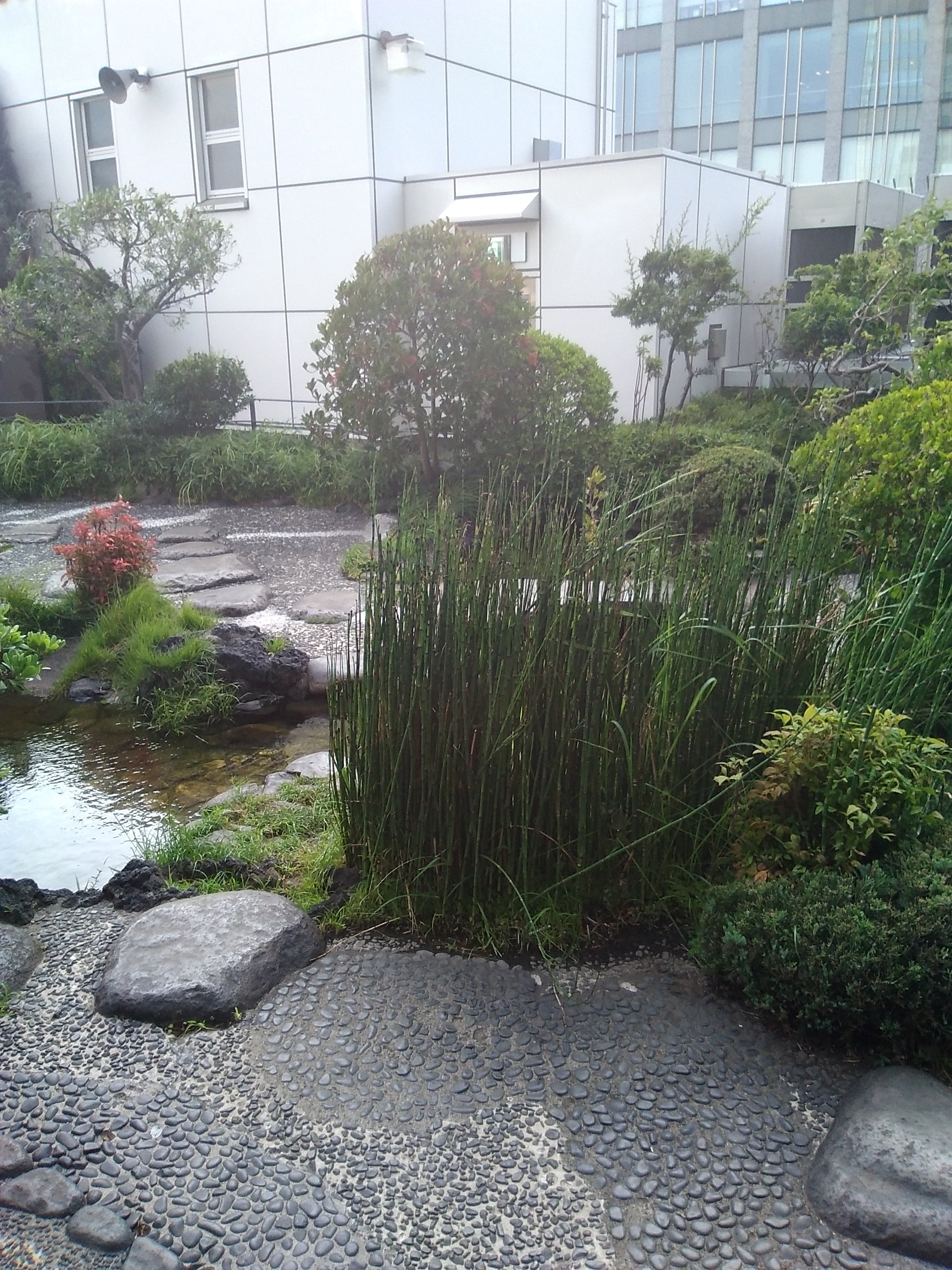
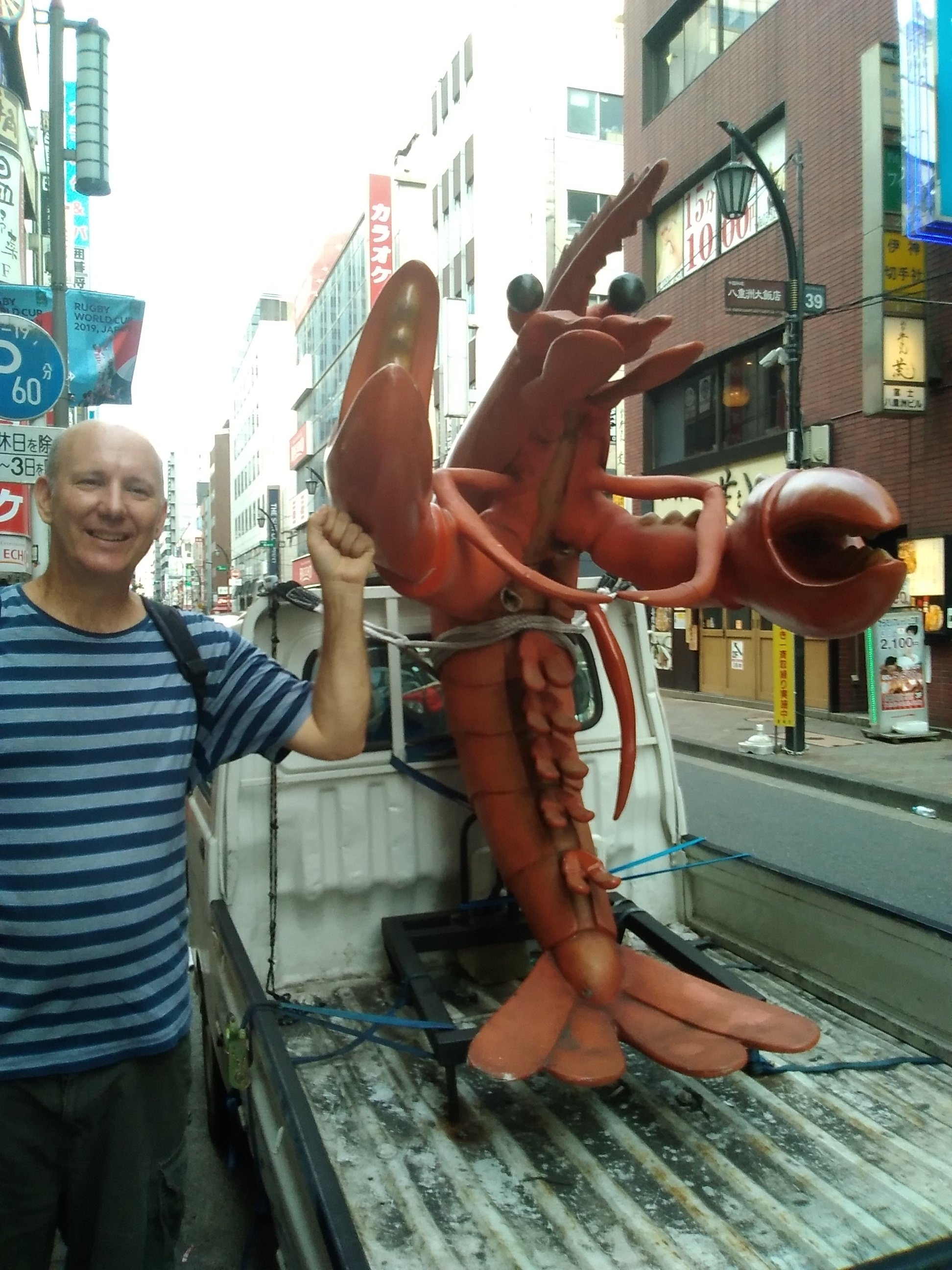
Heading to shops that reflected our budget we passed a giant lobster tied up in the back of a van. This country always seems to have surprises round the corner.
 Random Acts of Travelling