Well getting up and ready for 5.30am seemed huge the night before especially as we were both tired. However, as Costa Rica is 7 hours behind the UK our body clocks are completely off kilter. So wide awake at 2am we sat up in bed watching the distant electrical storms.
This doesn’t do justice to the dramatic splendour of it.
We met a couple from Nottingham on the way to the pick up point in the centre of San Jose. They were from Nottingham. The man introduced himself as Shish, as in the kebab he said. Pete said he was Pete and I was Donna, as in the kebab. A bonding experience.
Much of today has been about transferring from one type of vehicle to the next. Firstly we were picked up from the hotel by Ricardo.

Ricardo spoke English and was very obliging in pointing things out about Costa Rica in general and also things we passed.
We anticipated that it would be deadly quiet travelling at that time in the morning but as Ricardo explained it was actually rush hour. The place was alive with throngs of people. He explained that half the population of Costa Rica live in and around the city of San Jose. Costa Rica has 287 cars per 1000 of the population, making it one of the lowest globally. Probably helped by the very comprehensive and affordable transport system. It also has the highest number of electric cars per head of population for a South American Country.
You could tell that in the way Ricardo recounted things that he was very proud of his country and their stance on attempting to keep as much of it intact. Roughly 28%of Costa Rica is reserved for national parks and reserved land. Costa Rica accounts for only 0.03 percent of the earth’s surface (has only 51.100km2). However it contains nearly 6 percent of the world’s biodiversity.
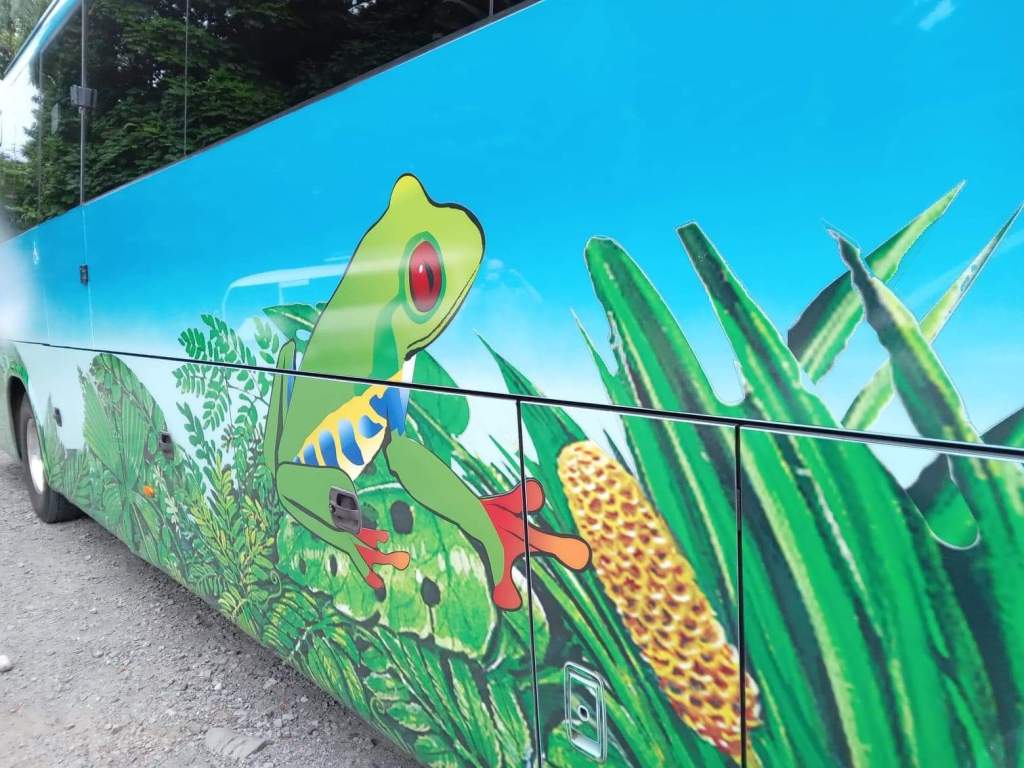
Ricardo dropped us off and we got on this bus, meeting our tour guide for the next few days, Julio. Julio’s English and breadth of knowledge proved to be fantastic. At turns stern didactic and funny. We felt like we were on a grown up school trip. Passing anything Julio would recount statistics, stories and opinions – very much rooted in his love of nature and belief in conservation.
We passed orange rivers full of sulphur drawn from the volcanic soils higher up – completely toxic stated Julio, no fish, utterly poisonous. This tree is called this, that tree is called that, one thing quickly spiralling into another in an exhaustive but spellbinding litany of information.
We stopped at a restaurant on the outskirts of Guapiles, where Julio informed he came from. As it was now around 8am it was time for breakfast, although the Bueno Vista hotel had also given us a pack up of fruit, cake and yoghurt, so it ended up being quite a breakfast experience.
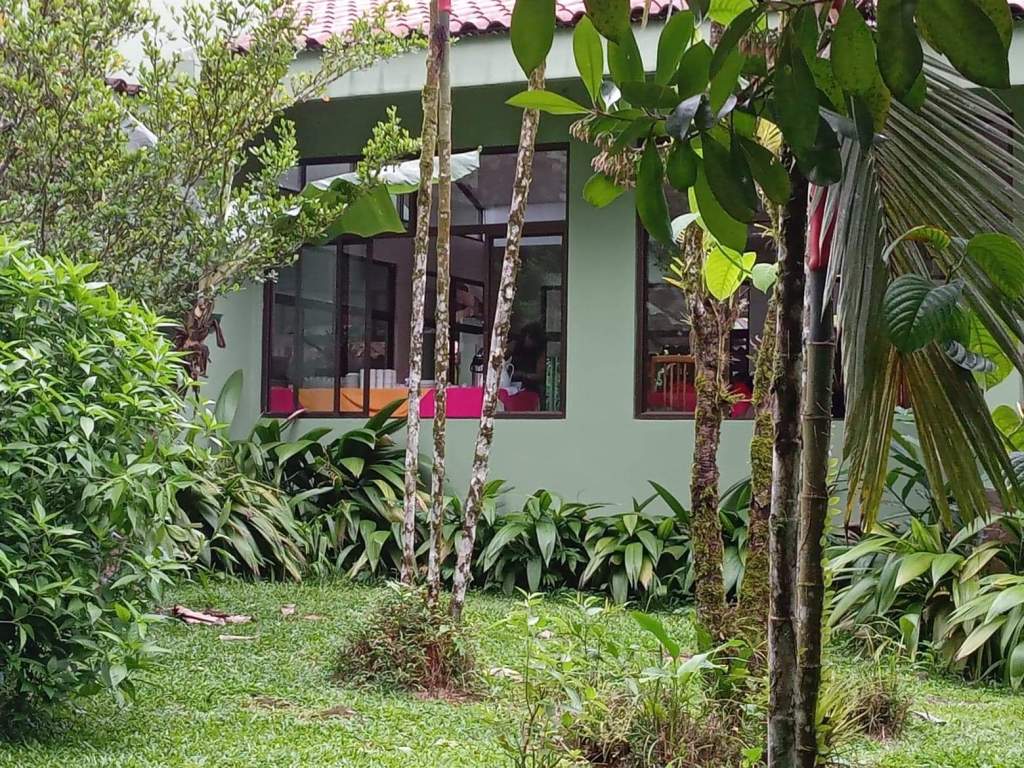
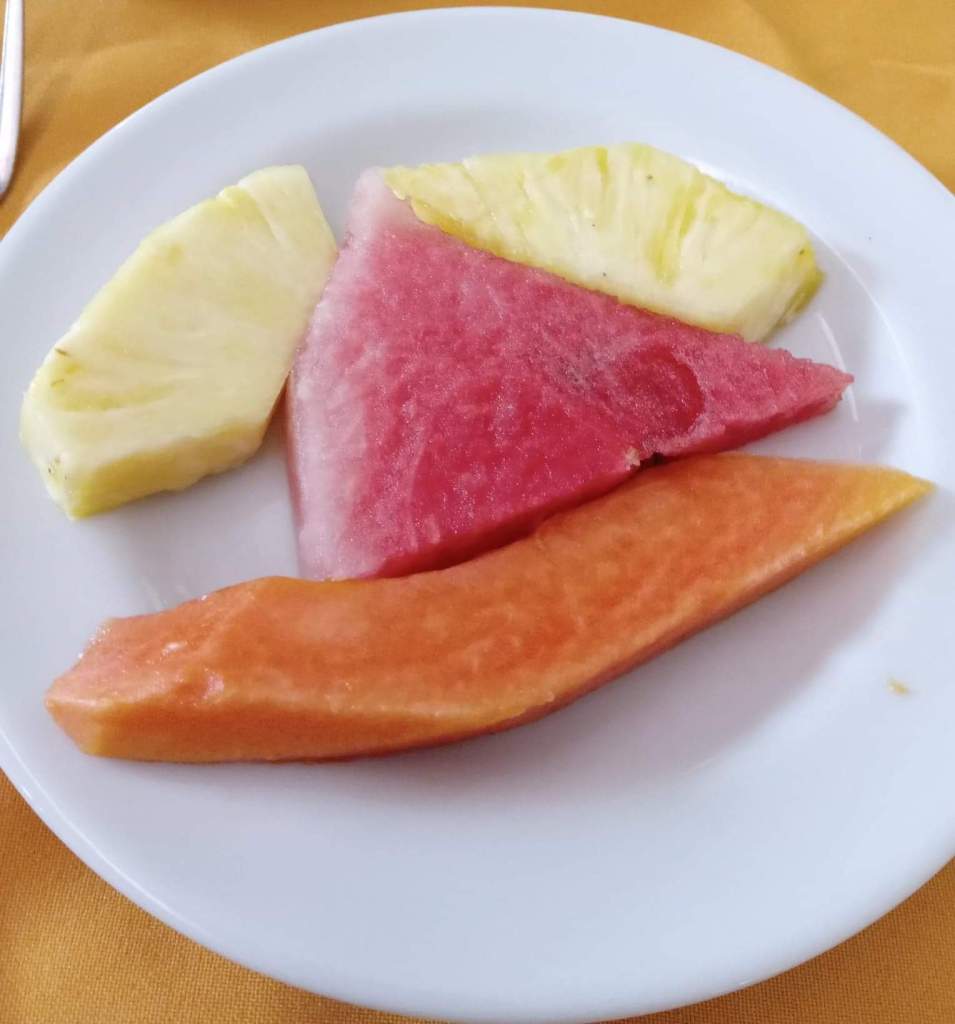
Fruit and rice and beans are staples that make up the breakfast experience in Costa Rica – everything I love.
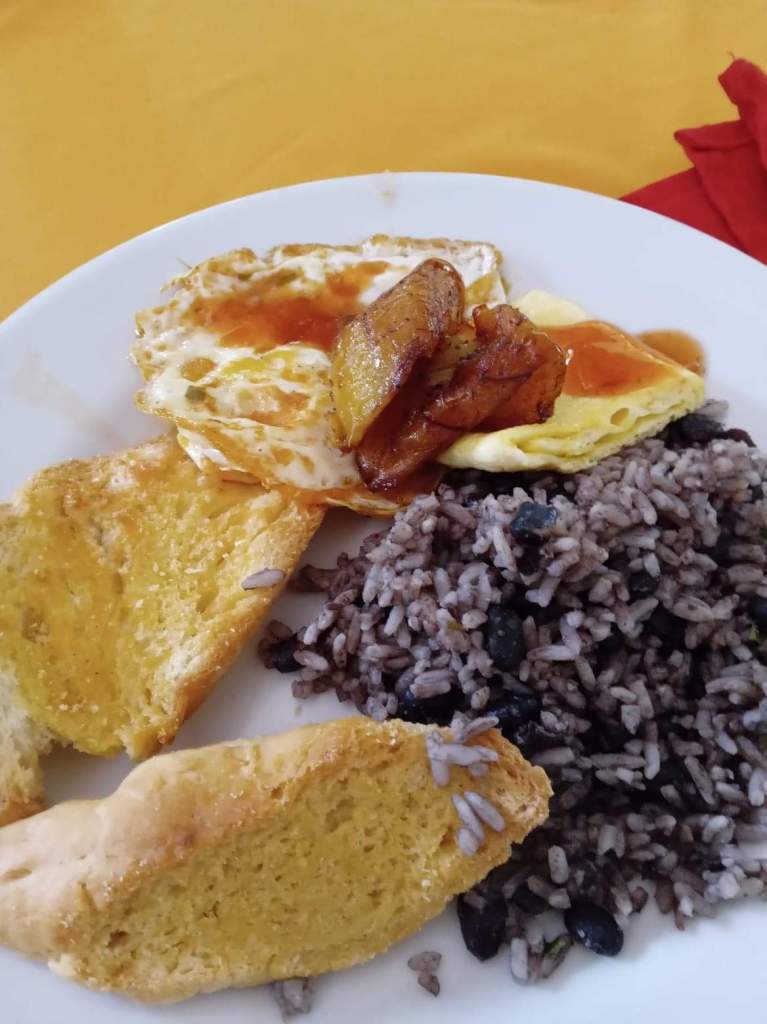
We had time to stretch our legs so strolled round the gardens.
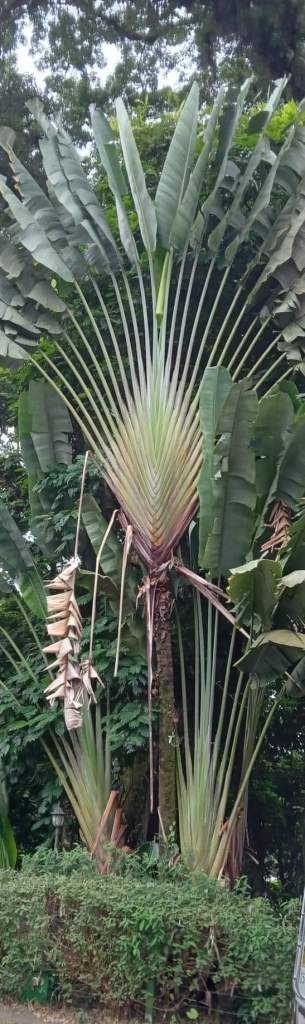
Julio said that this tree was an important one for ancient civilisations. As we have got to know Julio a bit better we have found his enthusiasm often creates a situation that he has talked so much you miss the salient points in the middle of long winding stories – so don’t actually remember what it is called.
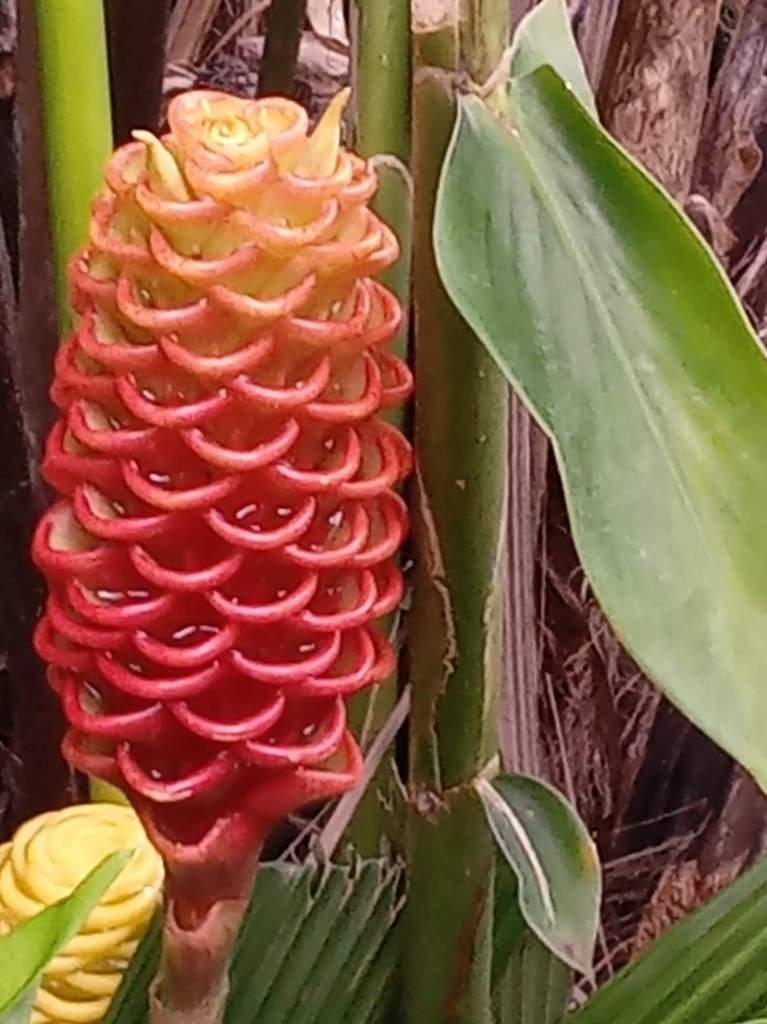
The flowers are beautiful and vibrant as I had anticipated. This is the Red Pine Cone Ginger.
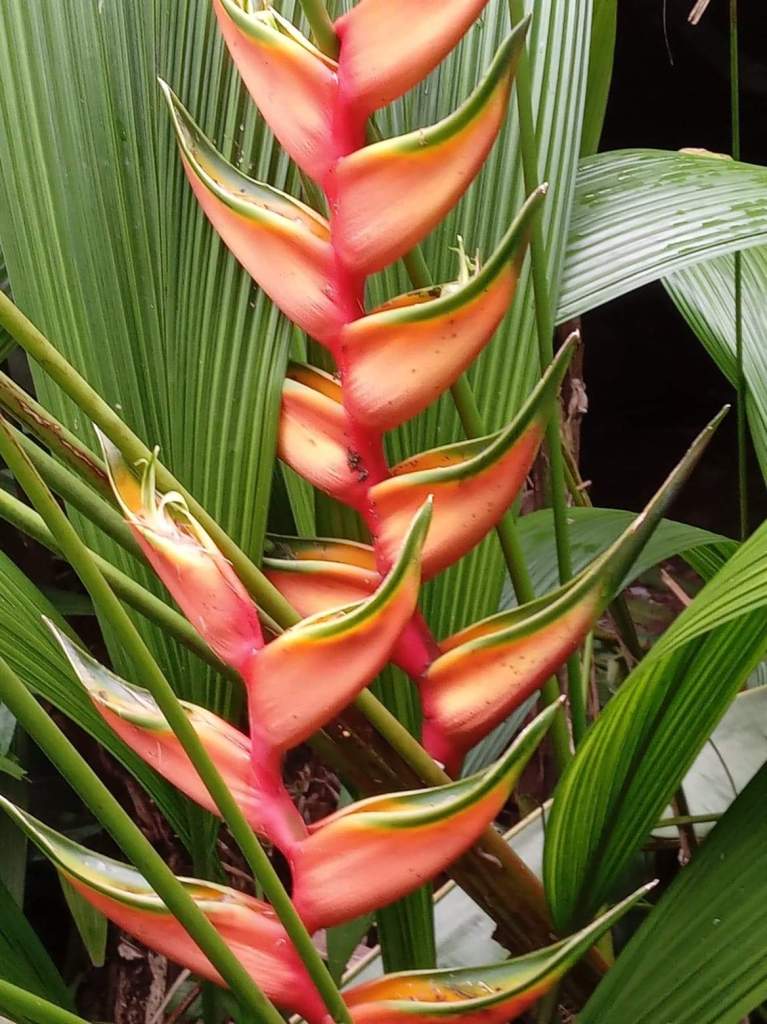
This is aptly named the Hanging Turtle Claw. Hummingbirds are particularly fond of this flower.
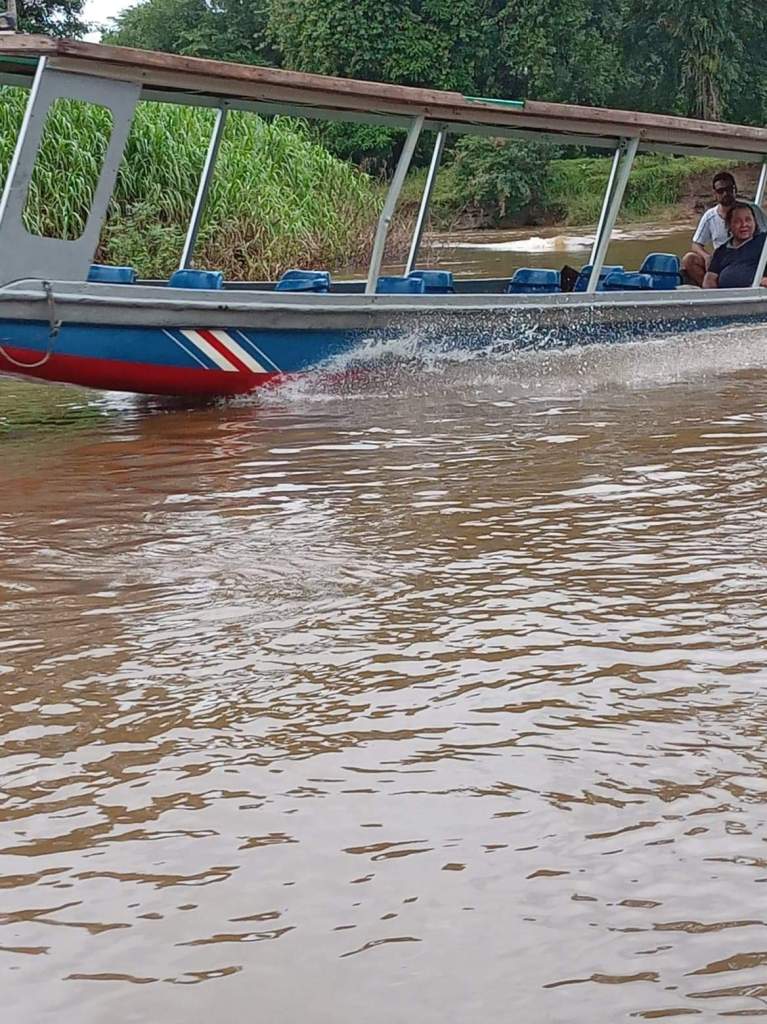
We headed back to the coach and proceeded to the ‘ferry terminal’ for the final leg of our journey to The Tortuguero Canals. These represent the second largest wetland in the country, and are considered by many visitors as the Amazon of Costa Rica for its natural richness, and great biodiversity. It is located in the northern area of the Costa Rican Caribbean, and you can only access the area by boat or plane, since there are no roads. We weren’t going to stretch to a plane so it had to be a boat. Having reached here very uncertain how a plane would land here.
On the way Julio really, really brought any expectations of our next few days down to the lowest bar possible. He extolled that you could weeks and months in this area and see no animals, birds or insects. The place we were staying would have no internet, no sir conditioning. People had travelled there before and had promptly turned back. He made it sound like the canal journey was out of a chapter of Heart of Darkness. Juilo’s catchphrase was that you needed “Good luck and good eyes’ to be in with the chance of seeing anything.
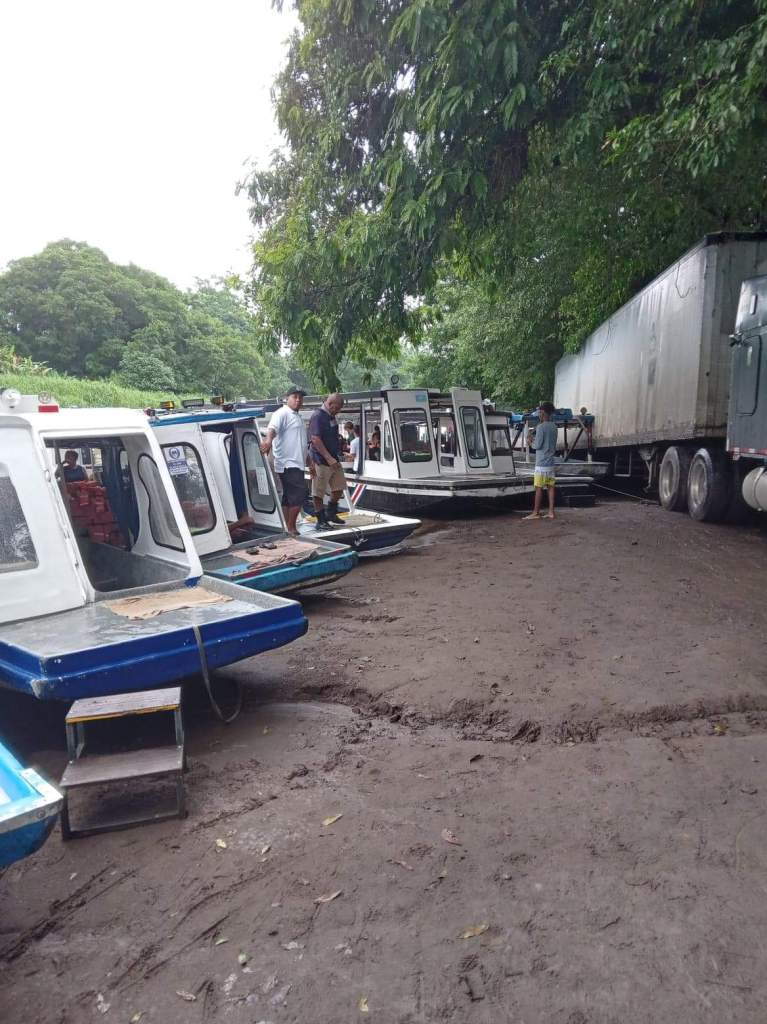
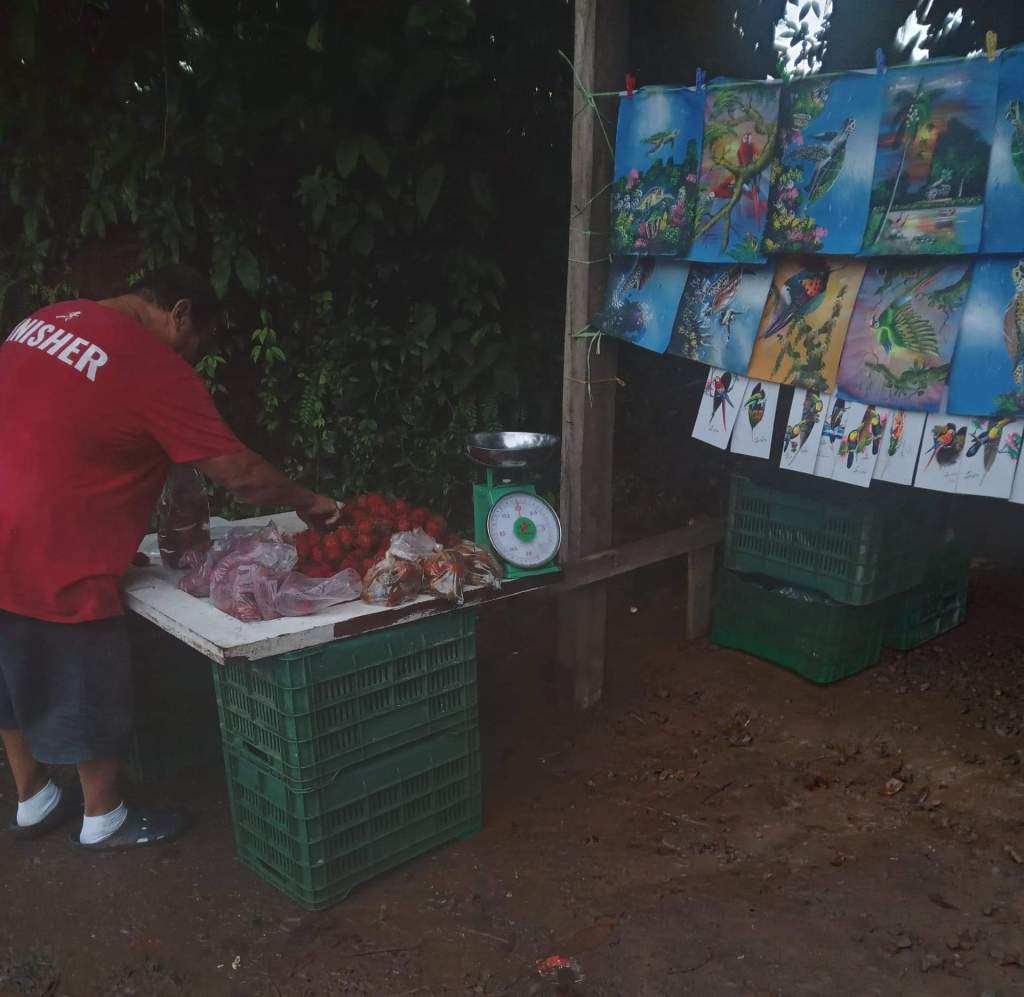
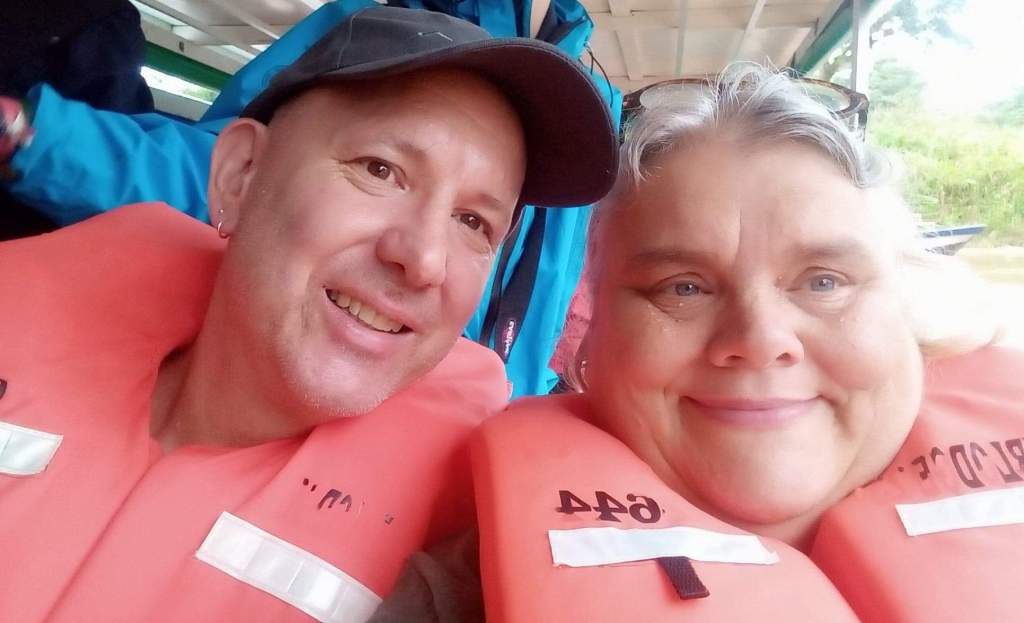
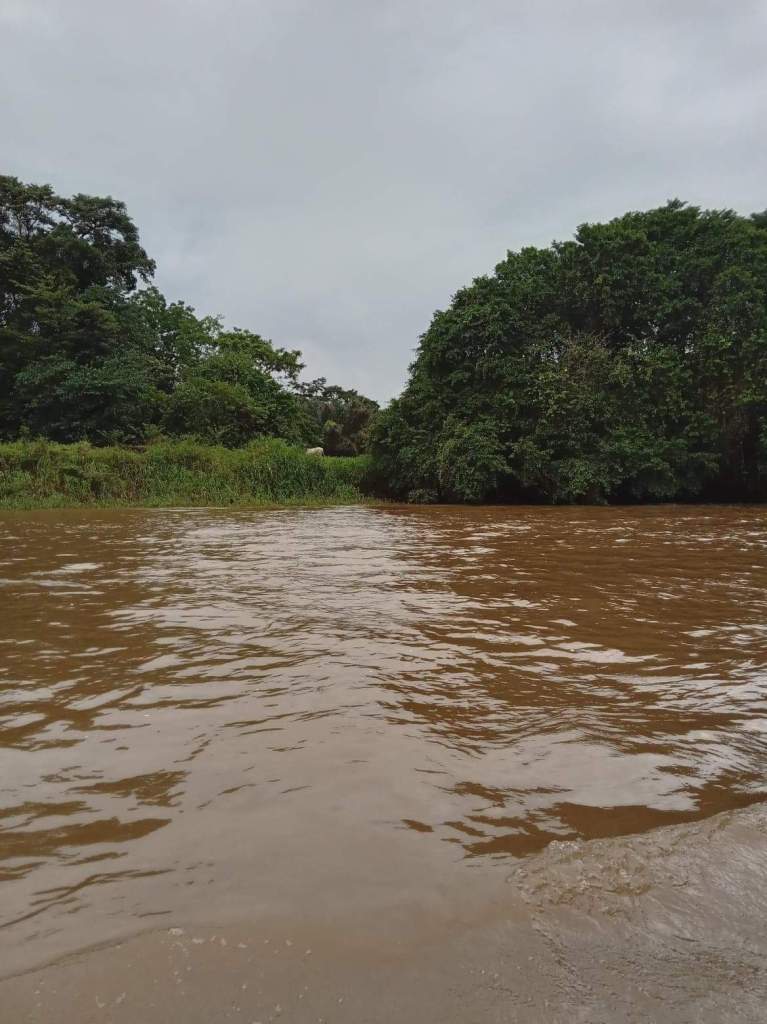
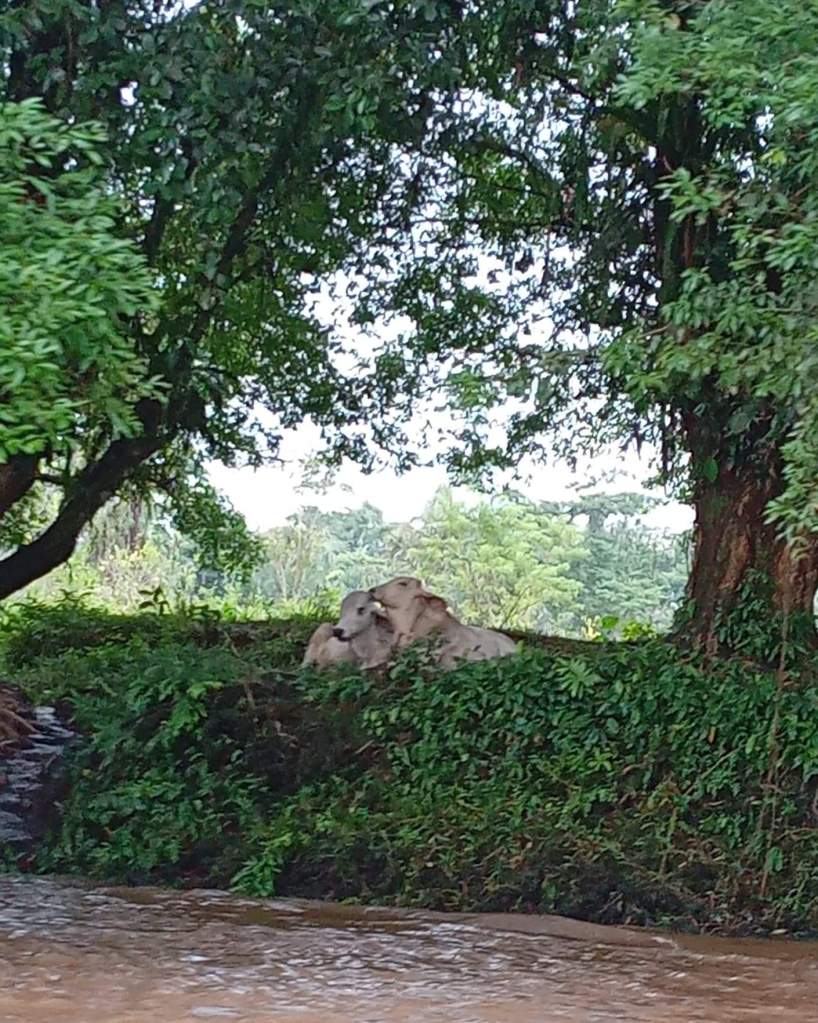
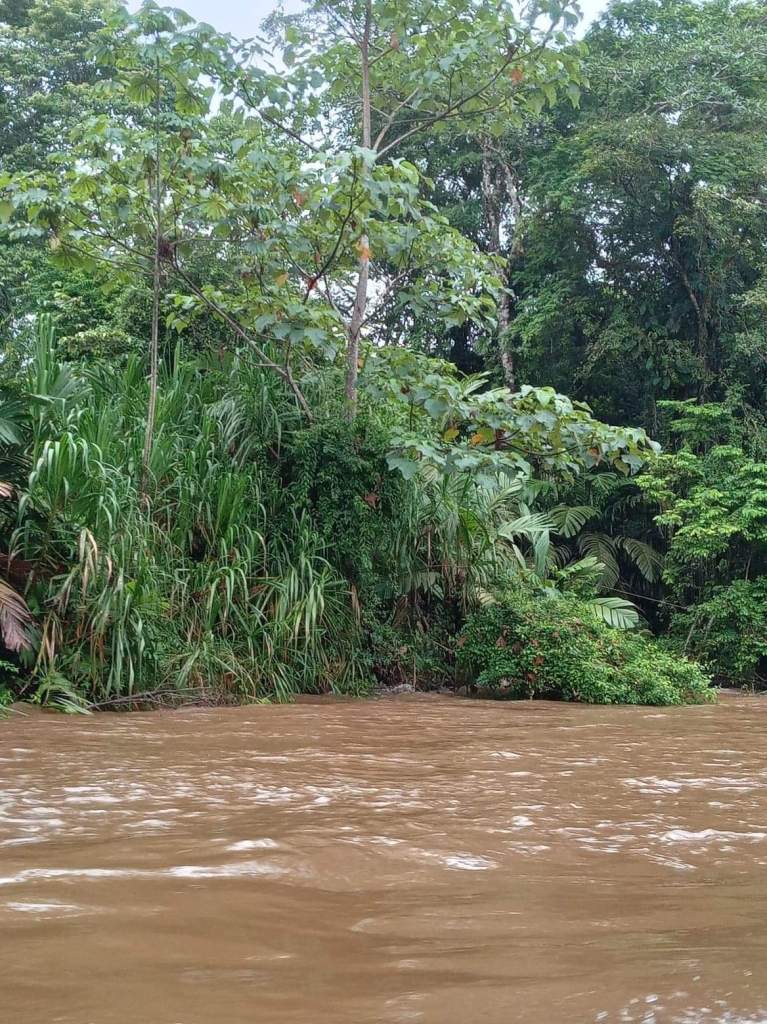
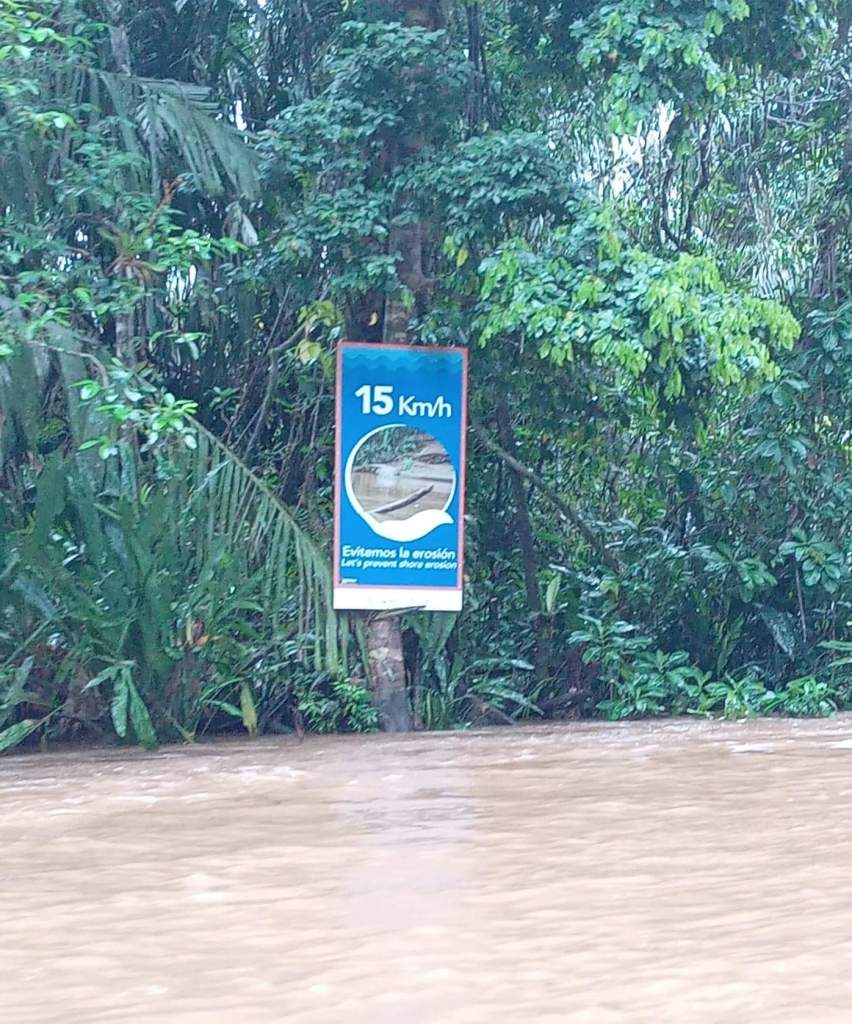
We bought a bag of rambutans for the journey. I have never had them before but I liked them. The journey took about 40 minutes, passing through the rainforest, which proved quite an experience.

 Random Acts of Travelling
What a wild adventure! I hope you see some animals xxx
LikeLike