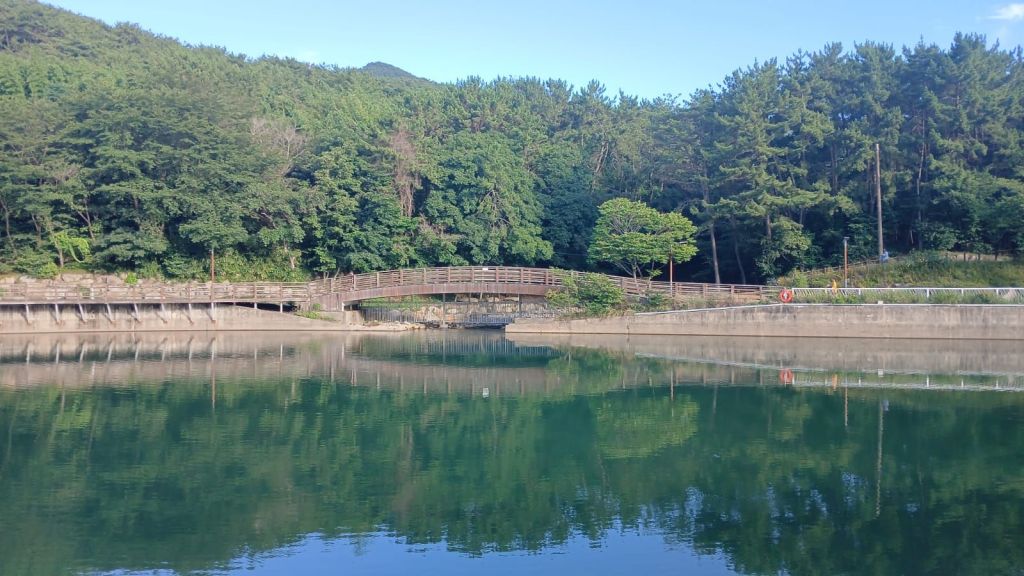
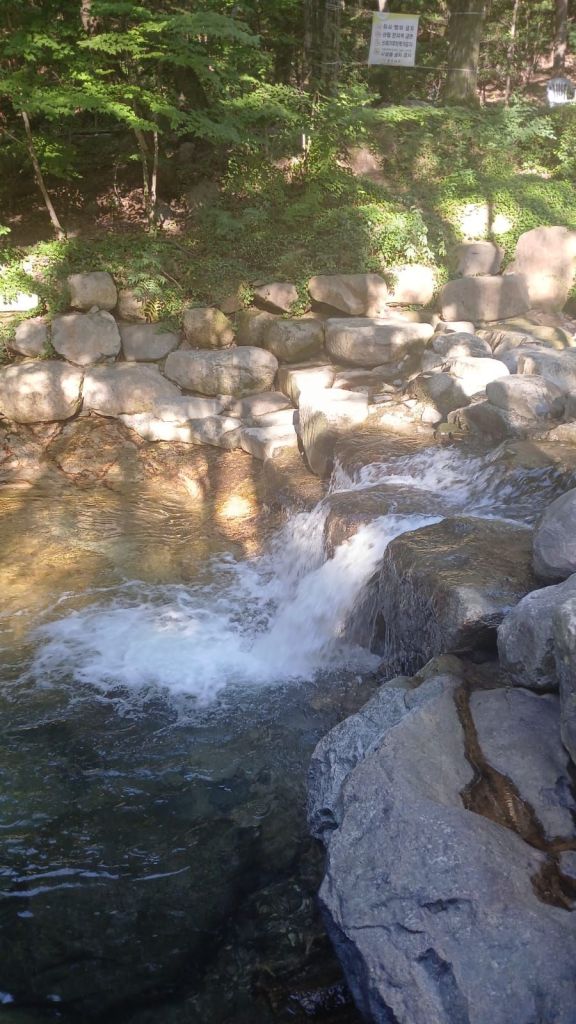
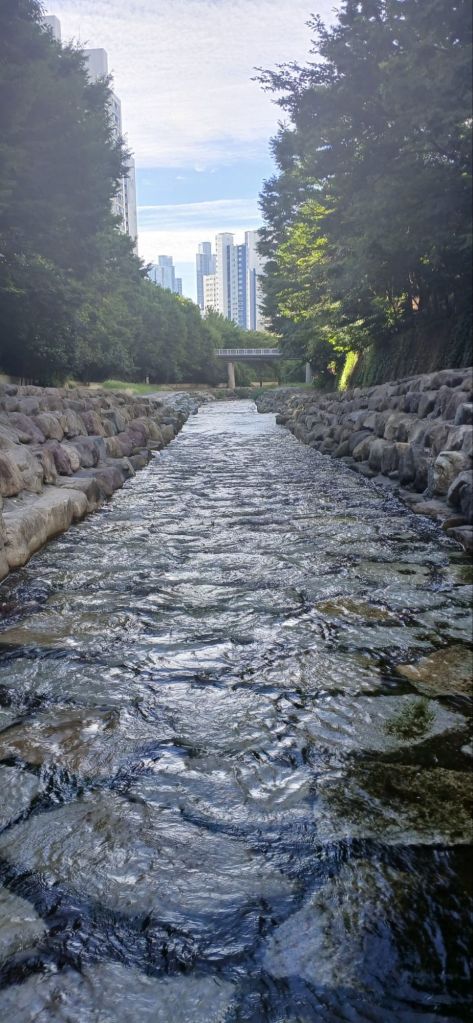
Pete went for another early morning walk, and I didn’t. He sent me lovely photos though.
Busan is huge. In fact, it is 770.17 square kilometres, so doing a day trip within Busan can take quite a bit of time.
We decided to visit Gamcheon Culture Village, still part of Busan, but a journey of about an hour and a half. The bus fares are very cheap, we travelled the first hour for just over a pound. Travelling through the main city centre. Although Koreans seem quite quiet, behind the steering wheel, it seems a different matter. The bus driver didn’t seem to ever take his hand off the horn. It reminded me of a nail-biting trip from Mekelle to Adwa, Ethiopia, when that driver was similar. You just assume it’s a life or death moment, but Pete said, looking out of the window, it was just that cars were going into the bus lane.
Forty stops later, we arrived at the next bus stop, getting on a small green minibus. I did wonder why such a small bus for a major tourist destination, but very soon, I found out. Snaking up a mountainside, with one sharp hairpin bend after another. At one point, there was a road rage moment, a car wouldn’t budget, leaving a truck behind us trapped and us not moving forward.
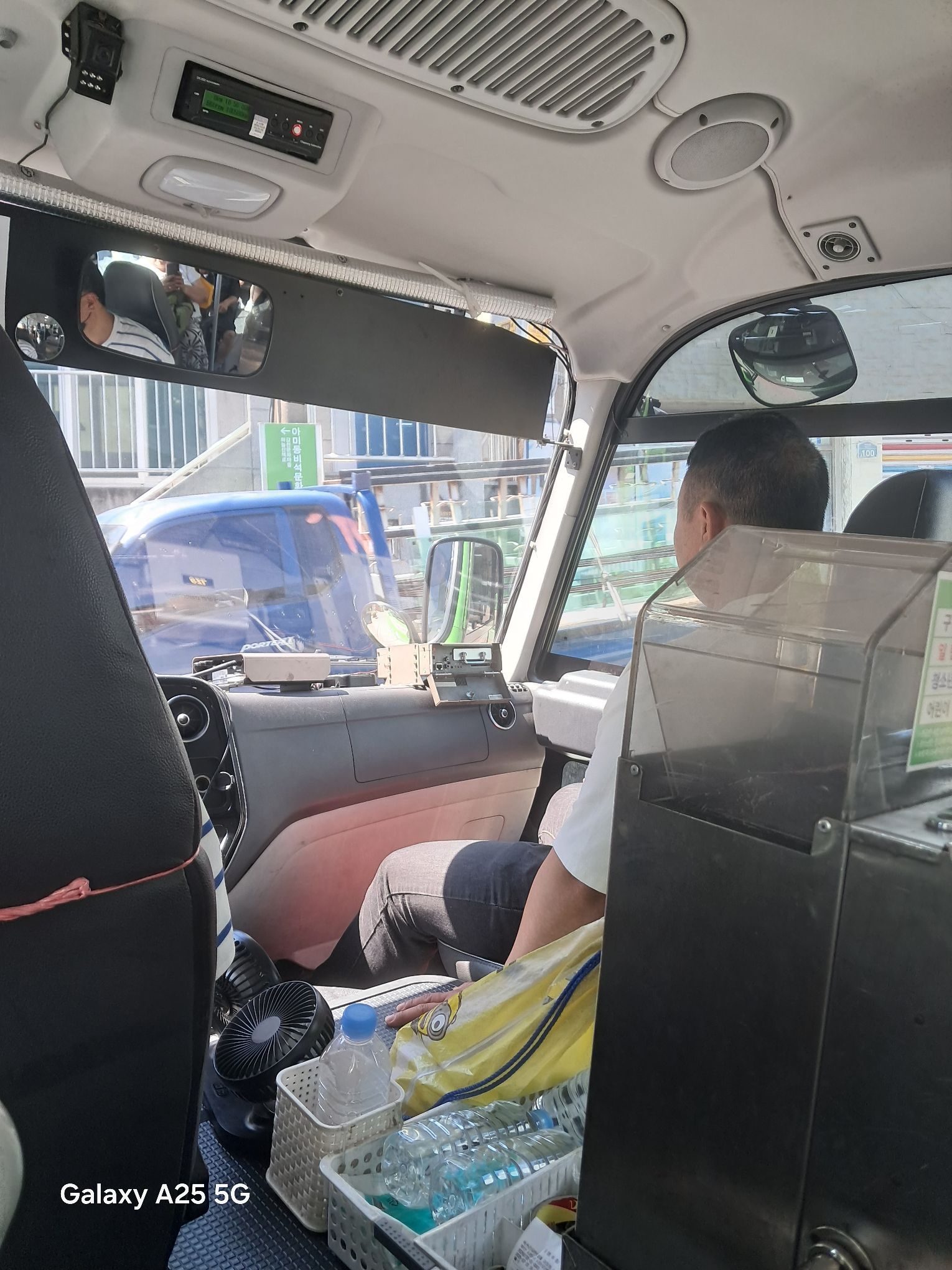
Eventually, the bus driver backed down, reversed slightly and then revved up the road so aggressively, the gear box felt like it would explode. It was calmer after that.
The Gamcheon Culture Village, also known as the Machu Picchu of Korea, although to be honest, I couldn’t see it!
The history of the Gamcheon Village, located on a city slope, goes back to the 1950s when thousands of refugees from the Korean War from all over the country began living there, making it a large area of hurriedly built houses piled on top of each other on the hillside. Pete said it reminded him more of flavellas, the higgledy piggedly nature of it.
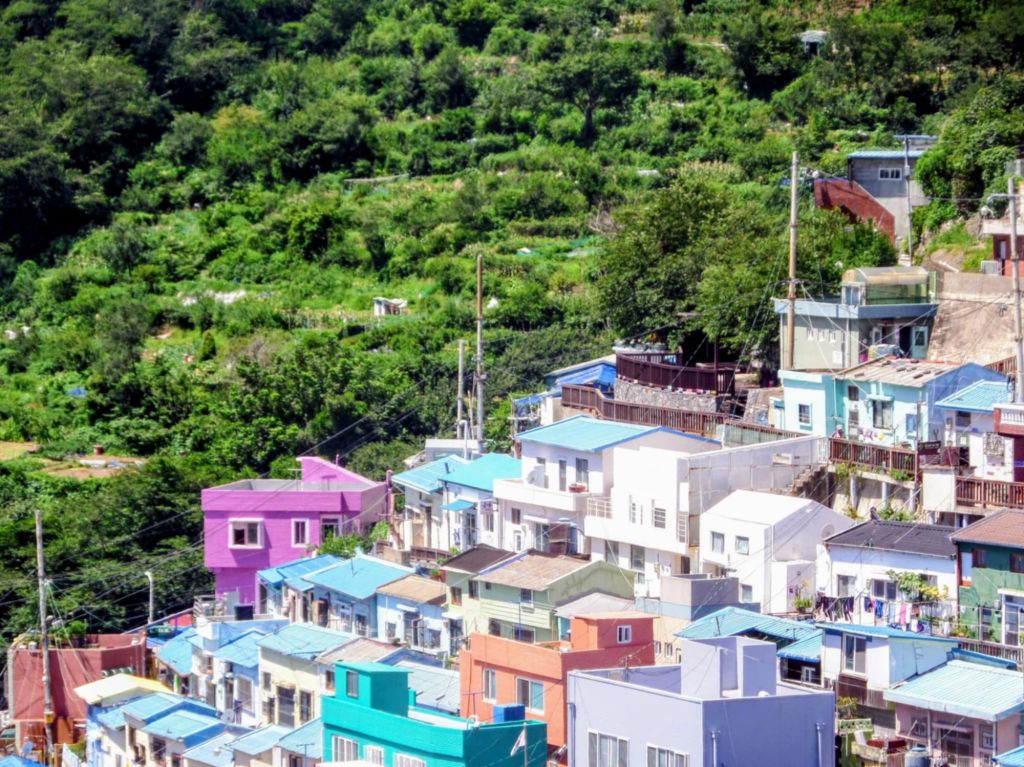
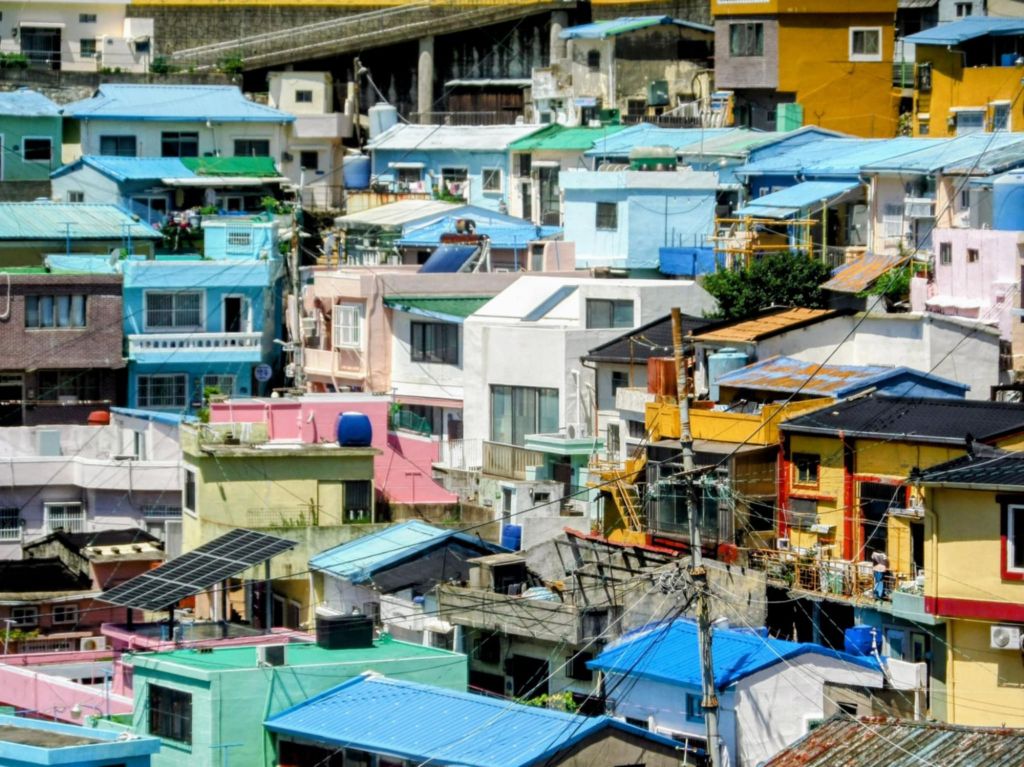
In 2009, students, artists, and residents decorated the village as a part of the Village Art Project, and the village grew into a colourful artistic place nestled into the hillside.
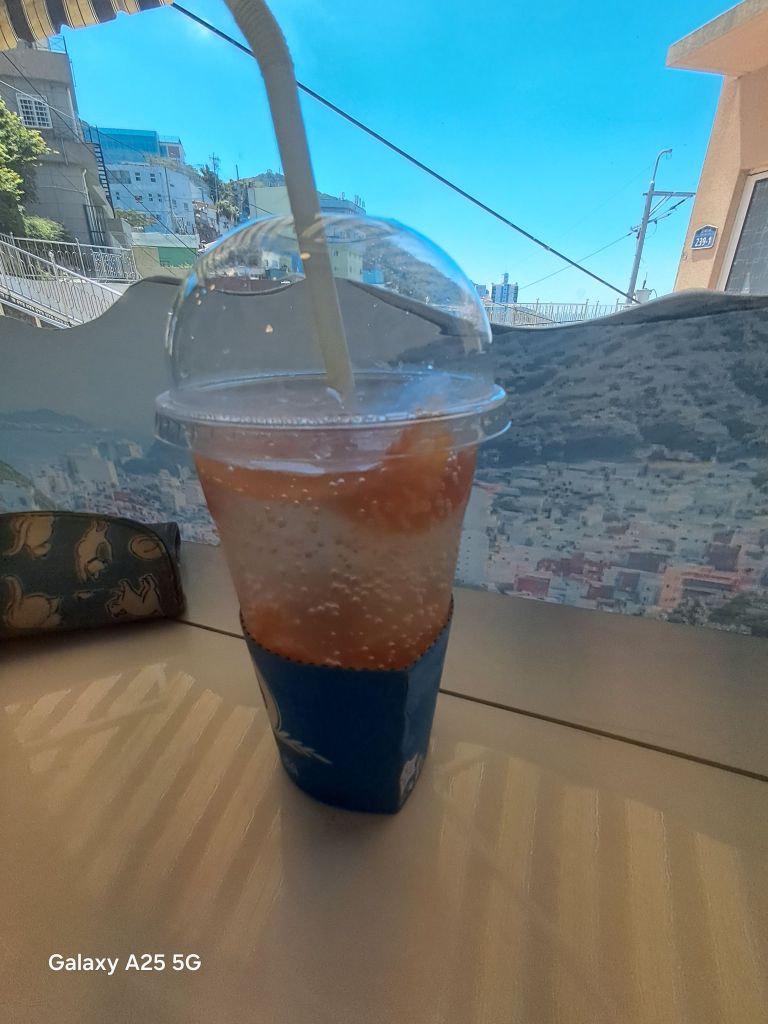
A well-deserved drink made with preserved grapefruit when we arrived. It was delicious, the owner gesticulating that I should twist them and eat them. I would like to try to make them at home.
A lady from the tourist information insisted on taking our photo with the village in the background
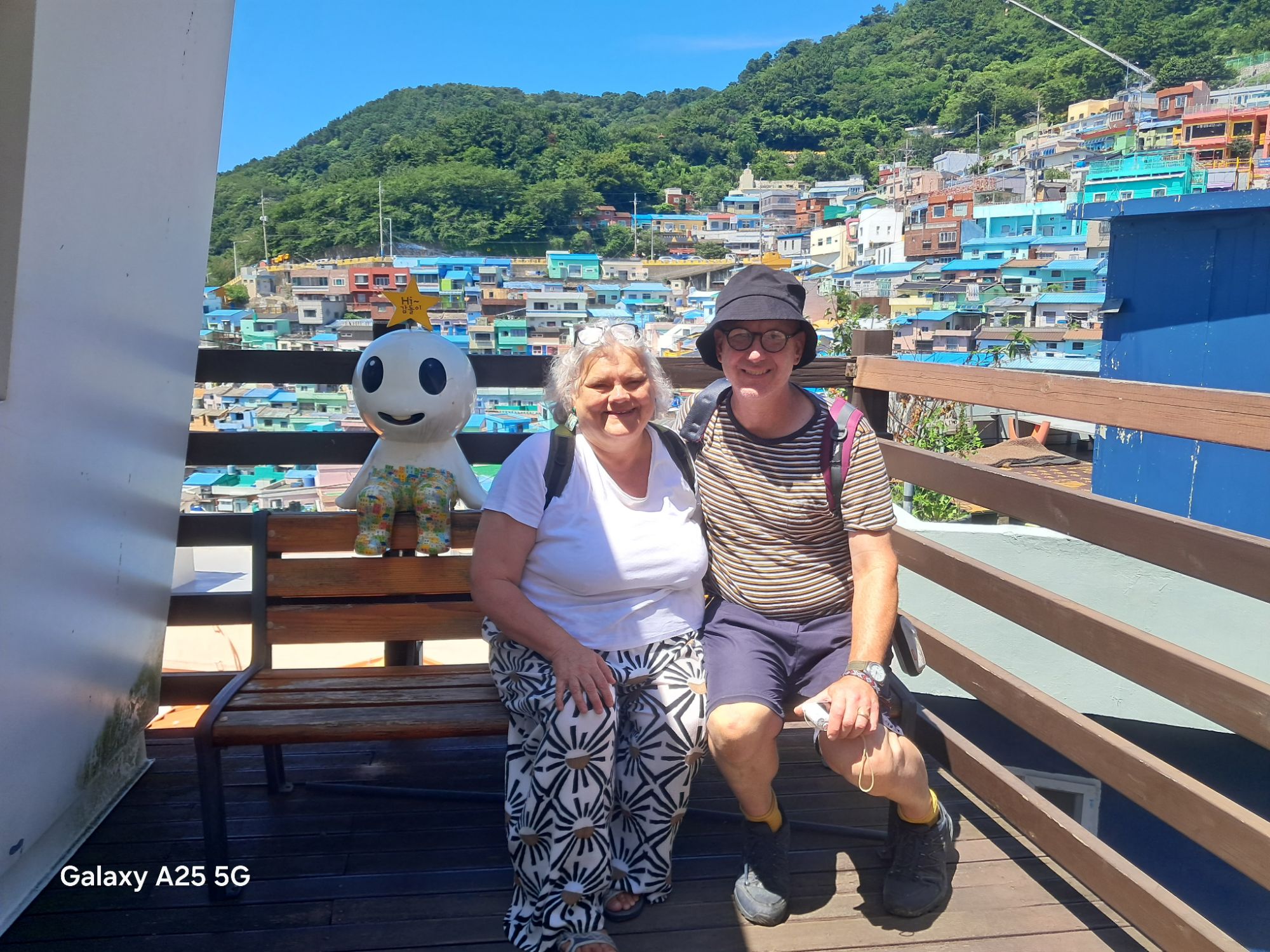
She entreated us to see the Little Prince and The Fox statue, we didn’t find, but did see lots of images linked to it. The story is very popular in Korea because of its themes of love, friendship, and imagination. They see it’s about finding joy in simple things.
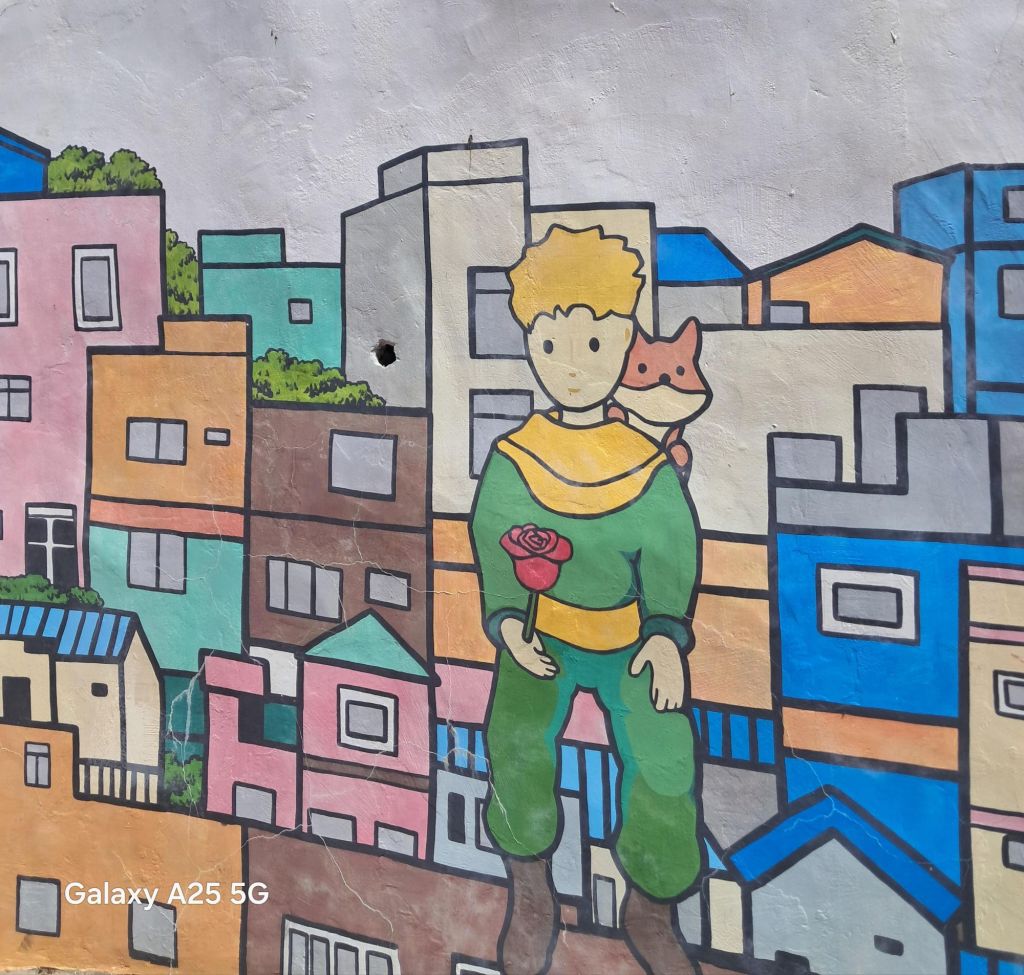
Because the village is seen as a symbol of rebirth and resilience, it has adopted the story as its own. A place of new beginning, overcoming adversity, and finding beauty in unexpected ways and places.
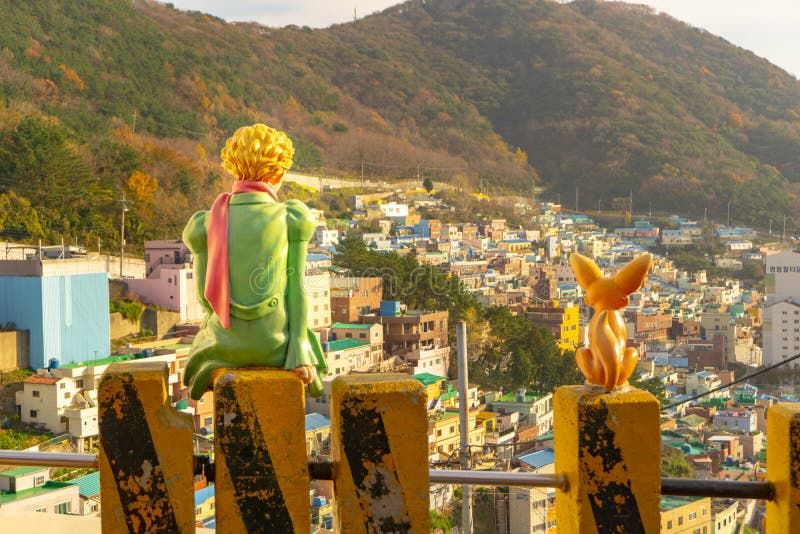
Of the 9000 residents, only 120 are resident artists. Along the way, some houses had art installations in between people’s houses. Notices around every corner reminding visitors that it was a real place, where people lived.
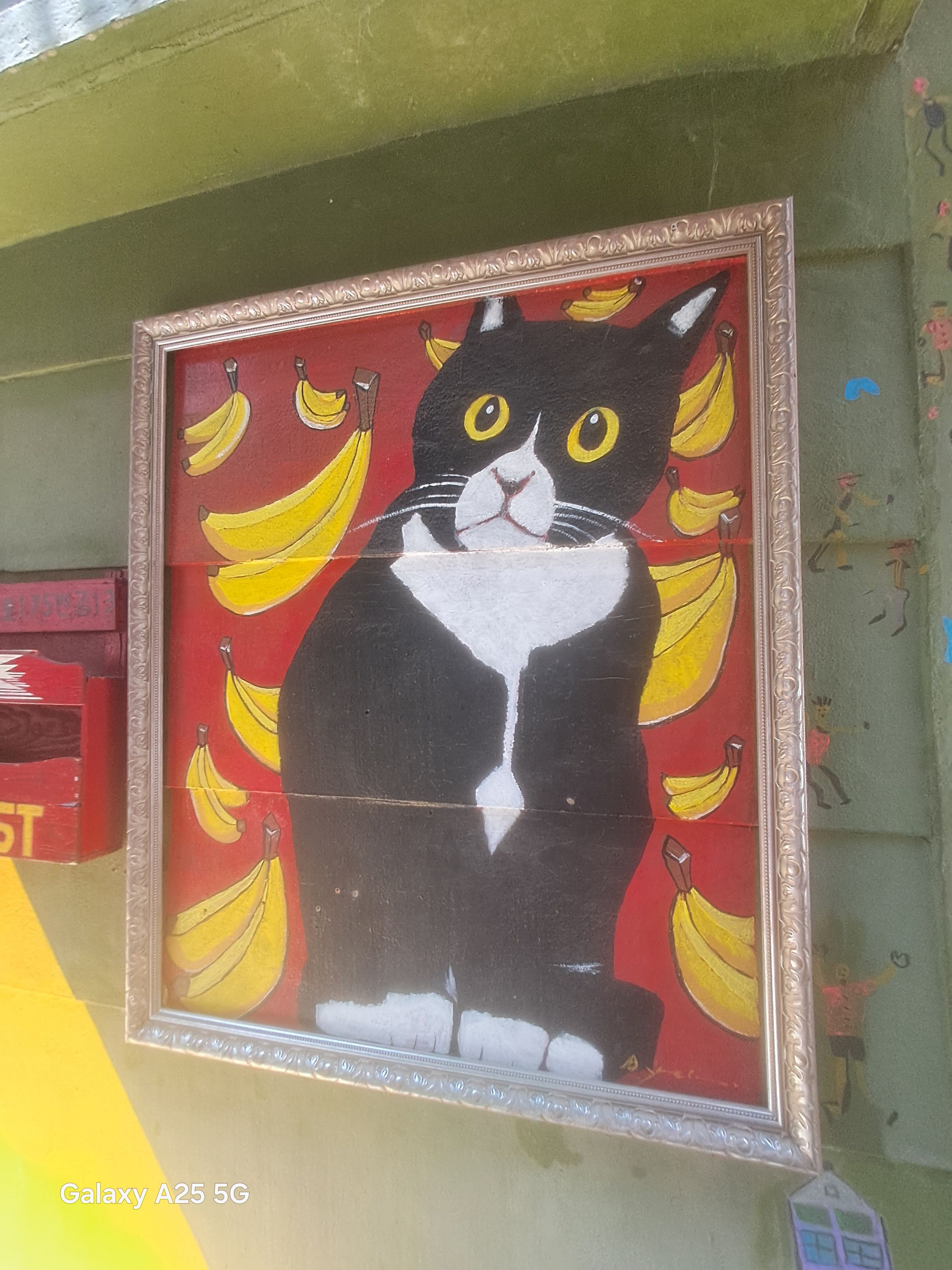
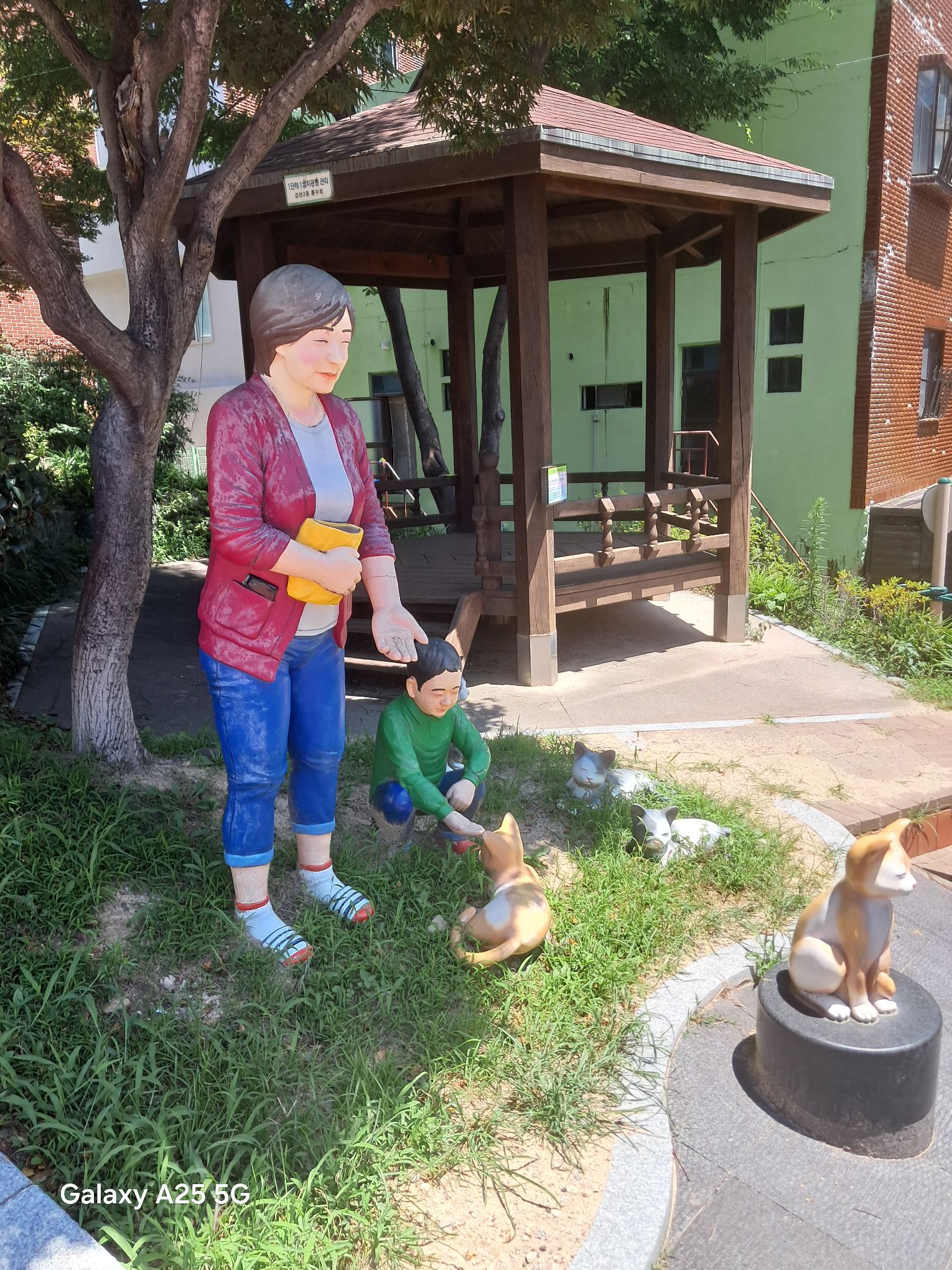
Try as I may, it was hard not to see where they lived, as many doors were open. The houses, although brightly coloured on the outside, had very basic. Old residents bent double, climbing up steep steps to their houses. Life looked hard there and not certain how much tourism has eased it. Although, maybe this is the realities of life for people out of the city. But on the other hand, there were lots of innovative fruit and vegetable growing ideas.
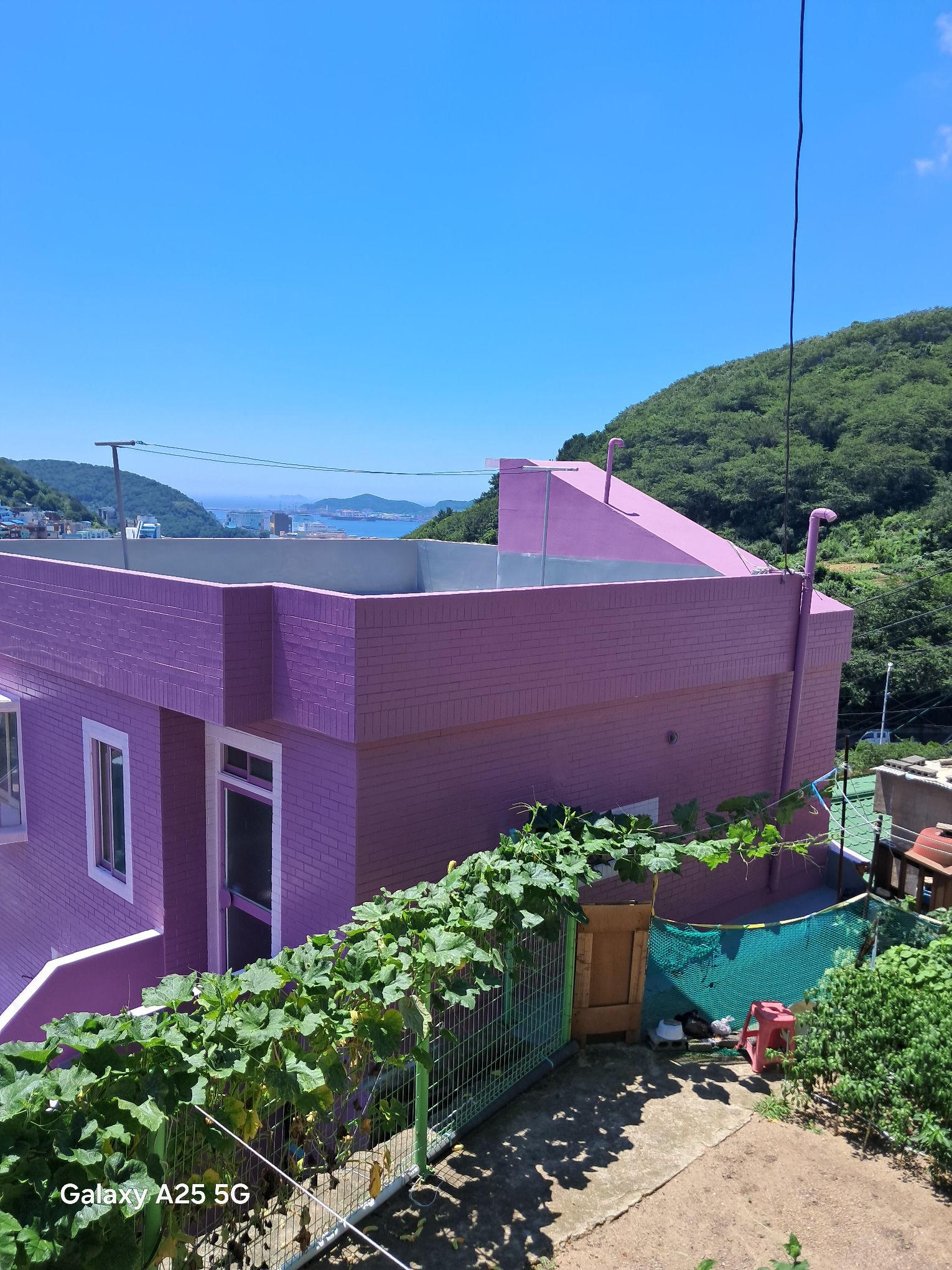
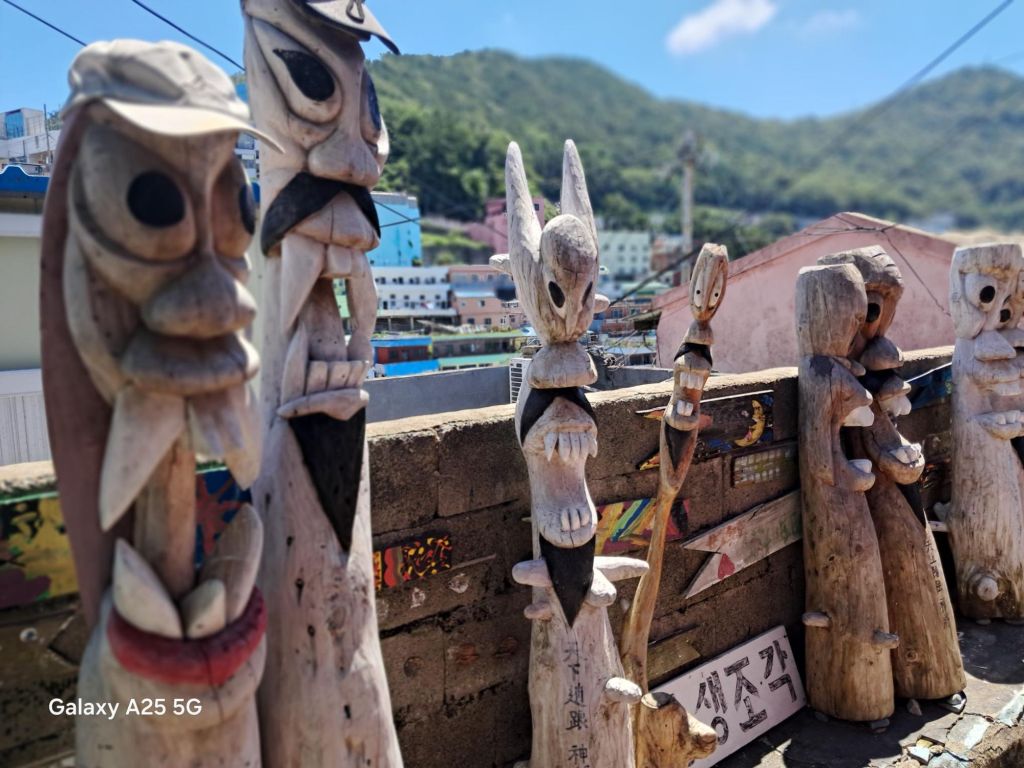
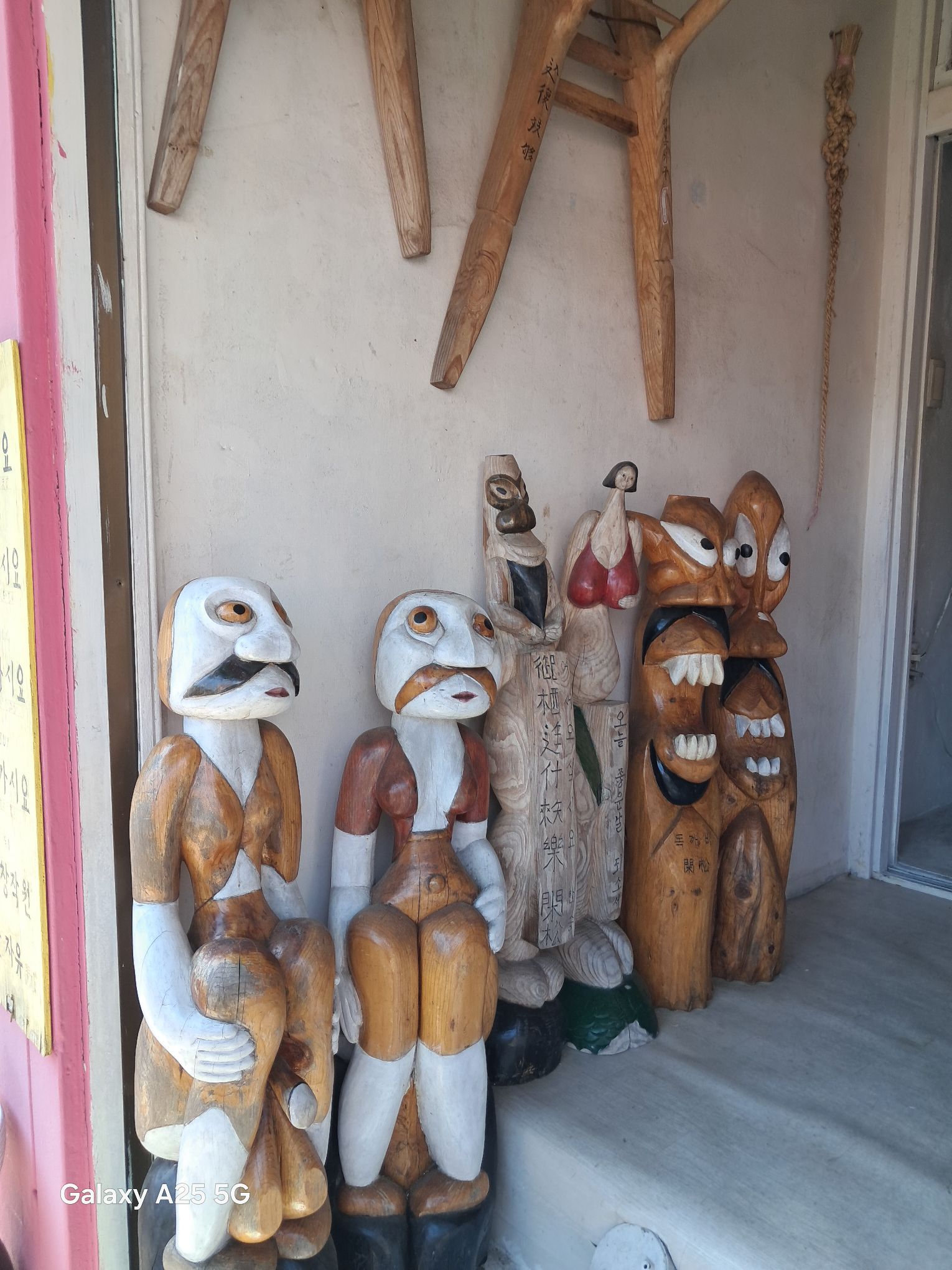
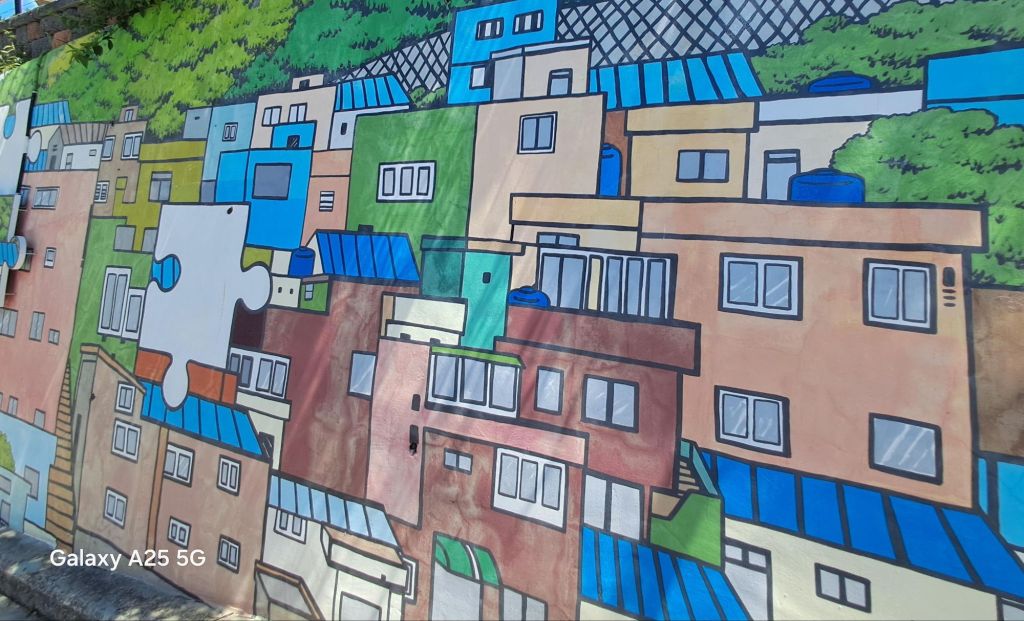
The art installations were very good and quite thought-provoking. Although some of the descriptions sounded like a load of bollocks!
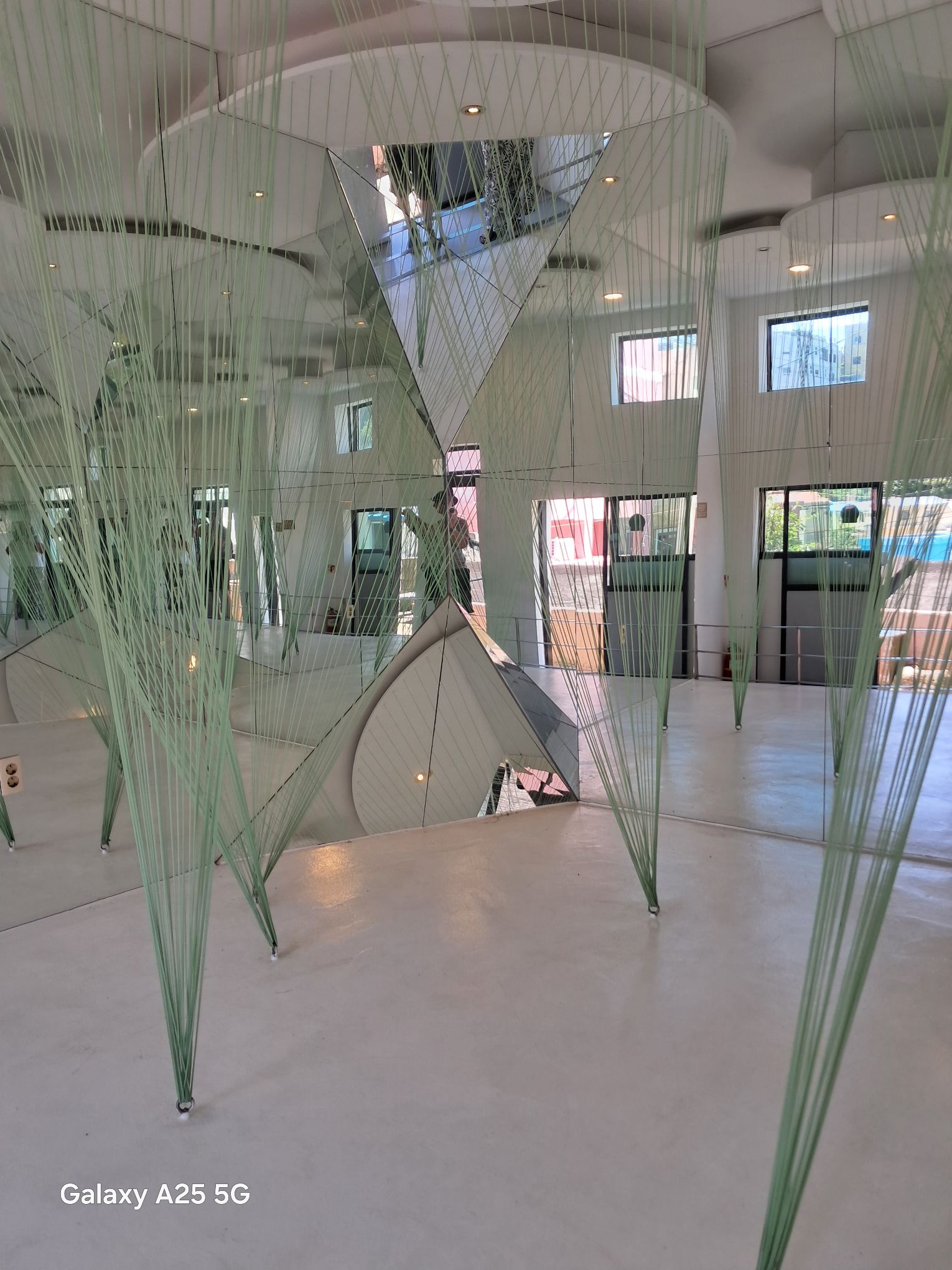
This one was about the flow of life represented by the wires. The mirros are there to reflect on yourself. I just liked the shapes the wires made.
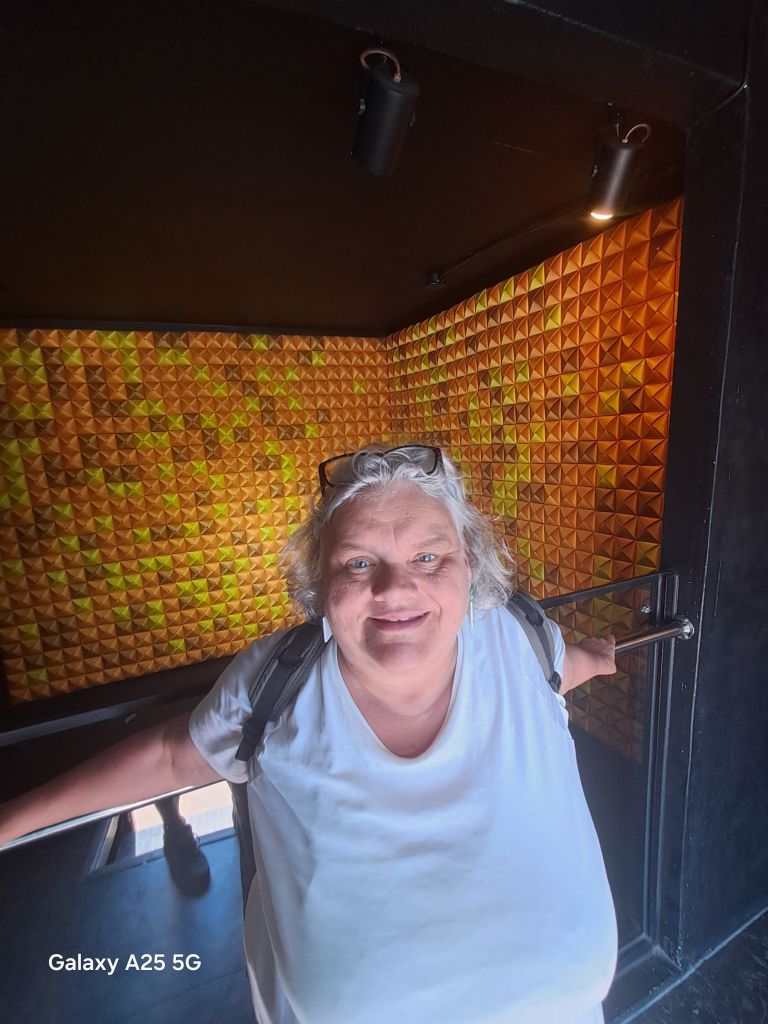
Not the best photo of me, I look like I have 58 KK bra size! This was called The House of Hope II – at home. It’s about the light and energyyou get from being at home. I am very basic, I again liked the colours and shapes and appreciated it for that, but nothing more. Well, also how clever the artist was in making something so intrictae.
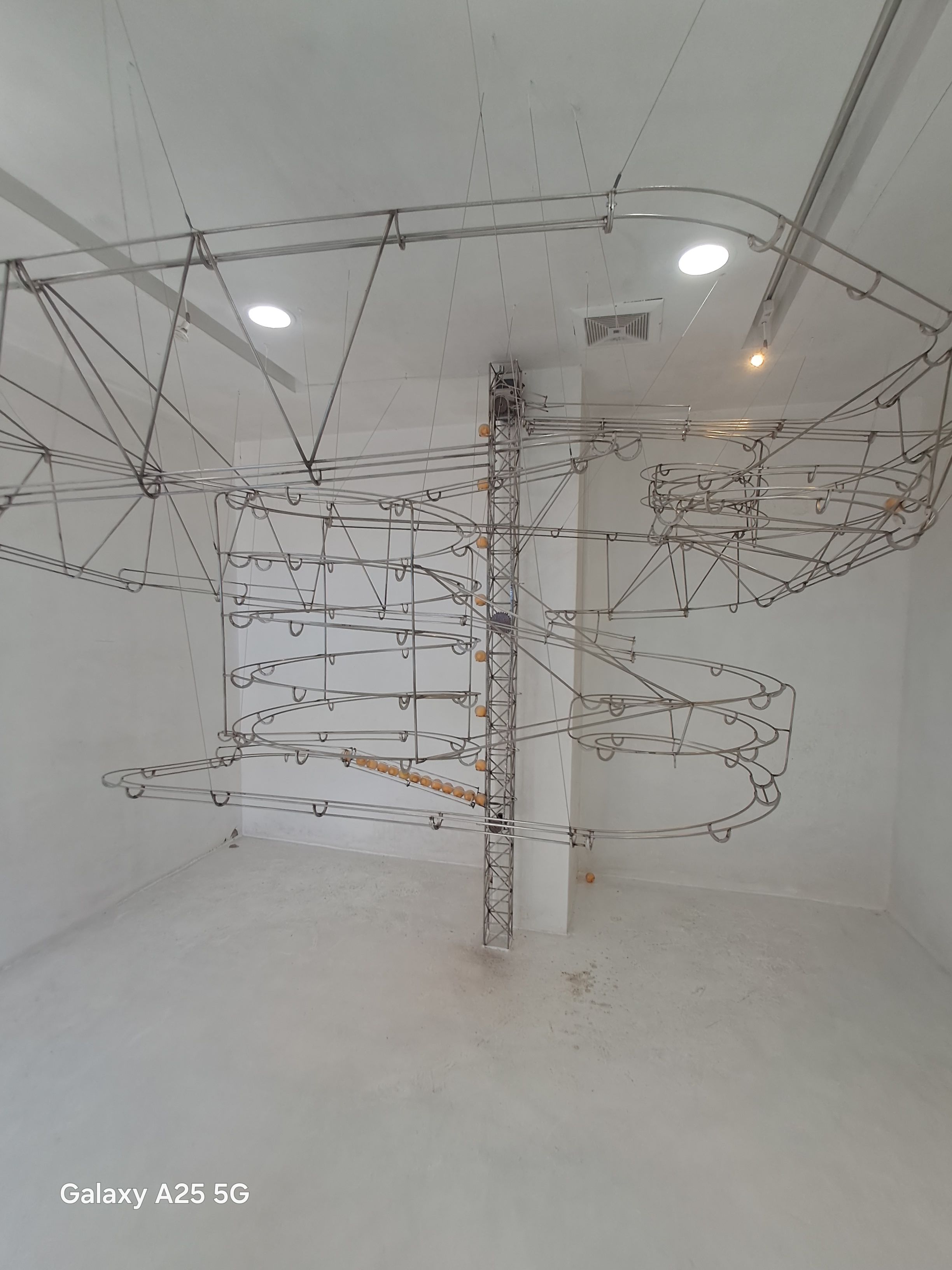
I really liked this one, eggs rolling down various routes continuously. Itwas called the Lively Space. The egg endlessly rolling along one path gettting lost in the rail lines, complicatedly intertwined with each other, the way we follow our passions and dreams. I ddn’t write that, it was copied from the place!
It was great seeing art everywhere!
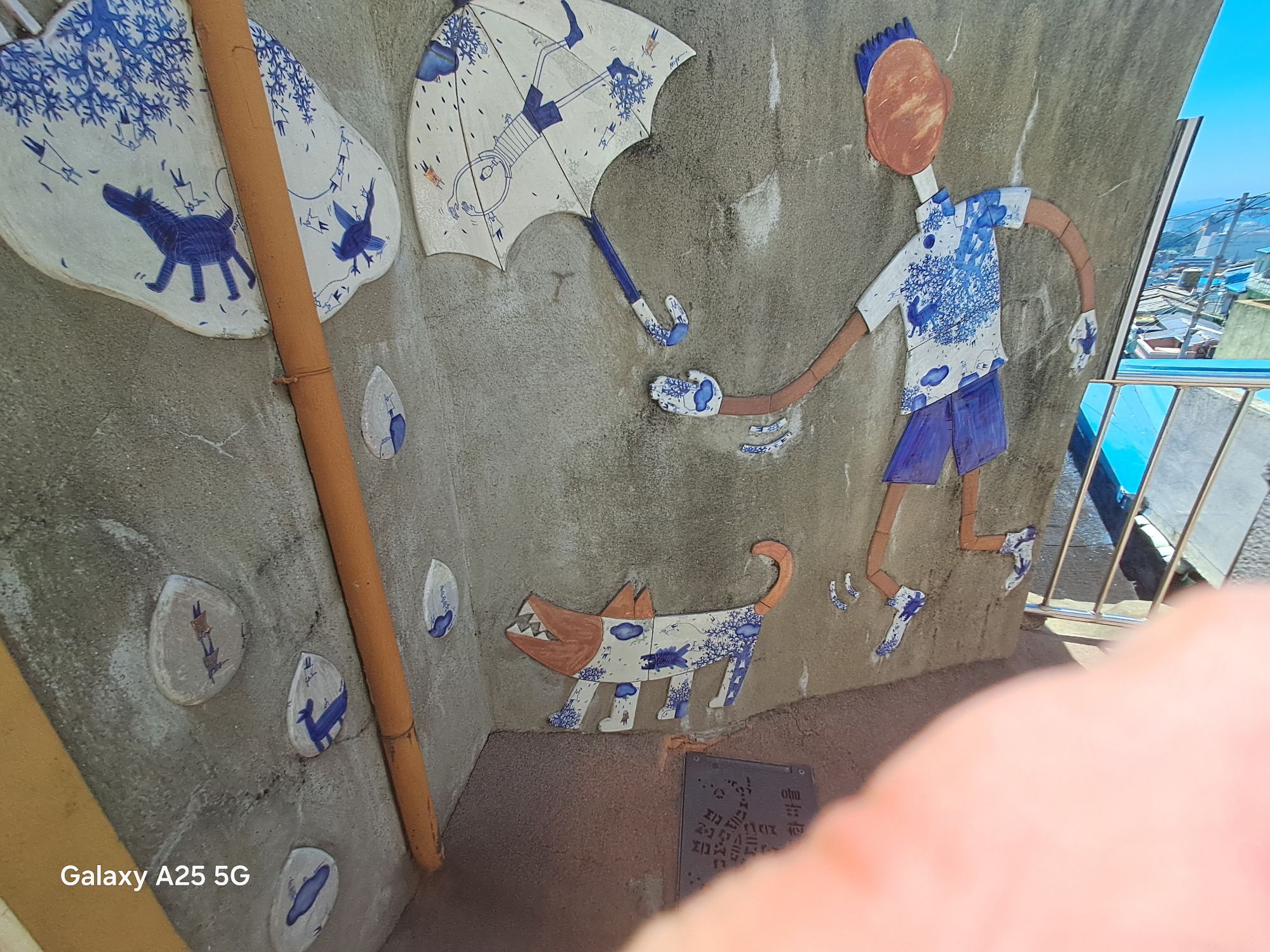
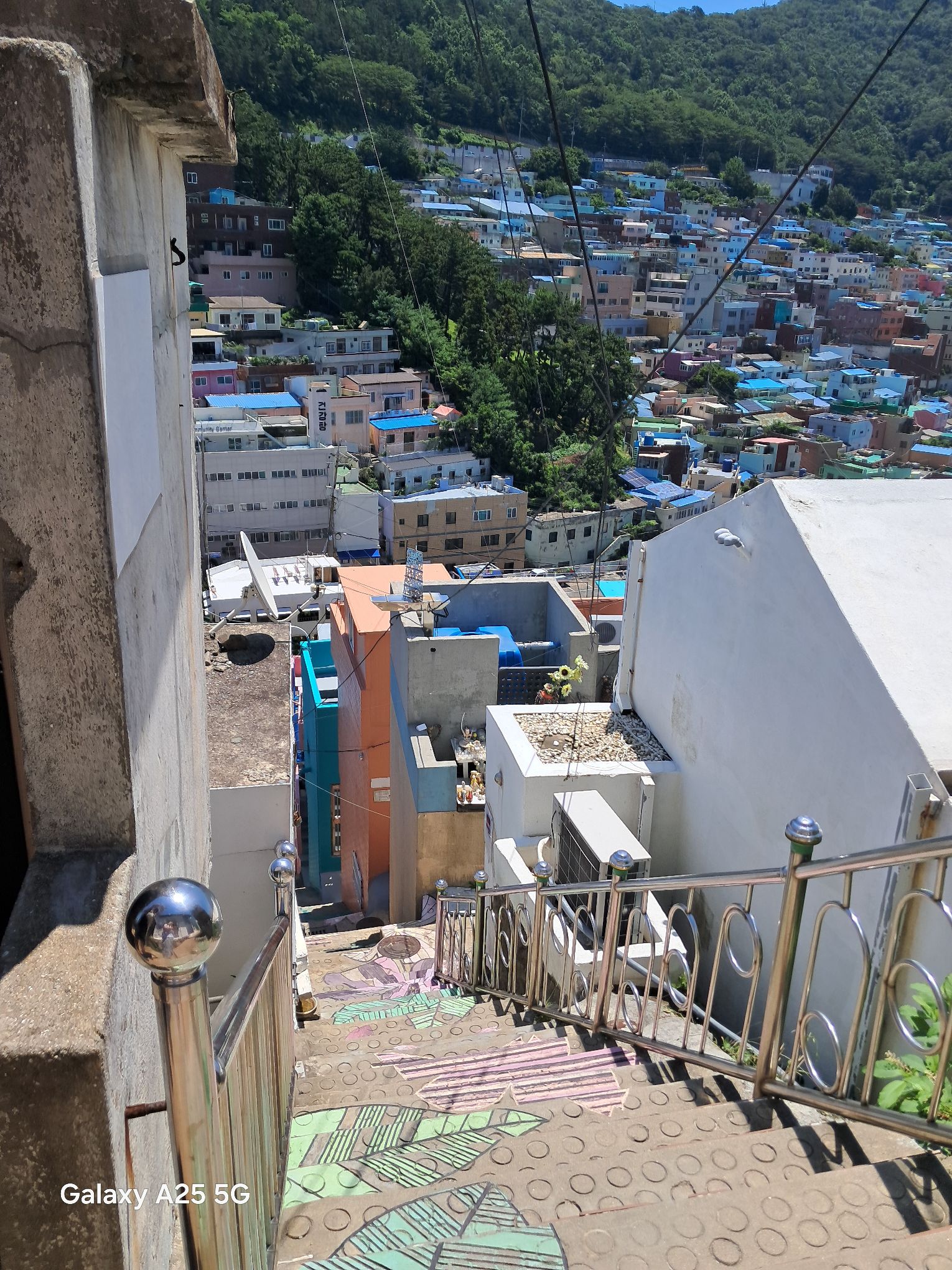
There were some very steep stairs there, like this one, called Stairs to See Stars. It was called this by residents because people used to feel dizzy and see stars in they eyes when they climbed up, carrying heavy loads. It is also called 148 steps. We did alot of walking that day, but we didn’t do this one!
Having walked to the bottom of the village, I really didn’t feel I had the energy levels of the older residents, who climbed up no matter what. Luckily, a bus came, and we had a less dramatic return to the city centre.
On the way there and the way back we passed the Ami-Dong Tombstone Culture Village. Another mountainous village that grew
during the Korean War, refugees embarked on a journey with nothing but basic household items. The civic officers handed out a small note to refugees who congregated to Busan Station that contained the following short address.“San 19-beonji, Ami-dong.” This was the beginning of the Ami-dong Tombstone Culture Village where they made their homes from tombstones from a former Japanese cemetery, which was abandoned after liberation and gradually transformed into a residential area when refugees settled there.
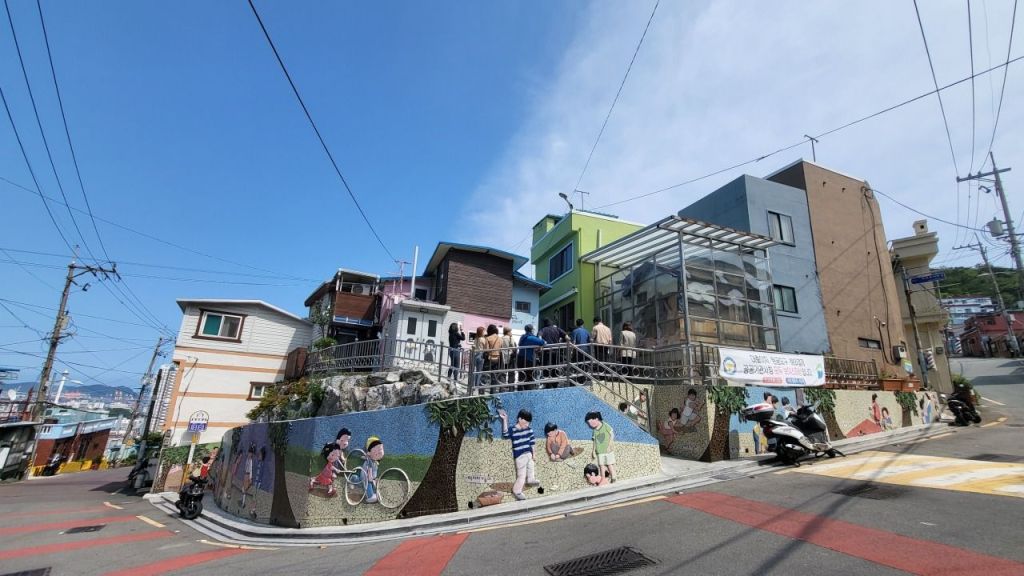
We stopped one the way back tolook round the centre a bit.
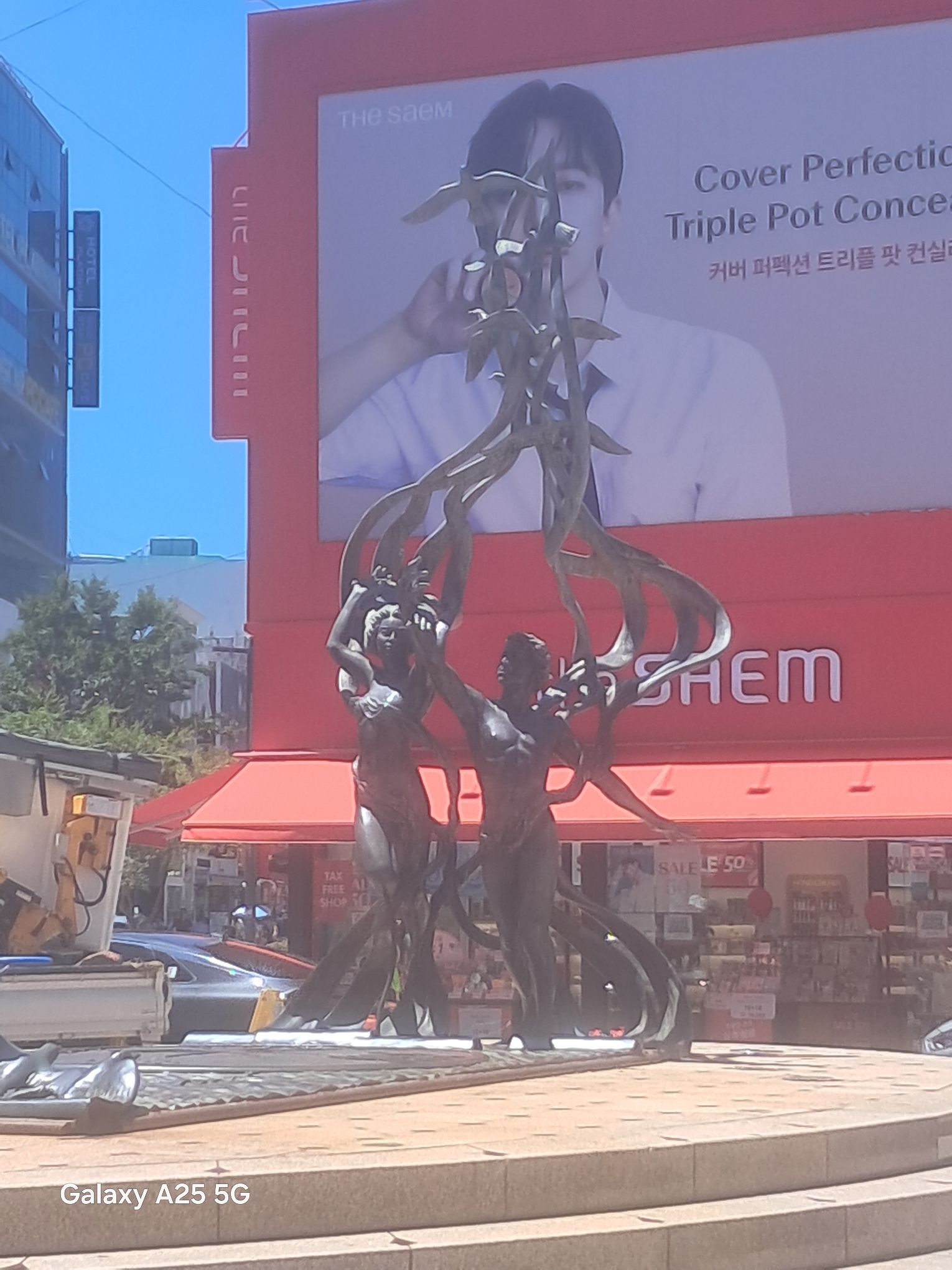
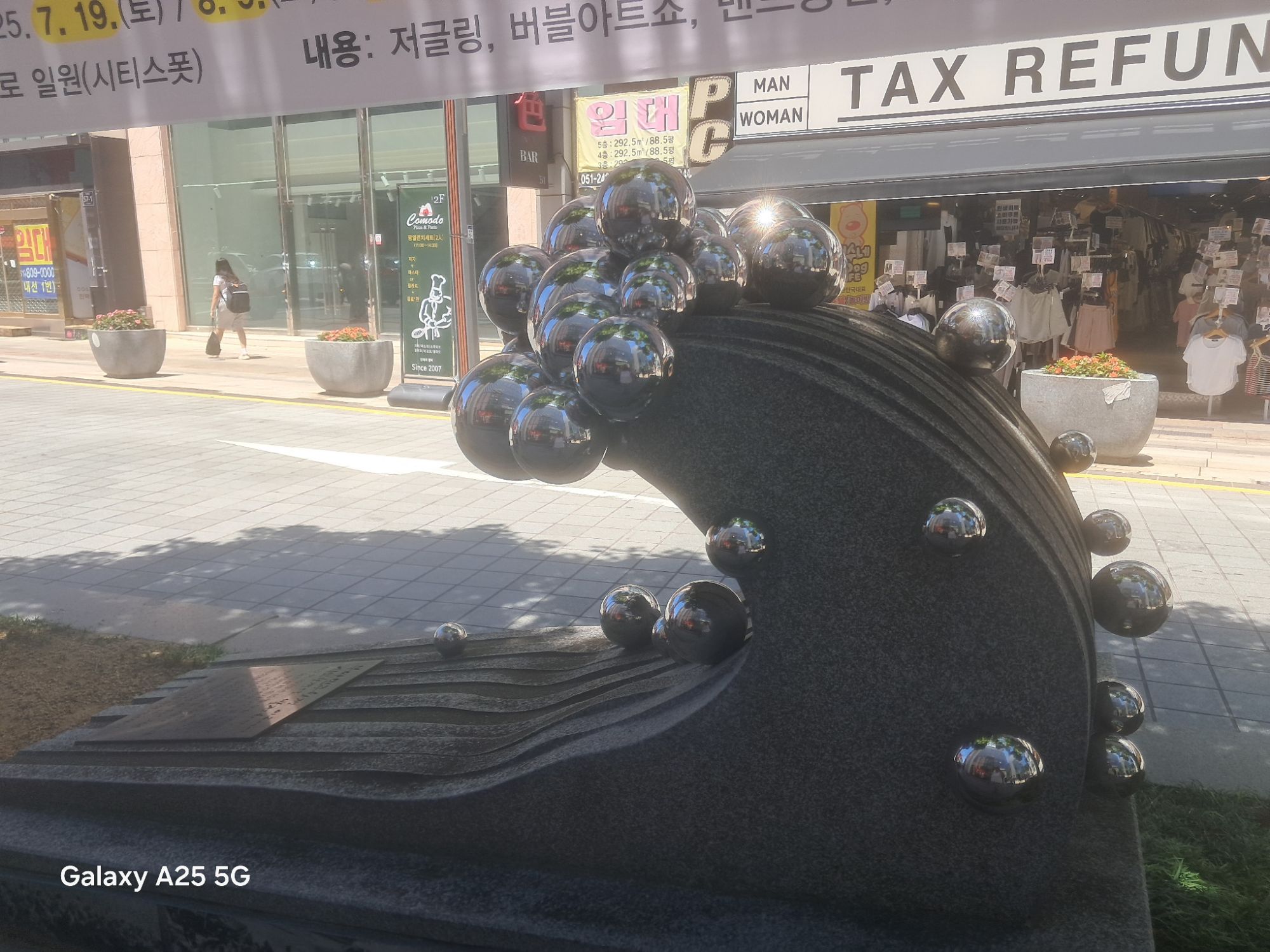
To be honest it was a bit of a blur, we walked down one large street, with handprints of famous Korean actors. Having now watched a fair few Korean dramas, I may well have known who some of them were!
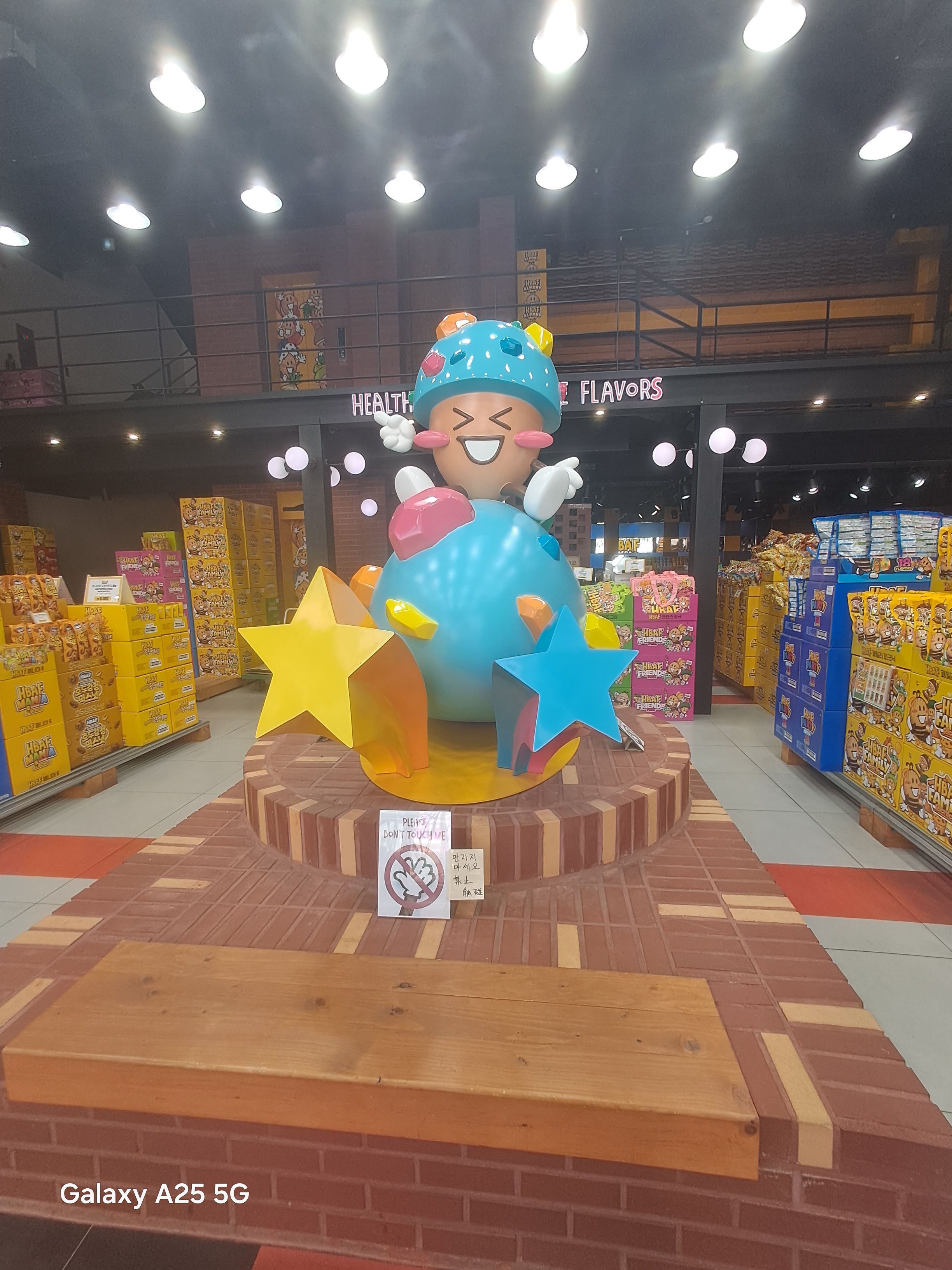
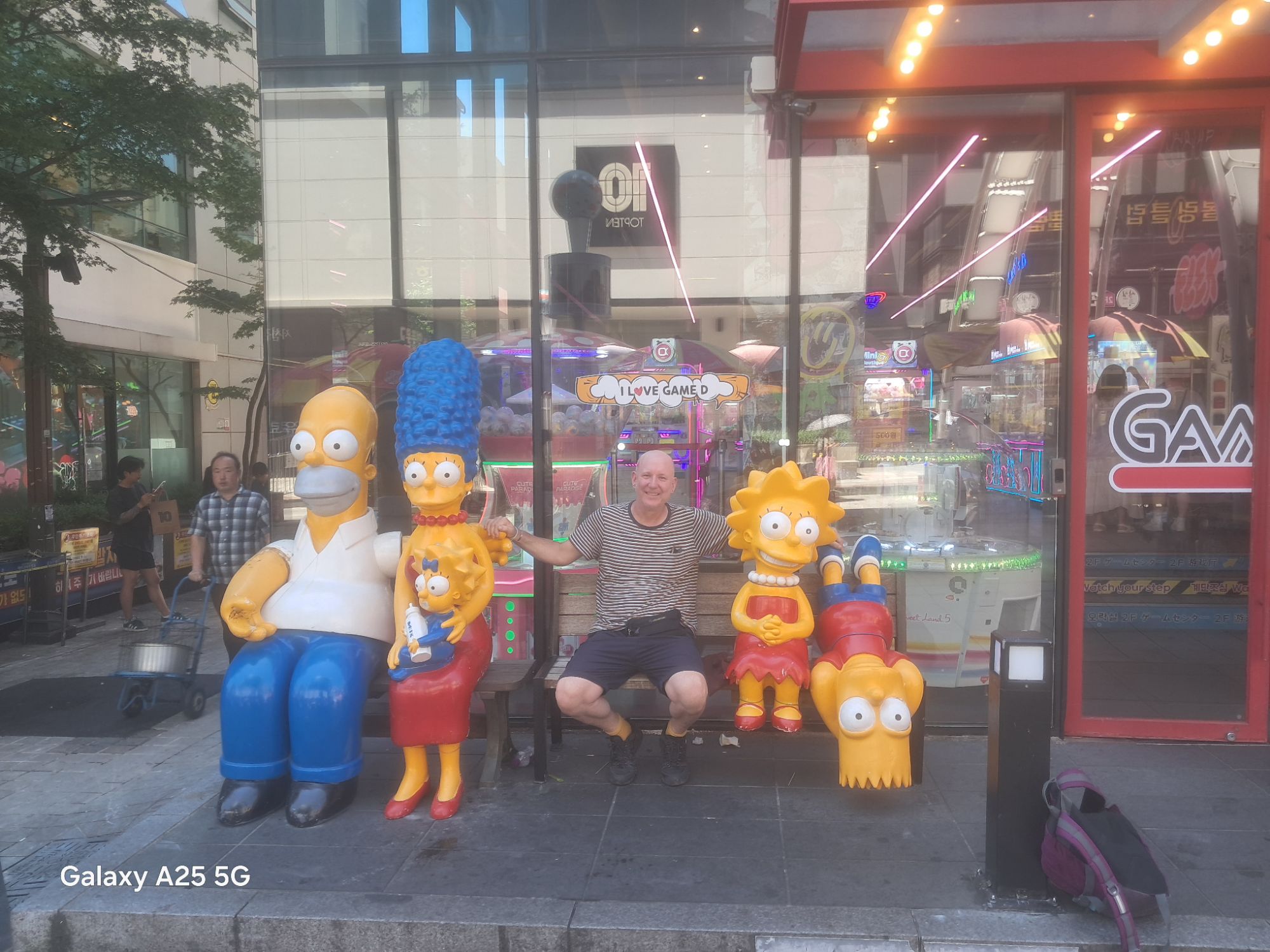
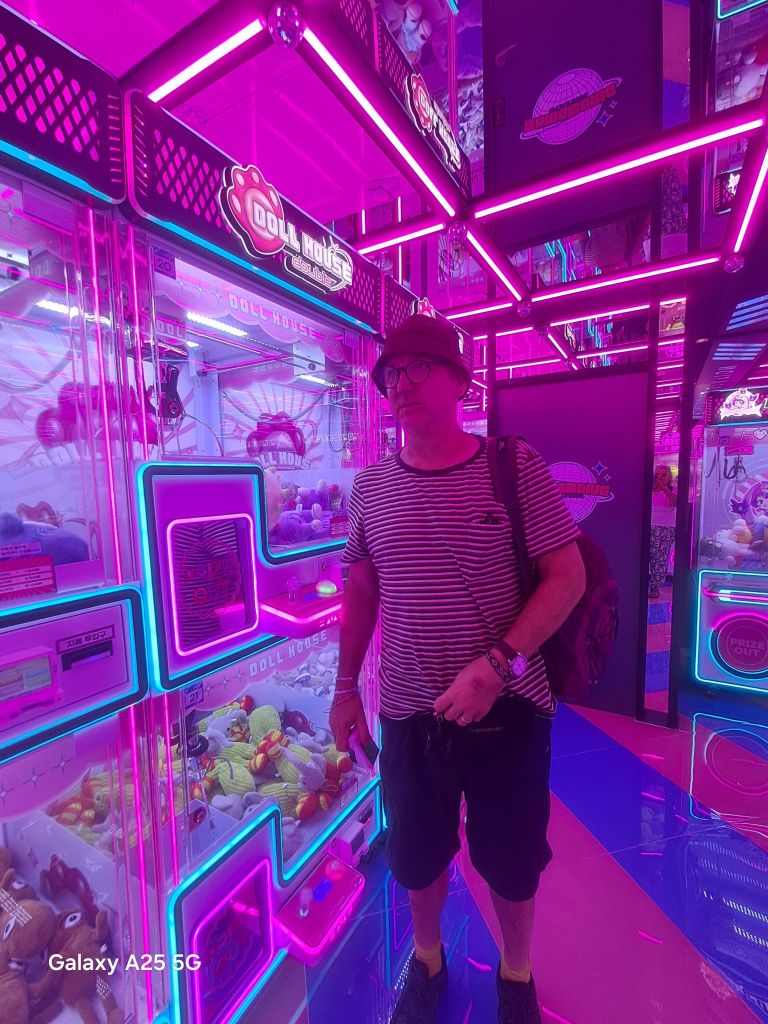
We went to an amusement arcade but didn’t do very well. They were all grabbing machines, now if they had been 2p slots it would have been a very different matter!
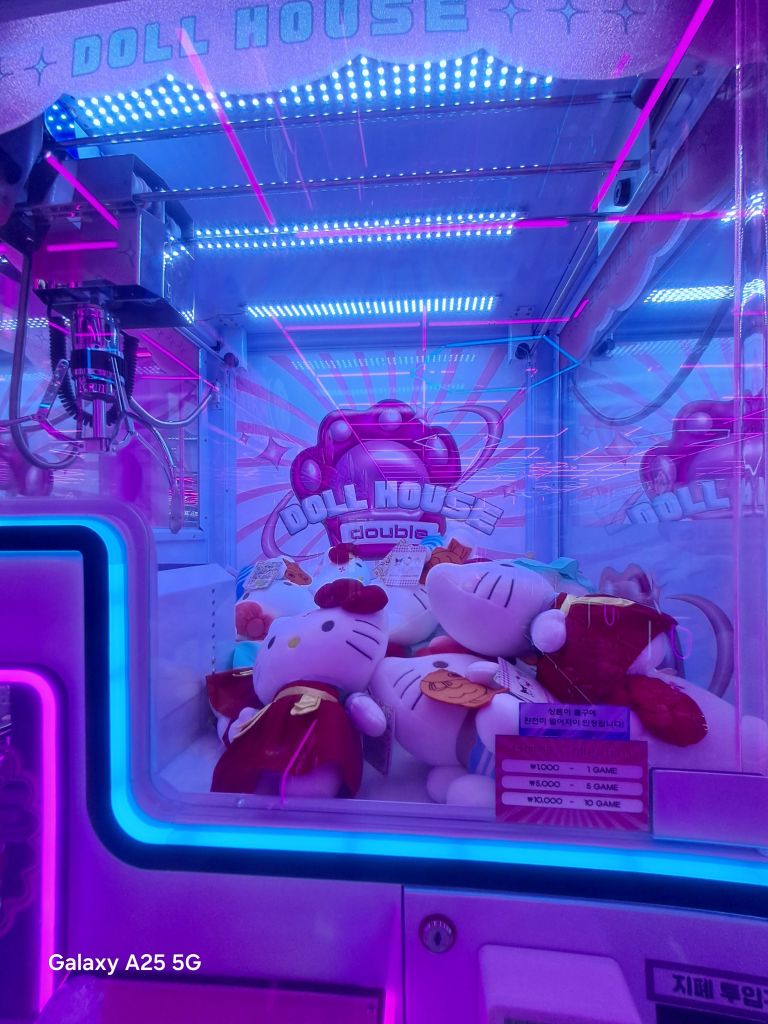
Ages ago I remember watching a programme about people going to special courses, to help them learn how to win on these machines. Why go to such lengths? Well, it seems popular with youg couples, and what can be a better way to woo someone thanwinning a fluffy toy!
After one more photo opportunity, we went to Yongdusan Park.
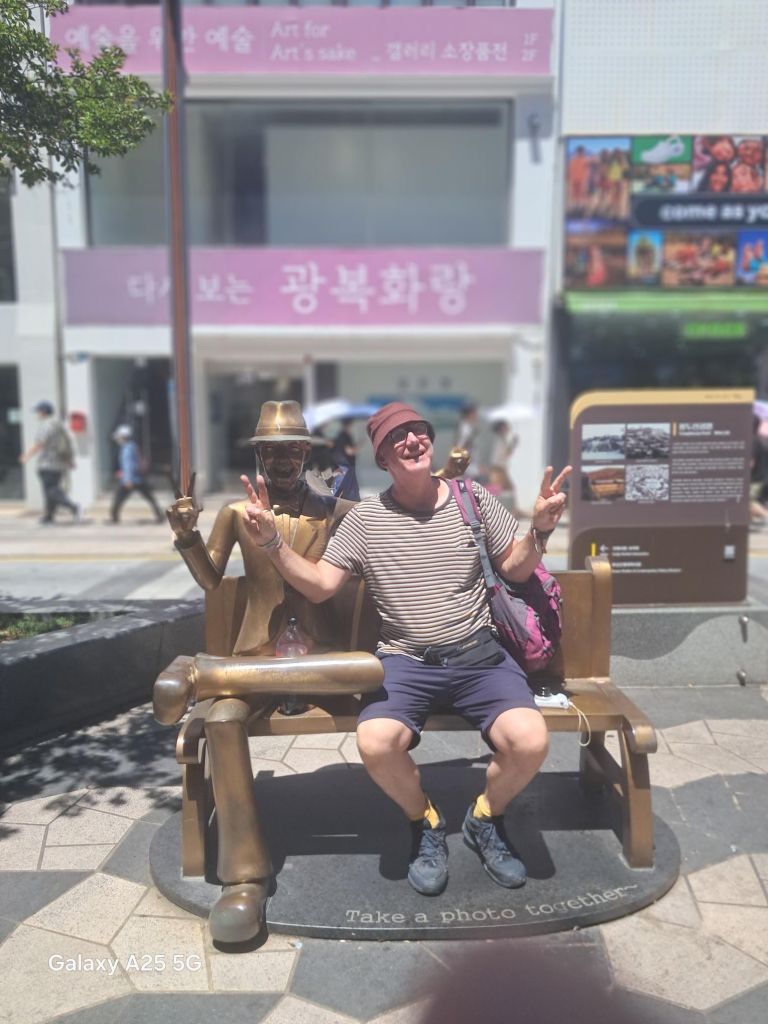
The park is located on a nearby mountain. Luckily, from this shopping sttreet, there were several escaltors going up. If we had walked it, it would have been a case of seeing many stars!!
It was very beautiful, with many swinging benches at the top, all taken by elderly Korean people, it seemed like a meeting point.
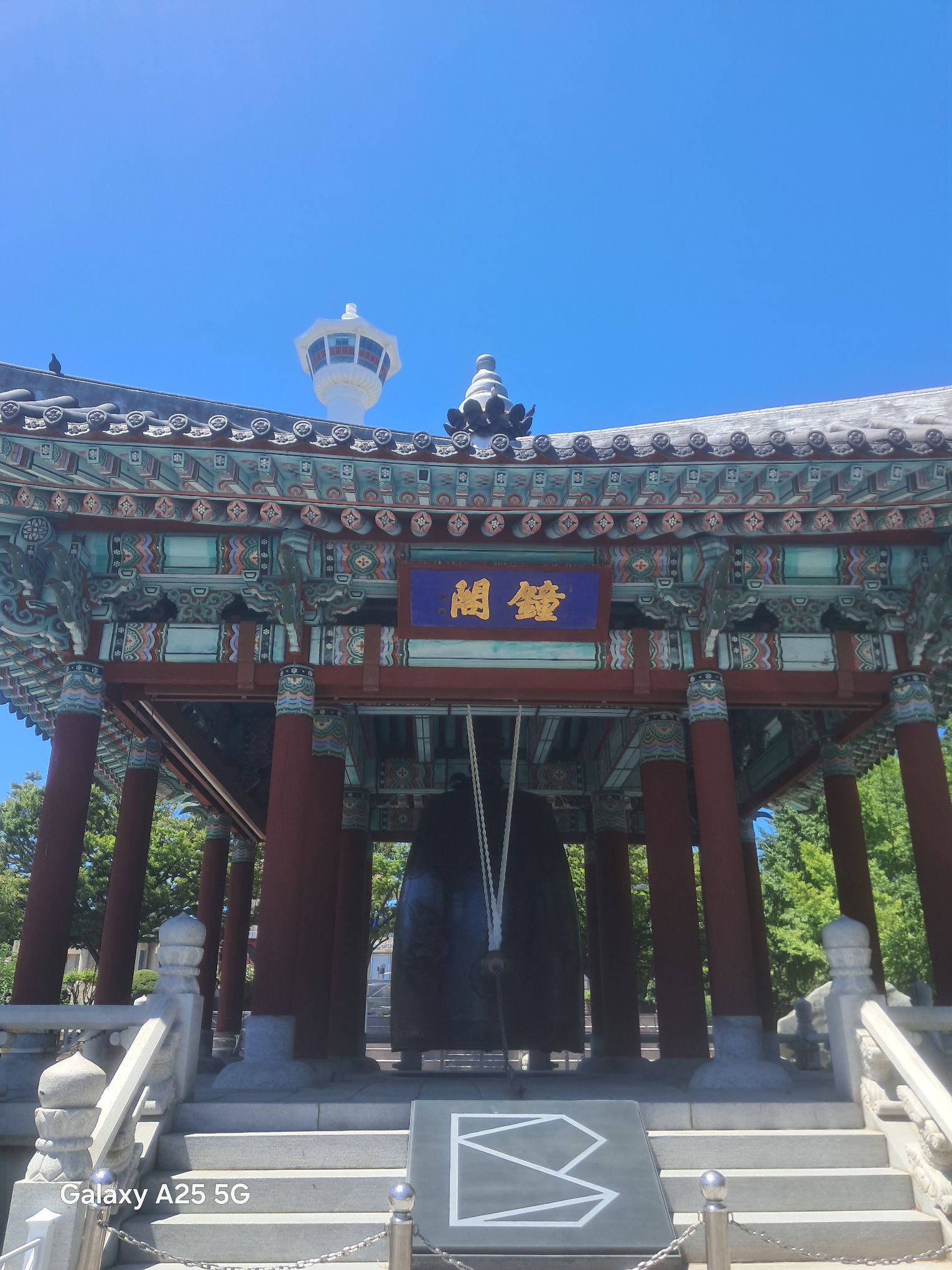
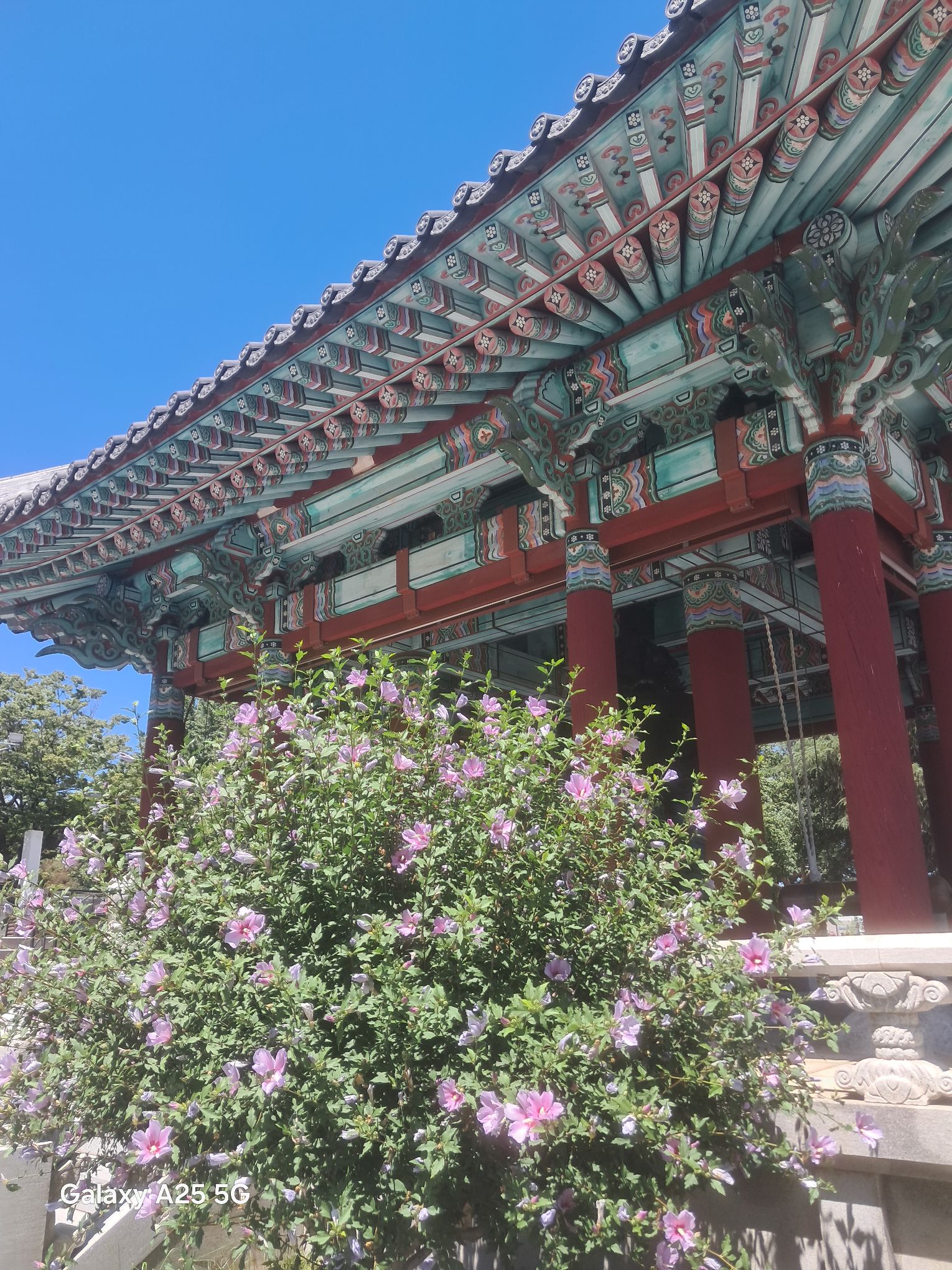
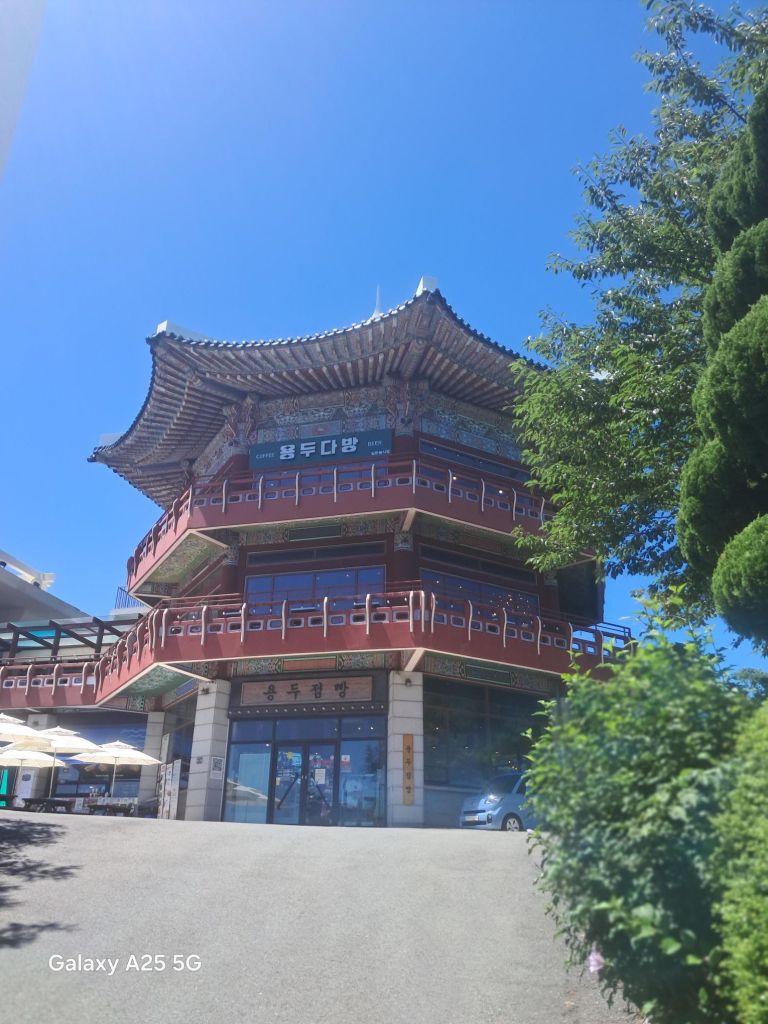
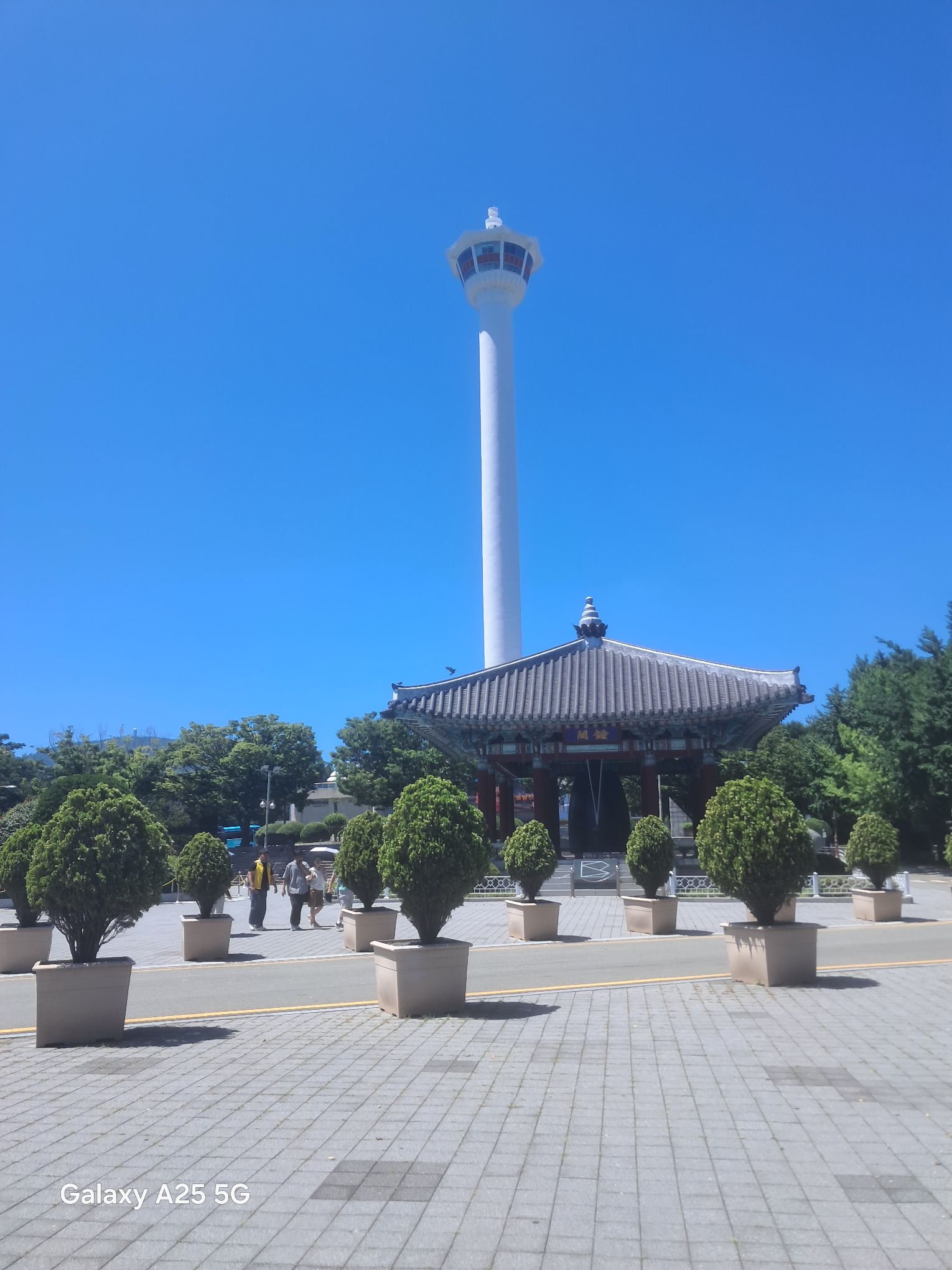
There was a duty free shop in the park. Popped into it, because we needed an air con fix. The shop was massive, and we were the only ones in it. We were literally swopped on to try different food products. It was really hard to pretend we were shopping, as all we wanted was cold air! That said the honey butter almonds were rather special!
In the background you can see Busan Tower, 120 metres high, nothing like the one we went to the other night. We decided to go up. It was a very great experience!
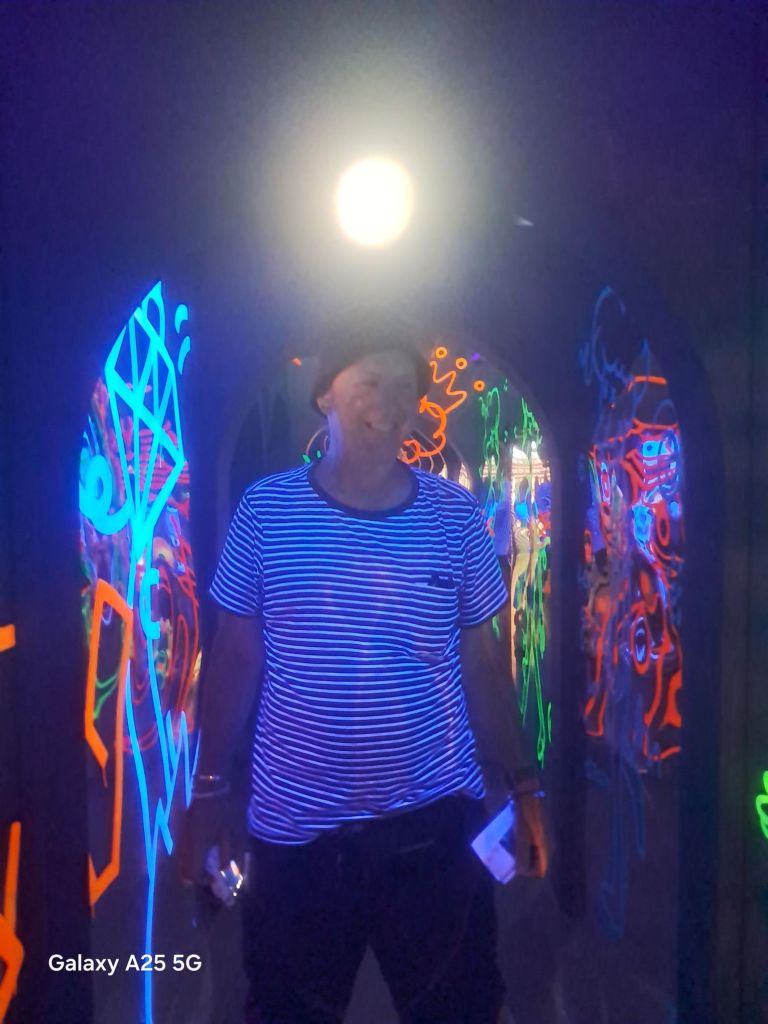
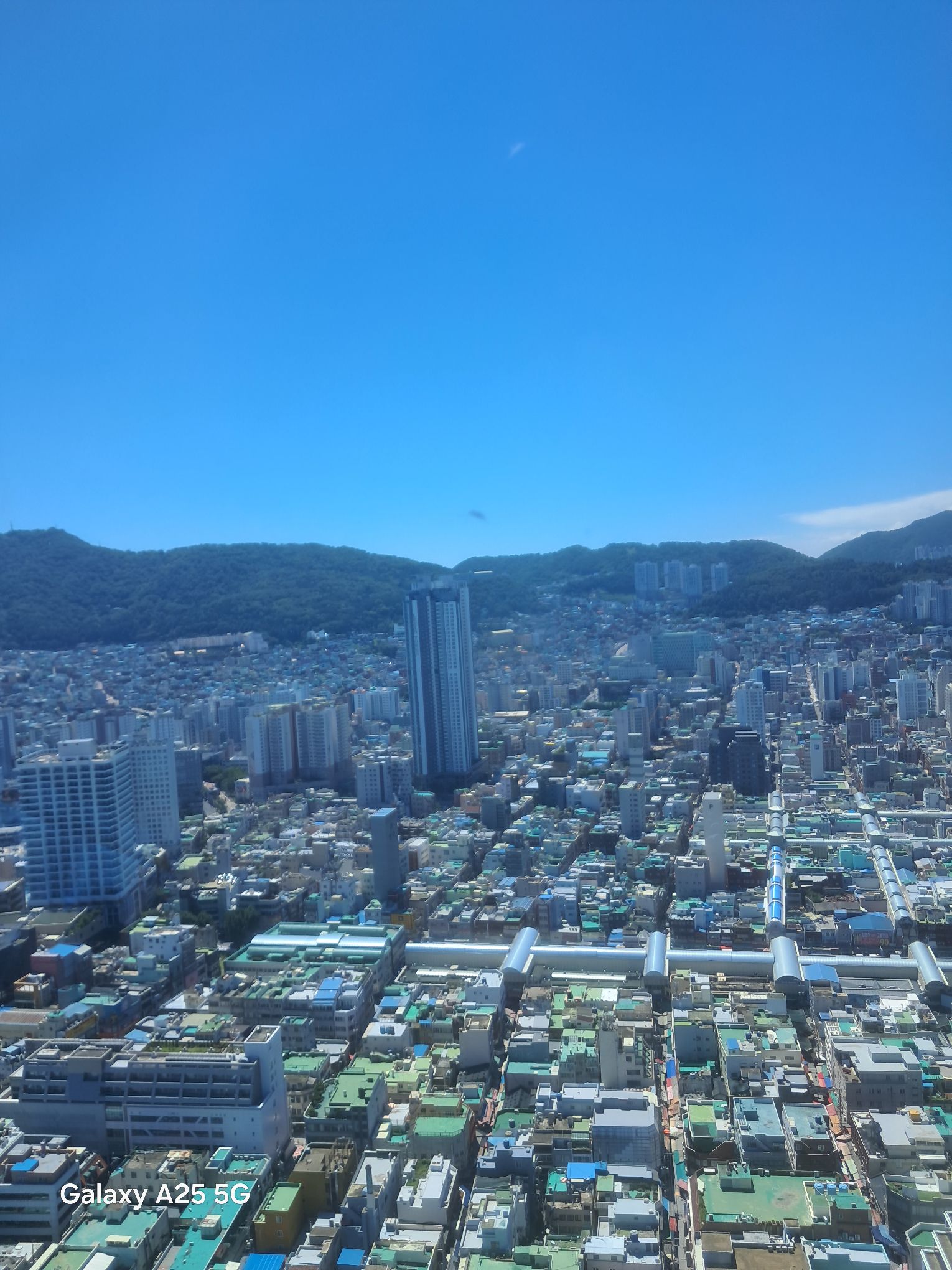
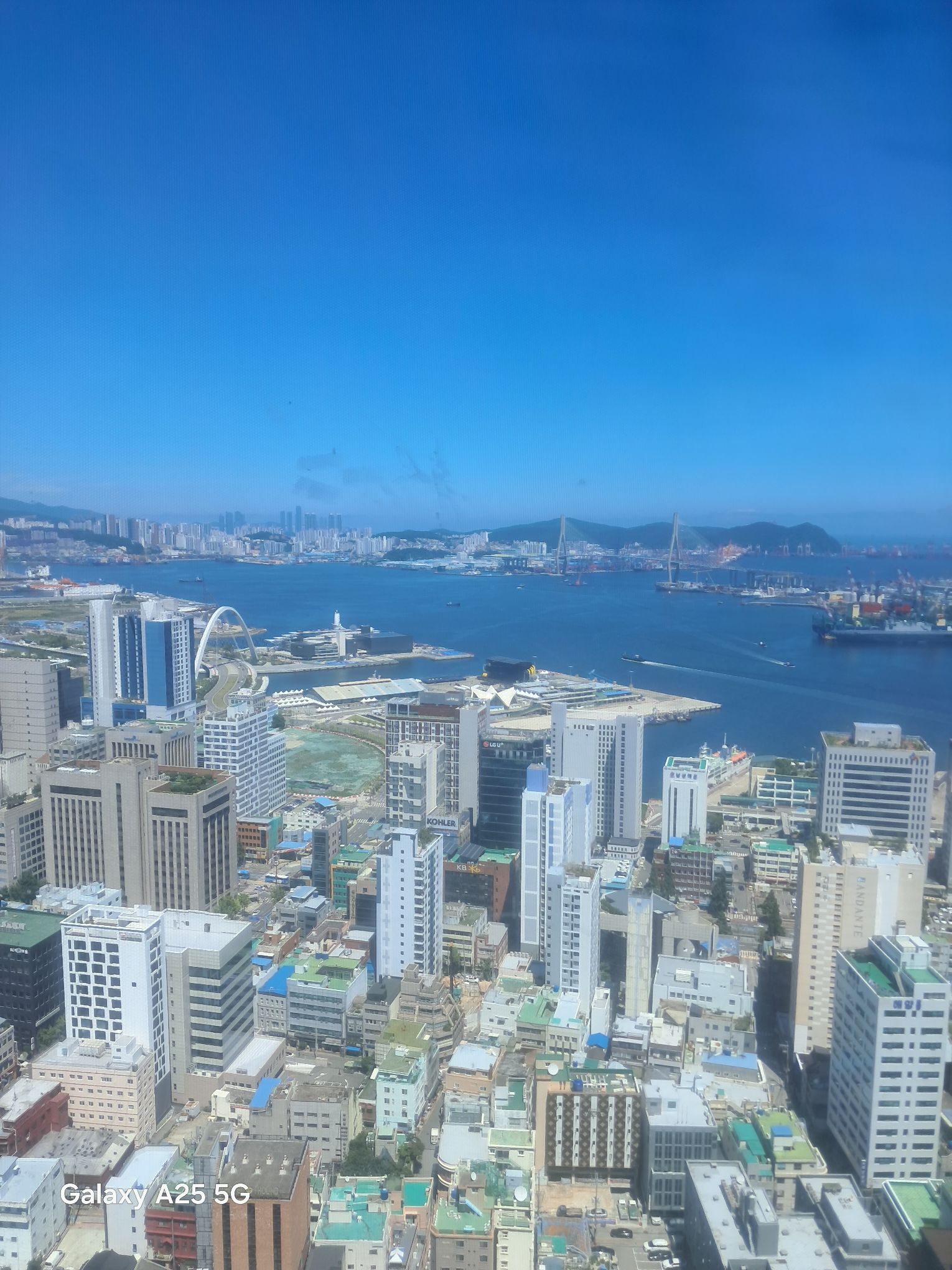
Going up the escalator, we got to see Busan in the daytime.
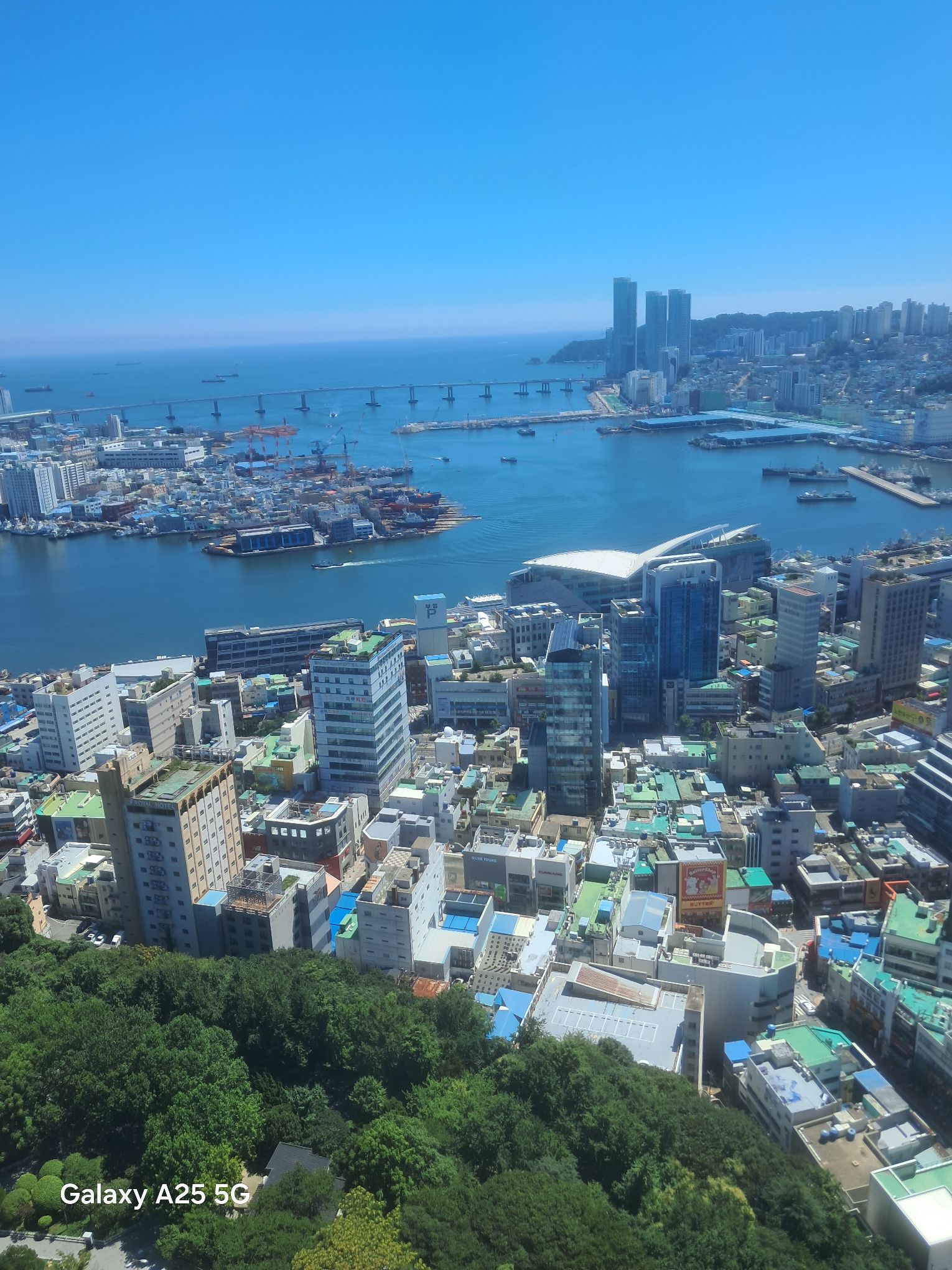
Then there were very odd photo opportunity moments, which we lapped up!
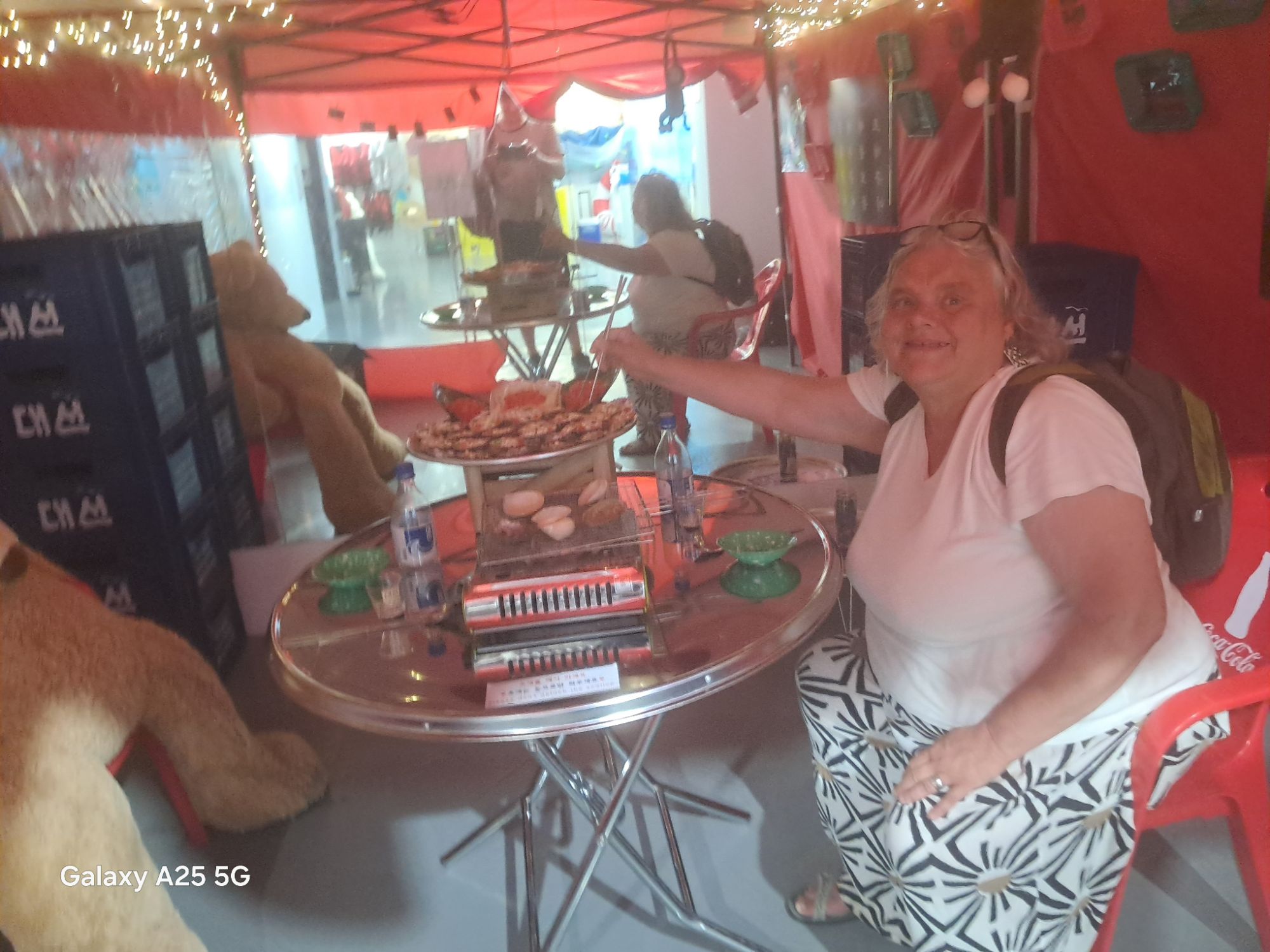
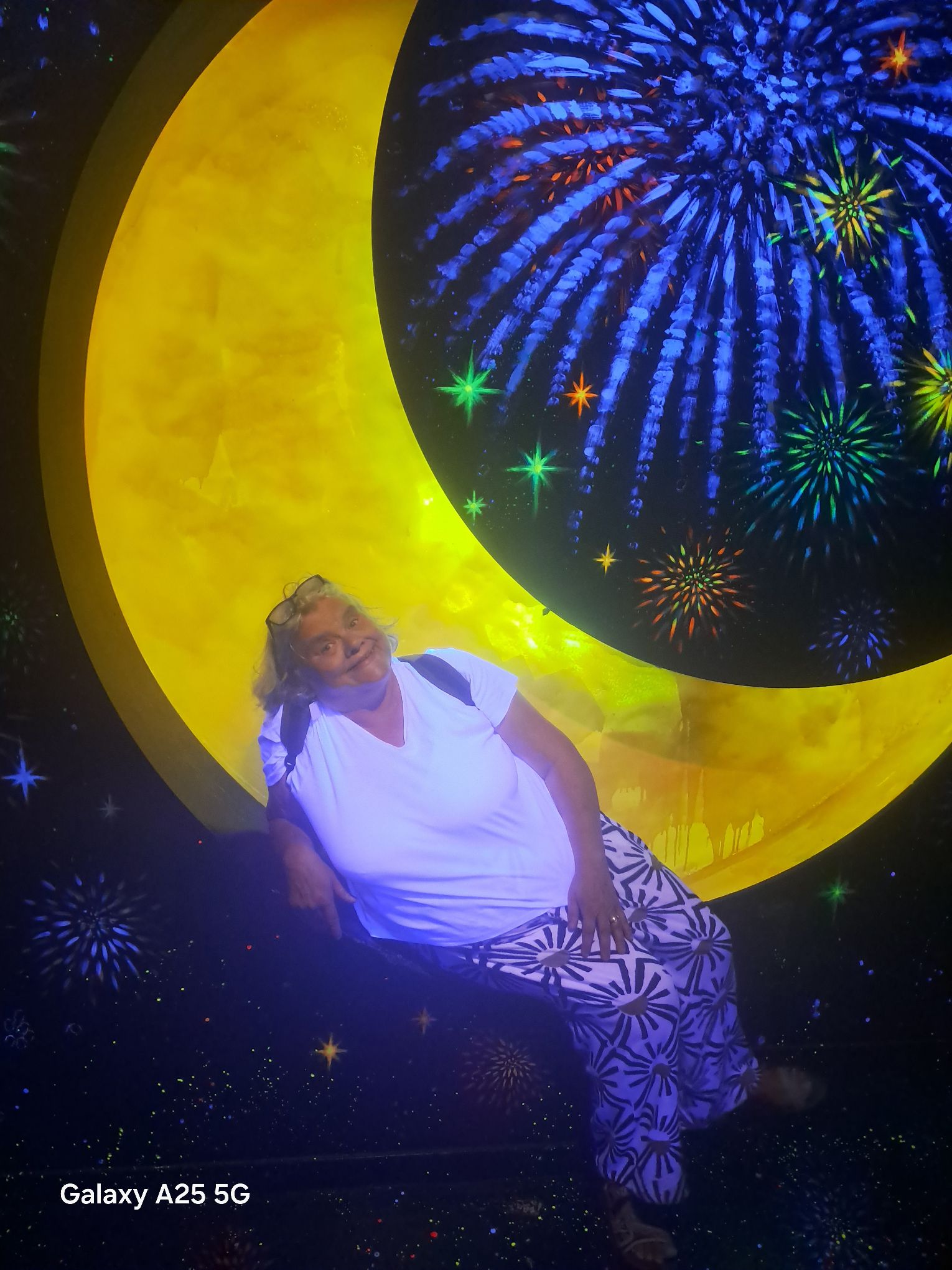
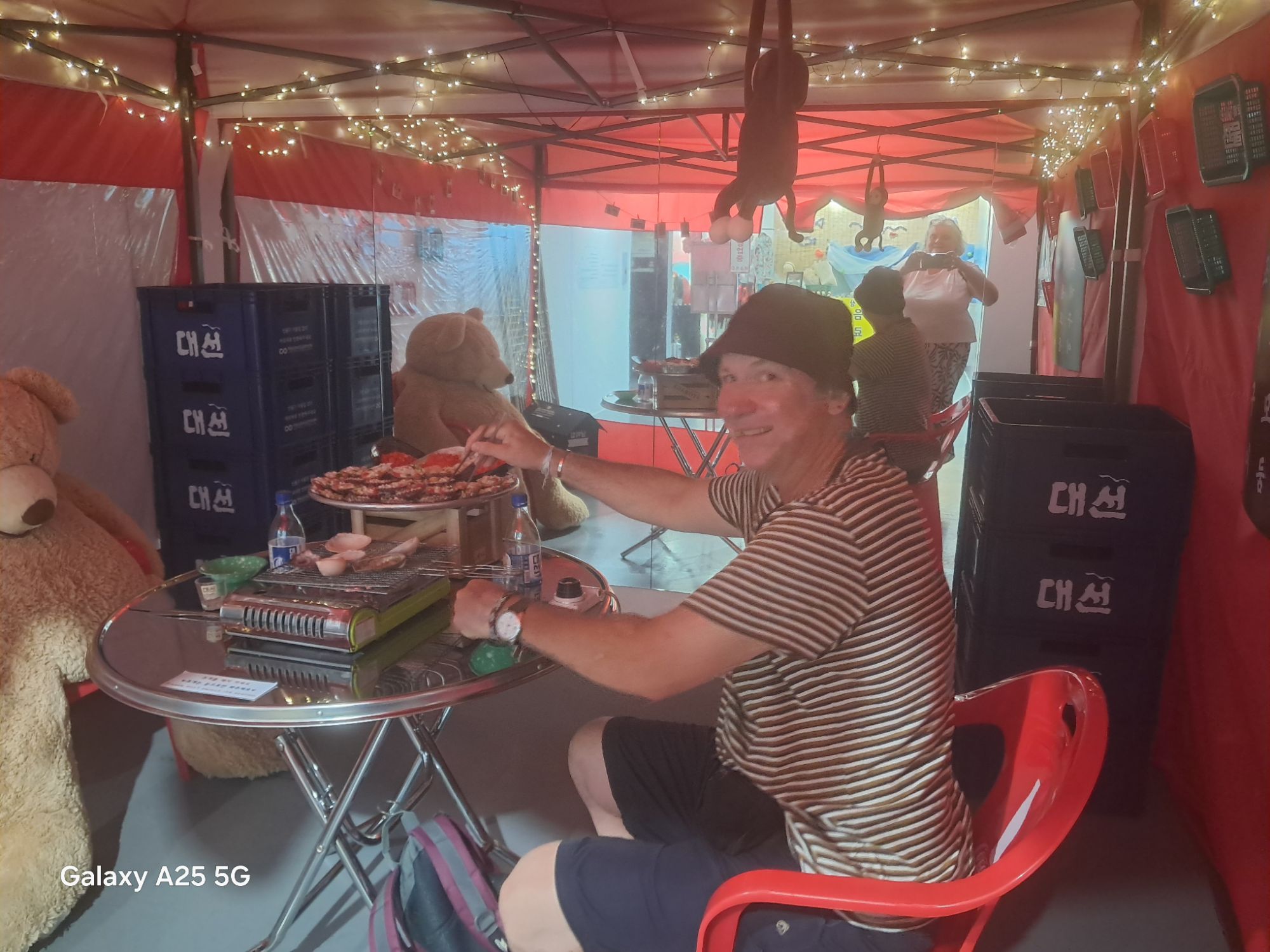
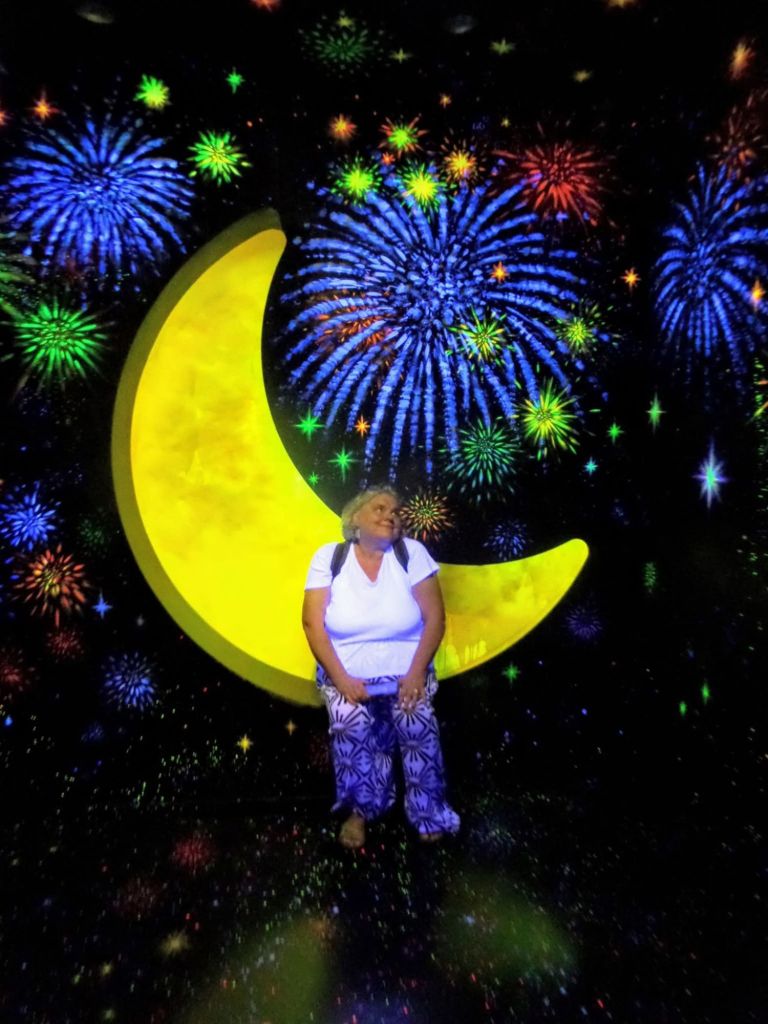
I loved taking these of Pete. Luckily, no one was around!
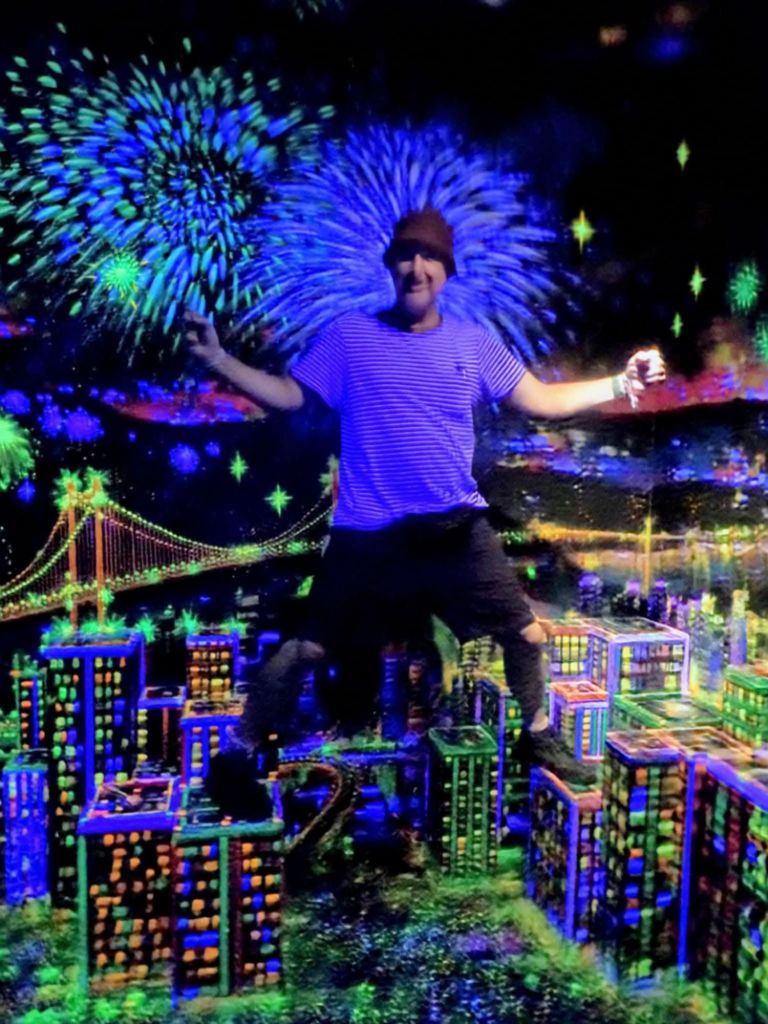
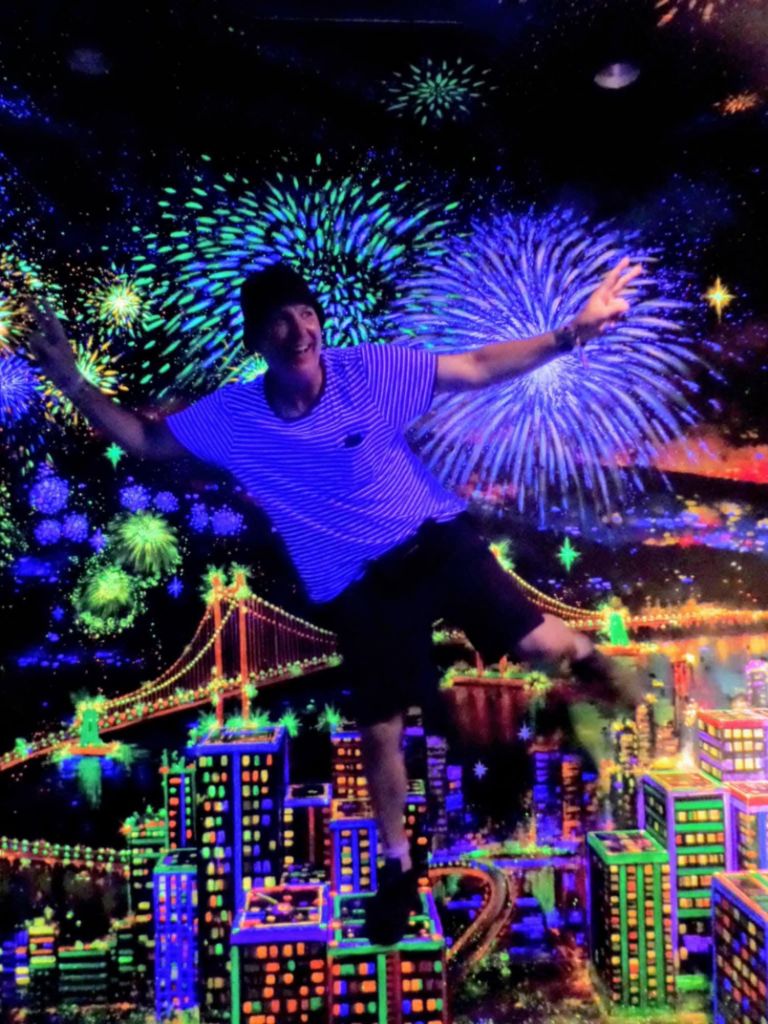
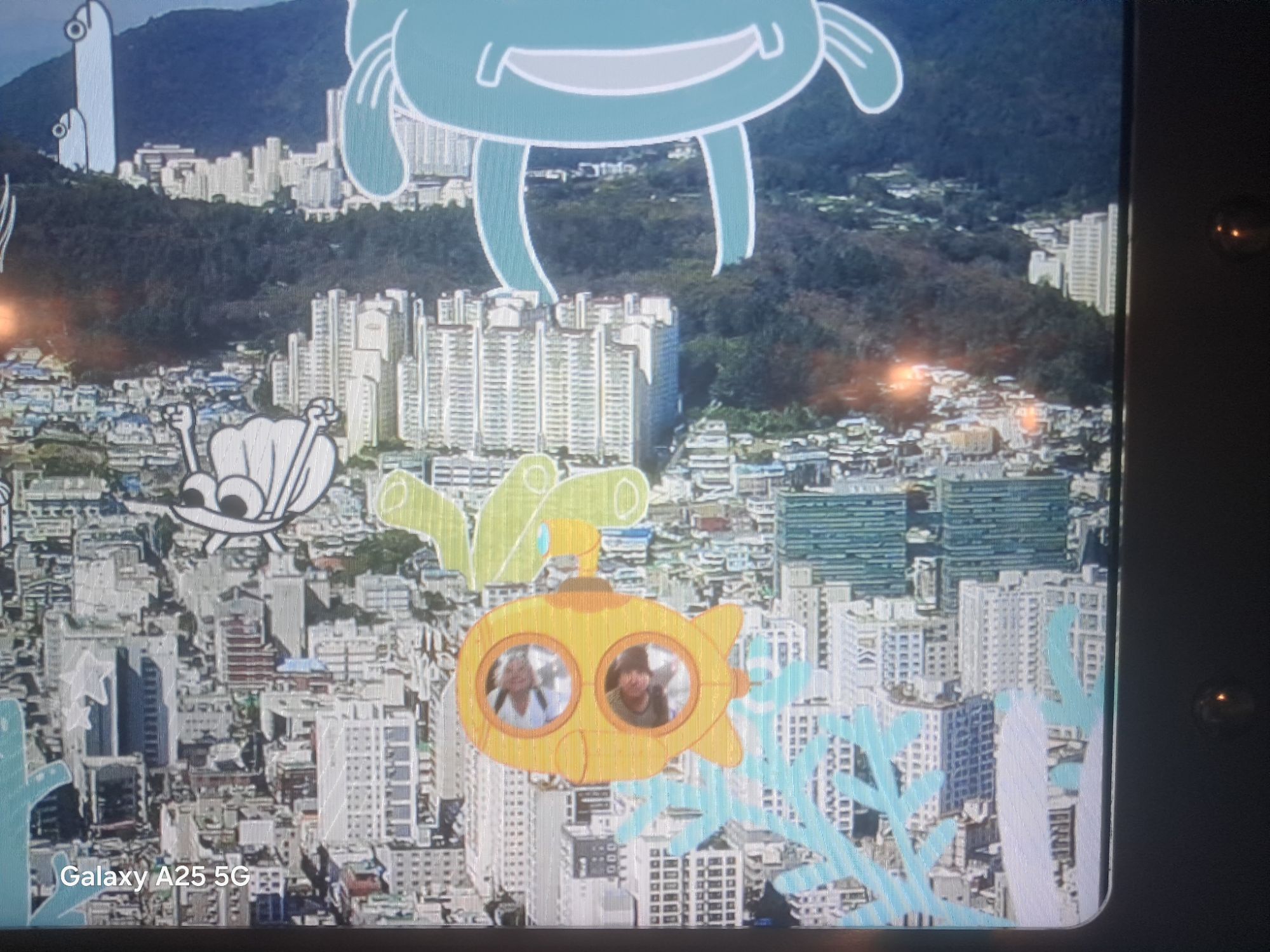
The next level was a virtual tour of Busan., in a submarine. It was really funny!
After all the fun and frolics, we went home via the market. As Busan is a seaside city, there is alot of fish etc for sale. What we have tended to do id face forward in the parts that have those stalls, of cramped tanks full of all the sealife imaginable. But today, as I did that, I saw something moving in my peripheral vision. I couldn’t help but look, I wish I hadn’t! An eel that had been skinned and beheaded, still writhing on the chopping board.
It was so horribe!!!
 Random Acts of Travelling