We left Fonda Vela today – for once we weren’t going at a crazy time in the morning. Our destination was to Manuel Antonio.This for all intents and purposes was the last leg of the trip. In many ways saving the best until last.
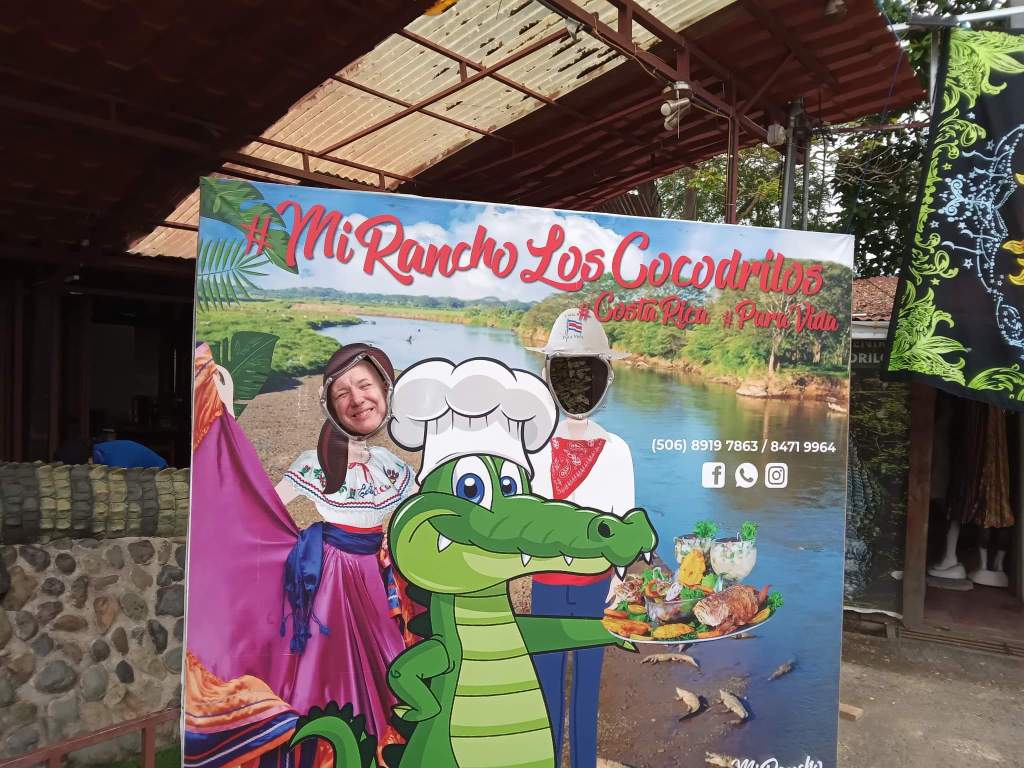
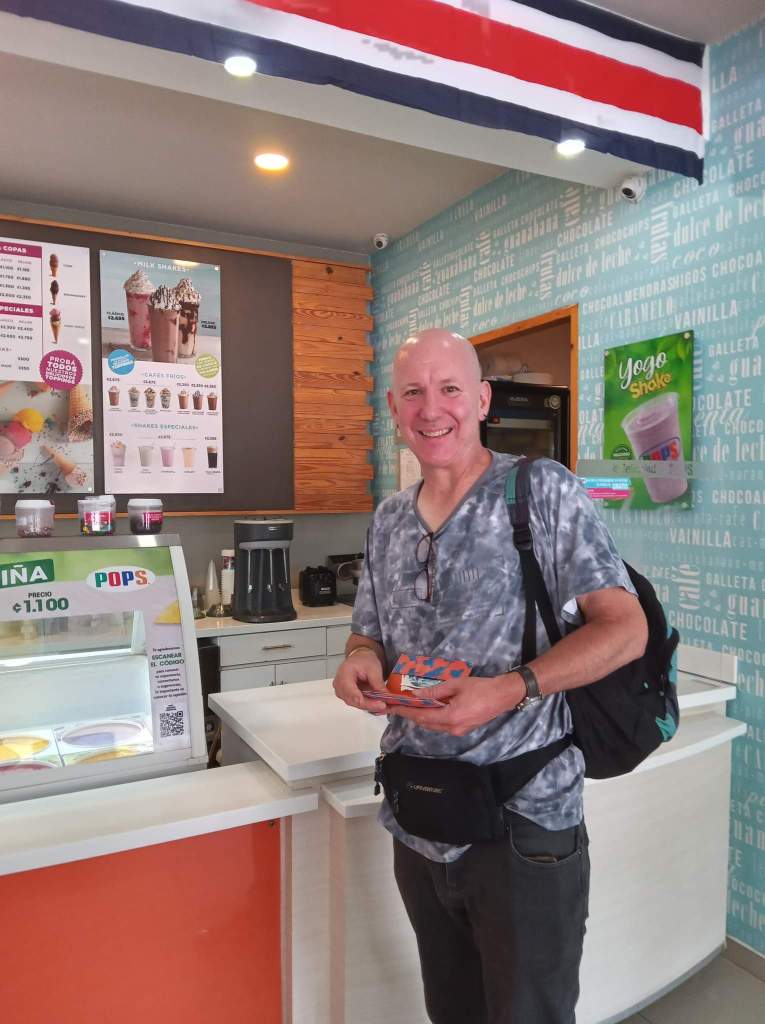
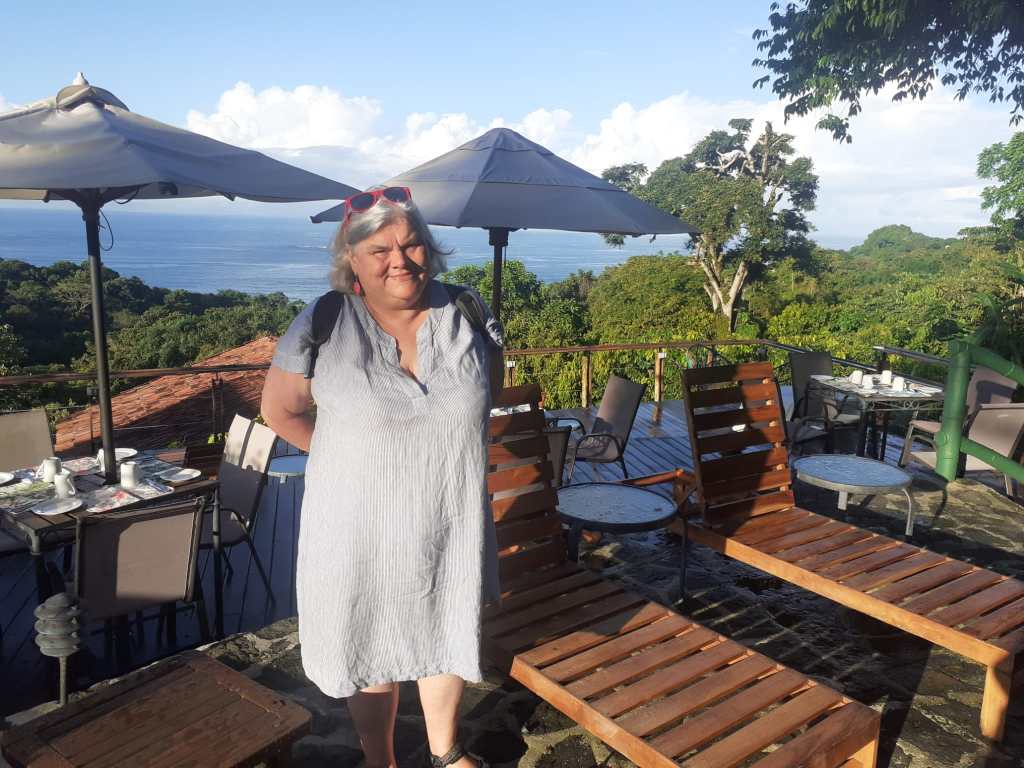
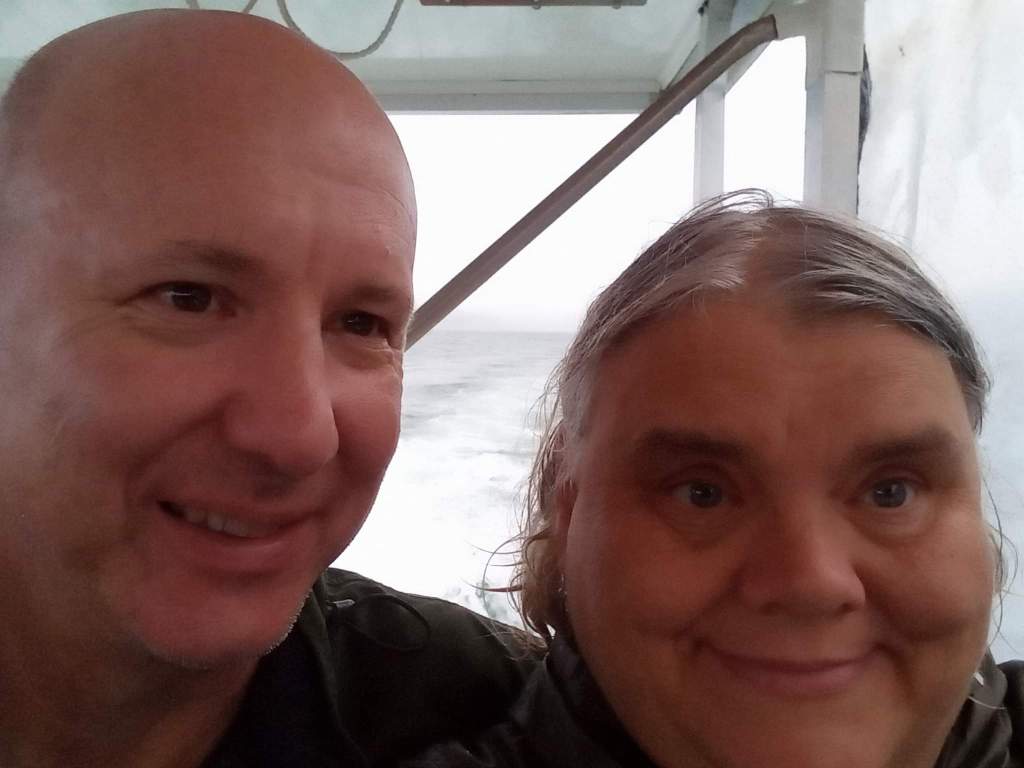
After two hours we stopped at a Costa Rican equivalent to a services. It was called Crocodilos. I just thought it was a quirky name. We decided to cool down with smoothies, which has reignited Pete’s love of them. But before we had our smoothies I had to continue the family tradition of a photo opportunity.
I
We headed back to the minibus and the minibus driver in Spanglish told us to go to towards the bridge. As we did so a smarmy roadside seller was hawking crocodile teeth necklaces. He tried everything, including that they were lucky in Costa Rica, in the end I just said they were horrible. The heat can do something to your manners.
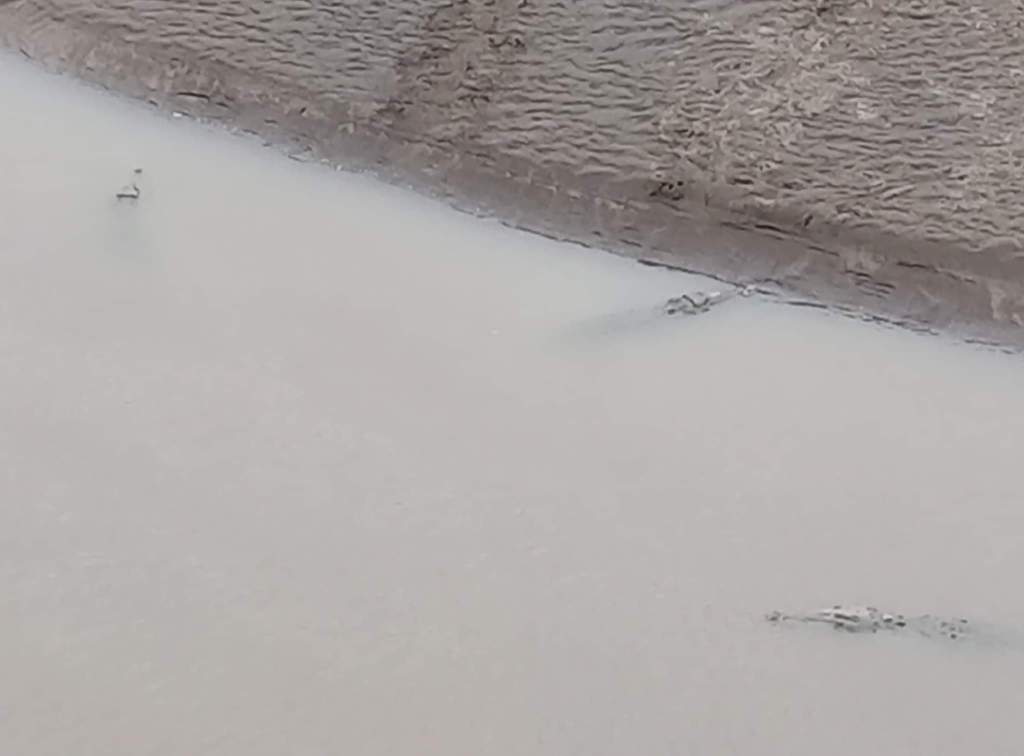
When we got there a group further up were lobbing coconuts at the water. Looking more intently we saw they were aiming at a crocodile. We both decided if they did it again we would tackle them. I wouldn’t have minded throwing them over the bridge.
When returned in the opposite direction two days later the crocodiles were in the same position. Adult crocodiles only have about 50 meals a year. They need energy to break down the food so will lay still for the times in between.
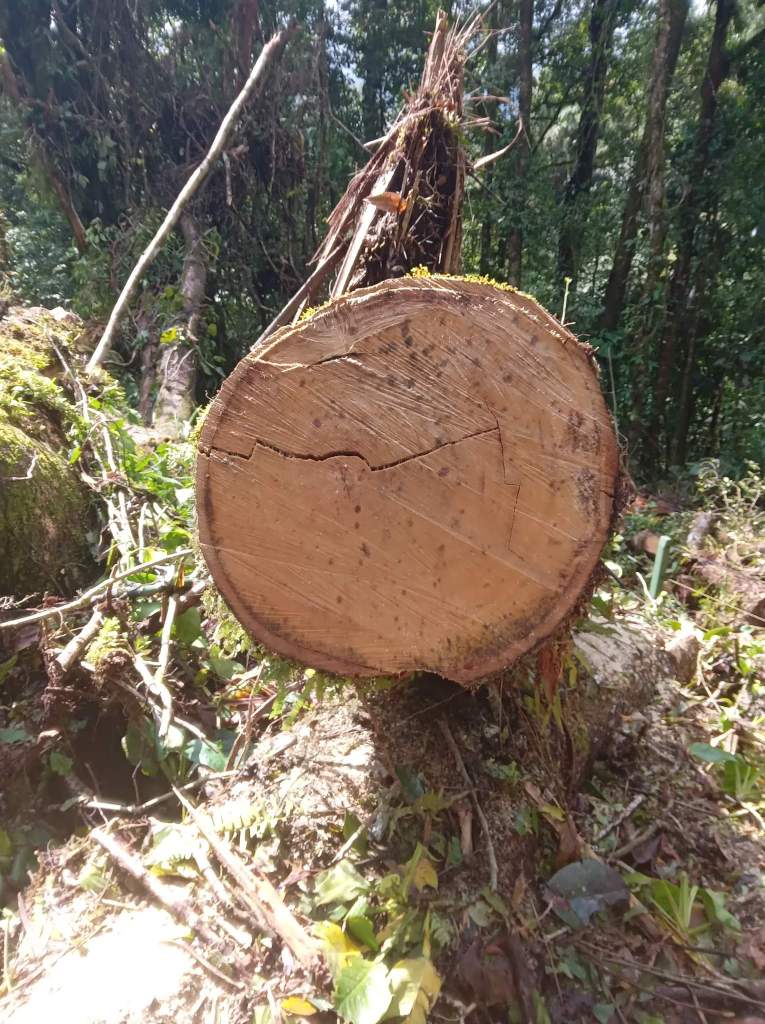
We arrived at Si Como No which means Yes of course. A tad annoyed as we were three hours before check in but we didn’t argue about it. The receptionist said that we could go to the nature reserve that they owned opposite the hotel. It was quite exciting as it was closed for refurbishment, so we were let in by a security guard. It was really good, if you could cut out the deafening noise of chainsaws cutting through huge trunks of wood. As we passed them Pete had a moment of chainsaw envy.
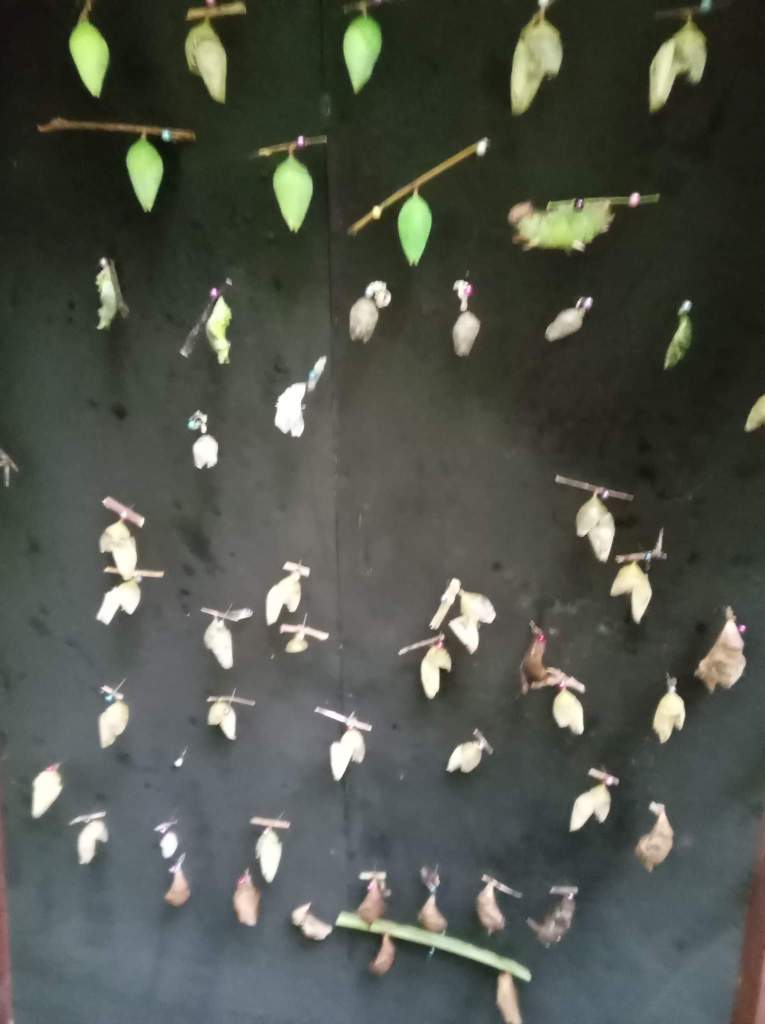
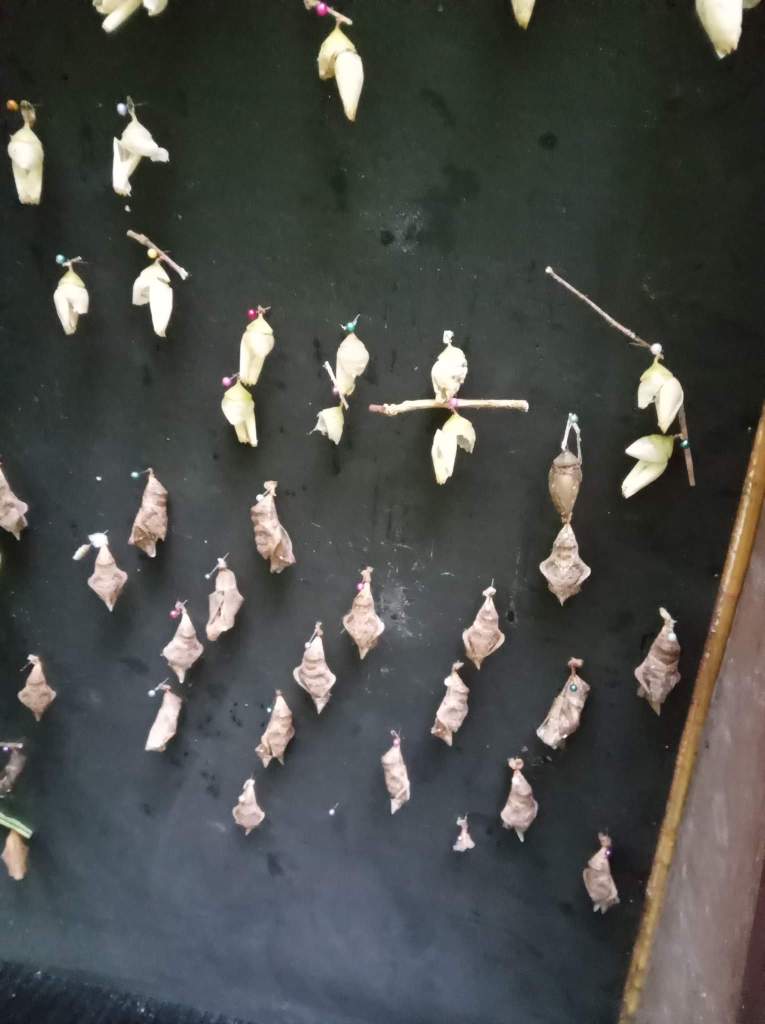
Not only did we see lots of butterflies but also the pupae – which was an added dimension.
We still had plenty of time so we ventured to Manuel Antonio by the local bus, the receptionist seemed surprised that we would do that, as was the receptionist at the Fonda Vela. It would have been ridiculous not to, the fares were 380 colonas and that’s the equivalent to 47p.
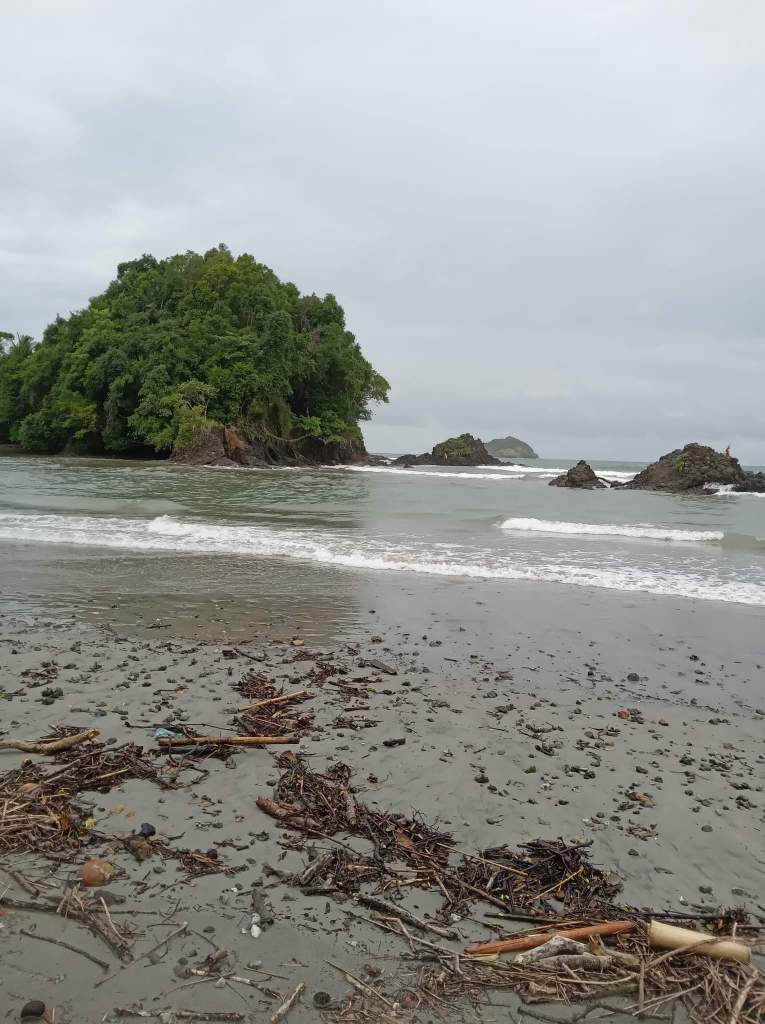
Manuel Antonio is on the Central Pacific coast of Costa Rica. We hadn’t bought our costumes with us – they were buried deep inside of one of our rucksacks. I wasn’t really tempted to swim there as the sand was volcanic and it give it bit of a mucky impression. It looked brilliant for the many surfers. We walked to the end of the beach passing horses trying to keep in the shade.
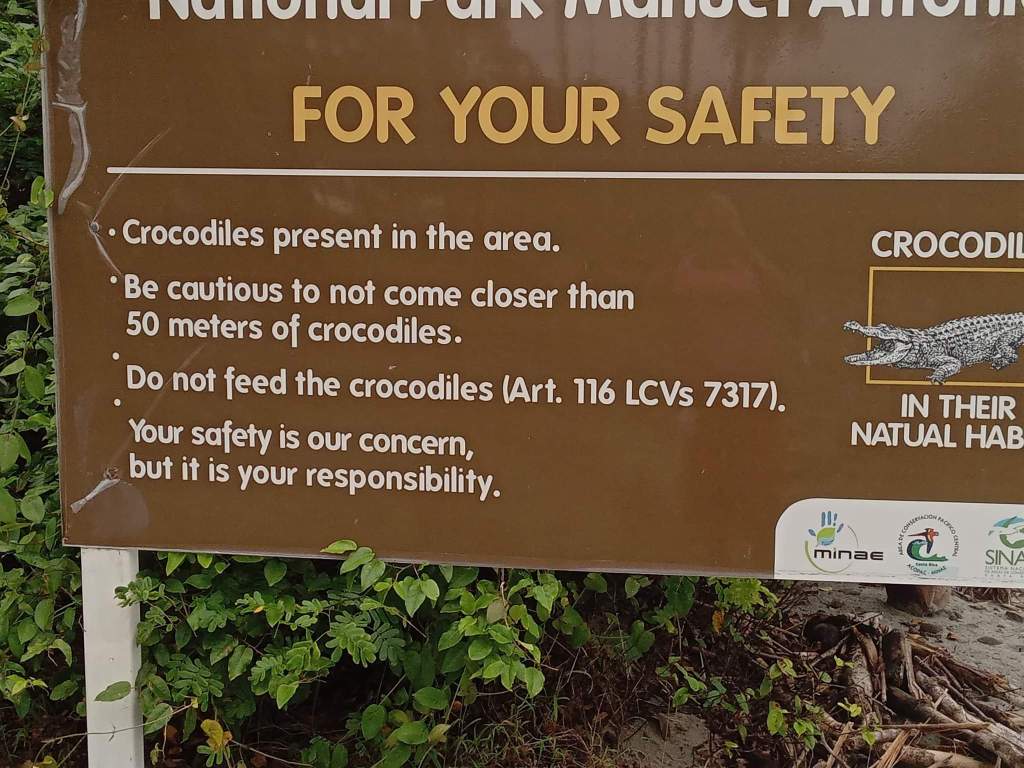
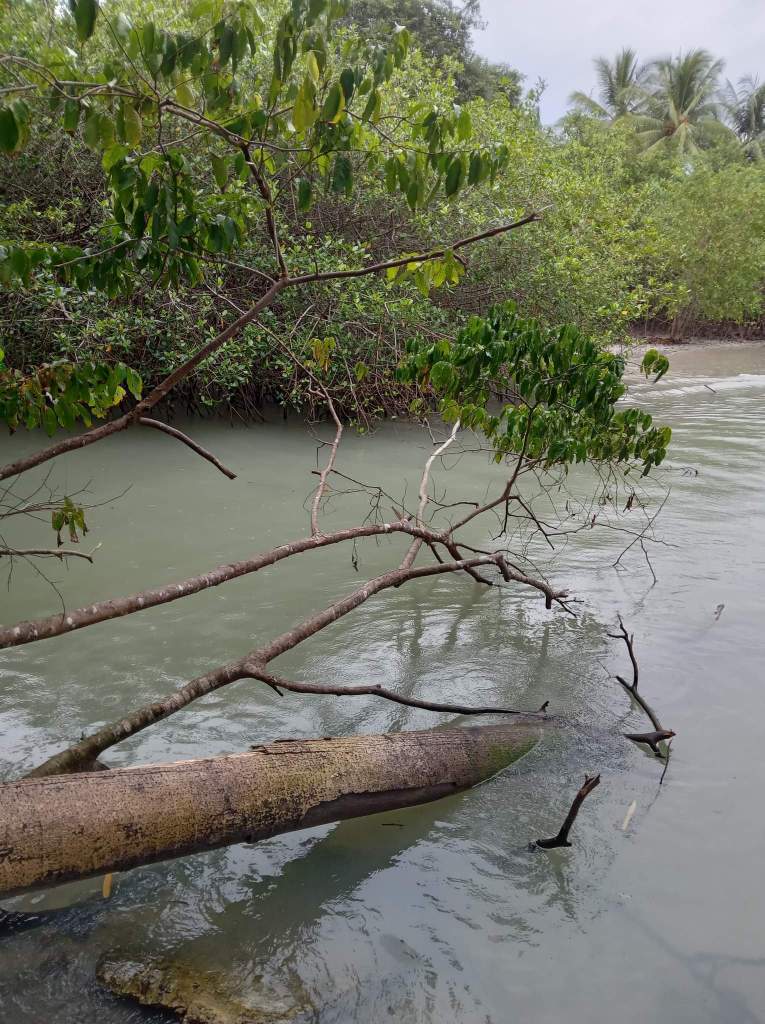
When we reached the end of the beach it turned to mangrove. Despite the sign Pete still wanted to go further down the path, reasoning that crocodiles are slower on land!
I wasn’t in the mood for going further into the forest but luckily that path stopped.
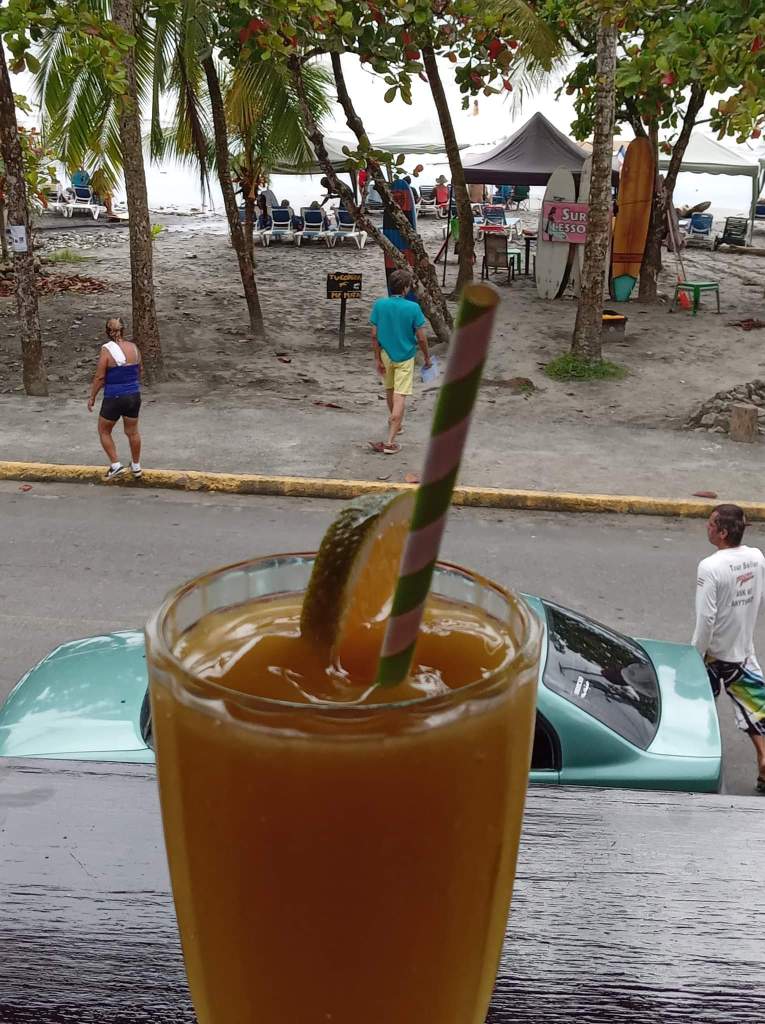
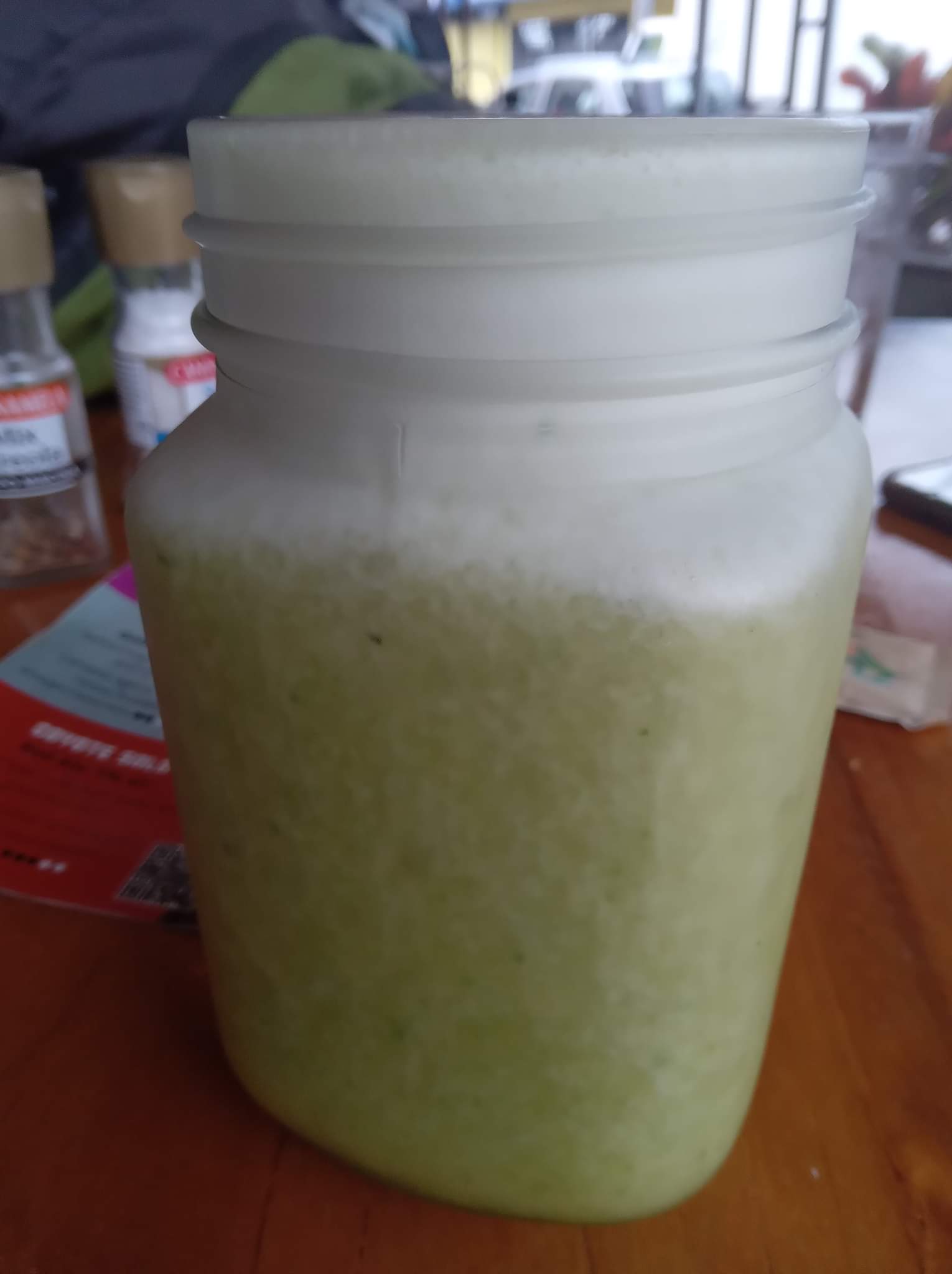
We still had even more time to kill…..so time for another smoothie – but in a cafe with a good view of the beach so we could people watch.
To be honest we just wanted to bum the internet!
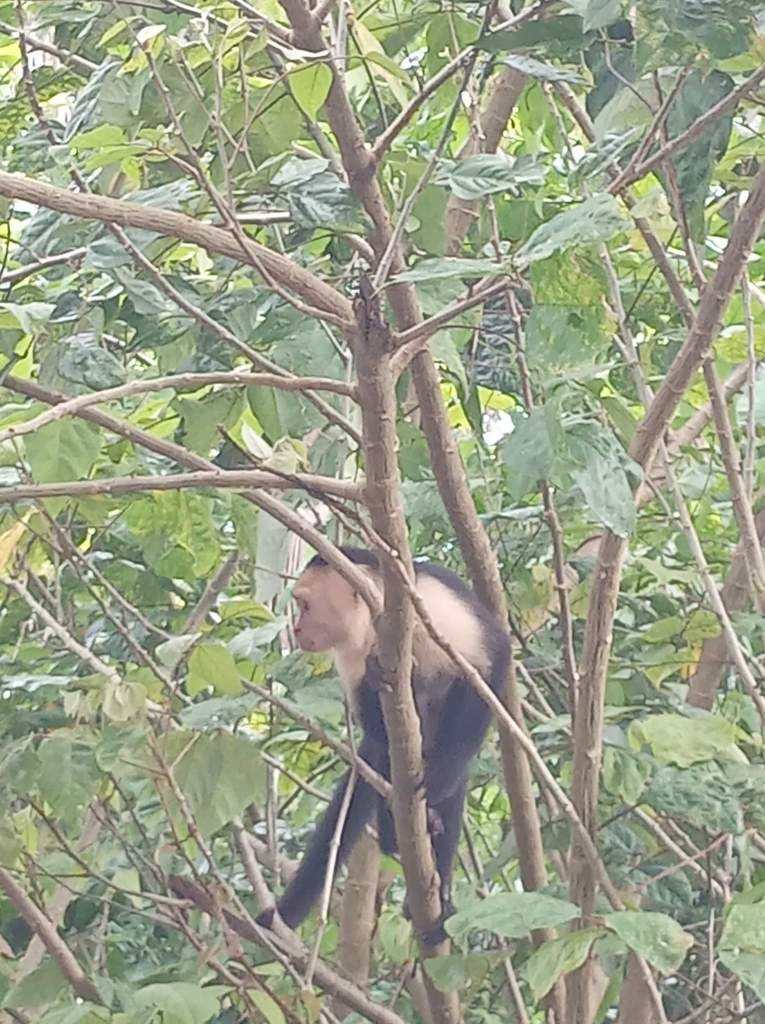
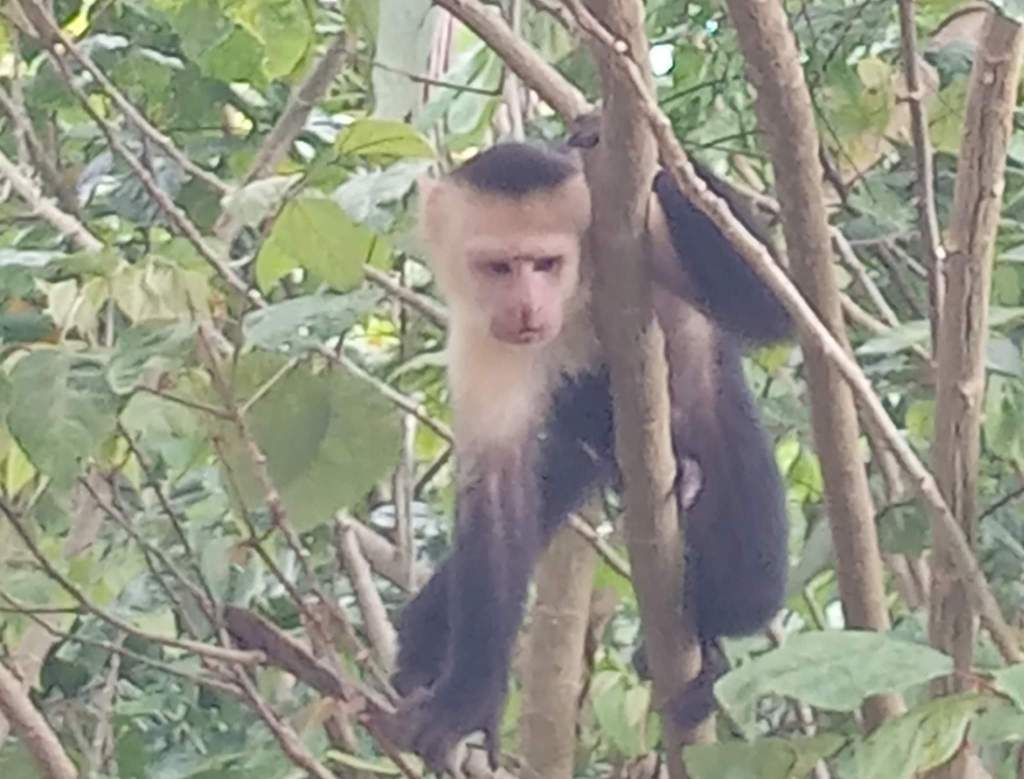
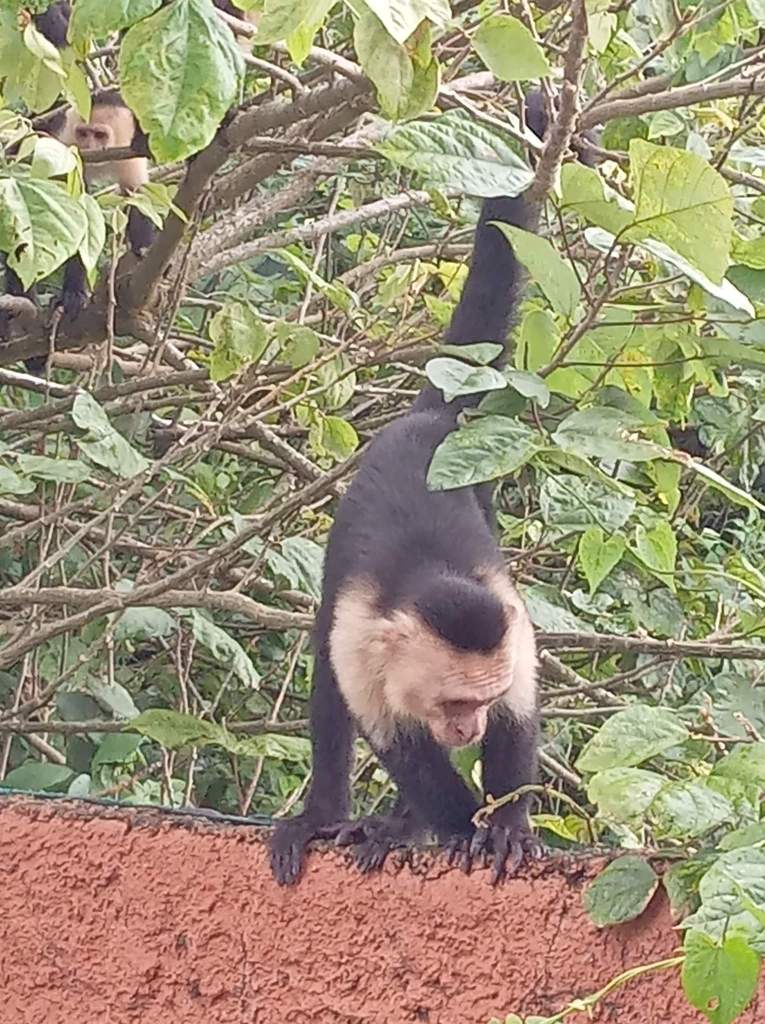
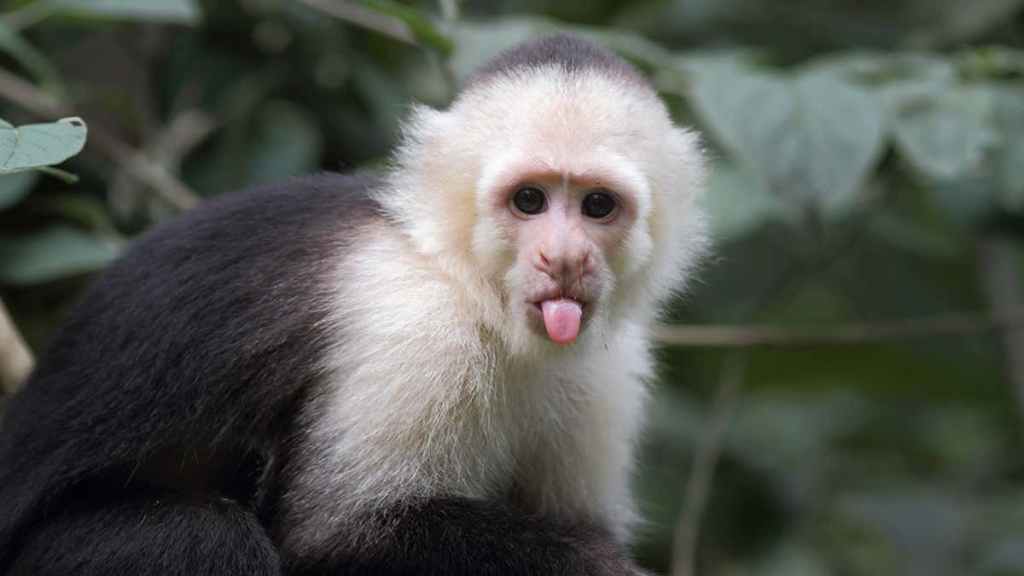
We figured how to get the bus back to the hotel and passed lots of people with cameras pointed at the trees above them. So instead of going straight to the hotel we walked a little way back to see what it was all about. It was amazing, a large group of Capuchin monkeys, jumping from one tree to the next.
it
It was so special to see them so close. We stayed a while and only left when they did.
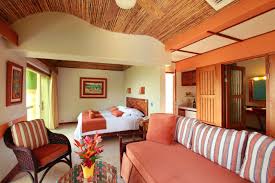
Got to the hotel to be told we had been upgraded due to the checking in issues.
It was again very posh and again not the sort of place we have normally stayed in, but we have decided we could easily get used to it.
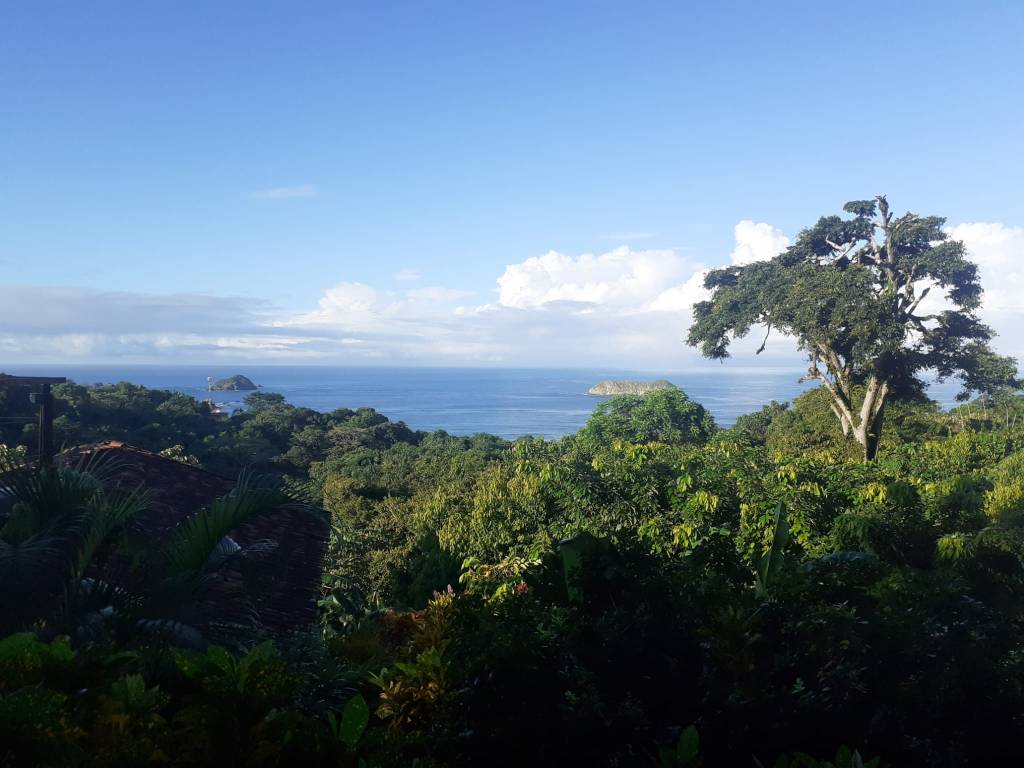
The view from the balcony was breathtaking even when there was torrential rain some twenty minutes later!
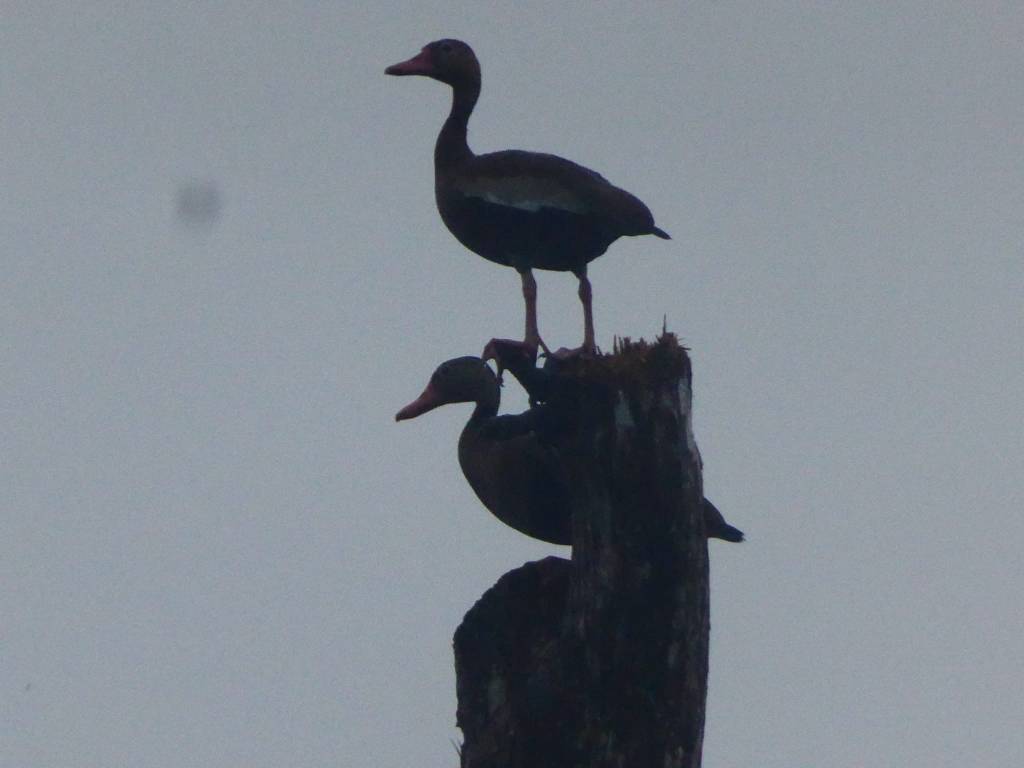
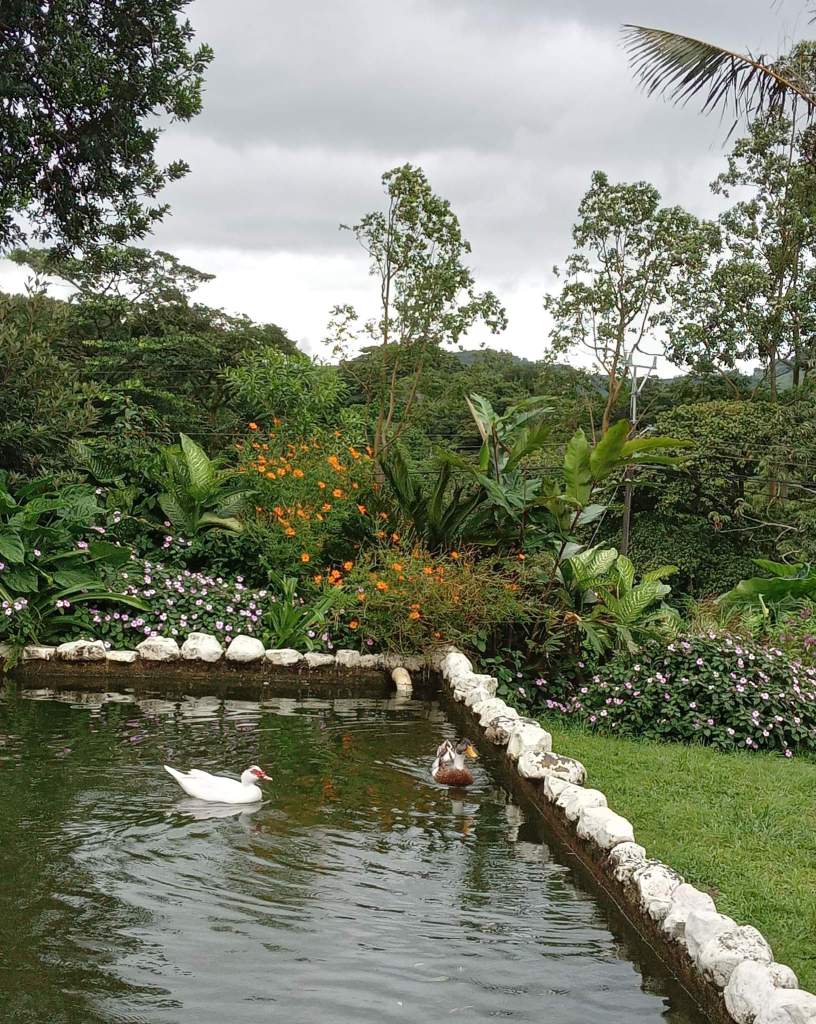
We saw these ducks while it was literally bucketing down.
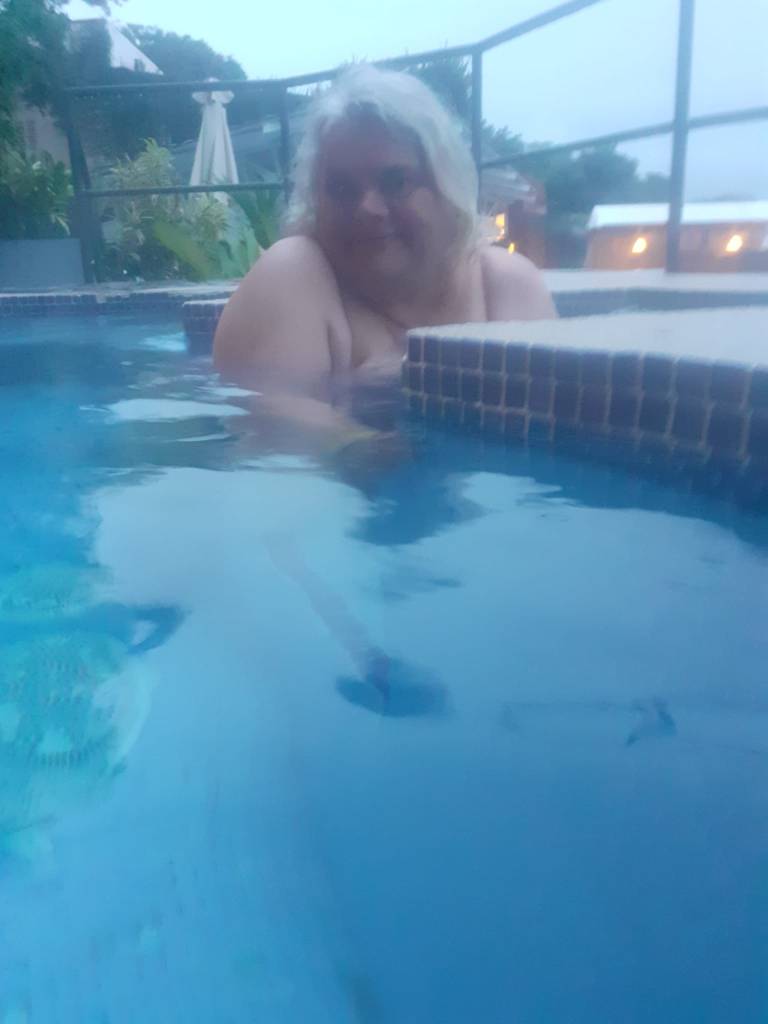
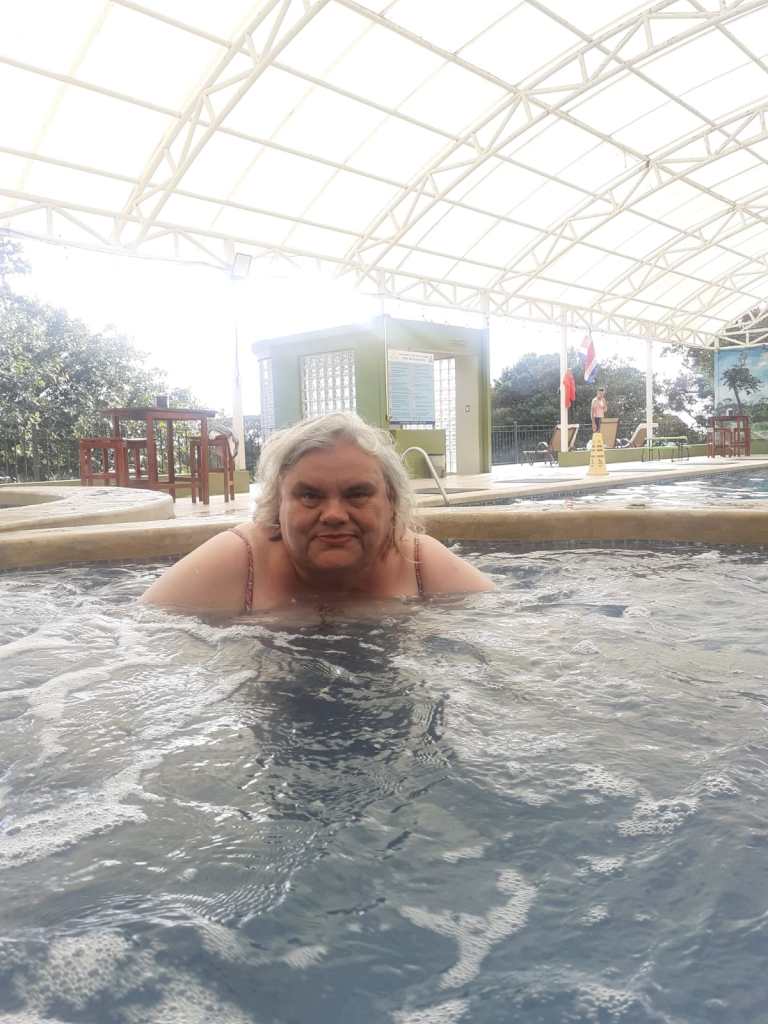
When it eased we went to the pool. They had a separate adult pool, which I guiltily loved the idea of, hence probably the awful coy pose!
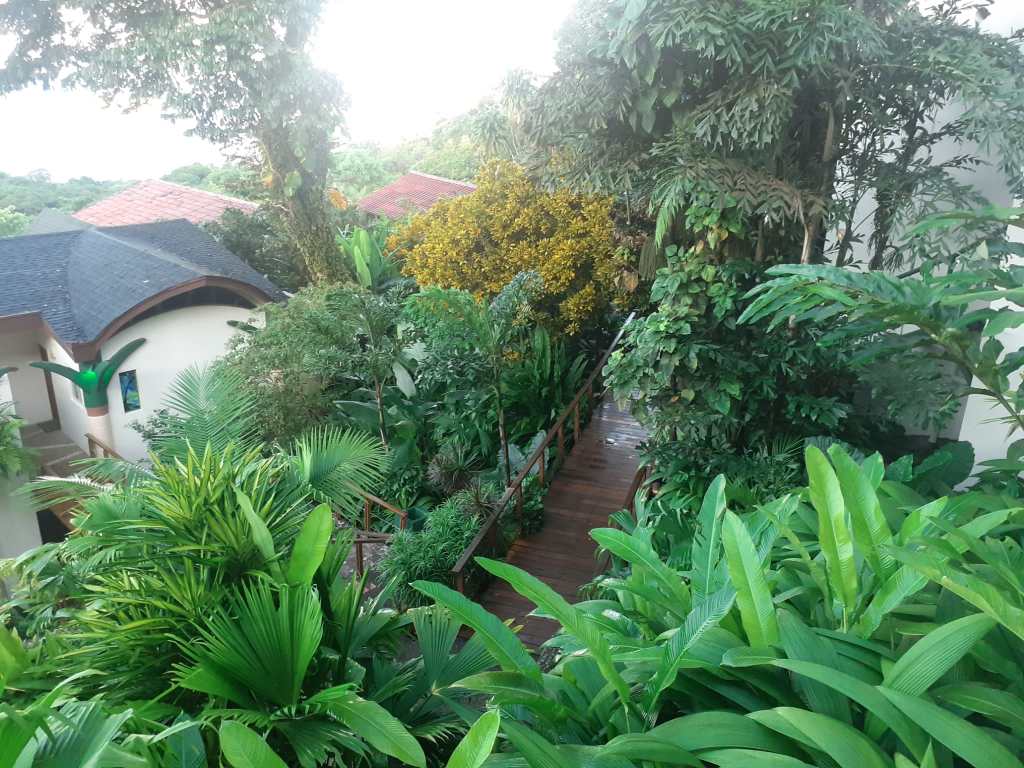
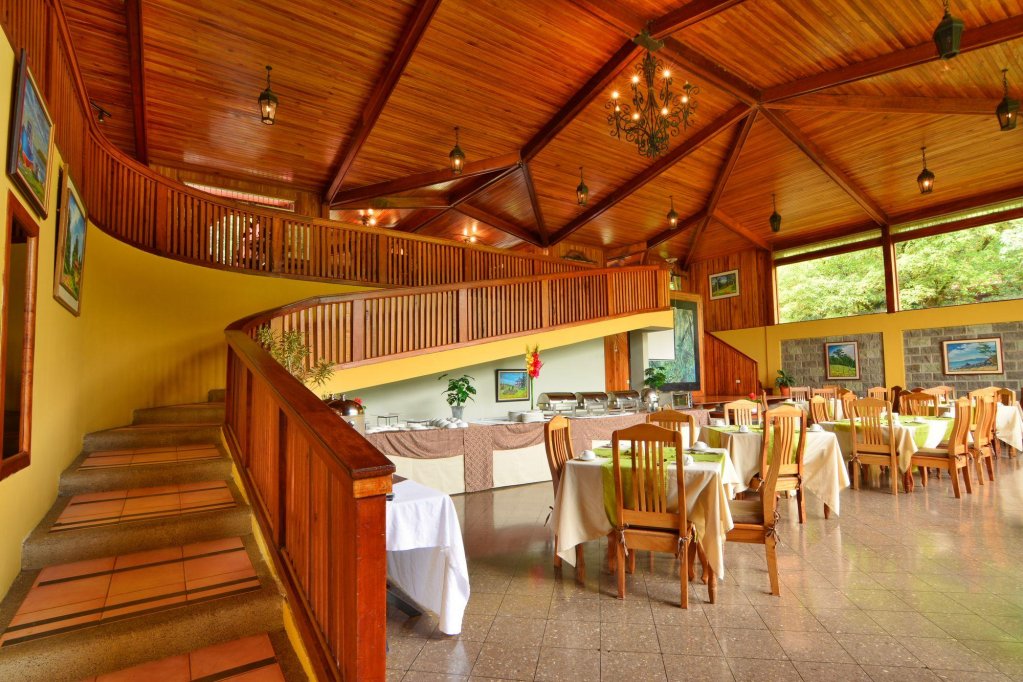
We were being picked up today at 7.30am, so another early breakfast. The walk to the restaurant took in a large winding wooden staircase. Pete really like the staircase and made me pose several times, I think the heat is maybe getting to him.
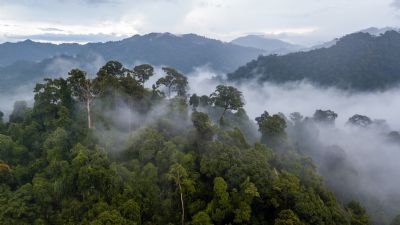
One of the big pulls in the area is the Cloud Forest.
This cloud forest was first ‘taken over’ by Quakers who decided to leave Alabama during the 1950s Korean War. Looking for a place to settle that would provide a simple life.
When Costa Rican farmers tried to take some of the land the original Quaker families joined forces with interested scientists to protect it and doing so increased the size.
It is very much a place of great scientific interest. What exactly a cloud forest I wasn’t certain , I guessed a forest in a cloud. But the real definition that a cloud forest, also called montane rainforest, vegetation of tropical mountainous regions in which rainfall is often heavy and condensation is persistent because of the cooling of moisture-laden air currents deflected upward by the mountains.
I don’t quite understand it but anyway normally the place is under a cloud and very misty but on the day we visited the sky was clear and the weather unseasonably good.
It was another day when we bumped into Shish and Joyti, it was lovely to share it with another couple. We also met another couple, Linda and Dee from California who were anti Republican and Trump. Linda said that things were so bad she no longer speaks to her 7 siblings due their Trumpian views and pro gun stance. It sounded as divided as the UK is becoming.
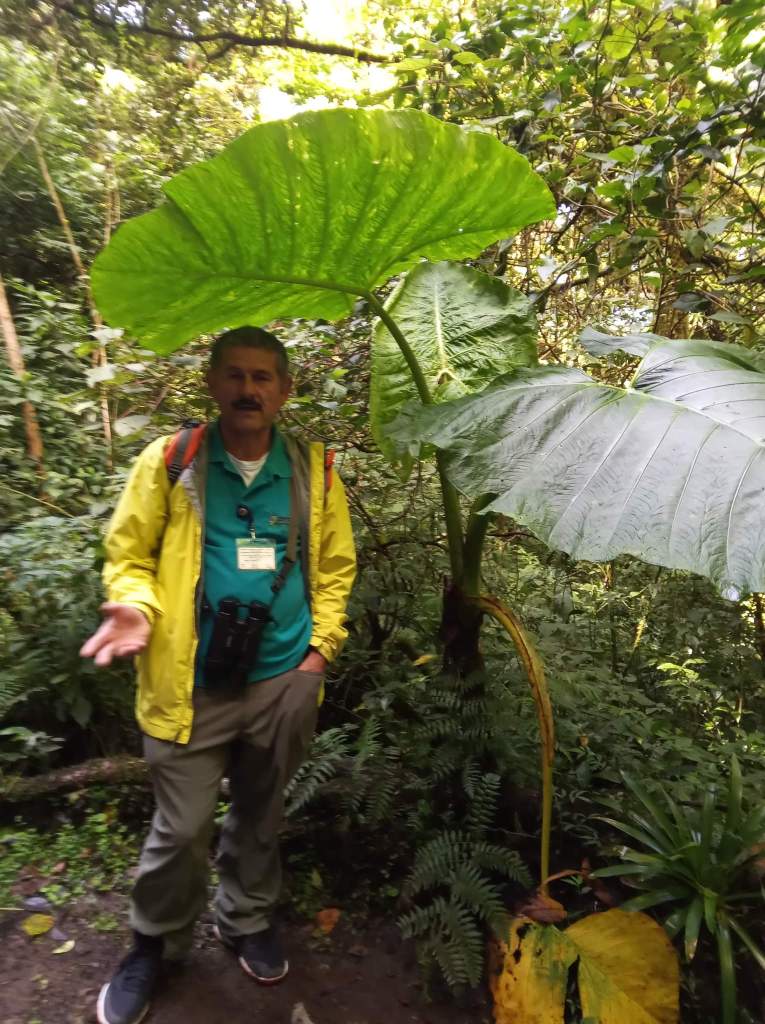
Our guide today was Giovanni. He was very enthusiastic and told us he had a degree in forestry. To pass he had to know about all the 1000s of species in Costa Rica.
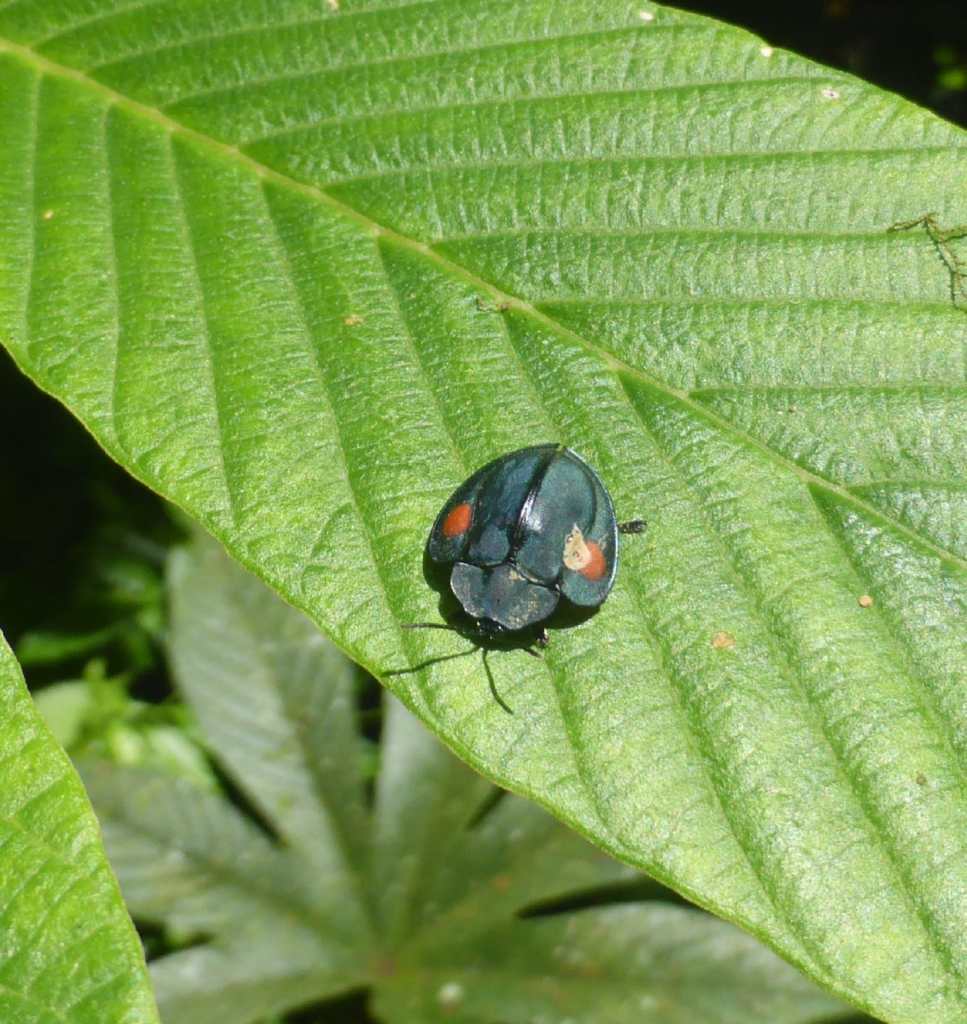
Just before this photograph Giovanni made us huddle around a leaf as he had seen an interesting beetle, only so say ” ah no it is bird poo”.
Another thing he kept saying was we were in the rrrrrrrrainforest not the rainforest because it rrrrrrrrains alot. Apparently annually there is 8 feet of rain. That said there are changes and the cycle of some of the wildlife and fauna etc has changed and some things are happening four months earlier.
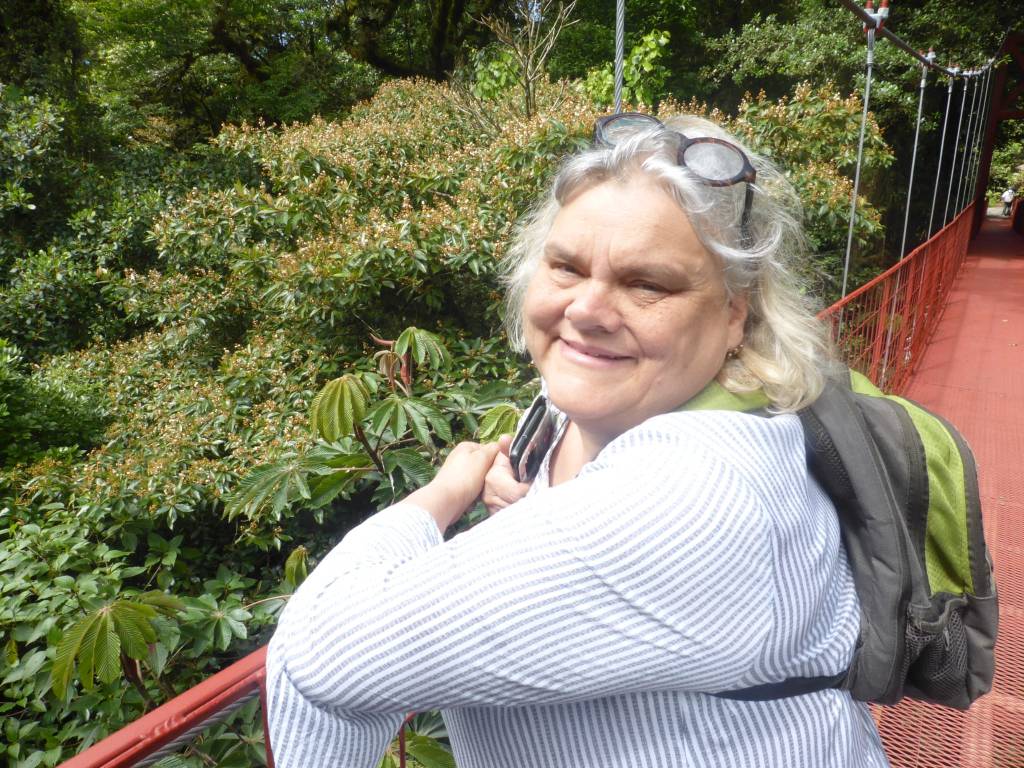
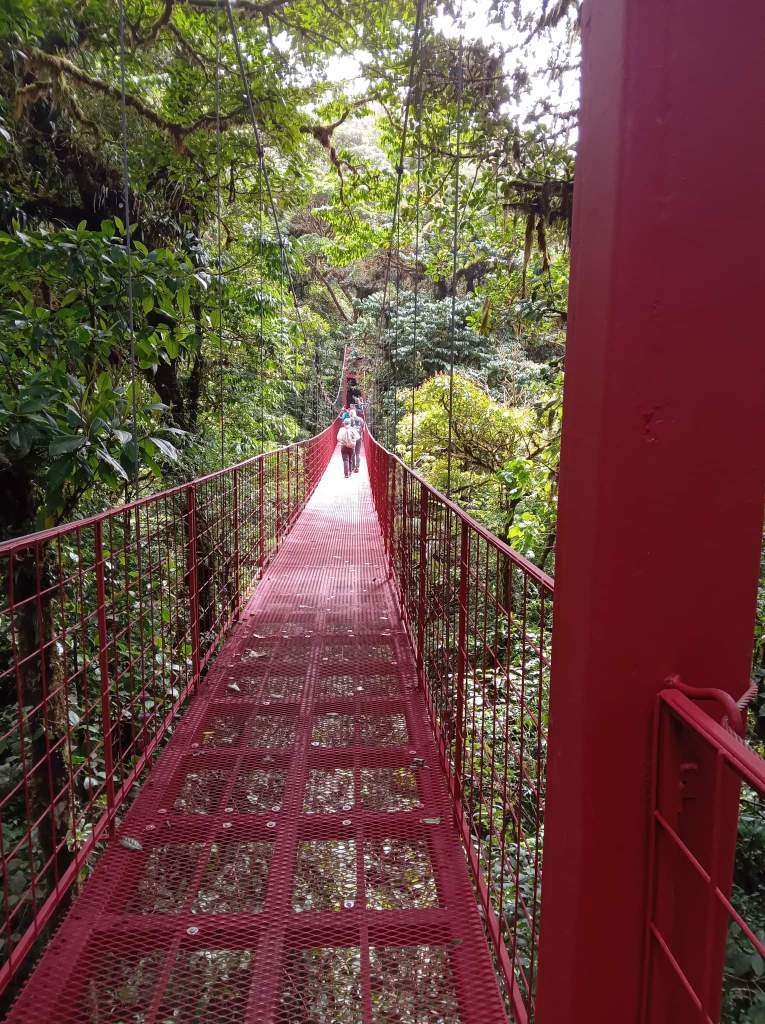
We got to walk over bridges again, which thankfully more stable than in the hanging gardens.
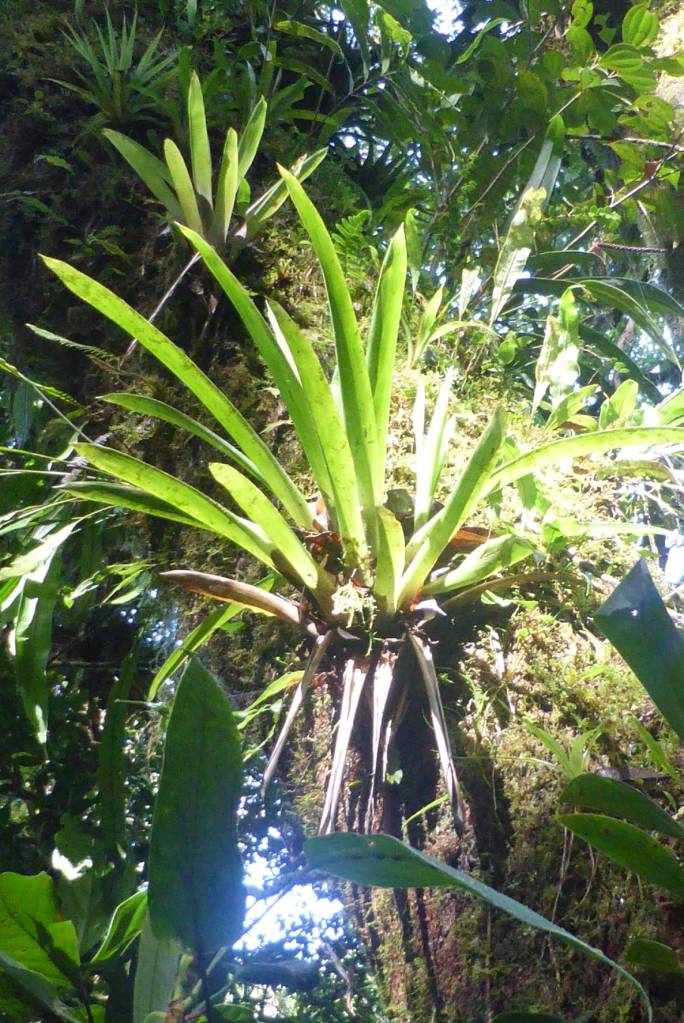
Giovanni said that long term studies in the area had concluded that there are more plants etc growing above ground than there are on the ground because of the humidity. These are called epiphytes, organisms that grow on the surface of other plants and trees.
There are more than 500 known species of orchids, but as Giovanni pointed out new species of plants, insects etc are constantly being discovered. Of the known 9000 plants in Costa Rica 3000 are from the cloud forest.
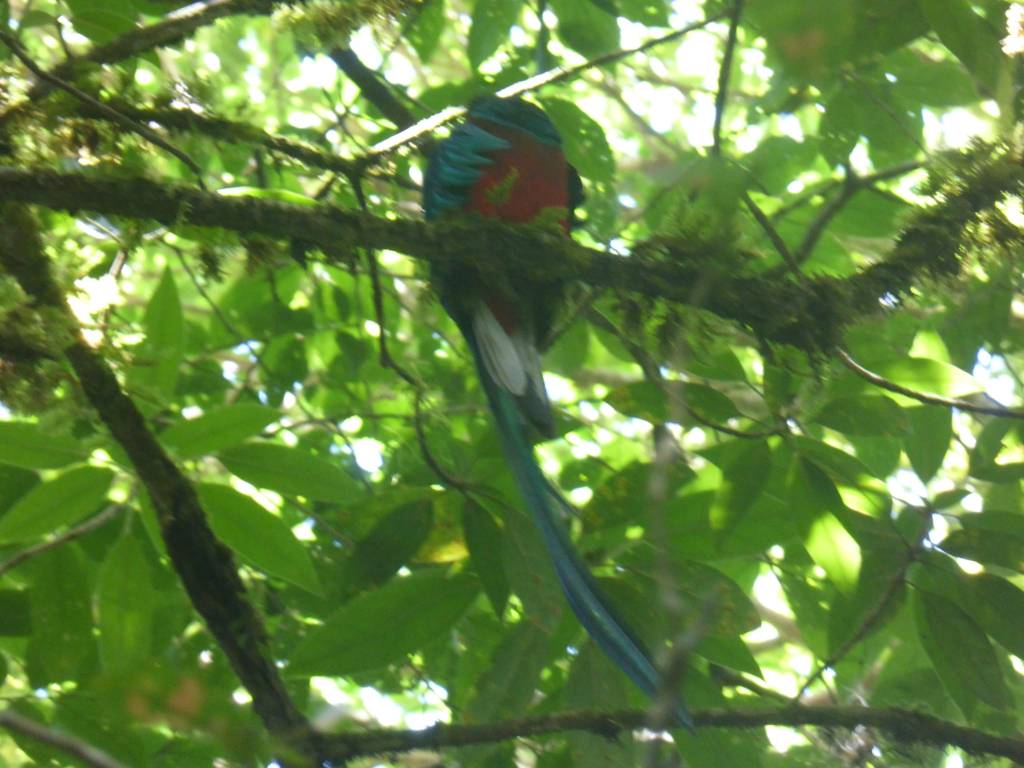
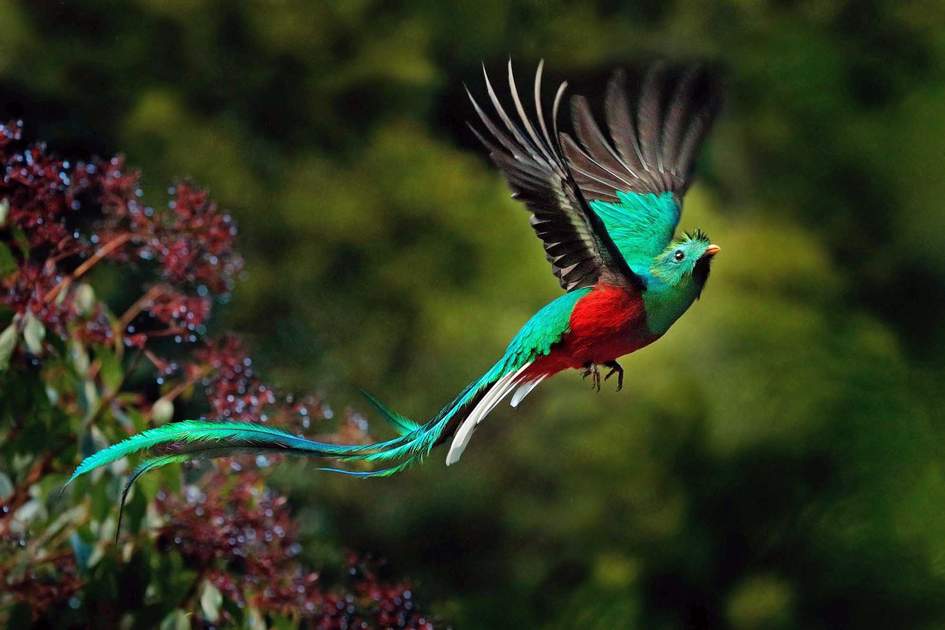
On the way back to the start of the walk we saw a Resplendent Quetzal, they feed off the avocado trees and enjoy the high elevation of the trees. Although they are the national bird of Guatemala the Monteverde Cloud Forest has been deemed to be the best place in the world to see them.
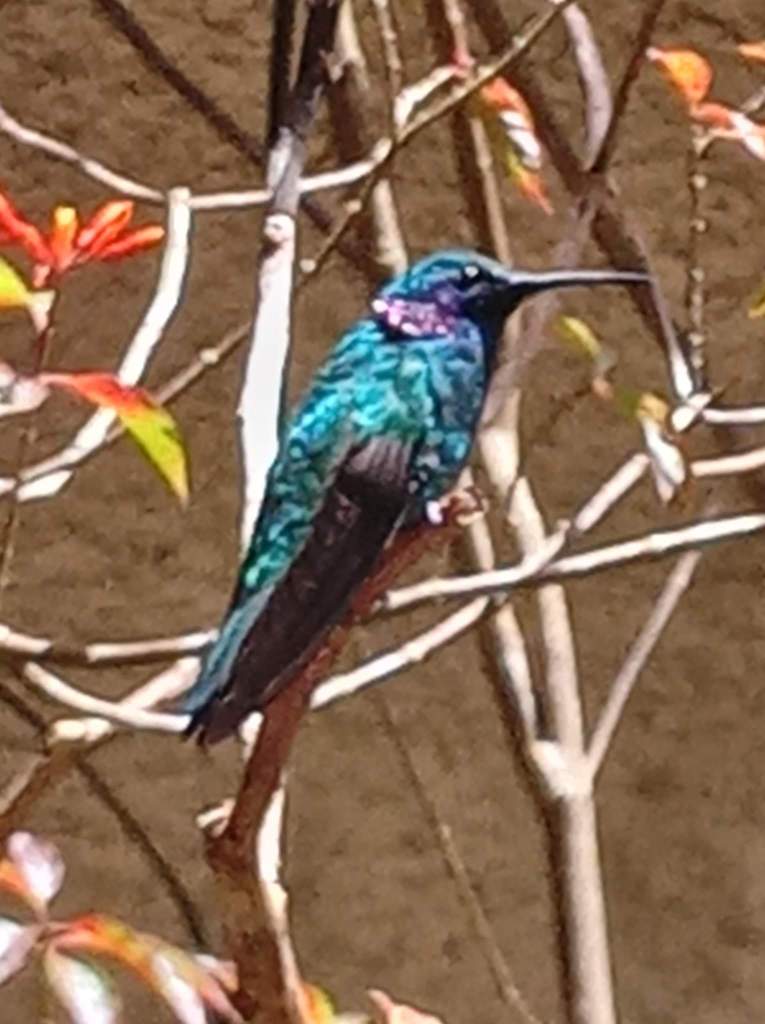
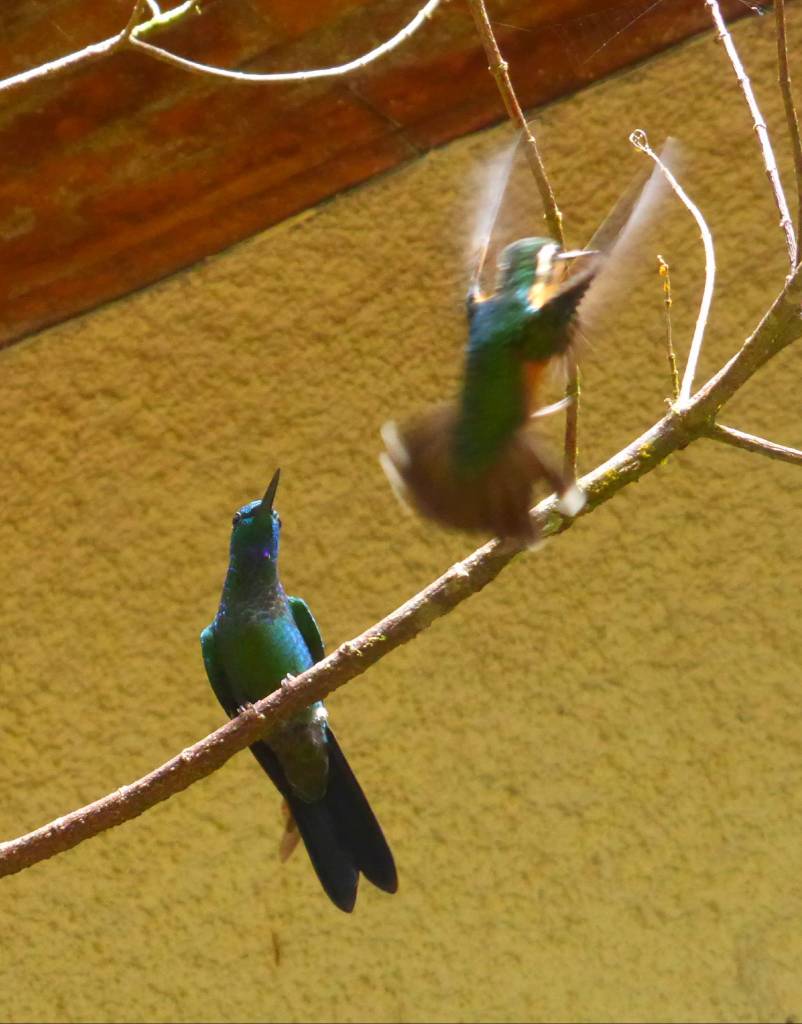
At the end of the visit we saw loads of beautiful colourful hummingbirds. There are 53 known species of hummingbirds in Costa Rica. There wings move around 60 times a second and they need to consume three times their body weight a day.
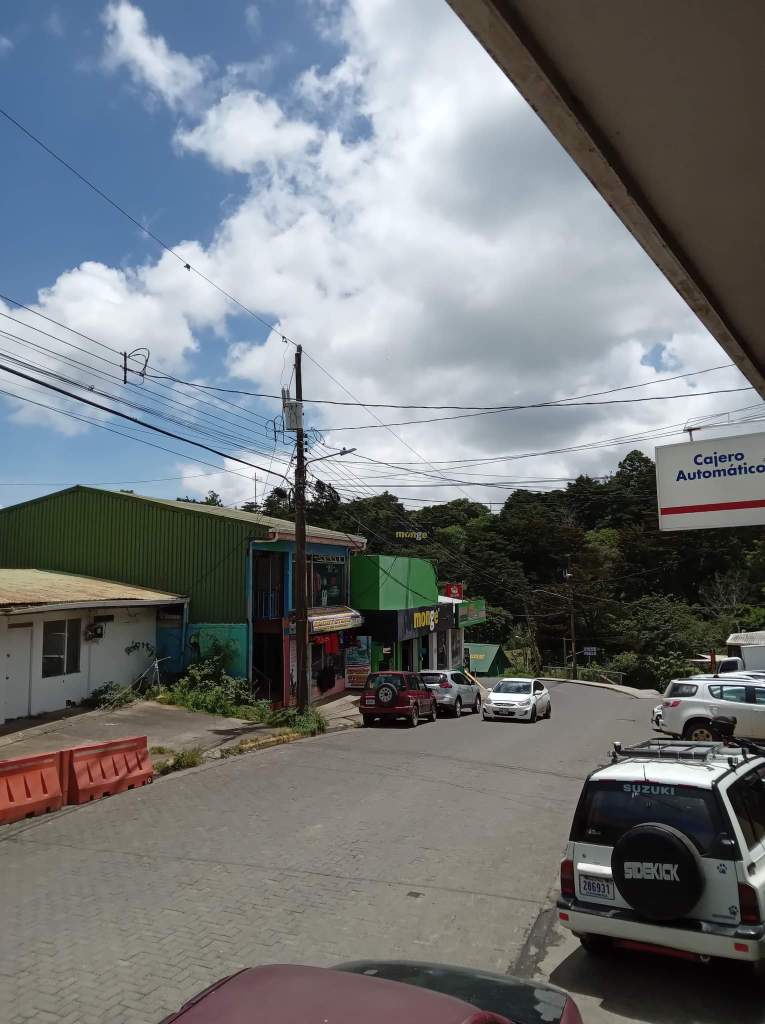
We got the driver to drop us off at Sant Elana the nearest “town” to the hotel and went for a drink with Shish and Joyti. Trying to have new taste experiences so went for a soursop coconut smoothie. Felt very wrong but tasted very good – soursop high in vitamin C and as still feeling ropey it was medicinal.
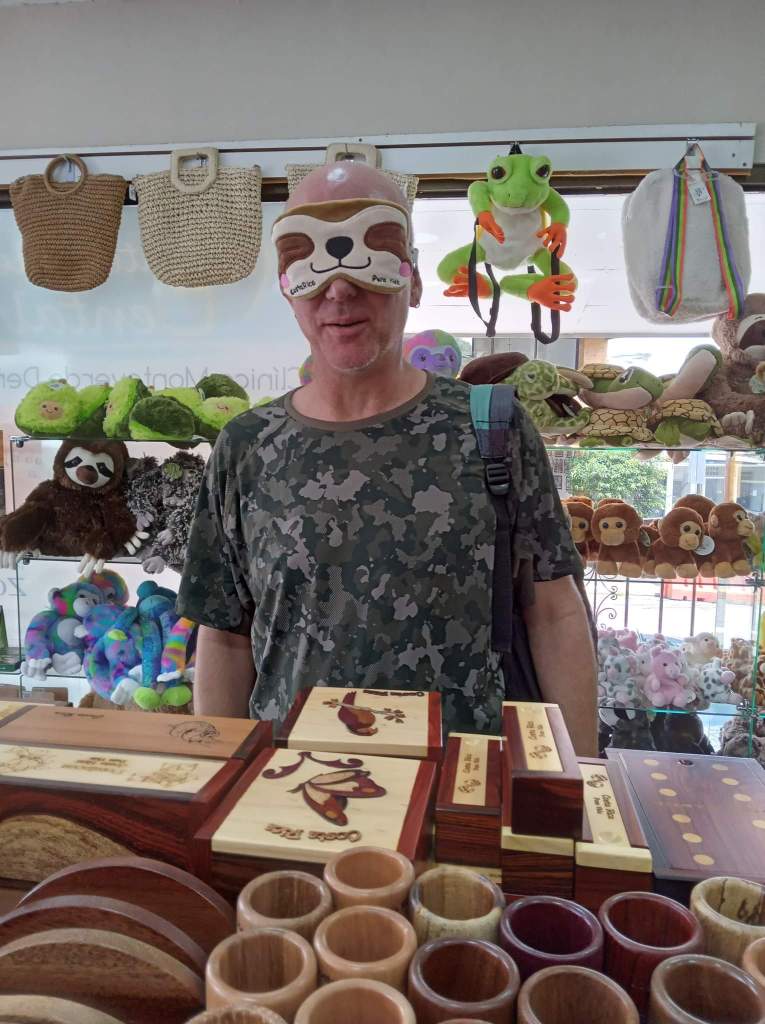
We then went souvenir shopping.
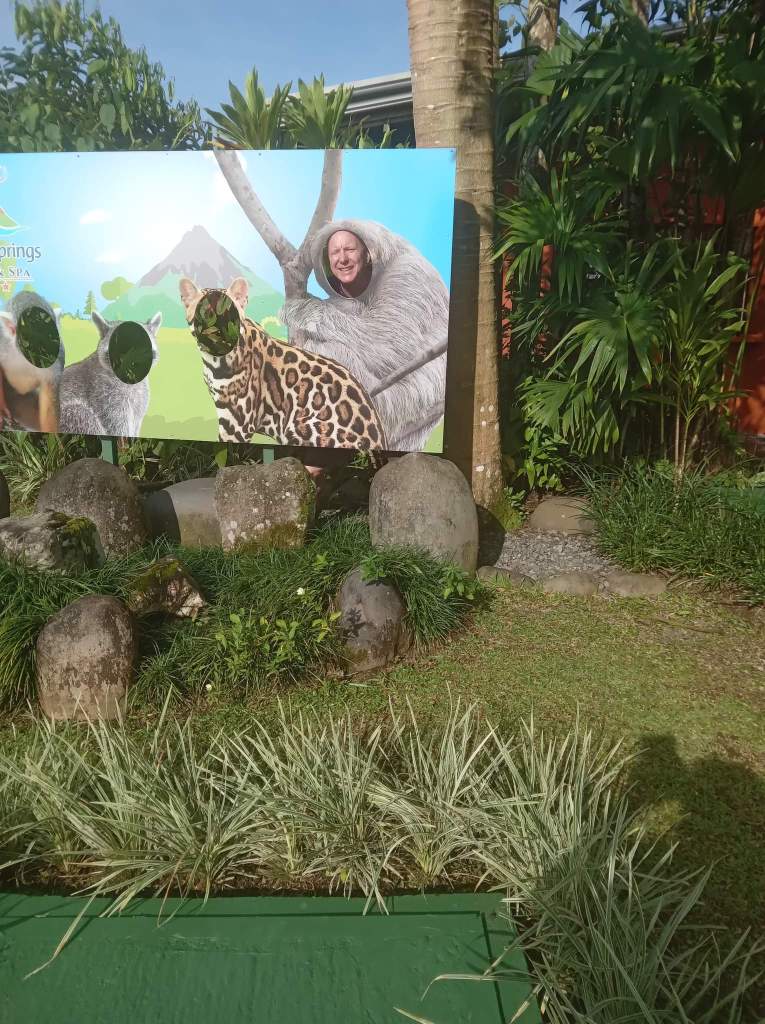
Pete discovered he was a dead ringer for a sloth.
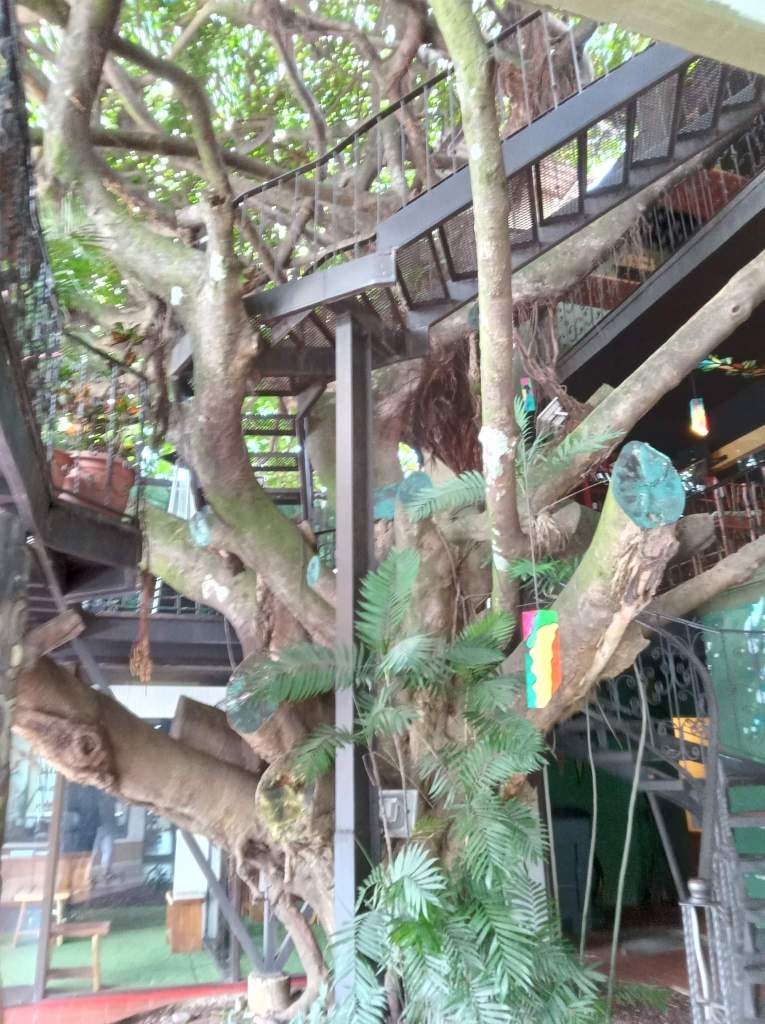
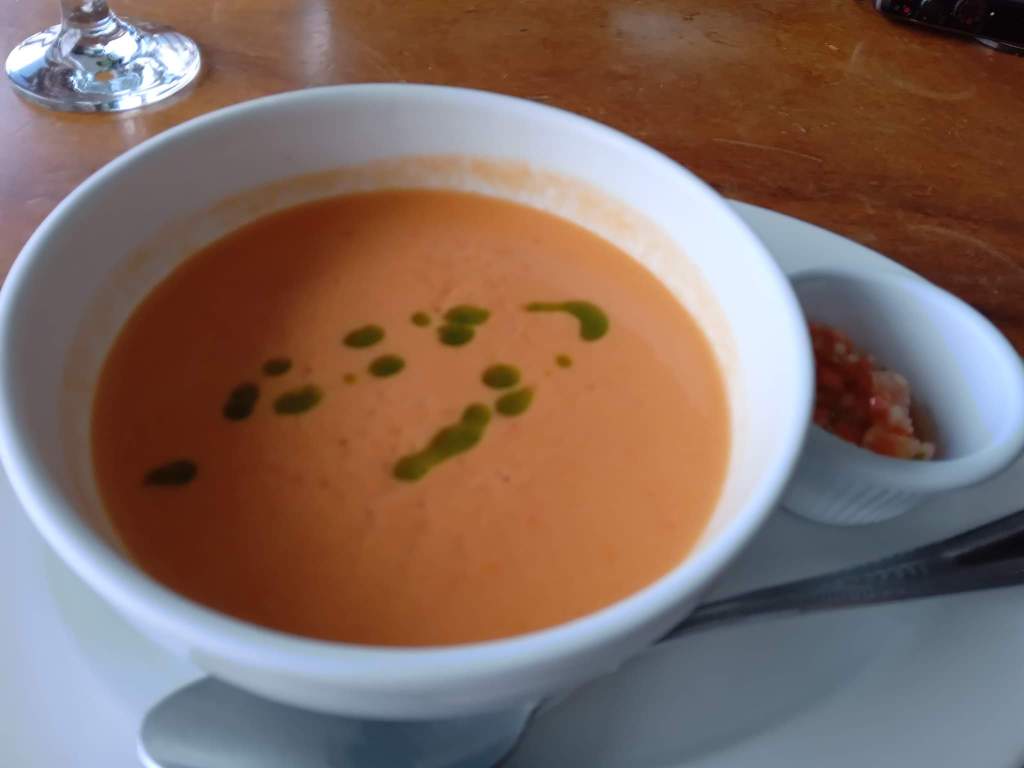
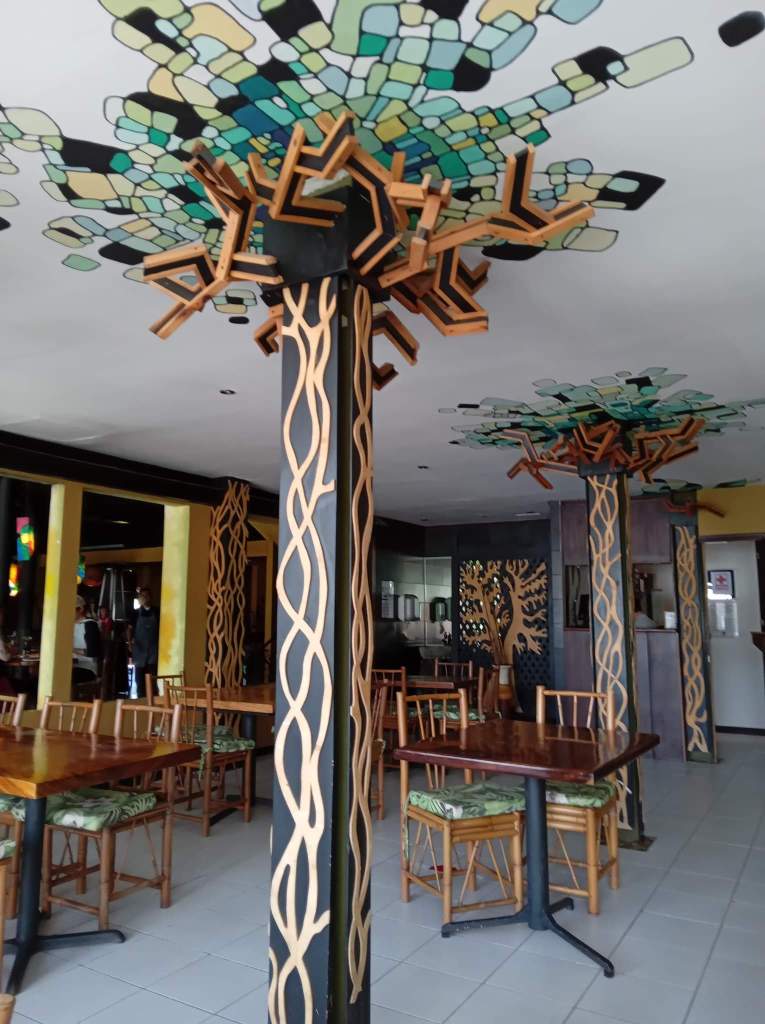
We had a while to wait for public transport. It would be the first time we hadn’t been ferried around – so it was good to navigate. With time on our hands it was time to eat some more at the Treehouse Cafe where we had the most delicious and tasty gazpacho. It was built around a tree.
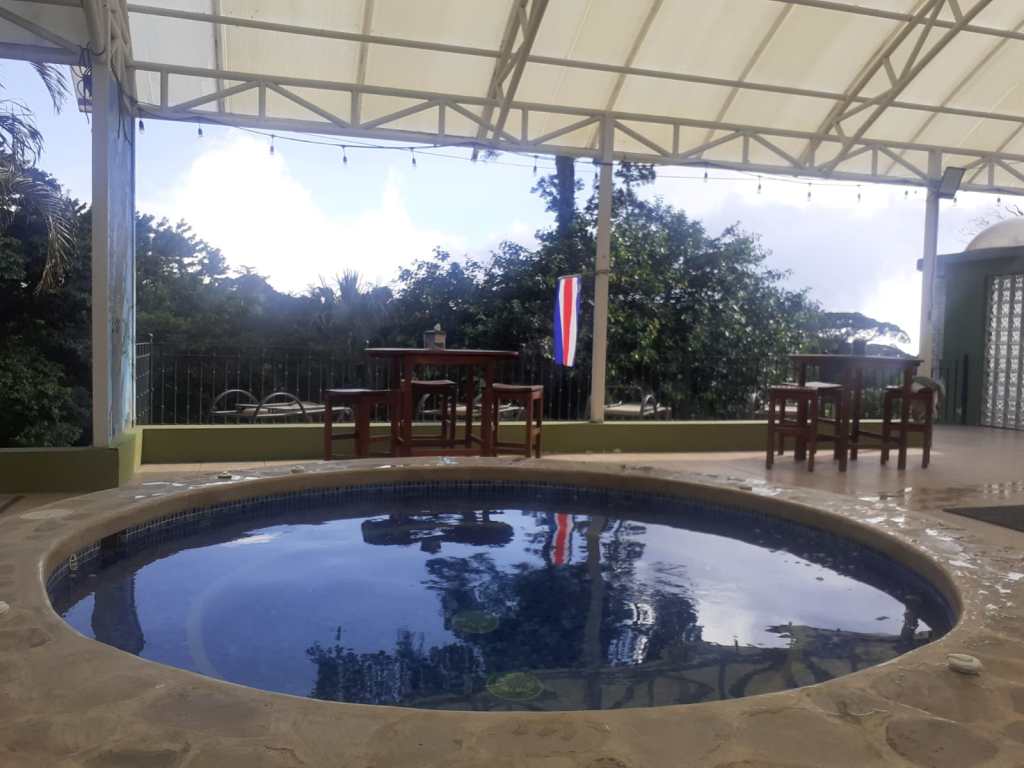
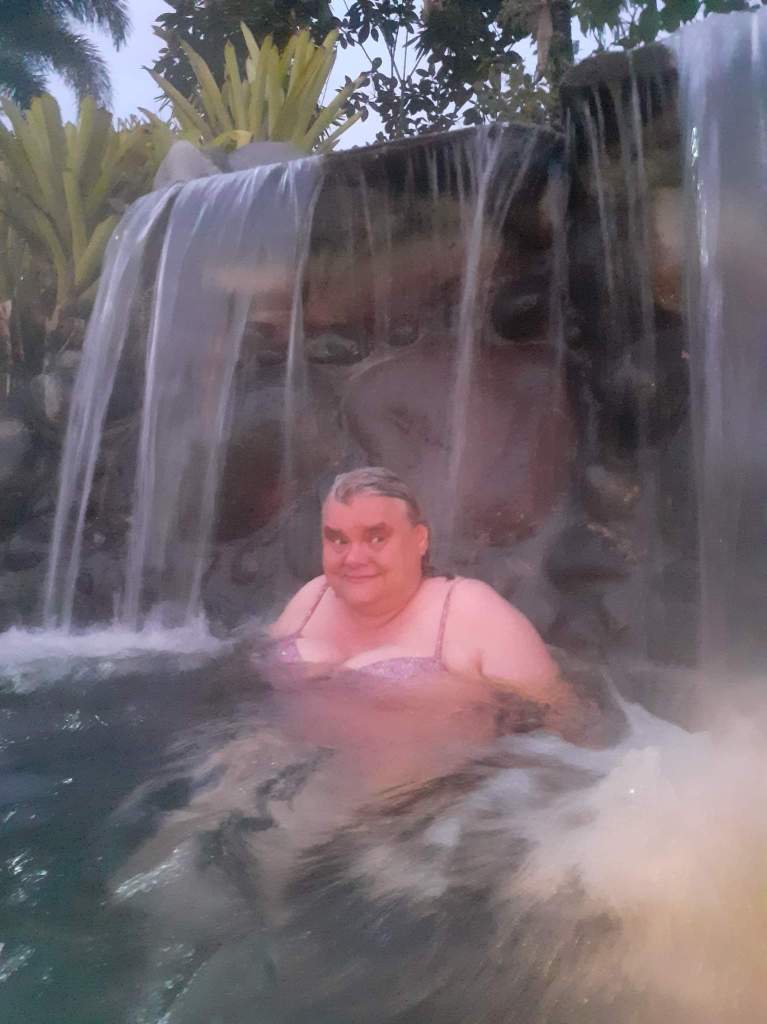
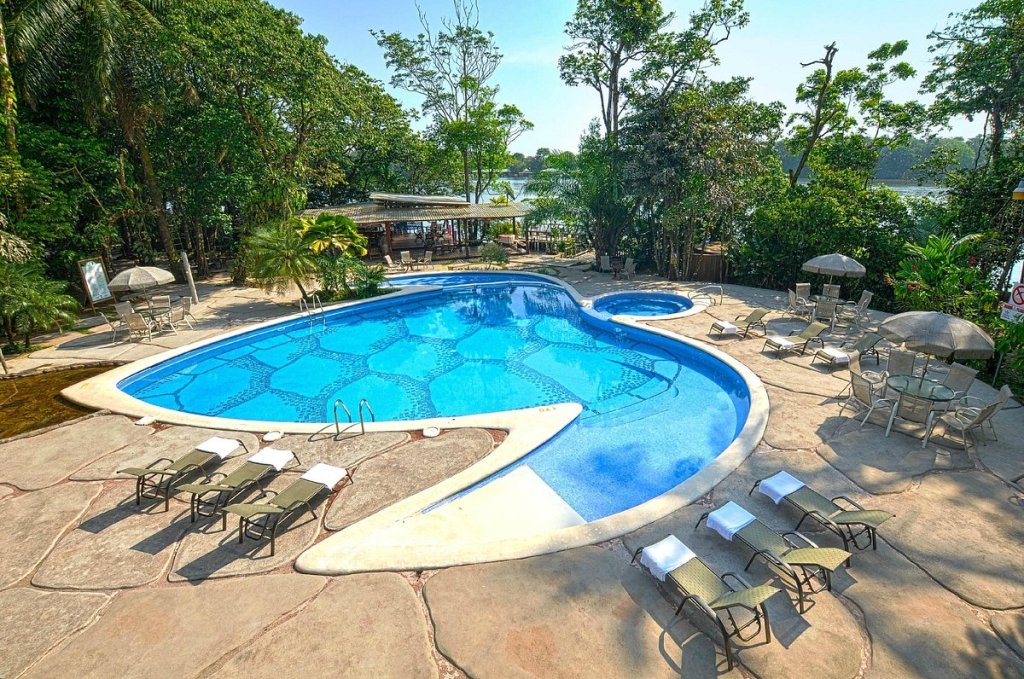
When we got back to Fonda Vela we had a swim and a hot, hot, hot tub.
On the way back to our room we saw an agouti. It was incredibly cute.
We We
Agoutis are part of the rat family and so maybe they don’t think of them as so cute there. They act like squirrels.Agoutis are known as jungle gardeners. This is because they bury nuts and seeds and then forget all about them…allowing them to grow. How very helpful! They are monogamous, meaning they stay with the same partner for life.
We topped the day off with pizza and pool – which I inevitably played badly.
We got picked up at the hotel and ourselves and various other people from hotel pick ups headed to Monteverde. Monteverde is Spanish for “green mountain,” and traveling through a sizeable part of it became obvious why. Monteverde’s biggest draw is its unique habitat known as the cloud forest, which is named after the mist that is pervasive throughout the rainforest. It is one of the rarest habitats on Earth, and it boasts an impressive range of flora and fauna. This was our planned trip for the following day.
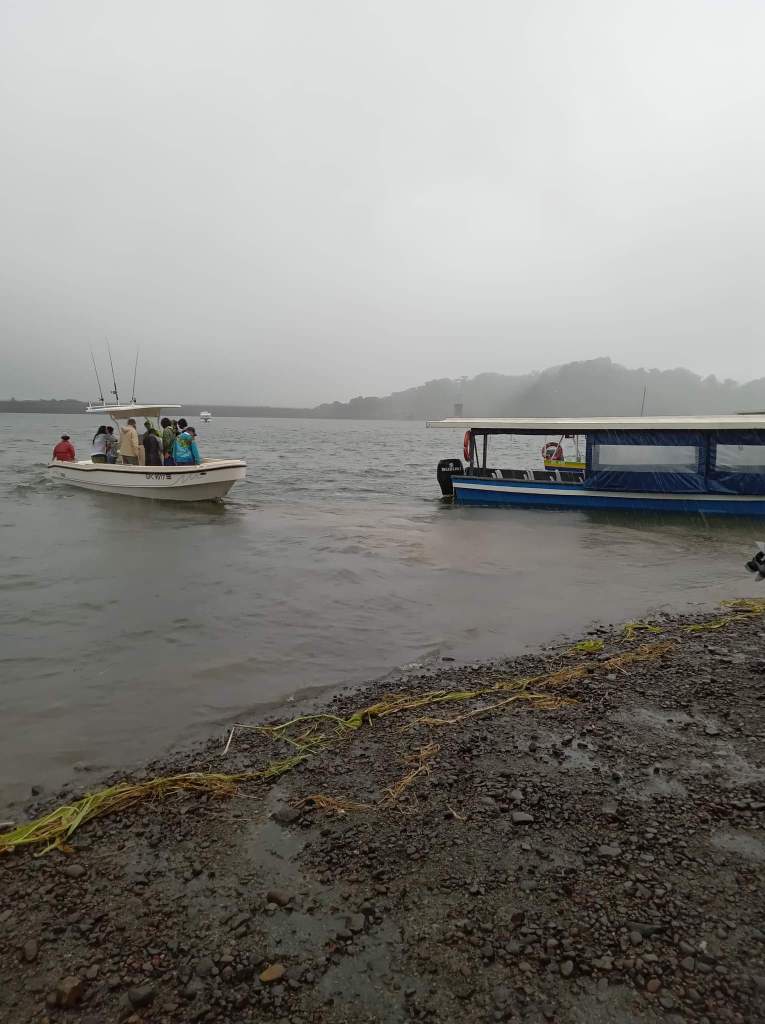
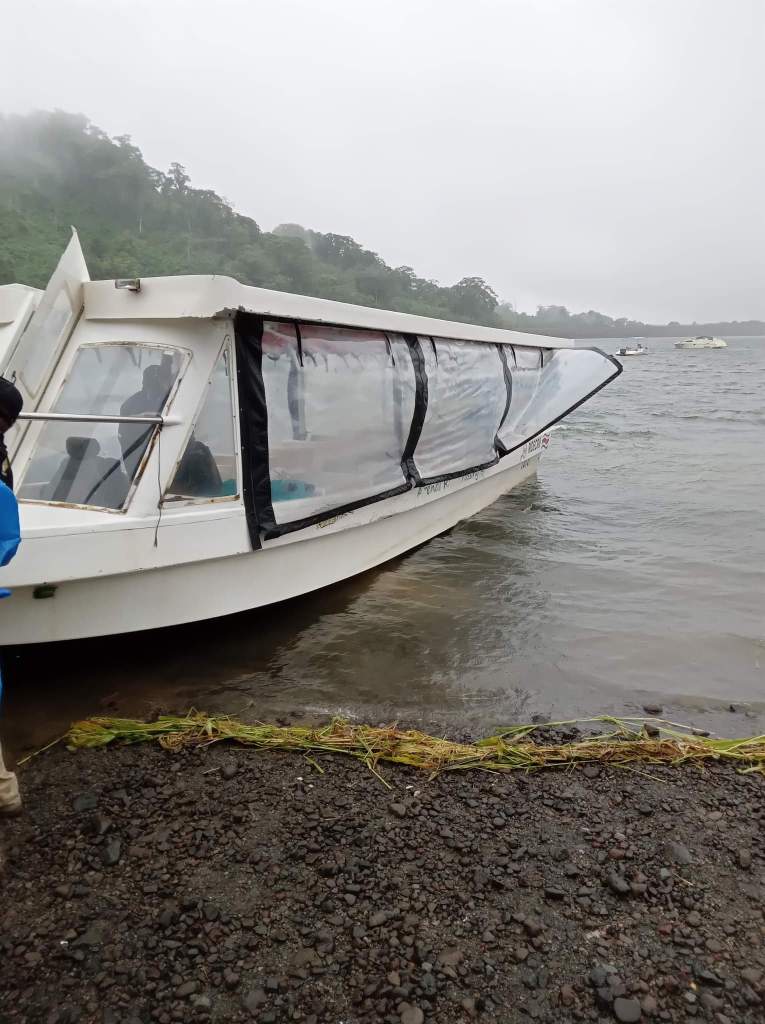
The first leg of the trip involved travelling in a boat across Arenal Lake. Over the years the lake has grown by over three times it’s original size and a dam was built there in 1979. It forms the backbone to Costa Rican green energy drive, providing 17% of the country’s energy.
It was such a shame that it was rainy and misty as apparently the view from the boat normally takes in the volcano from a closer perspective.
It took 45 minutes to cross the lake to the other side and just like we had come from there was no pier or jetty, just a badly rutted track to the water. On our way a minibus got stuck and as we got further from the shore we could still see them struggling to get it free.
When we got to the other side there was a melee of minibuses and a general feeling of confusion.
Our driver found us eventually. I am not certain what language the driver spoke, not English but maybe Spanish – he seemed just to grunt and look bad tempered. The roads towards Monteverde quickly became problematic, more pot holes than you could shake a stick at. Given that I felt the drivers driving was erratic, this made it even more terrifying at times, speeding up and slowing down.
I was glad when we stopped for a short break at a Costa Rican equivalent of a motorway services.
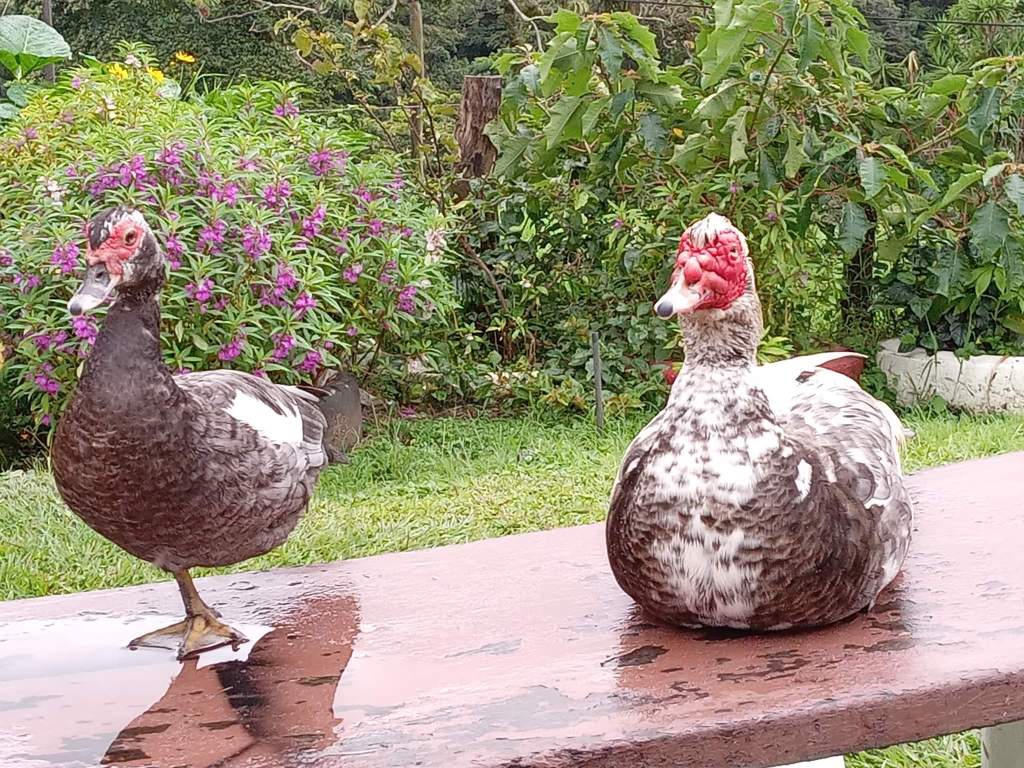
Lovely ducks waddled round the picnic tables. The prices inside the cafe/souvenir shop were eye wateringly expensive in Costa Rica terms. So we left the other passengers and cannily went to a nearby shop, where Pete wanted to do a photo shoot.
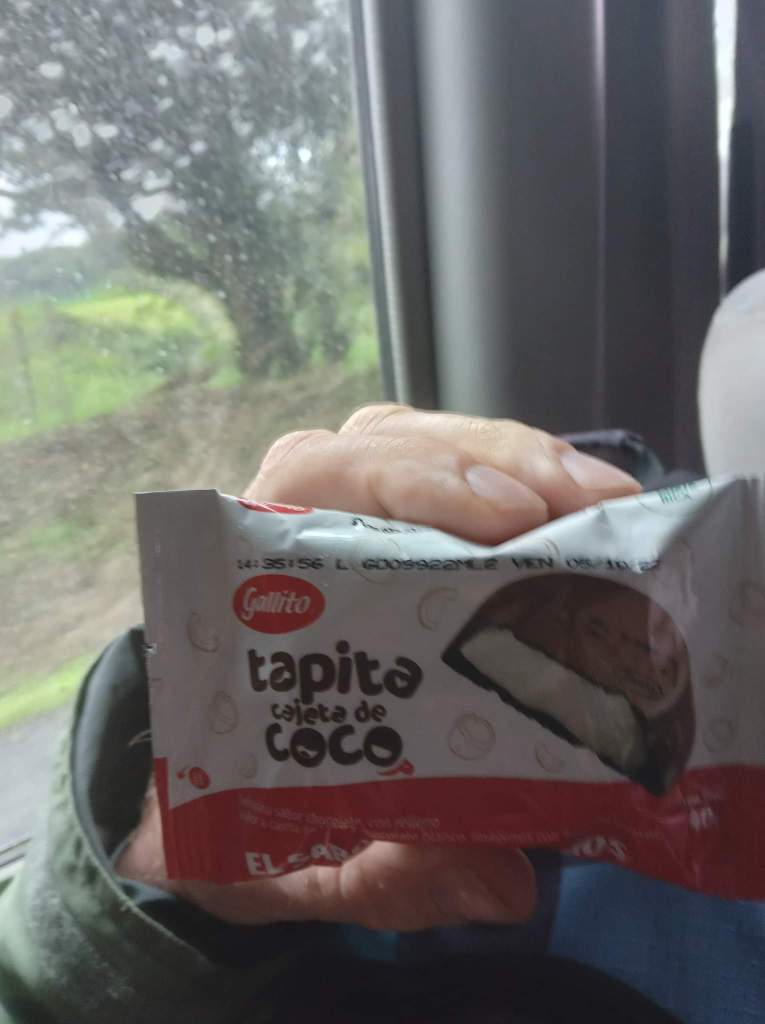
We got alot of goodies, including a Costa Rican chocolate, caramel and coconut bit of scruminess.
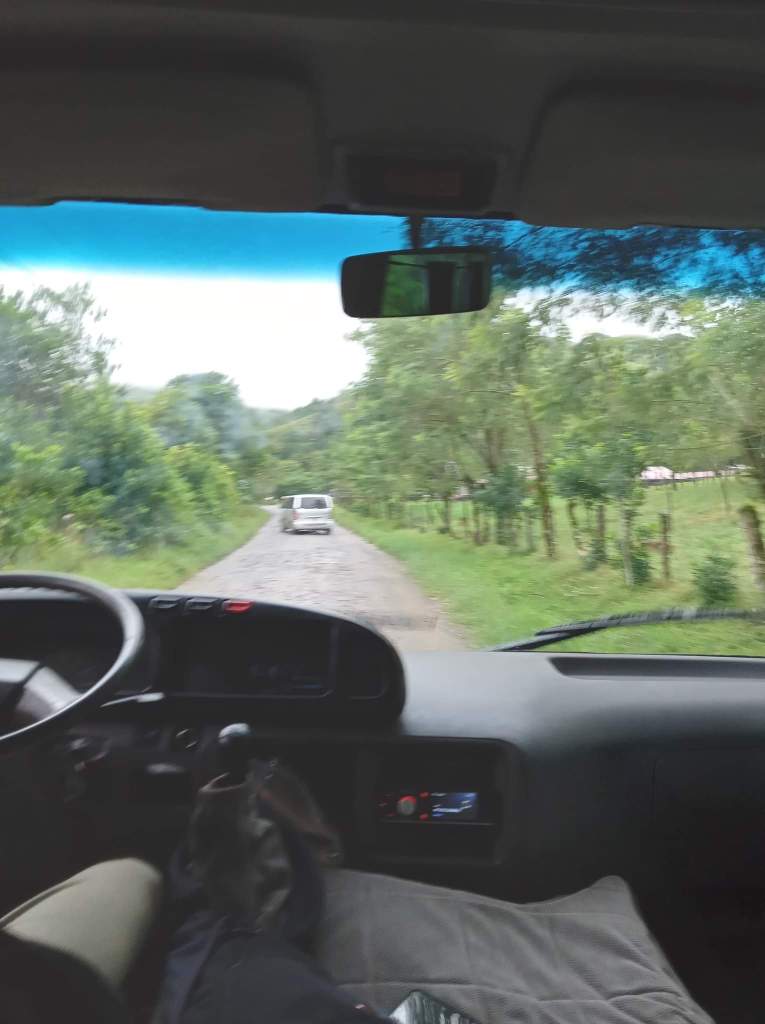
The journey continued, pothole after pothole. We were the last to be dropped off and the driver couldn’t get us out of the minibus fast enough.
We couldn’t get into our room straightaway and that was a little annoying. We asked if there was anyway round it and the receptionist went to ask the manager. There was alot of animated discussion and we felt perhaps we shouldn’t have asked. The receptionist came back and asked if we had the details of our driver. Confused we gave me it, apparently he had just driven through the barrier.
He completely snapped it. Glad we didn’t get on the wrong side of him!
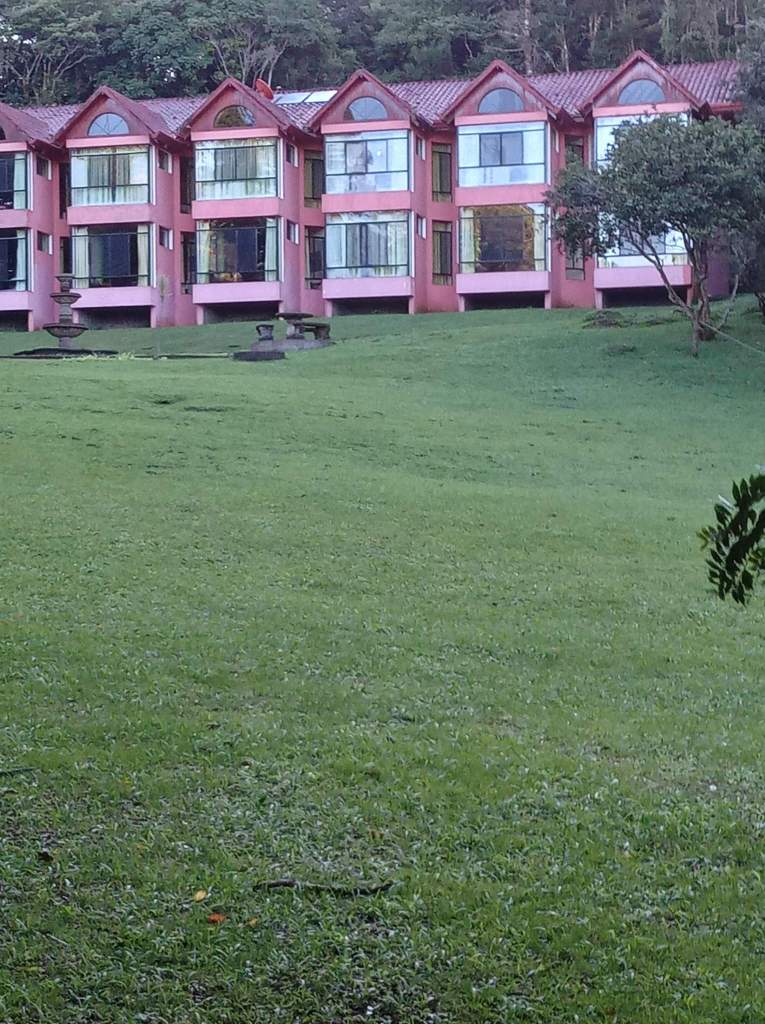
The reviews for Fondavela were mixed so wasn’t entirely certain of what to expect. One person had said staff were rude and disinterested, another that the place was dated. What we found was everyone was really helpful and that it wasn’t dated, it was beautiful.
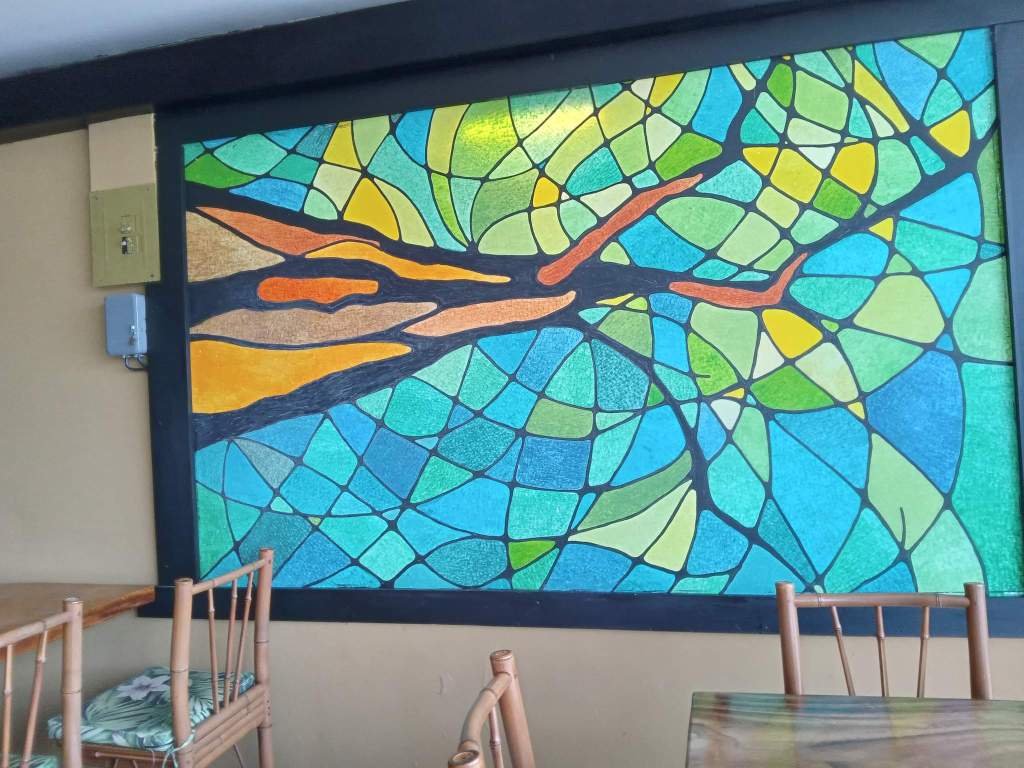
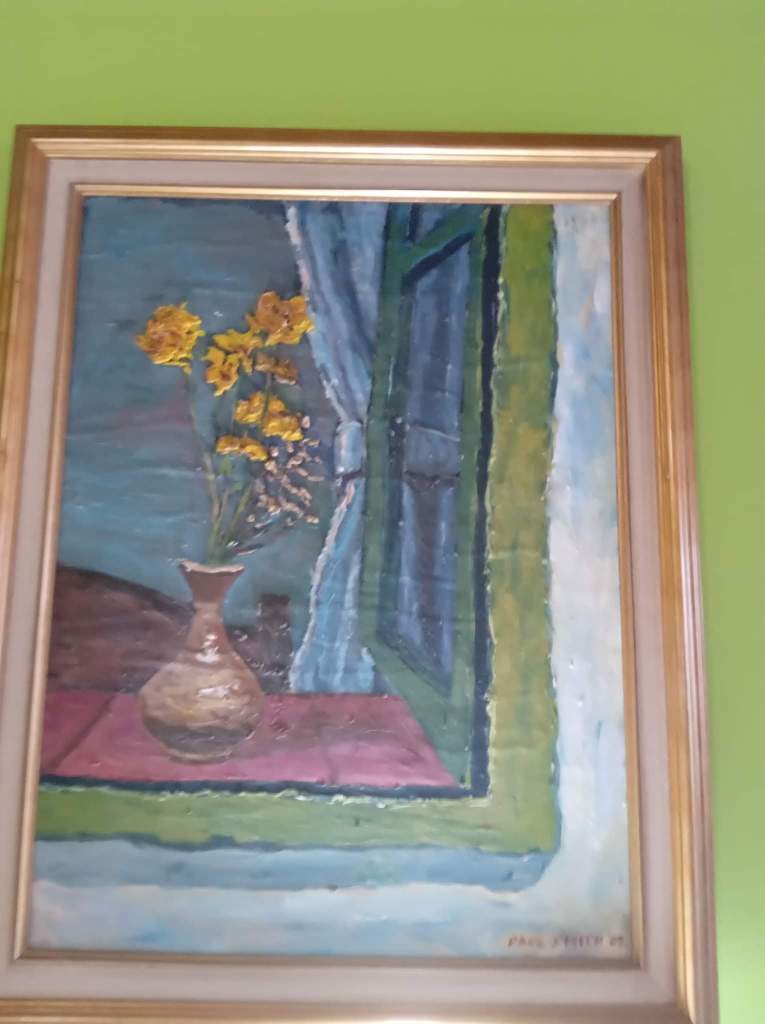
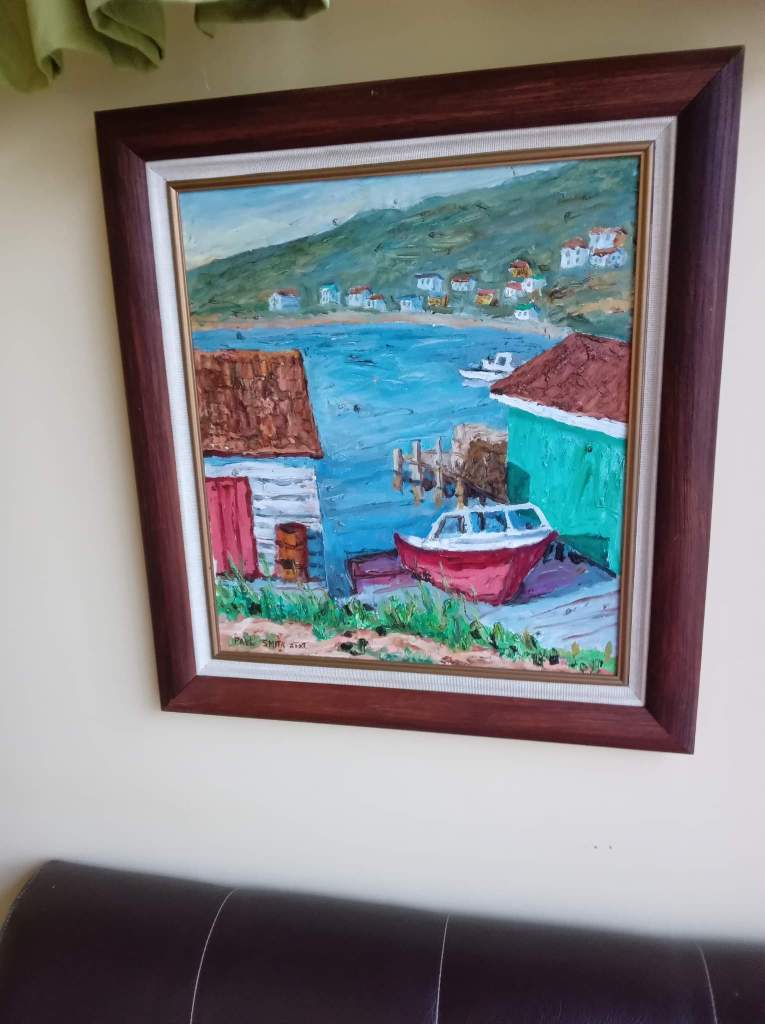
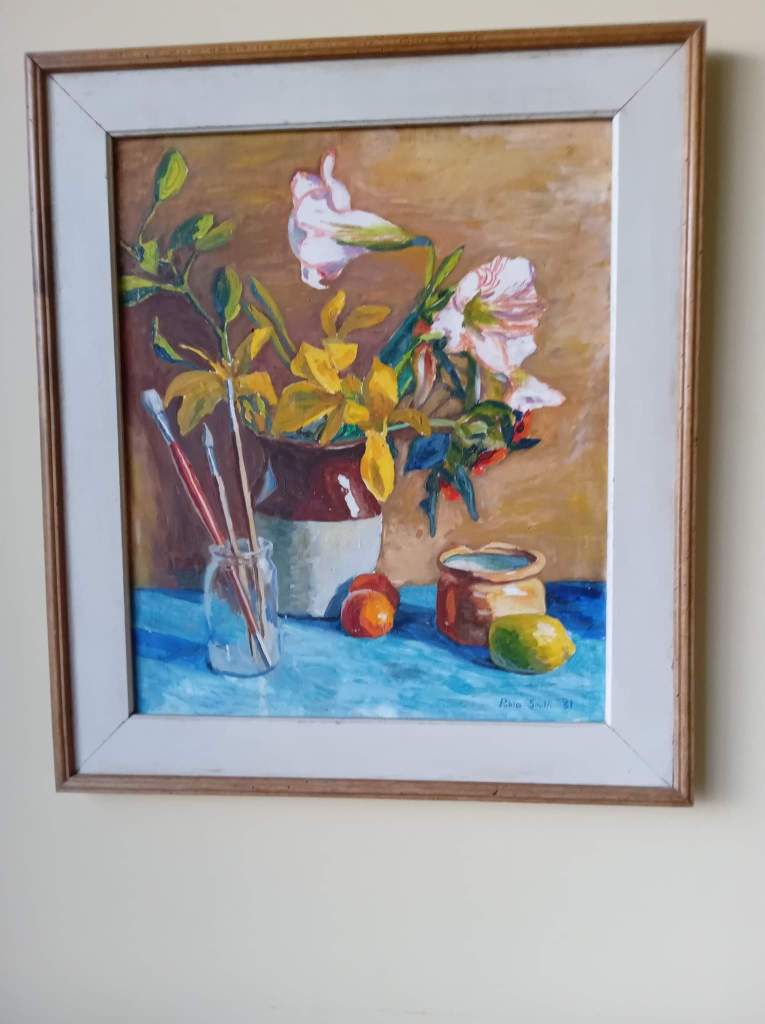
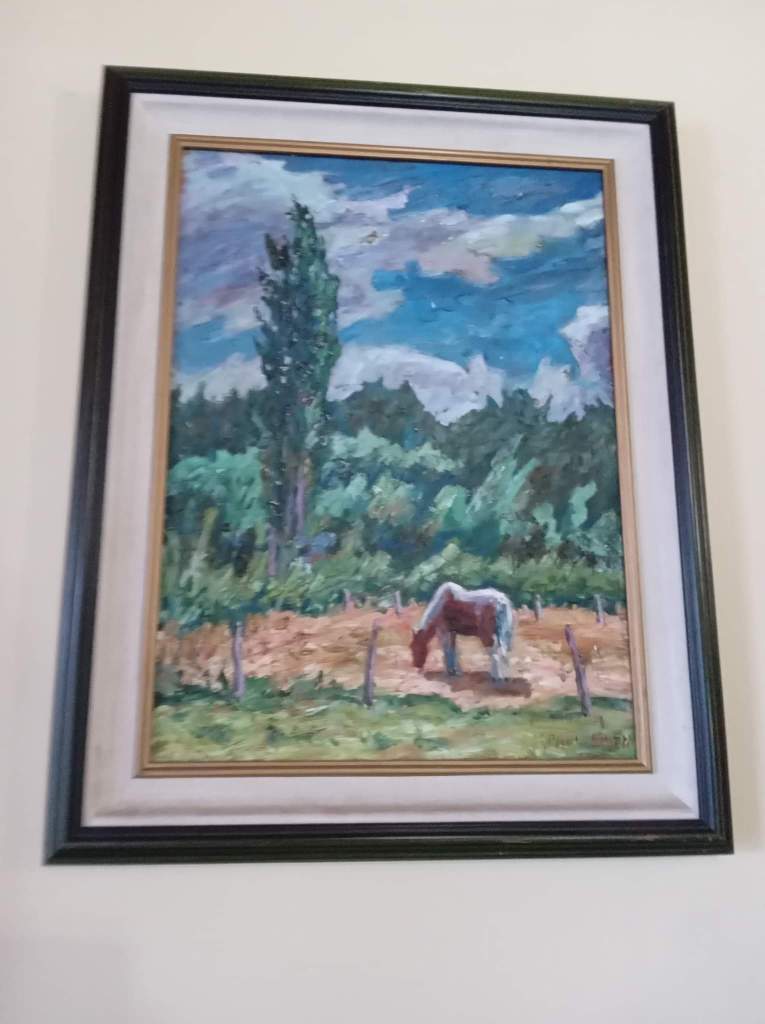
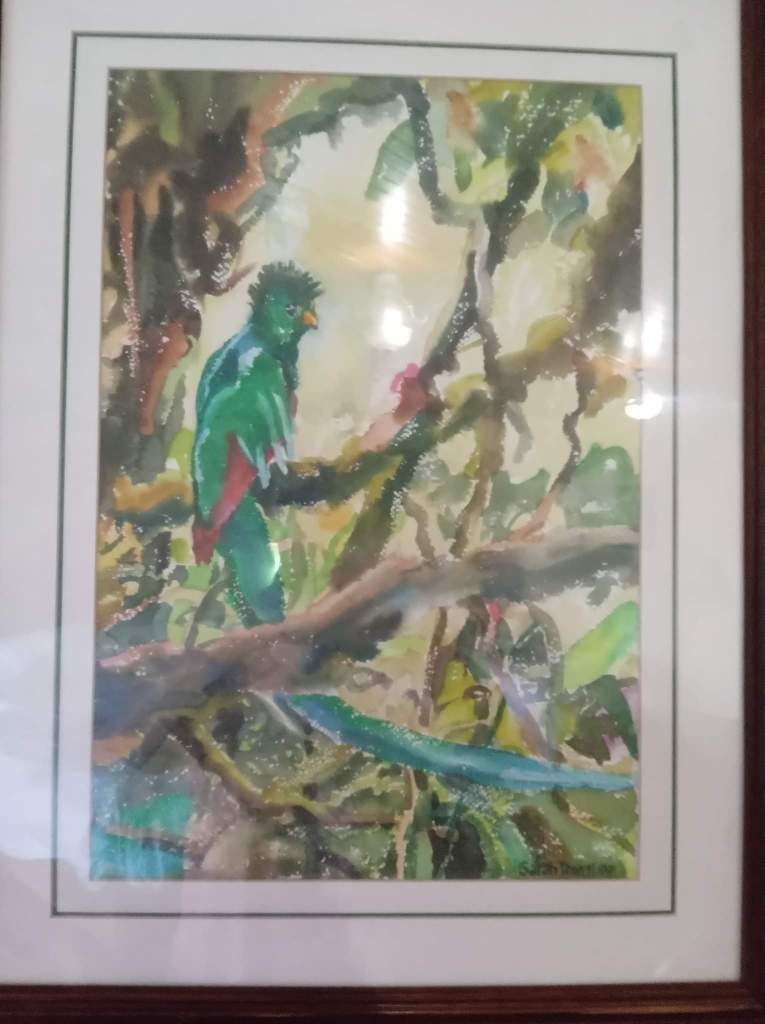
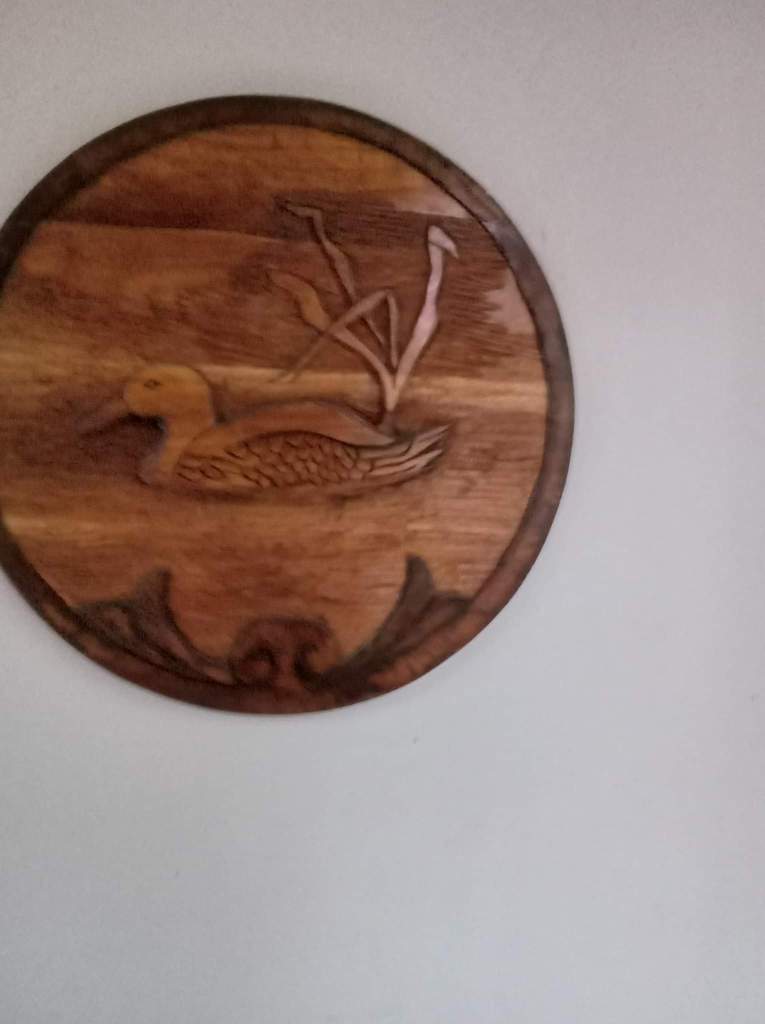
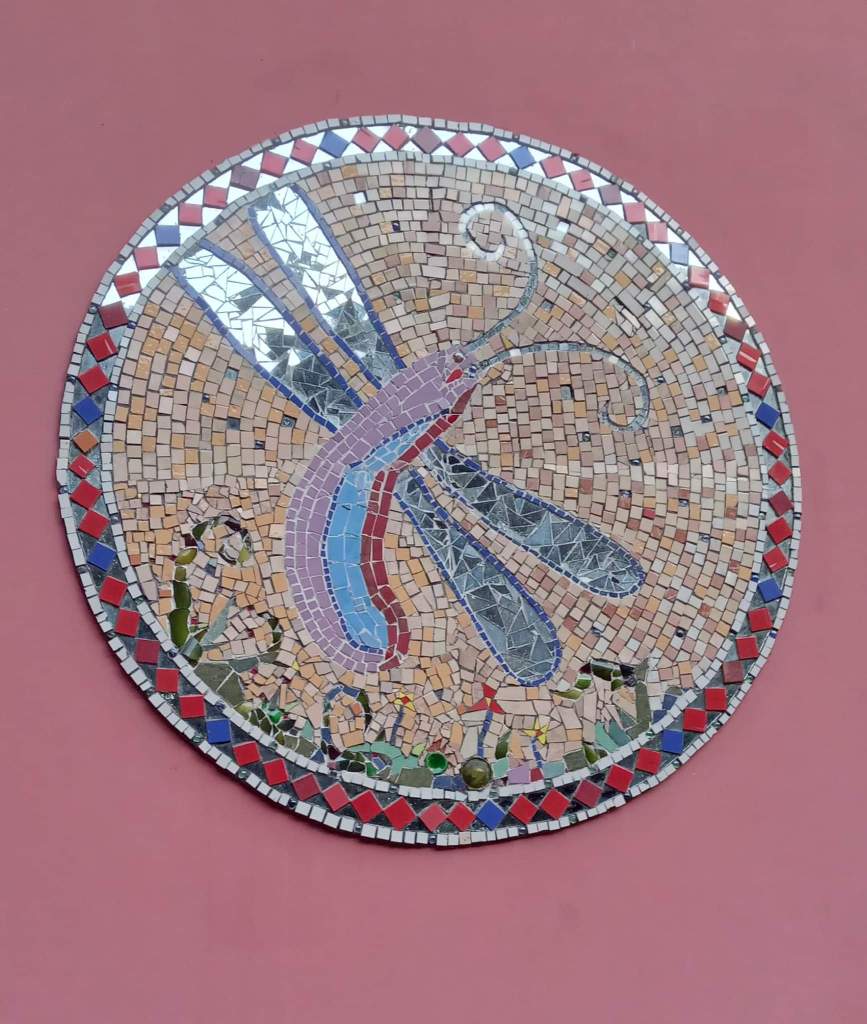
Original art hung from the walls and colourful mosaics and wood carvings outside the buildings.
They were all by the artist Paul Smith, an artist originally from Ontario,hard to unpick why but possibly his family owned the hotel.
We decided to go on a night walk in the rainforest. When we left the hotel it was still light, it seems to fo go dark really quickly.
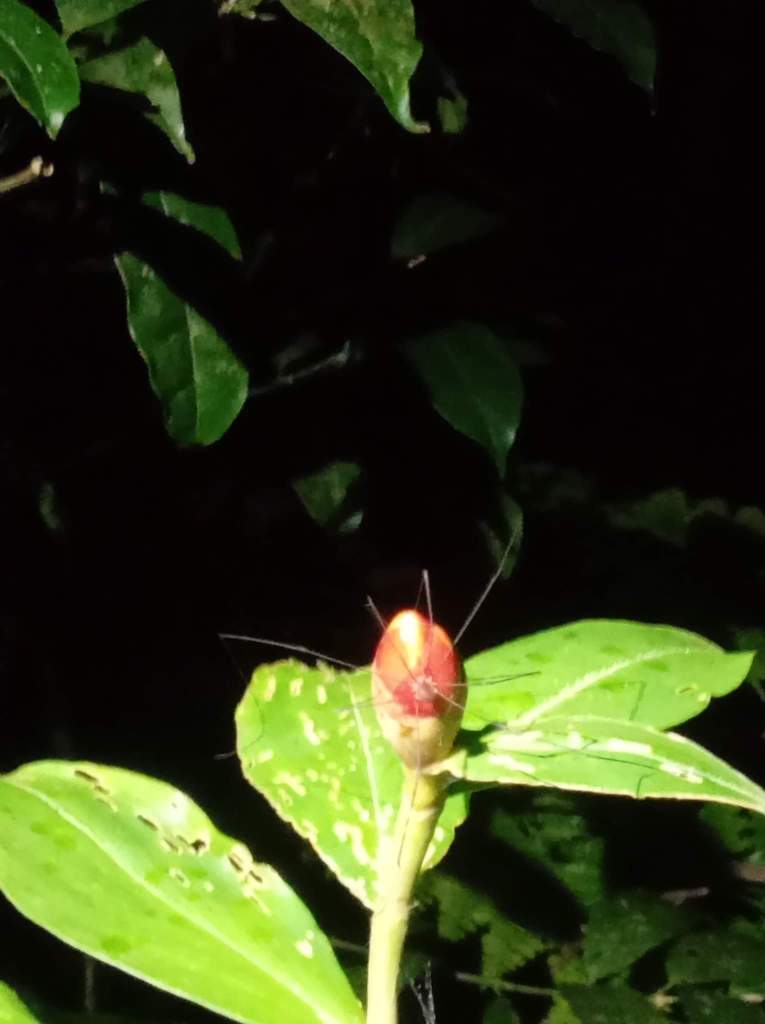
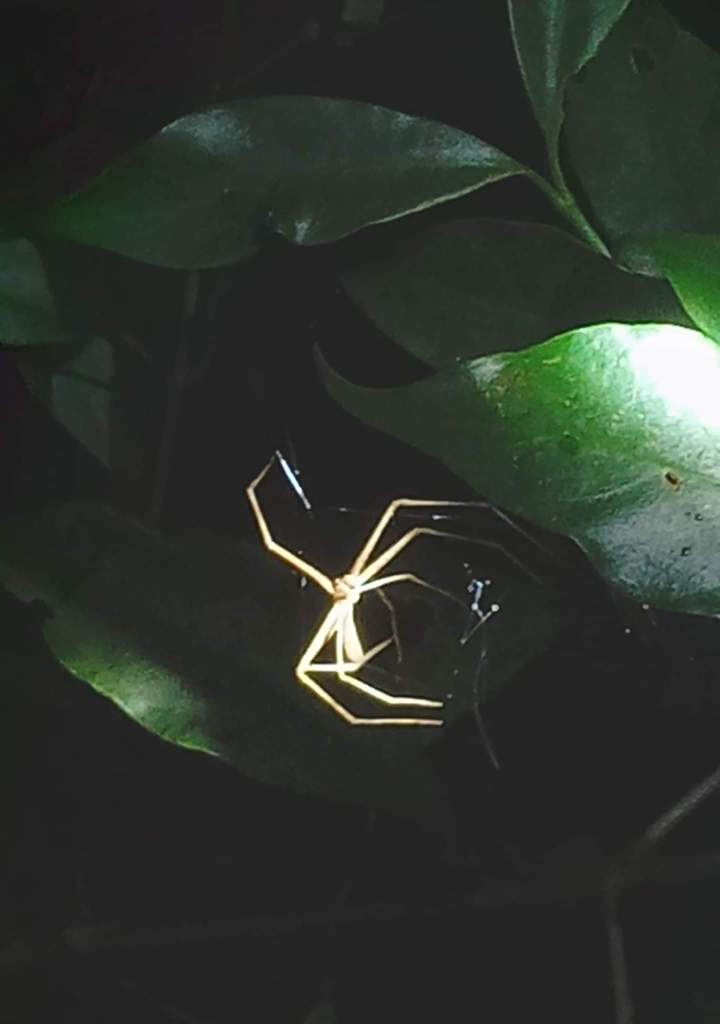
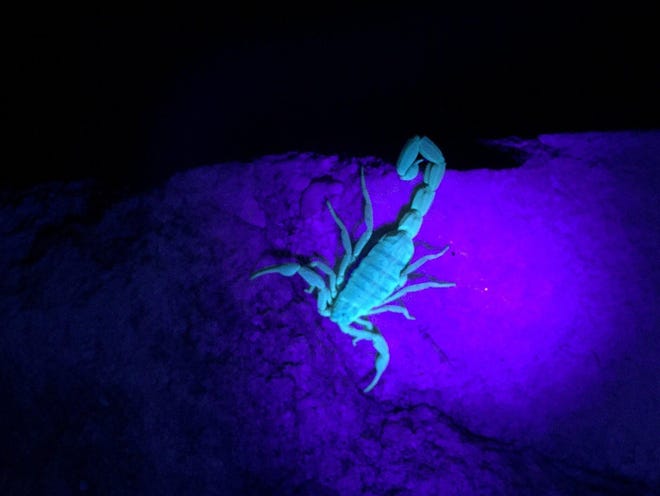
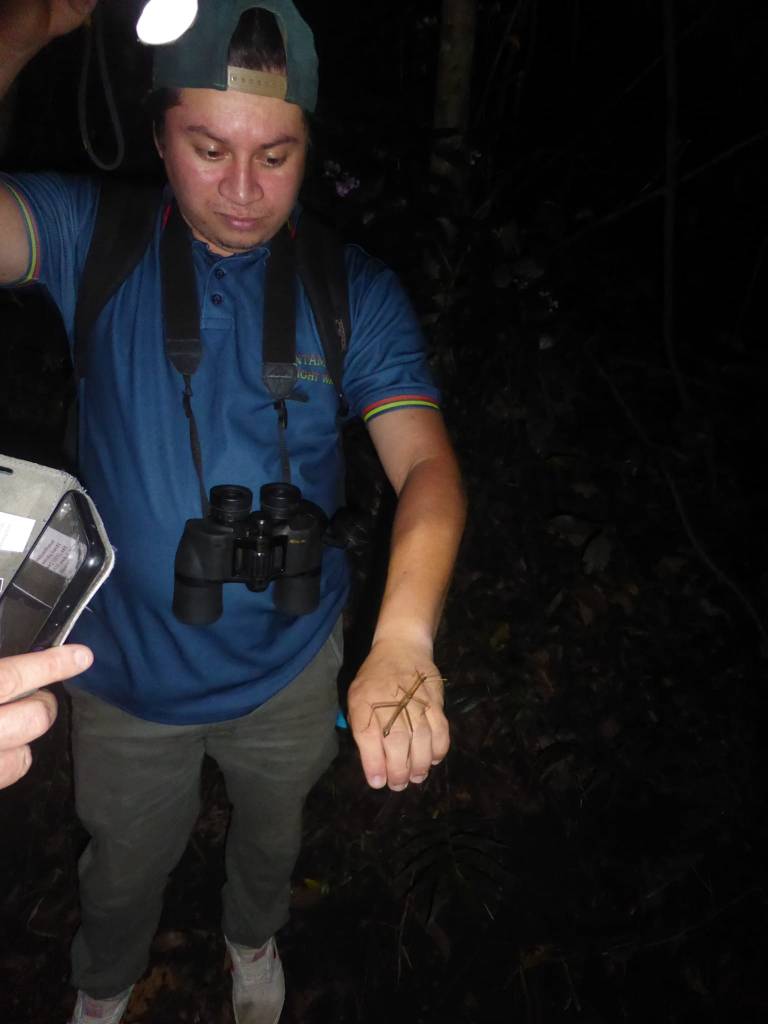
We had Pepo as a guide, he was lovely. There was something quite exciting walking in the dark, perhaps because the sounds seemed amplified. My photography skills weren’t up to much so have added some of Pepo’s.
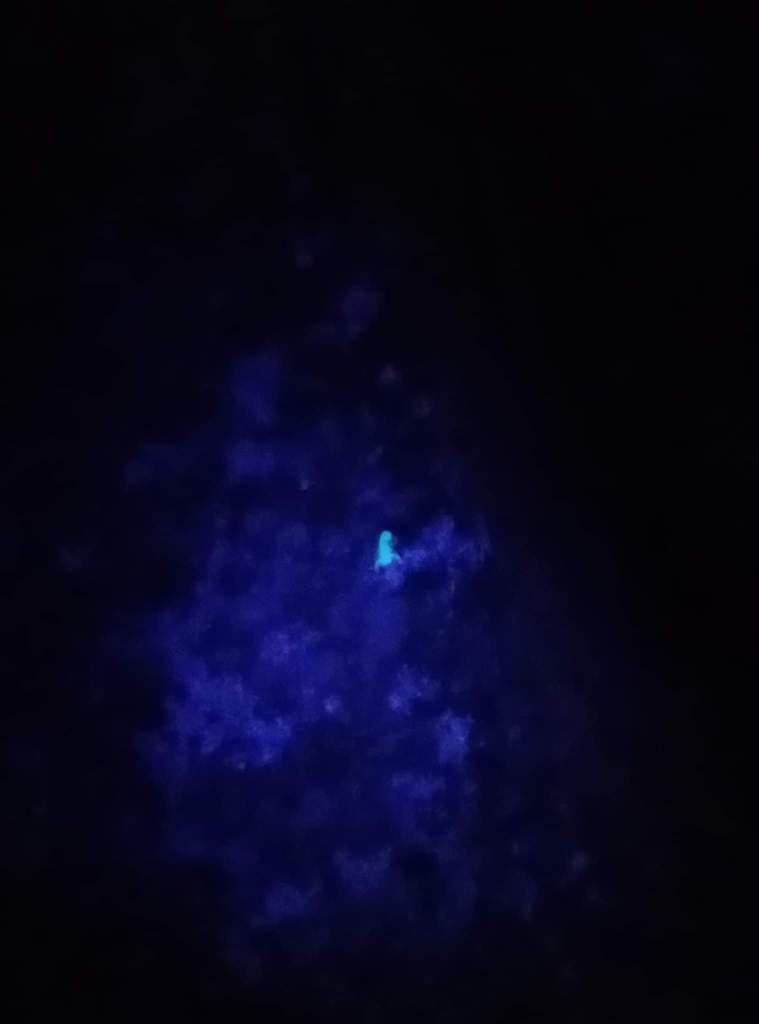
The bright dot is scorpion seen with a black light.
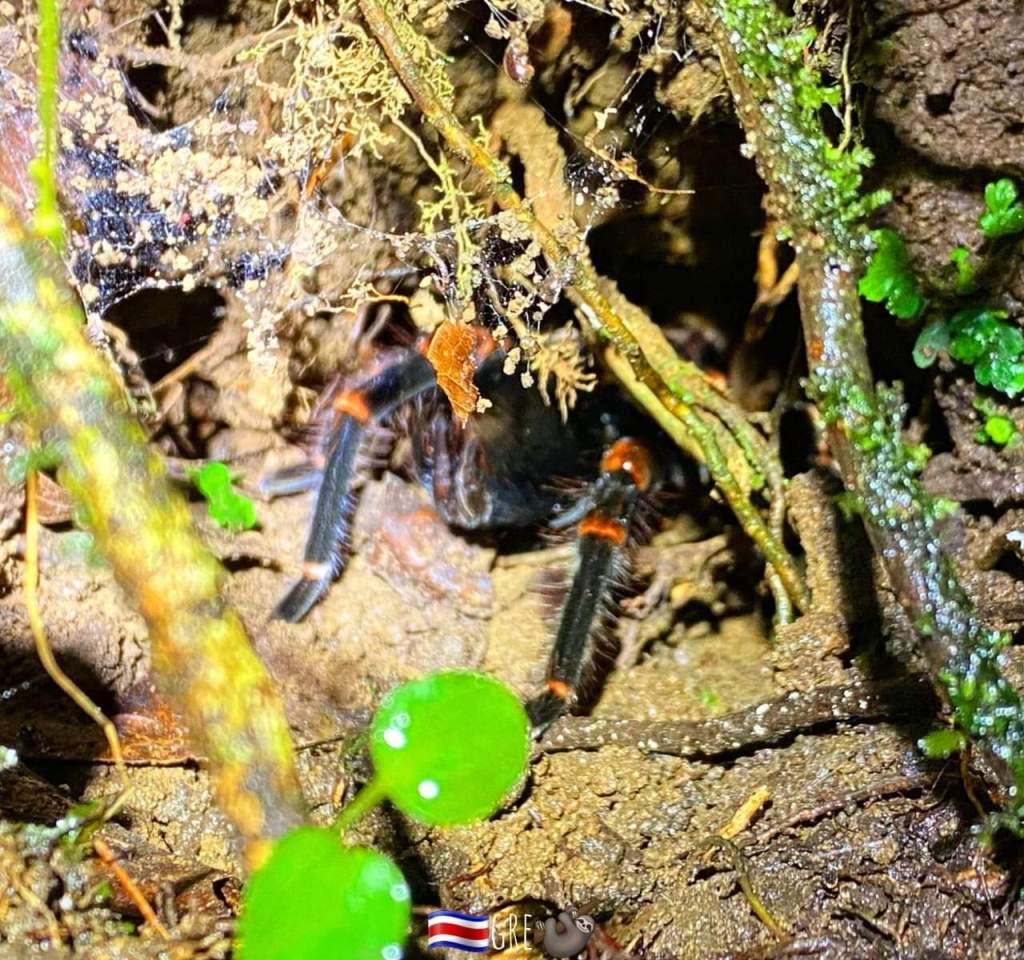
We saw an orange knee tarantula hiding in a crevice in a tree.
Pete started feeling really ill last night. Fever, headache etc. Googling the symptoms it transpired that it could be malaria, Dengue fever and a whole range of obscure jungle related illnesses. After a couple of days he felt better, stopped the malaria tablets as they could have been the cause, as well as having pizza – his body was craving carbs…..or so he says.
We had a relatively quiet day as a result. Part way through the day we decided we would go to the Natur Ecological Park – which was an animal sanctuary as well. As Pete wasn’t great we decided to cross the dark side and ring for a golf cart.
Within seconds we were in the golf cart and heading to the park. We were given an English speaking guide called Juan. He had just completed a degree in ecotourism and was planning to do a master’s in business. He was really lovely and did a variety of funny voices for effect. However, not certain how much he knew about everything. When we asked what things were called, he would look slightly startled and then say he didn’t know the English, quickly say the Spanish and move us along. I think if I could have translated what he said it would have been,” haven’t a bloody clue!”.
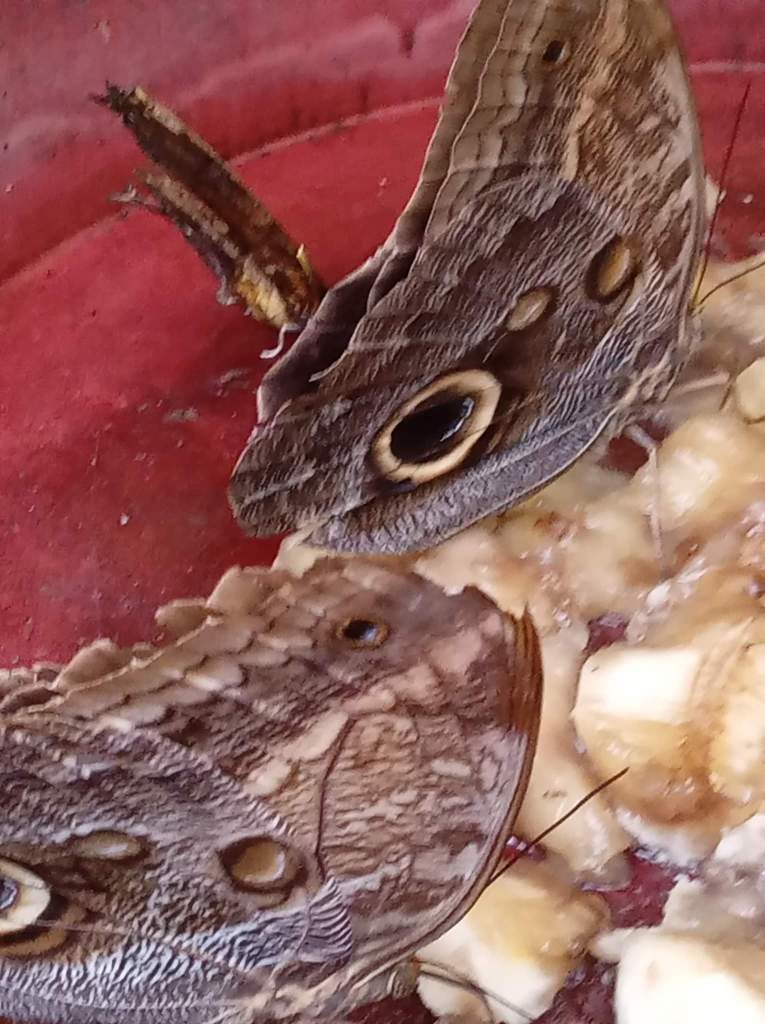
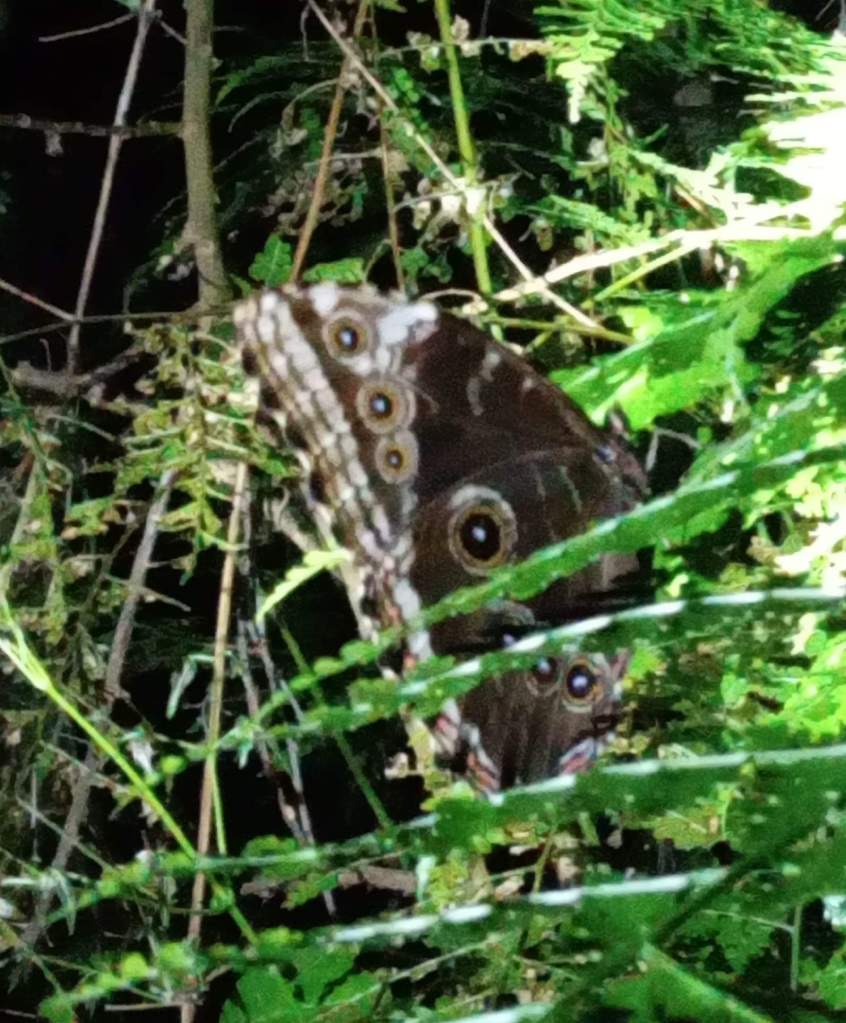
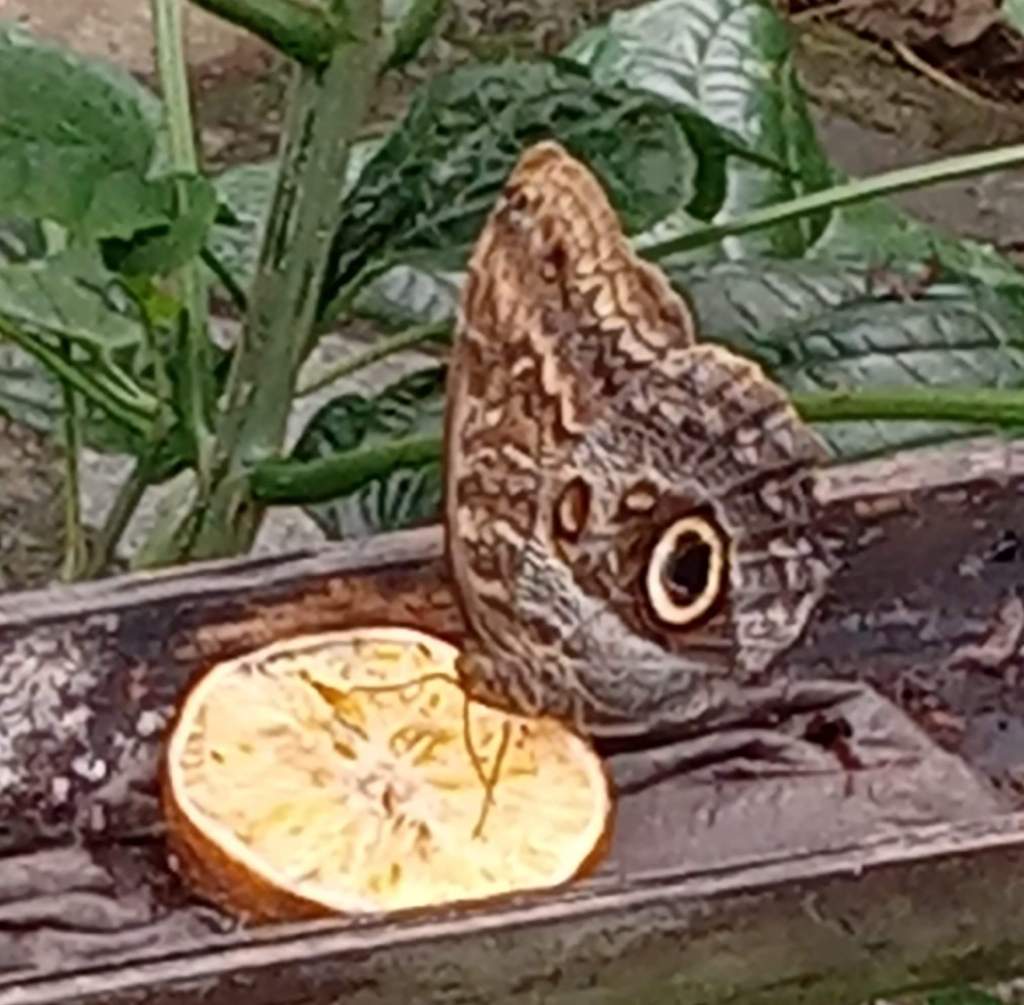
We saw alot of Blue Morphos – when they have their wings open they appear blue, when closed they are meant to look like an owls face to fend off predators.
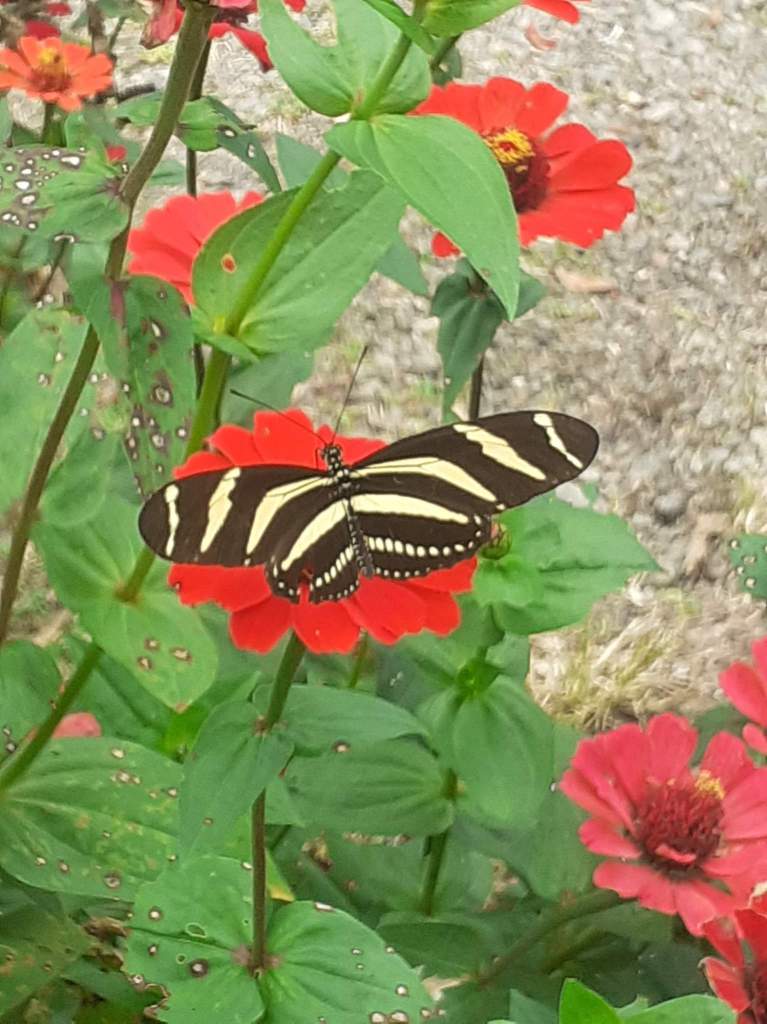
We saw quite a few different types of butterflies but as they were flying mostly it was hard to capture them.
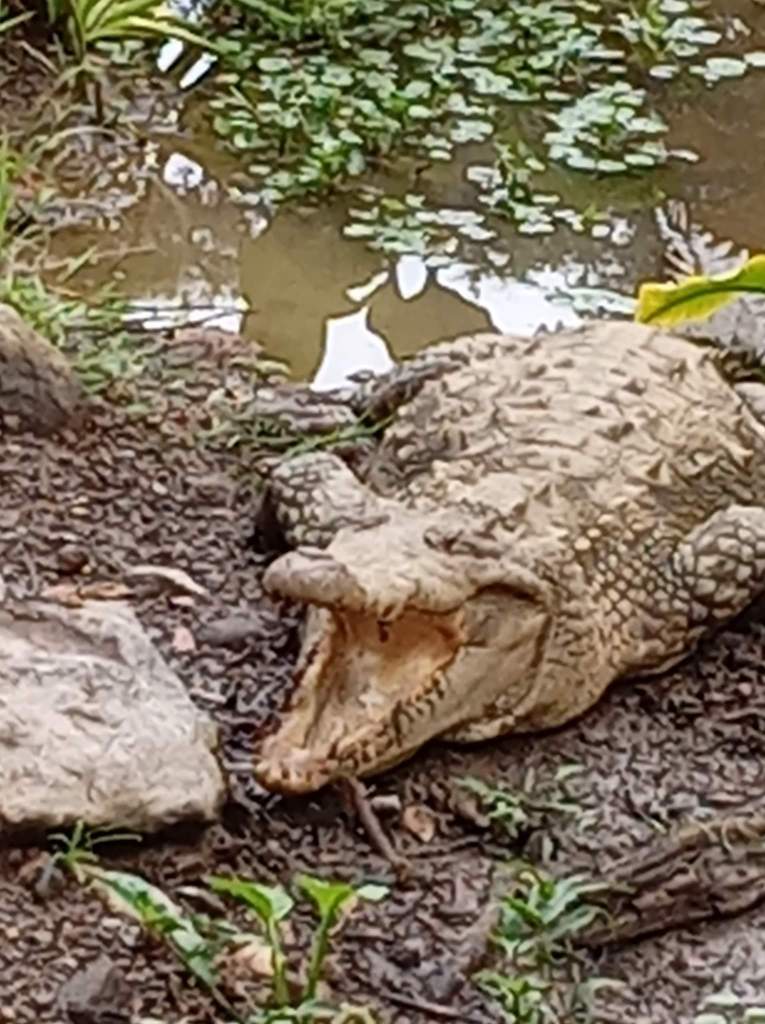
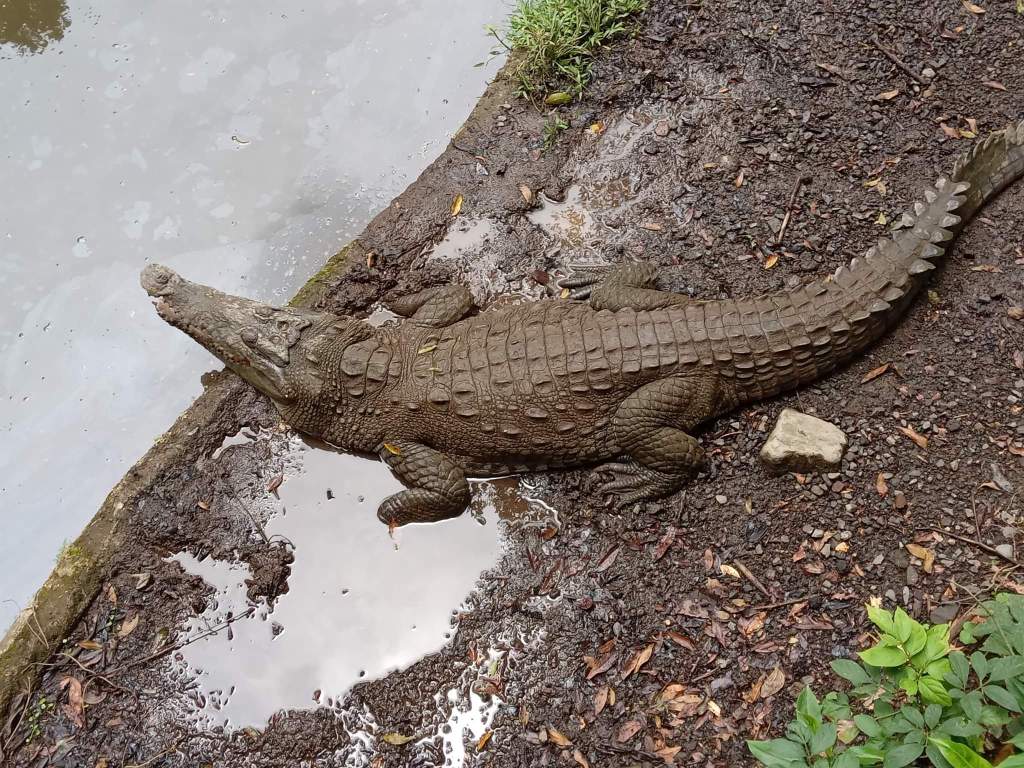
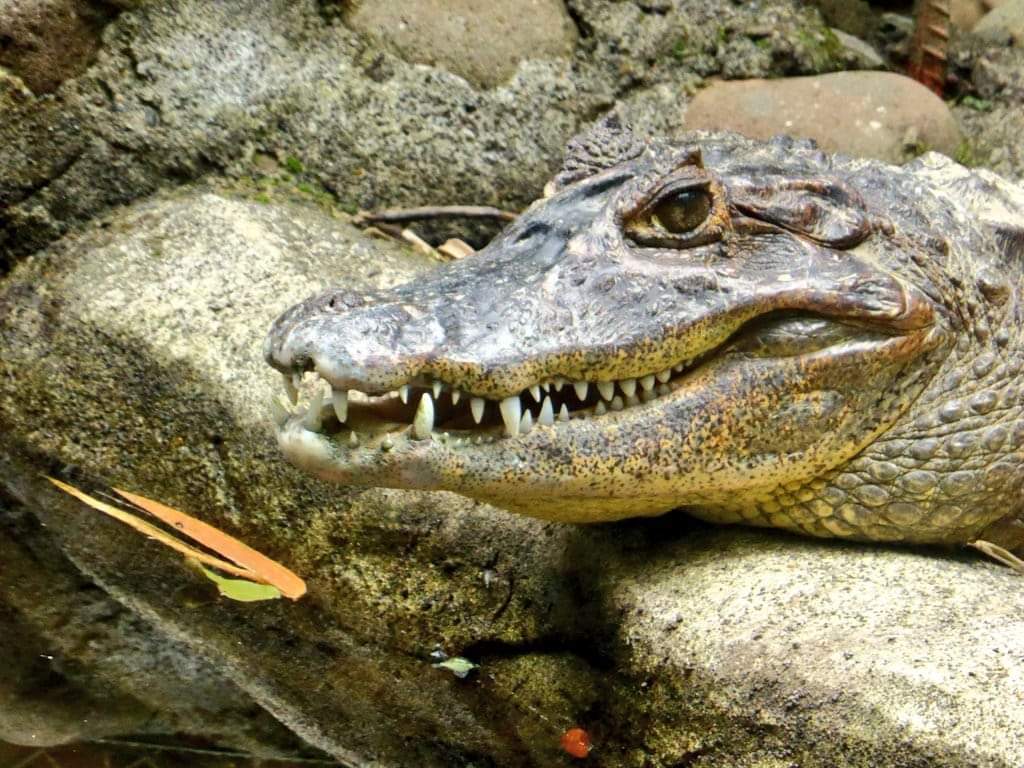
We then went to see the rescued crocodiles, one was called ,Margarita. I learnt two things I didn’t know about before, the females are bigger and they can’t regulate their body temperature so leave their mouths open. The ones they had, had either been rescued as they were hurt or they had been confiscated from people keeping them illegally.
JuJuan said
Juan said that these American crocodiles can grow up to 6 metres and weigh 400kg.
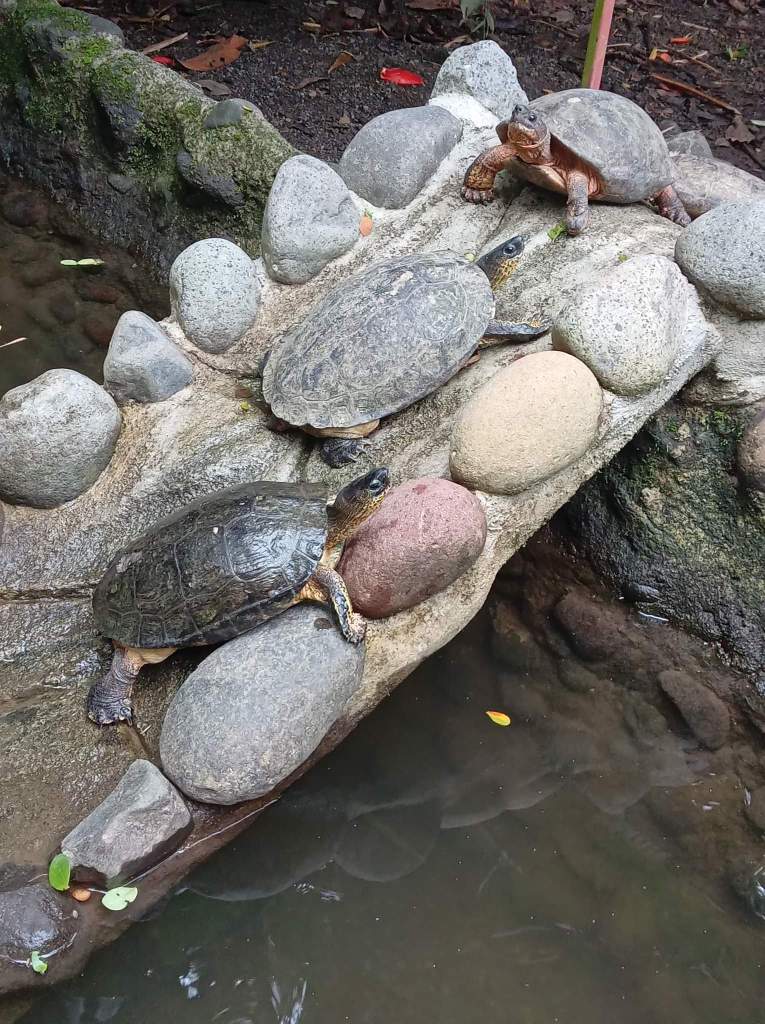
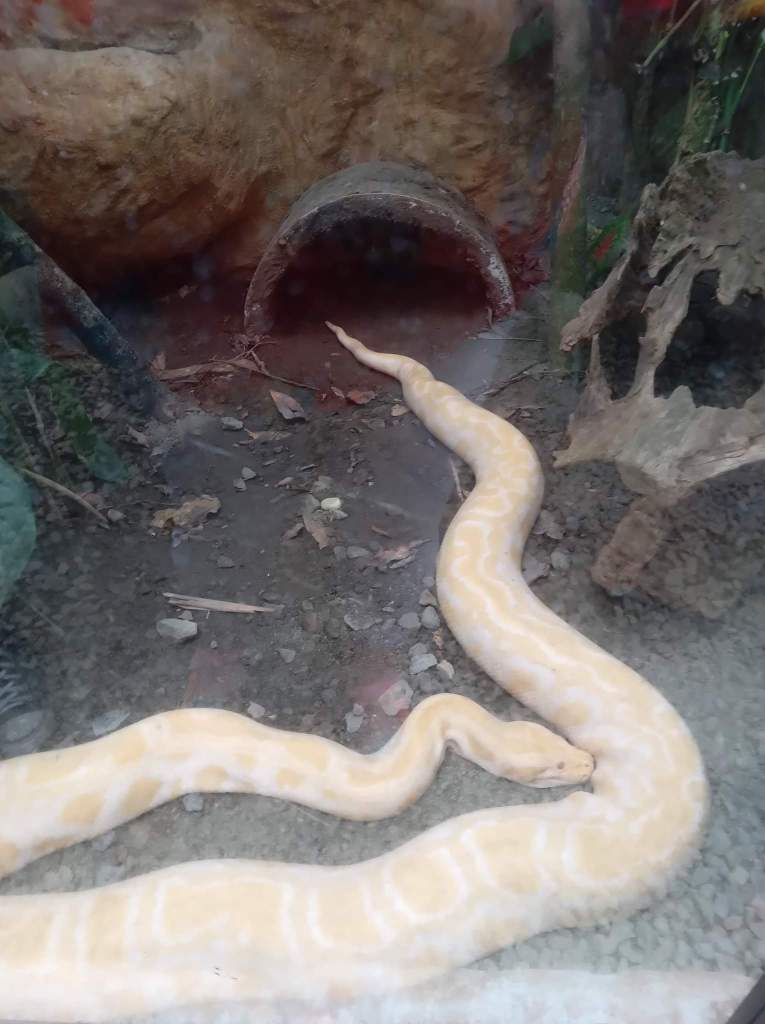
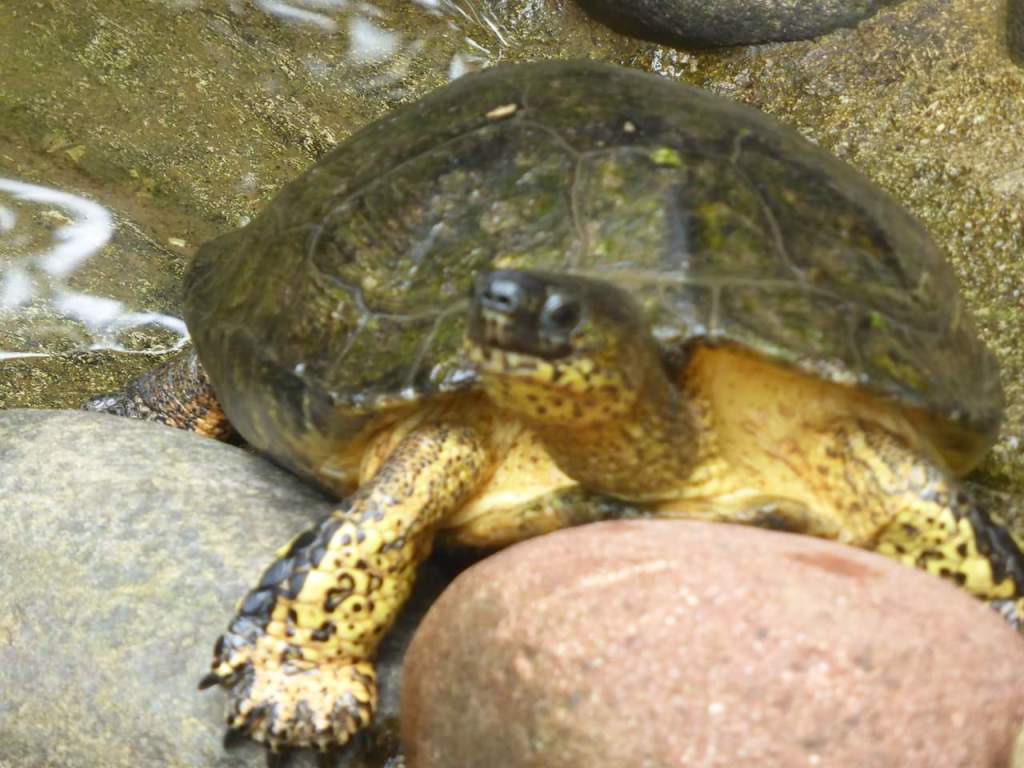
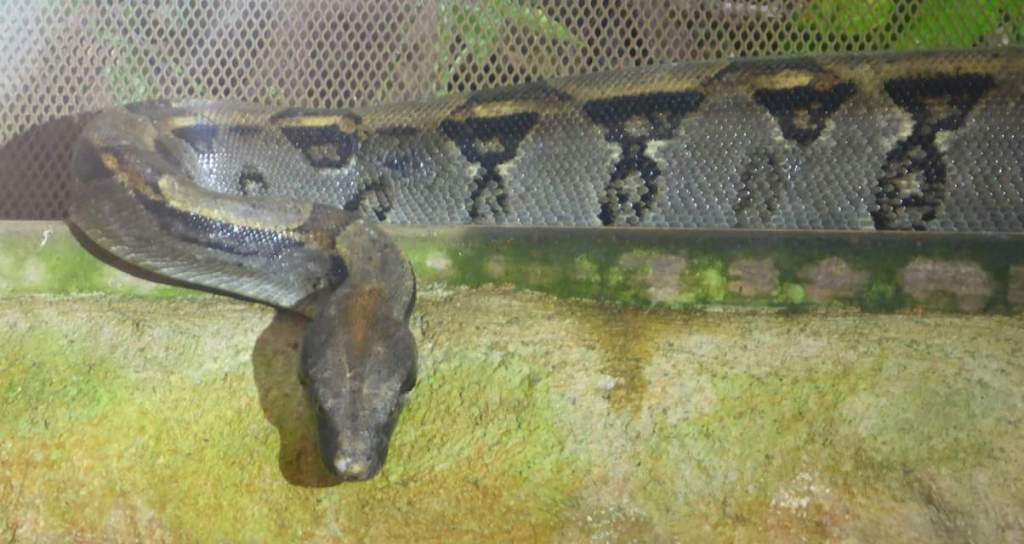
We saw snapping turtles, all manner of frogs and snakes too.
We passed yet more leaf cutter ants, Juan wanted to show how strong they are (he didn’t hurt it!). He picked it up and then somehow got it to take hold of the stick ,- this is the ant holding the stick. It is mind boggling how many times it is carrying its body weight.
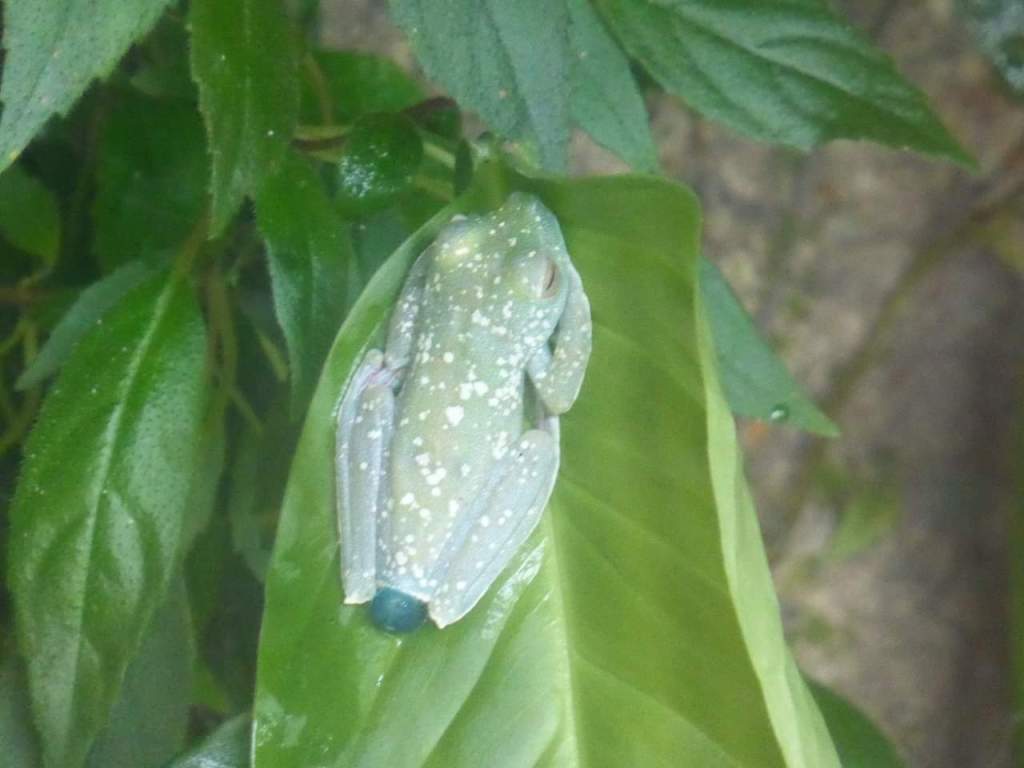
I thought the glass frog was very cute.
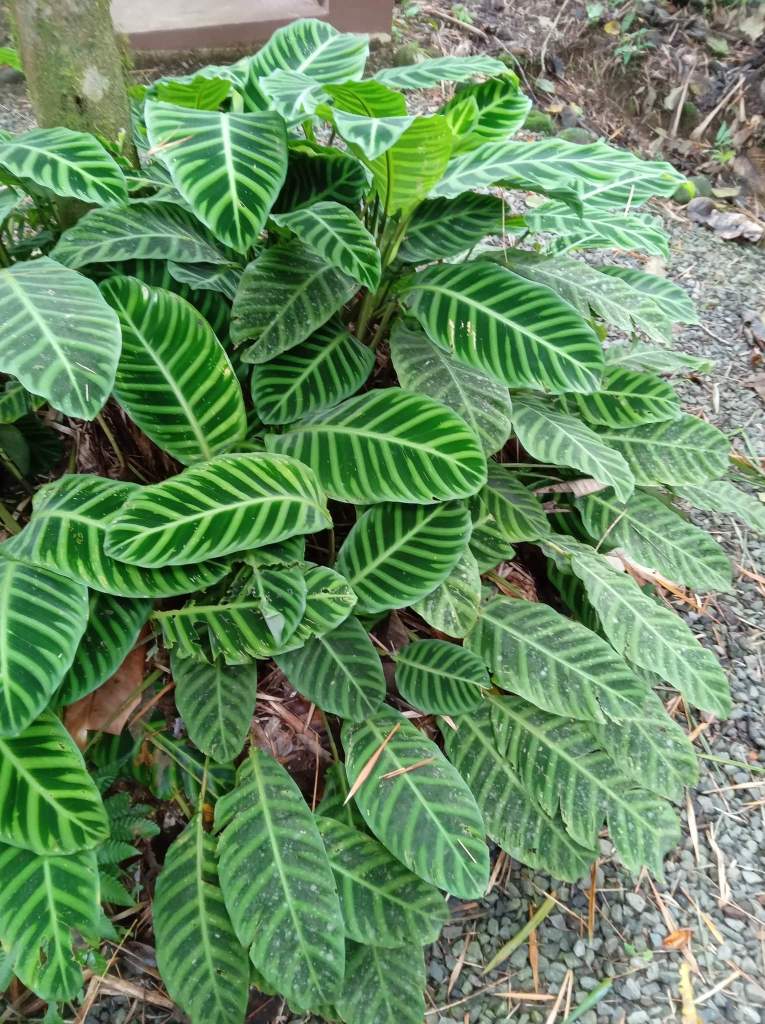
We trekked through the forest and saw lots of plants we have in plant pots in the UK. I told Juan this and he couldn’t believe it, to him I guess they are like our hedgerows etc. His business mind started whirring and he kept shaking his head in disbelief, I could make alot of money couldn’t I? He exclaimed.
After a few hours we returned to the reception. We said we would walk back but just as we were saying it the golf cart spookily turned up to take us back.
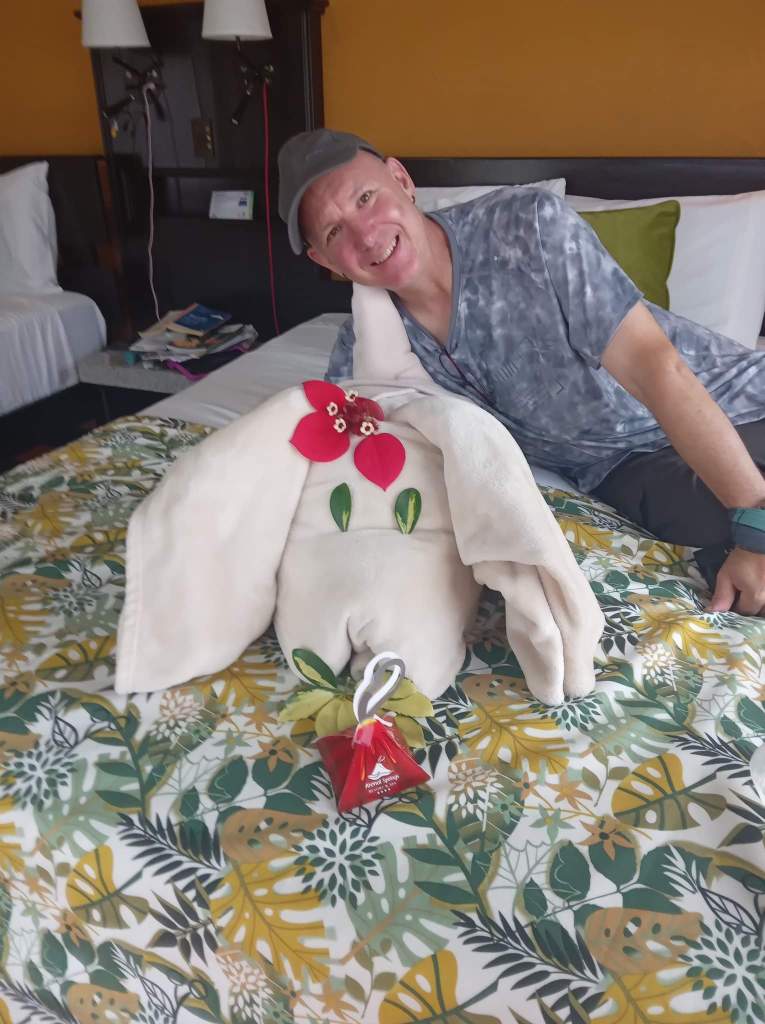
We got back to our room and were greeted by a blanket dog and chocolates. God knows how they managed that but it brought a smile on my face.
Unpacking the night before we realised that many of our clothes stank to high heaven. Pete kept saying they smelt of the rainforest. When we were in Tortuguero we didn’t notice it but having been stuck in a bag for half a day, they smelt musty and earthy in equal measure. I had also been more or less spread-eagled on the beach trying to see the turtle, as well as walking through swampy patches; so it wasn’t any wonder we ponged a bit. We decided to go all out decadent and got things washed at the hotel. When they came back they looked better than when we packed them.
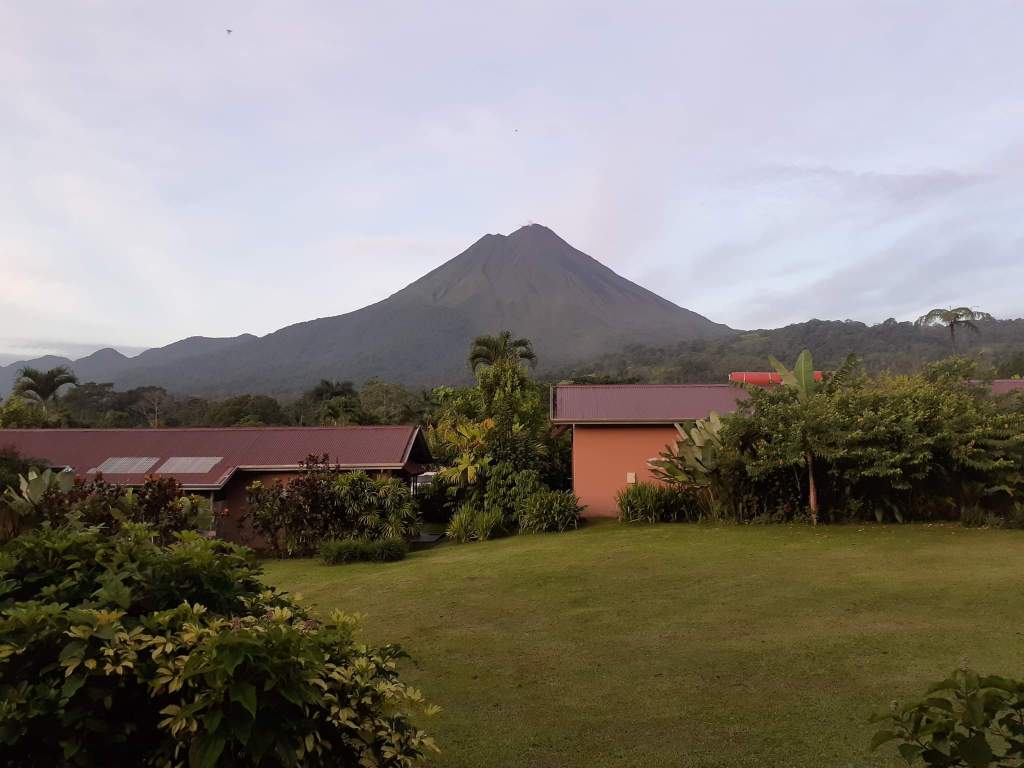
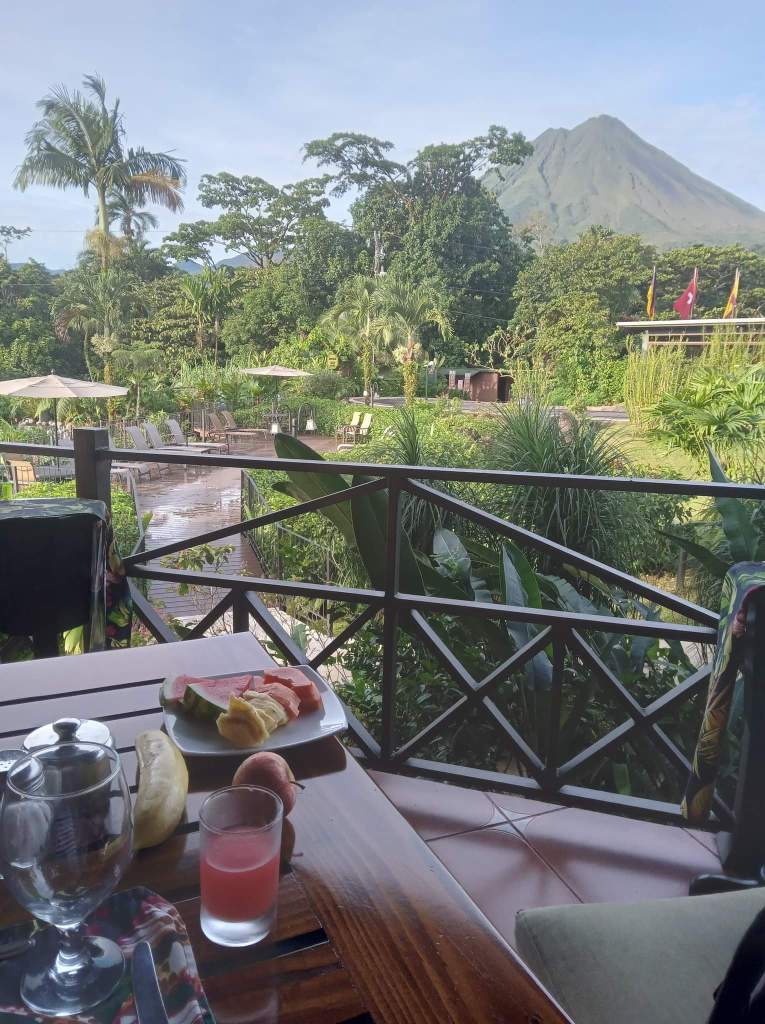
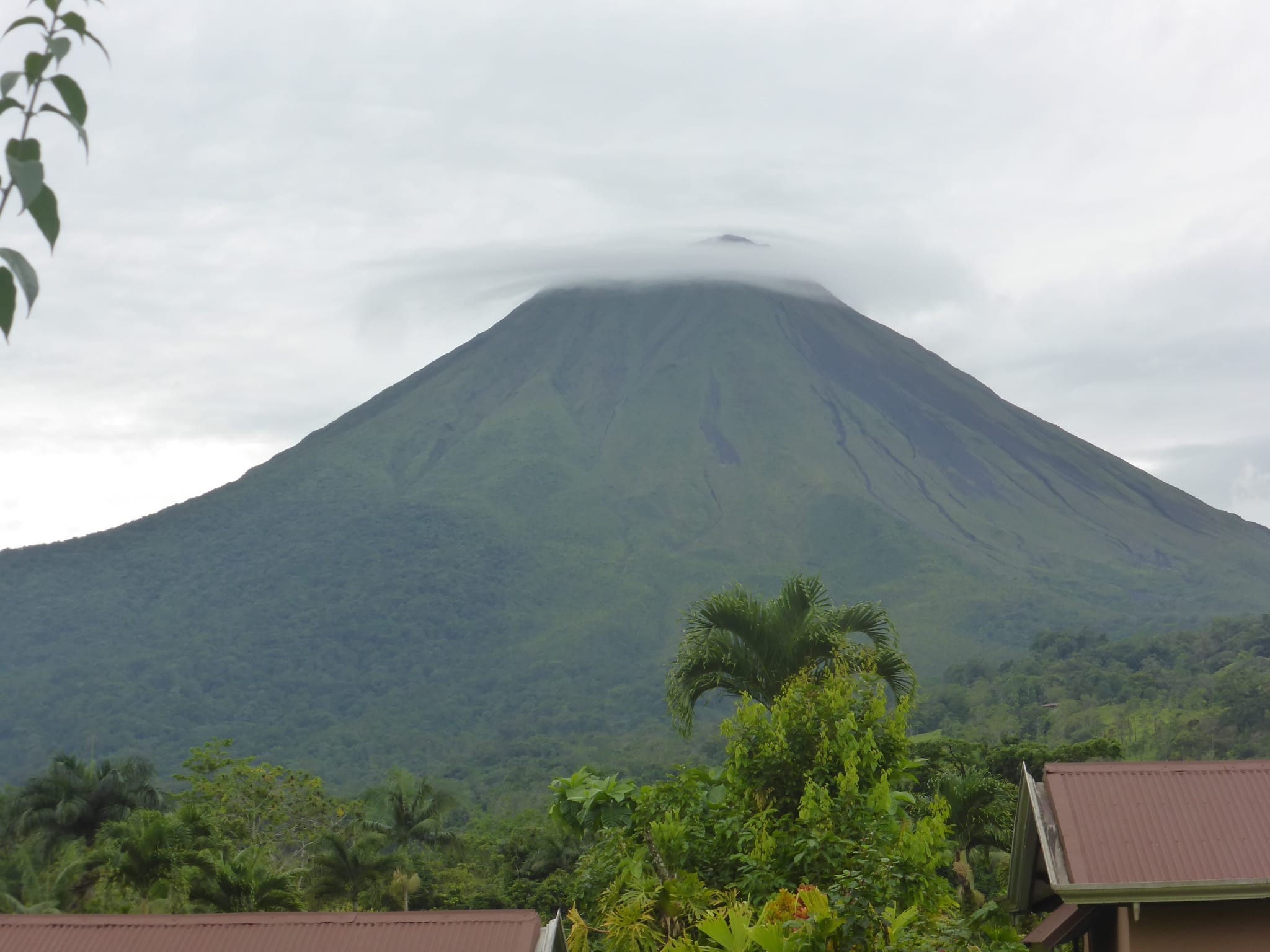
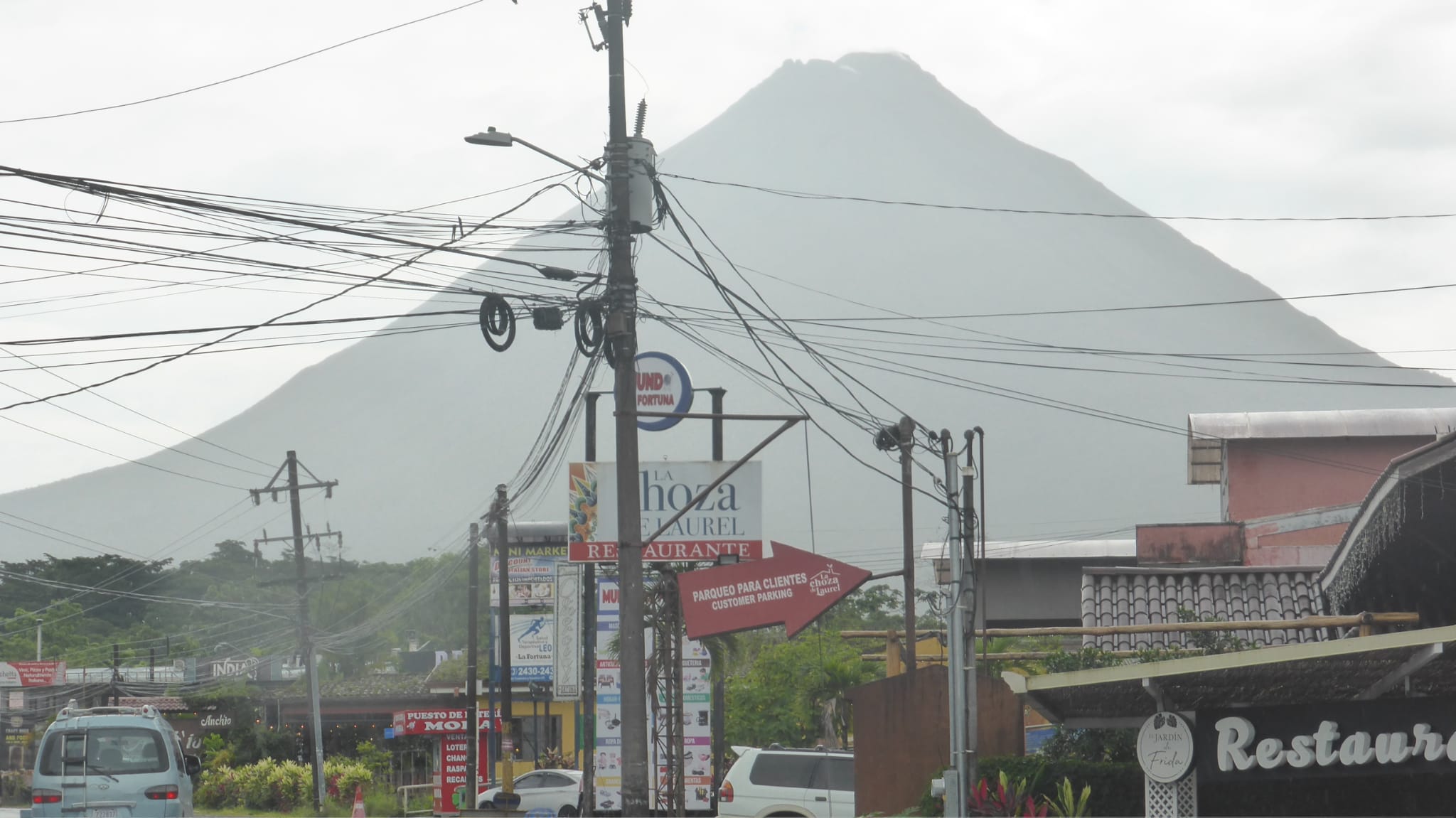
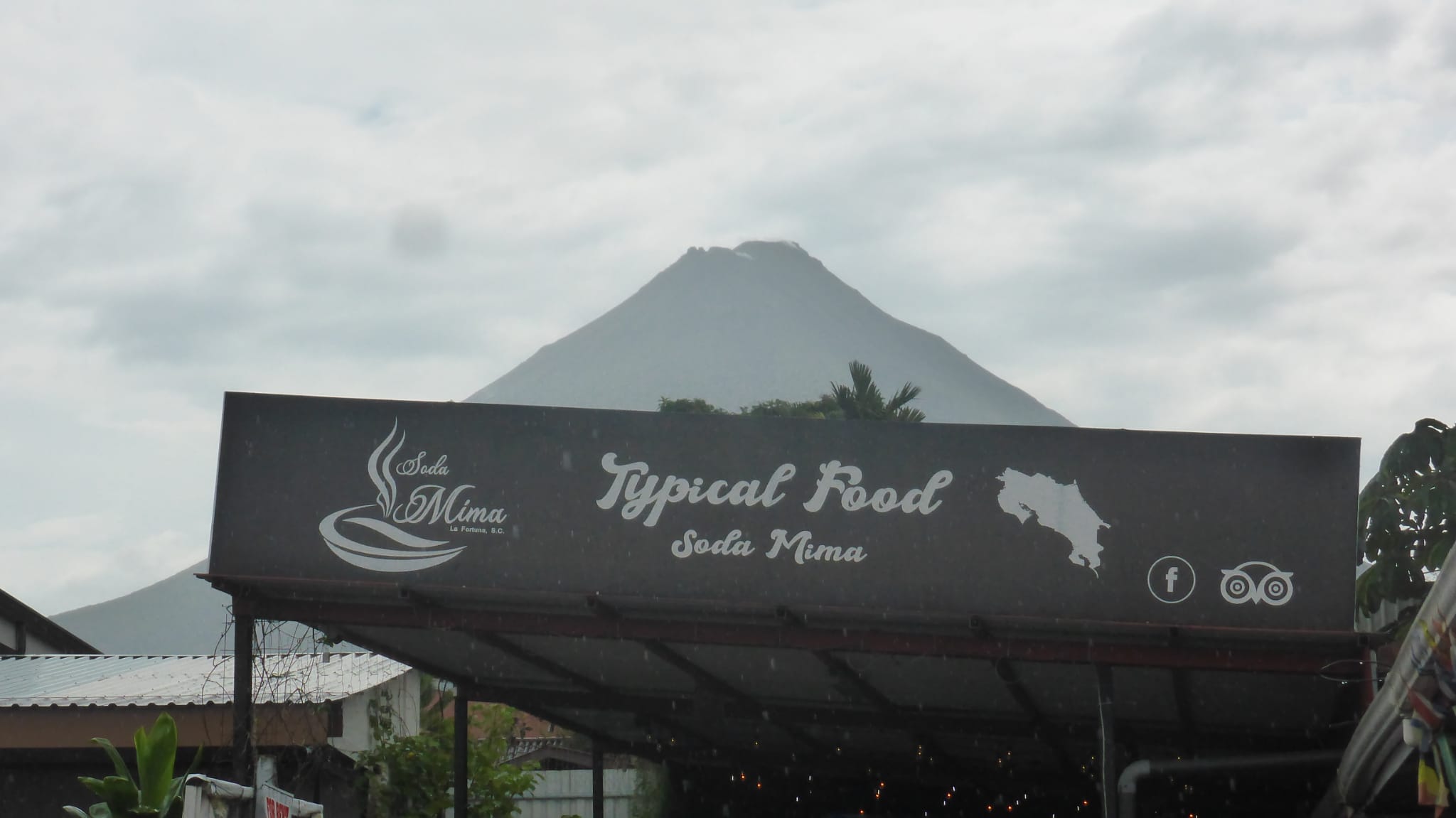
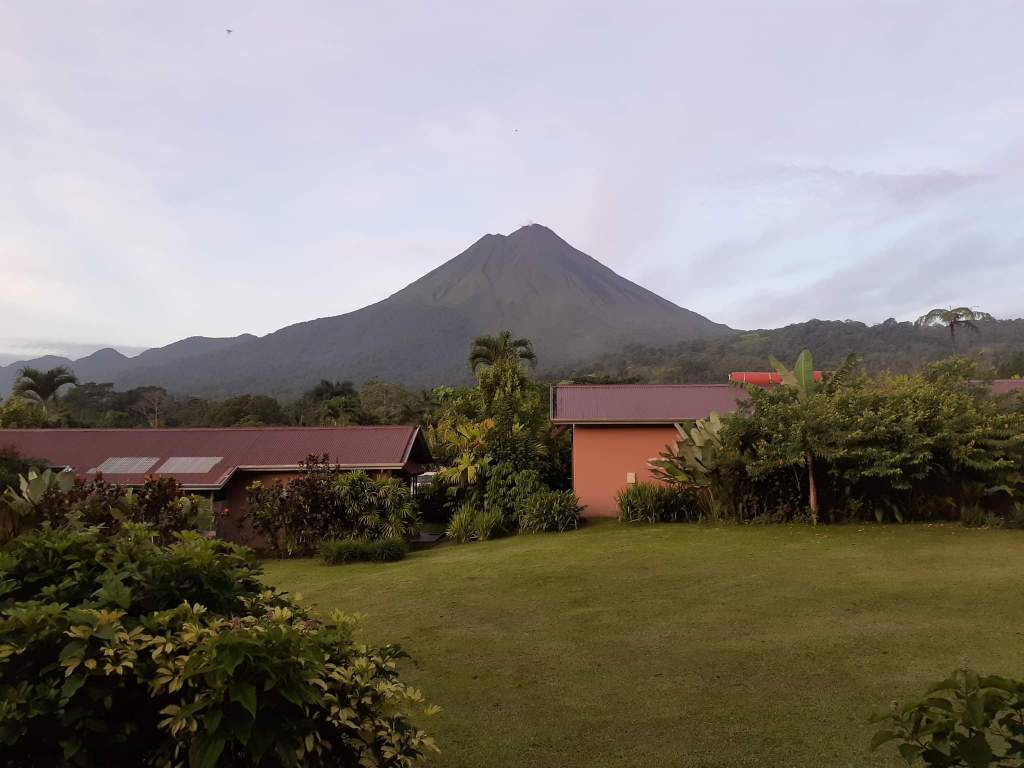
It was amazing to see the volcano outside our window again in the morning. The hotel boasts that it has the best view of the volcano in the area, but truth be told it is almost omnipresent pretty from every angle in the area.
We did not order a golf cart as was suggested when we first arrived for breakfast etc. It seemed very lazy but there were people being ferried to the restaurant for breakfast, mostly the American guests. It reminded us of The Prisoner for some reason, everything so perfect.
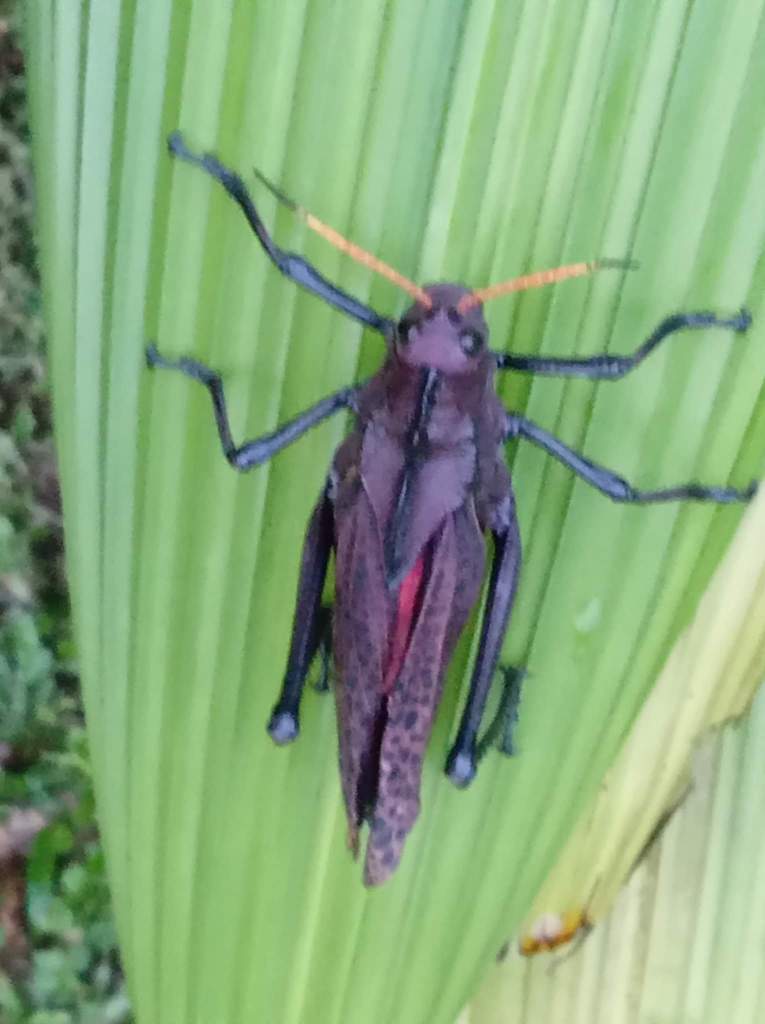
There were lots of these in our private garden, nearly 10cm long. Harmless but scary looking, probably because they were so huge.
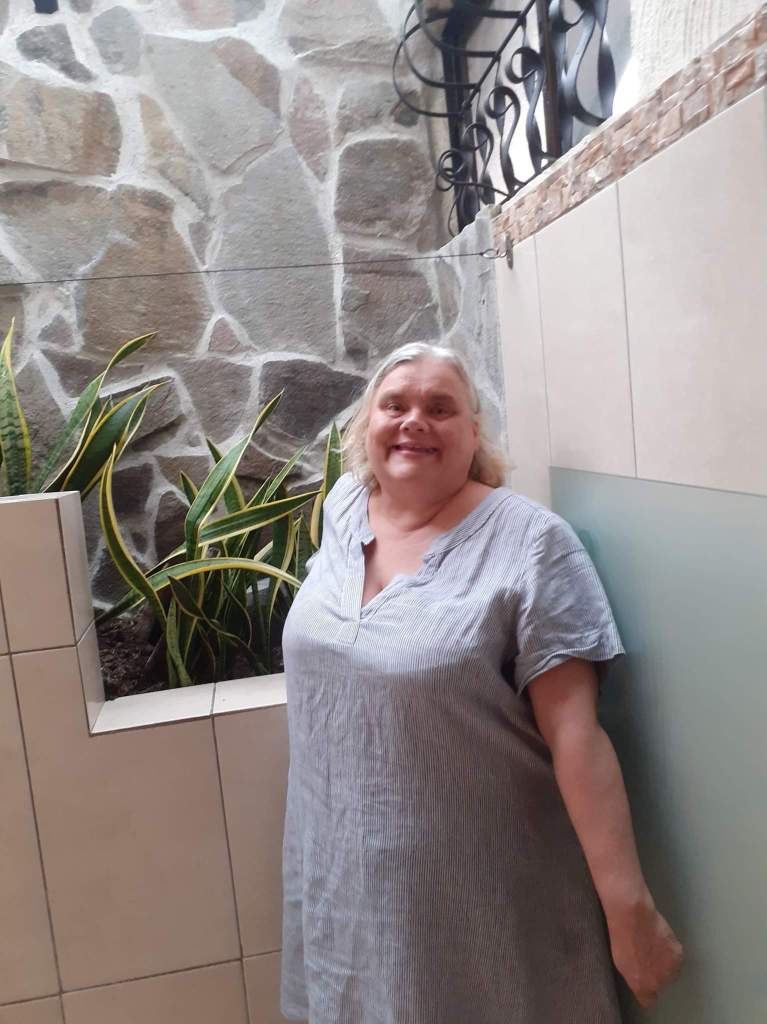
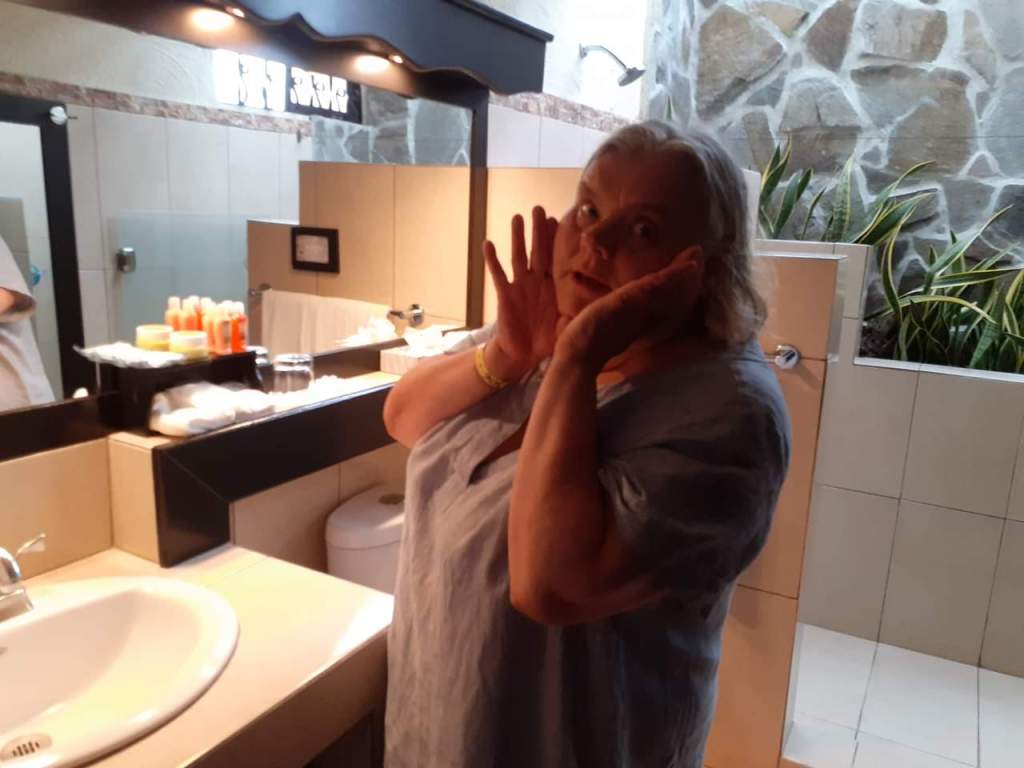
Still couldn’t get over the size of our room and made Pete take photos of every bit, even the shower!
I was a bit giddy as there were plants in the shower.
OK I may have gone slightly over the top about it all. But it was all quite a novelty for us.
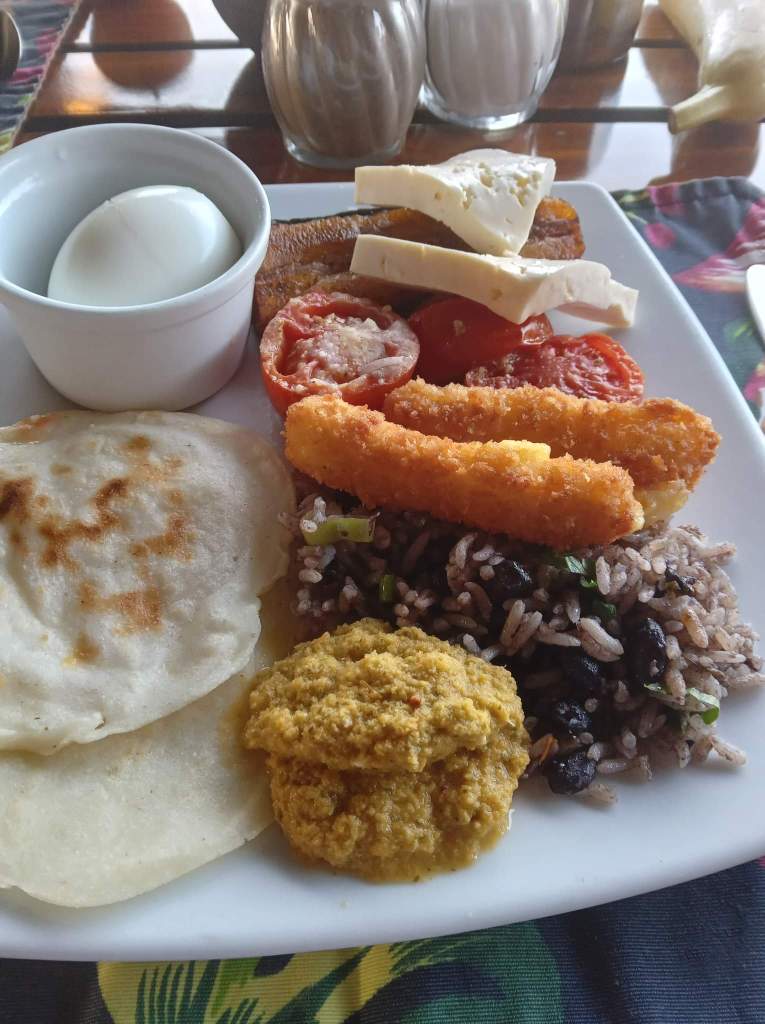
Breakfast was a very grand affair, with some dishes made to order. Our view was beautiful.
The food was utterly delicious.
Now you would think that this was like being in paradise, in many ways it was but on the other hand I felt quite uncomfortable with the obsequious nature of the people working there. Pura Vida, good life they would greet us with, a bit of a jig and a bow of the head. This level of attention feels overbearing.
Yes, pura Vida, the stock phrase in Costa Rica.
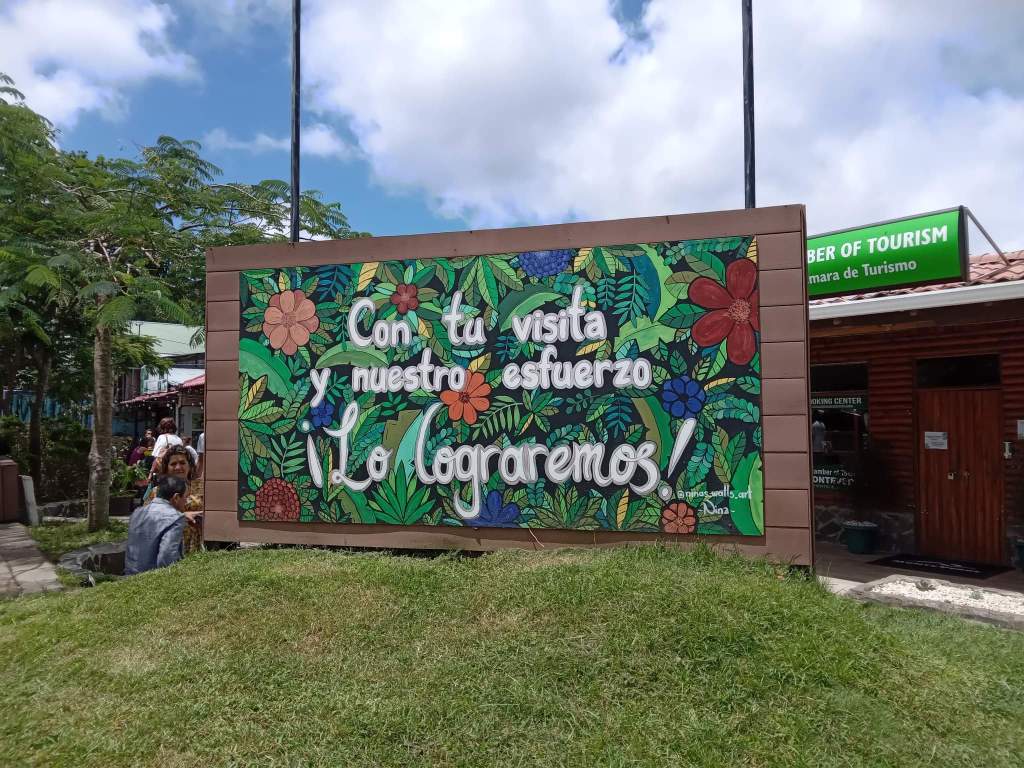
“Pura Vida” (pronounces poo-rah vee-dah). Simply translated, it means “simple life” or “pure life”, but in Costa Rica, it is more than just a saying—it is supposed to typify a way of life.
Costa Ricans (who are known as Ticos) use this term to say hello, to say goodbye, to say everything’s great, to say everything’s cool. The words are meant to reflect a way of life, but in the hotel it was so stereotypically overdone it sounded cheesy.
Managed a silly snap of Pete, Annie must be so glad she doesn’t have to do this anymore.
After breakfast we had a trip to the Hanging Bridges of Arenal. We were transported via mini bus, picking up more people on the way. It was a lovely surprise to stop and pick up Joyti and Shish, the couple from Nottingham.
It was great to be able to share the experience of the Mistico Park. The park is famous for its hanging bridges which date back to the early 20th Century.
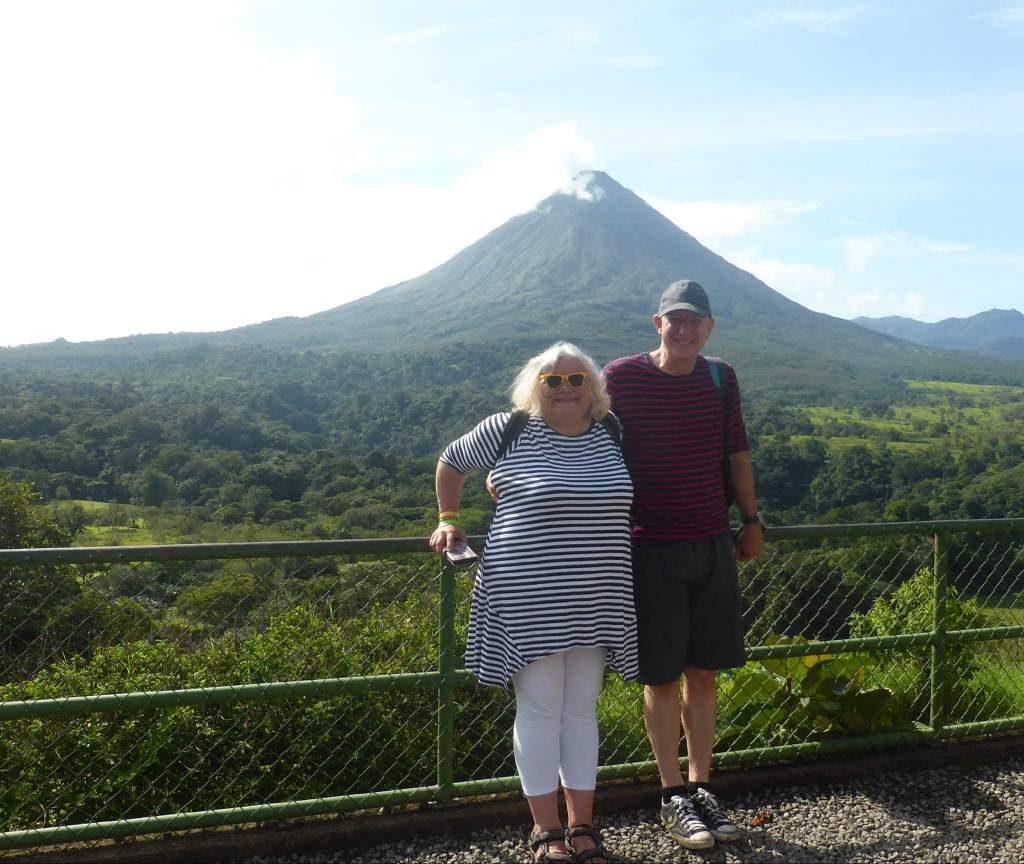
The view from the park was beautiful and luckily the weather was good. What has been good about these trips is that a guide has been included. Oftentimes when we have previously travelled there has been alot of guess work which may or may not have been right and we will never know.
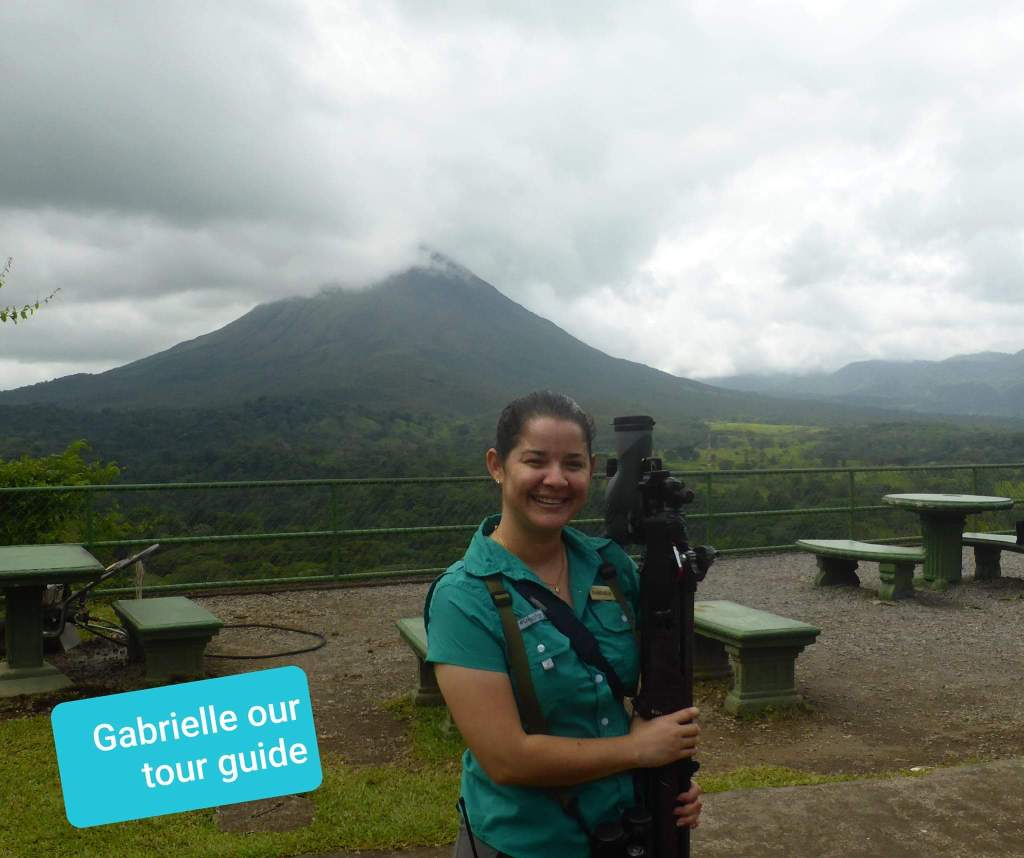
For this we had the very pleasant and knowledgeable Gabrielle, who was informative and easygoing.
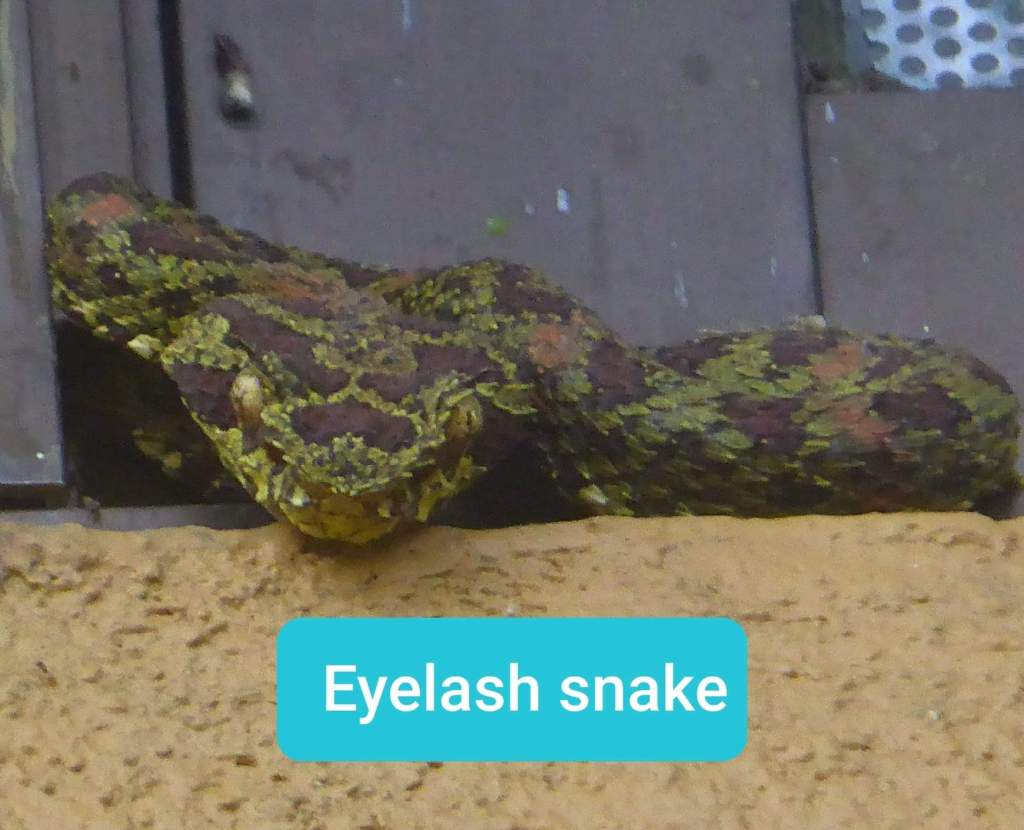
The first thing we saw was an eyelash viper.
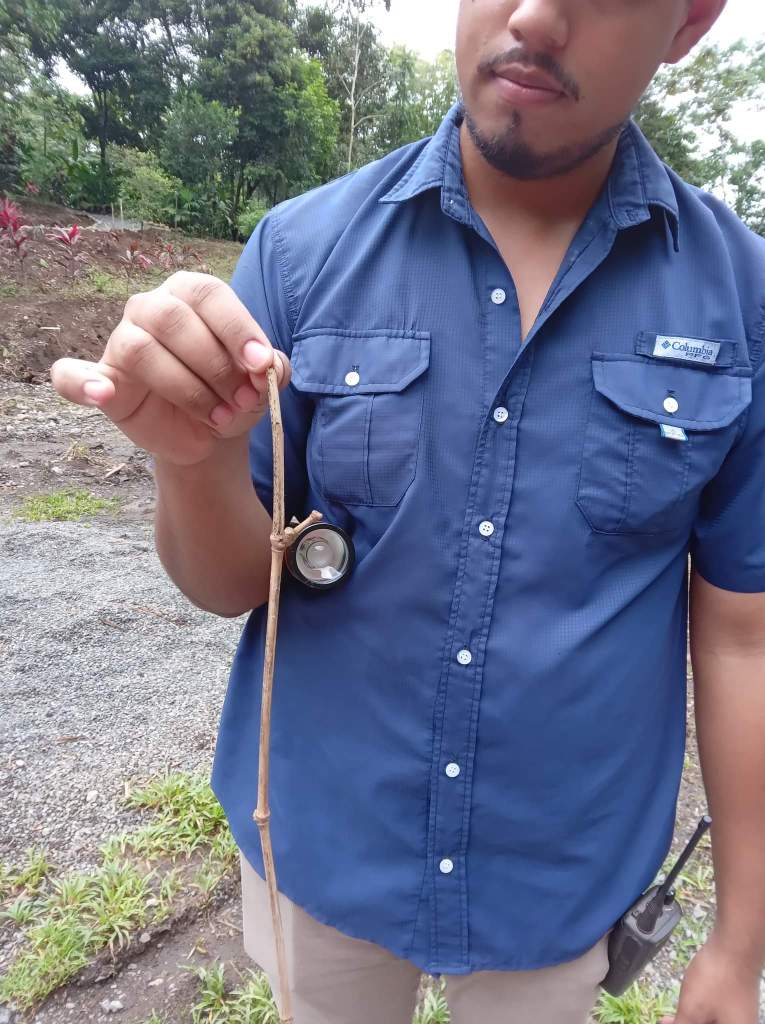
The eyelash snake is the most venomous snake in Costa Rica, as well as being one of the fastest in the world. Although this does look fearsome is was actually a baby and it was laying at the top of a tall building. Baby eyelash snakes are called snakelets. They can live independently from their mothers. Gabrielle had her telescope trained on the snake and took this photo for us.
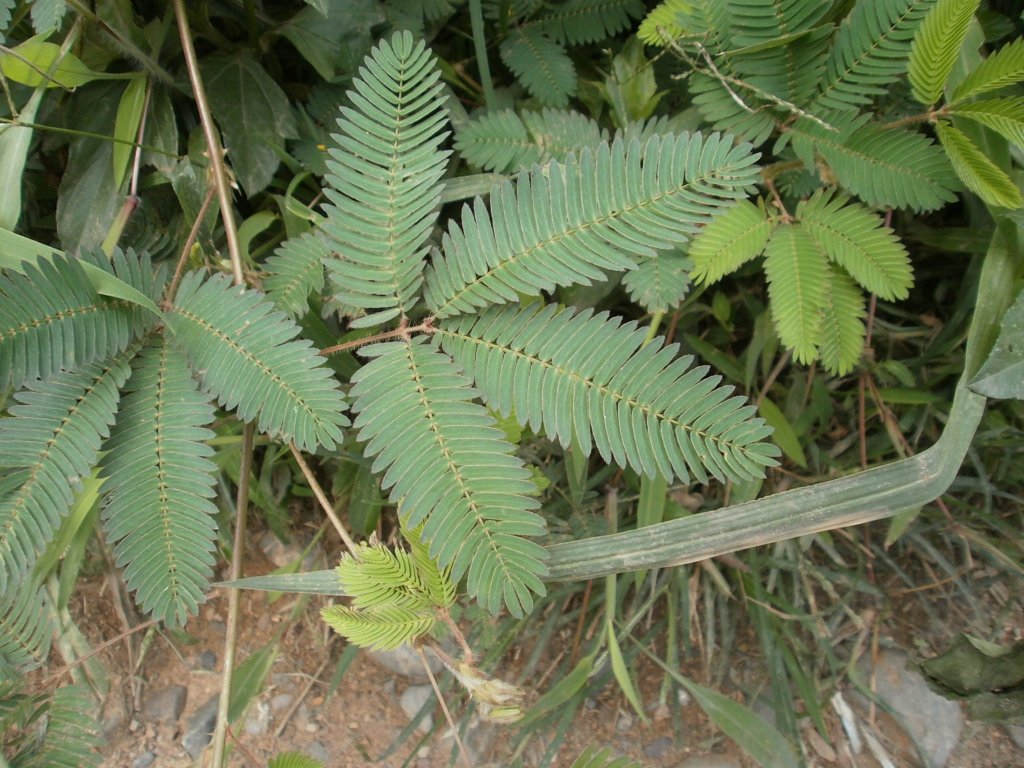
Gabrielle pointed out the sensitive plant. Sensitive plant (Mimosa pudica) is found throughout the tropics of the world as an invasive species, but is actually native to Costa Rica and Central America. It’s called the sensitive plant because touching it triggers a release of water from the stem cells that causes a drop in pressure and the leaves fold up (seismonastic movement).
OLYMPUS DIGITAL CAMERA
Gabrielle said that her mother is a seamstress and suffers from arthritis, so she drinks an infusion of it every day. Apparently there are 16 health benefits derived from this plant, from hair loss to asthma.
The
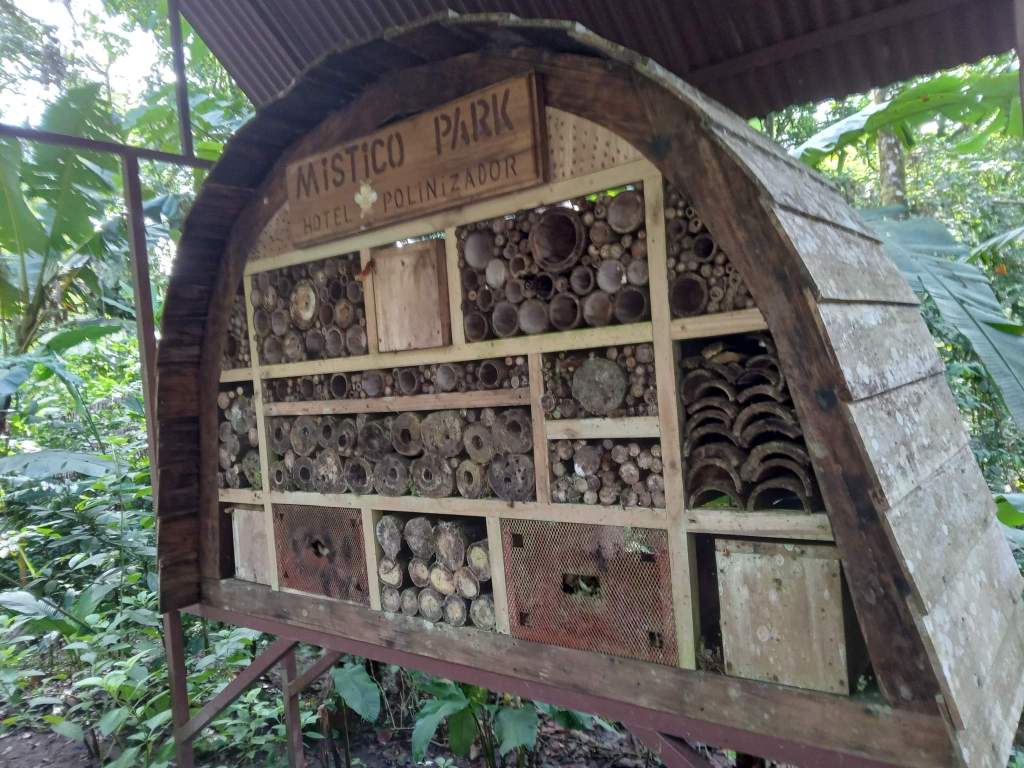
The start of the trail had an insect hotel.
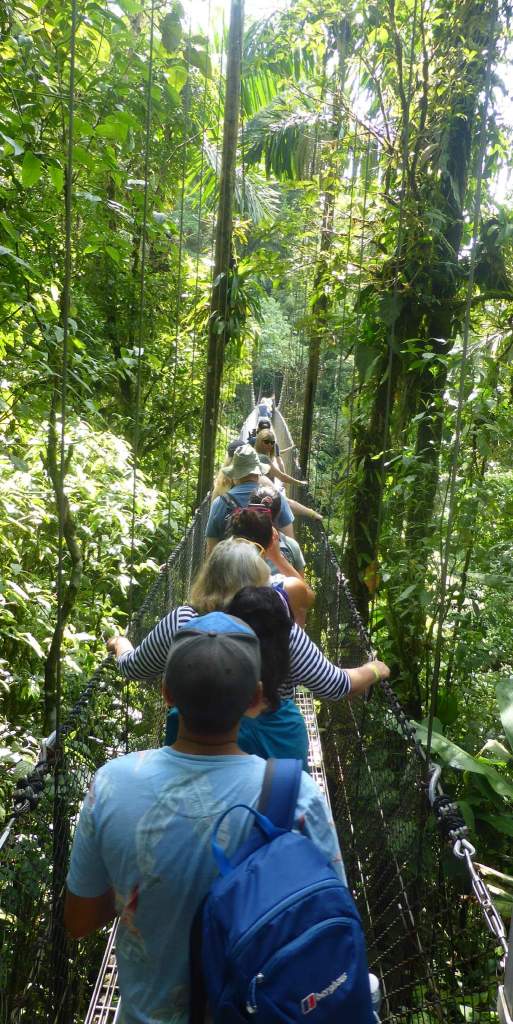
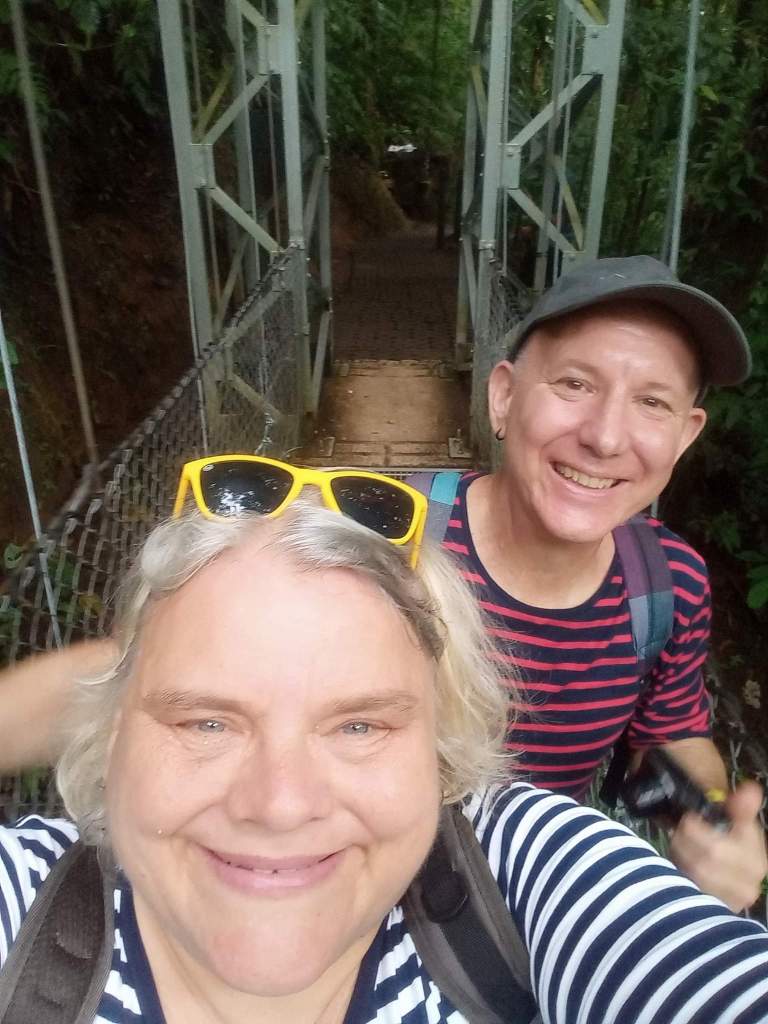
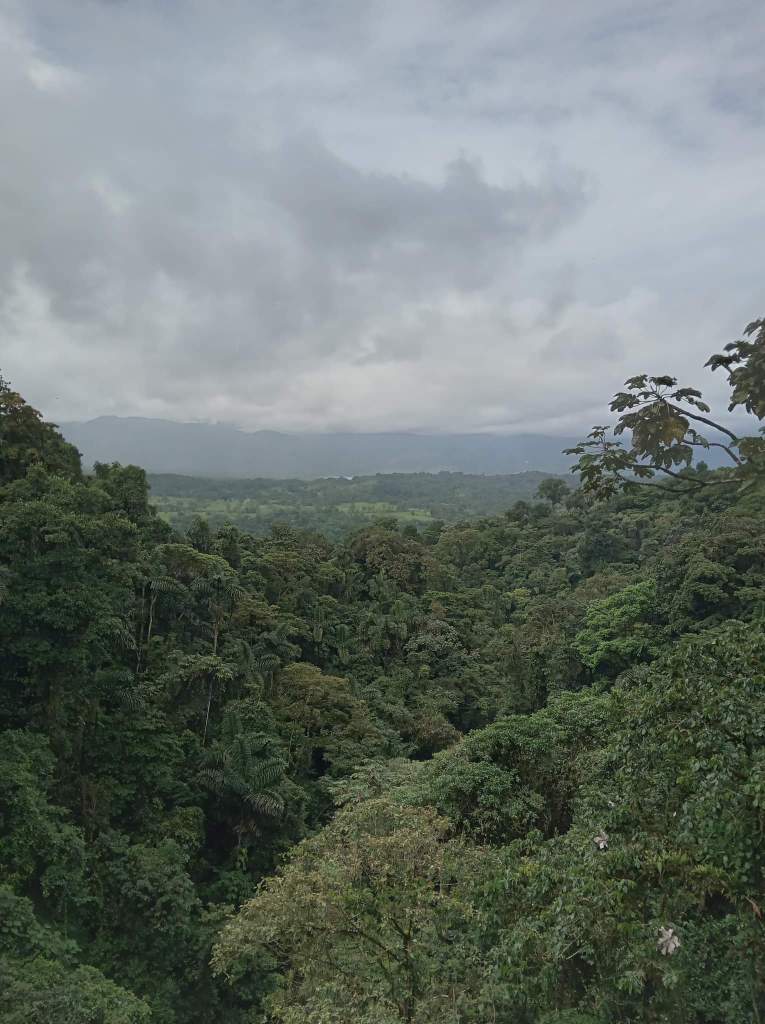
We walked over a series of these bridges high up in the rainforest, giving us spectacular views over the treetops. The bridges were obviously very high up and also equally wobbly, so not for the faint hearted.
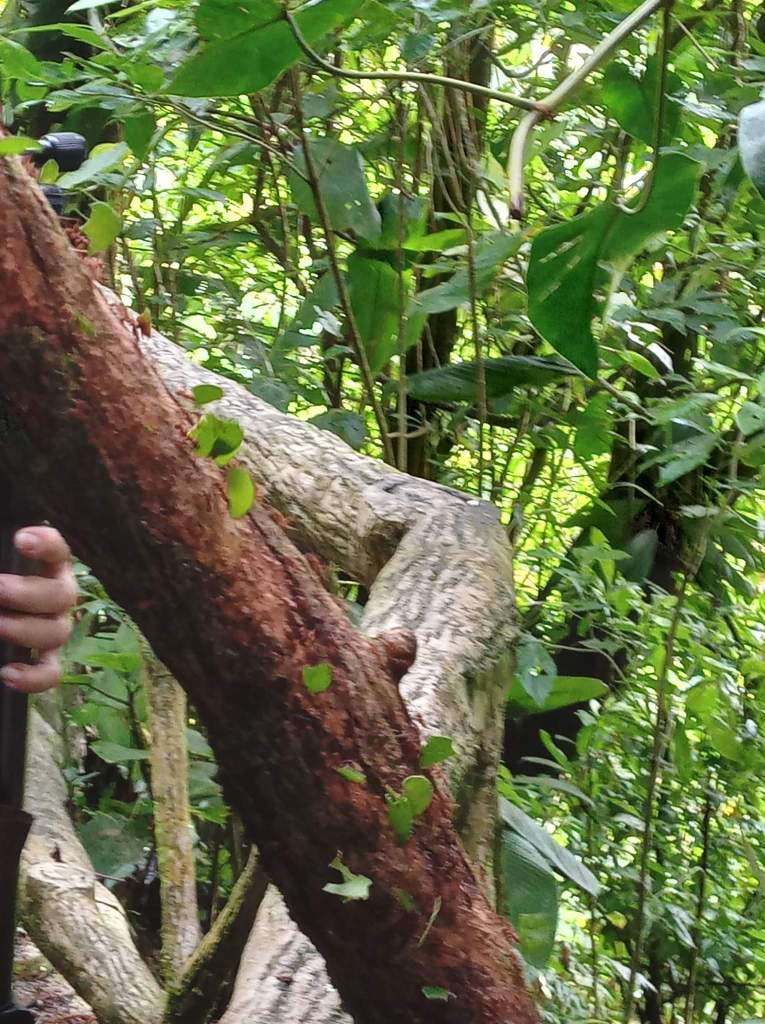
We saw lots of leafcutter ants Criss crossing along the paths.
Gabrielle said that not all the ants carry the leaves, the ones that don’t are quality assuring the leaves. It is important that nothing comes into the next and corrupts their production of fungi.
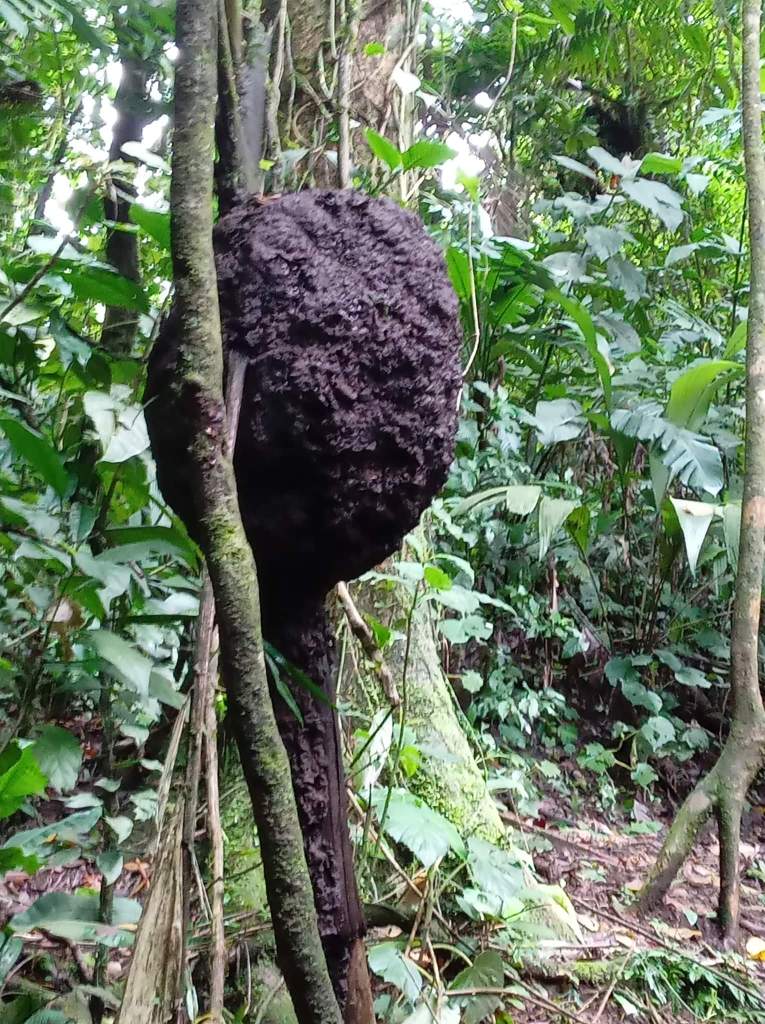
We saw termite nests. The termites in Costa Rica are arboreal termites. The nests can reach up to 28kg.
Typical arboreal colonies contain anywhere from 50,000 to 60,000 termites.
We saw lots of insects, plants, birds etc. We have seen toucans and green macaws – which were magnificent. But all so fleeting so no snaps, which is ok as I have the memories in my head.
The sound of cicadas was deafening. Gabrielle said that female cicadas are deaf so the louder the males are the stronger the vibrations they make. She said the males are also quite deaf and they know how strong their vibrations are. Not surprising they are deaf as they spend nearly two decades underground!
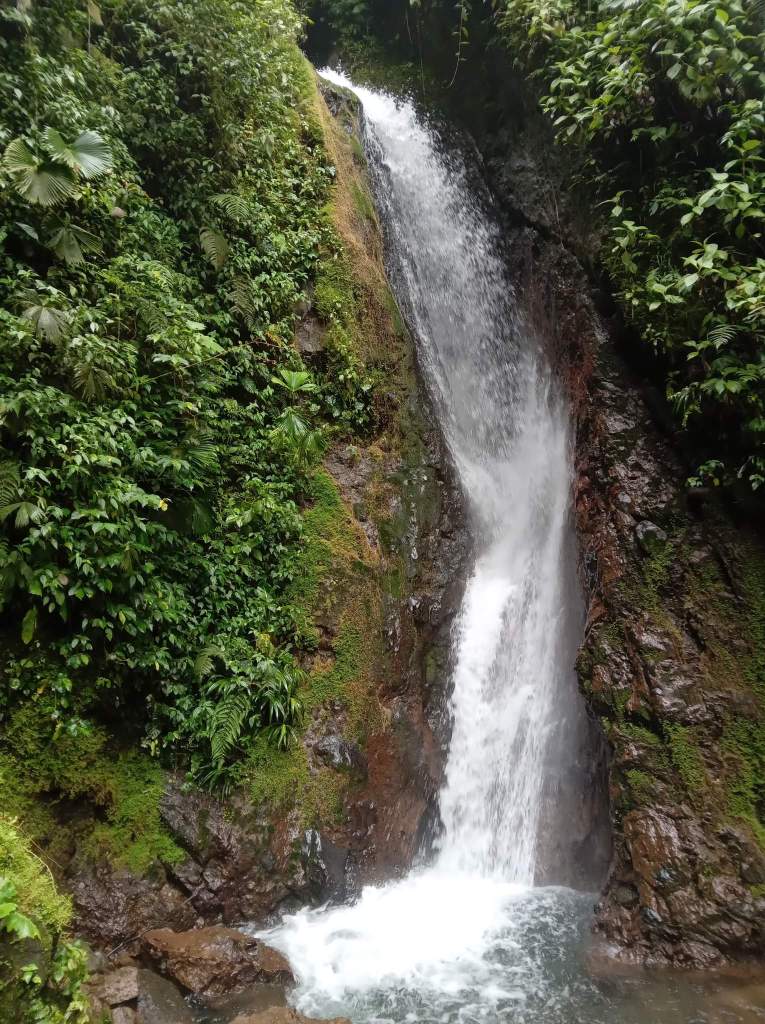
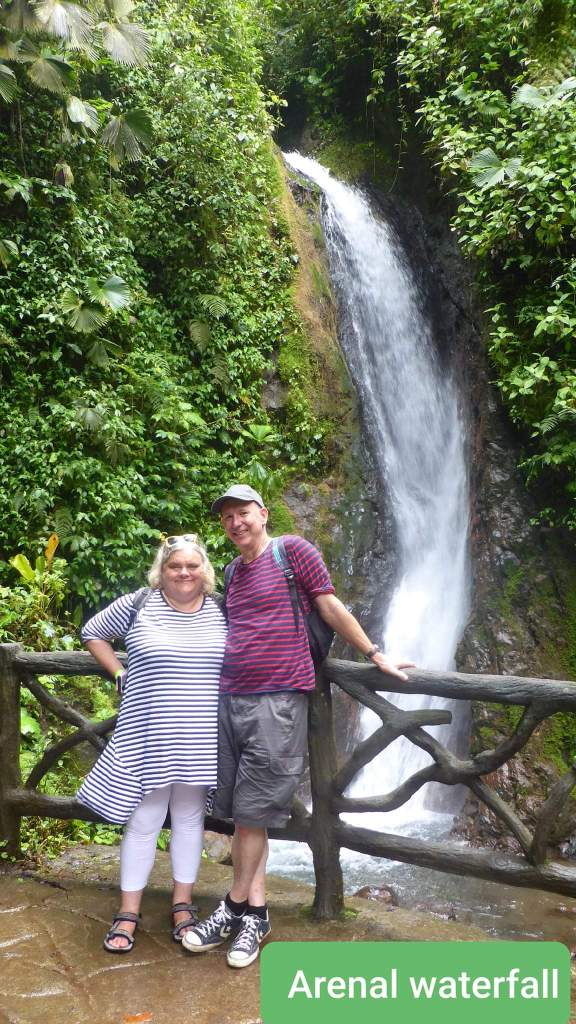
We went off the main path to see a waterfall.
It was so refreshing as walking round the park was the hottest most humid experience we had had so far.
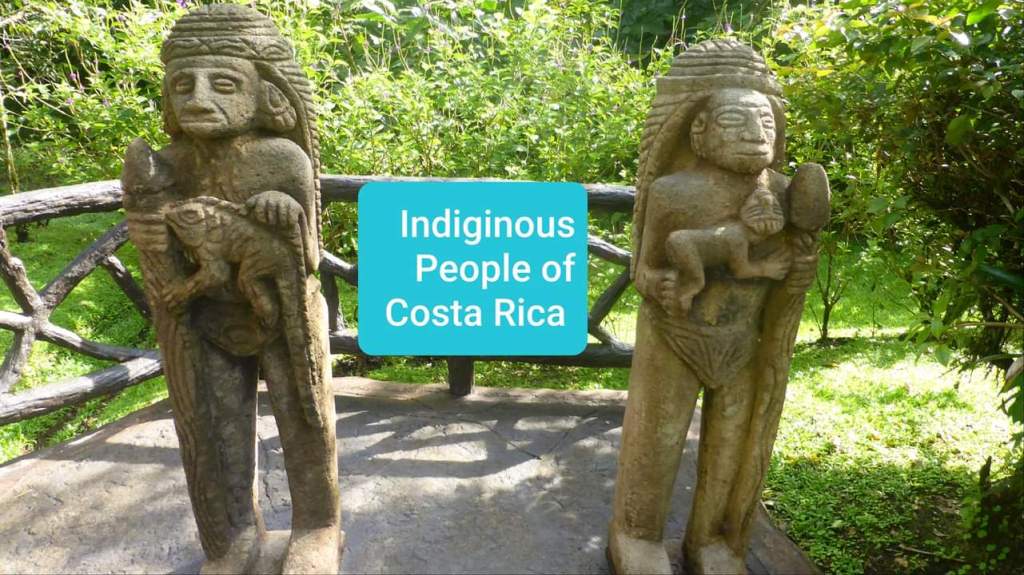
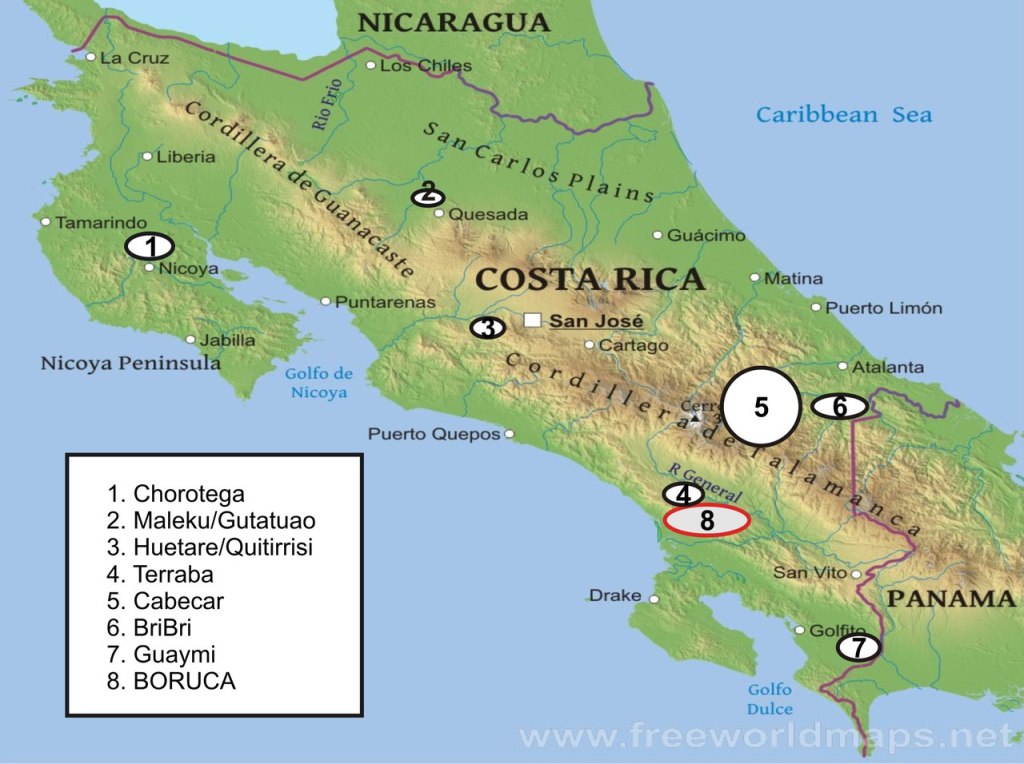
Gabrielle said these statues were in homage to the indigenous people of Costa Rica. Officially there are 8 distinct groups but she thinks it is more correct to think of 7 as the 8th is completely assimilated and has lost its language.
So officially there are the Huetar, Maleku, Bribri, Cabécar, Brunka, Ngäbe, Bröran and Chorotega, and they represent 2.4% of the total population. According to the 2010 National Census, a little over 100,000 people thus self-identify as Indigenous.
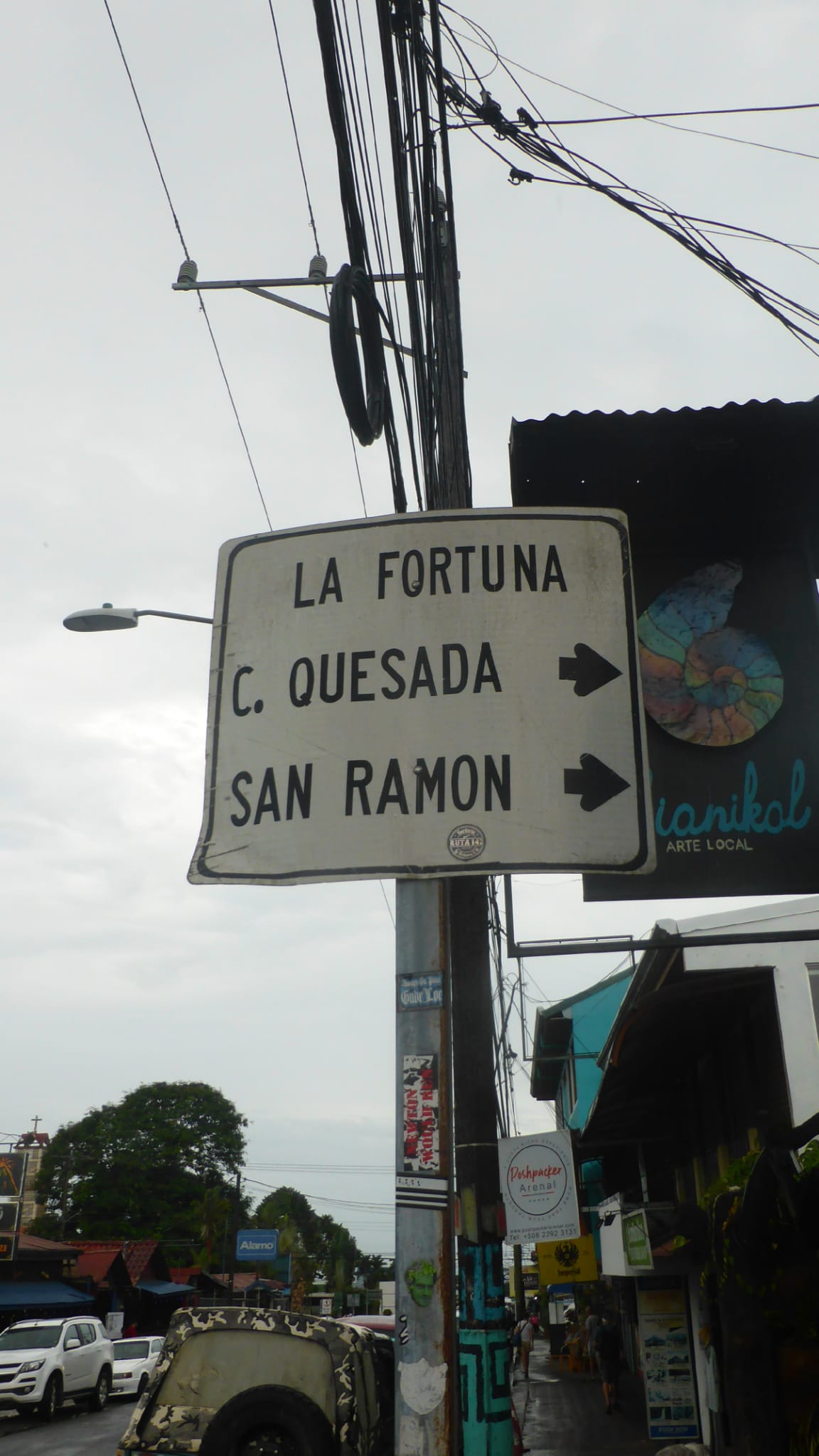
We found out that the mini bus would drop us off at the town of La Fortuna on the way back. So we decided to do that with Joyti and Shish and split the taxi fare on the way back. I think that is the thing that we have missed a bit from this trip, going off the beaten track. Conversely we haven’t had the mishaps and mistakes we have made in the past when we go under our own steam.
We agreed to go our separate ways in La Fortuna and meet later by the town Square park for a taxi.
The town is centred on a beautiful park with colourful gardens and a large church. Arenal Volcano, provides the backdrop and can been seen from almost every vantage point within the town.
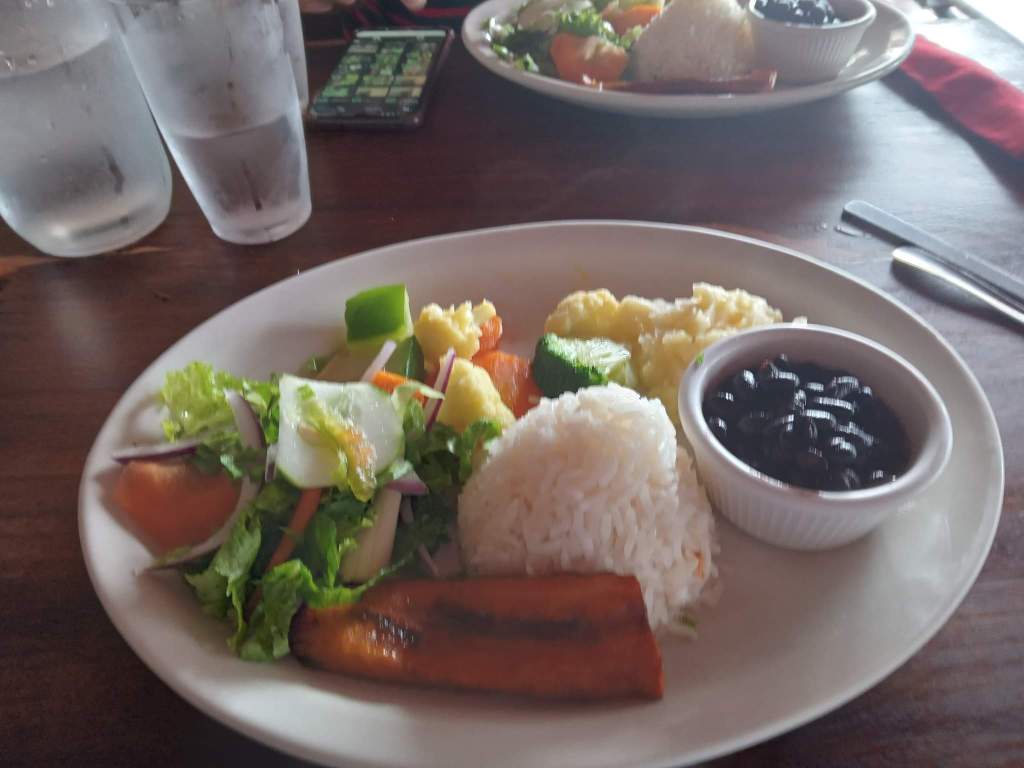
We found somewhere to eat. My rule of thumb is always head to a side street as the food tends to be better and more reasonable. We spotted a family run restaurant which had lots of vegetarian options. We opted for casado.
A casado is a Costa Rican meal using rice, black beans, plantains, salad, a tortilla, and can have meat such as chicken, beef, pork, fish and so on. The term is said to have maybe originated from when restaurant customers asked to be treated as casados, since married men ate such meals at home.
It was funny as when we were leaving Joyti and Shish had sat down to eat – great minds think alike!
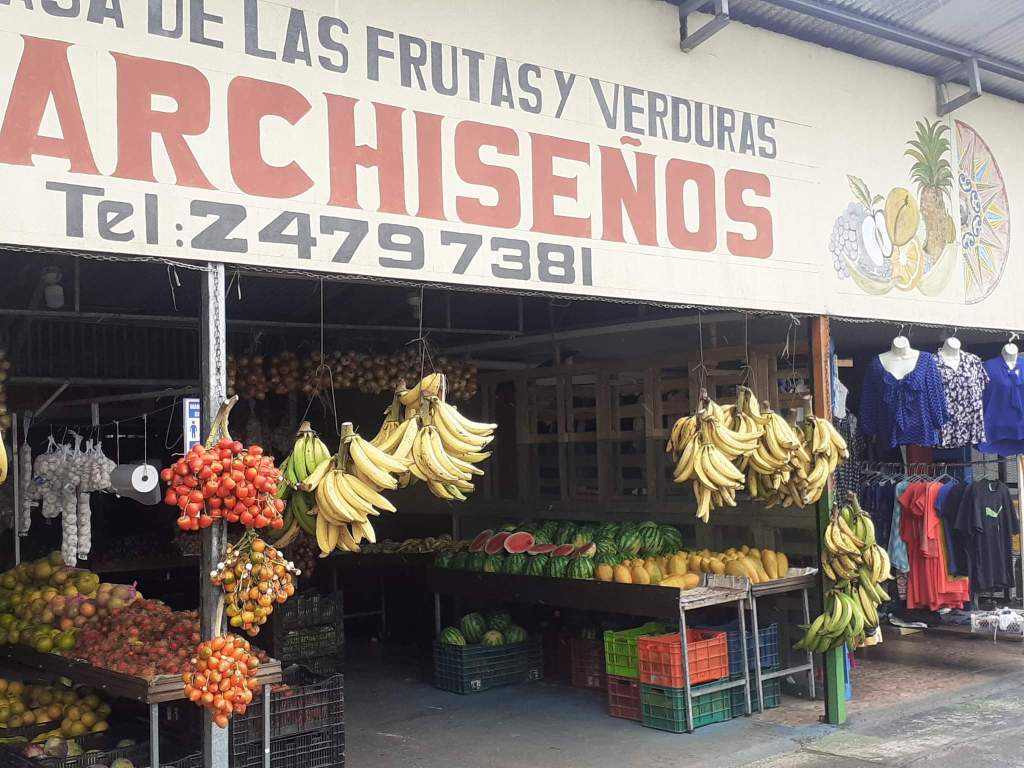
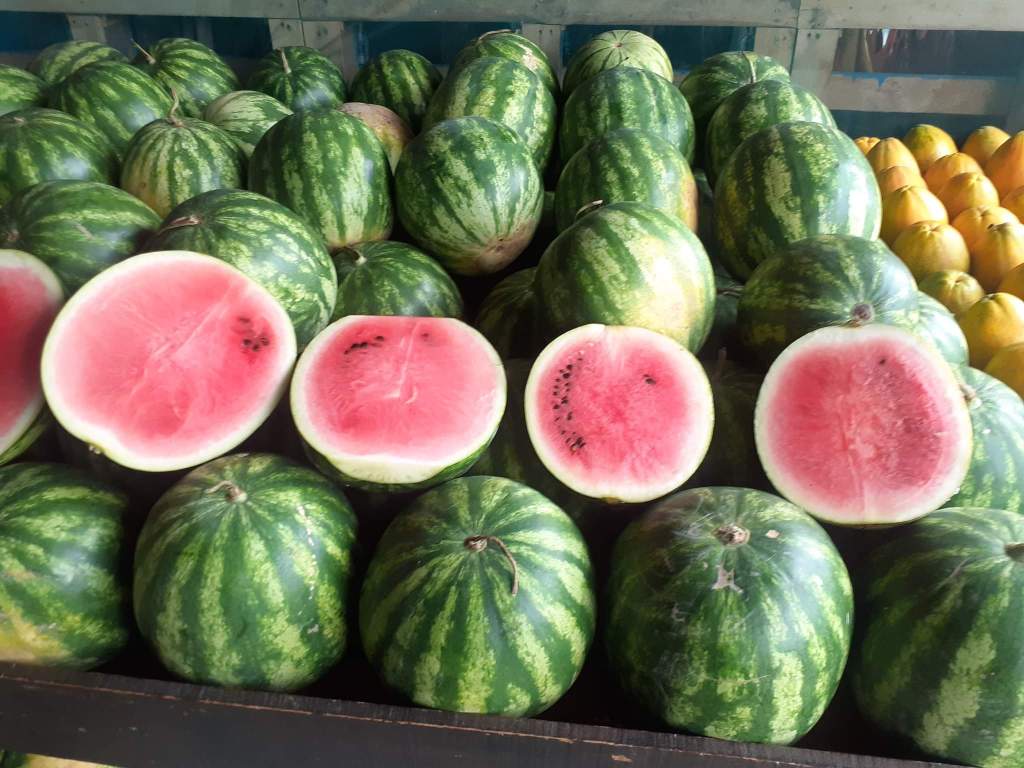
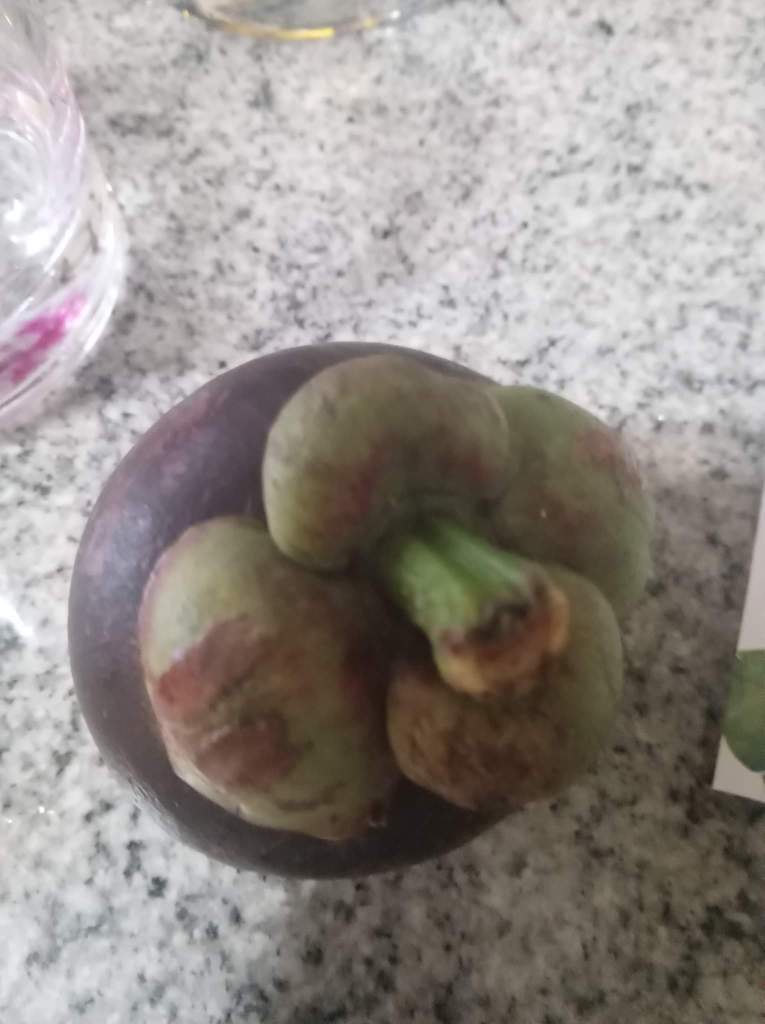
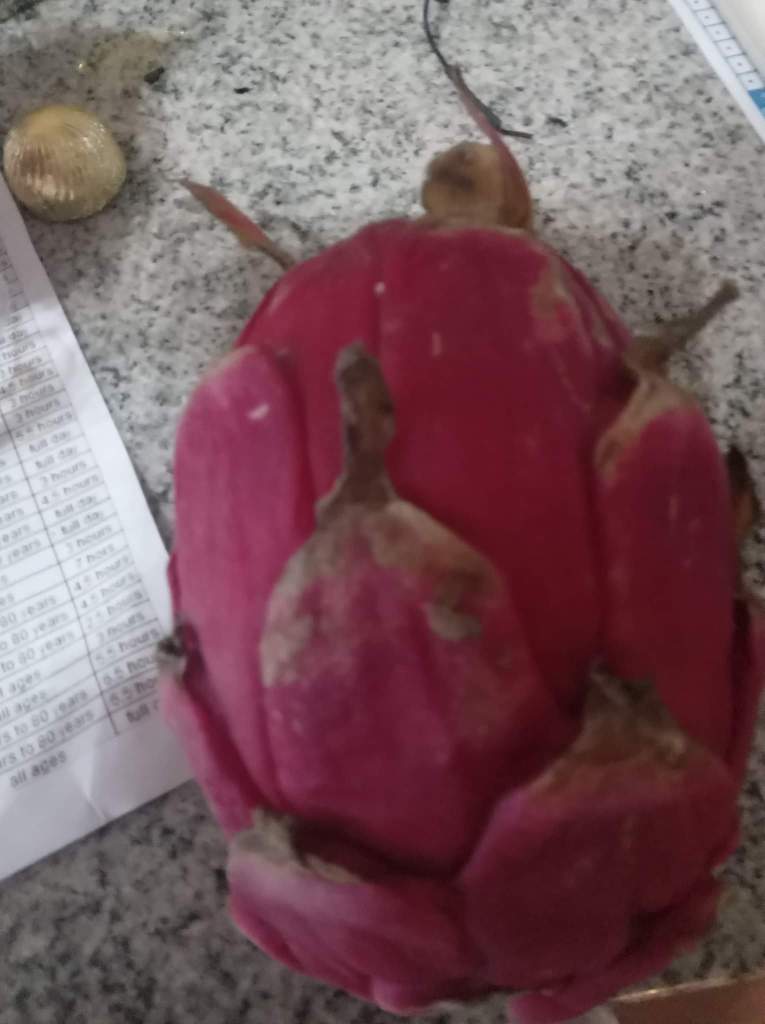
Nearby was a fruit shop so decided to buy things to try out.
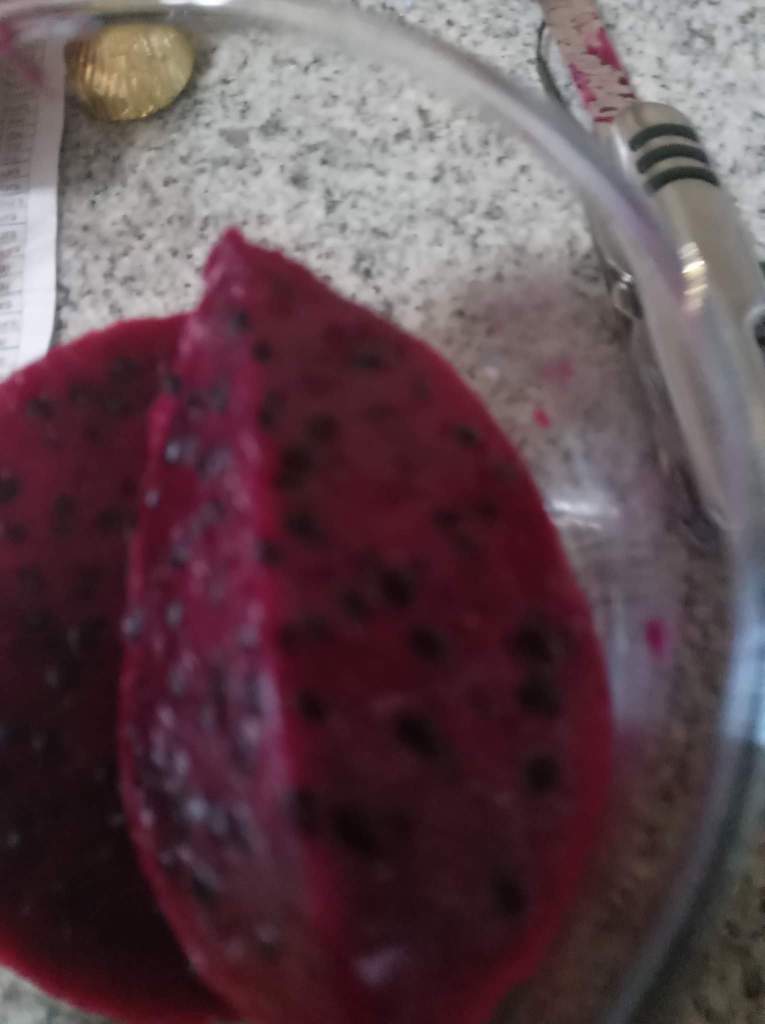
I really liked the mangosteen but didn’t like the dragonfruit – it looks more inviting than it actually is.
We wandered round La Fortuna despite the heavy rain at one point!
The time had come to leave Pachira Lodge. It had been amazing but the next leg of our journey was calling. Thankfully not at an ungodly hour, departure time was 8.30am. It seemed a long time ago that we had arrived and the journey back on the boat seemed to go faster on the way back.
I since found out that the boat transfer was to Cano Blanco pier and that we had travelled along the Parasmina River. It was quite sad today as Julio was very subdued and wasn’t really talking to anyone. I made stories up in my head, maybe he wasn’t looking forward to going home.
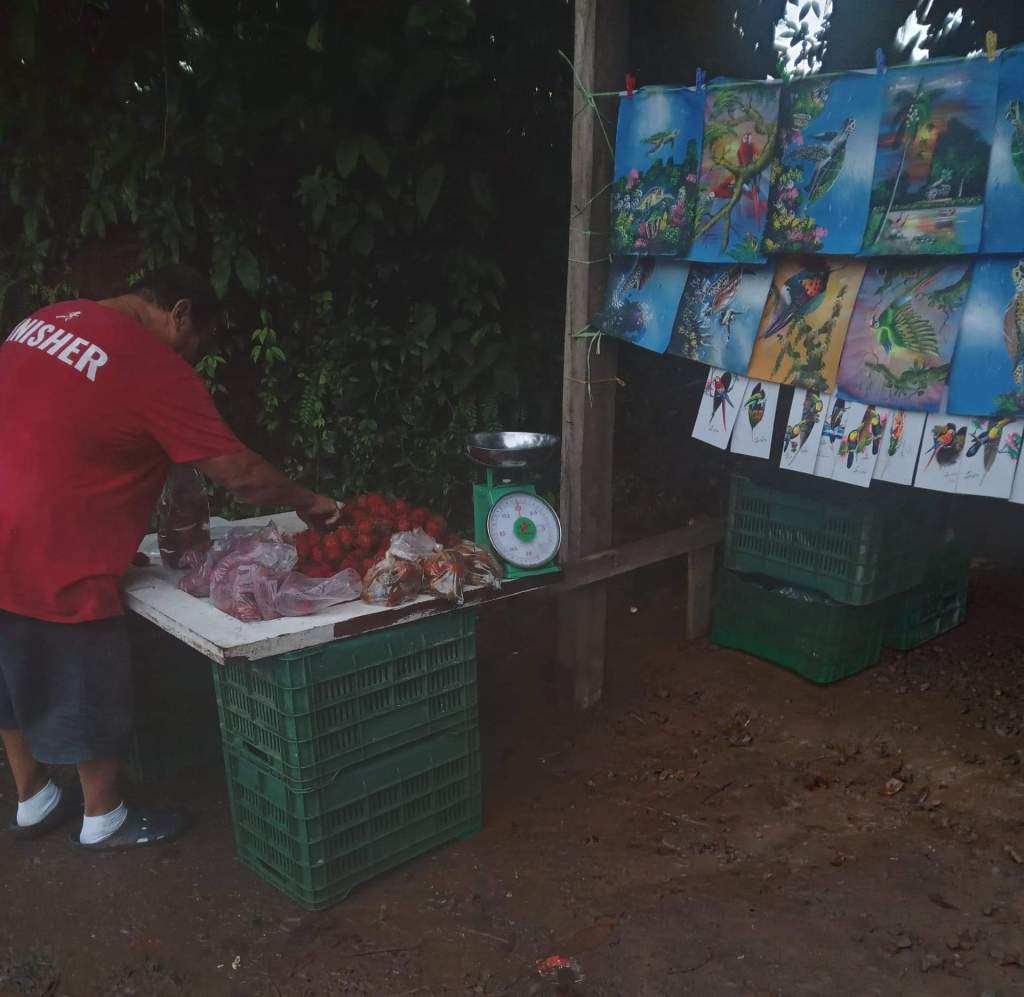
When we arrived the fruit seller and the chicken on skewers sellers were still there selling their wares. The fruit seller had far more variety this time.
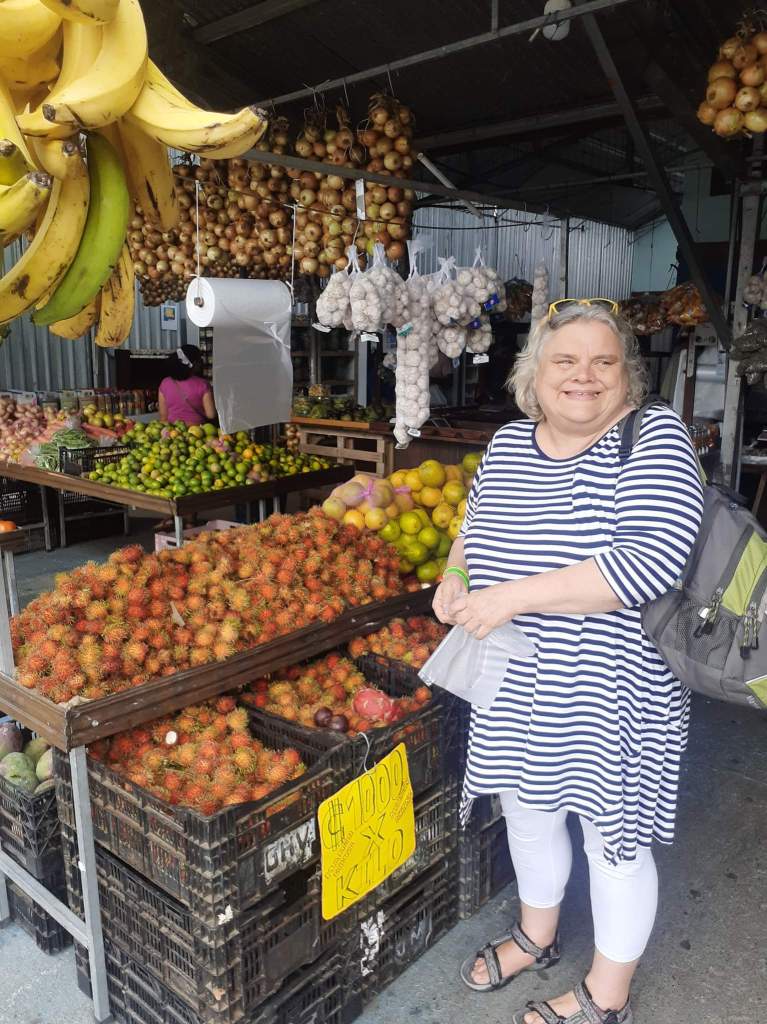
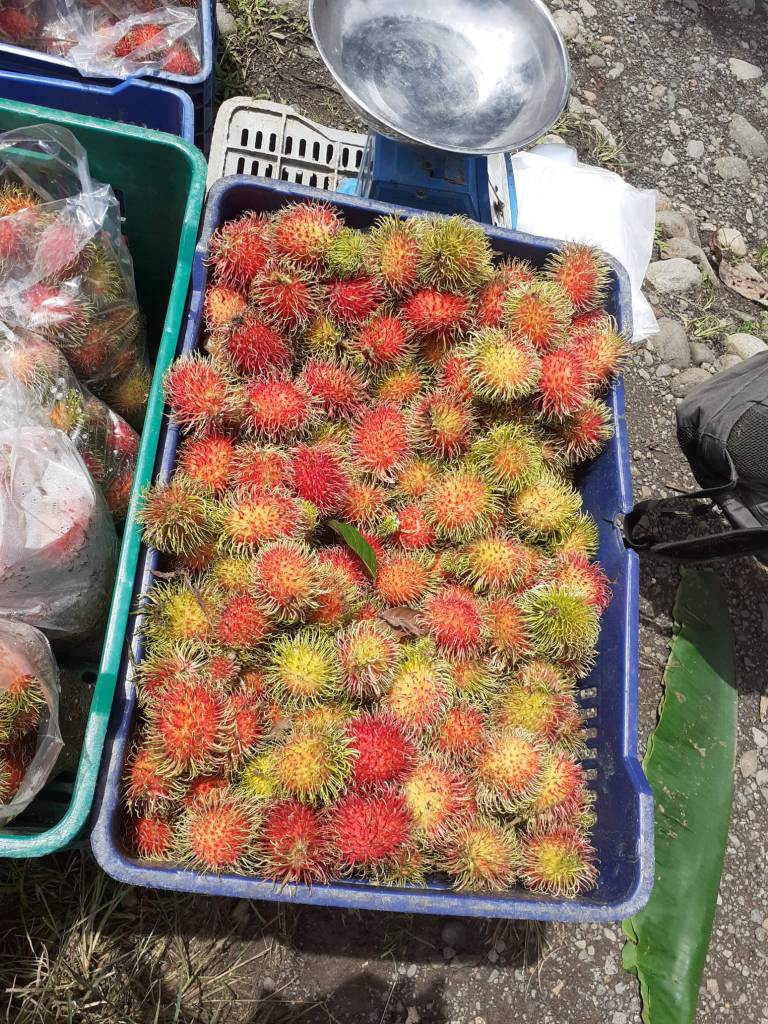
We bought more rambutans – they are delicious and much bigger than the ones you get in the UK. It looked like a tray of sea urchins. In Costa Rica they are called Mamon Chino and it is currently the season for them. Travelling towards Arenal the streets were littered with sellers.
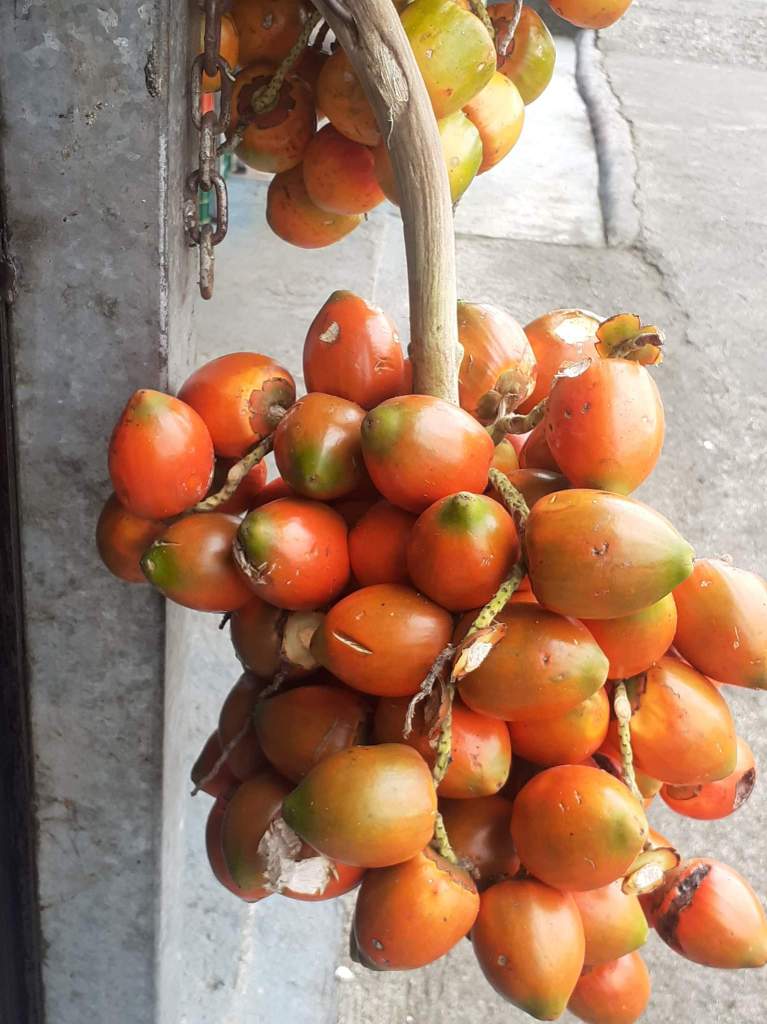
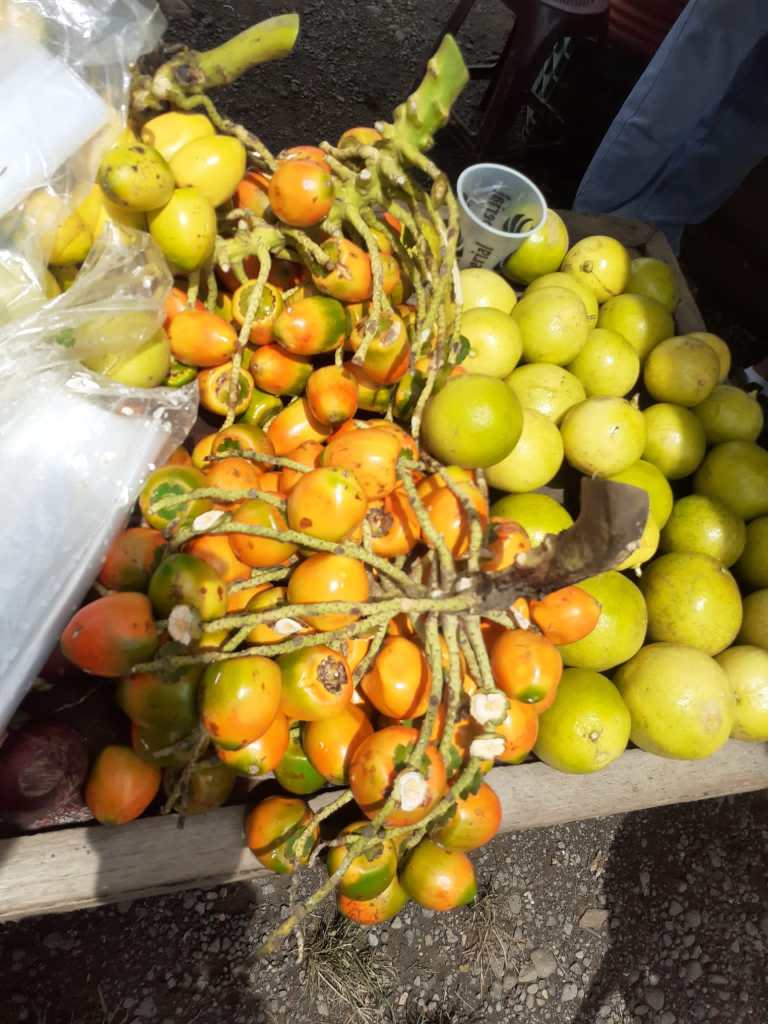
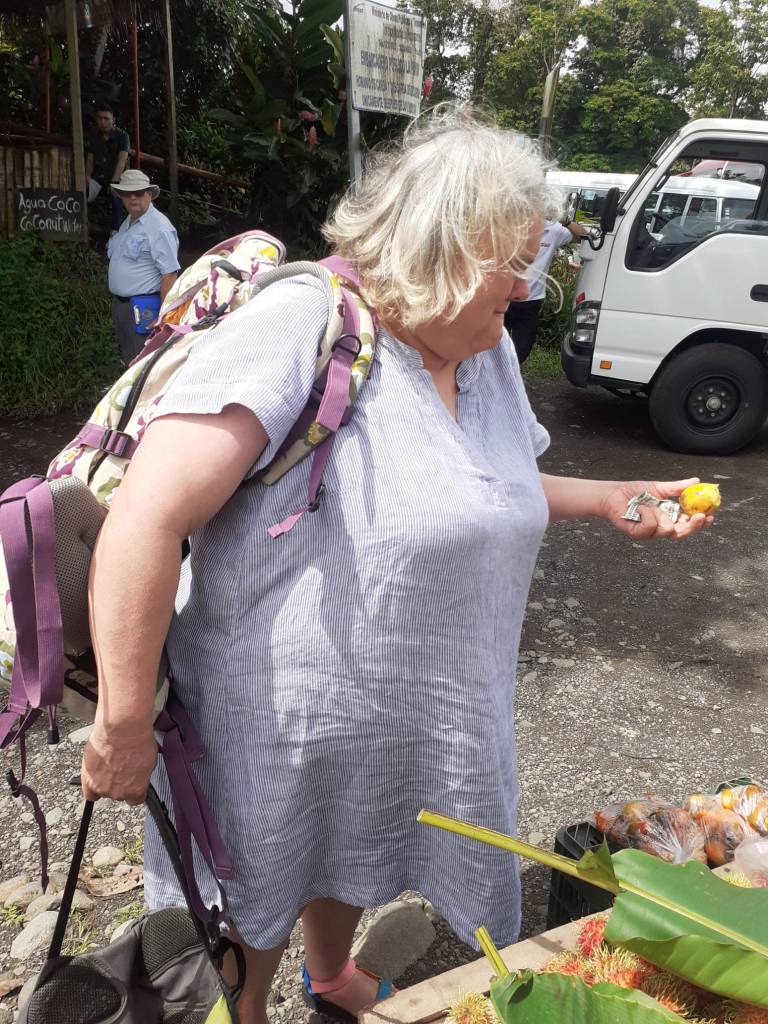
I saw these and was instantly intrigued and wanted to try them. I looked them up later, they were Pejibaye aka Peach Palm Fruit. Pejibaye. are about the size of an apricot or large acorn and grow in clusters in tall palm trees. The man cut one open for me to try , the flesh looked so inviting. However they grated on my teeth as they were so starchy, so much so that I had to spit it out in my hand, desperately looking round where to put it.
Thev
The seller looked shocked that I didn’t like it but subsequently I looked it up and found that it seems used more in savoury recipes.
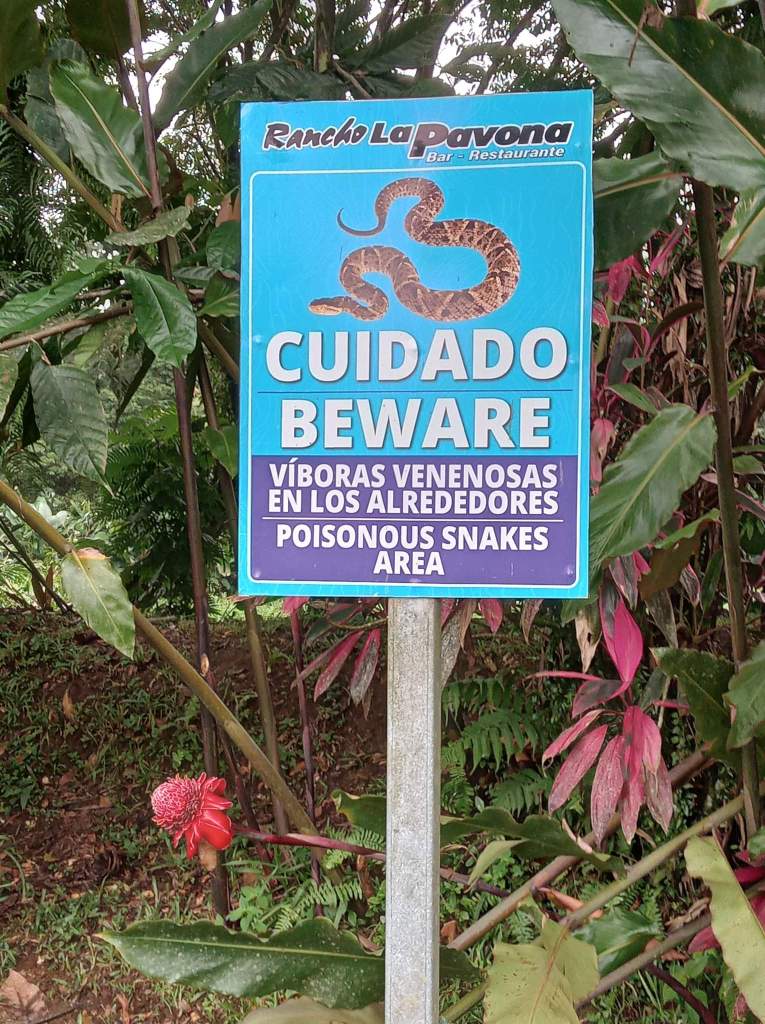
We had to wait here for twenty minutes for the next transfer on a coach. I would have walked around and had an explore but saw this notice and thought better of it. There are 137 species of snakes in Costa Rica but only 22 are venomous – it would be my luck to come across a venomous one!
So I sat whilst Pete explored. There was a little cafe with intricately carved wooden tables and chairs, where I sat in the cool.
The bus arrived and we were taken to the restaurant which we had been to on the way over. We sat with the couple from Winnipeg and Copenhagen, what a difference a few days make. This was the location where people would either be getting their hire cars or getting minibuses etc. Quite a few people were heading to Arenal from the same tour company but getting separate vehicles – which seemed bonkers.
With time to kill wandered round the grounds some more.
We were one of the last ‘groups’ to be picked up. A whole mini bus to ourselves all the way to Arenal.
The journey took two and a half hours, and as we continued to Arenal the scenery changed and so too did the general feel of the places we passed. It very much seemed that the nearer we got to Arenal the more affluent it appeared compared to Tortuguero.
We passed many sugar cane fields. Sufficient rainfall, moderately warm temperatures, and rich soil fed by numerous volcanoes help make Costa Rica sugar cane exceptional. There were even more fields of pineapples as far as the eye could see. Costa Rica is among the world’s largest pineapple producers, supplying fruits to major supermarket chains in Europe, the US and elsewhere, so it’s likely I have tasted pineapples from Costa Rica at some point. However, the difference in taste between what you get here and what you would get from Tesco’s is incomparable. The taste and juiciness is truly luscious here. Apparently the country has seen a 700% growth in pineapple production over the last 15 years and the industry is worth US$ 1.3 billion to the national economy.
We eventually reached our hotel Arenal Springs. What a culture shock!!! As we left the minibus our luggage was put onto a golf cart and we were ushered into the reception. We were directed to wash our hands, then were given a flannel to refresh our faces and finally handed a cocktail. Then driven to our ‘chalet’ – which was a ludicrous short distance away. Passing an ice machine where we could fill our ice bucket.
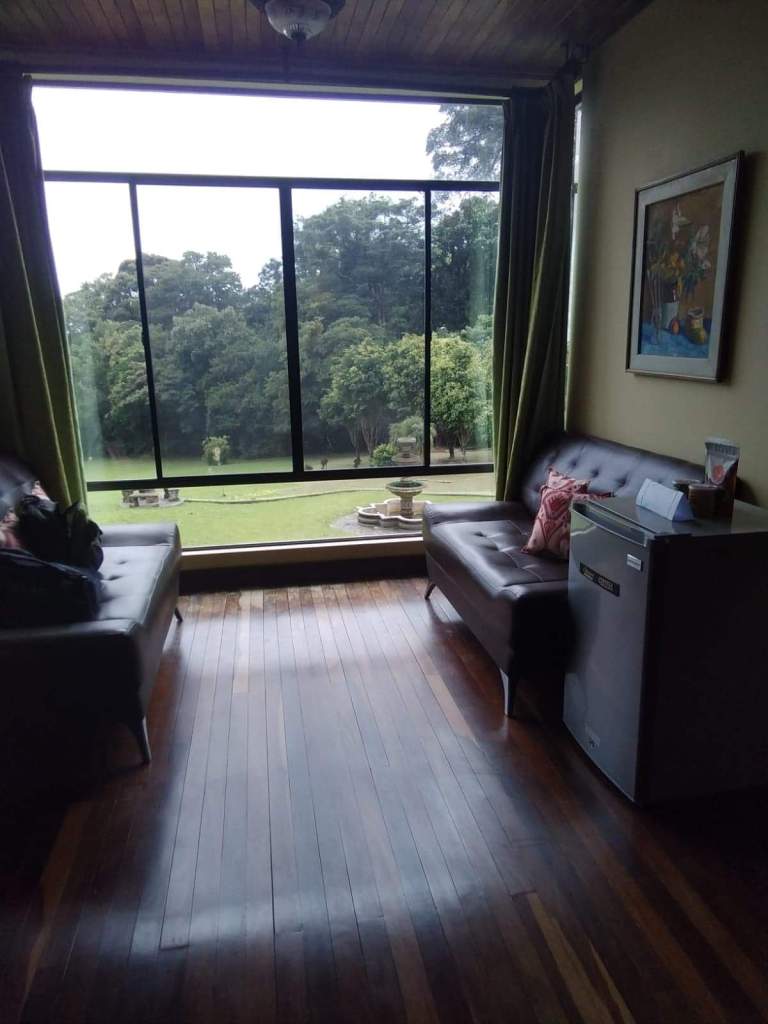
The view was spectacular and took our breath away.
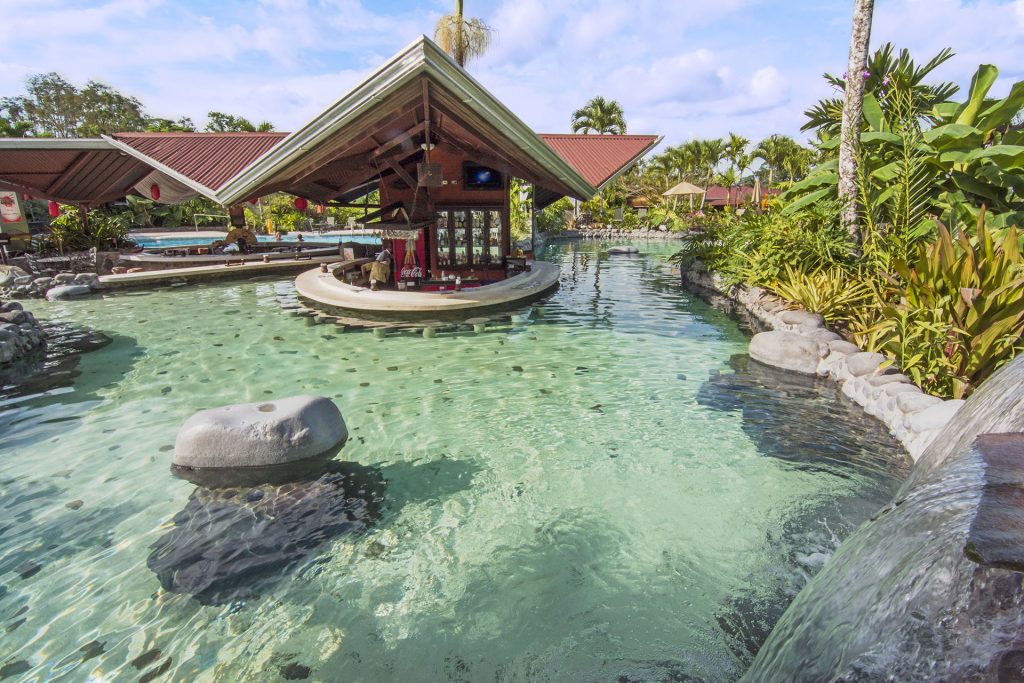
This is the Arenal volcano. Arenal is Costa Rica’s most active volcano, and since 29th July the lava flows have been consistent. Because it is still active there are hot springs across the area and as a result it is a honeypot of various spa resorts. Having been in hot springs in Canada. Japan and Iceland this was on another level.
It was amazing and so relaxing. Various sections with bars and food stations. Had a really good sleep after this.
Today woke quite bleary eyed. We had definitely found out what puts the rain in rainforest. The rain had hammered down all night, peeking through the window I could the water raising up bit by bit. I could now understand why the lodges were on stilts. Never, ever have we seen the deluge of rain before. Pete got very giddy and decided to stand underneath it, looking like a continuous ice bucket challenge.
Under the trees were pools of water in the morning. We spied a blue crab. They burrow into the mud, up to five foot. Dotted around you could see tell tale holes which they quickly scurry into.
After another lovely breakfast before the planned activity which was a nature walk. It was still raining but we were undeterred.
Julio was leading the group. As ever full of information as well as putting the fear of God into us all.
Here he was showing us an ant. He then proceeded to tell us not to put our hands down anywhere, regaling us with a long list of things that could happen to us. Primarily the scourge of the bullet ant. Although nonaggressive, bullet ants will sting when provoked. When one ant stings, it releases chemicals that signal other ants in the vicinity to sting repeatedly. The bullet ant has the most painful sting of any insect, according to the Schmidt Pain Index. The pain is described as blinding, electric pain, comparable to being shot with a gun.
Julio described the time when he was bit and how the pain was unbearable, I promptly kept my arms, hands and everything close to me. Julio then went through everything he had caught, including Dengue fever, which resulted in being wheel chair bound for a few months.
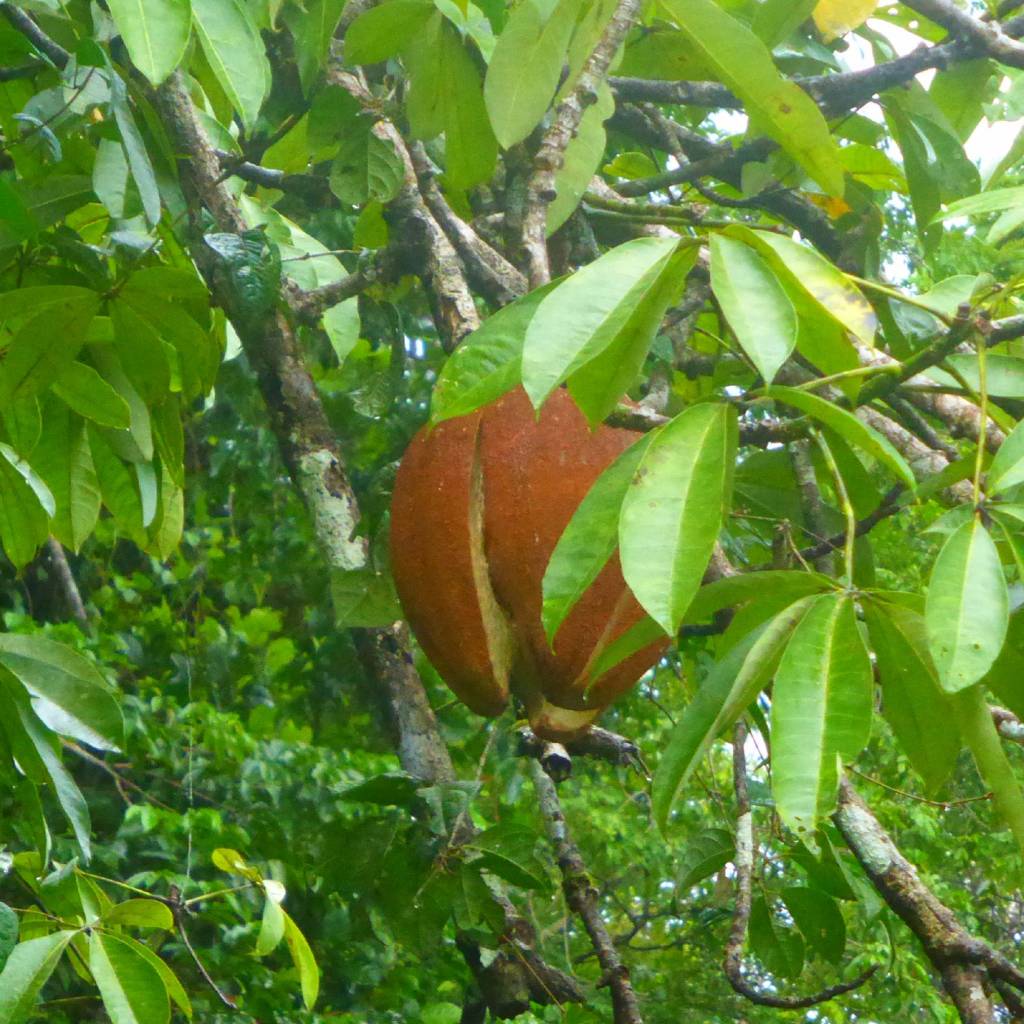
This is the provision fruit from the Pachira tree from which the lodge gets its name.
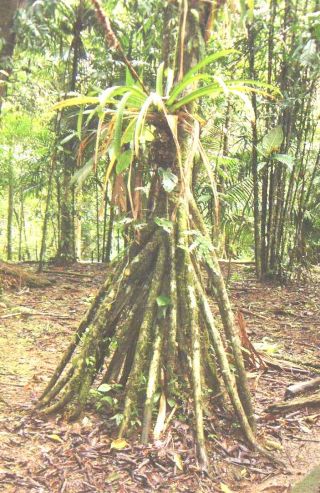
Julio pointed out the Walking Palm(Socratea exorrha), he said like Socrates was known for pacing aroundMany people believe it can literally walk around (more or less). This is because of its unusual root system; while most trees have one trunk, the palm splits into many smaller roots a few feet off the ground, giving it the appearance of many little legs.
The amazing ambulatory ability of the walking tree is a story that apparently many guides tell in Costa Rica. However, our more recent guide, a naturalist called Gabrielle says it is rubbish, it doesn’t walk, it’s roots just move toward the direction of the sun.
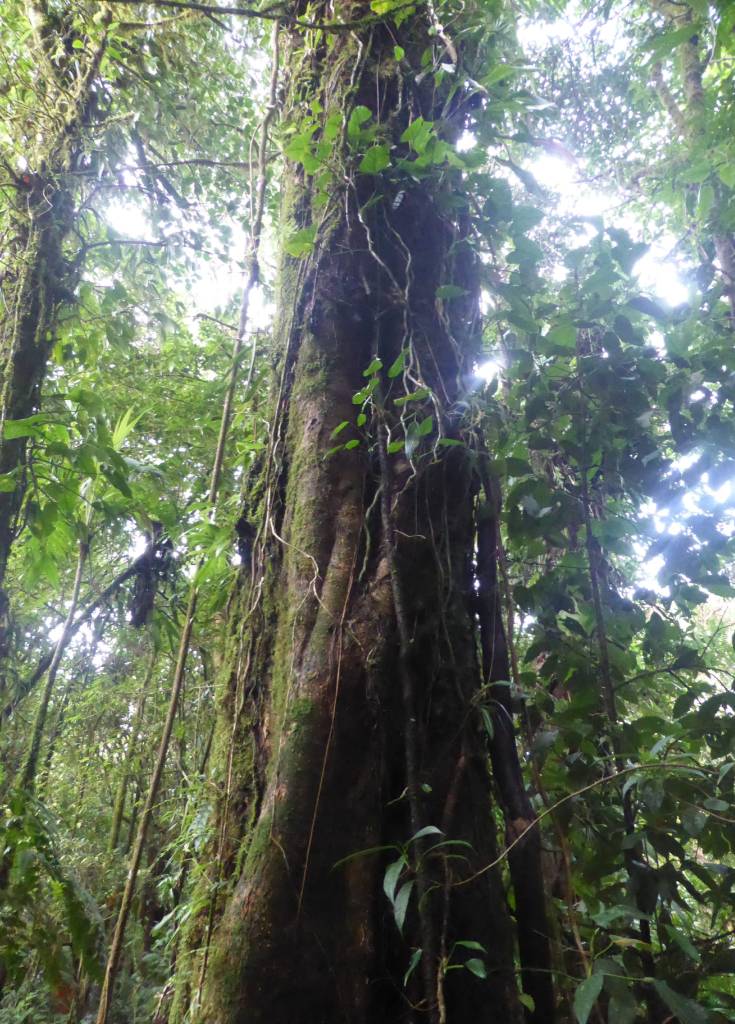
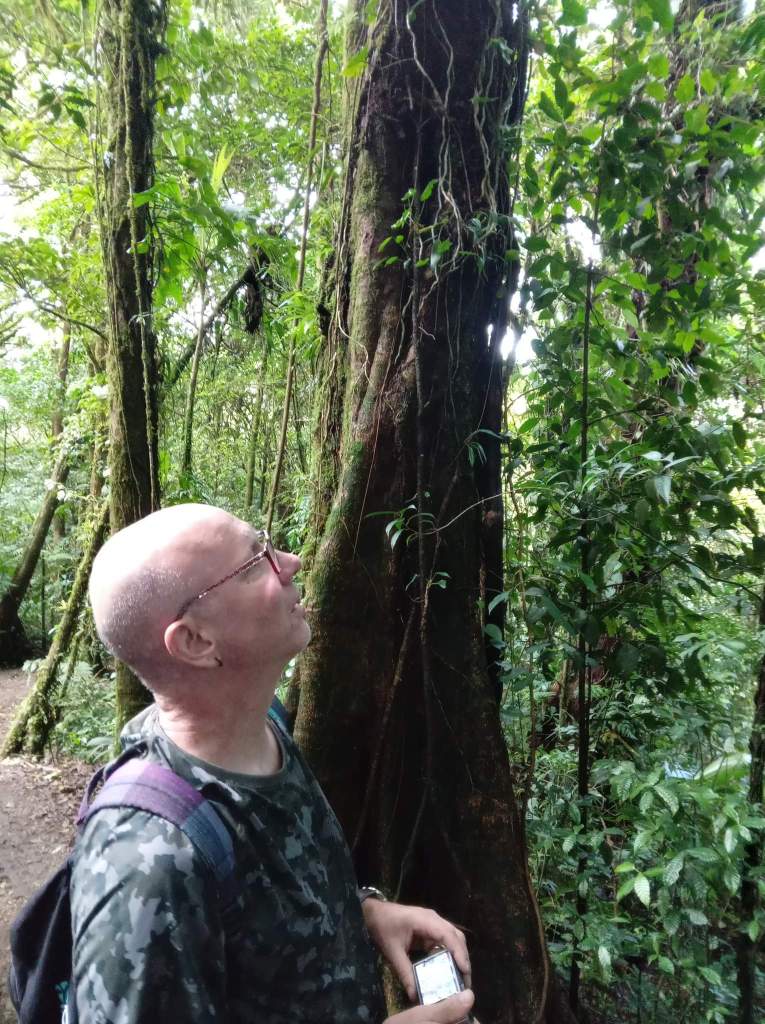
Another thing I found out was that you can guess but you can’t age a tree in the rainforest as it doesn’t have rings. It doesn’t have rings because there isn’t a definite set of seasons, just rainy season and not so rainy season.
It is a shame because there were alot of insects of the biting variety. Pete was getting bitten alive. He now has red constellations of bits across both of legs. Not wanting to be rude we stayed listening as intently as we could muster but should have just headed back to the lodge.
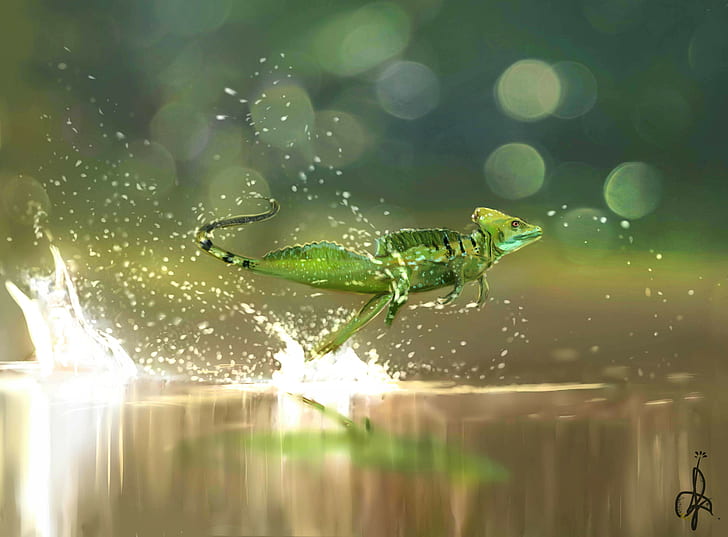
I forgot that we saw a basilisk lizard the previous day. Julio says they are called Jesus Christ lizard in Costa Rica as they walk on water. When frightened by a predator’s approach the lizard will drop to the water and run across the surface. There is a great deal of physics as to why they can walk on water.
Obviously, this is not a photograph taken by me. The one we saw was happy laying on a leaf.
In the lodge we had breakfast, lunch and dinner, all buffet style – which I prefer. We had to sit with the same people throughout, which was fine as they were all lovely.
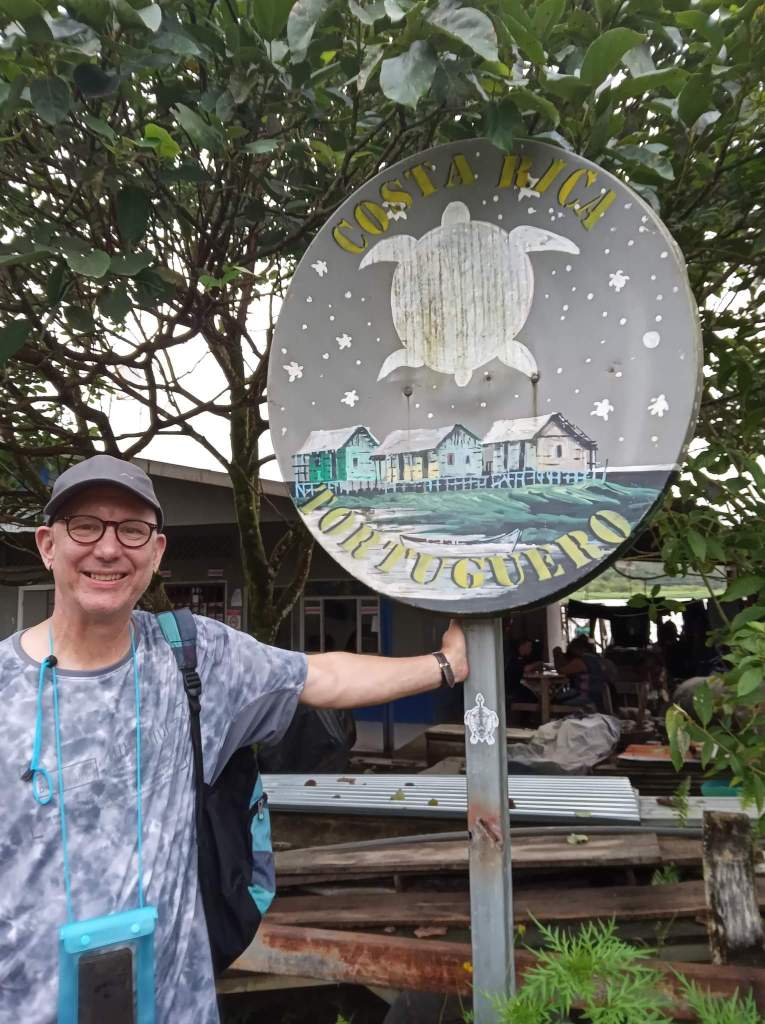
The next planned activity was to visit Tortuguero village,Tortuguero meaning turtle catcher. You can walk around without any worries about cars. The paths in the village wind through lush greenery and past wooden houses on stilts with corrugated iron roofs. We walked via the beach.
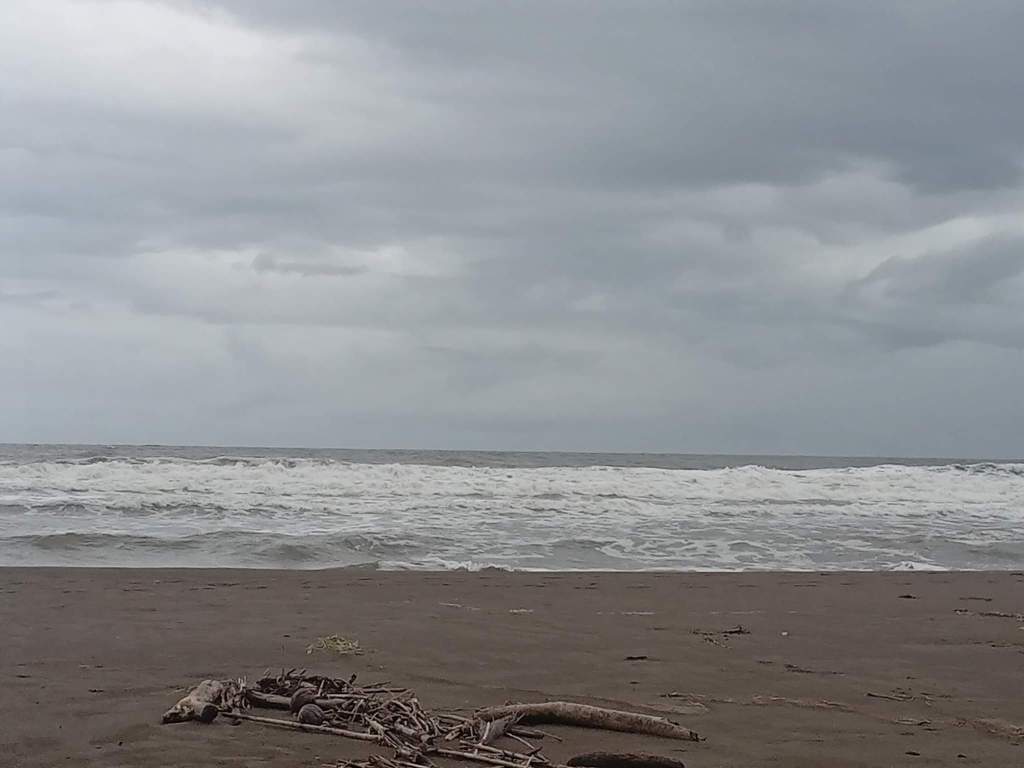
This is the Carribbean Sea. The name “Caribbean” is derived from the Caribs, one of the dominant American Indian groups in the region at the time of European contact during the late 15th century. Again thank you Julio, but please less talking!!!
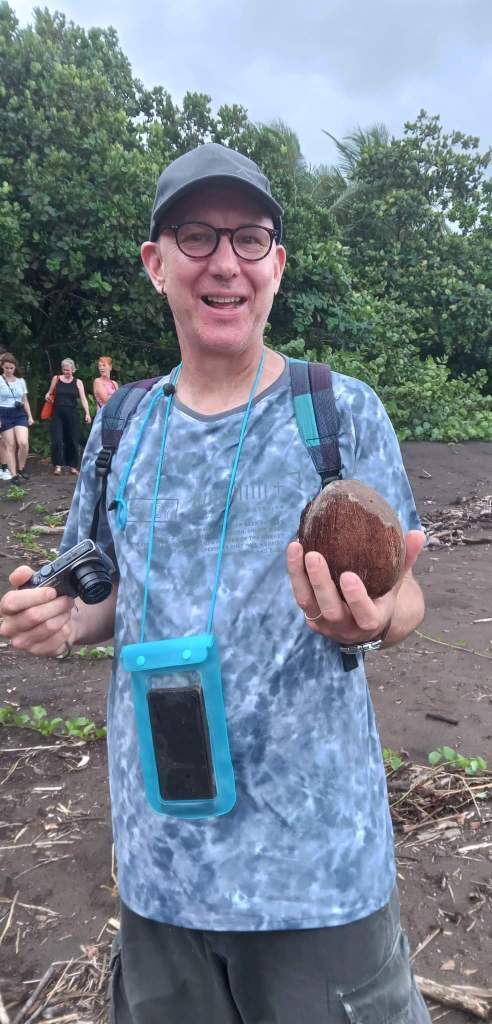
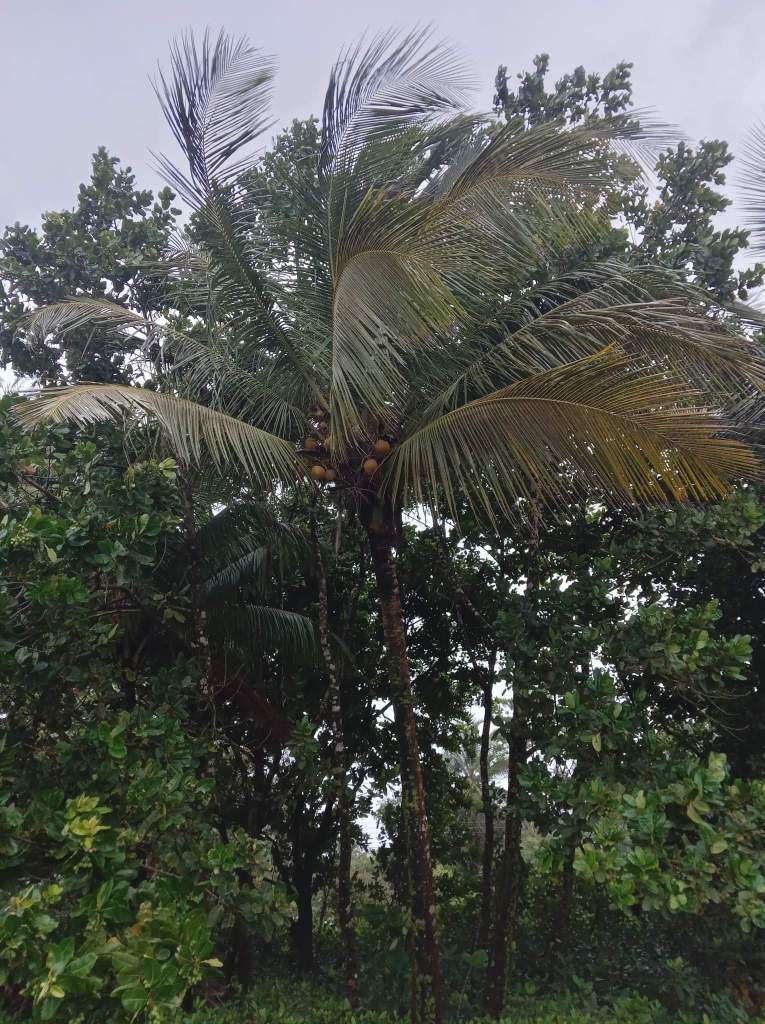
The beach was littered with coconuts that had fallen from the nearby trees,which added to the tropical feel of the place.
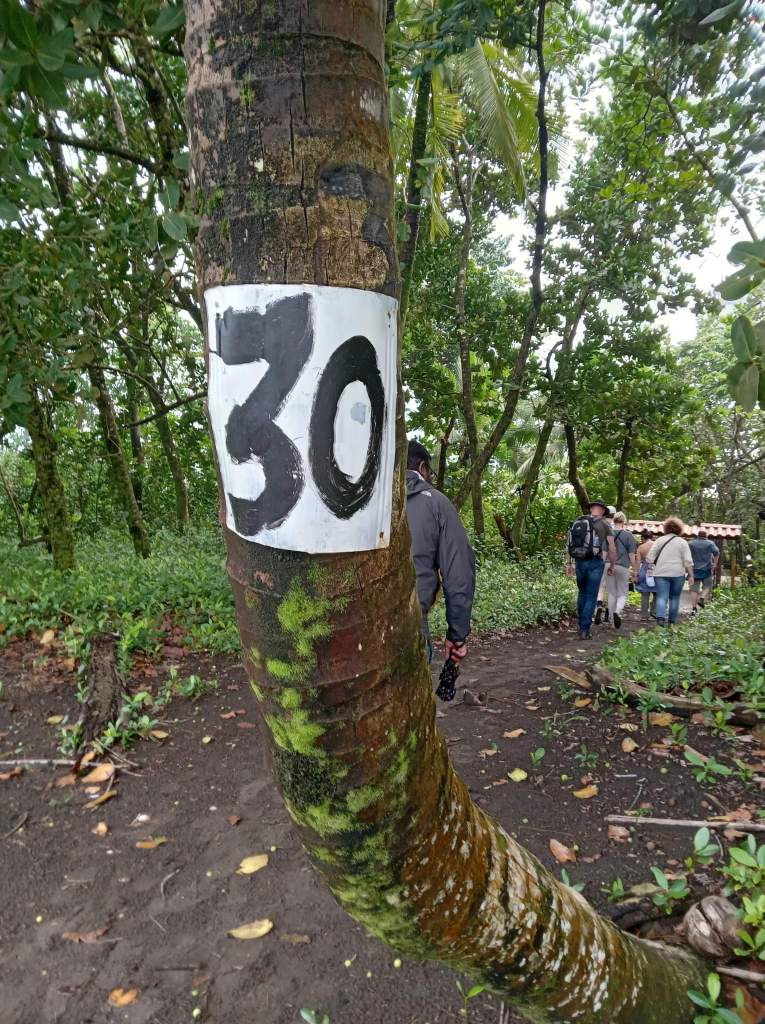
The We left the beach and followed the path to the village. I noticed numbers on the trees as we walked down the path. I would later find out that these numbers were linked to the night time turtle spotting. The beach was split from 1 -60 sections.
Suddenly the group came to a standstill. Someone had spotted a sloth up above in the trees.
It is there somewhere but as with everything so far on this trip you need to have good eyes!
Julio’s parting shot was to be careful of the coconut juice sellers. One particular one rips tourists off and when challenged waves his machete indiscriminately. Beware said Julio he comes across as lovely but I have seen him use his machete to strike things around him!
Sure enough as we rounded the corner a wild eyed man with a trolley full of coconuts and a machete in hand could be seen. We walked swiftly by and into the colourful village.
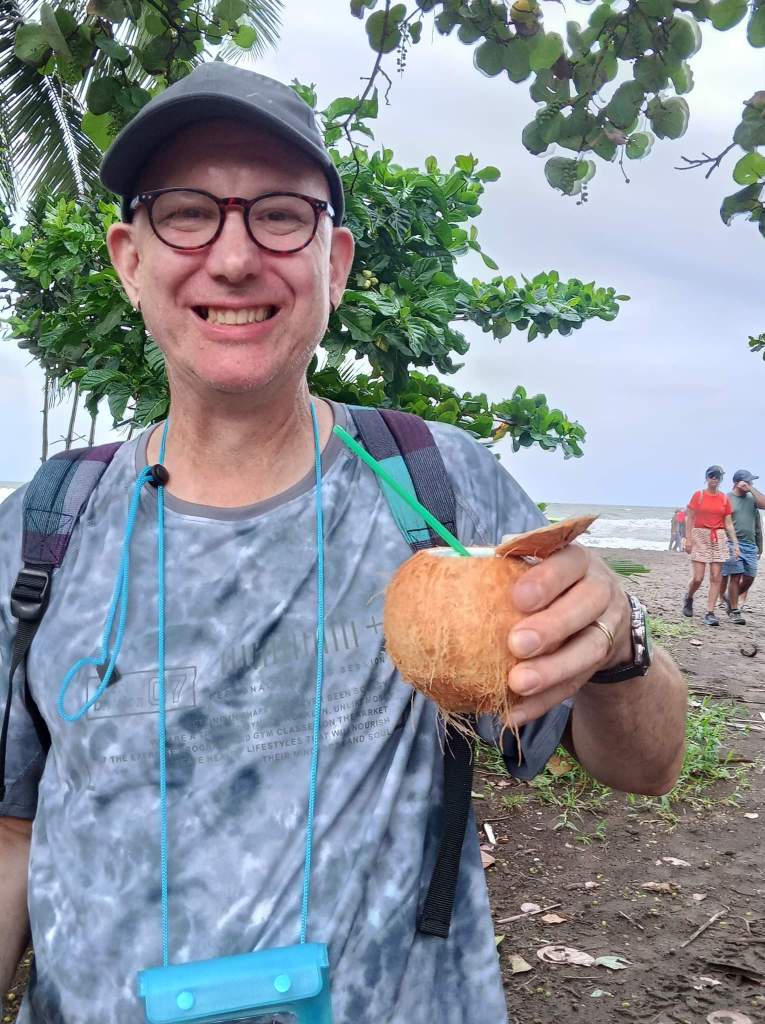
Pete was very excited when we stopped by another coconut juice seller as he has always wanted to drink coconut juice after someone had sliced the top of it. The machete must have been really sharp as it sliced through the coconut like butter.
So much to see, I just went round snapping everything.
A very colourful and vibrant community on a small strip of land that depend on tourism to make ends meet.
Popped to a cafe by the waterfront to be greeted by hellos from the corner. We had bumped into Sheesh and Joyti (we had met in San Jose). Had a pleasant chat and compared notes ,- they were doing similar trips like us so we were sure our paths would meet sooner or later.
They had done the turtle watching the night before. Just like the couple from Winnipeg, Samantha and Haneep, when they talked about their evening you could tell from their faces that they had experienced a once in a lifetime experience.
We had to go to the lodge reception to find out what time slot we had been given to the turtle watching. It would be either 8 or 10. I was hoping it would be 8 as the one at 10 returned after midnight.
Much relieved to be on the 8 pm slot. There were a number of provisos, we had to wear dark clothes and shoes. Having only brought sandals I wore black flight socks. The rain was torrential and my worry was it would be cancelled. Julio dismissed this, the turtles come from the water, what do they care!
Crossing the canal to the Tortuguero side in the dark was really exciting. It was only in the dark that I could see other lodges because of their lights, during the day they are neatly nestled within the trees and can’t be seen. Our tour guide would be Henry. We immediately warned to Henry, knowledgeable but succinct. He led us to a station. For this part we could wear head torches as it was pitch black. The station had three other groups made up of 10 people and a guide. As we made our way there we passed a couple a what I assume were special police. The whole process is monitored and regulated.
We would be led to the beach only when a guide who works for the government spotted a turtle. At that point we would follow Henry who could only use a small red light to direct us. We could not use any head torches etc. If the turtles saw any lights they would get confused and would head back to the sea – breaking the cycle of their egg laying.
We waited and waited at the station with no guarantee of seeing anything. The excitement was palpable and everyone talked in hushed tones.
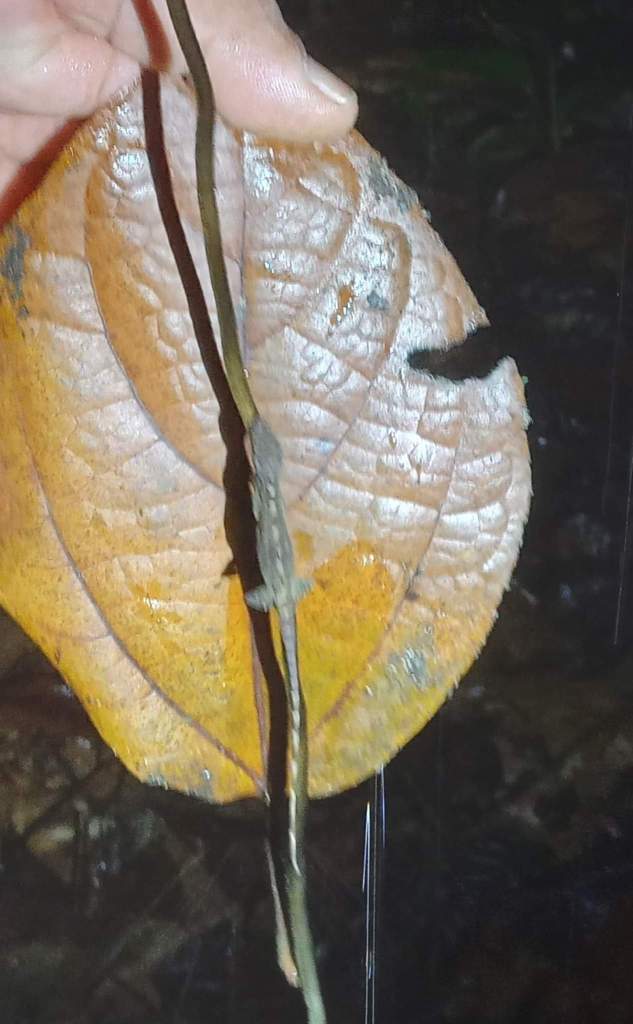
Spotted this cute little lizard while waiting.
Henry had been radioed. It was all hands on deck as we quietly and uniformly followed him to the beach. So dark as the night was cloudy.
A few feet away from the green turtle Henry asked us to huddle round. ” Right,” he whispered, ” these are your friends, you will need to get very close now, five of you will need to crouch and five of you will need to come closer above them. When I saw move. You move as one.” The call was somehow given, not by walky talky but by some sort of instinct between the guides.
As one we moved. Henry pointed for me to crouch, I was literally less than 10 centimetres from the green turtle as it lay it’s eggs. It was unbelievable watching the turtle laying these perfect golf ball eggs, one after another into the hole it had dug with it flippers. We watched silently as the turtle then began use its flippers to cover the eggs.
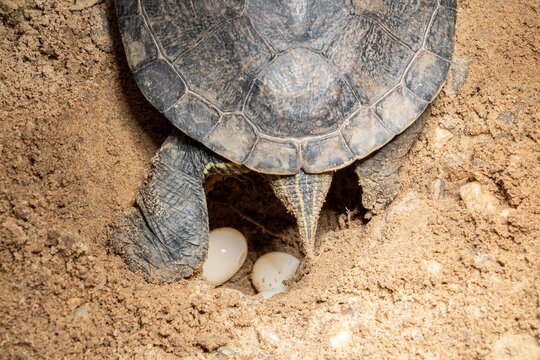
This is just a stock image as we couldn’t understandably take photographs. On that night there were more eggs in the hole as she was coming to the end of laying her eggs, there were around 50 plus eggs. The turtle itself was massive although Henry said it was relatively young as it was only about 40 years old! When the turtles are laying eggs they go into a trance like state , which they must not be disturbed from, this would risk them abandoning their eggs. That’s why we all had to be positioned behind the turtle.
Henry said that the turtle will come to the beach up the four times every two weeks during this period. Initially laying up to 120 eggs and with each visit it lessens. They come to this beach every two years to go through this life cycle. Henry said that out of 1000 eggs only one will survive, he explained that if any more survived it would harm the balance of nature. Pete later found out that the eggs at the bottom of the next become male turtles and the ones at the top female, of it could be the other way round!
As well as the green turtle the giant leatherback, hawksbill, and loggerhead turtles also nest at Tortuguero. The green turtle population is believed to have come perilously close to extinction in the 1960s when nearly every female turtle arriving to nest in Tortuguero was taken for the export market for turtle soup. The picture now is far more positive as this is a sanctuary for all turtles and closely regulated.
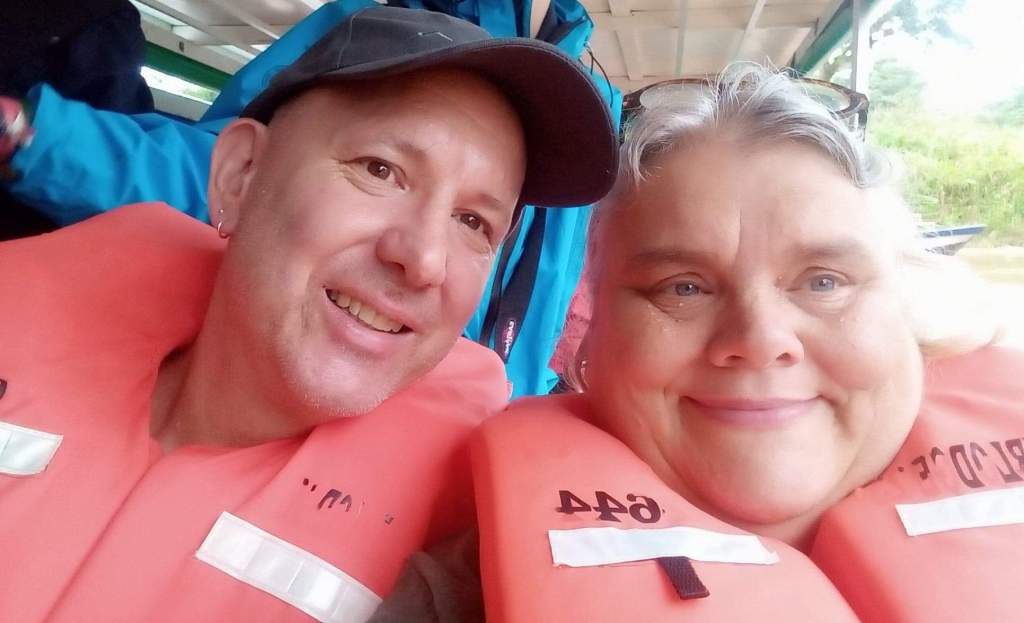
On the boat trip back we just couldn’t believe what we had seen. Utterly amazing!
We finally arrived at Pachira Lodge, which Julio was at pains to stress was not a hotel but a lodge. To us it seemed like a hotel. We were greeted by a Shirley Temple mocktail, refreshing, gingery and very welcome after the journey. Set in 35 acres it was located 5 minutes by boat from the entrance to the lush Tortuguero National Park.
We were not allowed to go to our rooms but had to have dinner. That was quite a performance, getting the numbers and dynamics right. On reflection although initially it was a bit of a faff it did mean that for the rest of our stay we had really lovely table companions; a couple from Winnipeg and a mother and daughter from Copenhagen.
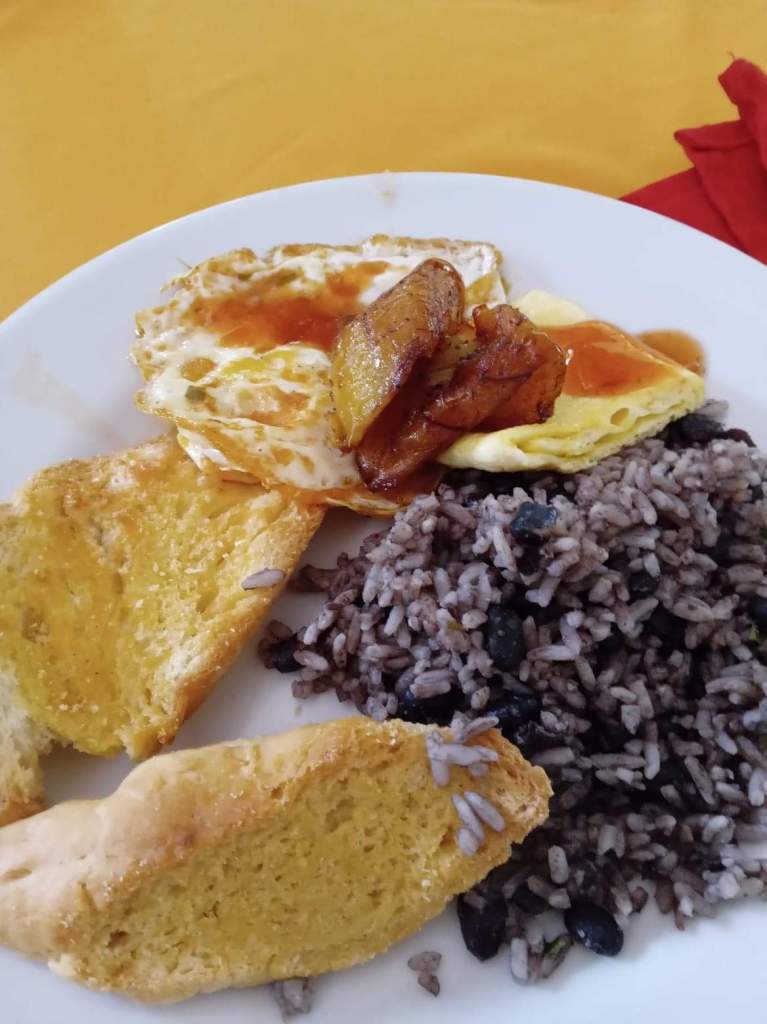
The food was delicious, lots of fruit and vegetables, with the staple of rice and beans. It has been a case of beans, bean and more beans. Rice and beans, known as Gallo Pinto is the national dish of Costa Rica, although Nicaragua also claims it as theirs.
Eventually we were allowed to go to our rooms and we were certainly not disappointed.
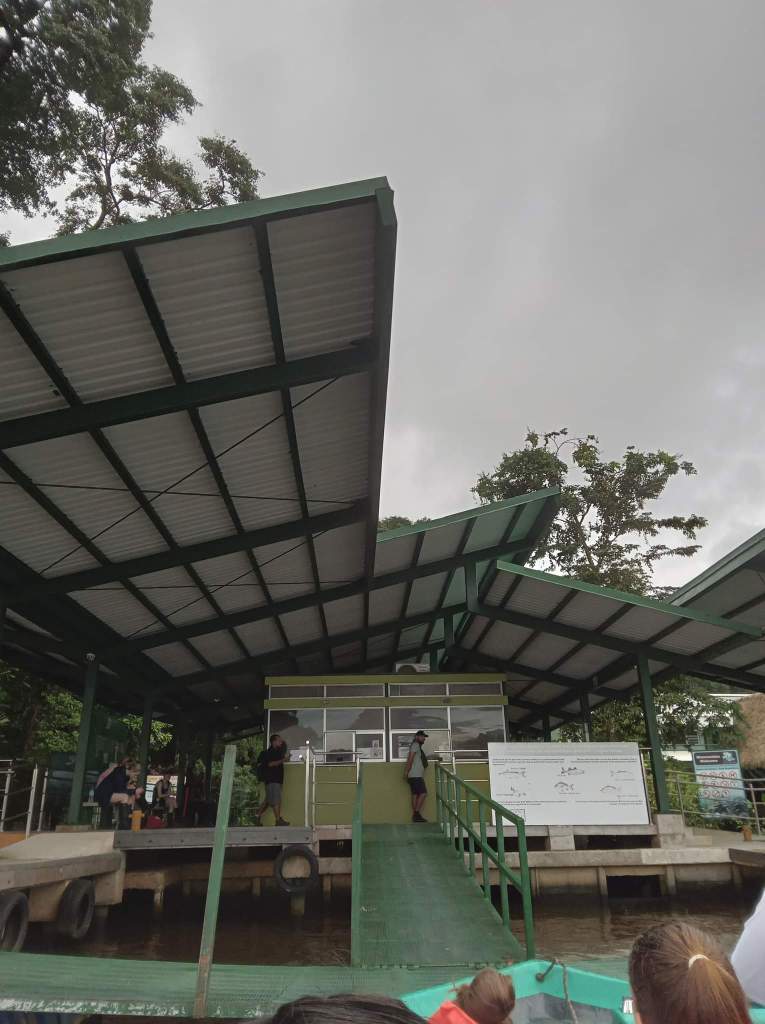
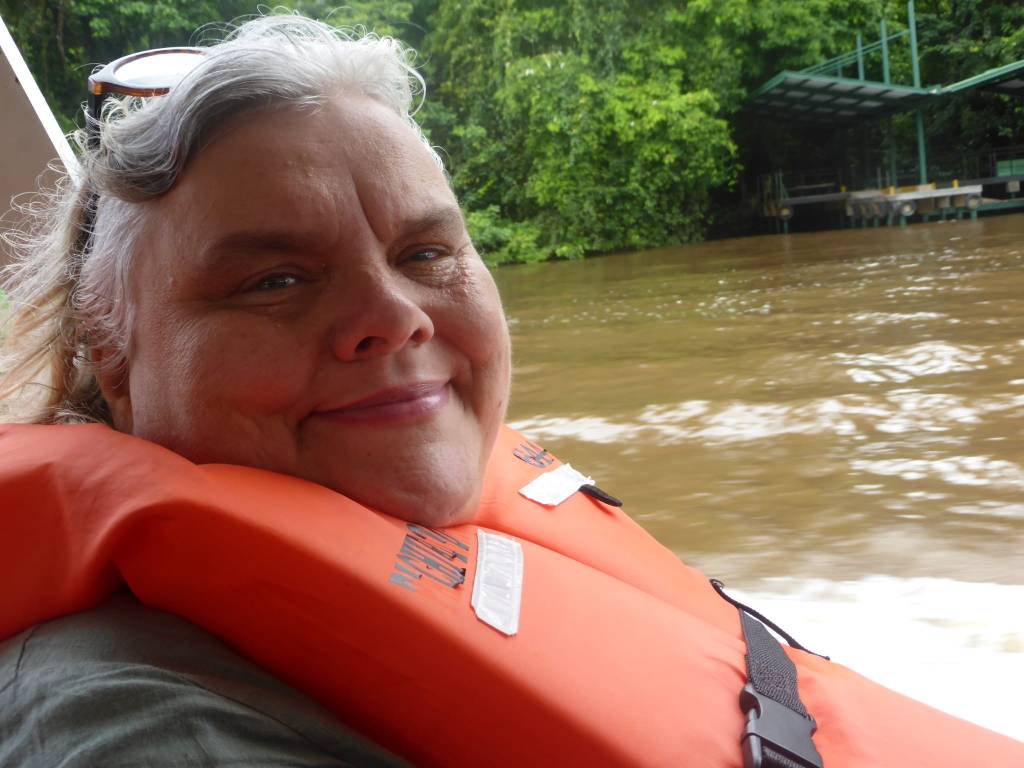
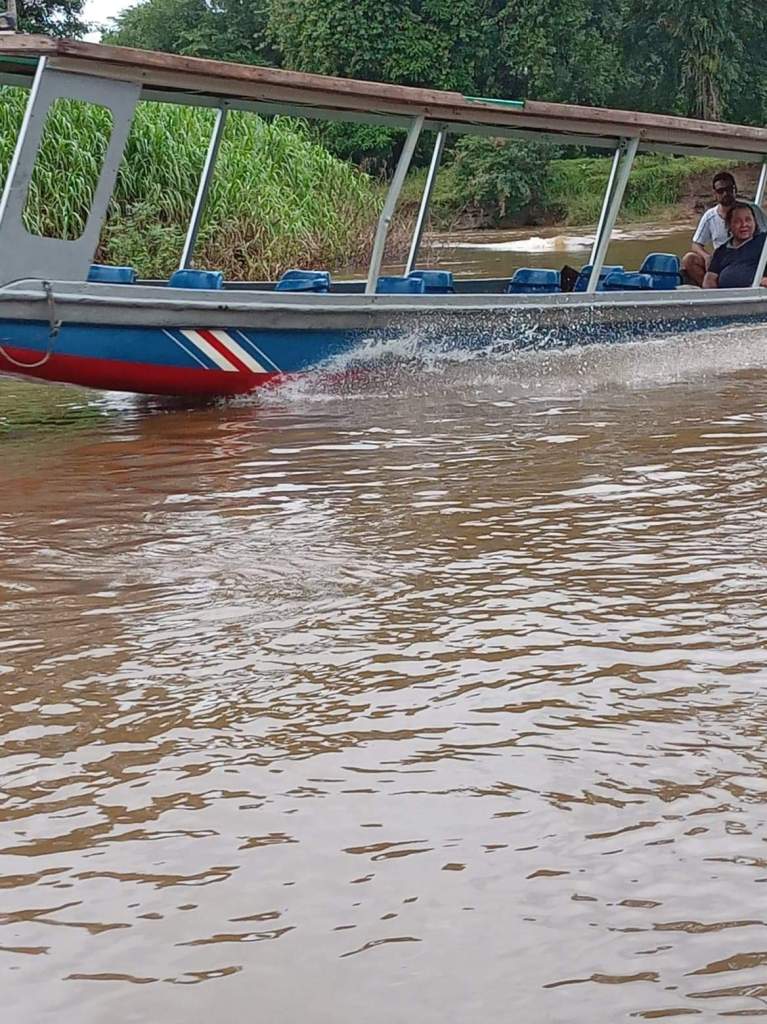
After a short break we headed off for a boat trip, on a very small boat with a few other people to explore the national park via the network of canals and waterways which criss cross it. The small open boats provided better visibility to be able to navigate the narrower waterways and go deeper into the park.
It was good to know how regulated this is. Every member of the group had to have been authorised prior to the visit by the government. Prior to going into the park we had to go to a building next to the canal for the final go ahead. Numbers are regulated and speed etc.
Julio explained that only 2% of the rainforest is allowed to be accessed and the rest is off limits.
It is an area rich in biodiversity. As of mid-2017 an area in the southern part of the park has been closed indefinitely to protect endangered Jaguar habitat.
We saw three types of monkeys, but as they are quite fast paced we didn’t get photographs. We have found having a guide has been utterly brilliant as they know all the signs to watch out for. A slight rustling in the trees, being able to pick out creatures so well camouflaged against the verdant hues of green.
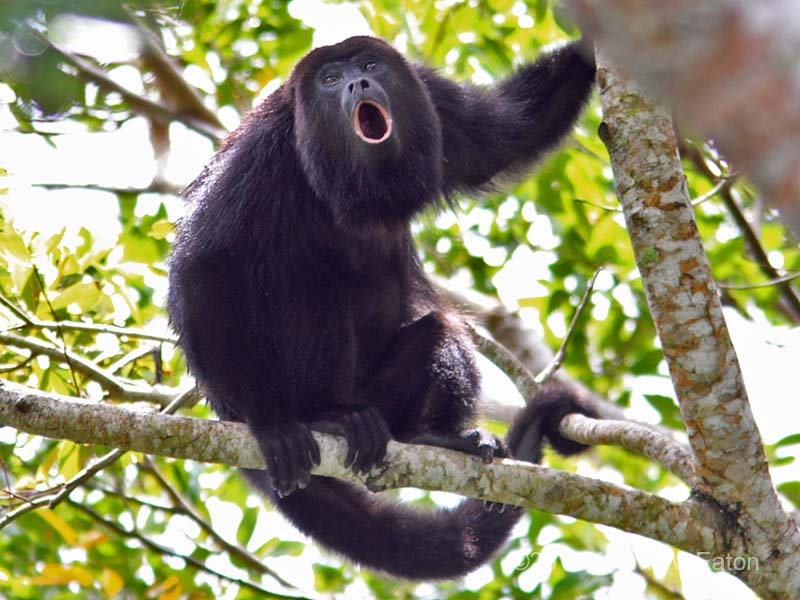
The howler monkey with their loud howls, which can travel more than one mile through dense rain forest, produced with a special bone in their throat which amplifies their calls. Howler monkeys usually do this in the morning and at the end of the day, so as it was mid afternoon we didn’t hear them but luckily we got to see them.
We saw the White Faced Capuchin, Julio was very animated about these, wanting to know what sex they were and a bit deflated I sensed when someone guessed correctly that they were male as have white testicles.
No wonder we couldn’t capture them can move very quickly between the branches of the trees in their habitat. The fastest recorded speed of these monkeys is 34 mph. These are known to be one of the cleverest species of monkey.They are known to use tools in different ways, from getting food to beating snakes to protect themselves or release an infant. They also rub their bodies against certain plants, the purpose of this could be to deter parasites or get the benefit of the anti-inflammatory agent from these plants.
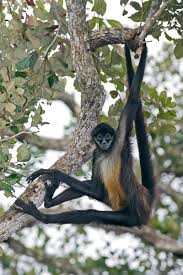
The last species of monkeys we saw were the spider monkeys and my particular favourite.
They just looked so gangly as they moved from tree to tree. Julio pointed out that they don’t have thumbs. Their genus name is Ateles, which means “imperfect.” This refers to the fact that they don’t have thumbs but to me they looked perfect!
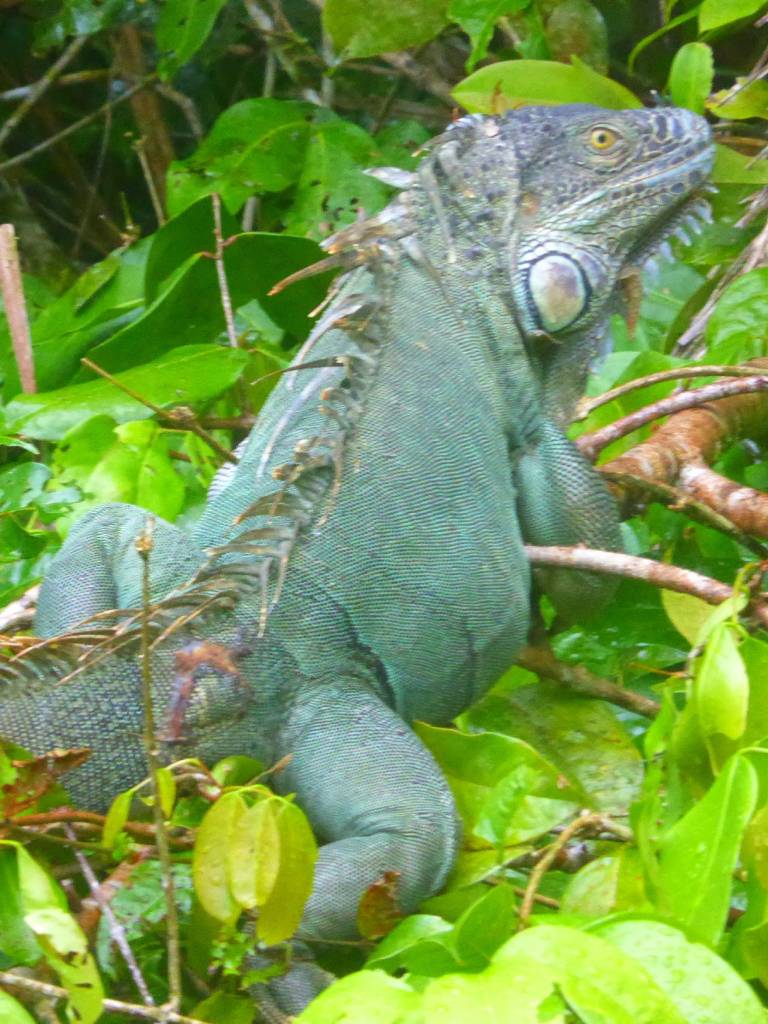
Pete was the official photographer for this part of the trip and took some really good ones, especially of iguanas. We saw some huge ones. Julio said that when he was little he would go out with his father, grandfather and uncles hunting and these would be a staple for them. What did it taste like I asked. ‘Like chicken’ replied Julio, the stock answer for all unknown meat, even in the rainforest.
In the small boats we were able .to get into some really smalls places which at first seemed inaccessible. It was amazing and luckily it didn’t rain!
We had a swim later in the lodge pool and there was a downpour but as it’s warm it felt really invigorating.
We knew it was the rainy season with the area having an average 512 mm of precipitation during July. During the night we felt that the whole 512mm had come down.
Had another fantastic, flavoursome meal.
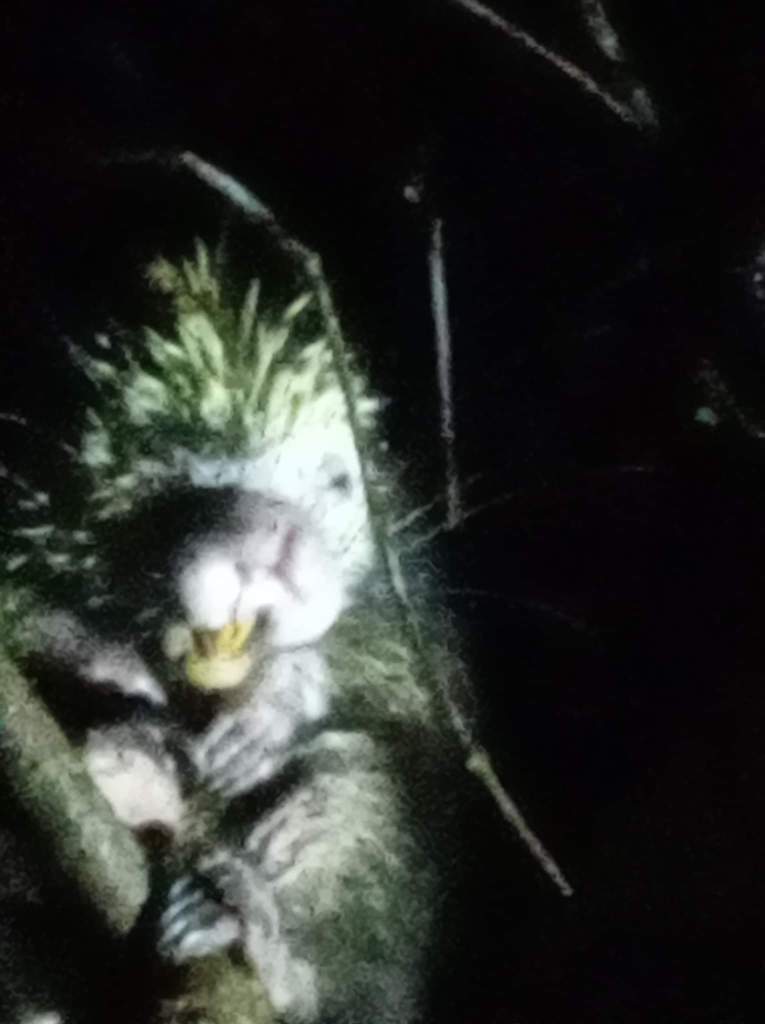
Despite the rain we decided to go to the bar that evening and I was really glad we did. The bartender came over to us to say that there was a porcupine walking behind the bar. It looked so cute toddling down the path. We quietly followed it as it climbed a tree and went to sleep in its branches.
Not the best photo but you can see it’s big yellow teeth.It started to clap vigorously at us so left it alone as thought it was a defence mechanism. Julio said we were really lucky to have seen one.
Only our first full day and this really is just a small amount of what we have seen.
Well getting up and ready for 5.30am seemed huge the night before especially as we were both tired. However, as Costa Rica is 7 hours behind the UK our body clocks are completely off kilter. So wide awake at 2am we sat up in bed watching the distant electrical storms.
This doesn’t do justice to the dramatic splendour of it.
We met a couple from Nottingham on the way to the pick up point in the centre of San Jose. They were from Nottingham. The man introduced himself as Shish, as in the kebab he said. Pete said he was Pete and I was Donna, as in the kebab. A bonding experience.
Much of today has been about transferring from one type of vehicle to the next. Firstly we were picked up from the hotel by Ricardo.
Ricardo spoke English and was very obliging in pointing things out about Costa Rica in general and also things we passed.
We anticipated that it would be deadly quiet travelling at that time in the morning but as Ricardo explained it was actually rush hour. The place was alive with throngs of people. He explained that half the population of Costa Rica live in and around the city of San Jose. Costa Rica has 287 cars per 1000 of the population, making it one of the lowest globally. Probably helped by the very comprehensive and affordable transport system. It also has the highest number of electric cars per head of population for a South American Country.
You could tell that in the way Ricardo recounted things that he was very proud of his country and their stance on attempting to keep as much of it intact. Roughly 28%of Costa Rica is reserved for national parks and reserved land. Costa Rica accounts for only 0.03 percent of the earth’s surface (has only 51.100km2). However it contains nearly 6 percent of the world’s biodiversity.
Ricardo dropped us off and we got on this bus, meeting our tour guide for the next few days, Julio. Julio’s English and breadth of knowledge proved to be fantastic. At turns stern didactic and funny. We felt like we were on a grown up school trip. Passing anything Julio would recount statistics, stories and opinions – very much rooted in his love of nature and belief in conservation.
We passed orange rivers full of sulphur drawn from the volcanic soils higher up – completely toxic stated Julio, no fish, utterly poisonous. This tree is called this, that tree is called that, one thing quickly spiralling into another in an exhaustive but spellbinding litany of information.
We stopped at a restaurant on the outskirts of Guapiles, where Julio informed he came from. As it was now around 8am it was time for breakfast, although the Bueno Vista hotel had also given us a pack up of fruit, cake and yoghurt, so it ended up being quite a breakfast experience.
It it
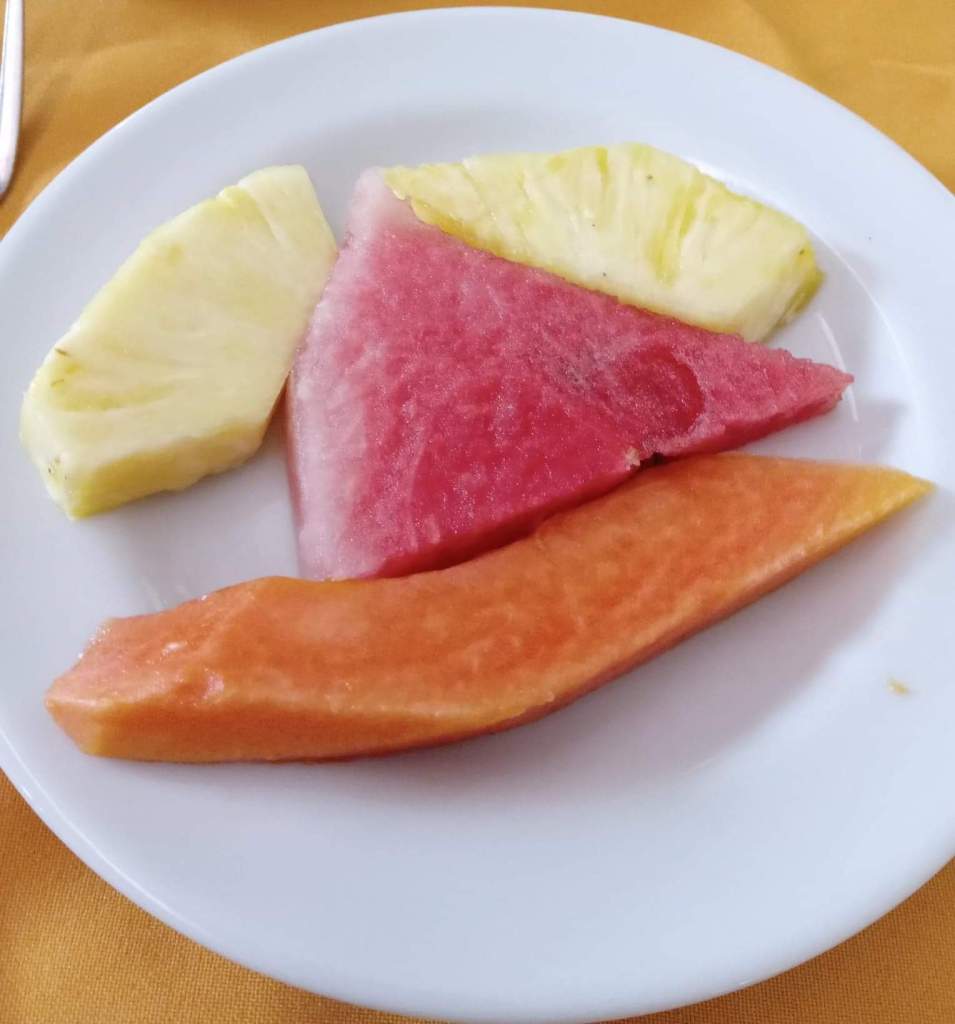
Fruit and rice and beans are staples that make up the breakfast experience in Costa Rica – everything I love.
We had time to stretch our legs so strolled round the gardens.
Julio said that this tree was an important one for ancient civilisations. As we have got to know Julio a bit better we have found his enthusiasm often creates a situation that he has talked so much you miss the salient points in the middle of long winding stories – so don’t actually remember what it is called.
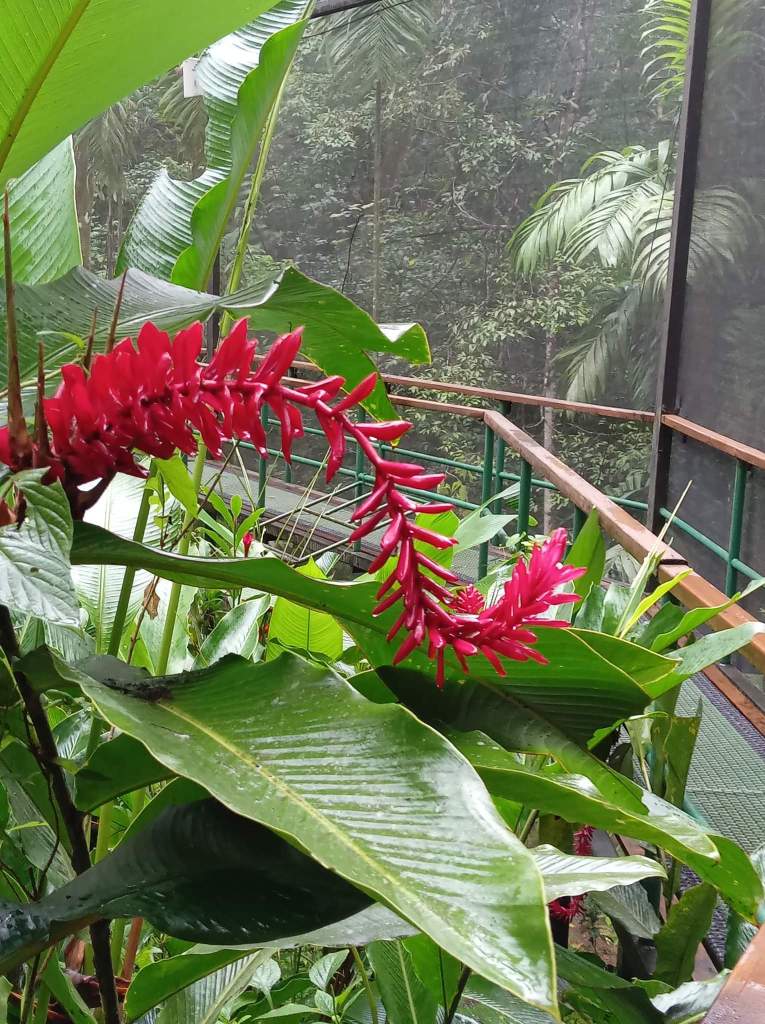
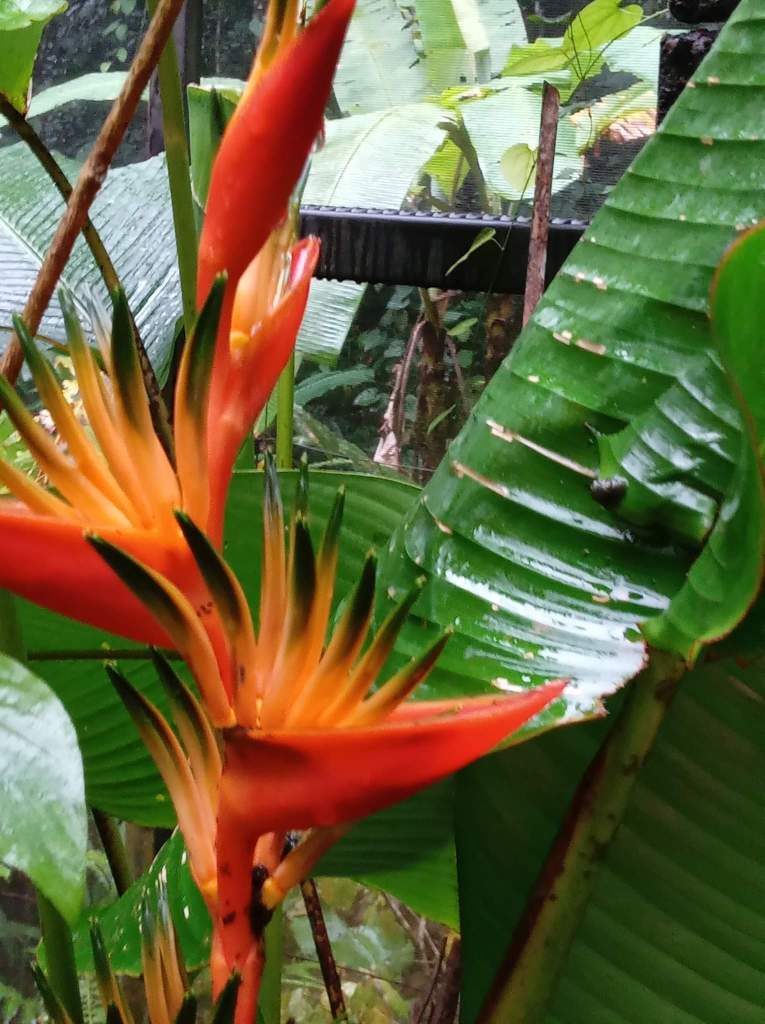
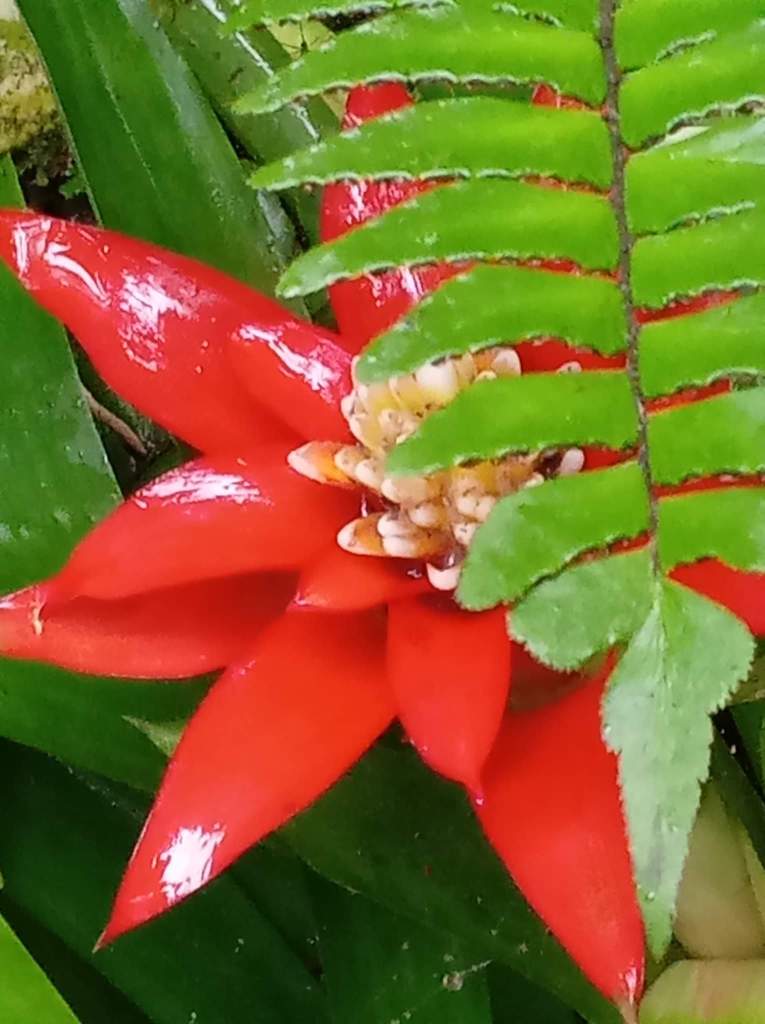
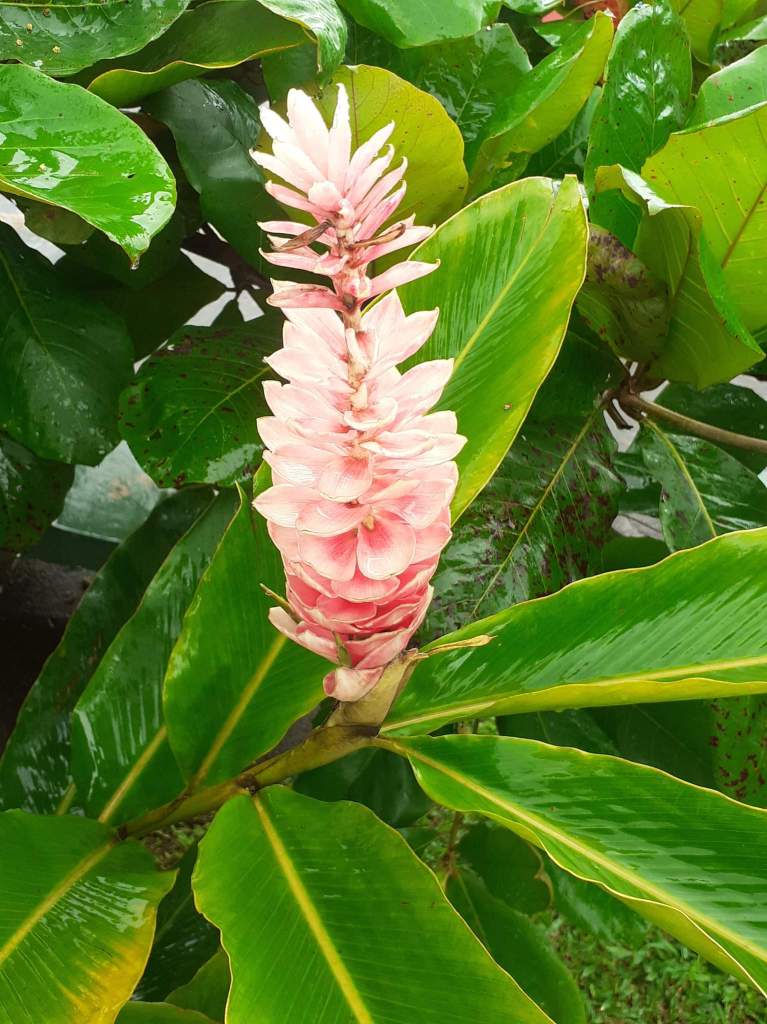
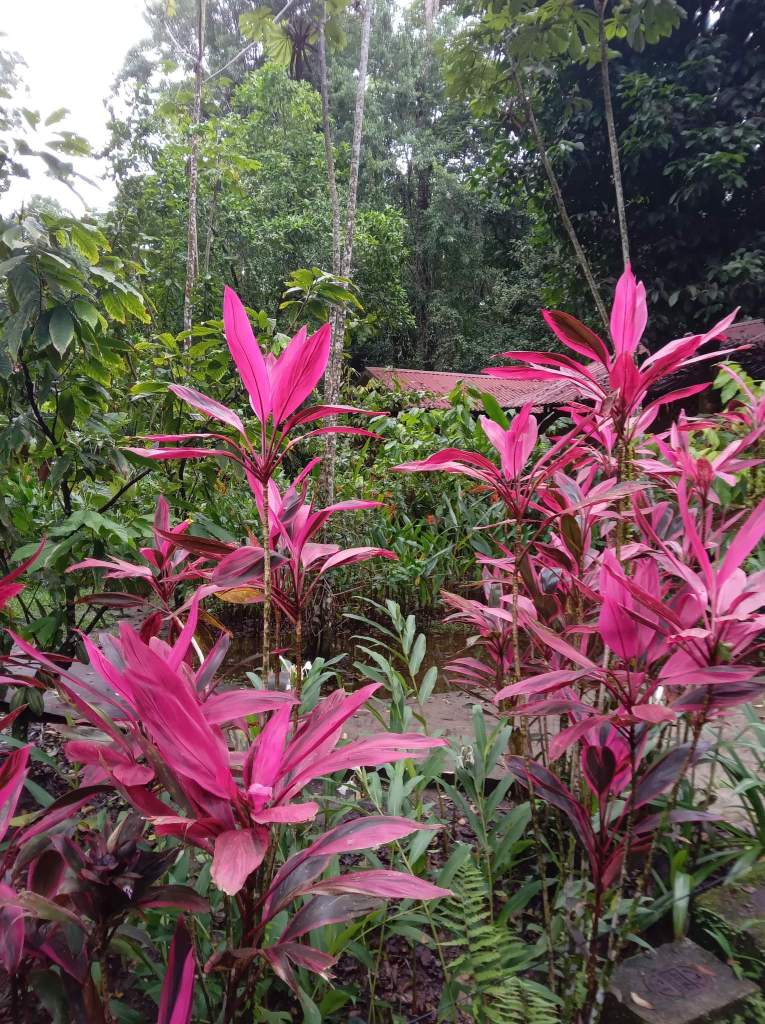
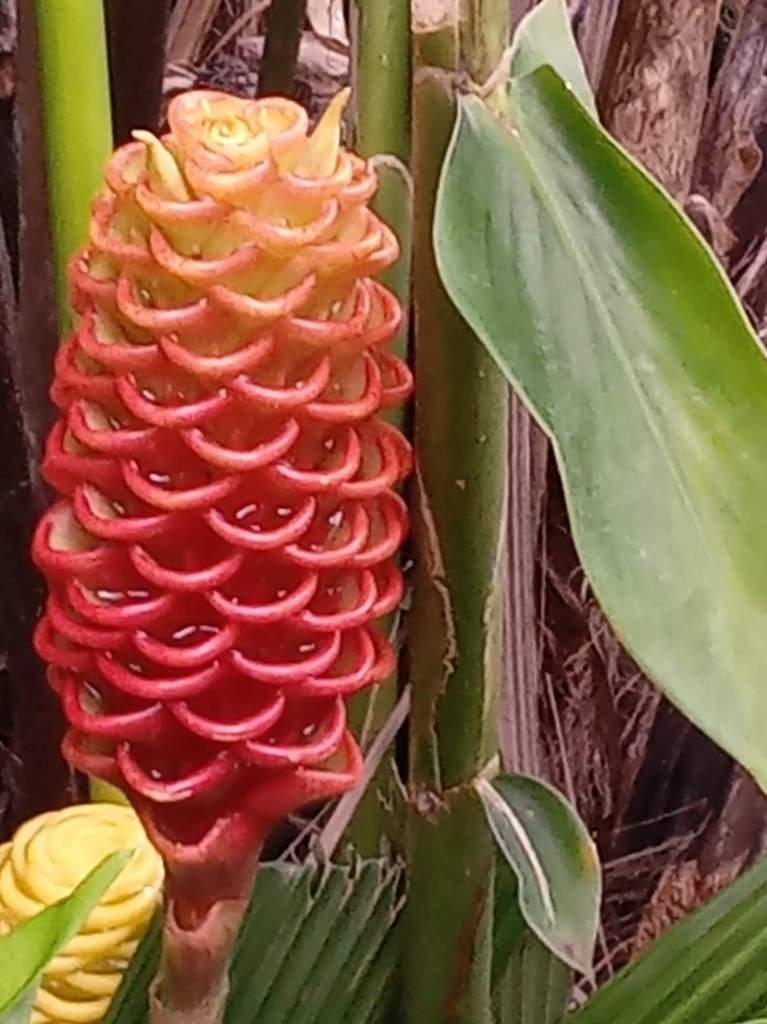
The flowers are beautiful and vibrant as I had anticipated. This is the Red Pine Cone Ginger.
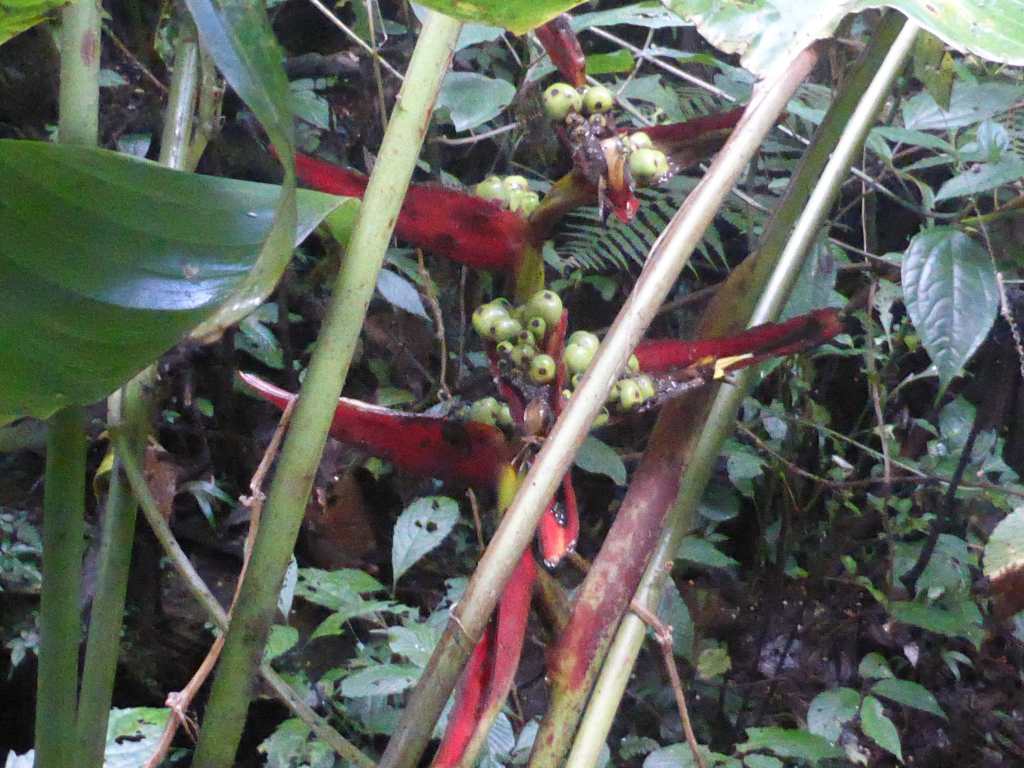
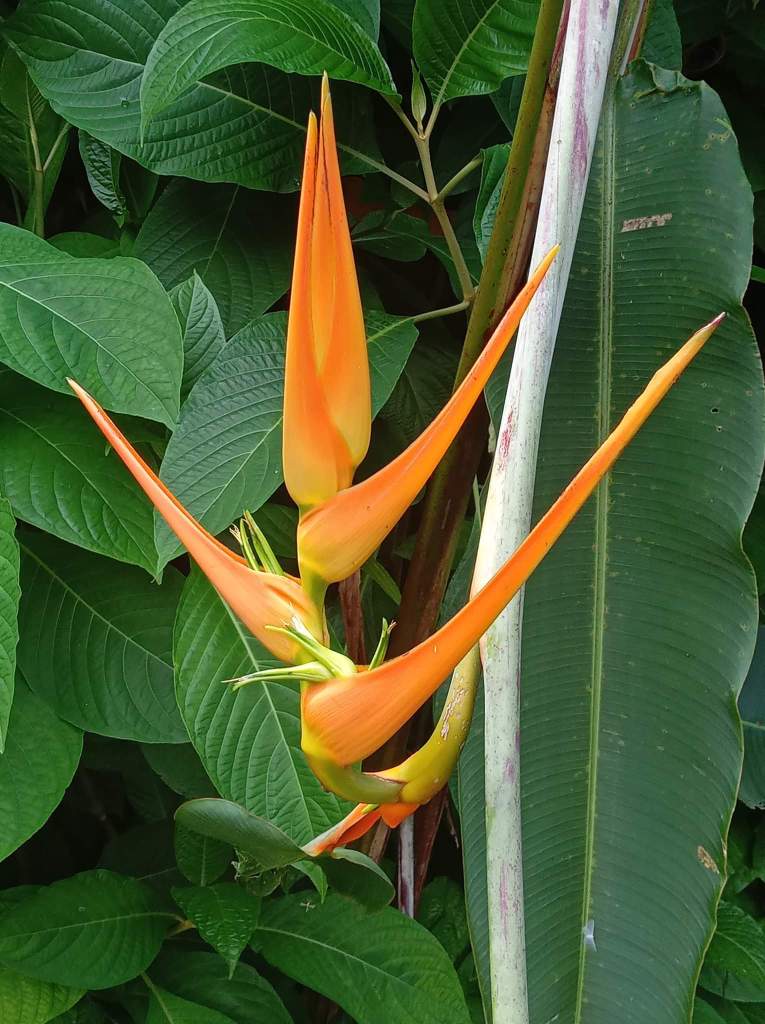
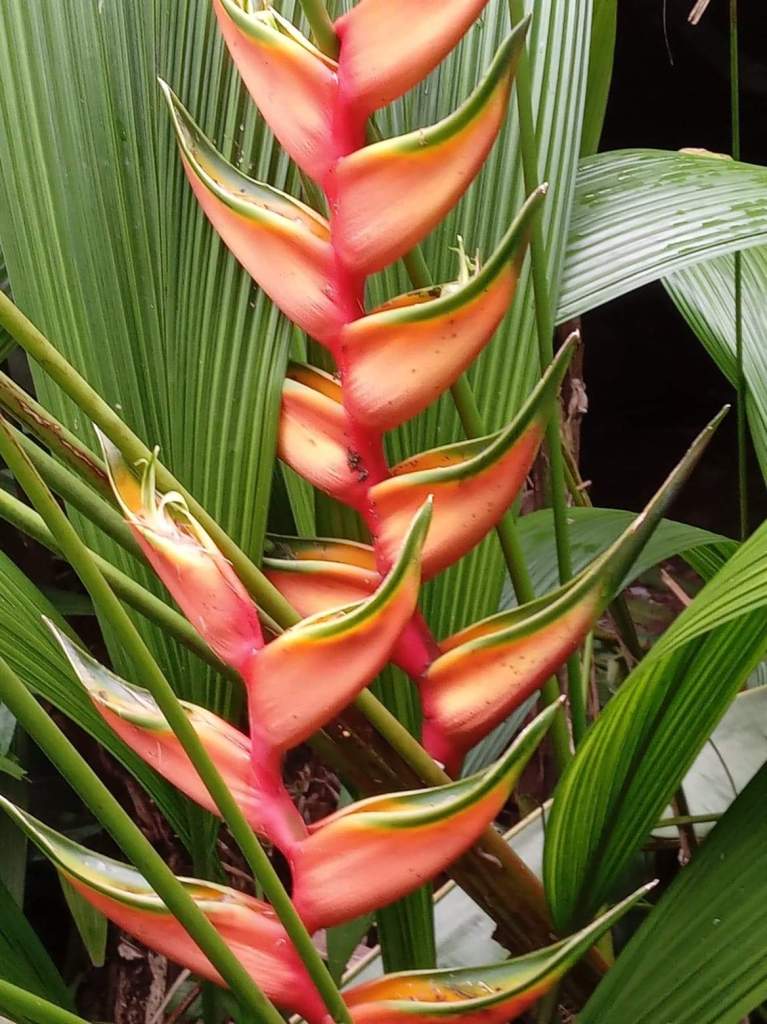
This is aptly named the Hanging Turtle Claw. Hummingbirds are particularly fond of this flower.
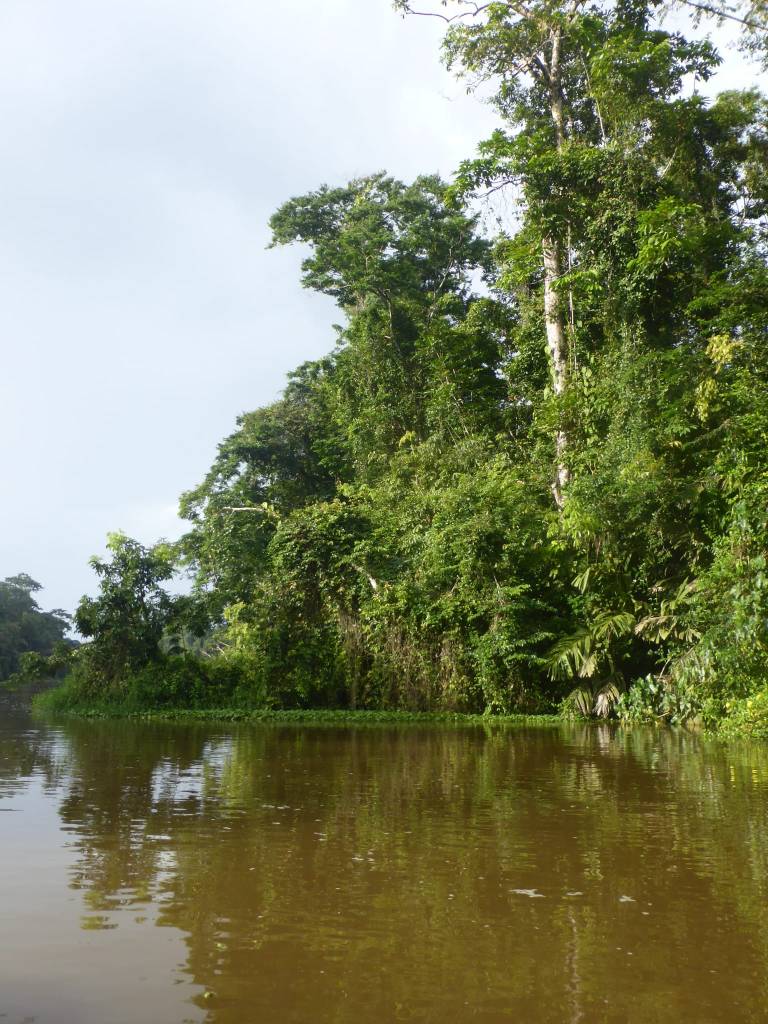
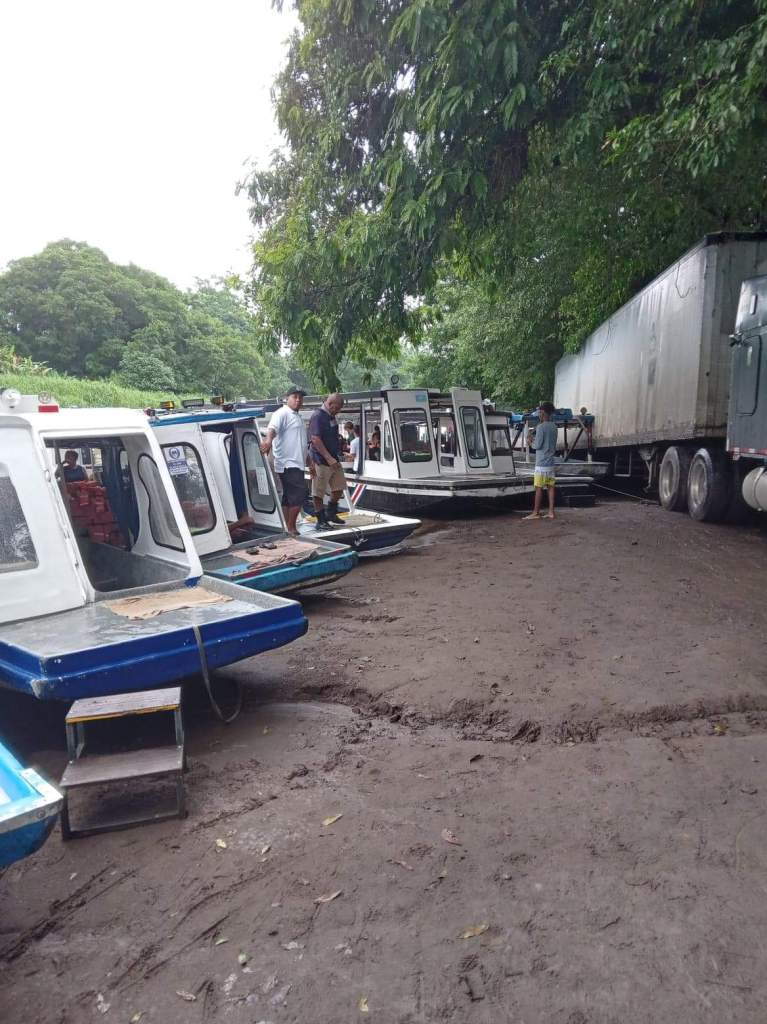
We headed back to the coach and proceeded to the ‘ferry terminal’ for the final leg of our journey to The Tortuguero Canals. These represent the second largest wetland in the country, and are considered by many visitors as the Amazon of Costa Rica for its natural richness, and great biodiversity. It is located in the northern area of the Costa Rican Caribbean, and you can only access the area by boat or plane, since there are no roads. We weren’t going to stretch to a plane so it had to be a boat. Having reached here very uncertain how a plane would land here.
On the way Julio really, really brought any expectations of our next few days down to the lowest bar possible. He extolled that you could weeks and months in this area and see no animals, birds or insects. The place we were staying would have no internet, no sir conditioning. People had travelled there before and had promptly turned back. He made it sound like the canal journey was out of a chapter of Heart of Darkness. Juilo’s catchphrase was that you needed “Good luck and good eyes’ to be in with the chance of seeing anything.
A A
We bought a bag of rambutans for the journey. I have never had them before but I liked them. The journey took about 40 minutes, passing through the rainforest, which proved quite an experience.
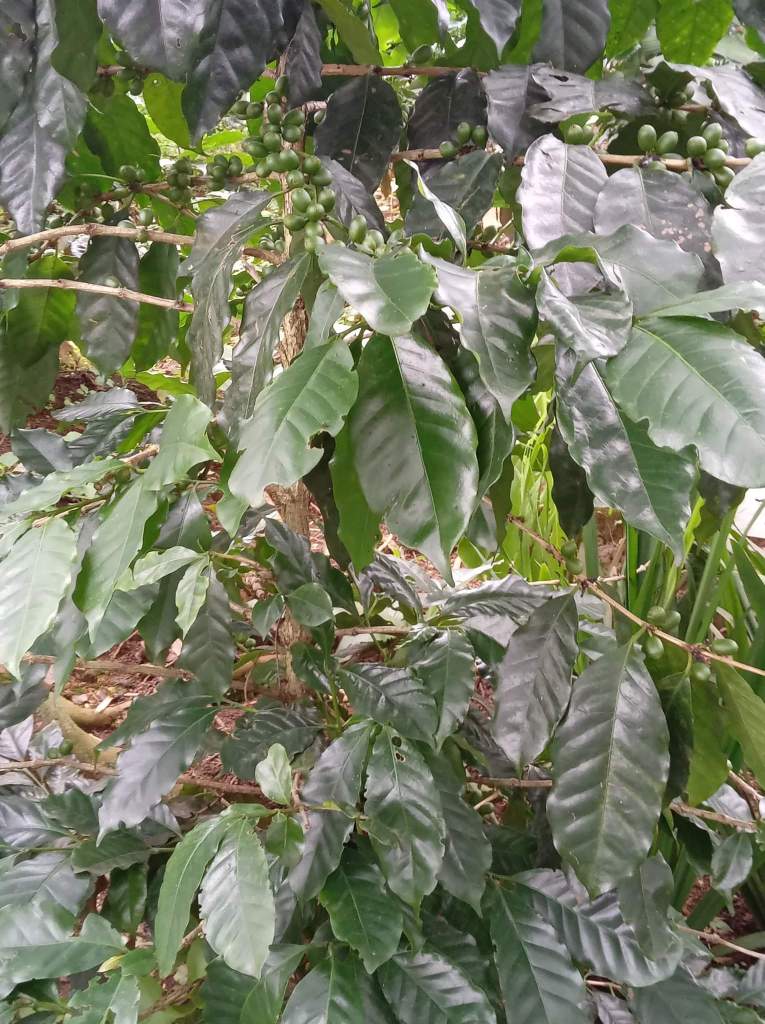
Arrived in one piece at the Buena Vista hotel located in the Central Valley with amazing views of three volcanoes. Although it’s located in Central Valley it’s actually 4,200 feet above sea level, set with its own coffee plantation and nature reserve.
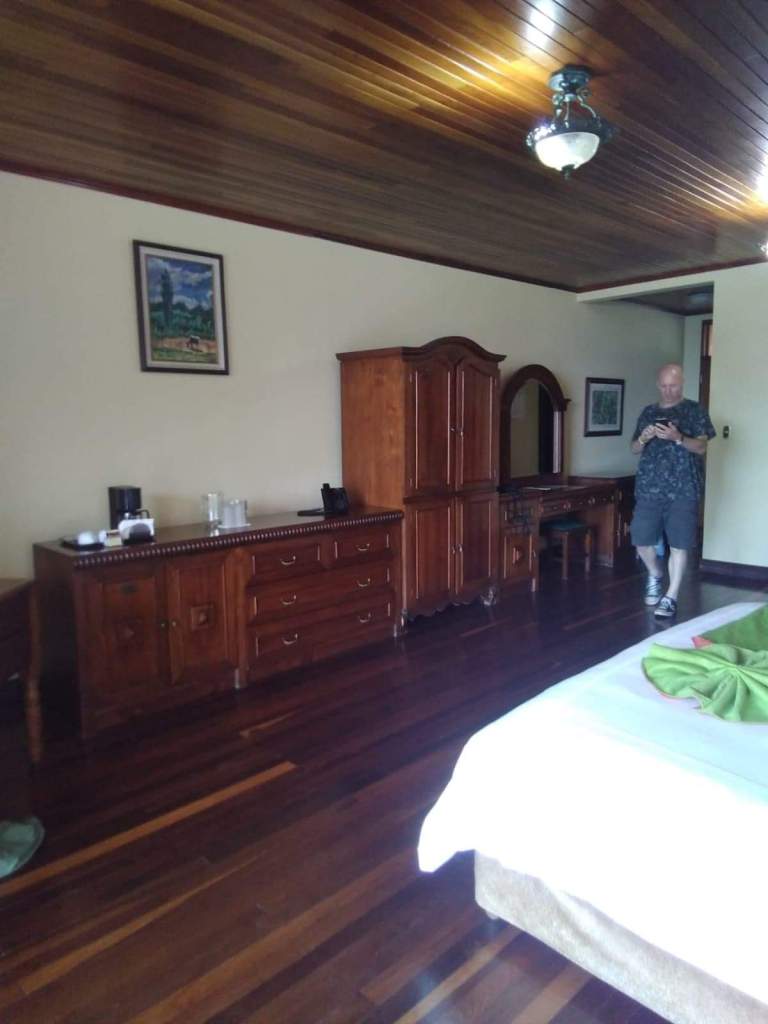
The room was gigantic and certainly the ,’poshest’ place we have ever stayed – although that set I think we both have pretty low bars around things like this.
It was great to finally have a shower and feel the layers of filth peel away.
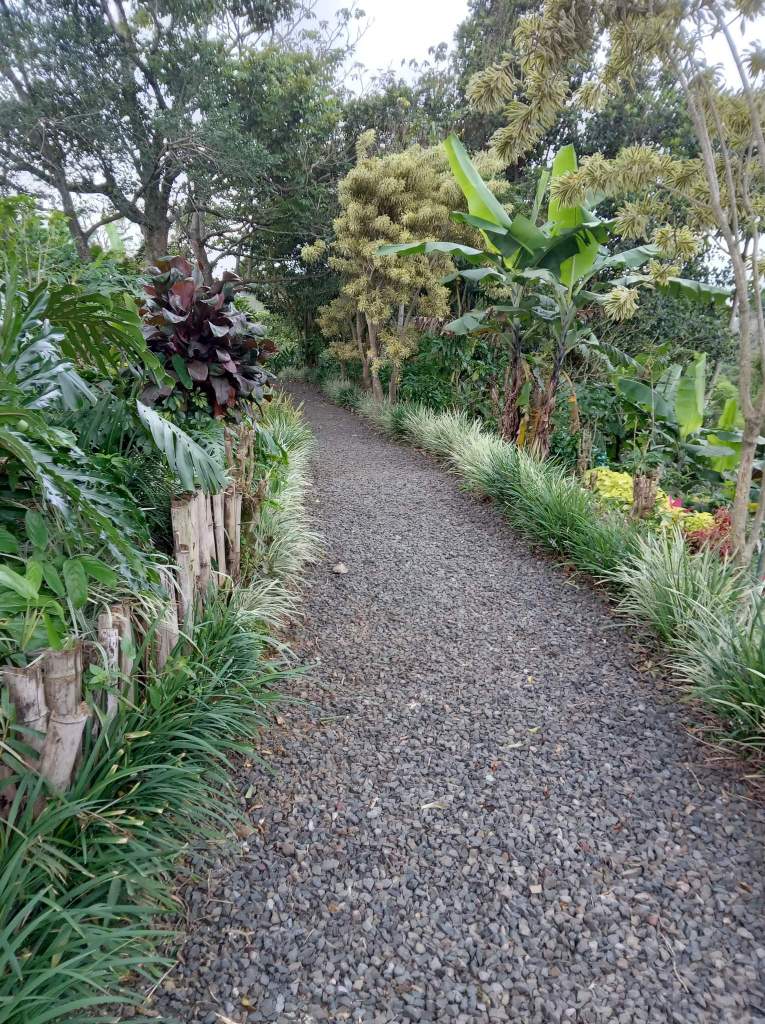
Had a walk around the grounds which were idyllic.
With high altitudes, fertile volcanic soil, warm temperatures and enough rainfall through the year, as well as a tropical climate, Costa Rica is uniquely positioned to produce coffee of a high standard. So seriously do they take it that they have made it illegal to produce anything other than 100% Arabica beans.
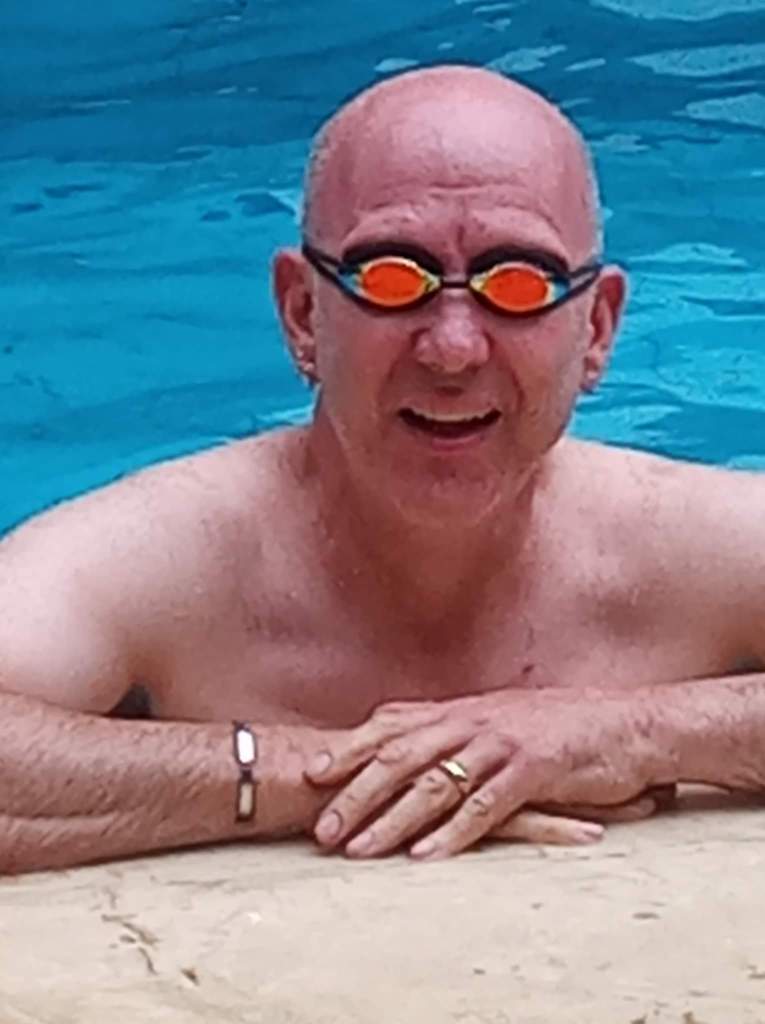
Pete had a dip in the pool and probably would win a prize for the most god awful goggle’s ever!
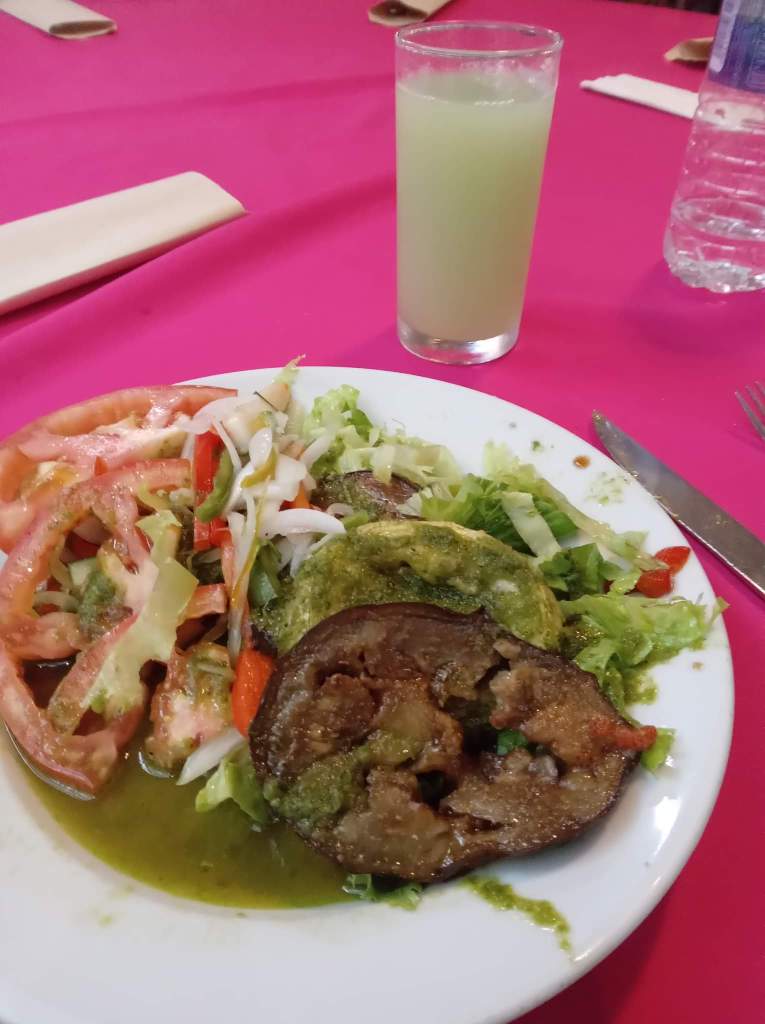
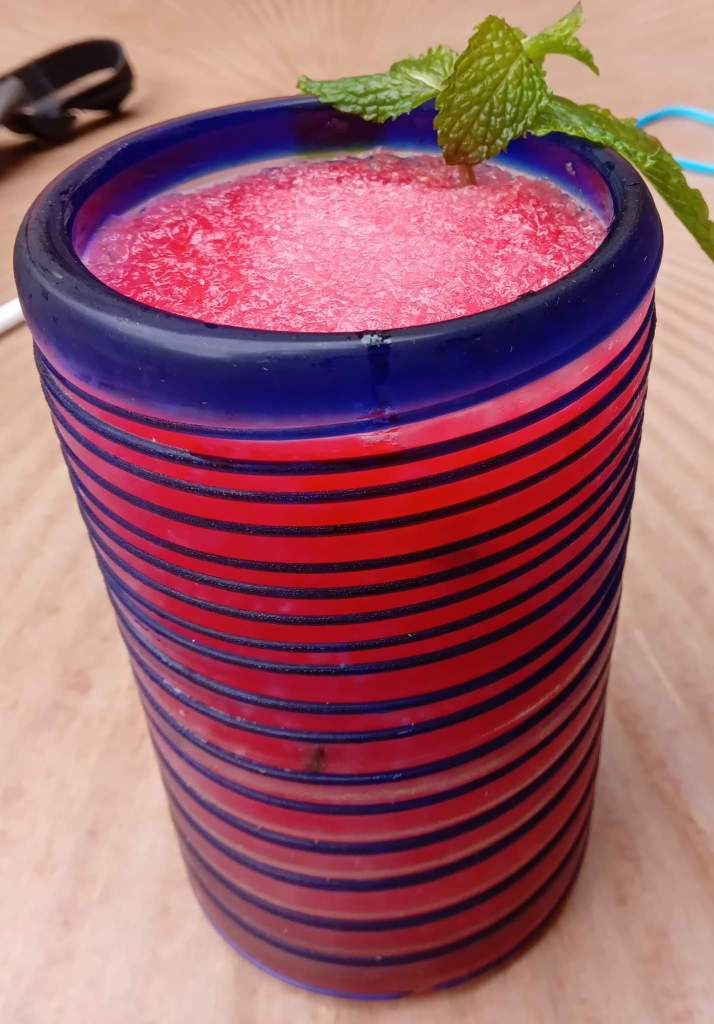
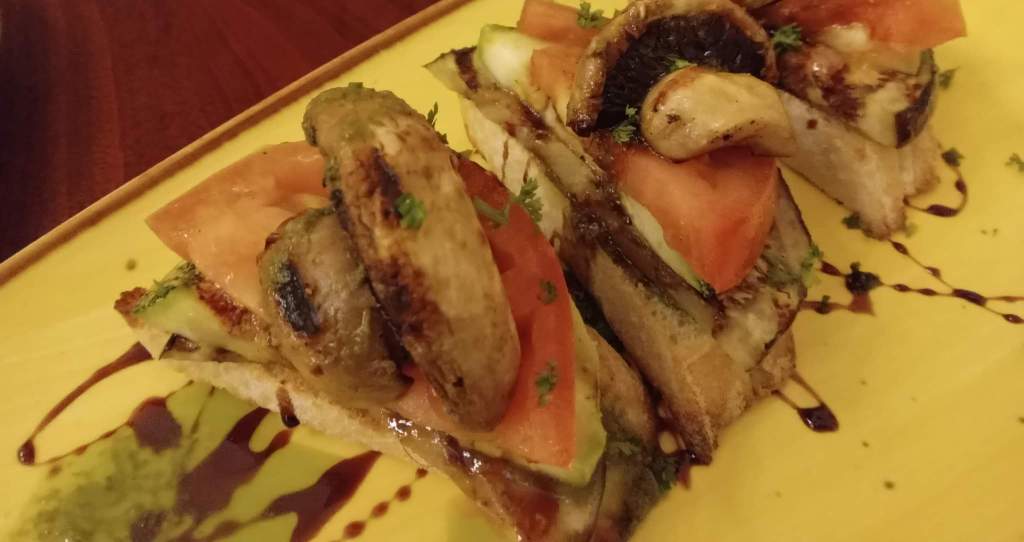
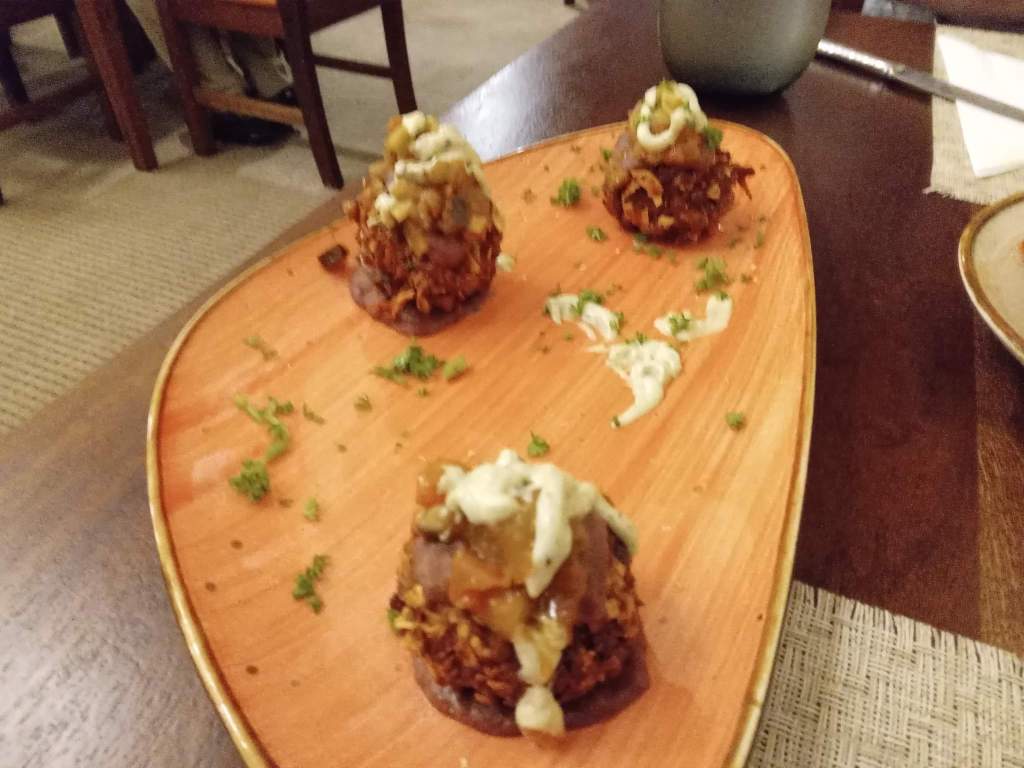
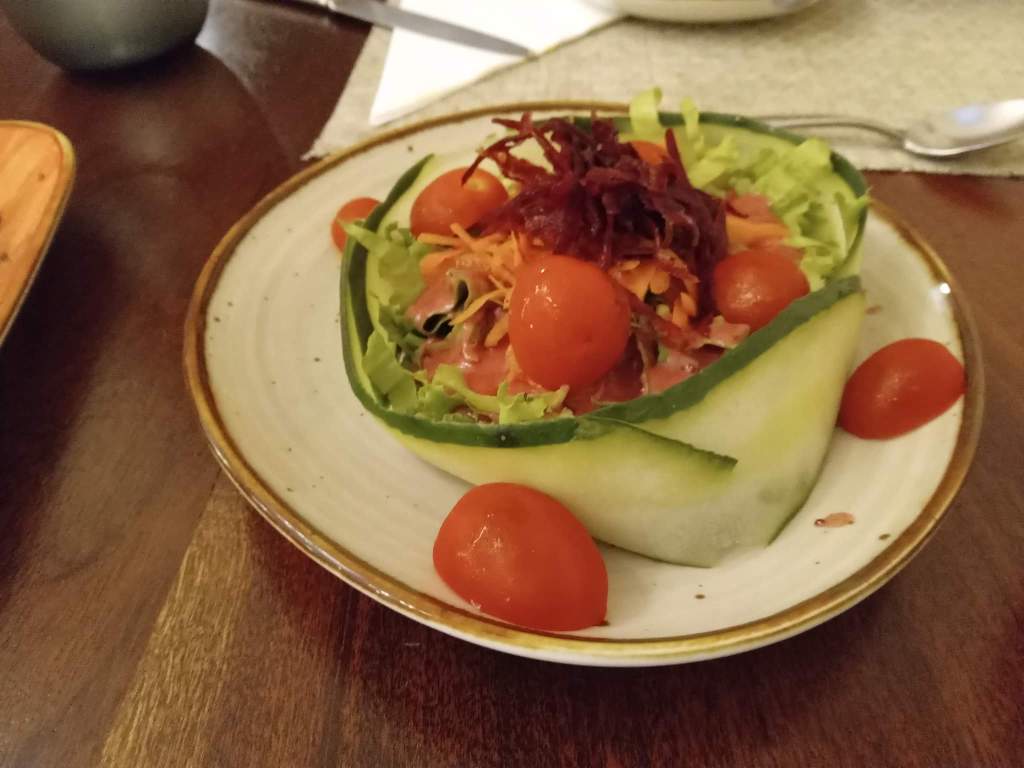
it was fantastic to try to Costa Rican cuisine first hand. Flavours and combinations were mouth watering, cassava croquettes, fresh watermelon juice etc.
We
We turned in early as I was fast becoming more brain dead than usual. Also we had to leave the hotel at 5.30am the next day.


 Random Acts of Travelling