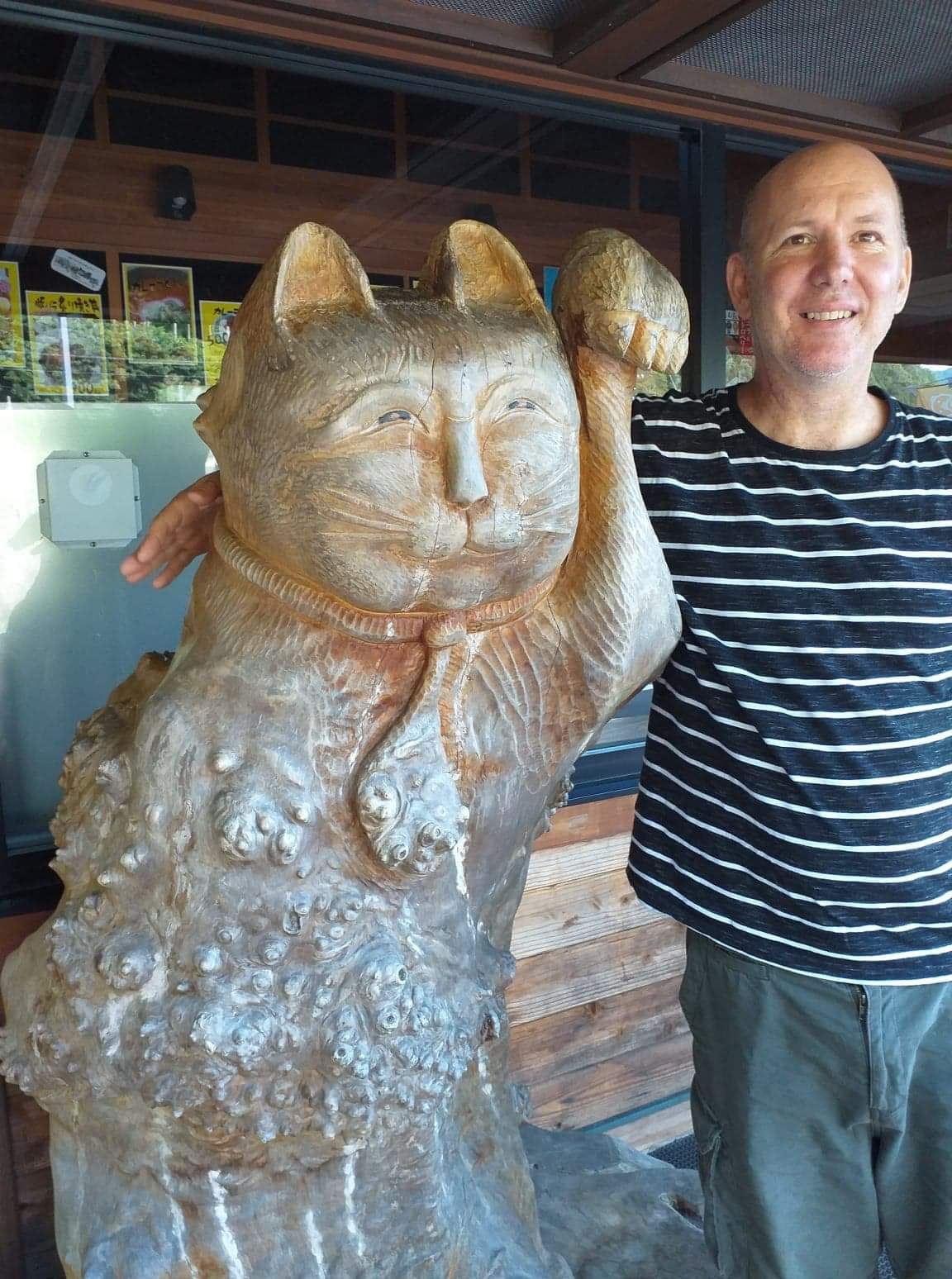
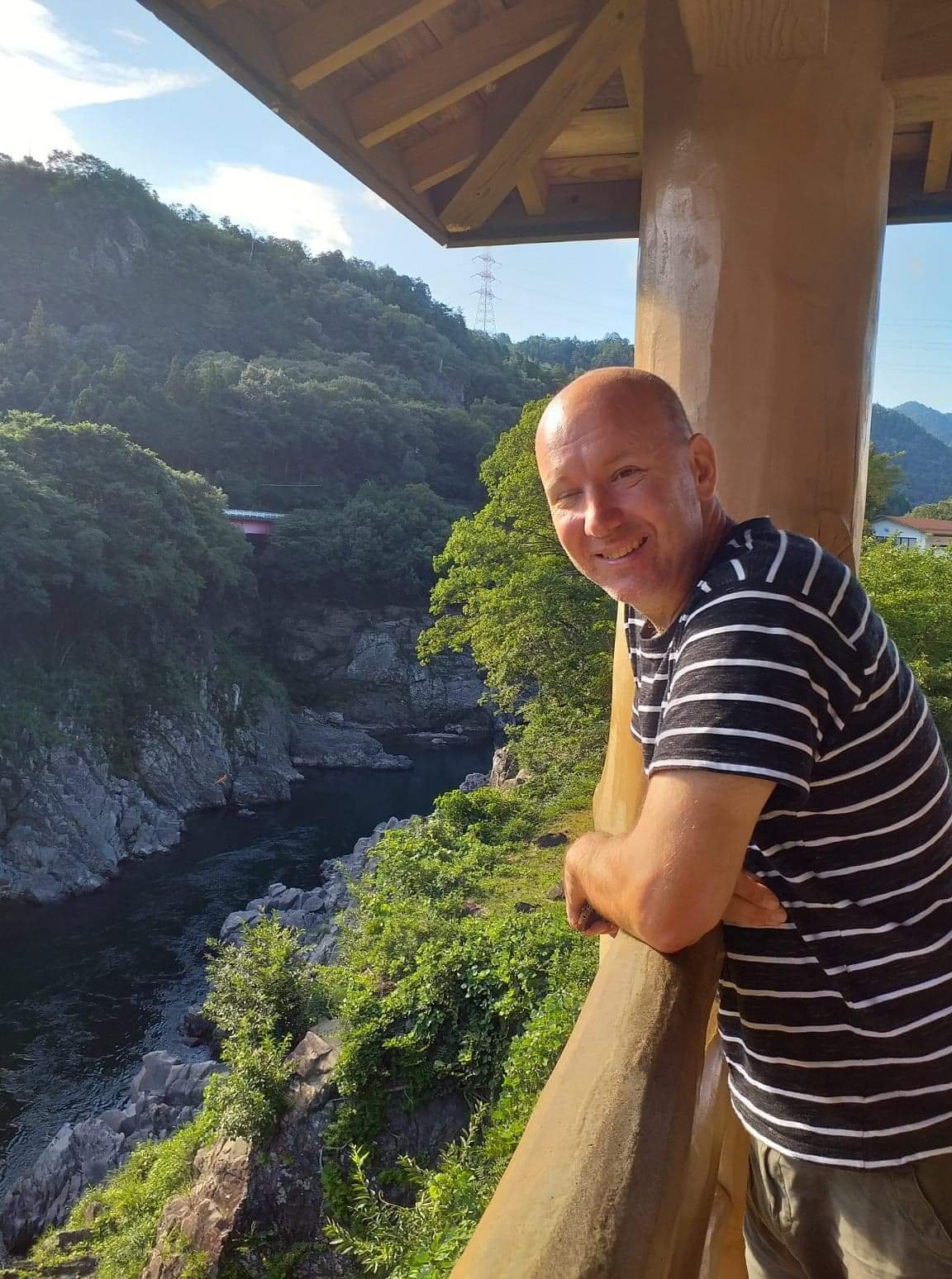
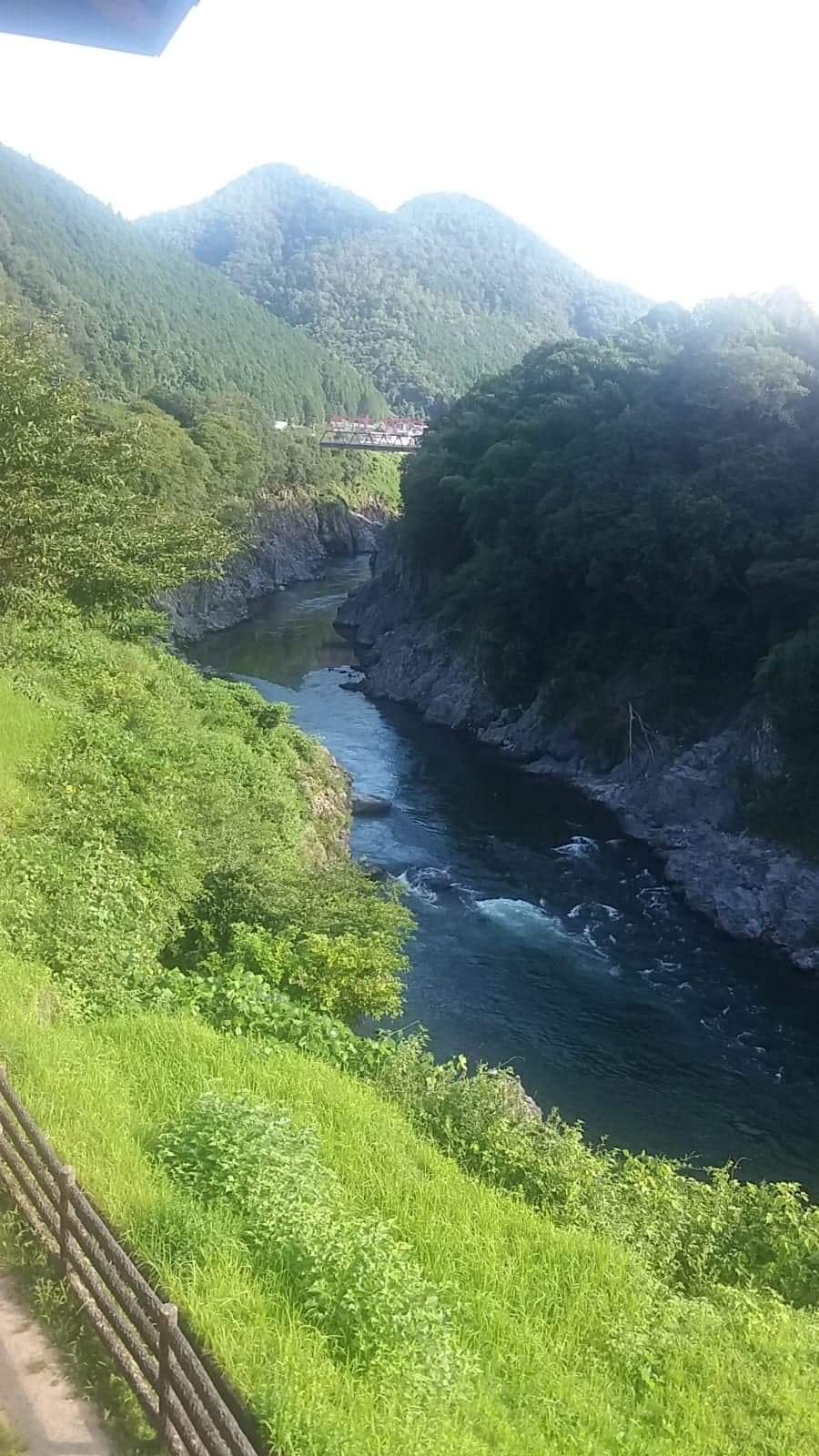
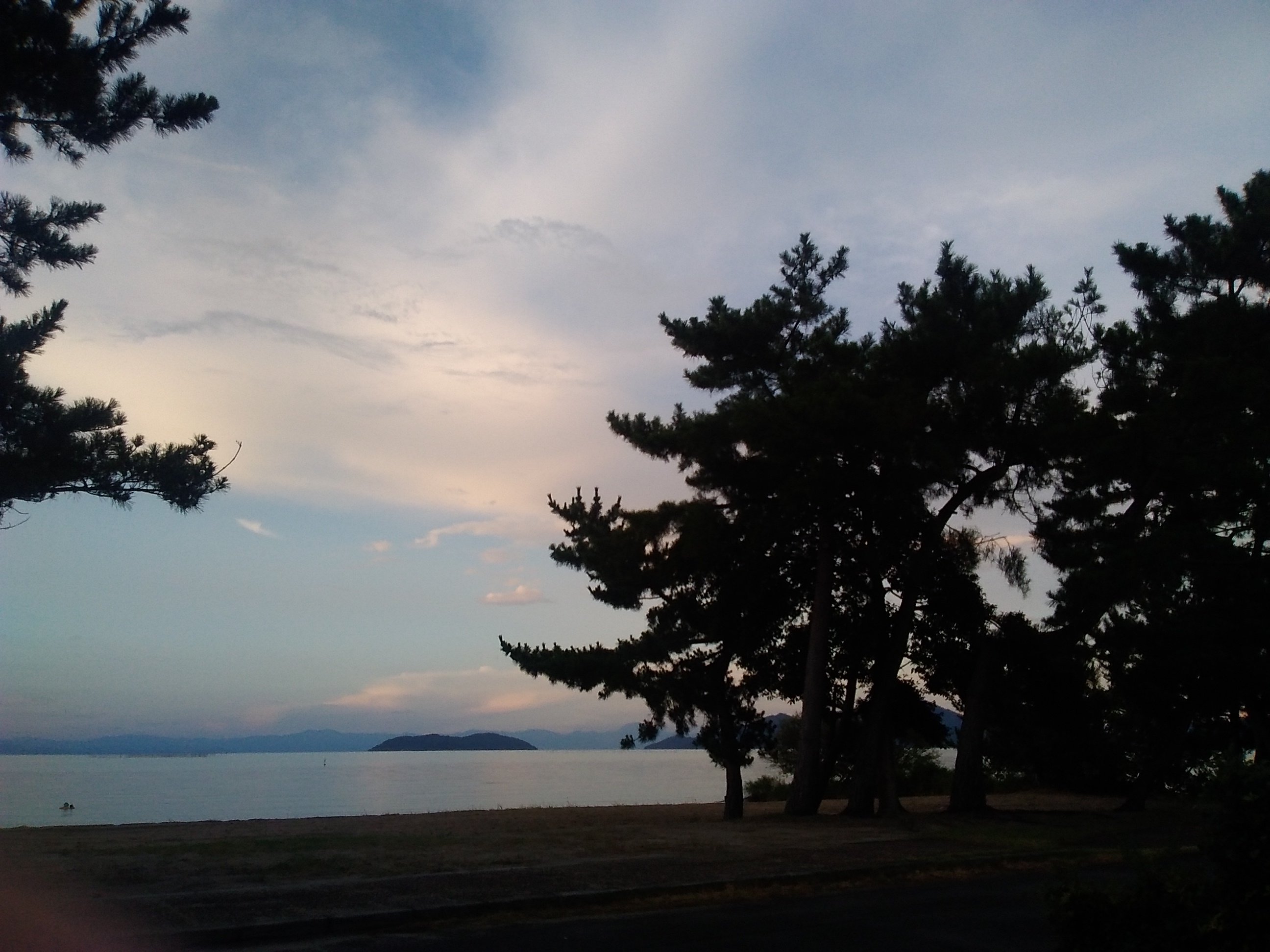
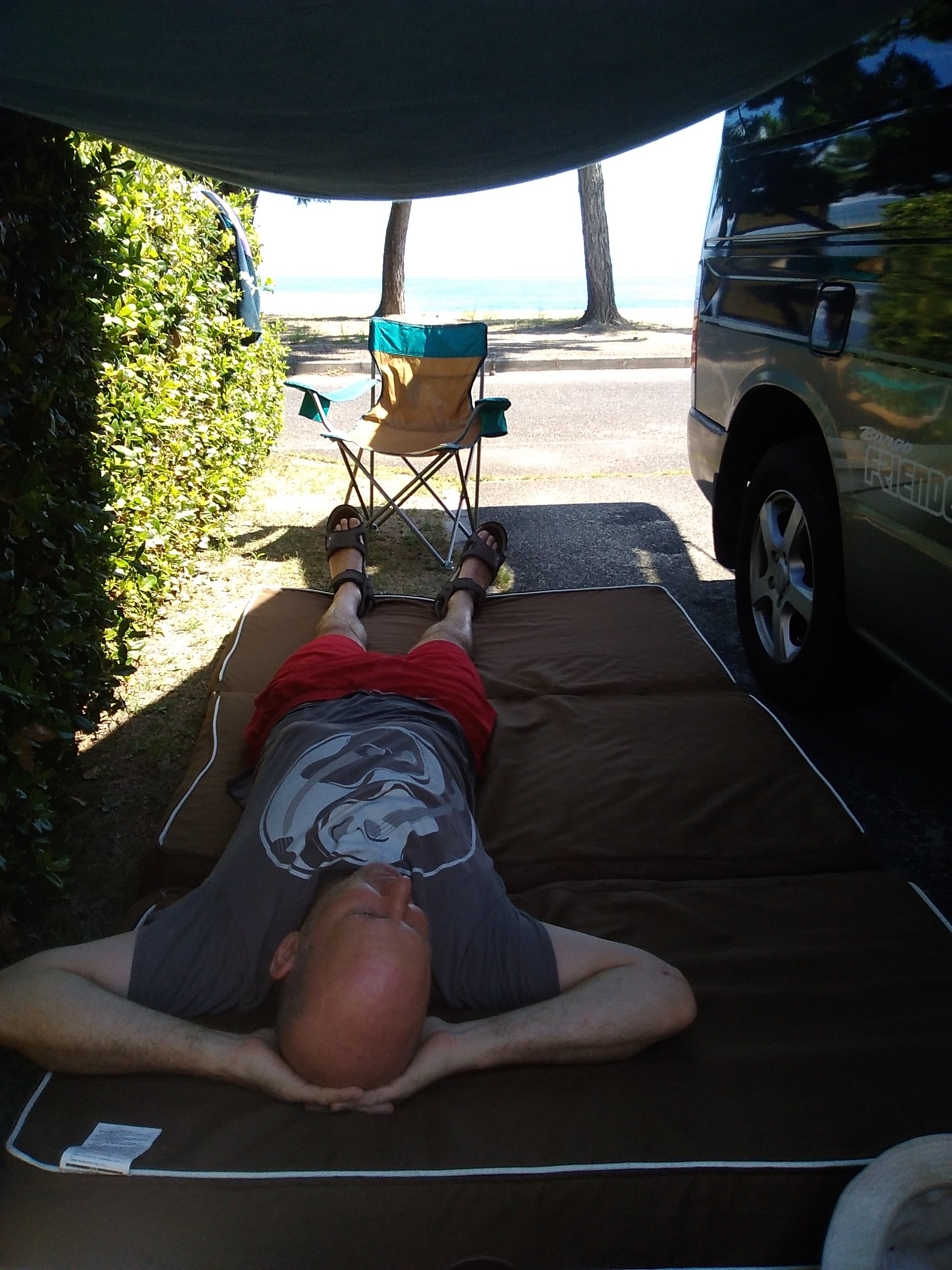
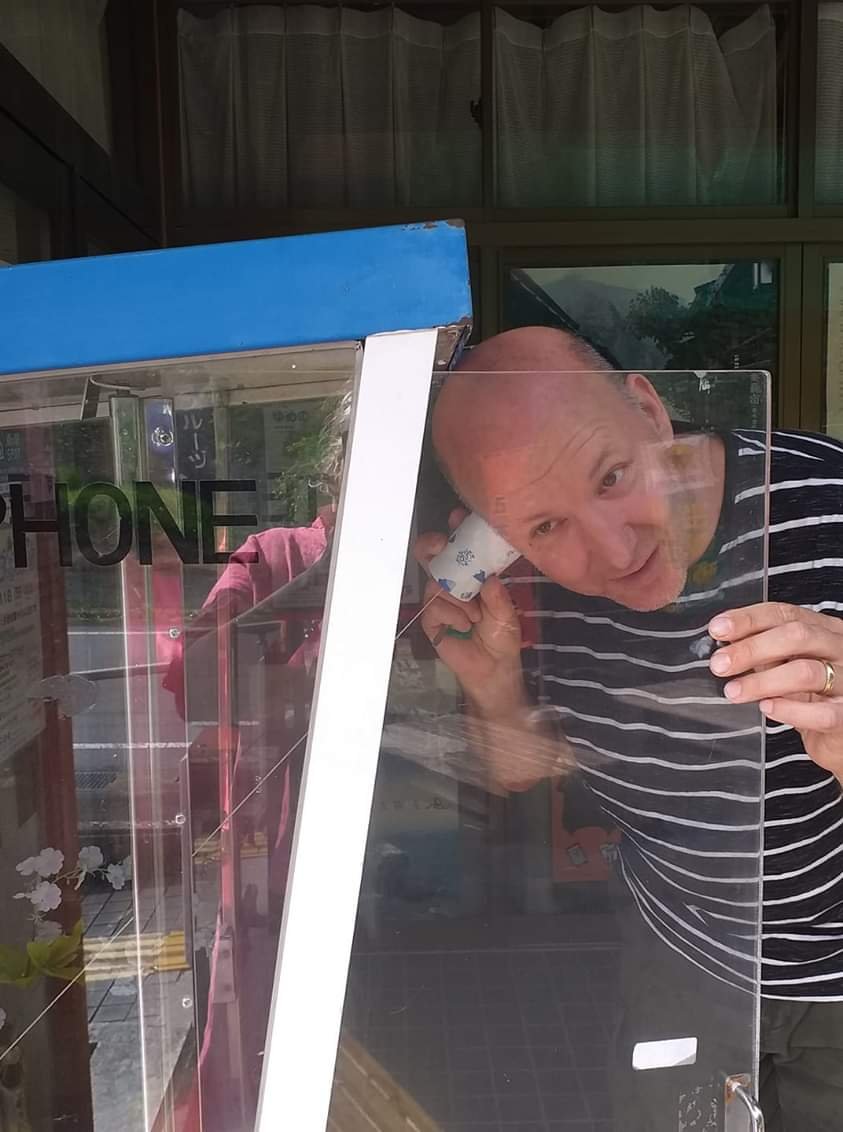
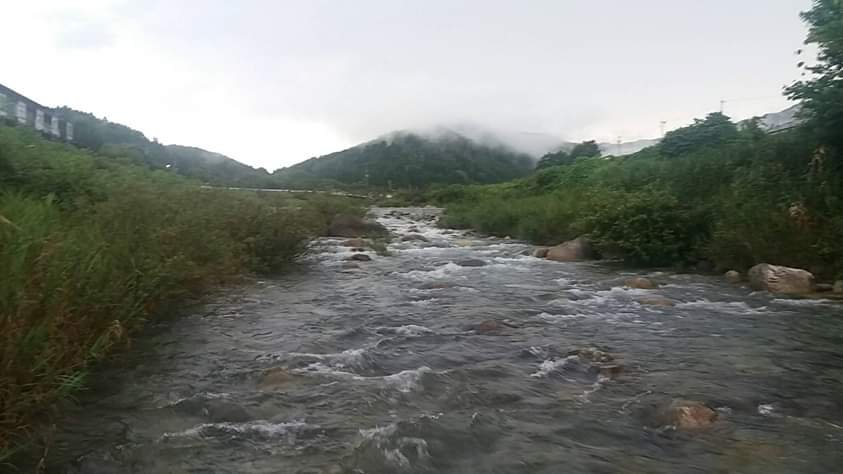
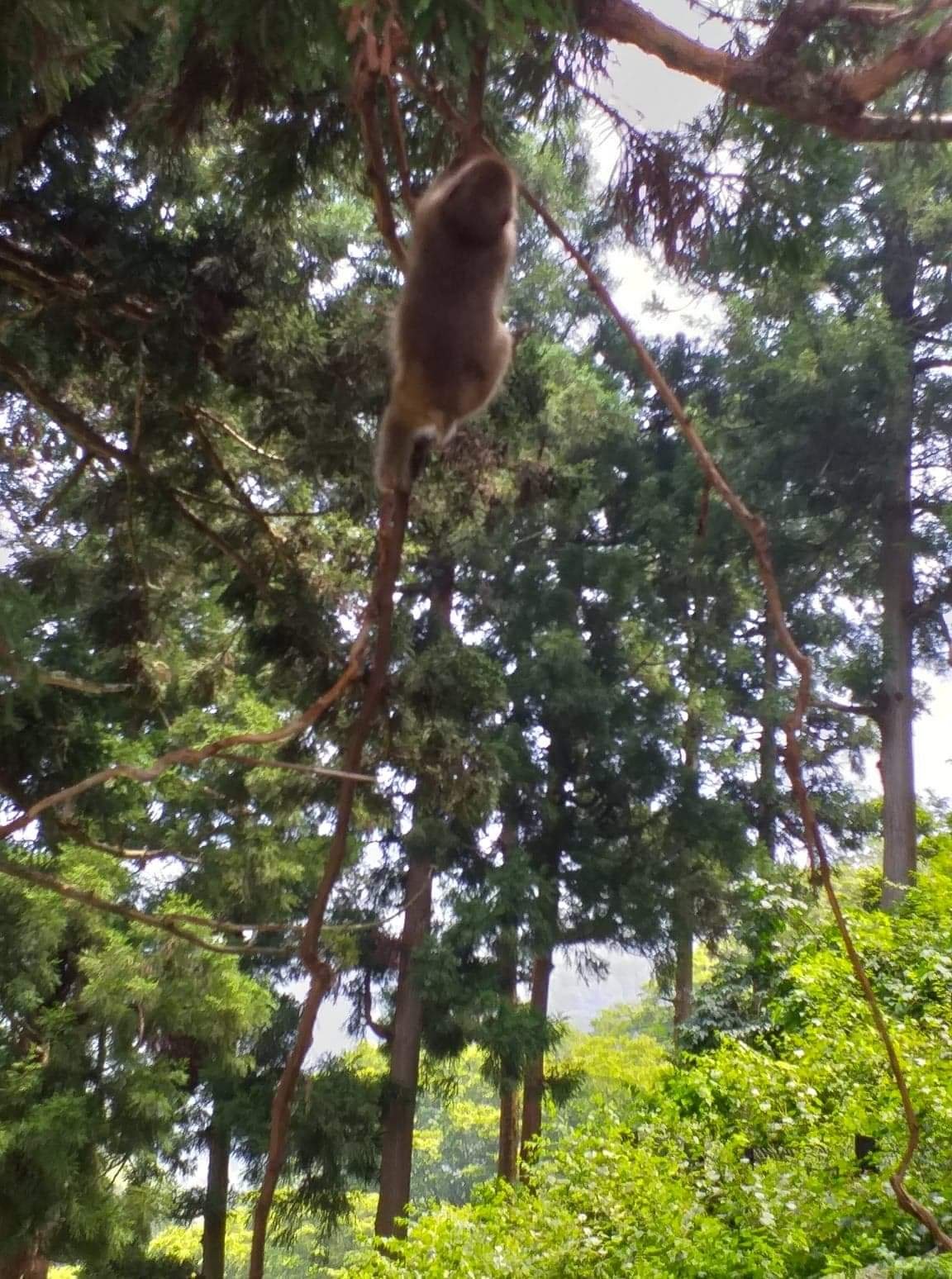
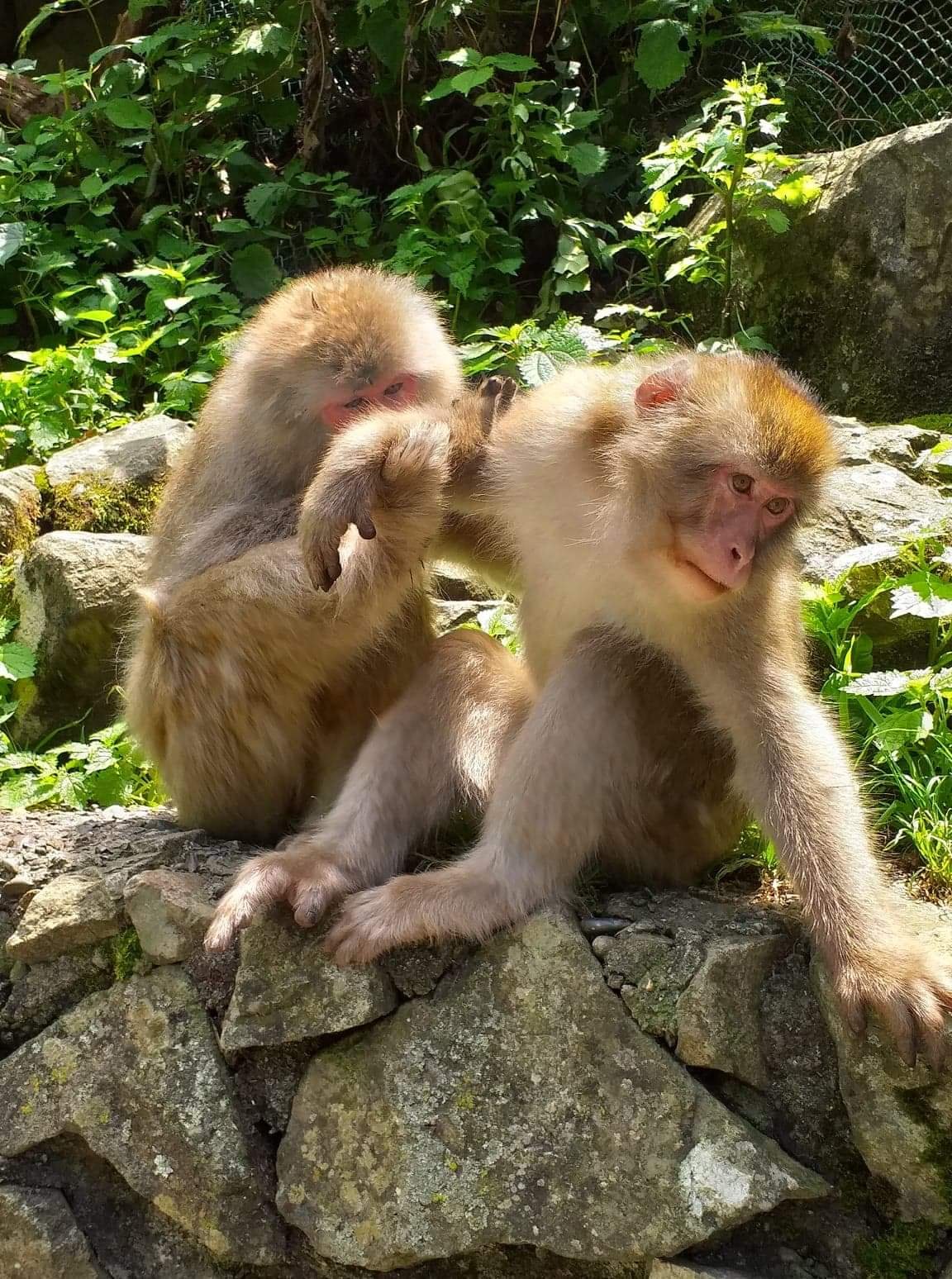
Fun at the seaside….

When we hired the camper van we also got an ipad, one to route navigate and second to locate michis, campsites etc. So far it had done a really good job. Sometimes you click on the location and you get lots of information and other times there isn’t much information. So far we had found it didn’t matter regards either as we always have ‘landed in our feet.’

However leaving Nara we decided that we needed to slowly make out way back to Tokyo. Not wanting to go back the way we came we decided to return via the coast and experience a different side of Japan, literally.

We headed towards Toba, to a campsite that was on a cliff top. It gets dark very early in Japan and outside of the cities it seems as though people go to bed earlier, we were worried as to whether they would be open, but again it’s always been find to park up settle in the morning. When we arrived at the campsite we didn’t get a very good feeling at all, knocking on the door of the reception a woman came and pulled a face. Then she called her husband. I think we had woken them up so it wasn’t a great start. Interestingly they didn’t look very Japanese. They said the site campsite was closed. But there people walking to and from the toilet block so it obviously was open.  We weren’t going to argue because we didn’t get a good feel for the place. I think it was the first time we have seen anyone making the X gesture.
To indicate “no” in Japanese , often people will cross their arms in an X shape in front of themselve. This gesture just feels a little disconcerting because it seem a very strong type of gesture and it made us feel as though we were doing something very wrong, not just asking if we could camp.

The woman stood by the path making sure we got off her land. It was all a bit strange.

So… Not to worry there was another campsite nearby, we headed off for that one. That turned out to be quite surreal. As we rounded the corner and the satnav said you are now at your destination, we looked round and thought really??? It was a 5 star hotel, all new, glitzy and swanky. Obviously there had been a campsite there at some point but now it was a hotel. We ended up driving another 12km to a michi. That was fine….. It was a long night. On the plus side we had found a shop earlier that sold cheese at a reasonable price, so we had cheesy pasta. Japanese do not eat as much dairy and what they sell isn’t great and is expensive.

When we got up we headed towards the beaches near Osatsu.
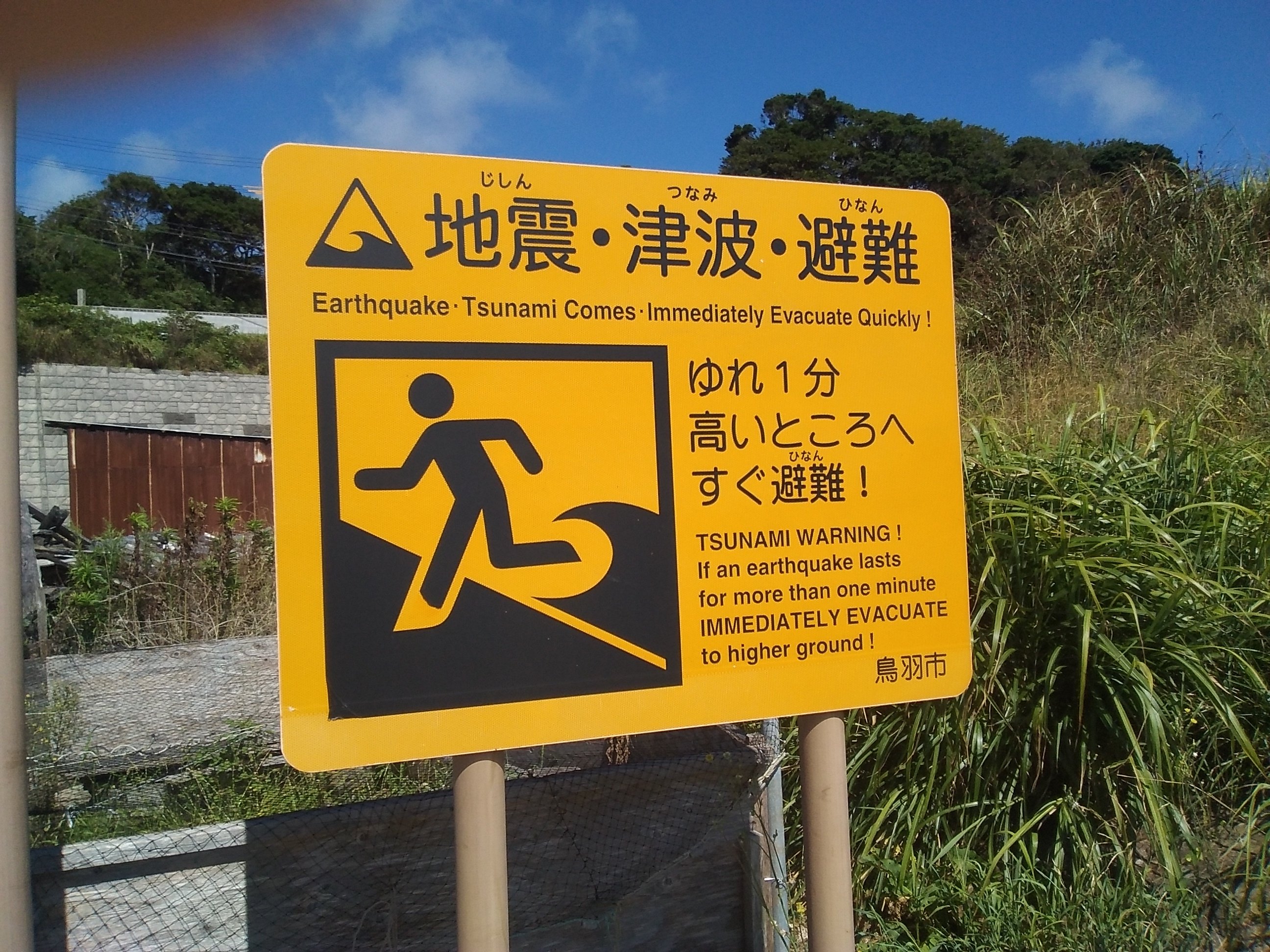

One of the most obvious things we noticed now we were on the coast were the tsunami warnings and what to do. Also the tannoys that line the front, to give a warning.
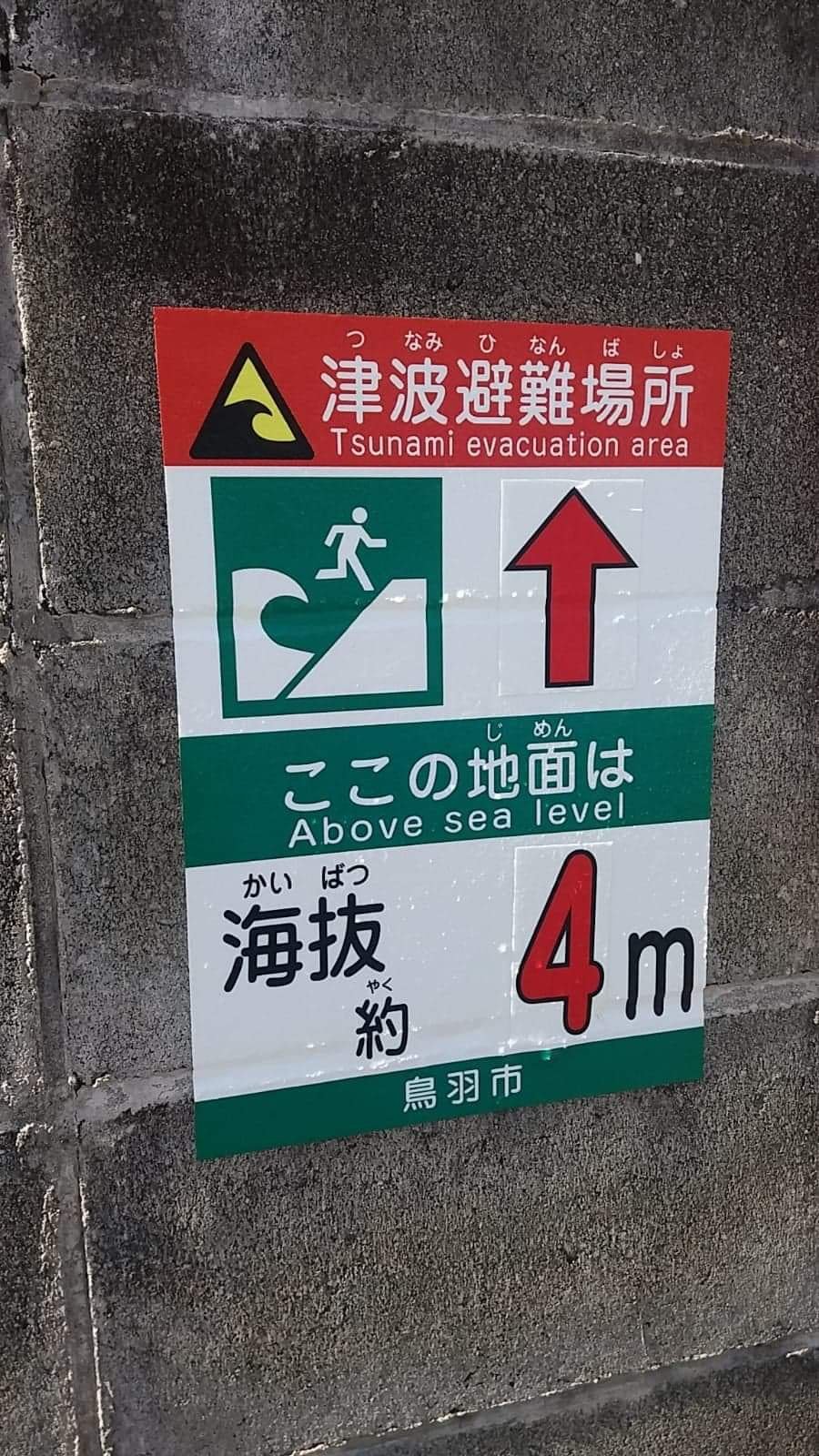
Every so often there would be an arrow showing a route to a tsunami evacuation place. 

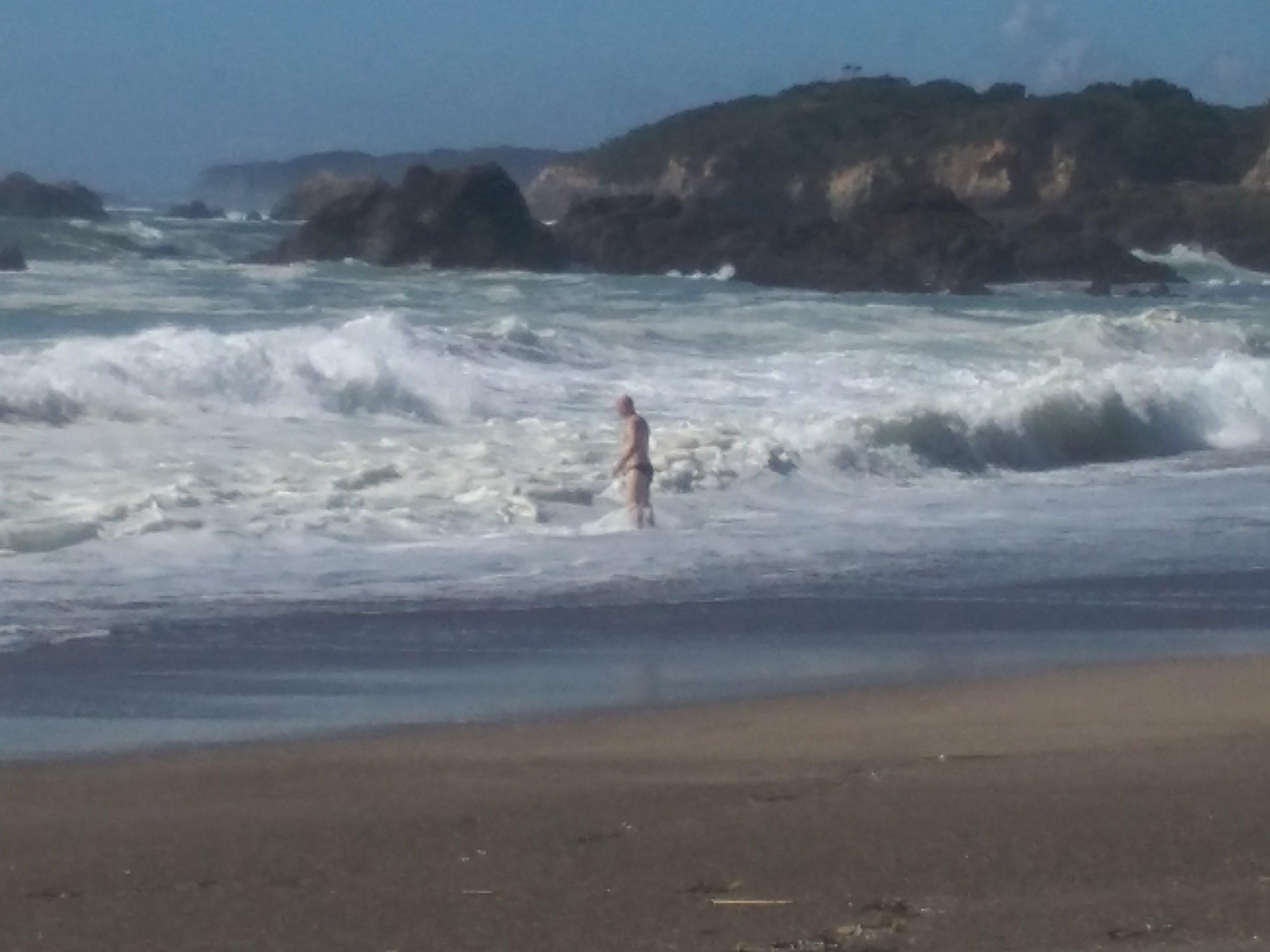
The first beach we found was too wild for me but Pete went straight for it, I was very anxious. He kept getting flattened – it certainly wasn’t a swimming beach.
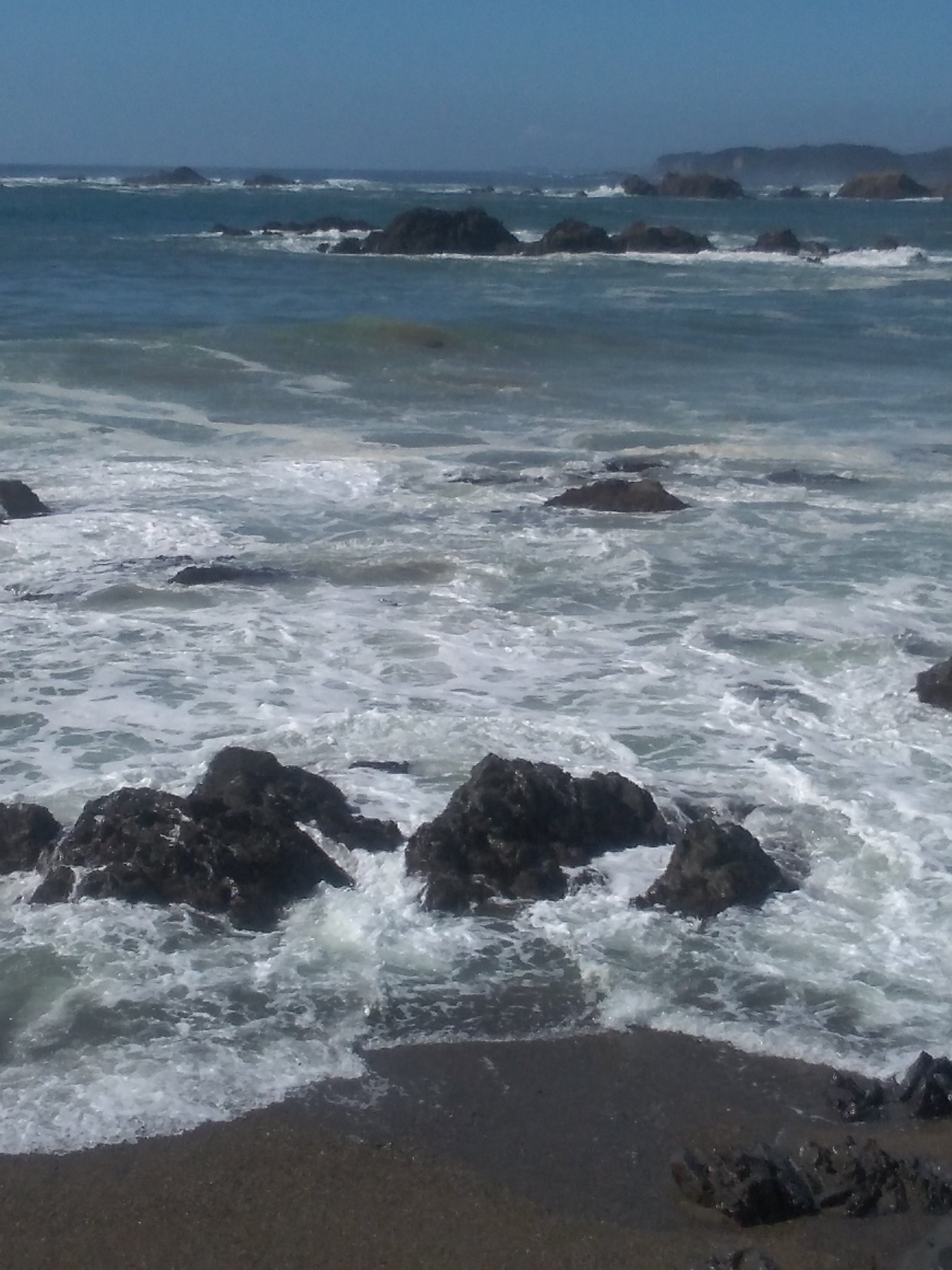
We headed further down a few kilometres and found somewhere far more suitable. The sun was scorching so we hired a tent for protection.
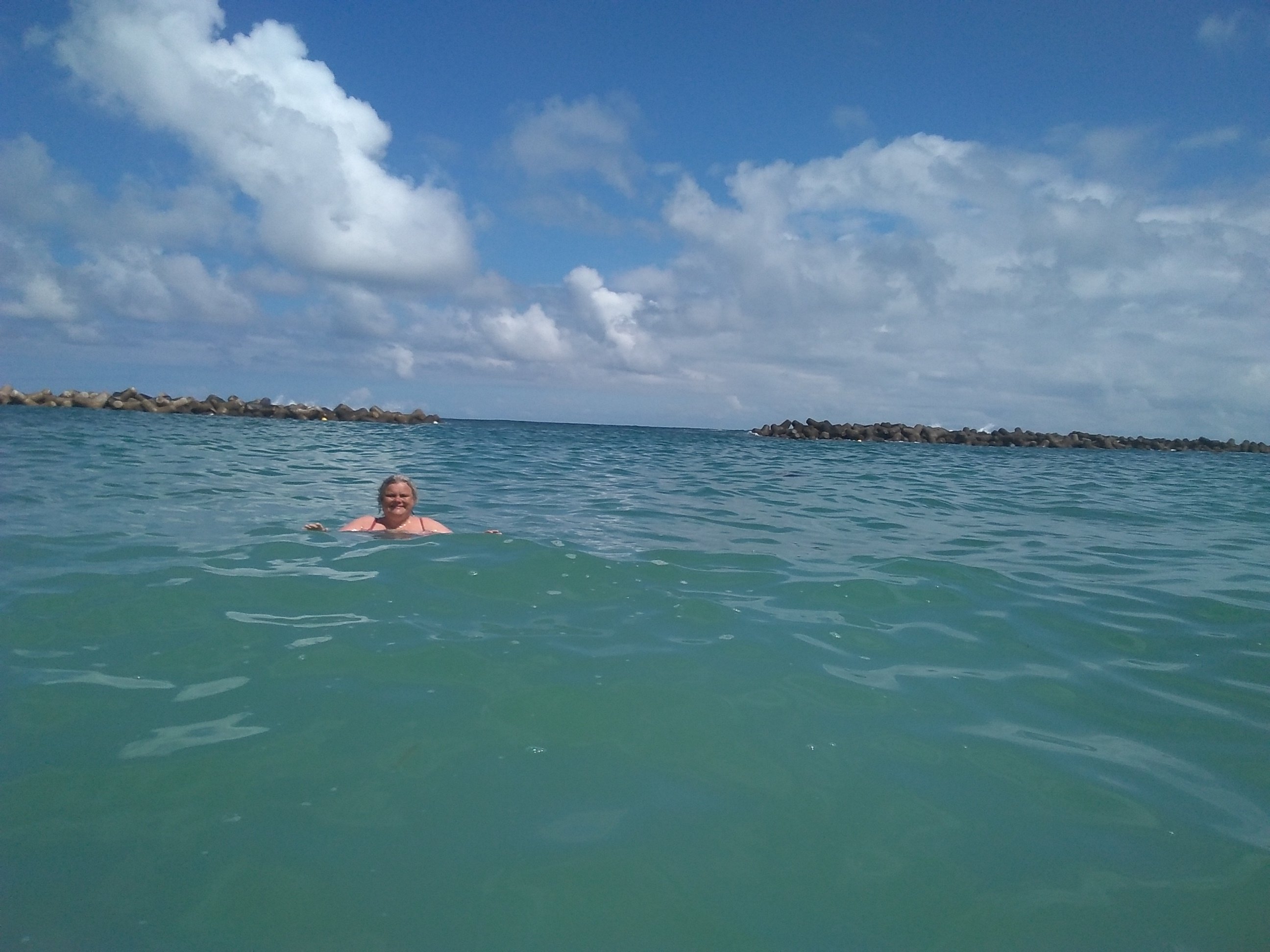

It was my first time swimming in the Pacific and it felt great.

Pete went for a walk and I swam and people watched. The Japanese seem to really love their inflatable devices and age was no barrier! In fact we were not only the only Westerners of the beach but the only ones without an inflatable. Whilst Pete was exploring my imagination was going overtime as I surveyed the beach, colourful inflatables, laughing children, squeals of delight and all the time I was thinking this wouldn’t look out of place in a disaster movie involving a tsunami. They always start off with a scene that looks perfectly normal land then……..all hell would break loose, the tannoys would be blaring out, there would be a mad dash off the beach. And so on…. Obviously I overthink things.

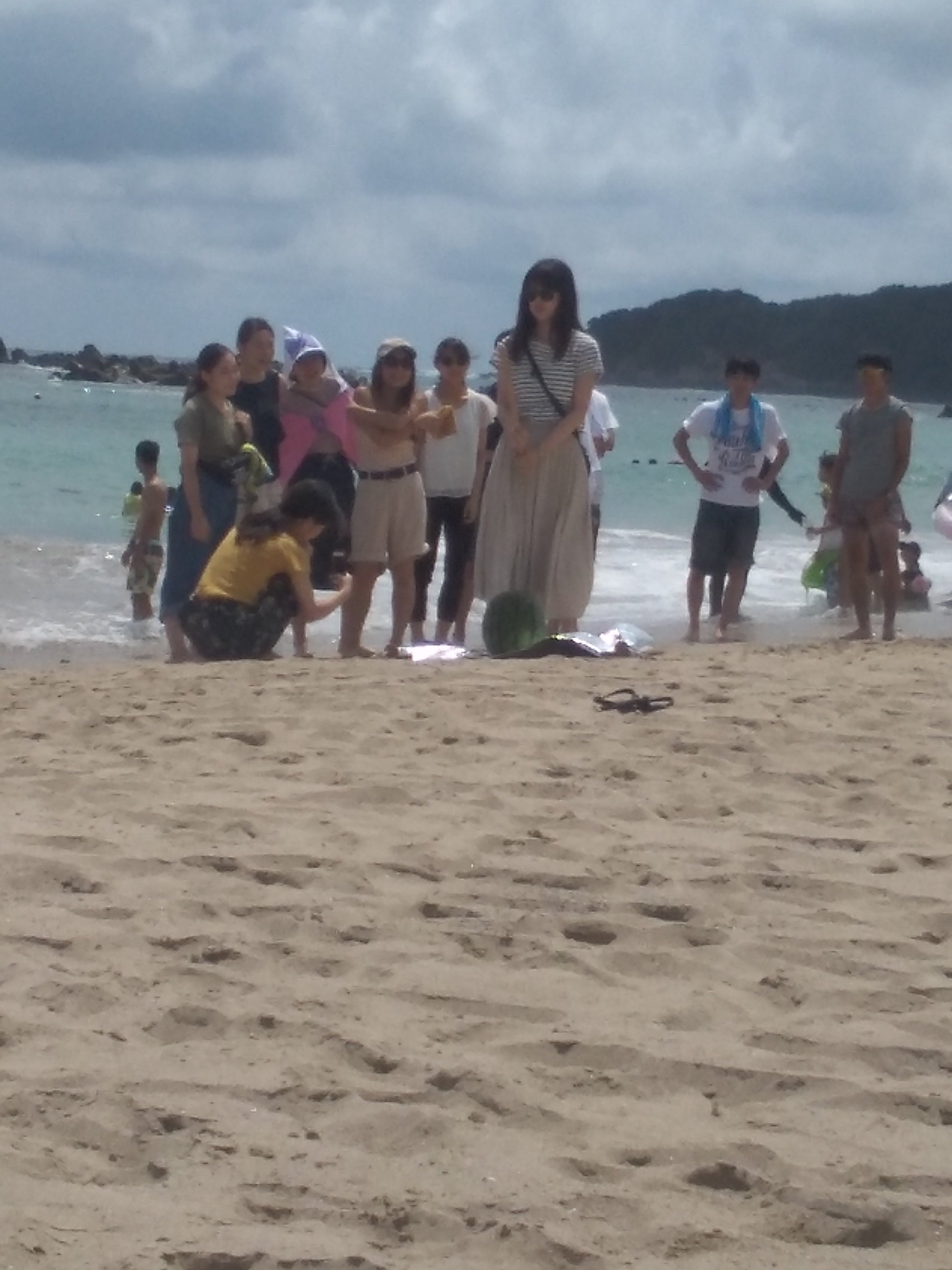
Anyway luckily I got distracted by these thoughts when I saw a group of young people, blindfolded hitting a watermelon, which seemed strange on lots of different levels, watermelons are expensive, it’s not the normal beach activity (or maybe it is in Japan), they were all fully clothed. So of course I googled it to find out what was happening. So I found out it is a traditional game. A warermelon is laid out, and participants one by one attempt to smash it open. Each is blindfolded, spun around three times, and handed a wooden stick, or bokken, to strike with. The first to crack the watermelon open wins. I found out that it is perfectly normal to play on the beach as it is a summer game and it is called suikawari. Not only that it is taken seriously as there has  been a suikawari association. I think it’s folded now but here goes:
Japan Suika-Wari Association Rules

The Japan Suika-Wari Association (JSWA), established by the Japan Agricultural Cooperative (JA), established a set of rules in 1991 governing the game.The JSWA was created by the JA to increase consumption of watermelon. The organization no longer exists. The rules established were as follows:

  • Distance between player and watermelon: over 5m, and within 7m
  • Stick: Circumference of 5cm; length equal to or less than 1m, 20cm.
  • Material to use for blindfold: JSWA-recognized blindfolds. To verify that the player was truly blinded, observers were encouraged to drop a 10,000-yen note in front of her.
  • Watermelon: a well-ripened domestic melon.
  • Time limit: 3 minutes.
  • Judging: Judges should rate the player on how pretty a break between halves she managed to make. Players who cleaved the watermelon in equal halves could come close to a perfect score, while players who broke them into unequal parts would receive lower marks.
  • Other details: Judges should have eaten at least 10 watermelons in the current year.
I would definitely like to introduce this to Sheffield as I eat at least 10 watermelons in a year.

I think this is why we like to go off the beaten track because you see things that you may not ordinarily do if you just stick to the top destinations.

After a very long time on the beach was a great relaxing experience we went to Otsatu, as I was interested in finding more out about the ama. The ama are women divers – it’s thought they have done this for well over 2000 years. They were honoured as their role originally was to retrieve abalone for shrines and imperial emperors. Latterly they have dived for pearls. The region is famous for introducing the first culture pearls. I had read about the ama previously and had seen old photos, they looked such strong women. Women were chosen as divers for their fat distribution and their better ability to hold their breath. Originally they only wore loincloths but Las time went on they now wear a white suit. In the 1940s there were 6000 ama now there are only about 60 and Osatsu is the main area.
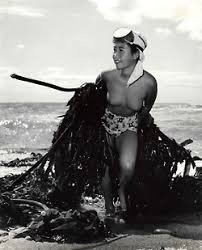
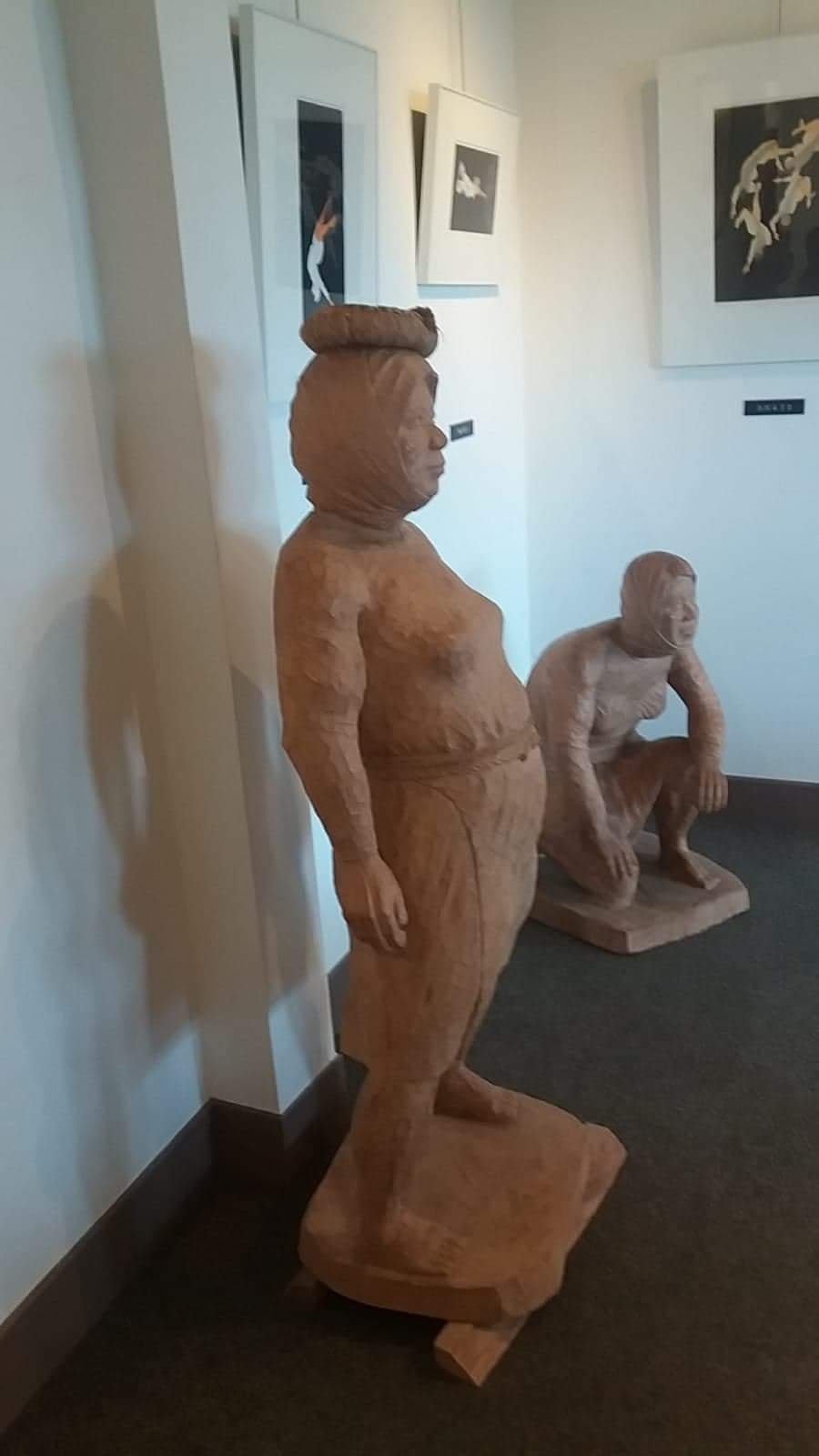
We went to the museum, there is a lot of art work linked to the ama. James Bond in You Only Live Twice got it together with an ama, Kissy Sususki.
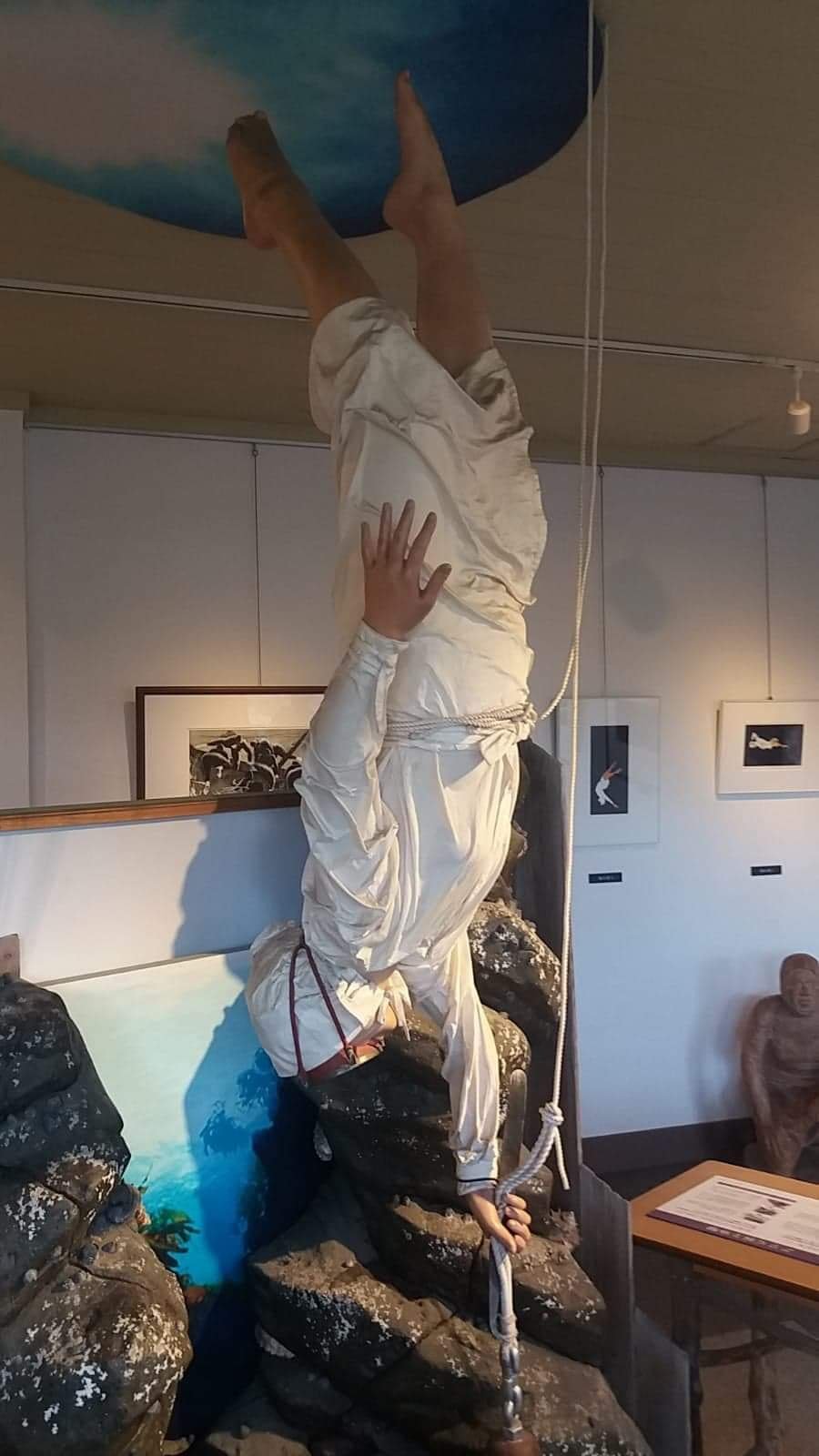
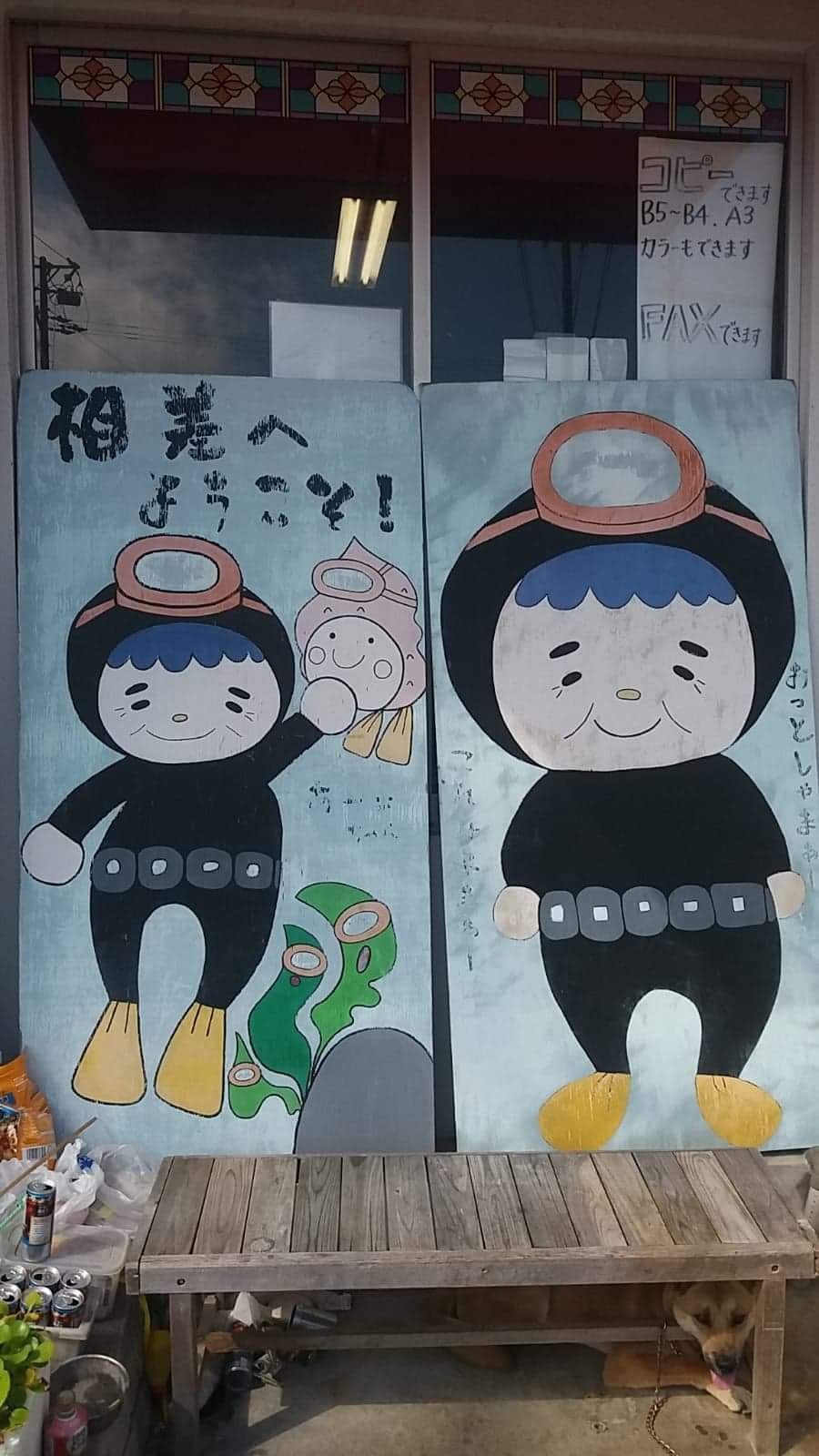
We visited the ama House where they will cook what they have got on their dives.. There are women still doing it in their 70s!
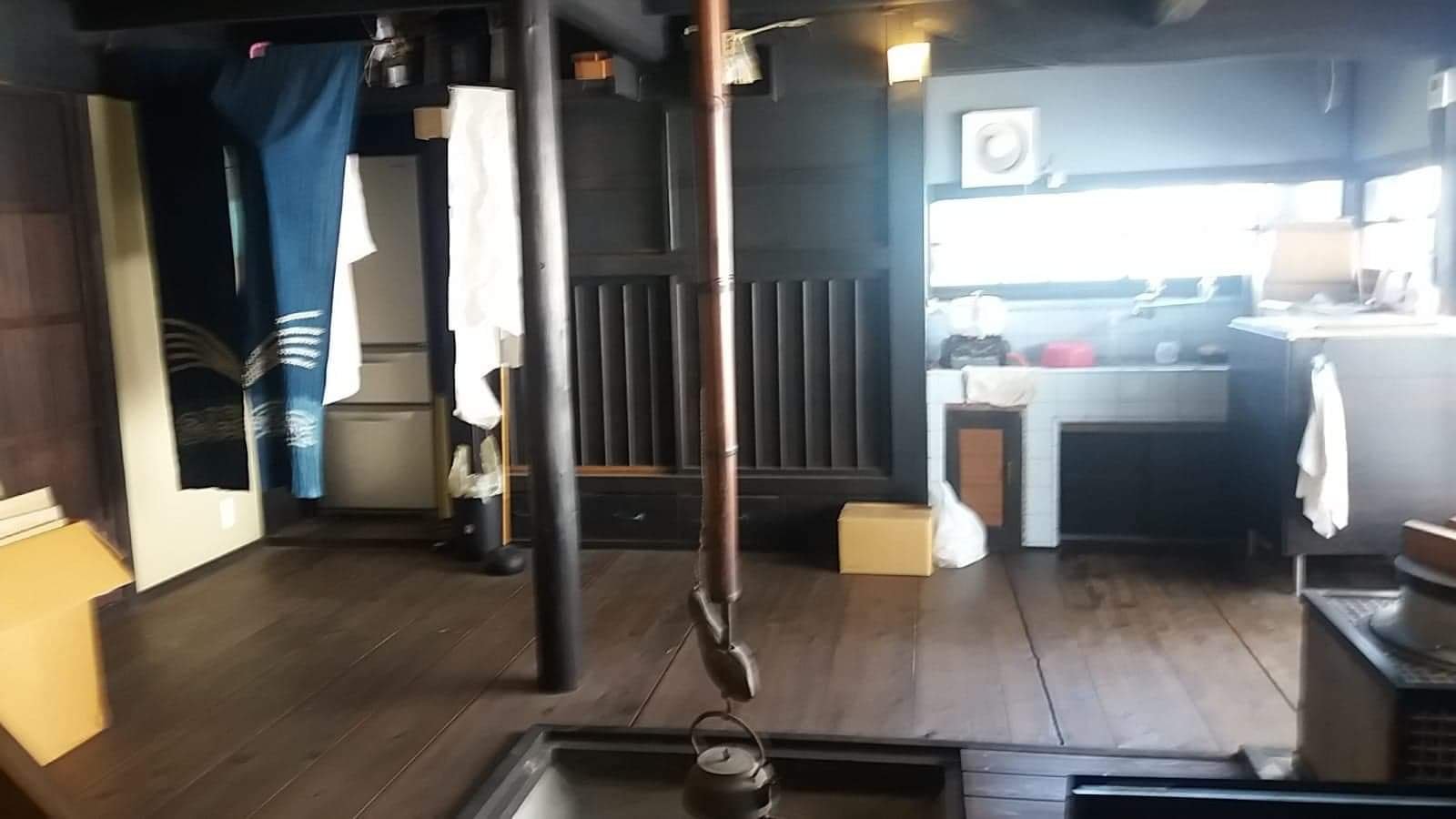
I would have loved for an experience like this but there were several constraints, whatever they cooked would have come from the sea, like urchins so wouldn’t have eaten it, they wouldn’t speak English and you have to have 4 to book. I watched YouTube videos instead.
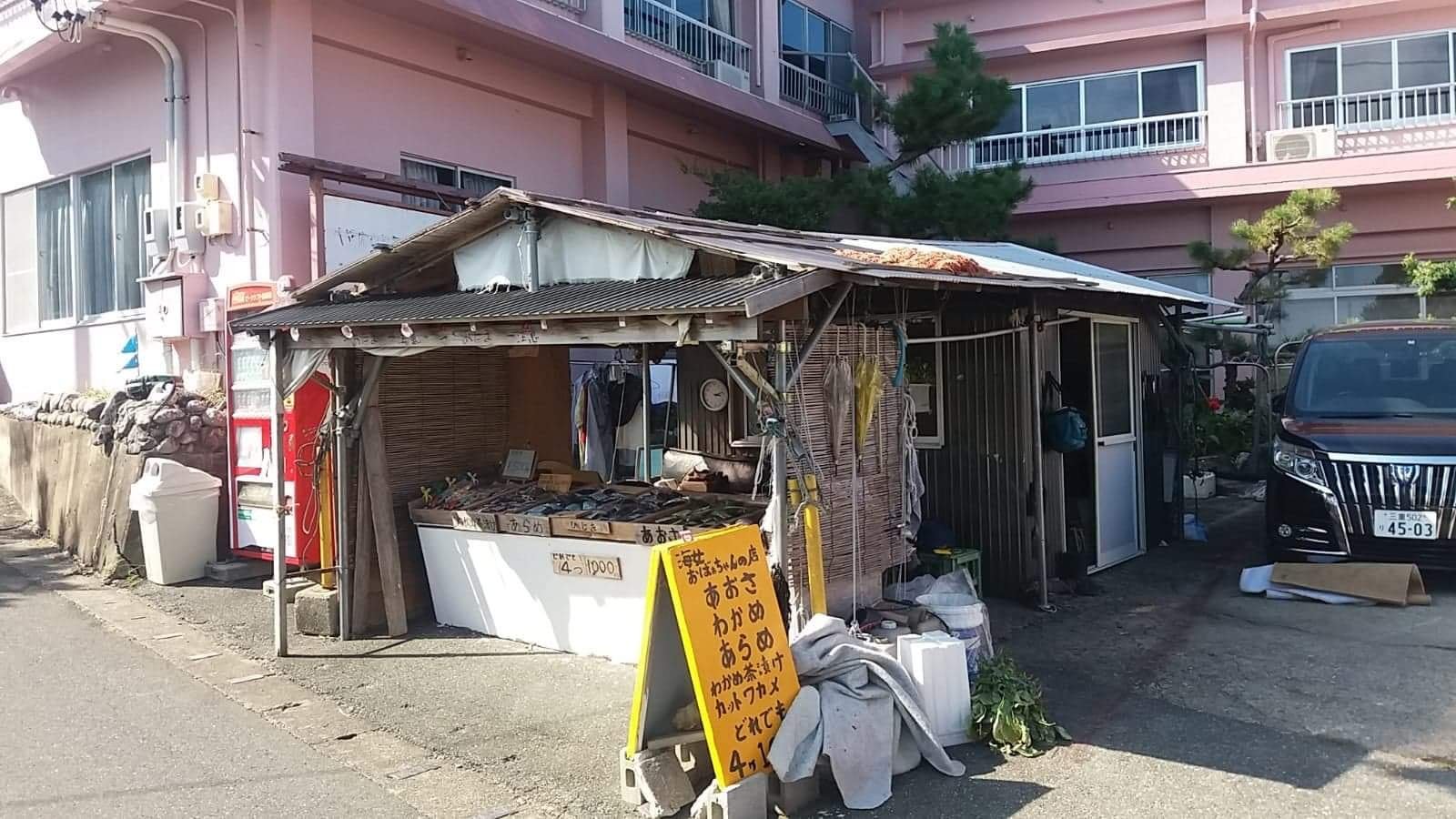
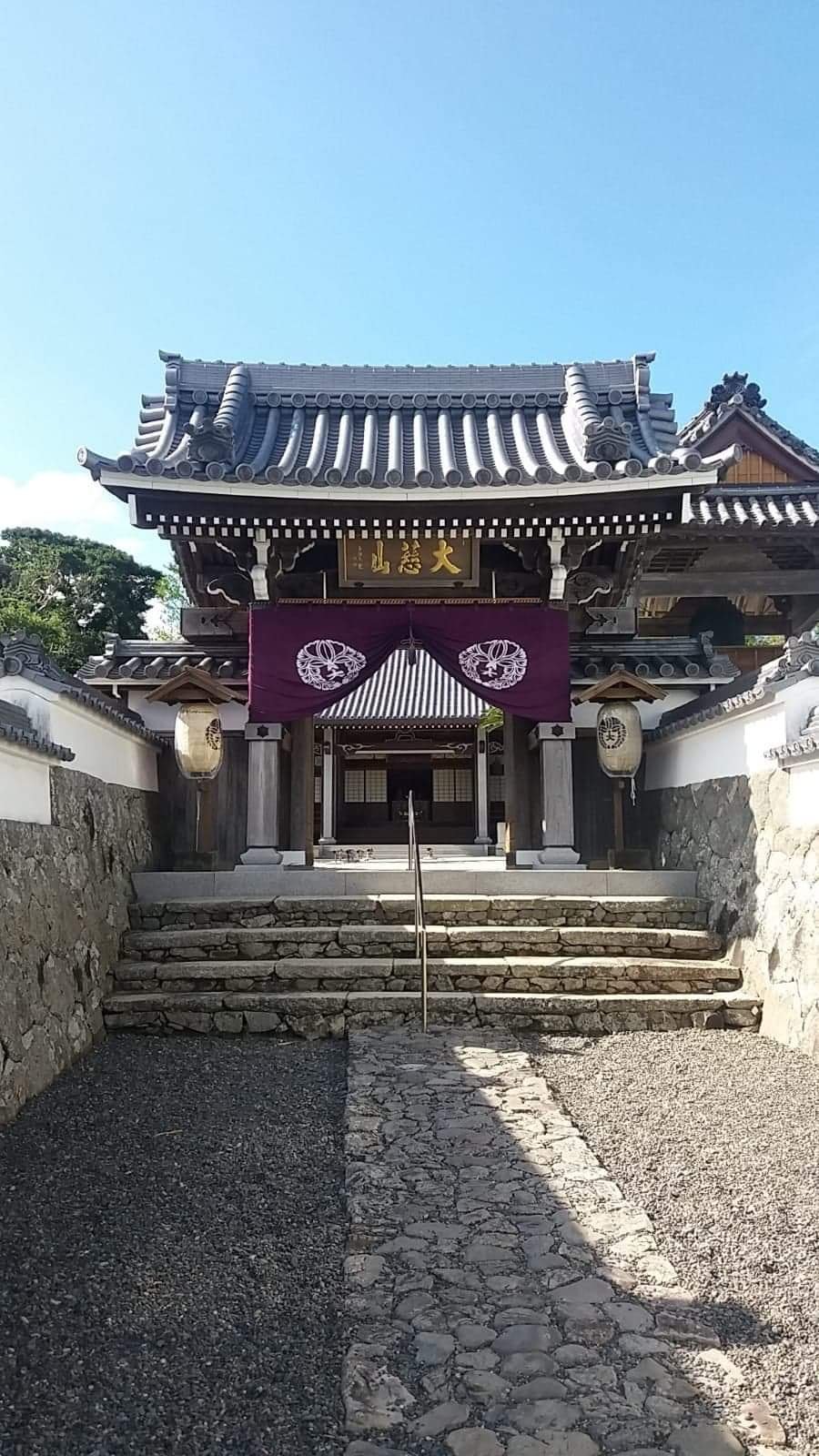
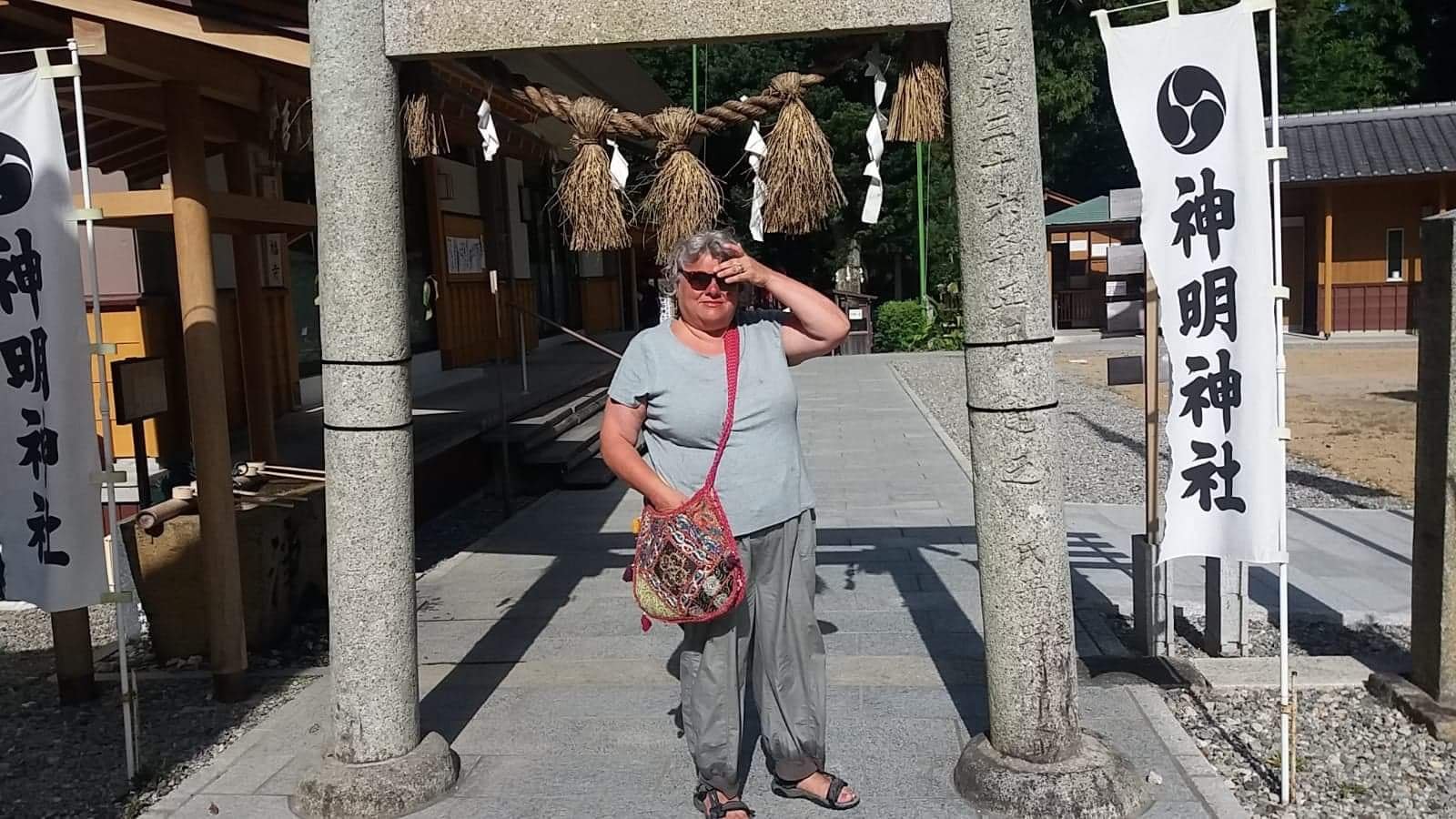
On the path where their house is there were several small huts selling things like seaweed products, run by old women, maybe they were ama. At the top of the path was yet another shrine…. Aghhhhh!
Nearly heaven and Nara…

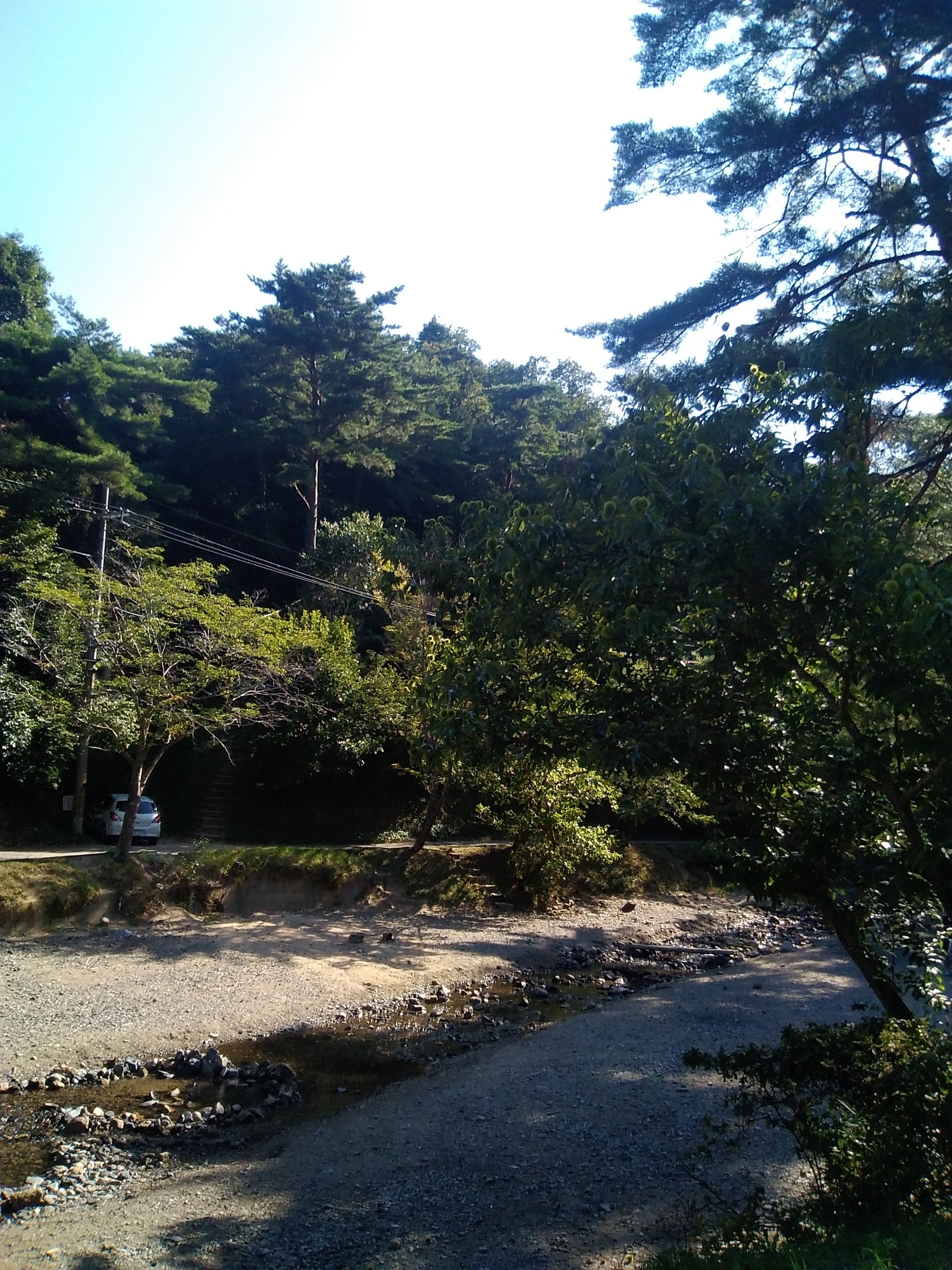
Leaving Kyoto we headed quite late at night towards Yamashiro forest Park. We had been recommended the site by some German travellers we had met. The roads in the dark were quite hair raising at times. On our way back down in the morning the roads were fine and couldn’t see why we had been so stressed. The website for the place was intriguing:Come and listen to the chirping birds and the soft tricking streams at the serene and green Yamashiro Forrest Park. I was very interested in the ‘tricking streams’.

First thing in the morning we saw what a beautiful spot it was. Very quickly though it started filling up with families and groups of youths, setting up barbecues next to the stream, when it still only about 7!
The tiny bit of heaven was being able to have a shower, our first since Tokyo! Although there had been showers on the campsite by the lake, in honesty the lake was a better prospect. Having a hot shower after such a long time was exhilarating. I felt I was loosing layers off my body. We have been keeping clean but it has been pretty basic.

We decided not to drive into Nara. We knew the parking fees were going to be exorbitant and again travelling into an unknown place can be stressful. So we did what we had done for Kyoto, find the nearest train station, park up and travel on from there. Again like Kyoto we were able to get an unlimited bus pass very cheaply once we got there.

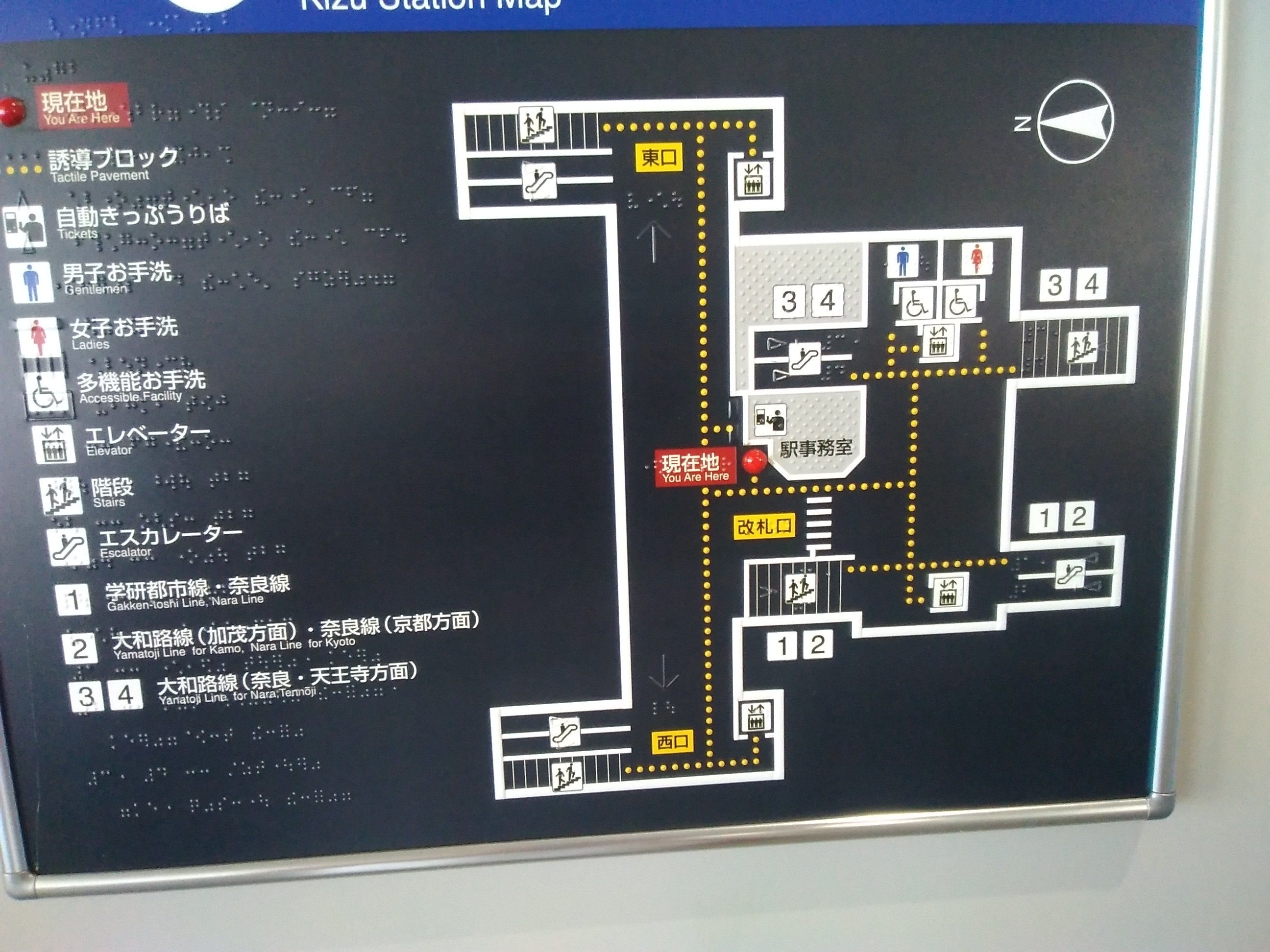
One thing I have obviously noticed as we have been travelling round is how geared up they are for the visually impaired, it would seem certainly from a transport point of view that there is a lot provided.

Nara once was the capital of Japan and is home to some of Japan’s largest and oldest temples. The biggest pull into Nara is the Todaiji Temple. It was built in 752 as the lead Buddhist Temple in Japan.

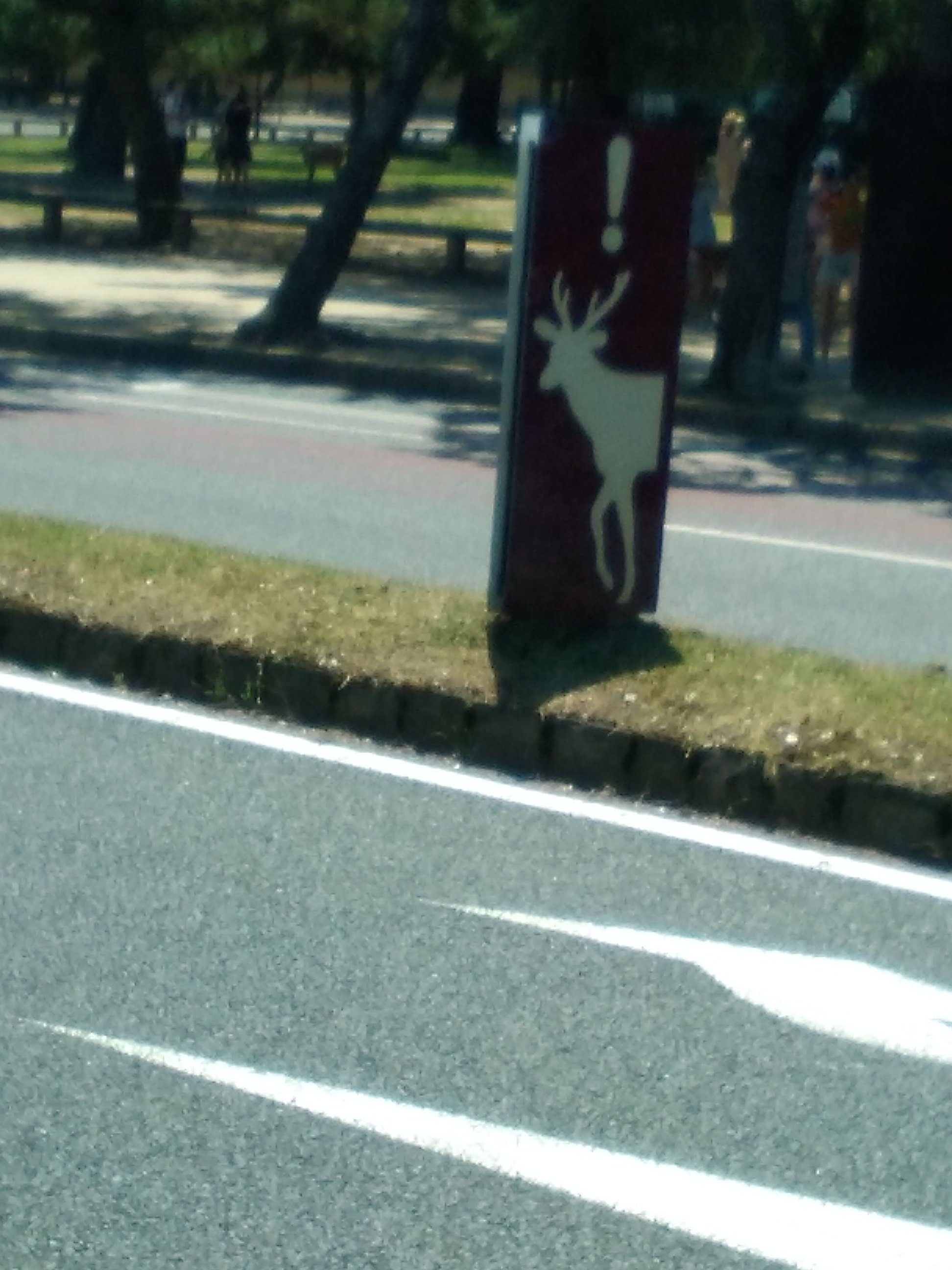
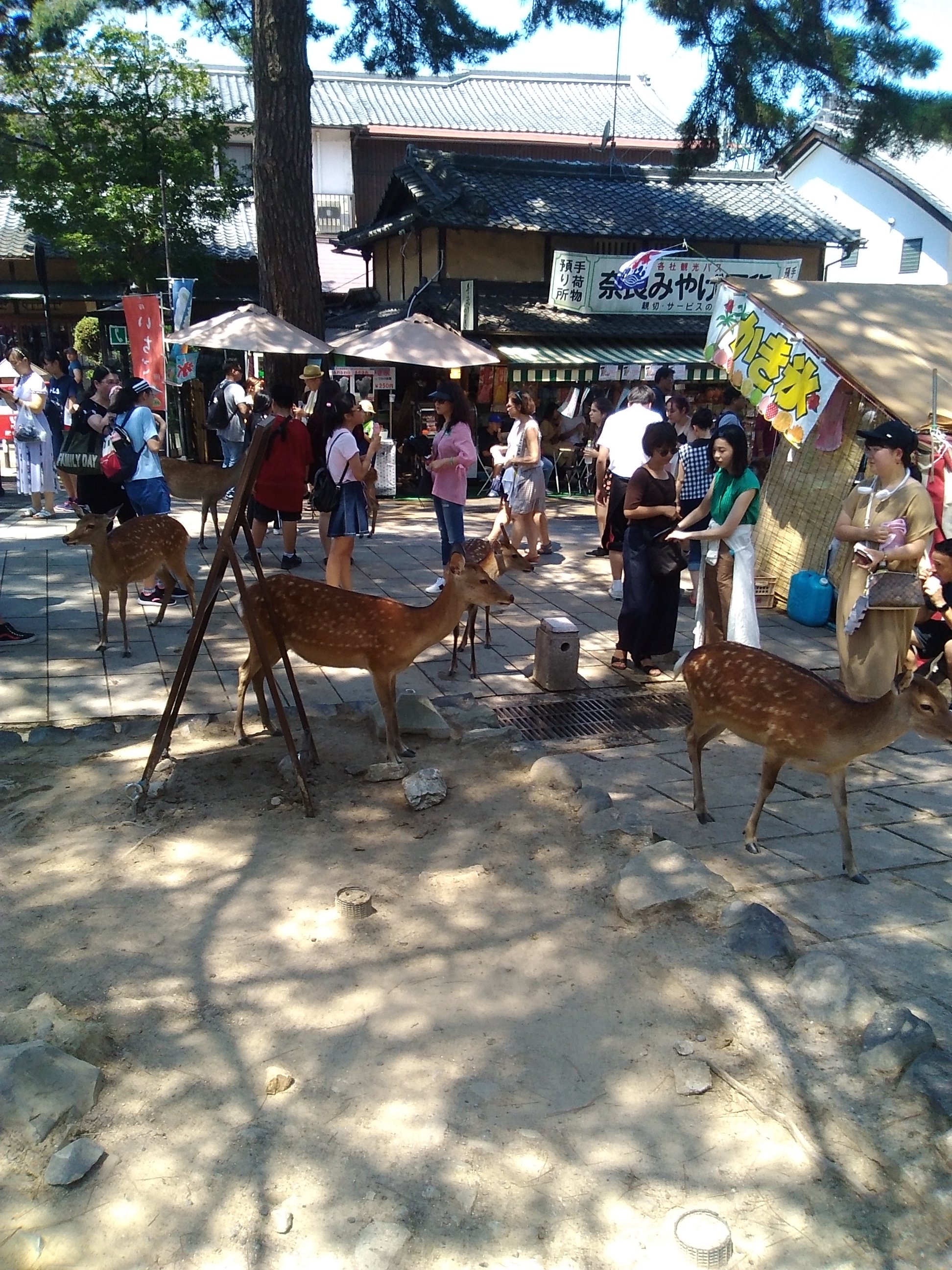
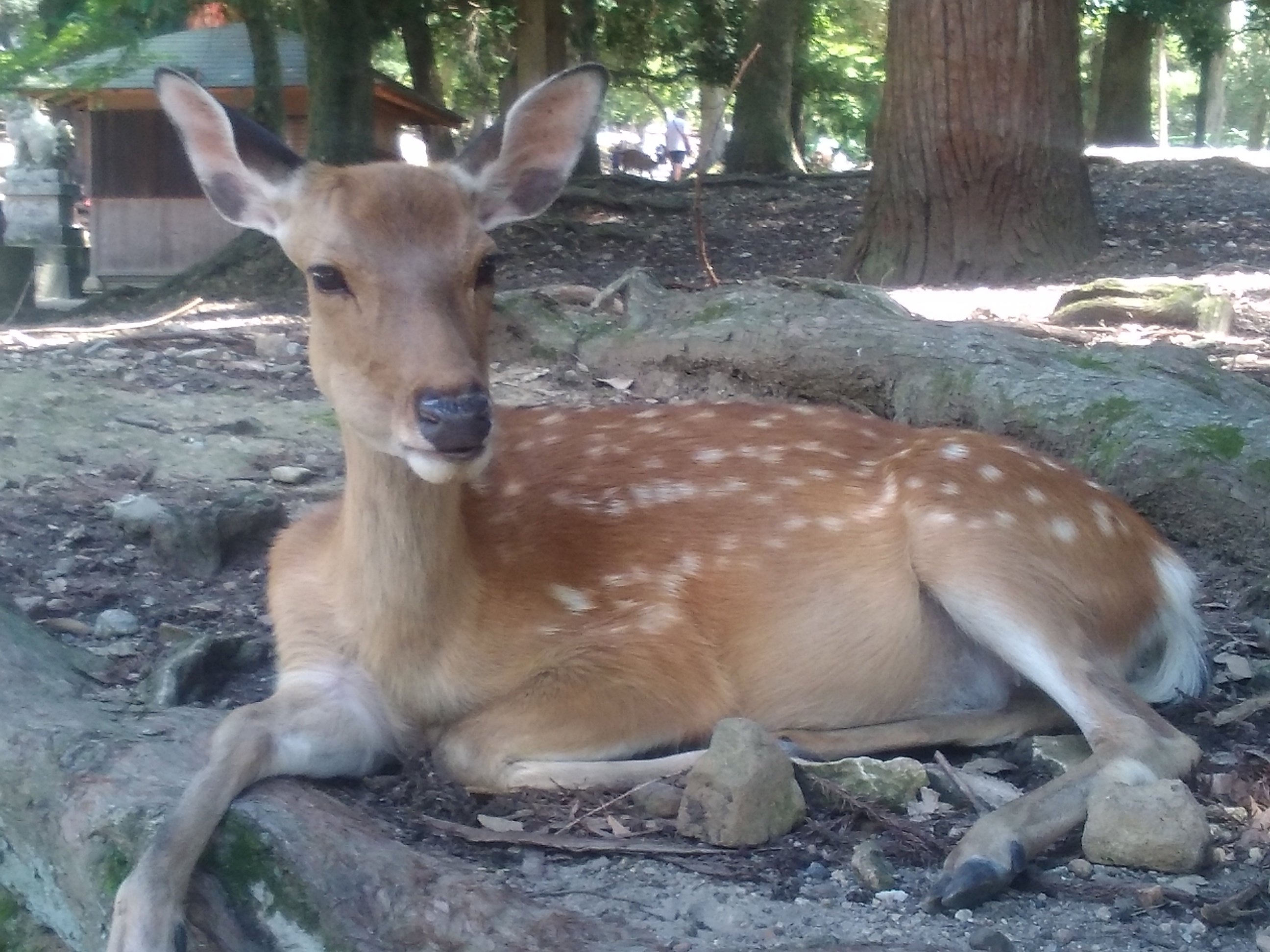
I was quite excited to see the deer that live around the Temple. As we neared the Temple on the bus road signs started signalling that deers were in the area.

The Nara deer are symbols of the city and are famous throughout Japan. The deity enshrined in one of thee temples  therein is Takemi Kajichi no Mikoto, said to have ridden to Nara upon a sacred deer from Kashima Shrine in Ibaraki Prefecture. Because of this legend, deer were thought of as sacred animals–the helpers of gods–and have been carefully protected for many years. Even today, Nara’s deer are carefully protected as “natural monuments. ‘
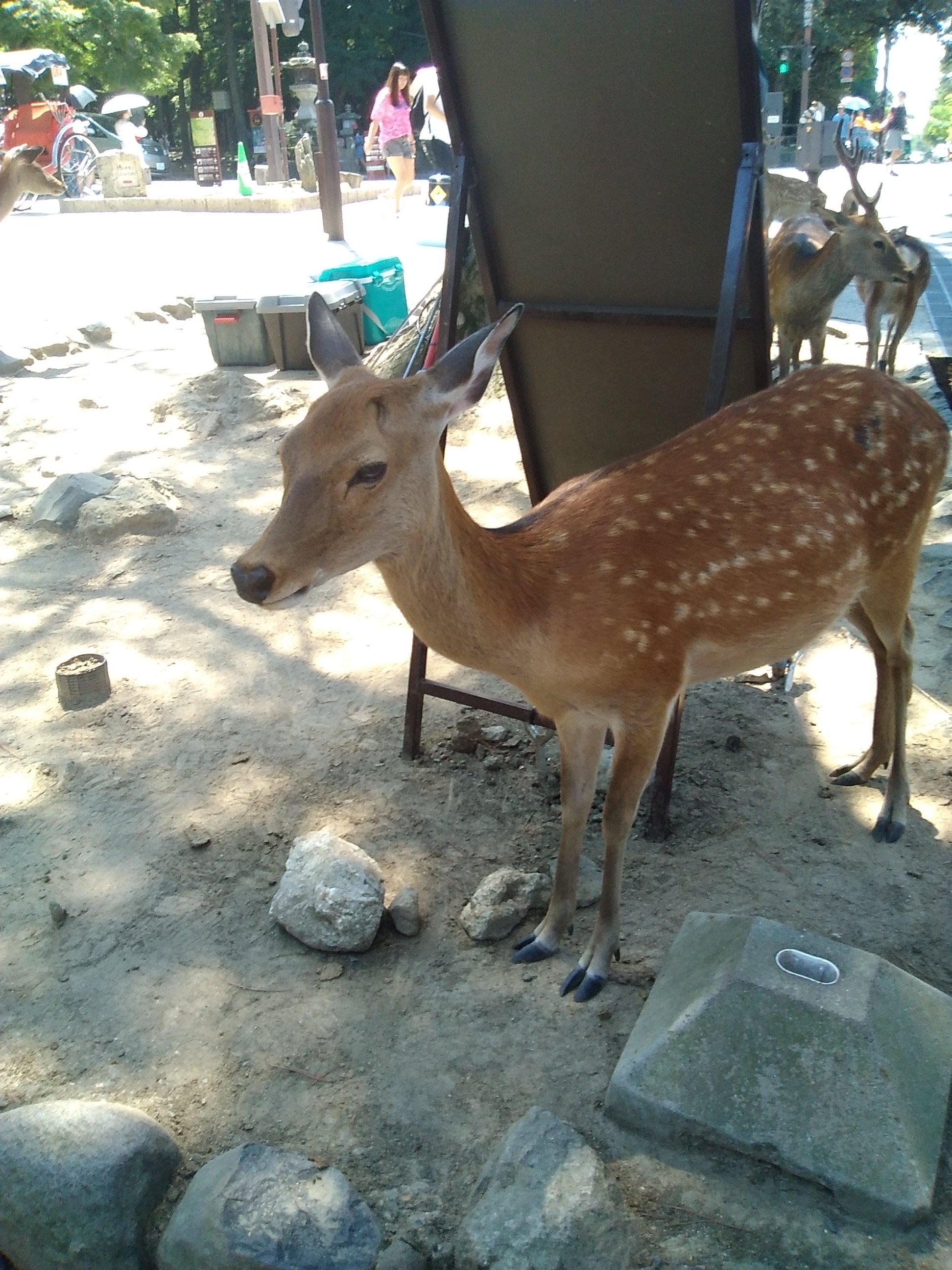
They did pretty much swan about as if they owned the place.


There are noticeboards along the way that stress that the deer are wild animals, so they need to be treated accordingly. That said there were stalls where you an by deer crackers or shika senbei. They are made of wheat flour and rice bran. These treats are made without any sugar for the health of the deer, making them completely safe for visitors to offer the animals. Deer crackers are a registered trademark of the Foundation for the Protection of Deer in Nara, and a portion of their profits goes to efforts to protect the deer. I bought a pack for 150 yen.The route to the temple is lined with little food stalls and shops, so I waited until I had passed these before I fed them.
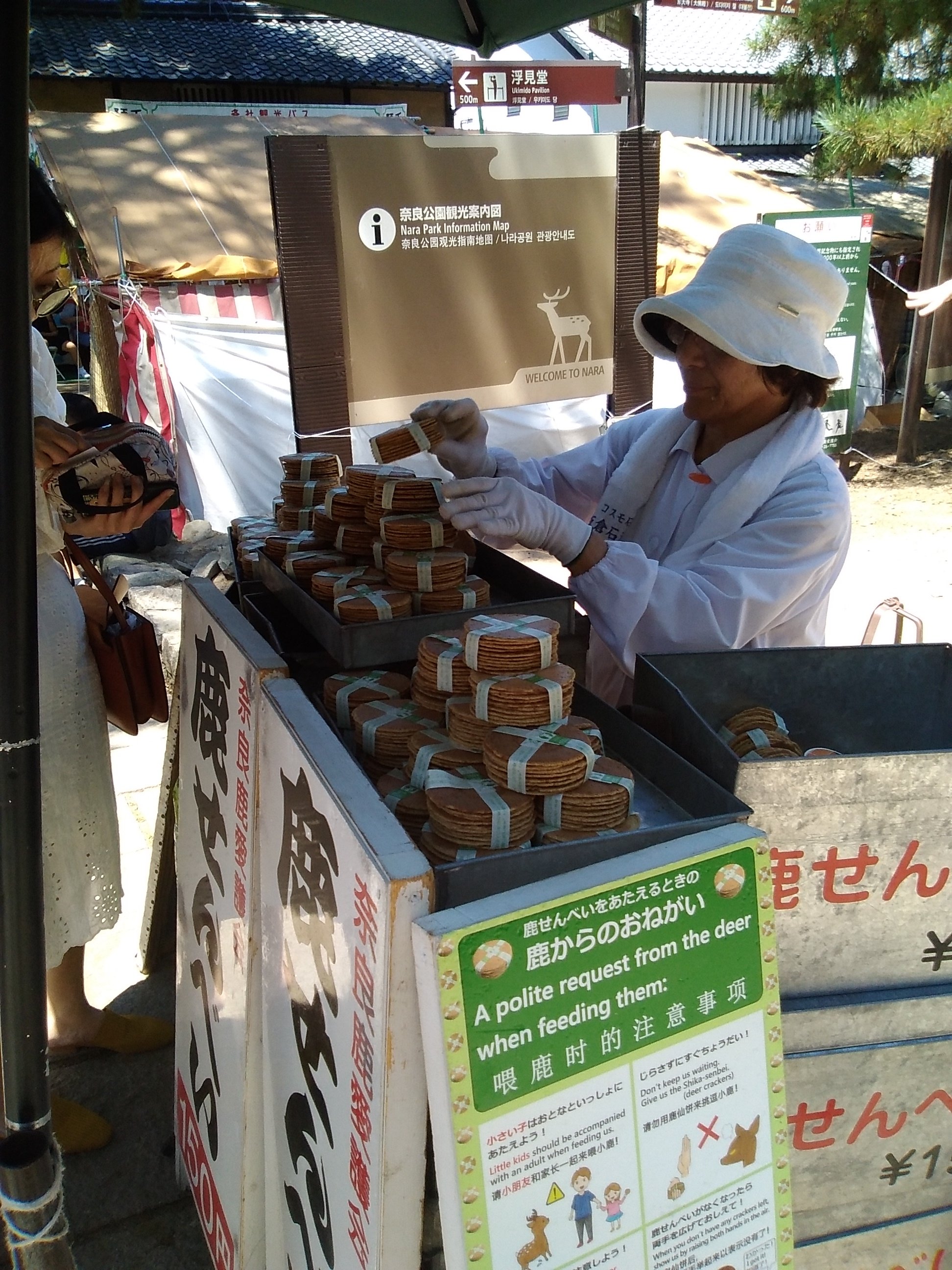
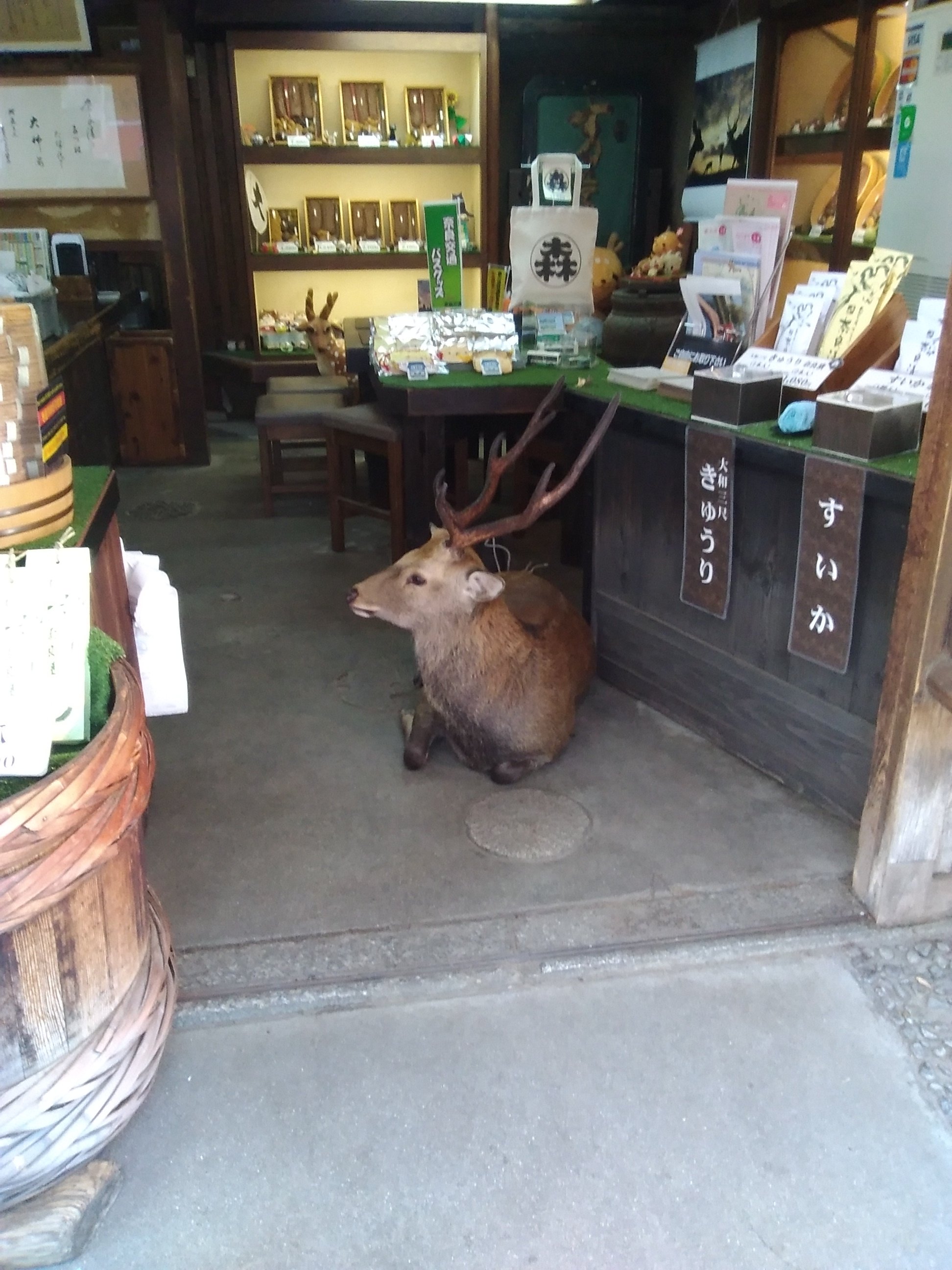
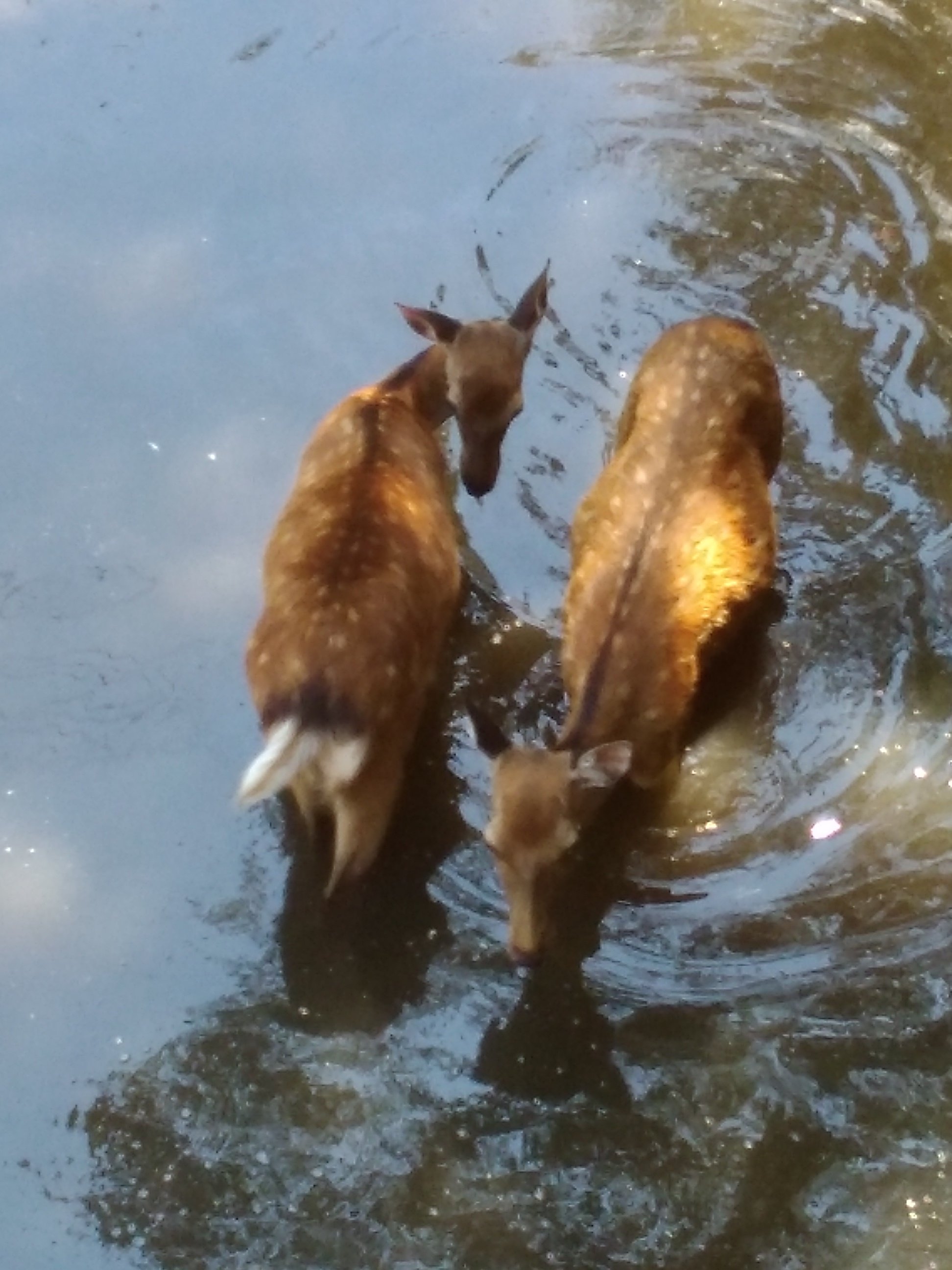
As per normal here it was a very, very hot day and even the deer were feeling it. Sheltering in shops, sitting in streams. Because of their special status they are not removed from the shops. Although I know there is a religious element, it is all so very lucrative financially as there were so many things you could buy linked to the Nara deer, headbands, biscuits, t-shirts, keyrings etc.
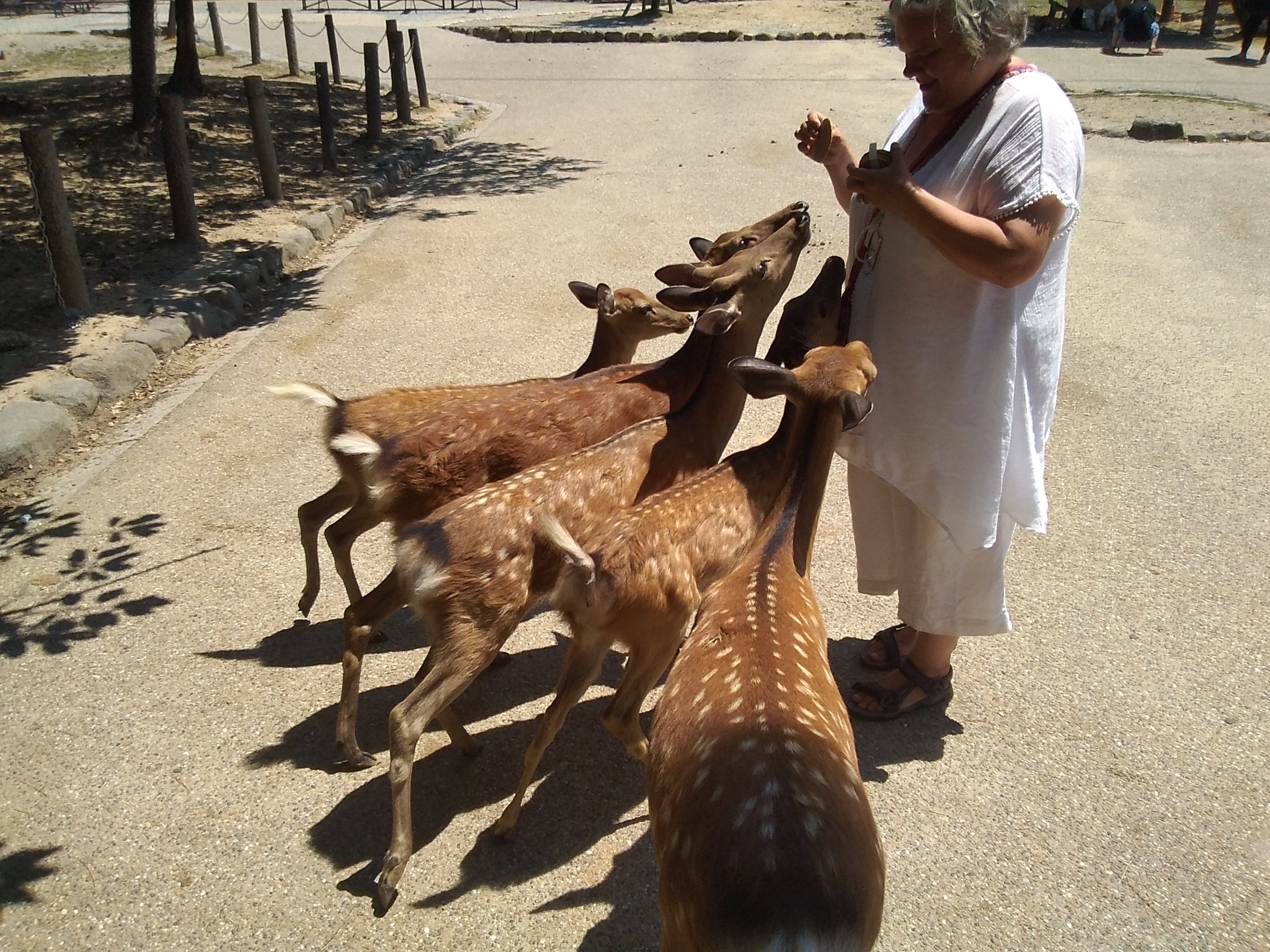
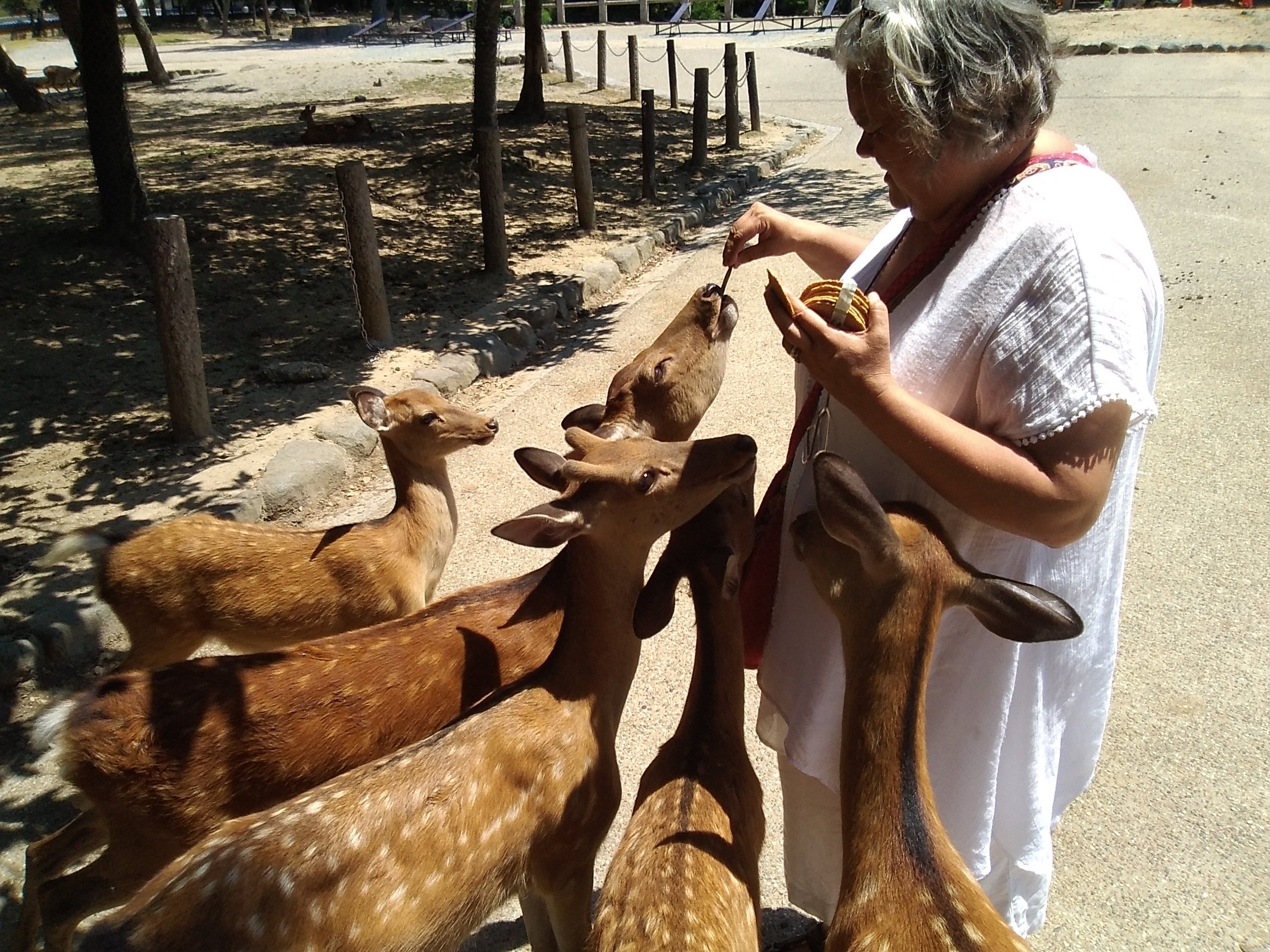
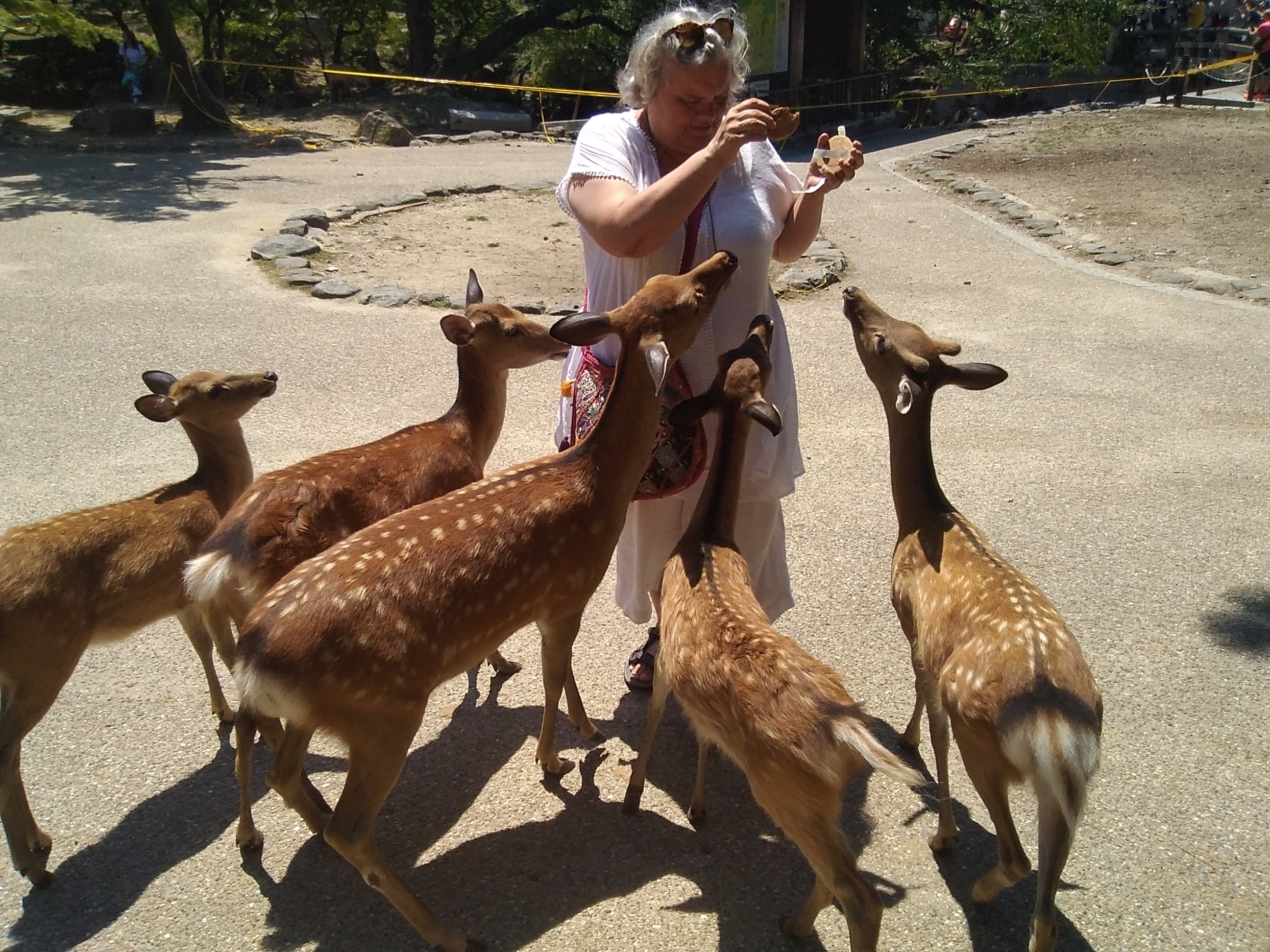
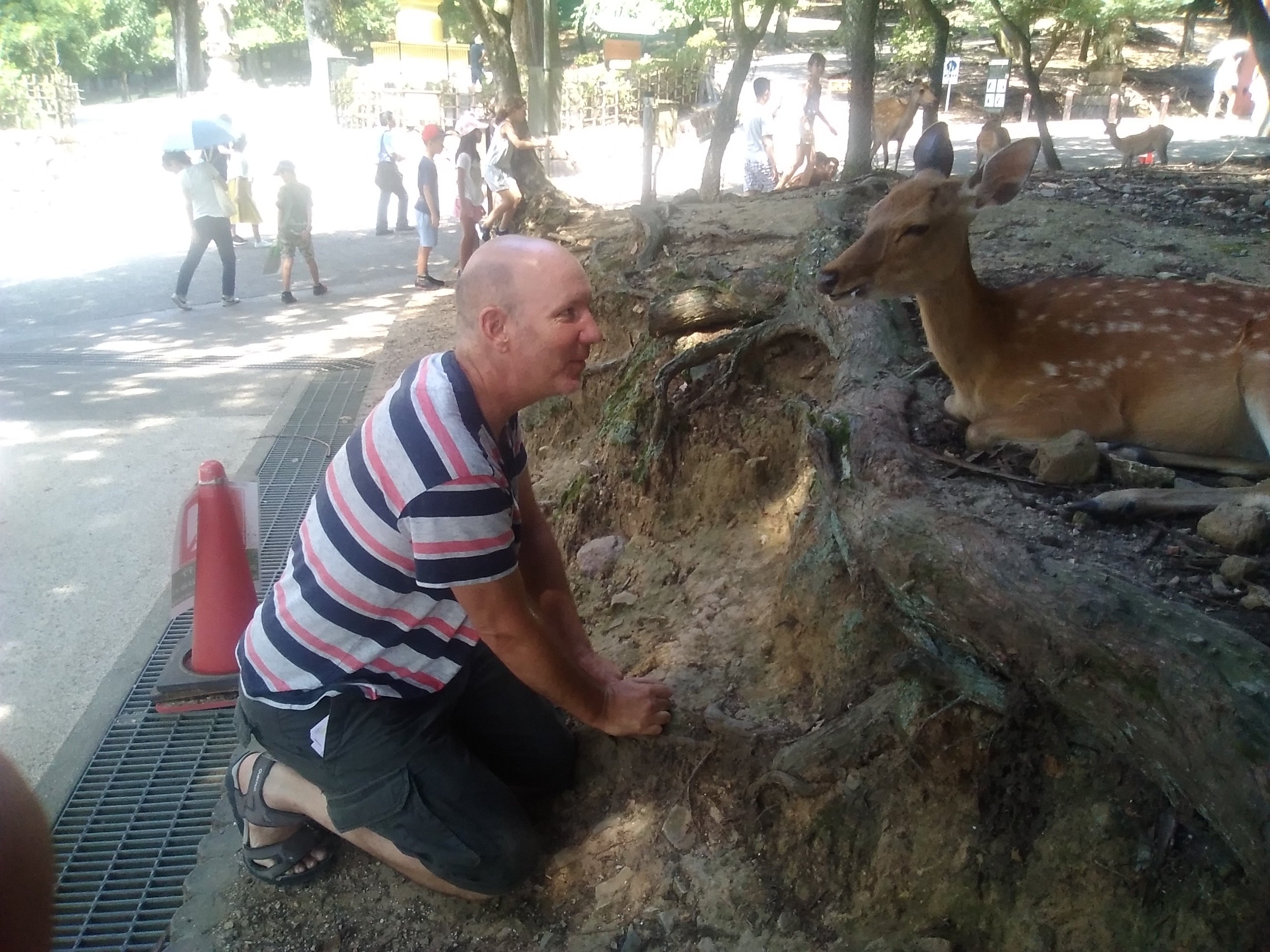
When we got to a more open area I decided to feed them, it was a bit frenzied. You  are advised that once the food has all gone you must left both hands in the air, opened out and this will signal there is no more. I did this and they just dispersed, pronto! Cupboard love! There were very cute. I know I shouldn’t say it but they were so lovely, I wanted to take one home, along with the snow monkeys etc. They just seemed to crop up all over the place.
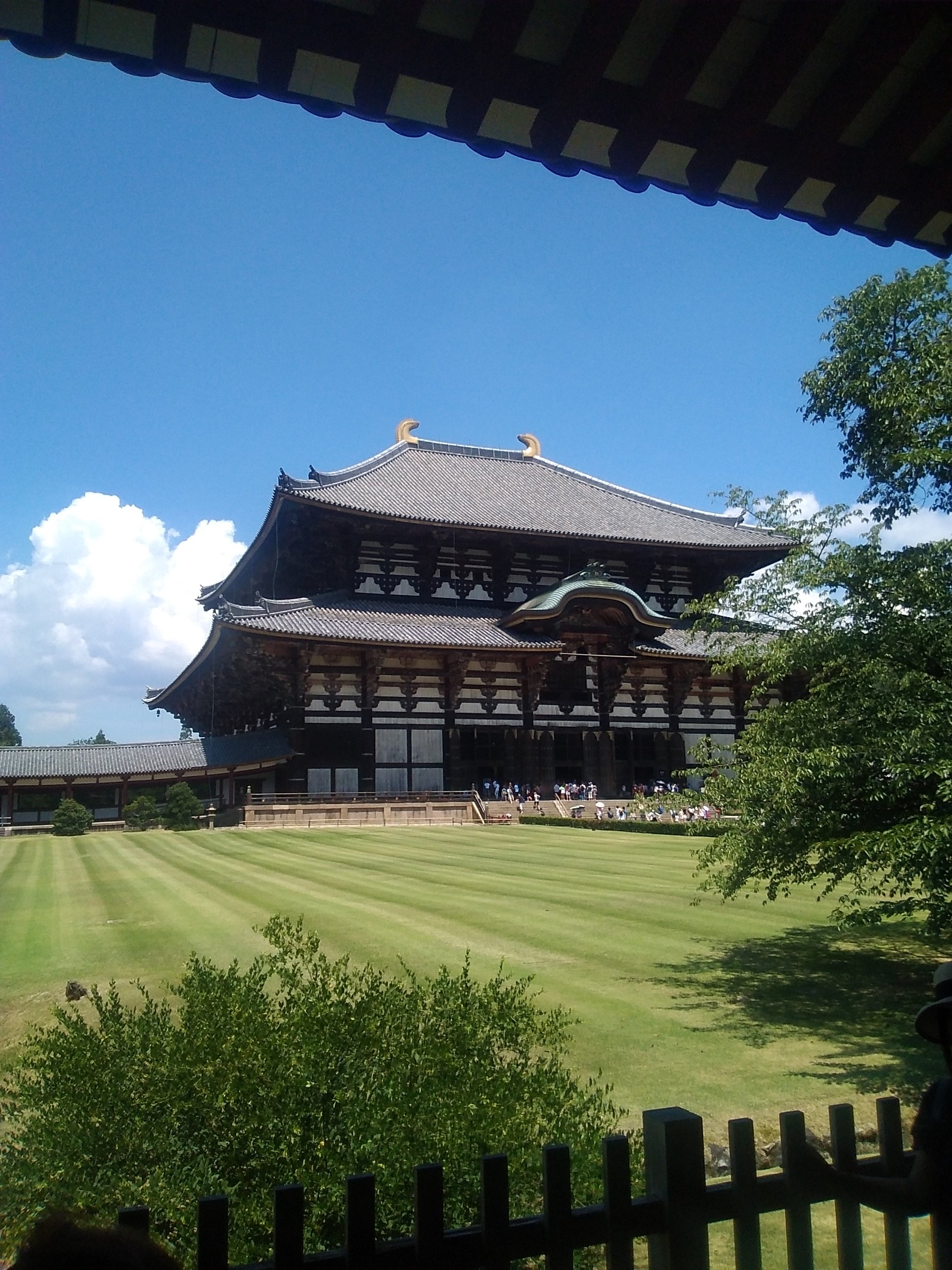
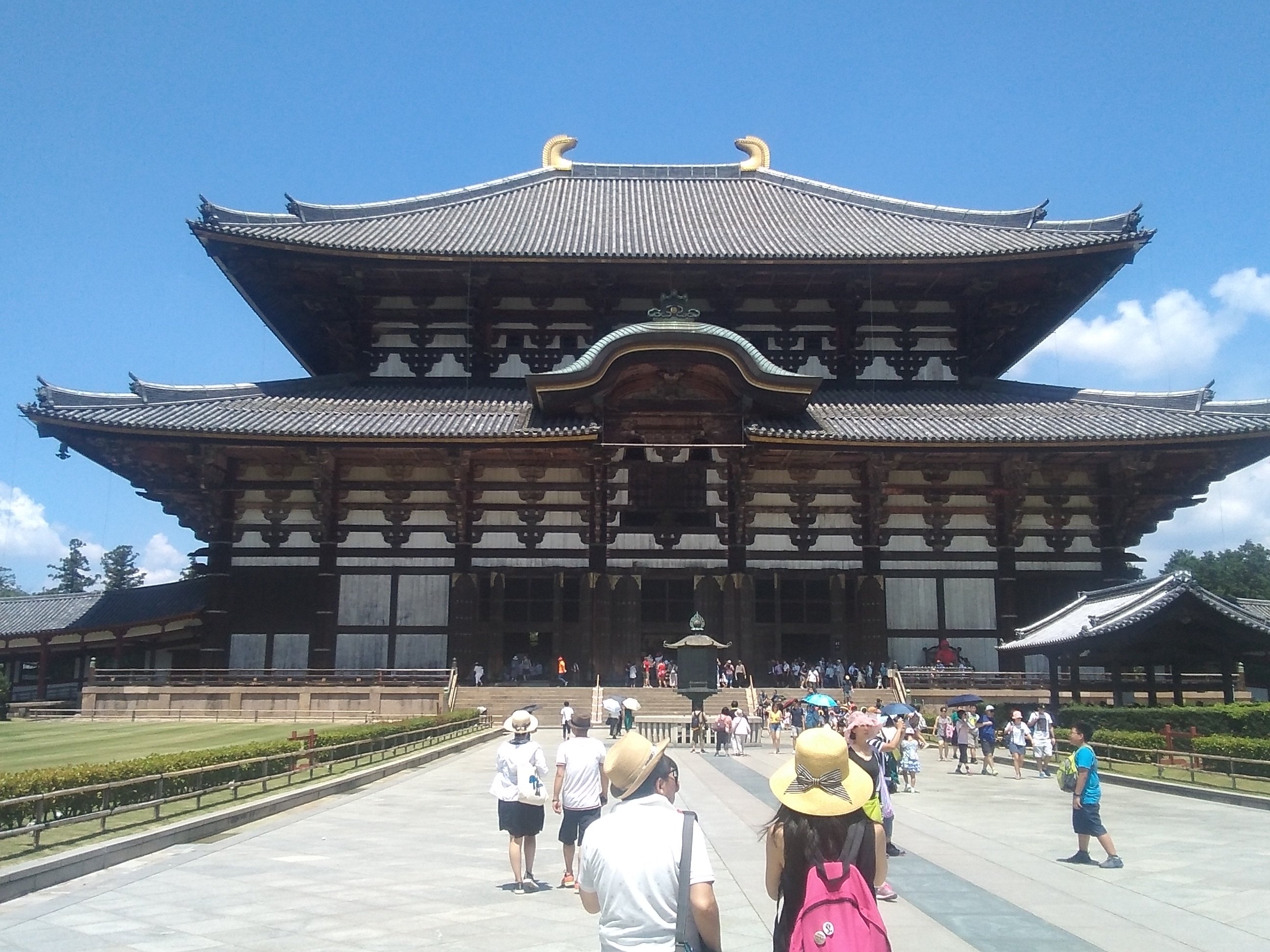
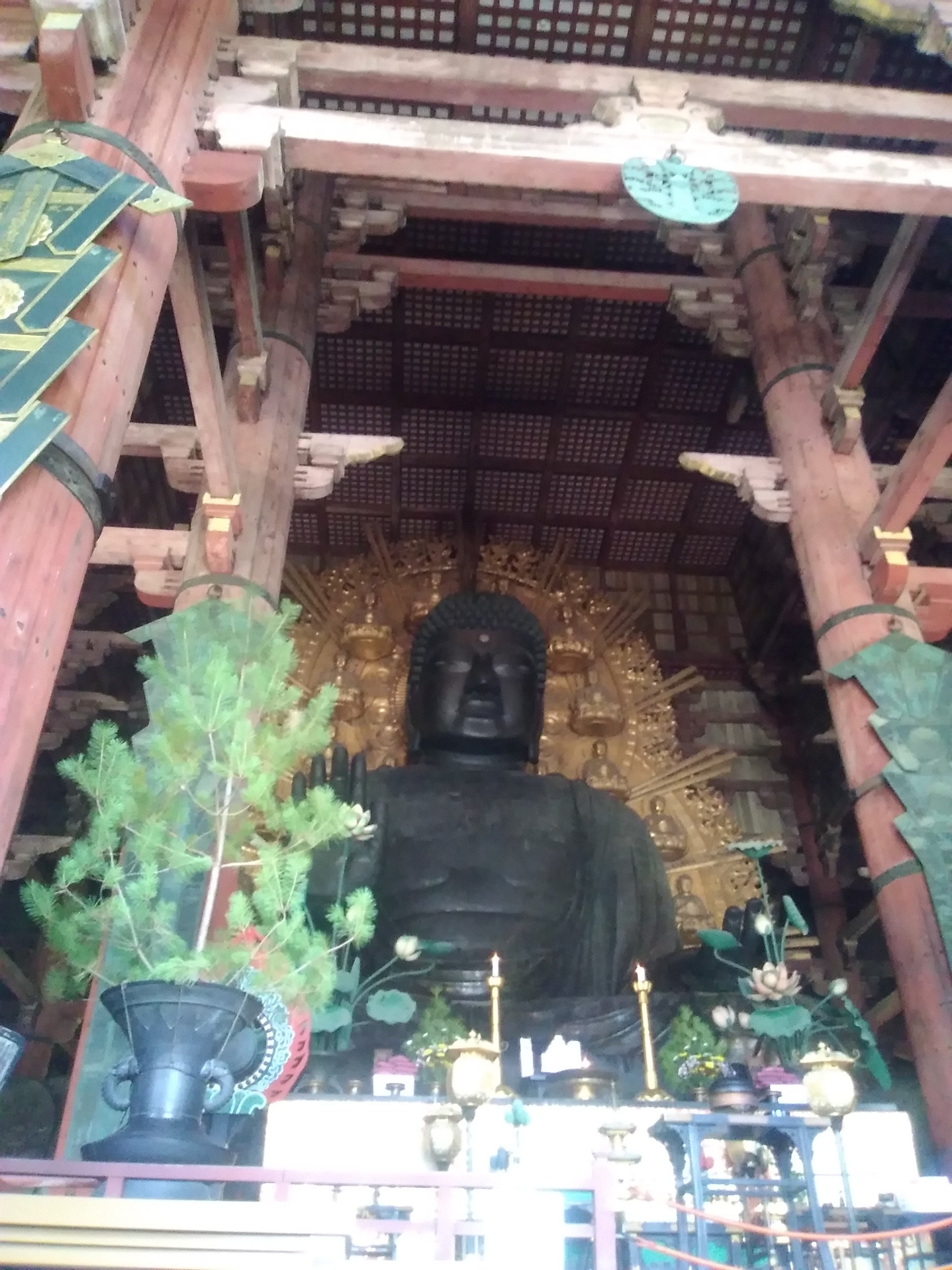
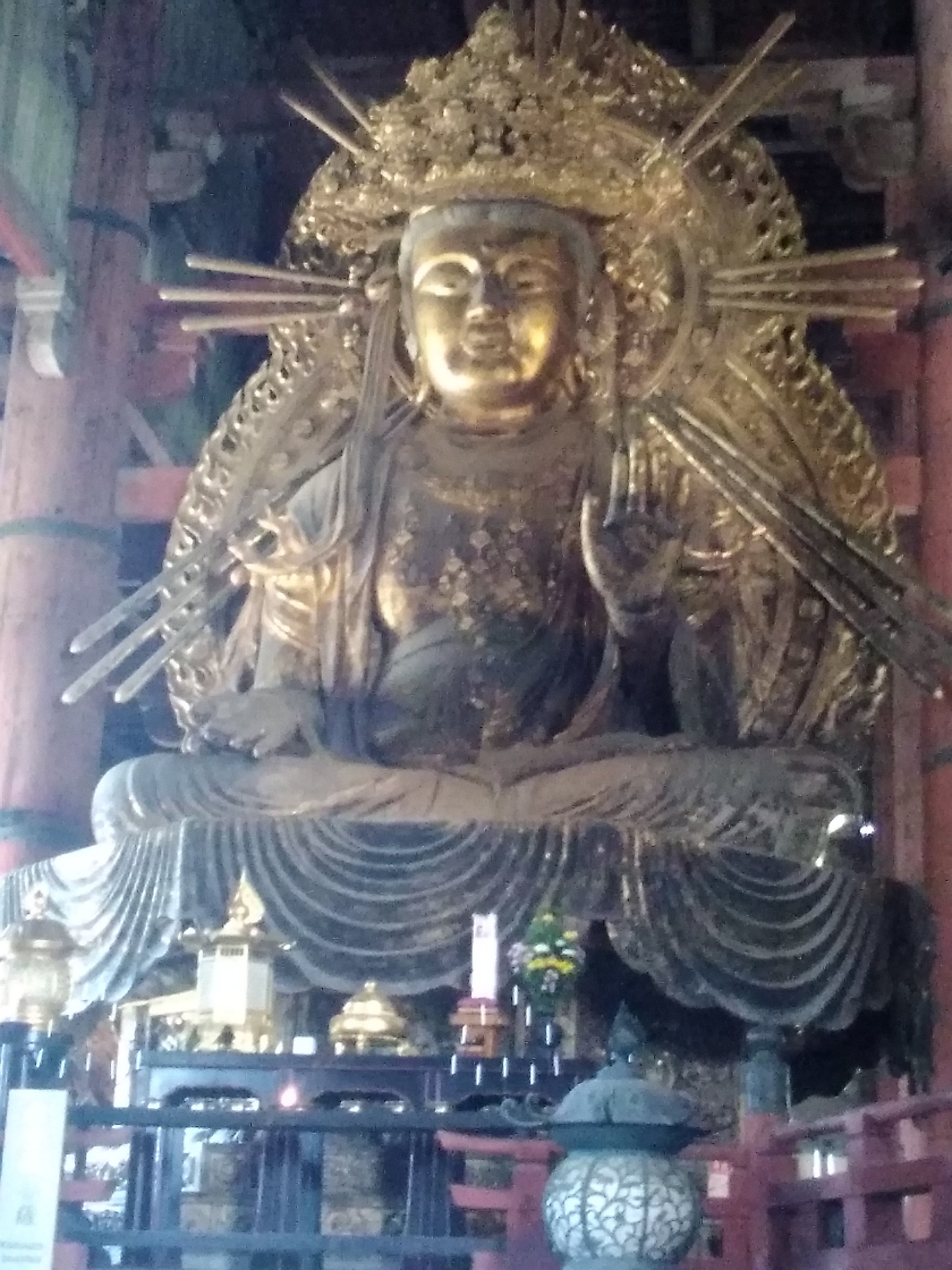
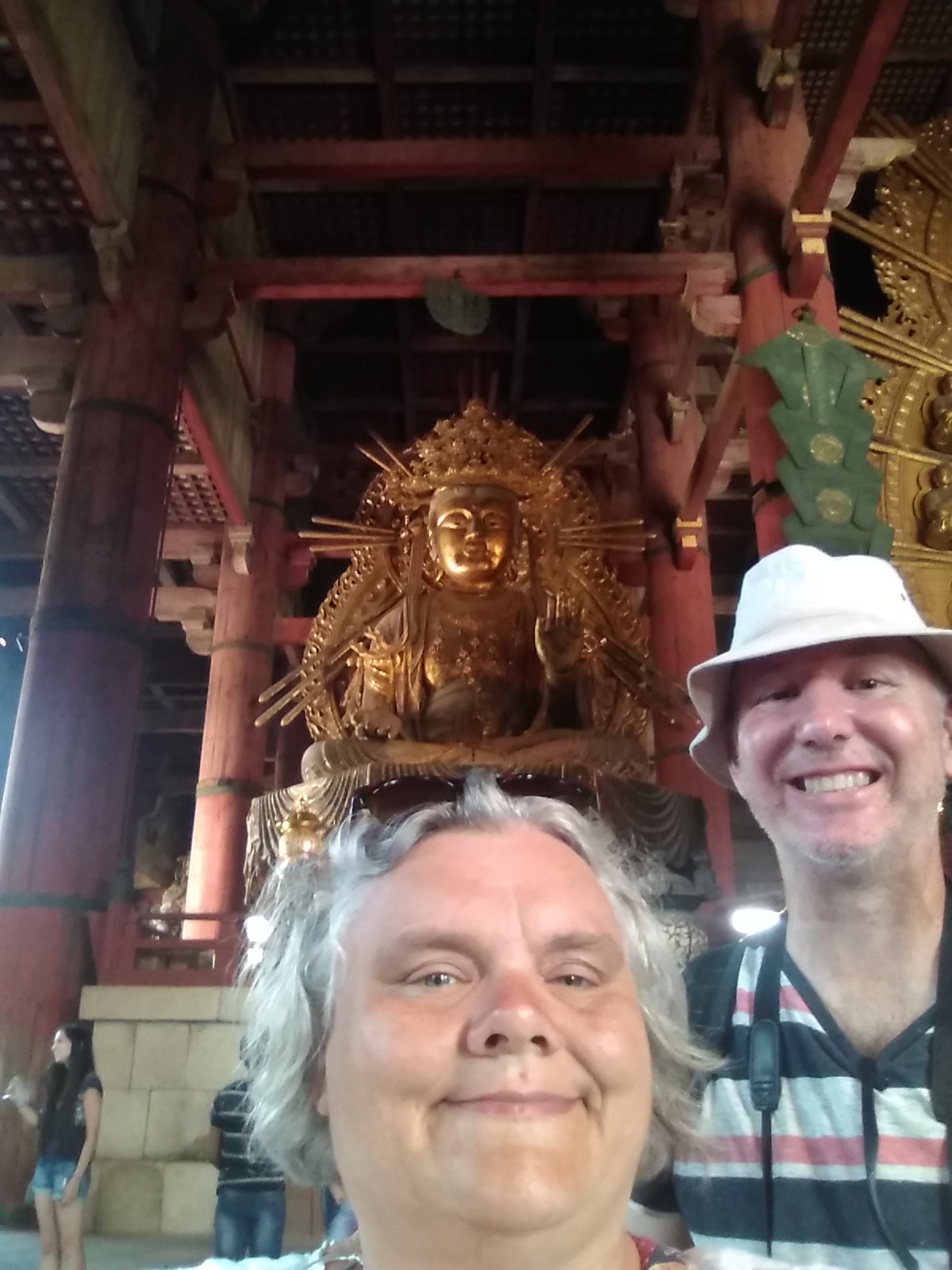
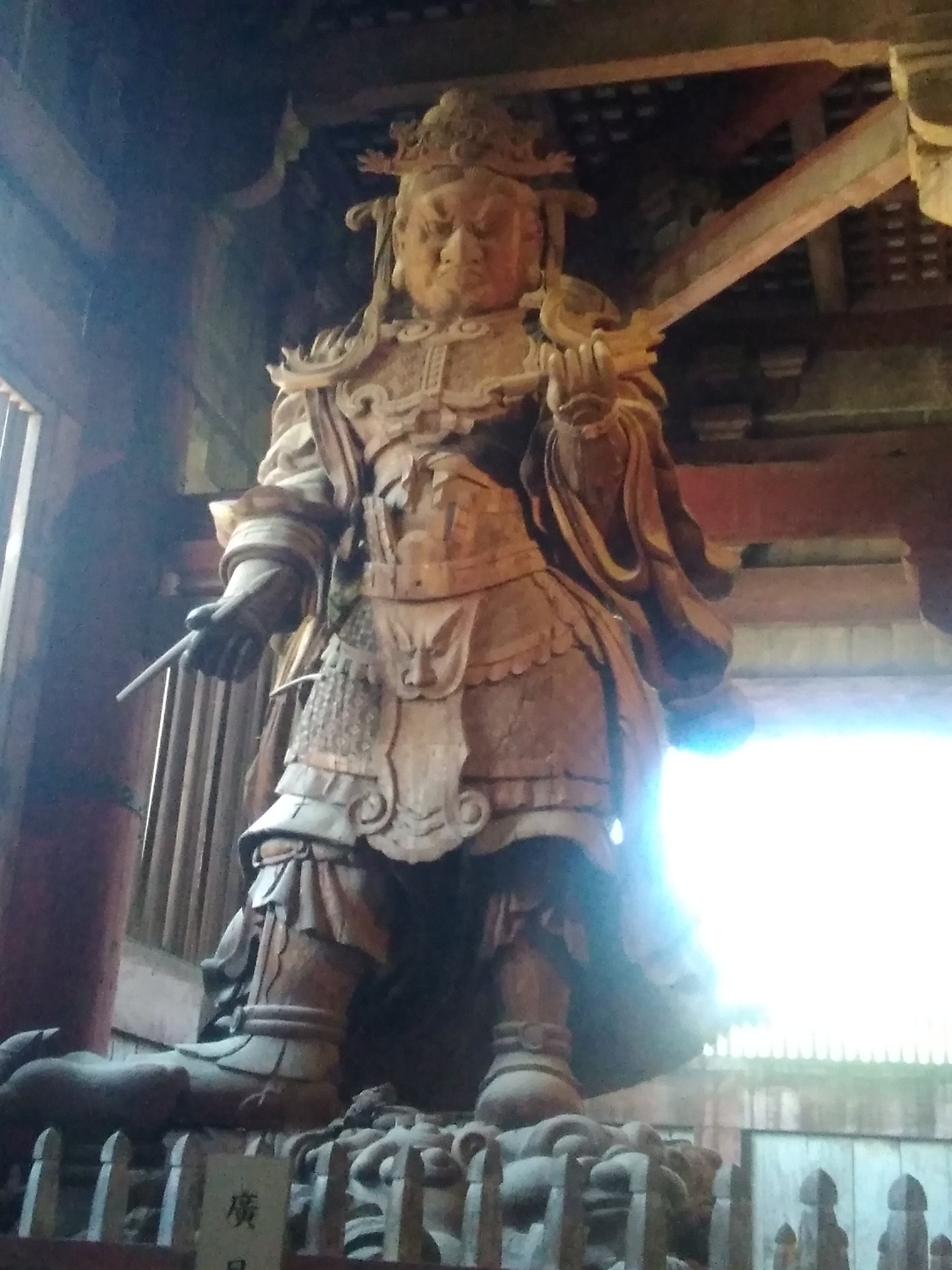
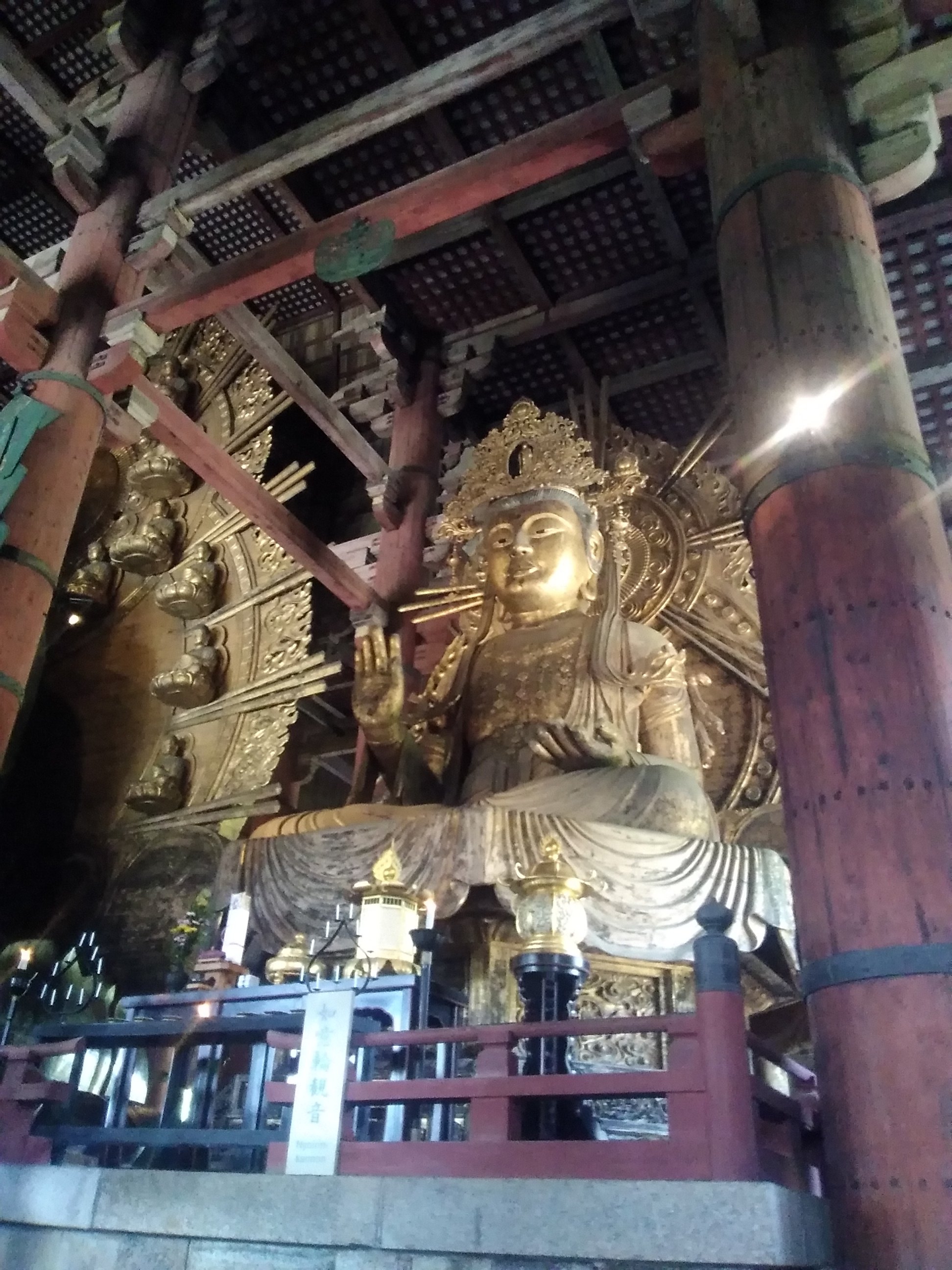
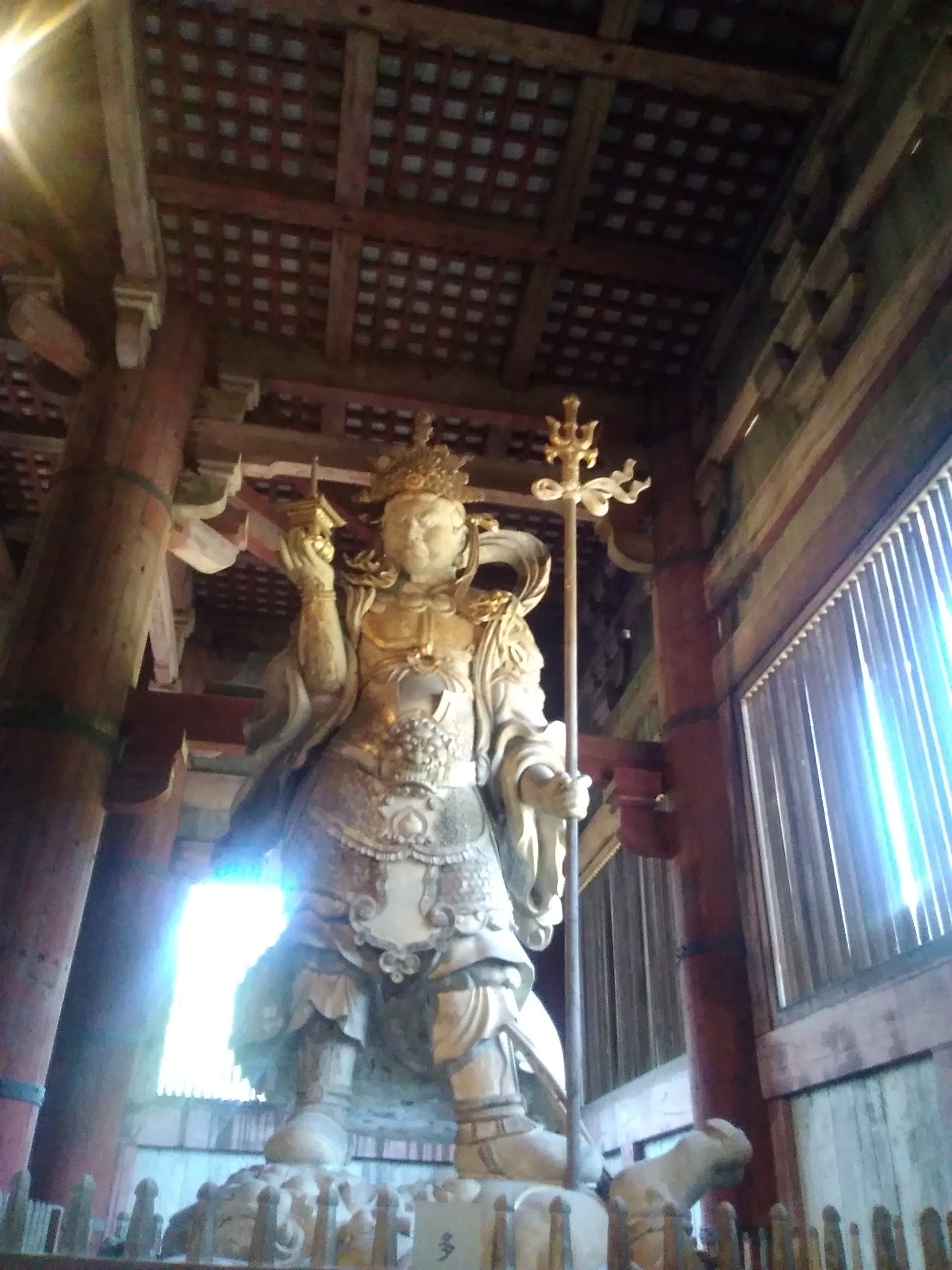
Until recently, Todaiji’s main hall, the Daibutsuden (Big Buddha Hall), held the record as the world’s largest wooden building, despite the fact that the present reconstruction of 1692 is only two thirds of the original temple hall’s size. The massive building houses one of Japan’s largest bronze statues of Buddha (Daibutsu). The 15 metres tall, seated Buddha represents Vairocana and is flanked by two Bodhisattvas.
The scale of everything was utterly unimaginable and the thought that they were constructed so many years ago is boggling. We went to the museum prior to going to the temple to find out more. Apparently at the time it was built Japan’s population was 2.6 million and half the population were involved in constructing it. The numbers are mind blowing but the organisation involved is also amazing.

Dimensions of the Daibutsu

The temple gives the following dimensions for the statue:

  • Height: 14.98 m (49 ft 2 in)
  • Face: 5.33 m (17 ft 6 in)
  • Eyes: 1.02 m (3 ft 4 in)
  • Nose: 0.5 m (1 ft 8 in)
  • Ears: 2.54 m (8 ft 4 in)

The statue’s shoulders are 28 metres across and there are 960 six curls atop its head. The Birushana Buddha’s golden halo is 27 m (87 ft) in diameter with 16 images each 2.4 m (8 ft) tall.

Recently, using x-rays, a human tooth, along with pearls, mirrors, swords, and jewels were discovered inside of the knee of the Great Buddha; these are believed to be the relics of  Emperor Shomu.

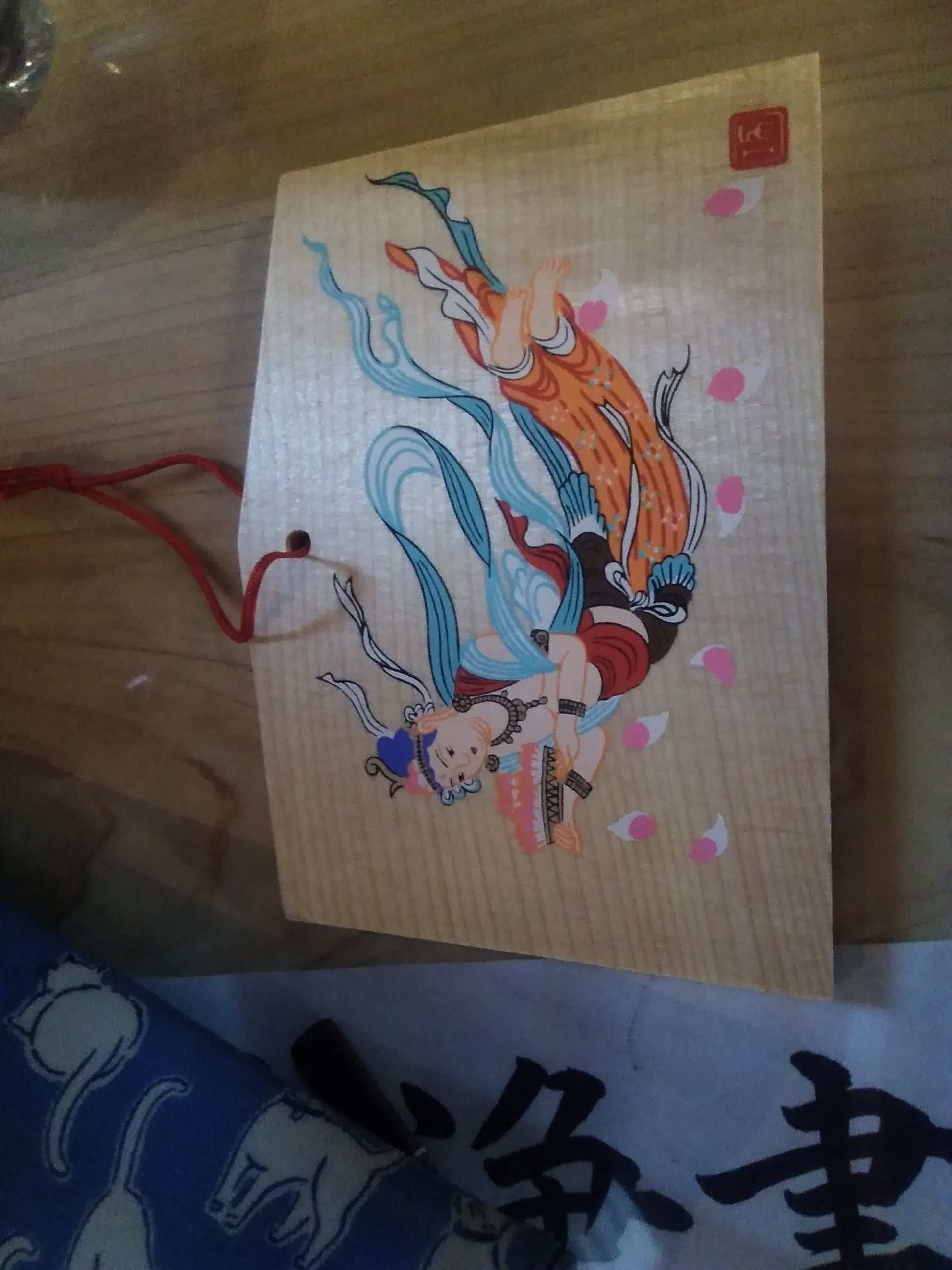
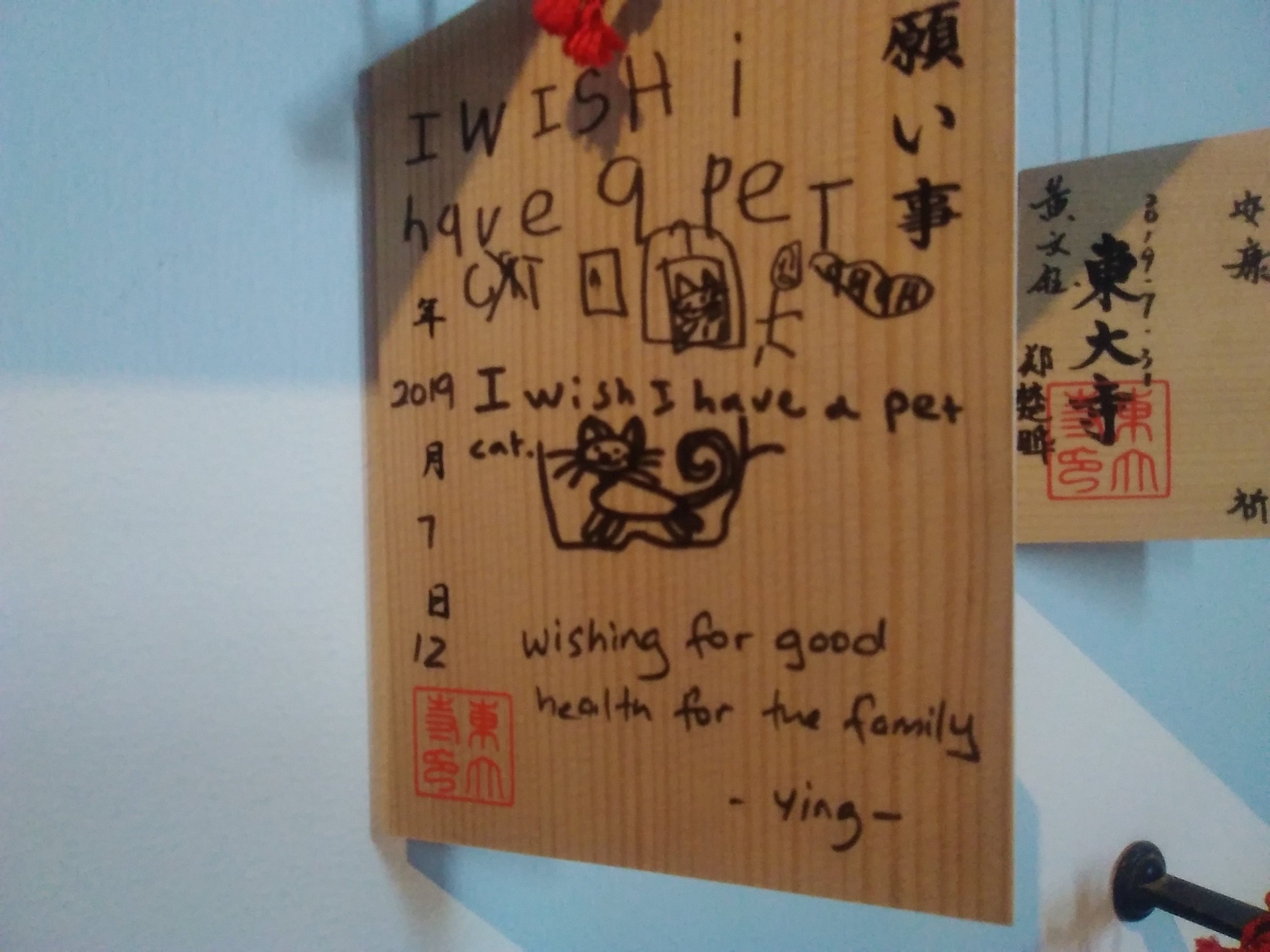
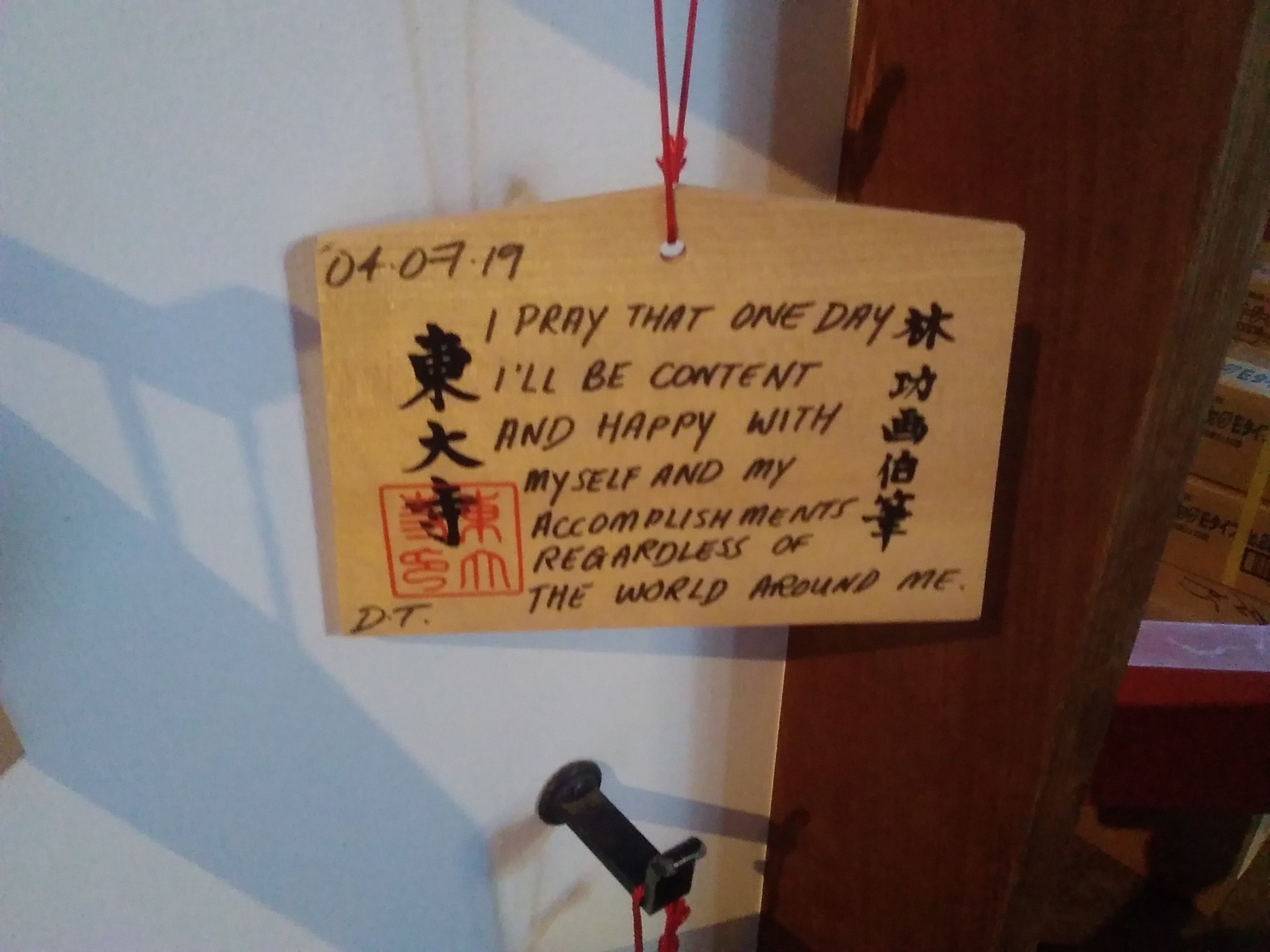
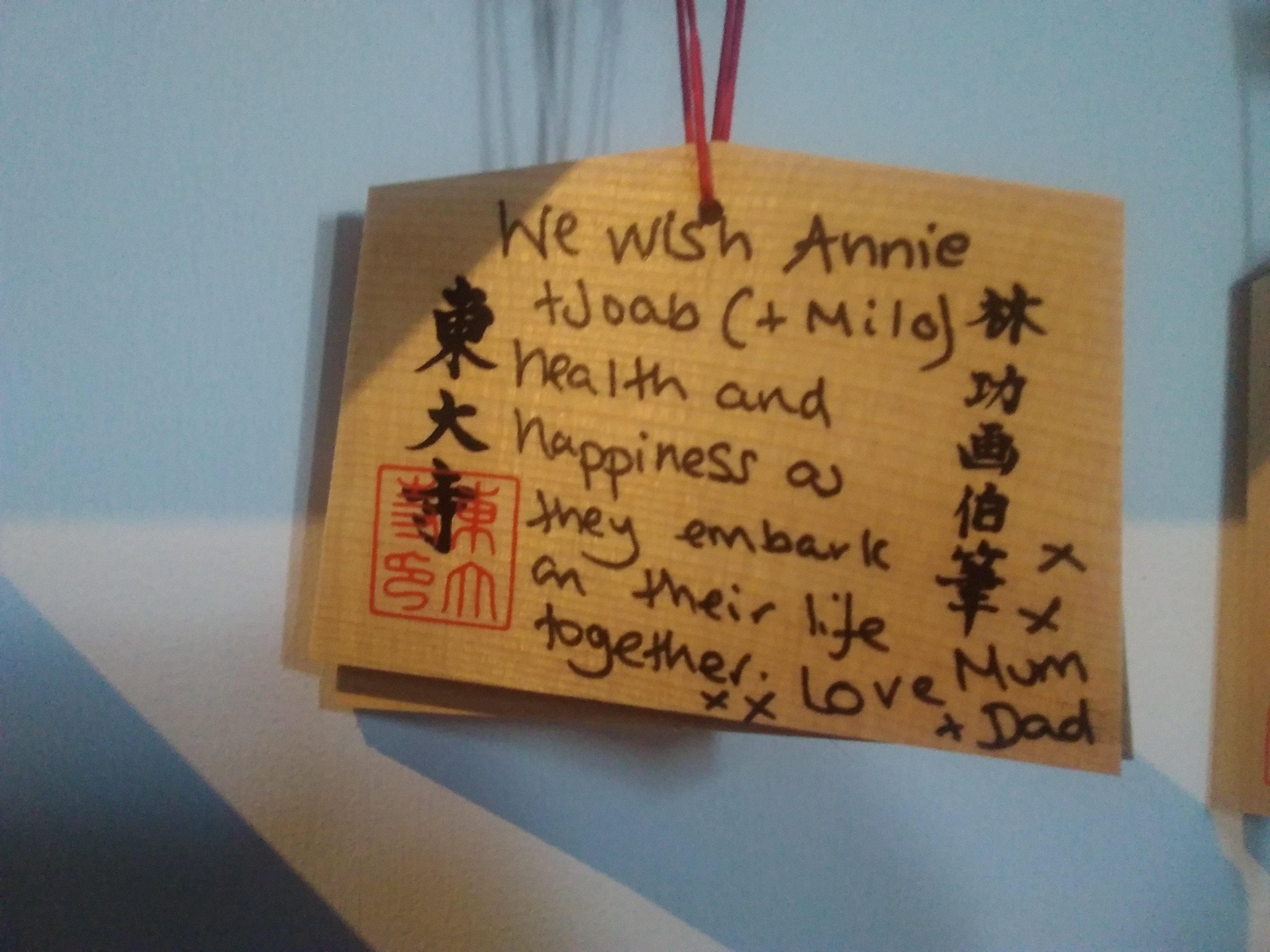
The statue weighs 500 tonnes. So basically we are talking massive!In this shrine I decided to make an ema. Ema literally means picture-horse. They  are small wooden plaques, common to Japan – we have now seen them in many shrines, in both Shinto and Buddhist ones. You write prayers or wishes. The ema are left hanging up at the shrine, where the kami (spirits or gods) are believed to receive them. Typically  they are 1 5cm wide and 9 cm high, they often carry images or are shaped like animals, or symbols from the zodiac. It gets its odd name picture-horse from the Shinto practice , in ancient times people would donate horses to the shrines for good favour; over time this was transferred to a wooden plaque with a picture of a horse, and later still to the various wooden plaques sold today for the same purpose.
I made one for Annie and Joab. Once inscribed with a wish, Ema are hung at the shrine and then they are ritually burned at special events, symbolic of the liberation of the wish from the writer.

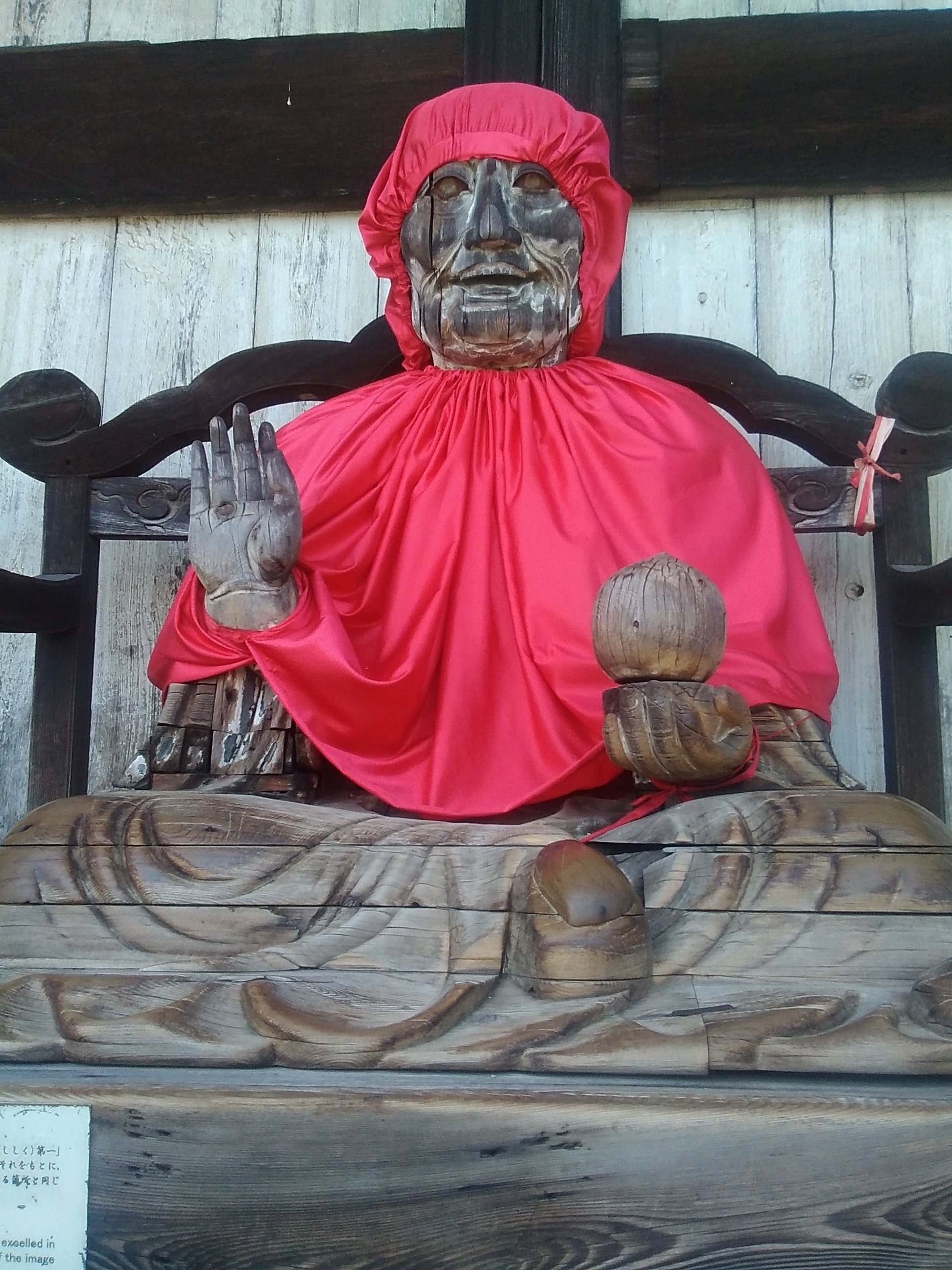
We have seen a lot of statues round Japan with red bins on them. These tend to be much smaller and almost child-like. The Ojizo-sama statues are one of the most popular Japanese divinities and are seen as the guardian of children, particularly of children who died before their parents. … This practice is said to have begun when grieving parents put their child’s bib on the statue in hopes it would protect the child in the other world. But this one was much bigger so no idea why it hada red cloak or hat. It did say if you rubbed part of Statue eg a knee if you have a bad knee then you rub your knee you can be healed. Typically Pete did this, when I pointed out his knees were fine he then wondered if it worked in reverse!
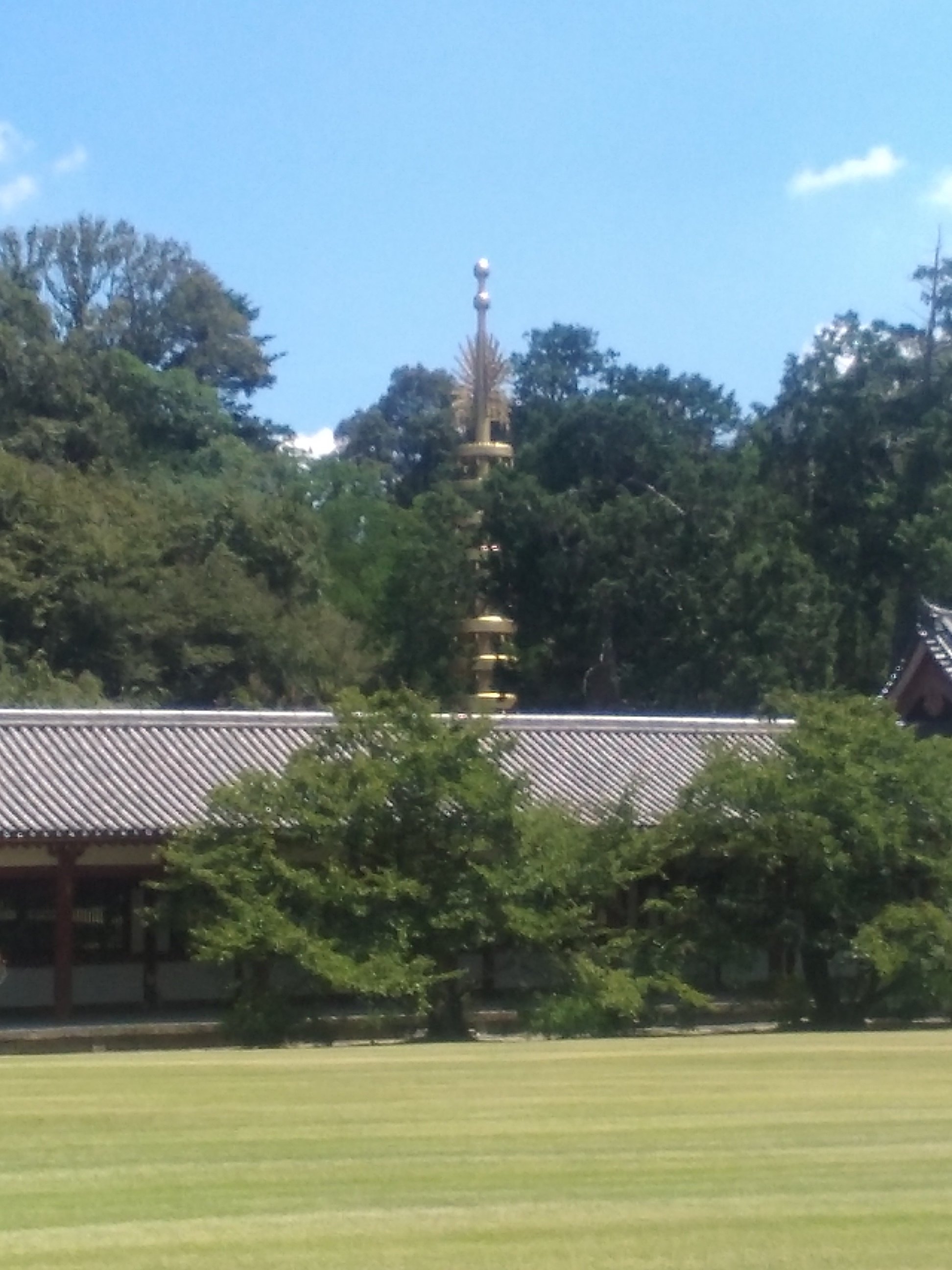
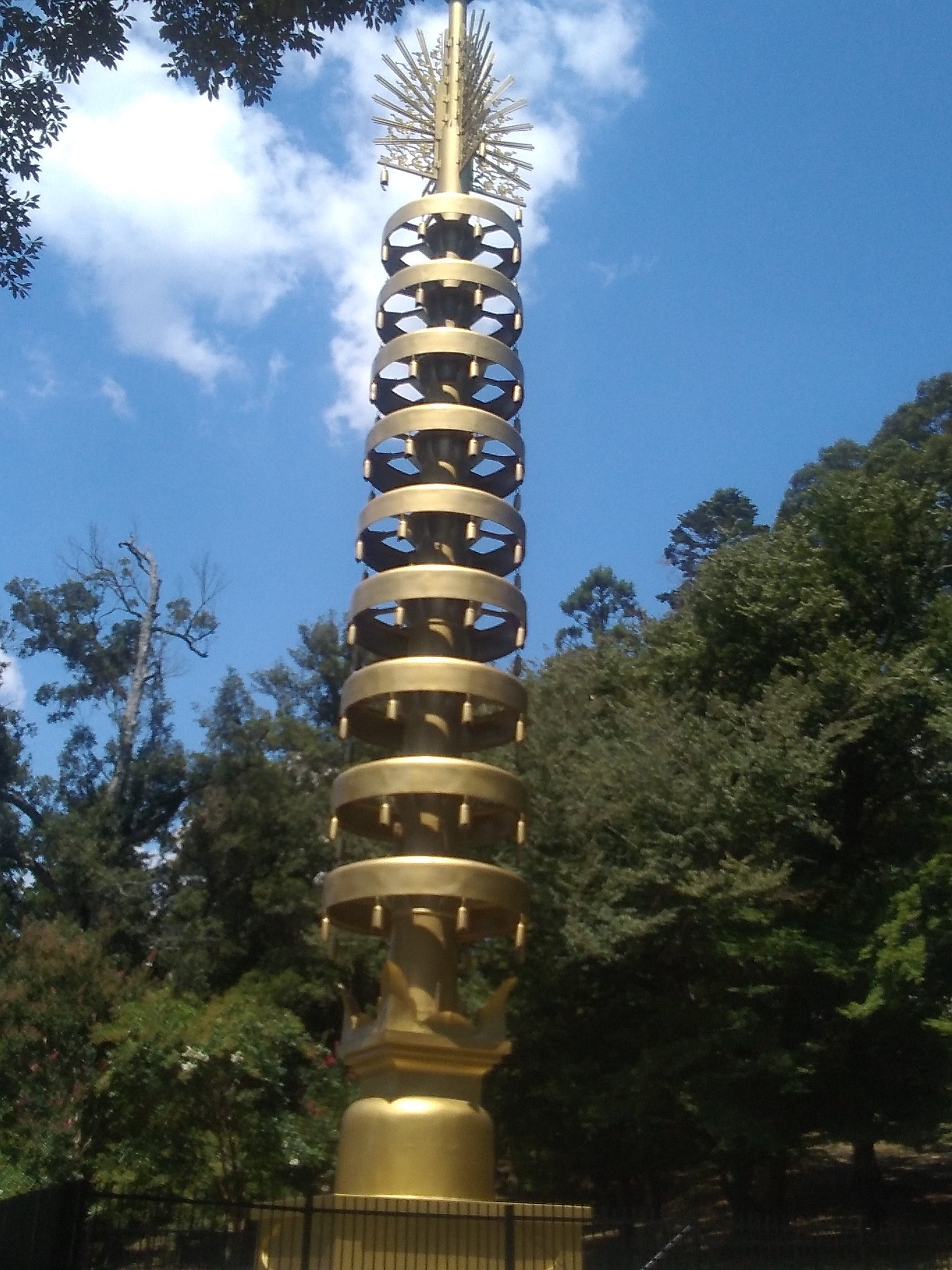
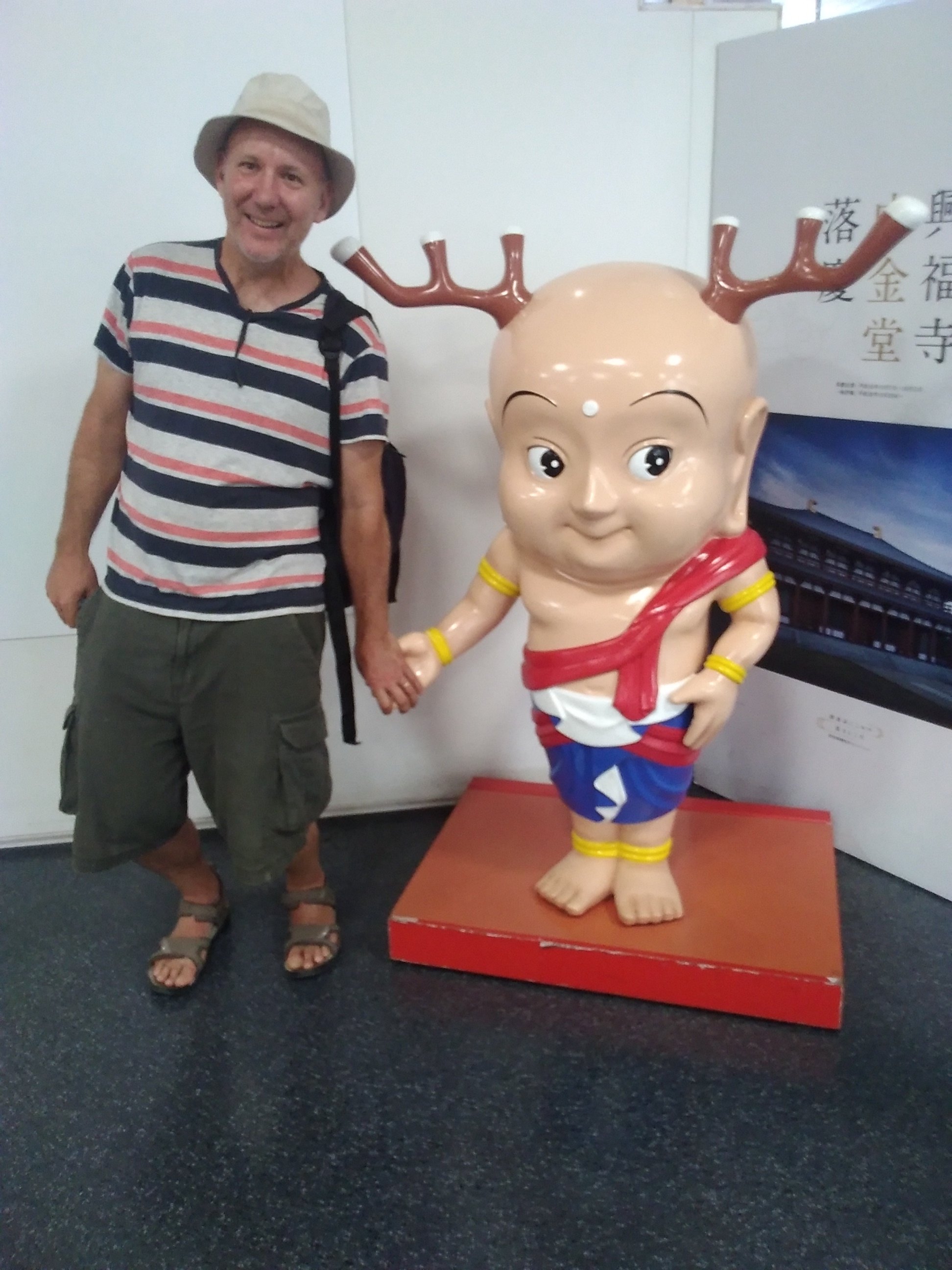
This golden tower is in the park area and was built from the donations of a 1000 priests, I think it is like a good wish conductor which is why it looks like a transmitter. We said goodbye to the deer and headed off for a drink and then the station.They have this statue in the station – we saw a lot of merchandise with a similar mix of Buddha and a deer. Odd!
Hot and a tiny bit bothered in Kyoto Part 3….

Oh dear, oh dear I was now very hot and very bothered. One voice was telling me to collapse on the pavement and just melt away, another was saying that I might never see these sights again, then that nagging voice would counter and say, it’s not humanly possible to keep going but then the other voice was saying to get a grip as it wasn’t that bad!

So a compromise was reached and we had a lovely long iced tea in a bookshop/cafe that served drinks in a traditional room with tatami mats. We made the drinks last and I came round a bit.

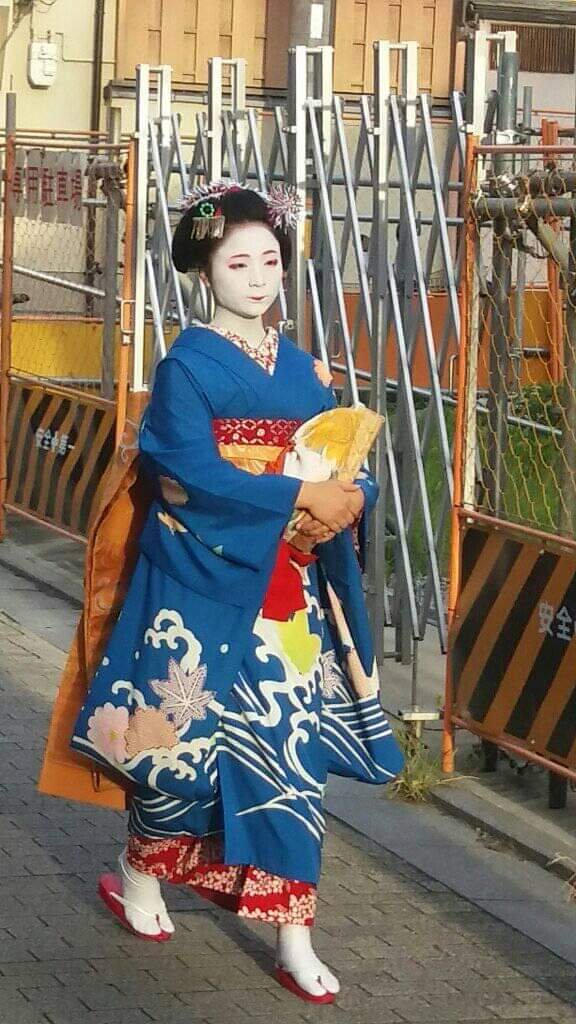
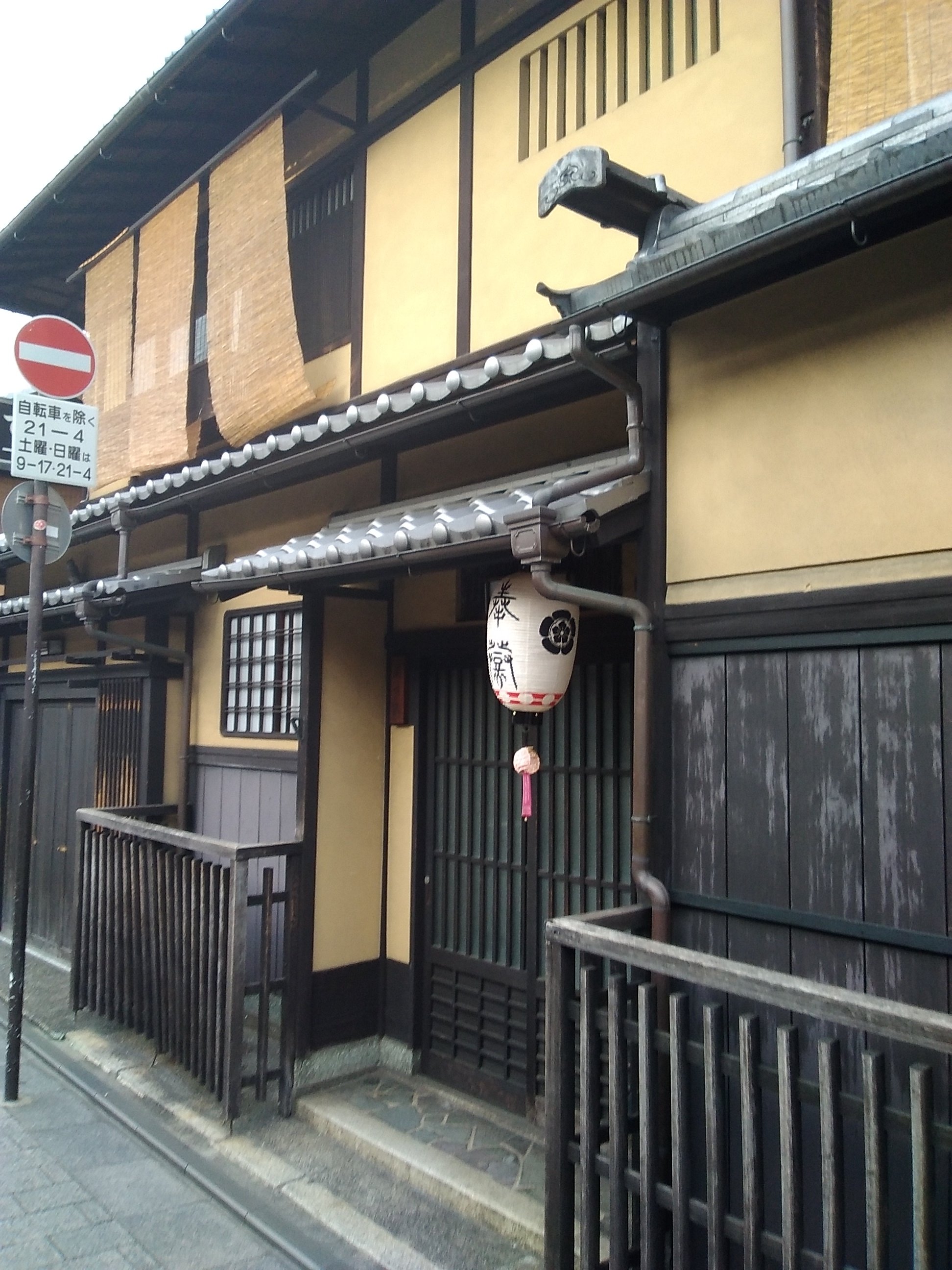
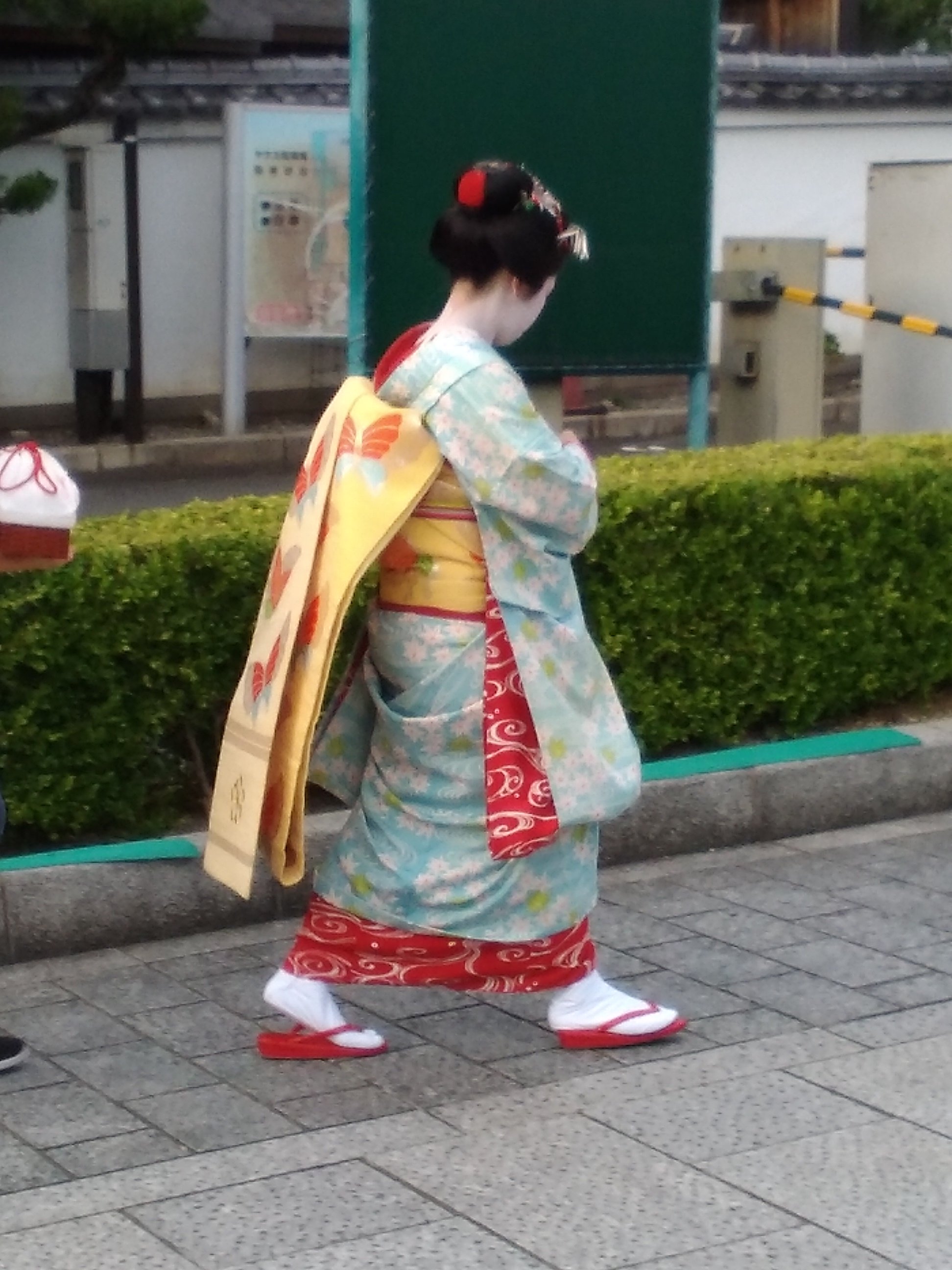
We were in Gion. Gion is the geisha District in Kyota, only they don’t call them geisha, there is a regional dialect difference and they are called geiko. Gion is situated between Shijo Avenue, the Yashaka Shrine and the Kamo River. It was quite early and the area being full of restaurants seemed as though it would come alive later on in the evening. We never expected to see any geiko. Geiko are highly skilled entertainers and not prostitutes. Training to be a geiko normally lasts about 5 years and starts between the ages of 15 to 20. Kyoto is famed for its very precise and traditional training.an

Avi Lugasi, who runs a travel company in Kyoto states, “Generally speaking, paparazzi is the name of the game,” says Lugasi, adding that tourists should keep in mind that the geisha they see are usually on their way to work and not being paid by the tourism board as some local mascot. “Geisha are aware that they are a special and unique aspect of the Japanese culture and subject to interest so it is a part of their lives, but people need to respect them too.”

Walking the streets with the slight possibility of seeing a geiko was really exciting but also felt as though we were part of a pack of paparazzi.

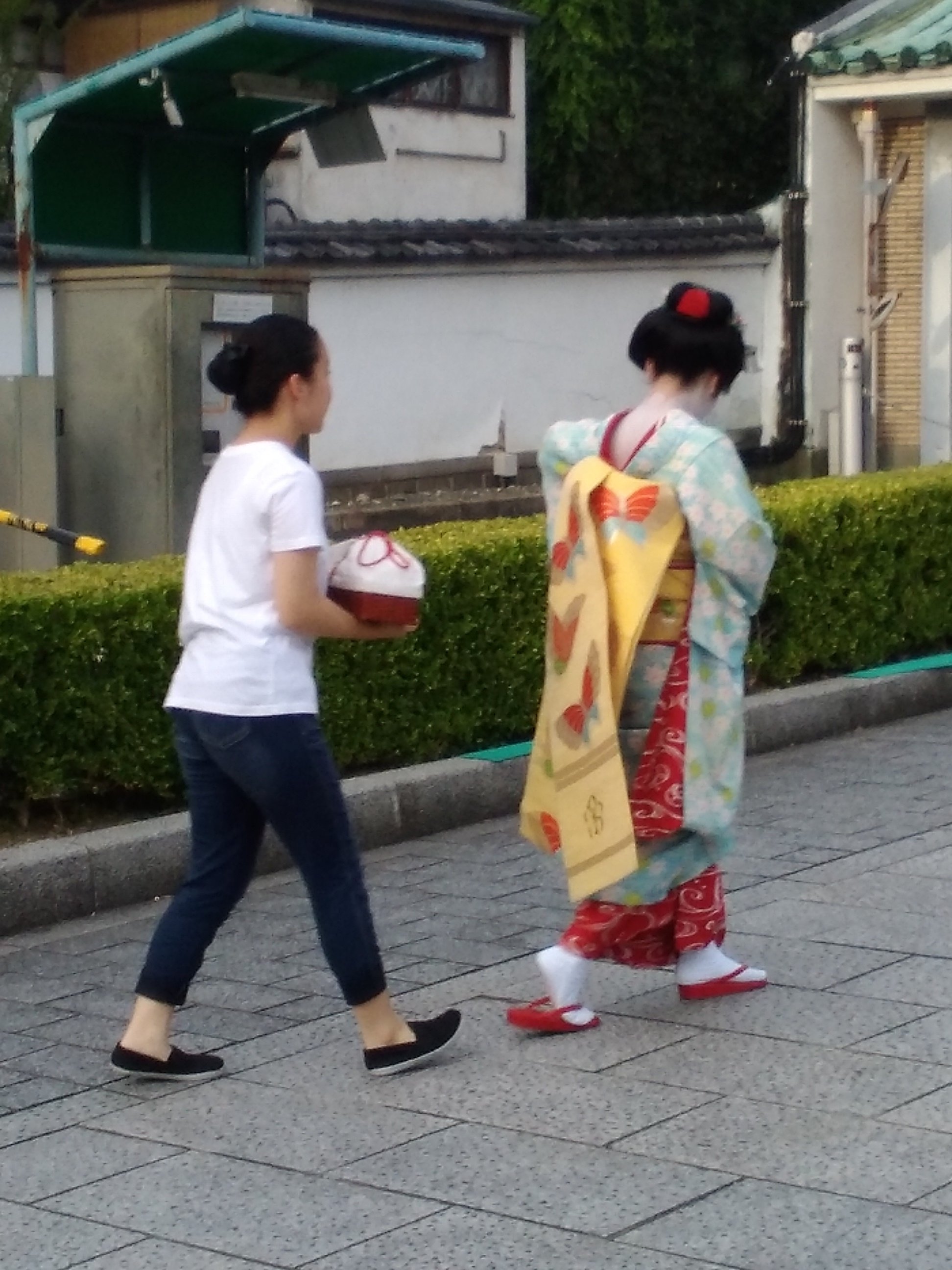
What we didn’t realise until retrospectively was that 5. 45pm is the best time to catch geiko in Gion as this is the time they go out to their first clients. Of course we did see them and stealthily took photos in the least obtrusive way possible.

To be honest Pete and I felt like we had set foot onto a film set. Everyone has heard of geisha but to see them up close is altogether another experience. Then I thought of lots of questions about the whole geisha/geiko culture came into my head so I went down the rabbit warren of  Google.


First question googled was why do they wear white face makeup. The consensus seems to be that this came about when they originally performed in candlelight, the more porcelain looking the face the more their expressions were picked up. I did want to know if this is something young girls want to do but couldn’t get a conclusive answer. Overall it just all seems completely other-worldly. A traditional eating place in the Gion area.
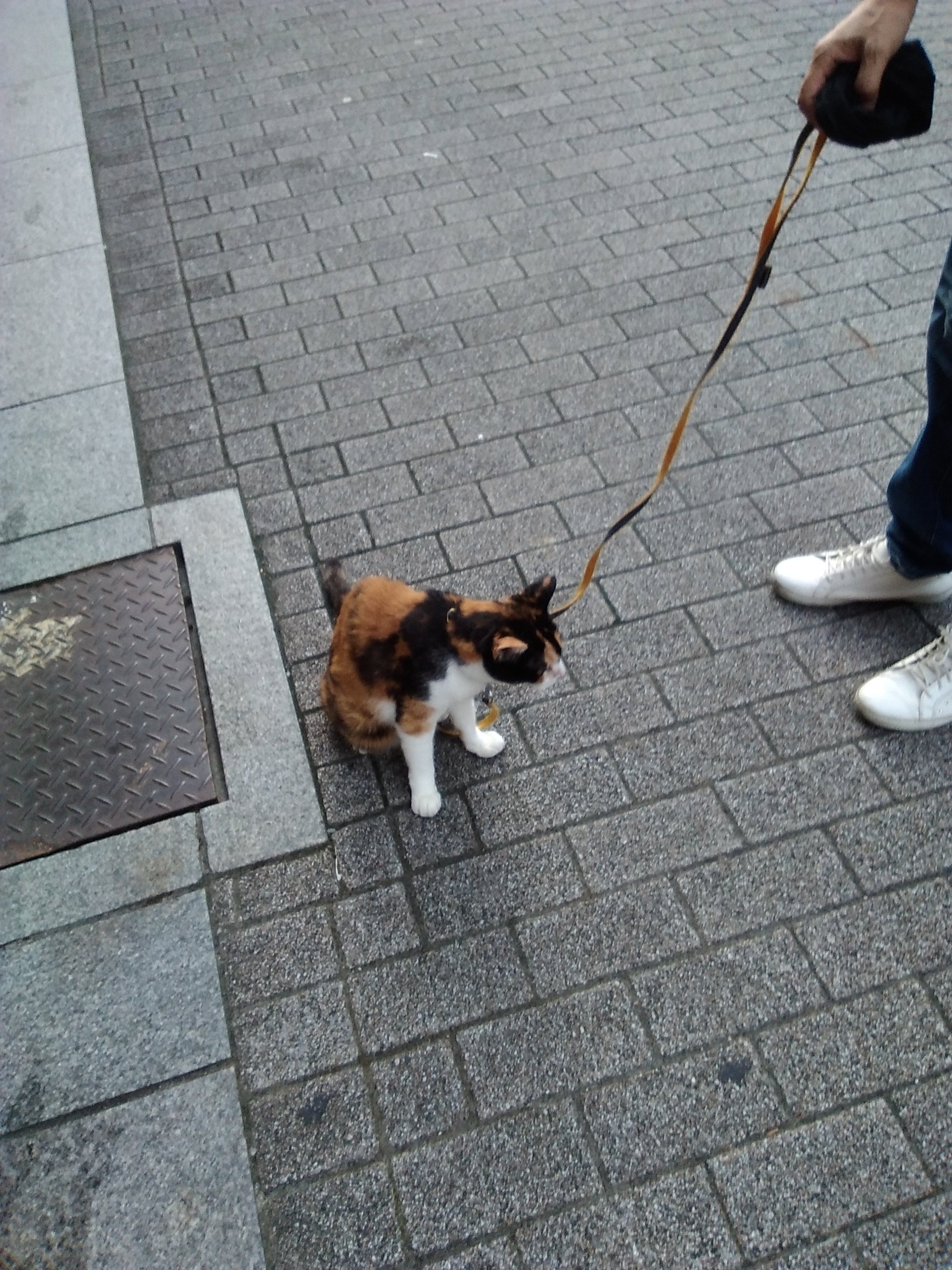
Another first we had when we ambled round Gion was our first sighting of a cat.

We met a woman taking her pet cat for a walk with a lead. She said her cat was 16 years old and was called Emerald and one of 7 cats she looked after at home. She seemed genuinely surprised when we told her hers was the first cat we had seen after being 2 weeks in the country. We showed her pictures of our cats and had a bit of a chat. It was again very odd and quite a bit out there.

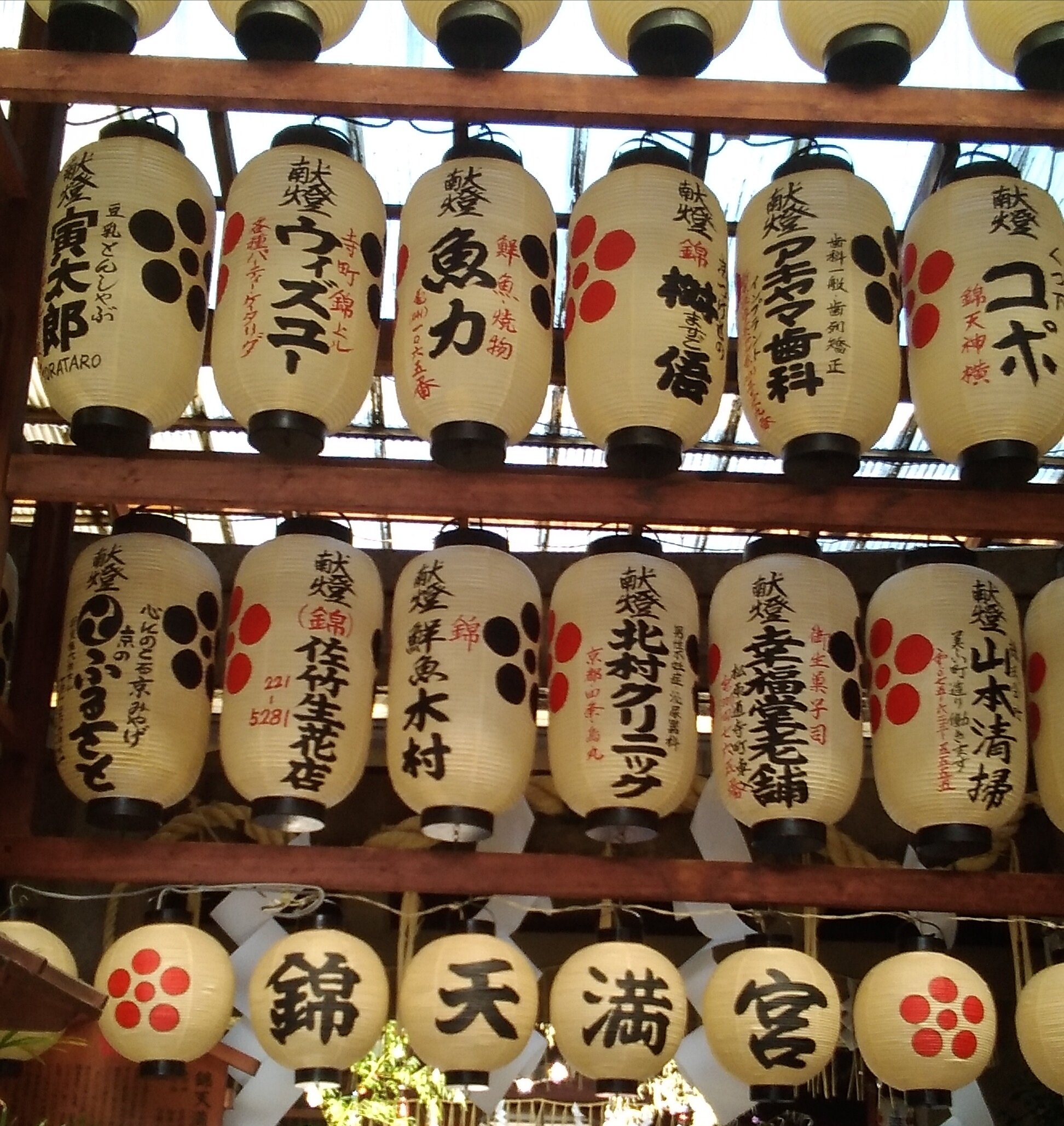
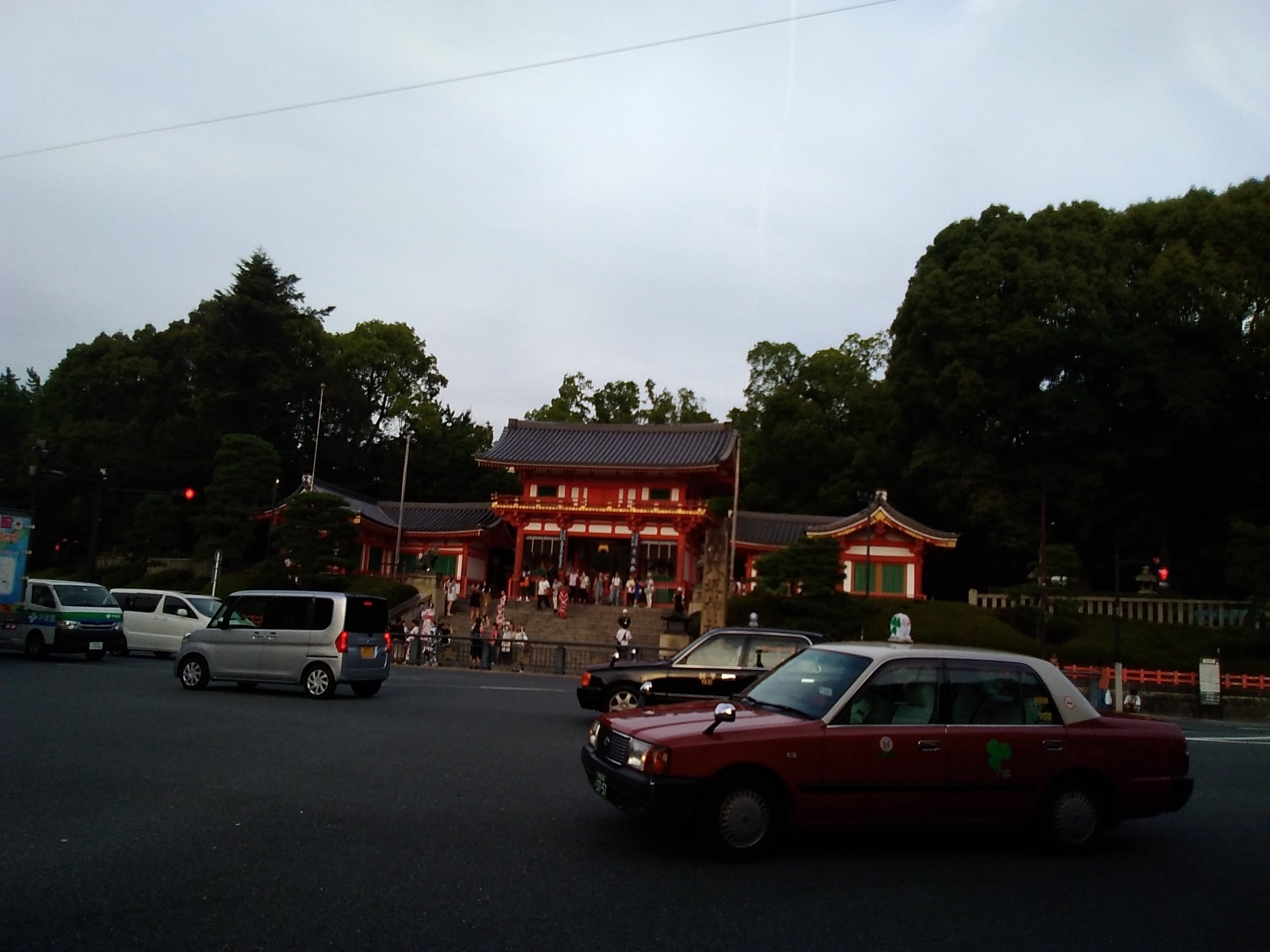
Oh no not another shrine…….although in truth with the number of shrines in Japan it is hard not to see one at every turn. This one is called the Yasaka Shrine, a Shinto one. On the steps there many young people in traditional costume posing… A lot!

The water from the fountain is famous for making the heart and body beautiful and is apparently regularly frequented by the geikos.

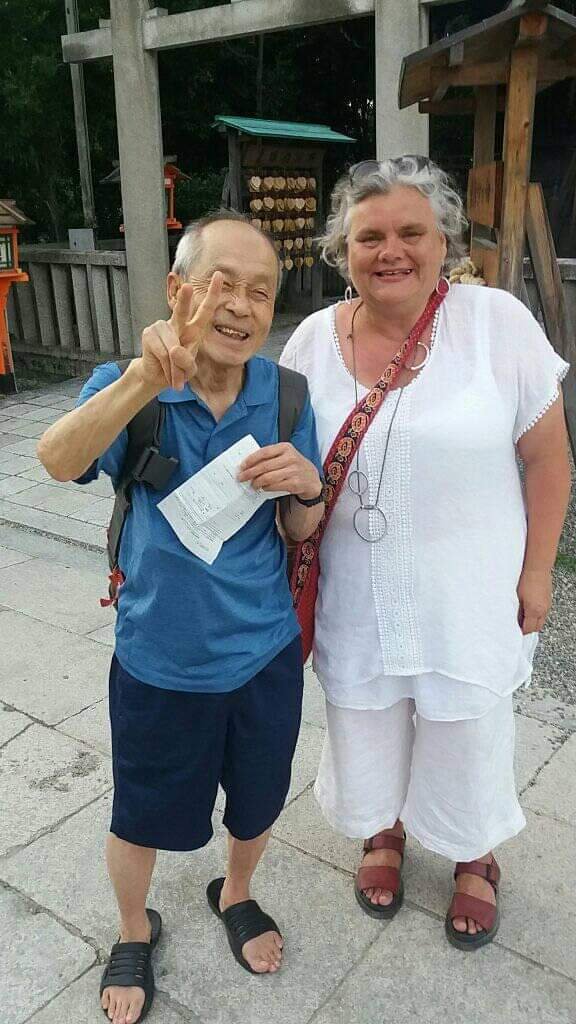
Inside we met an old Japanese man who said he had lived in the UK for some years, lecturing at Kings College London on semantics. The conversation went back and forth, inevitably about Brexit and why don’t we like Scottish people in England etc.

So then he gets out a well creased bit of paper written in English, some Japanese and crossings out. He read it through and was asking is this right can I call someone who has a French father and a Japanese mother a half blood, so we had quite a debate as to why you couldn’t really say that. By this point I felt really tired and wasn’t quite getting it, but later I realised we had, had quite a debate on semantics which is why I think he left us with a bit of a spring in his step, he had, had the opportunity to do what he enjoyed best – arguing about the nuances of language.

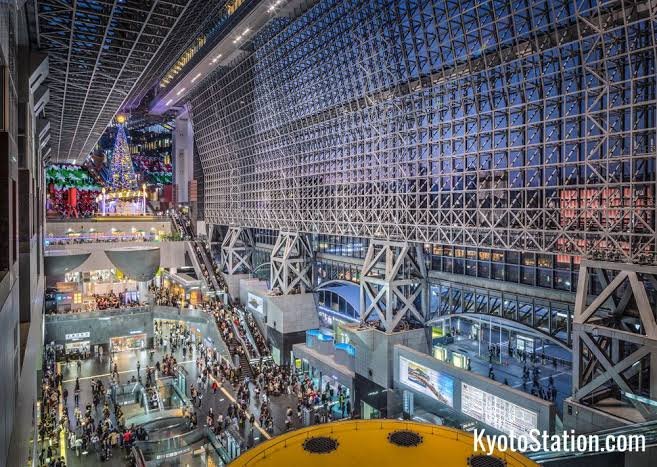
We realised beyond the free tapas that we hadn’t eaten and it was getting very late. I had read that the Kyoto train station has a whole floor of places to eat, with varying degrees of expense. When we arrived in the morning we had left through a side entrance. Coming to the front of the station, particularly at night was truly a sight to behold. It was like something from a sci-fi film and the scale of everything was gigantic.

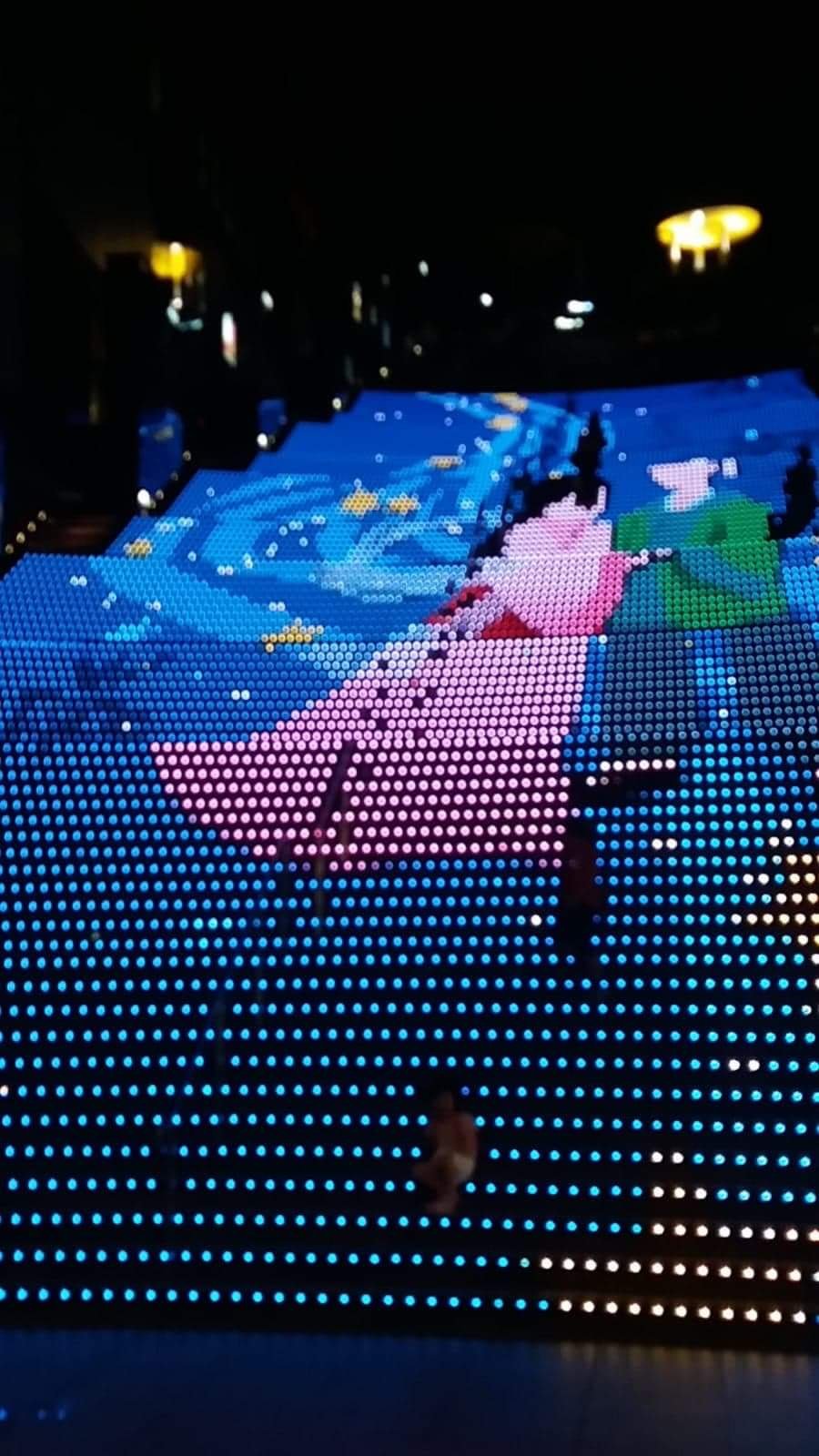
Going up the escalators to 11f to the food area we passed 171 stairs studded with 15,000 LED lights.


Took some photos of Pete with his phone but it just pixilated him. He looked like something from an old video game.

From the top you had a brilliant view of Kyoto tower.

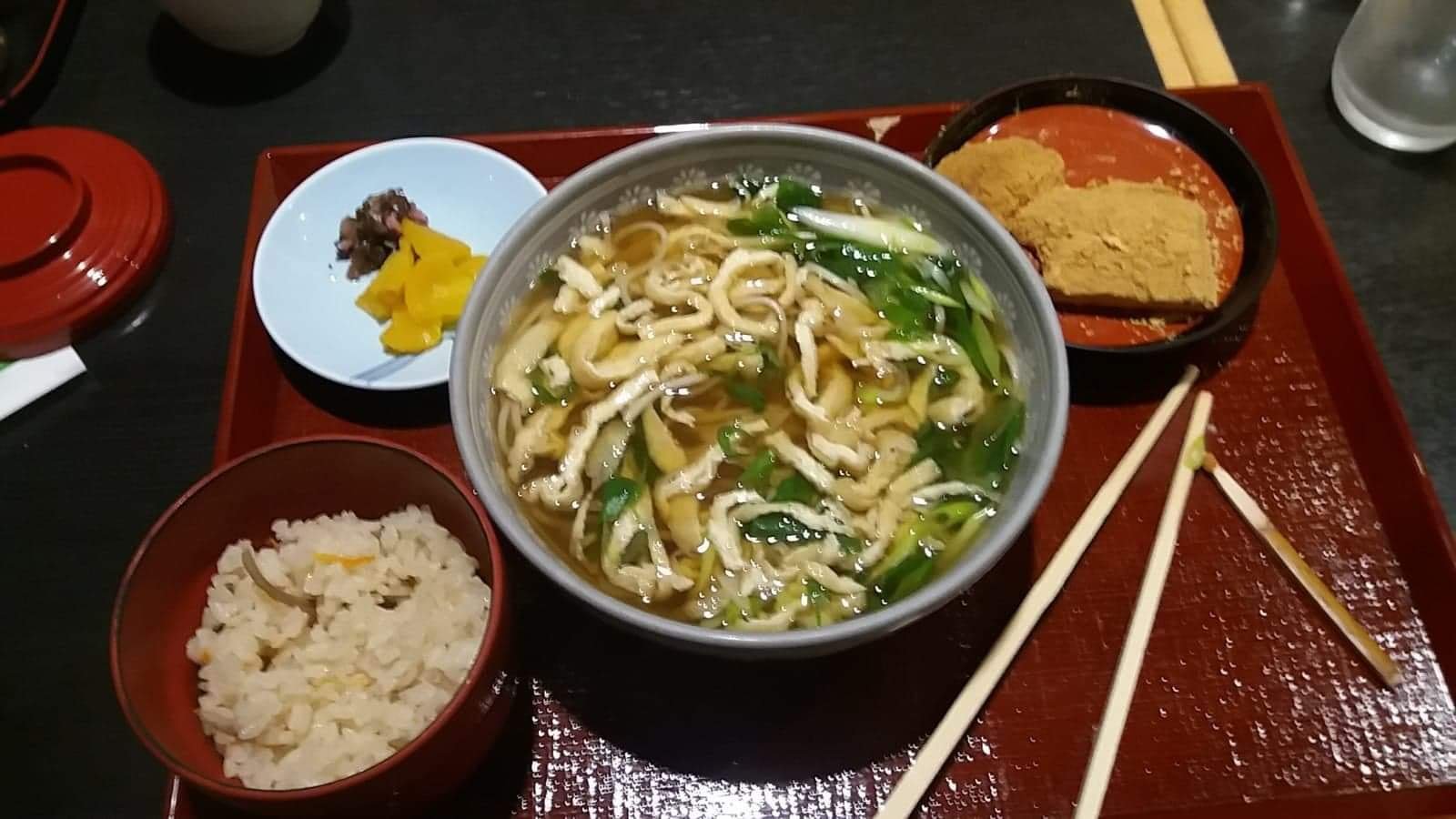
We had a great meal that came to about 15 pounds altogether but still not mastered chopsticks.

And after that we went up one more floor to the observation deck.

A bit dark but we were quite joyous about getting to the end of a very packed day in Kyoto.

Hot and and a tiny bit bothered in Kyoto Part 2

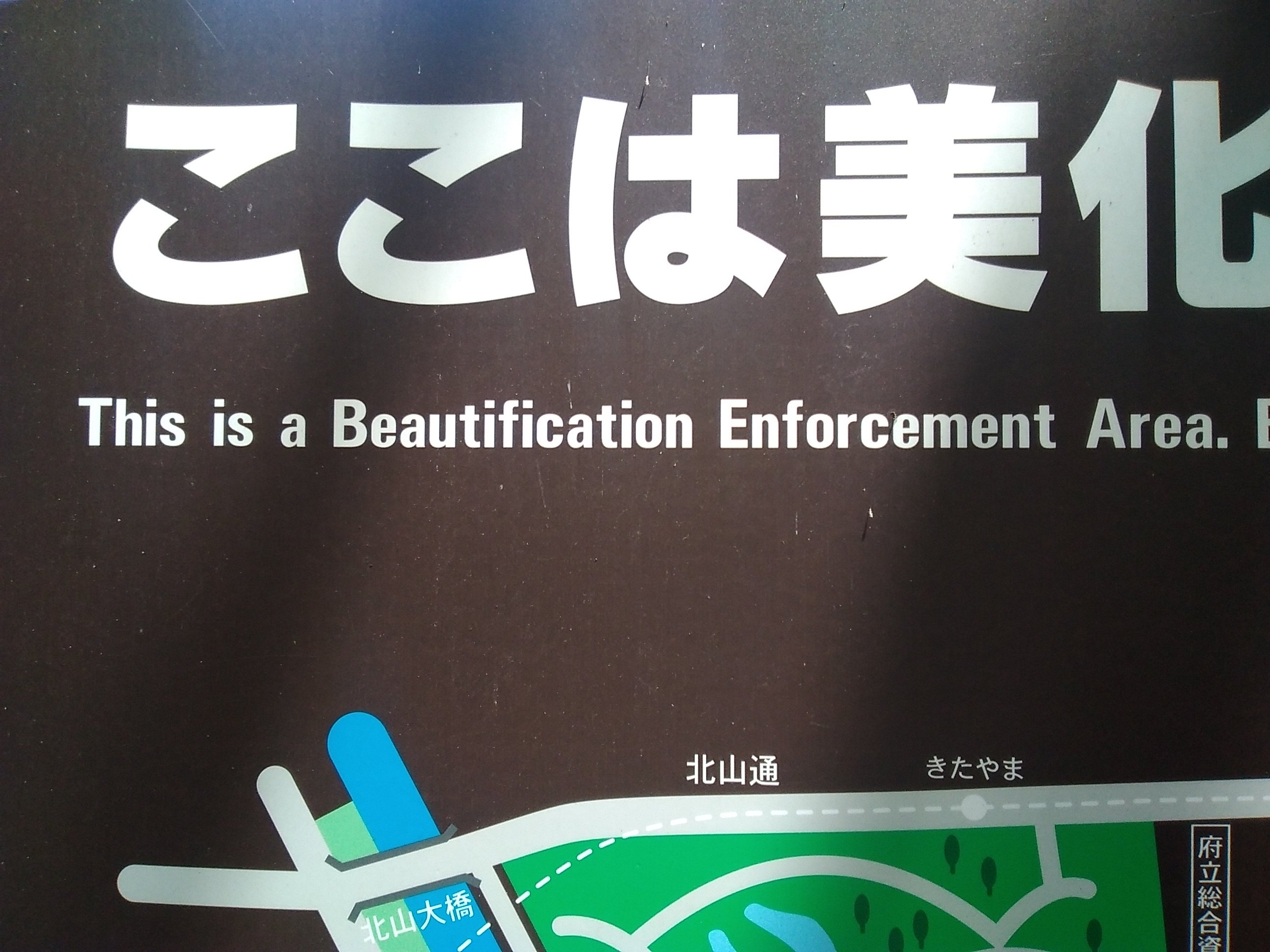
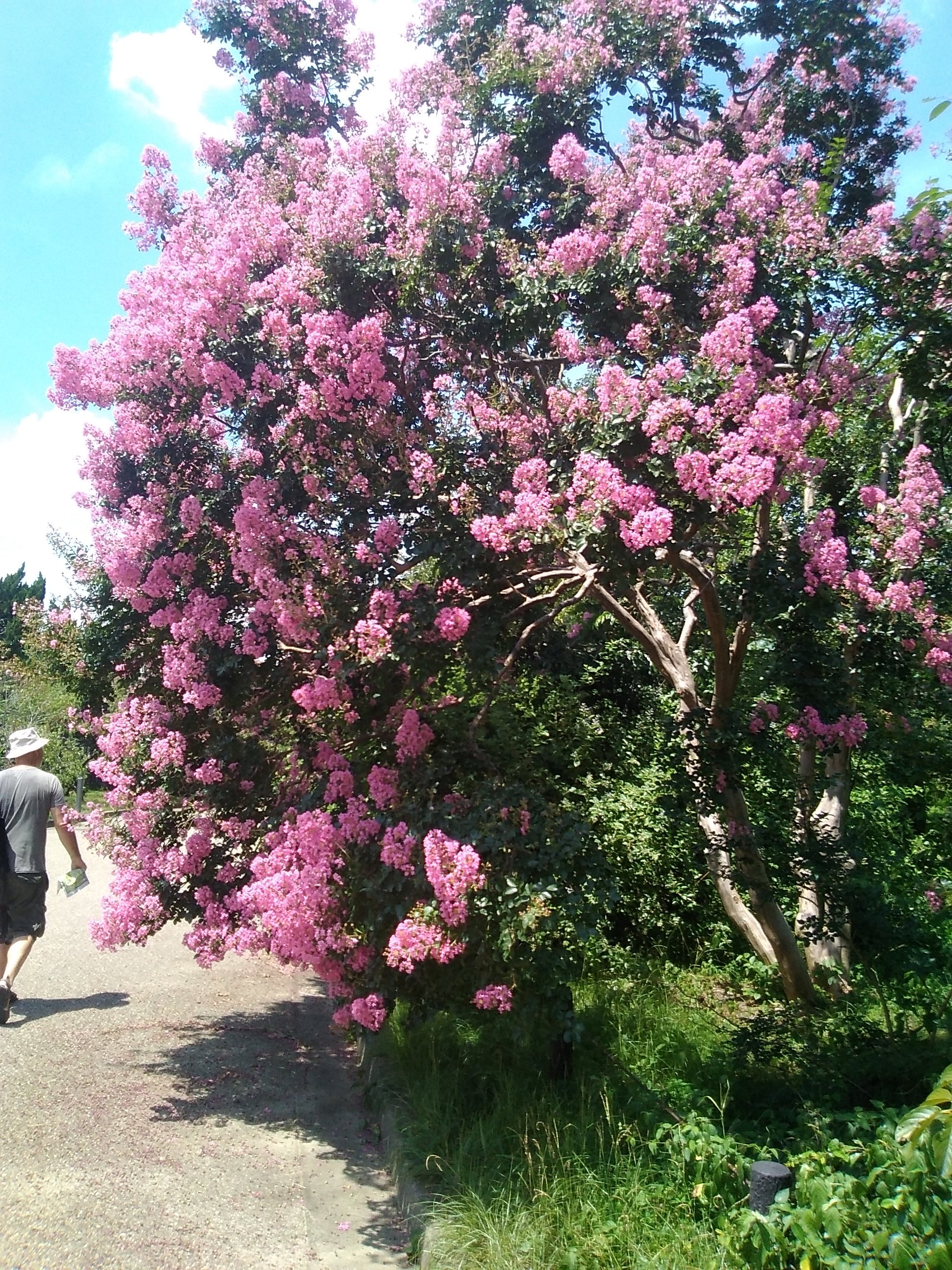
After we left the shrine we headed to the Botantical Gardens. We had quickly figured out the bus system. This was a blessing but in equal measure the heat was getting more intense and harder to deal with. The Garden is described as the most comprehensive public botanical garden in Japan. The large sign going in stated it was a beautification enforcement area, this worried me. What if I wasn’t beautified enough? I was a stinky, sweaty mess-what fate awaited me…..
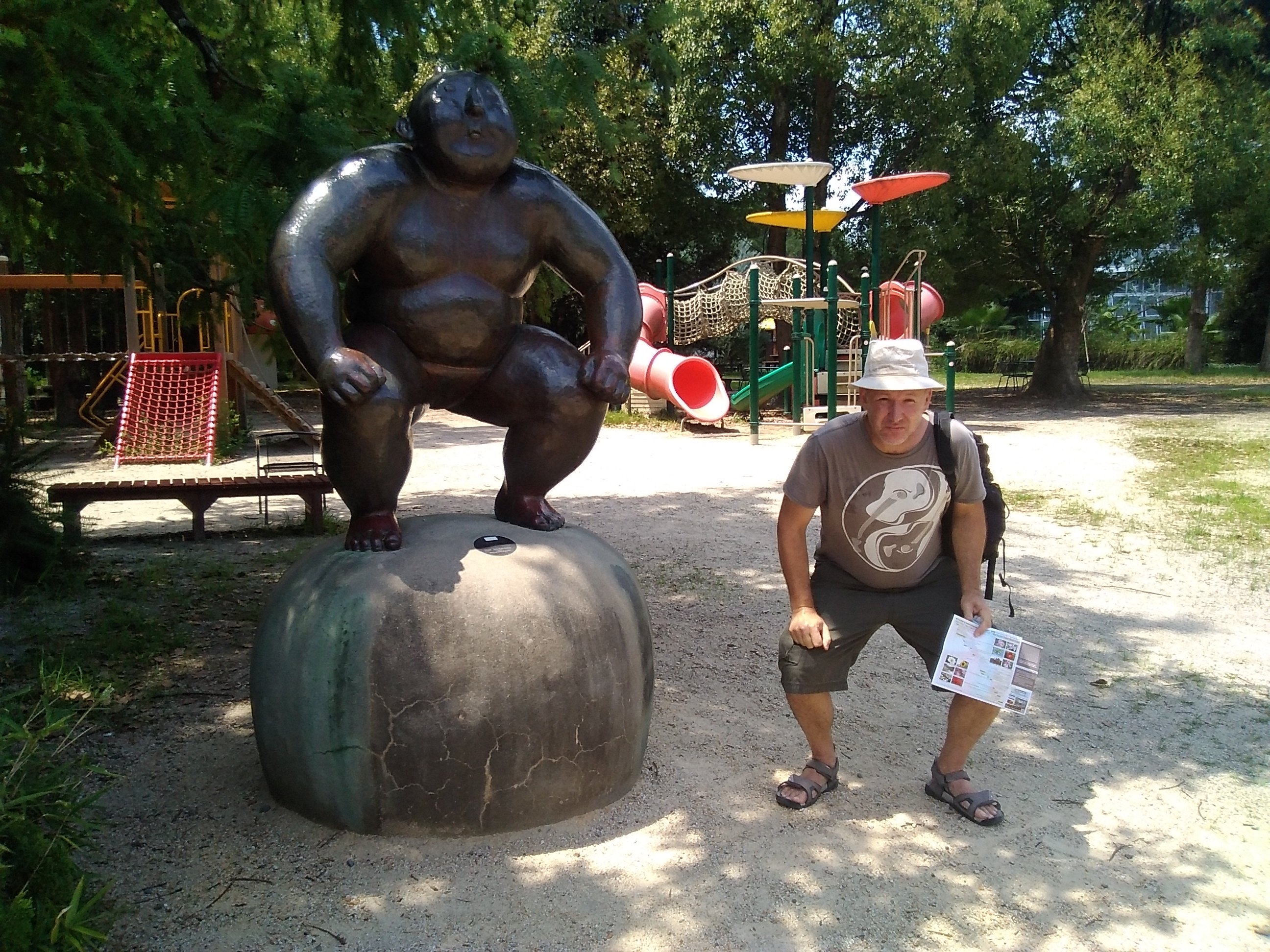
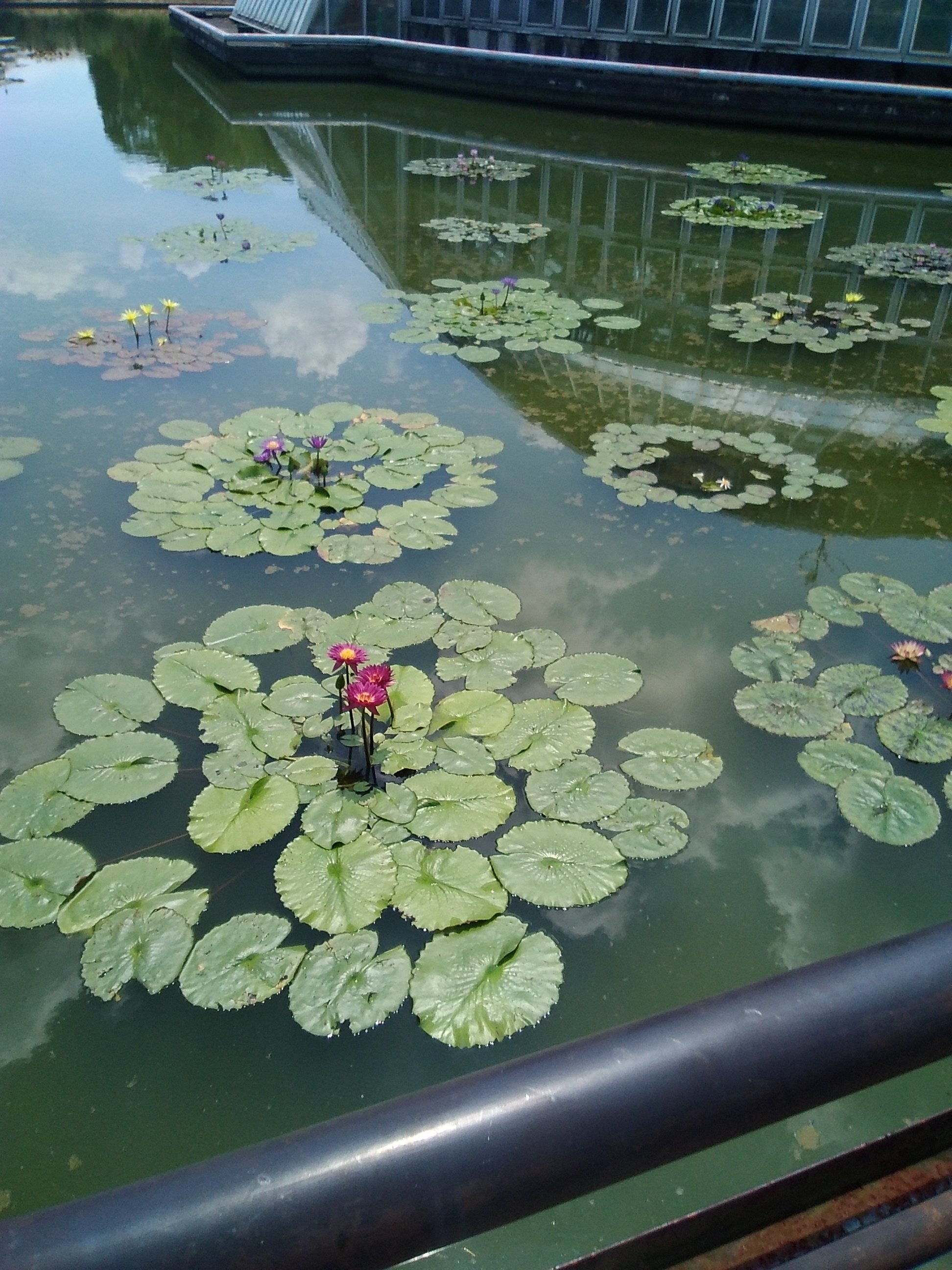
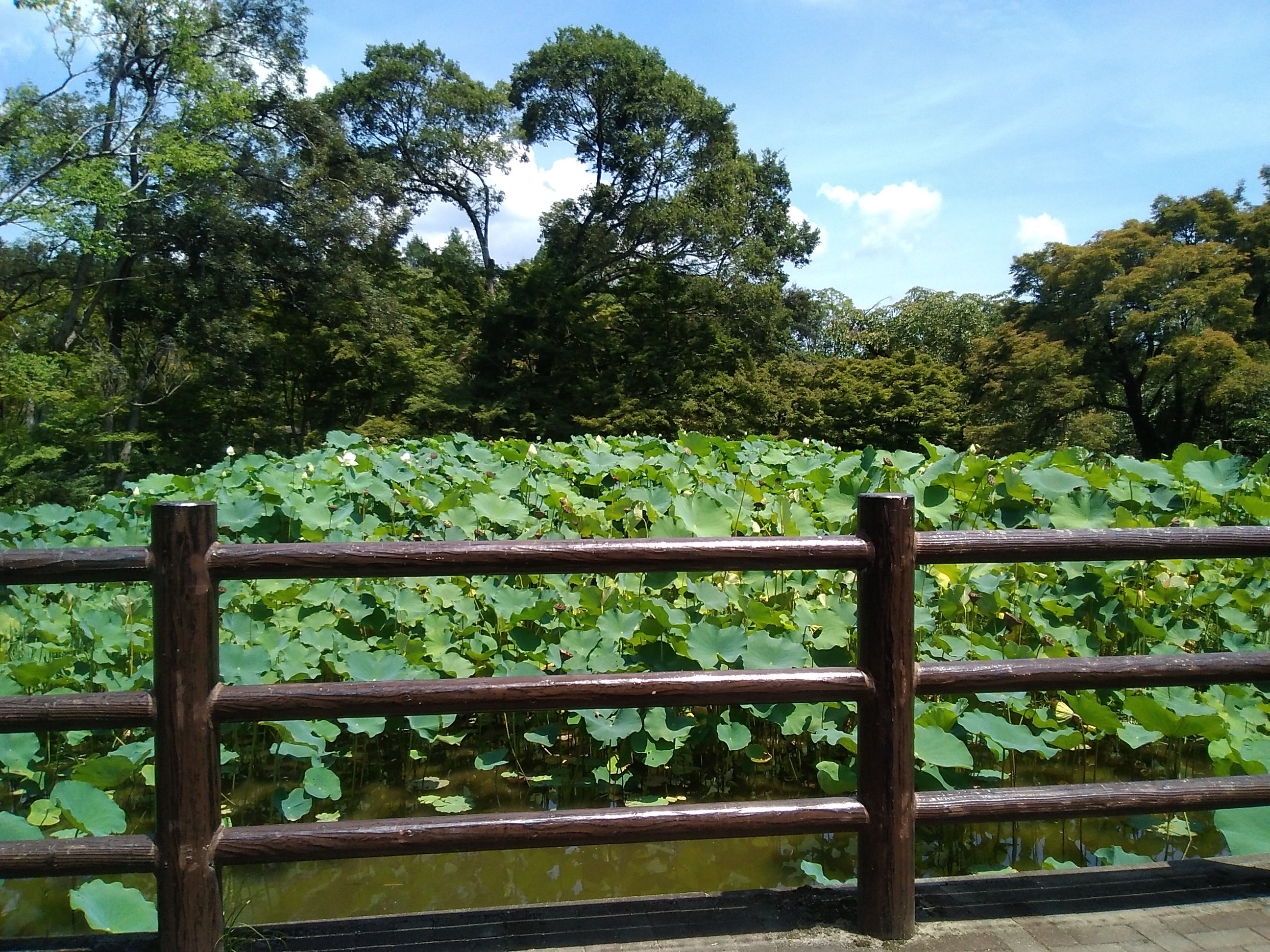
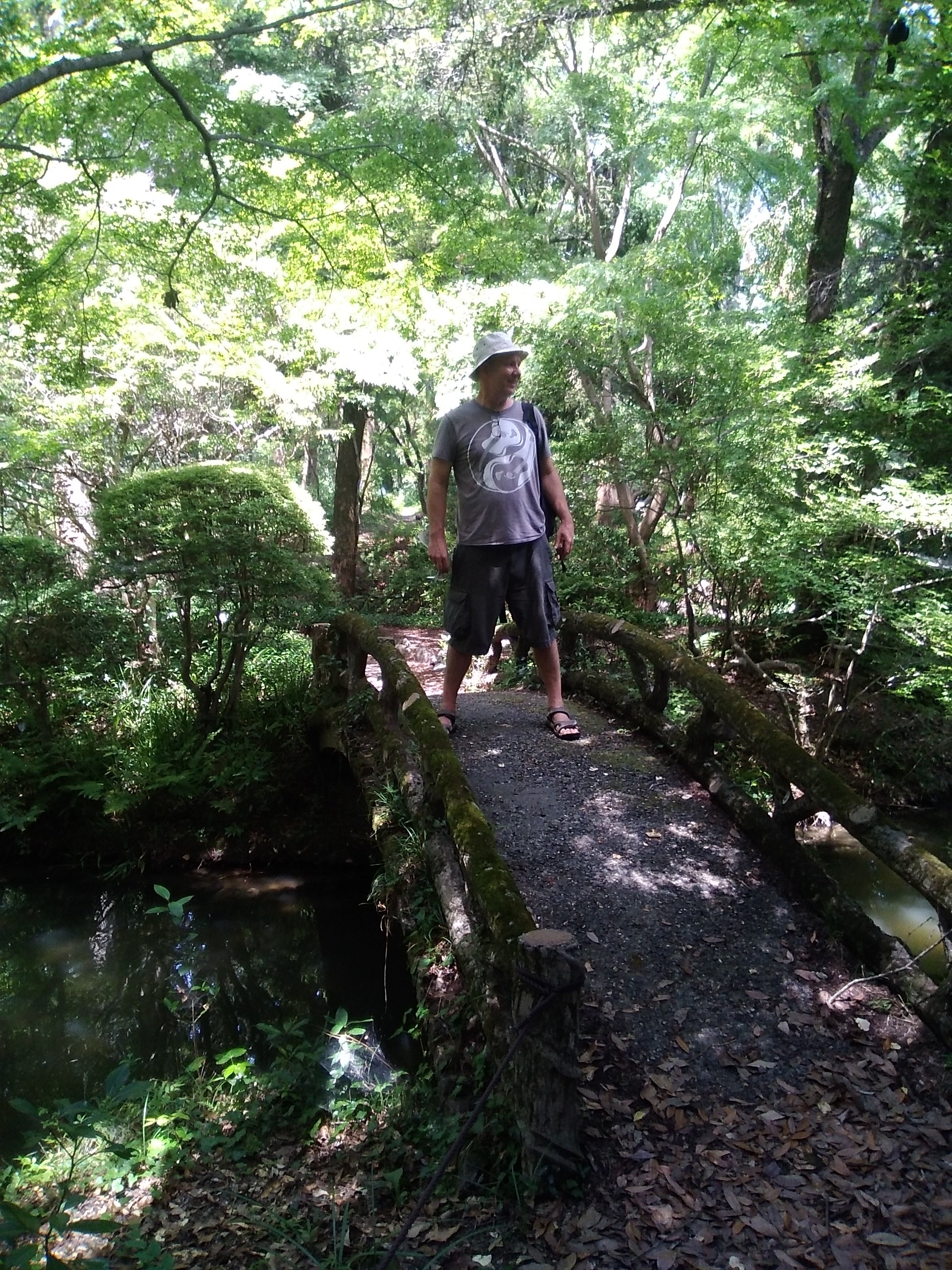
The visit to the Gardens also provided Pete with the opportunity to pose!

We passed water lilies and lotus blossoms. The lotus blossom has many different meanings in Japan, white ones symbolise purity and devotion. Also linked to ascension, it is revered in Japan for it’s ability to rise from dirty, murky waters and blossom into a beautiful flower, making it so important for Buddhists. But then my brain is whirring because how did such a beautiful flower then involve women having their feet bound. Although Japan had strong links with China (not all good) I don’t think this practice happened here.

The Gardens had the obligatory pond with carp in but looking more closely I saw lots of swimming turtles. Watching them move reminded me of my swimming technique, a bit funny looking but effective. A Japanese family gave us some food to feed them with, Pete said the food looked to nice to share with them! Anyway it was really lovely of the family to share. The turtles didn’t have a chance, each time something was thrown in the carp pushed them away, dive bombed them etc. They were so cute but a tiny bit clueless!

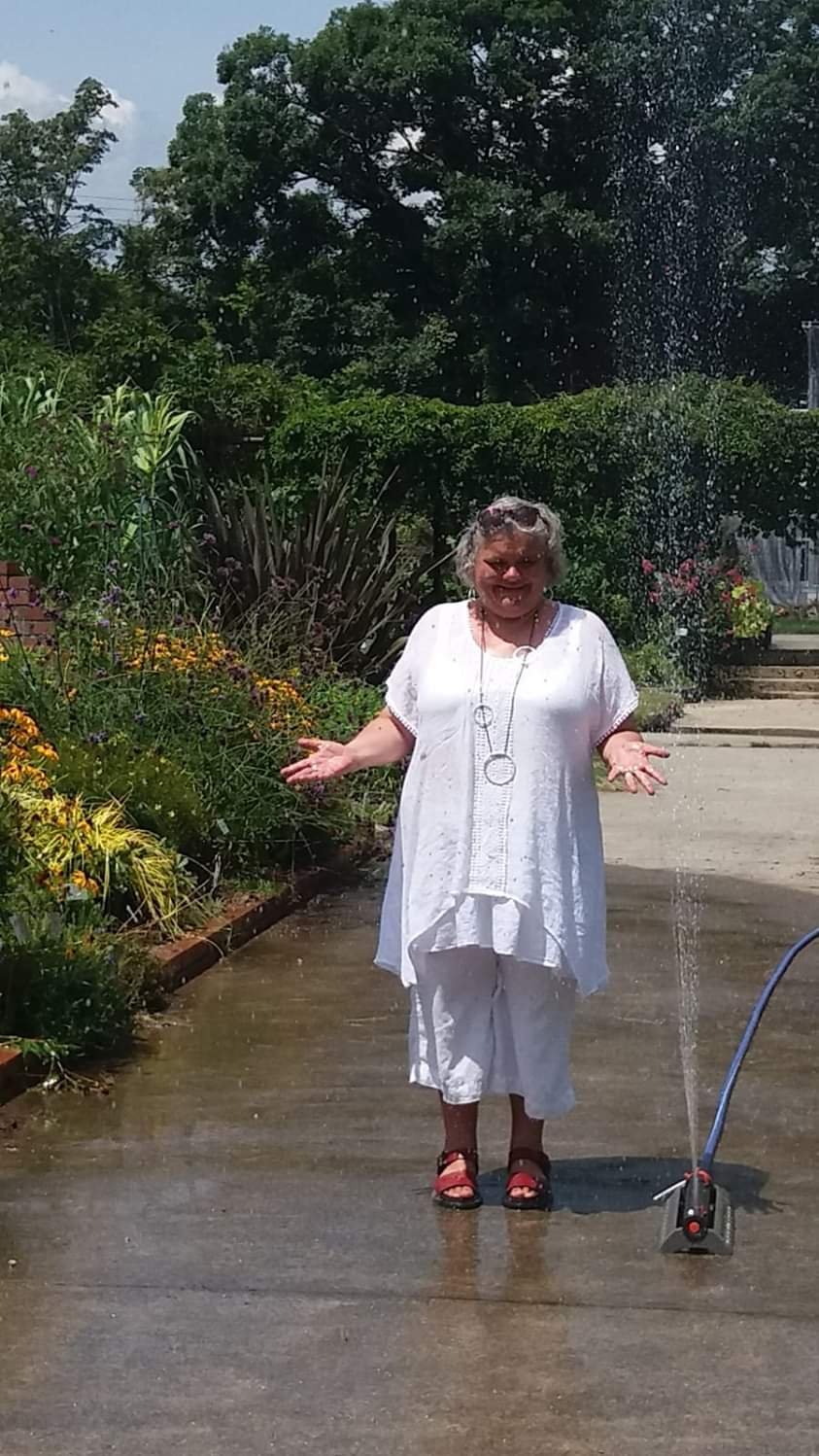
It was quite sweltering but the Gardens gave us quite a bit of shade and added to that I quite liked the water sprinklers. It was fantastic!

We hopped on another bus and eventually found our way to Nishiki Market. I had particularly wanted to visit the market because I had heard how vibrant it is.

A narrow passageway that goes through five blocks with up to 100 shops and places to eat makes this area of Kyoto very lively and exciting. There were lots of free things to try, giving us a better idea of some of Kyoto’s specialities. The area has a long history with in fact the first shop opening it’s doors in 1310. Many of the shops have been run within families for generations, and linked to that is a pride in this history, with notices testifying to how long they have operated in this area.

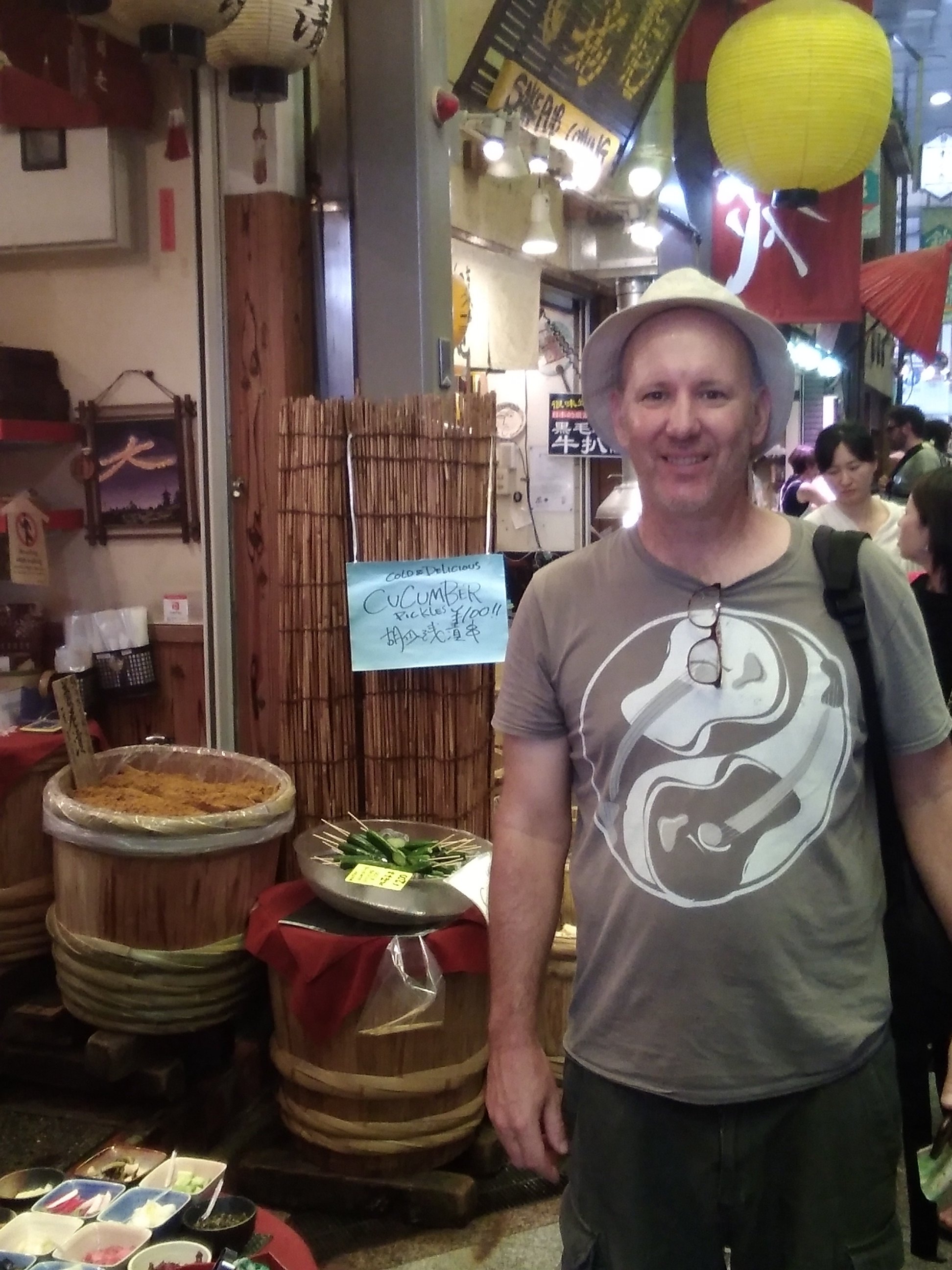
Shop assistants vie for trade calling you over, the smells either attract you or at times for us repelled us. But nevertheless the place had ‘pulling power’. Drums were filled with all many of pickles, most of them coming from locally sourced fruit and vegetables. Aubergines covered in salt, ginger pickles etc.
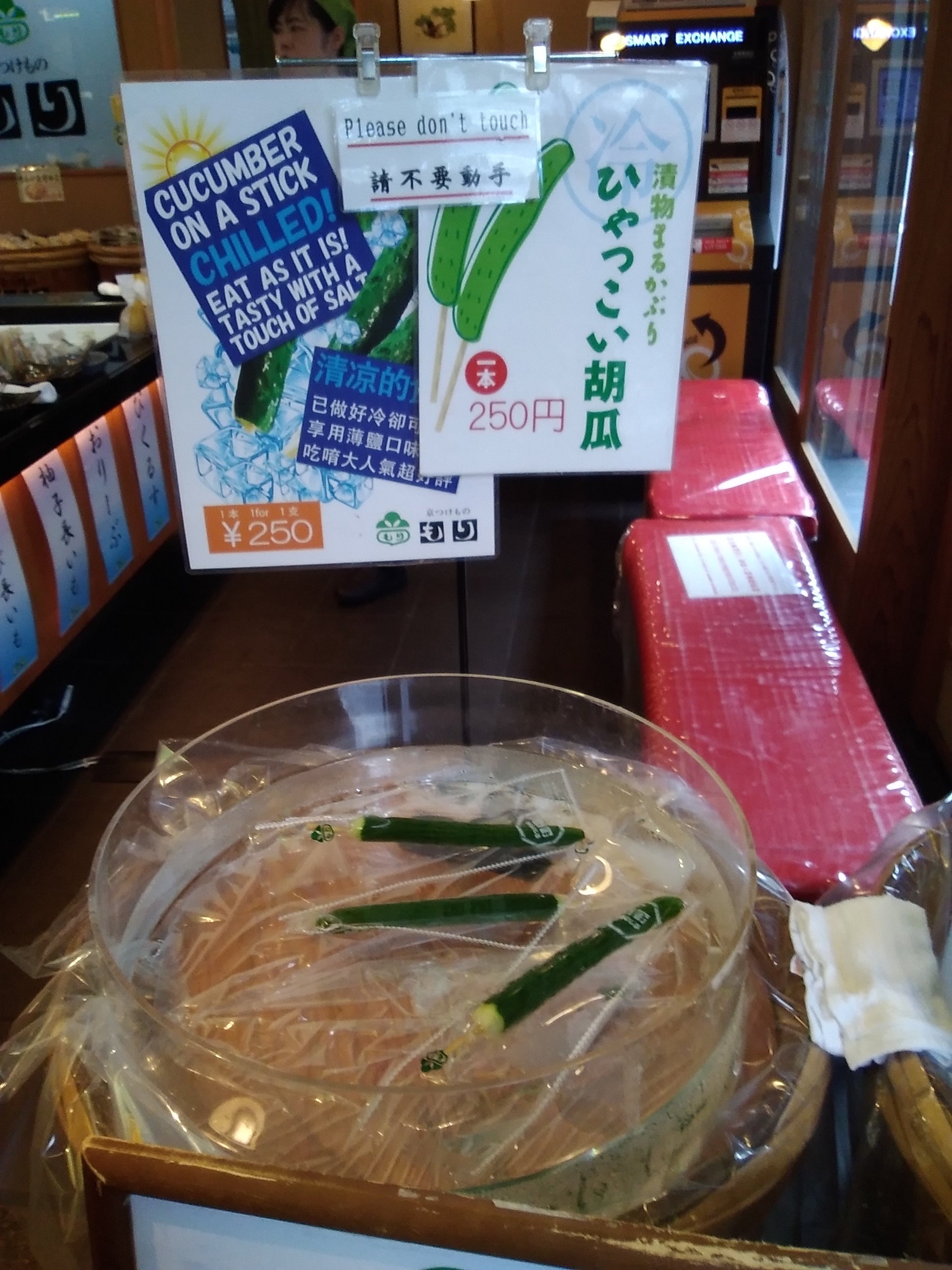
Cucumbers on a stick looked like a great idea!

The place was a buzz with activity but it was also a place that very much highlighted how hard it is to be vegetarian in Japan.

All around people were eating skewered food, under the instruction from the store owners that any food bought must be eaten next to their stall. This made it hard to pass the most popular places. One of the most popular culinary delicacies was the baby octopus on skewers.

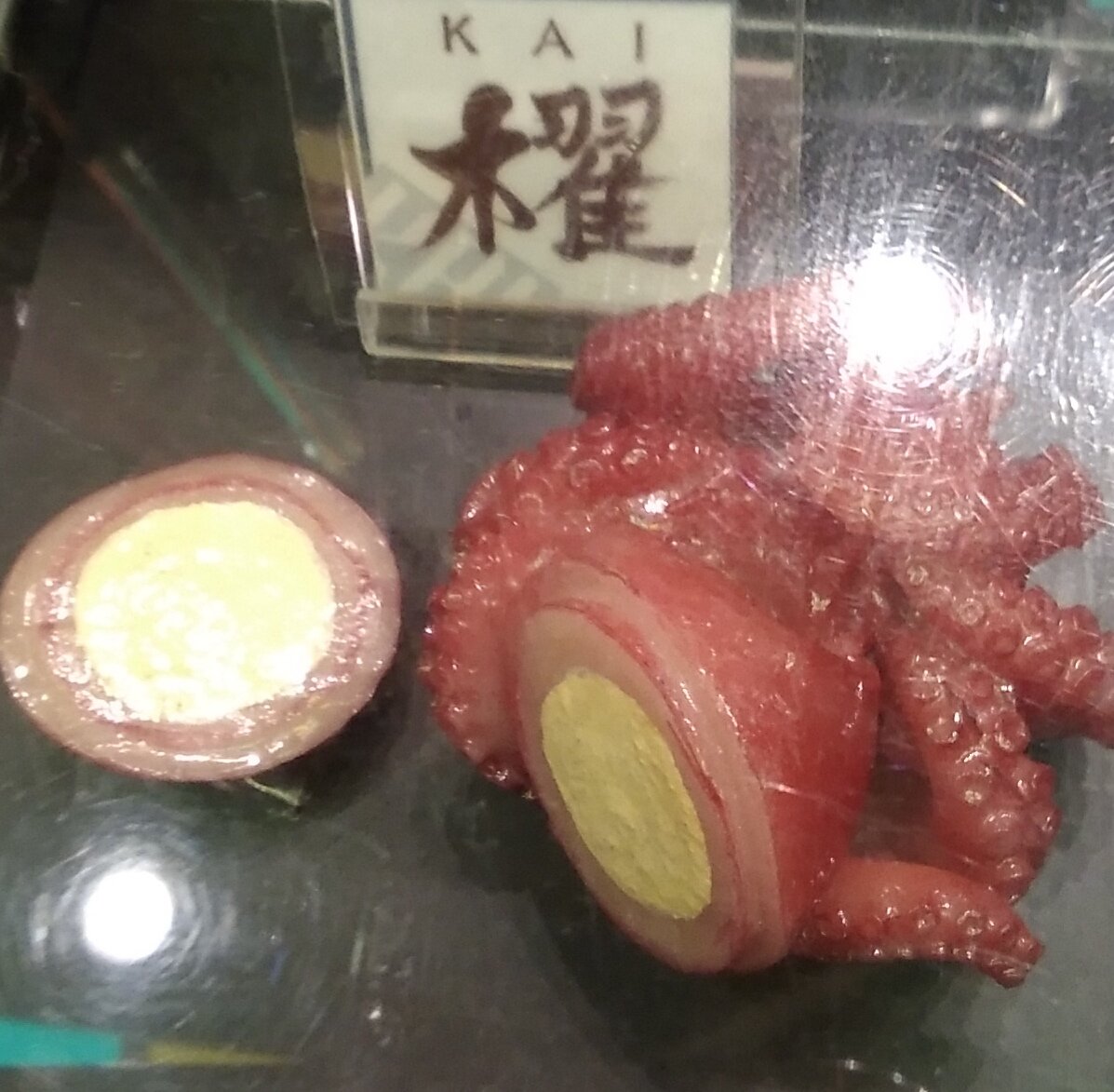
Some stall holders had gone one step further and had stuffed them with quail’s eggs. Baffling that it was possible to stuff a baby octopus but also very much stomach churning for us. These are called tako tamago, they are candied too, so an even odder combination of sweet and salty.

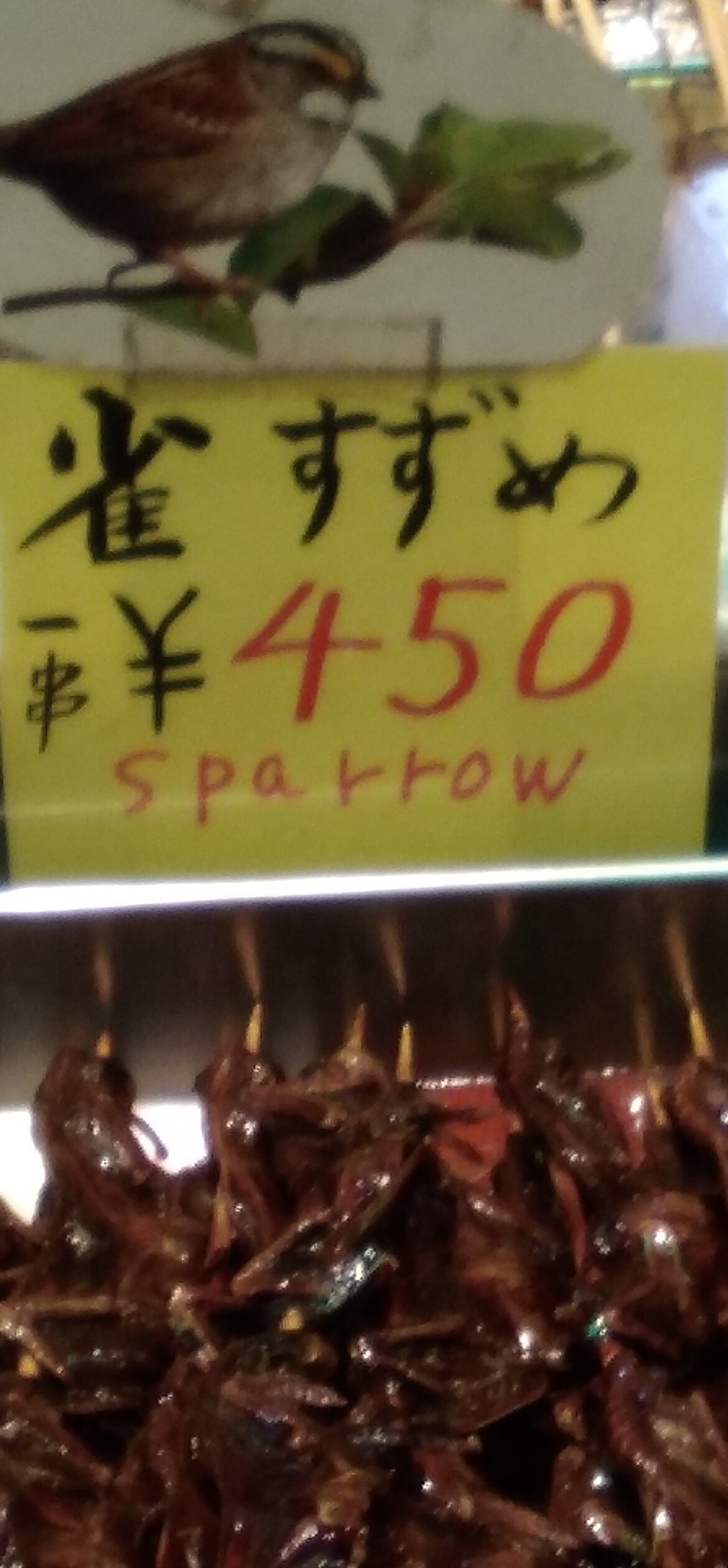
They even had sparrows on skewers to chomp through. All of this was very alien to us but there were many happy faces with different types of skewered food being eaten. To be honest eons ago I went to Warrington Market and they were selling udder, boiled and sliced to your preference, so my feelings of queasyness are not limited to ‘abroad’.
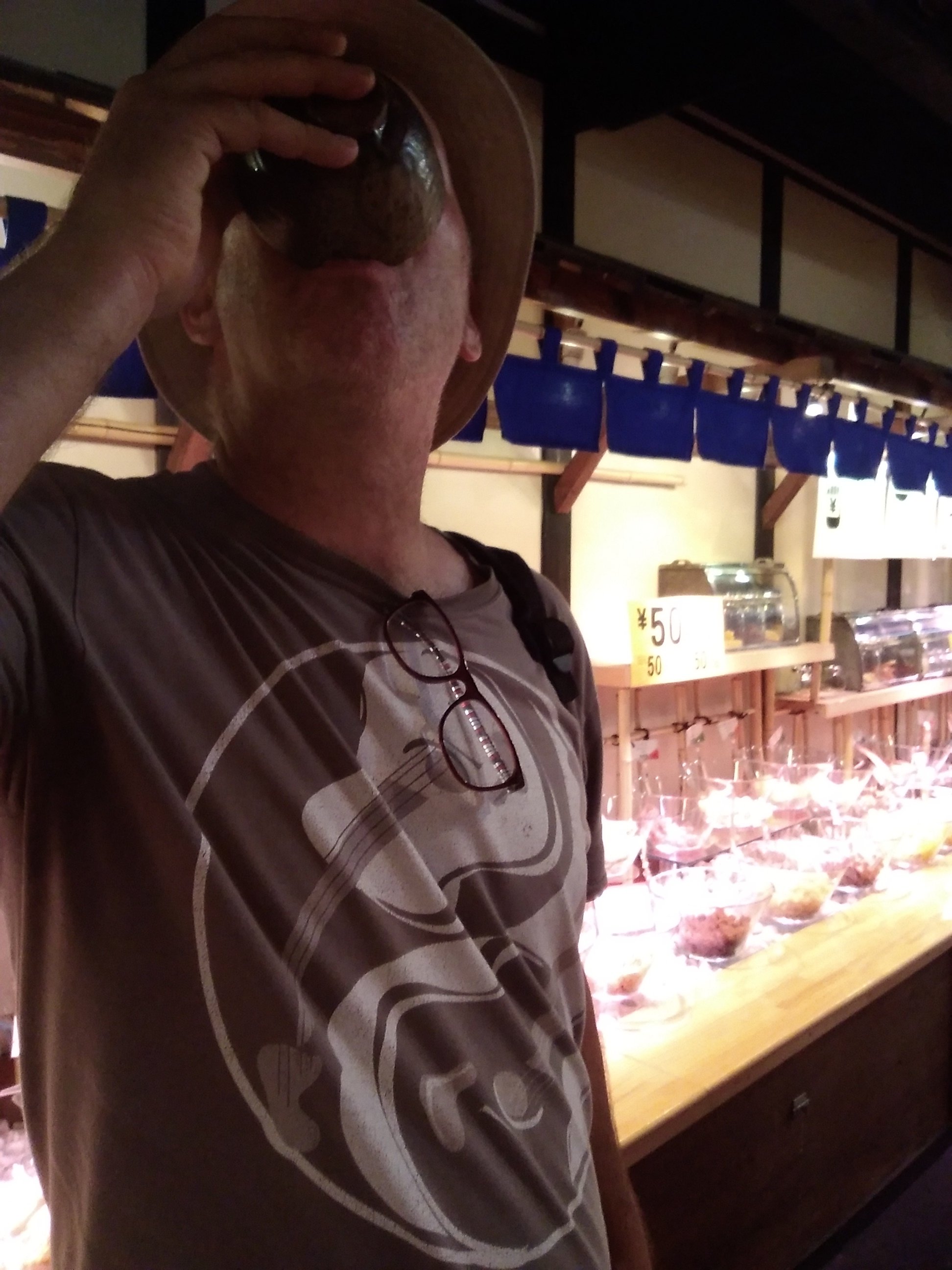
Initially we had headed to the market with the intention of getting something cheap and tasty to eat but to be honest we were a bit overwhelmed in terms of what we could or couldn’t eat. It really wasn’t bad and it was lovely to lured into a store with a bowl of iced tea! Then to sample dried strawberries, different nuts, rice with toasted sesame seed toppings etc.
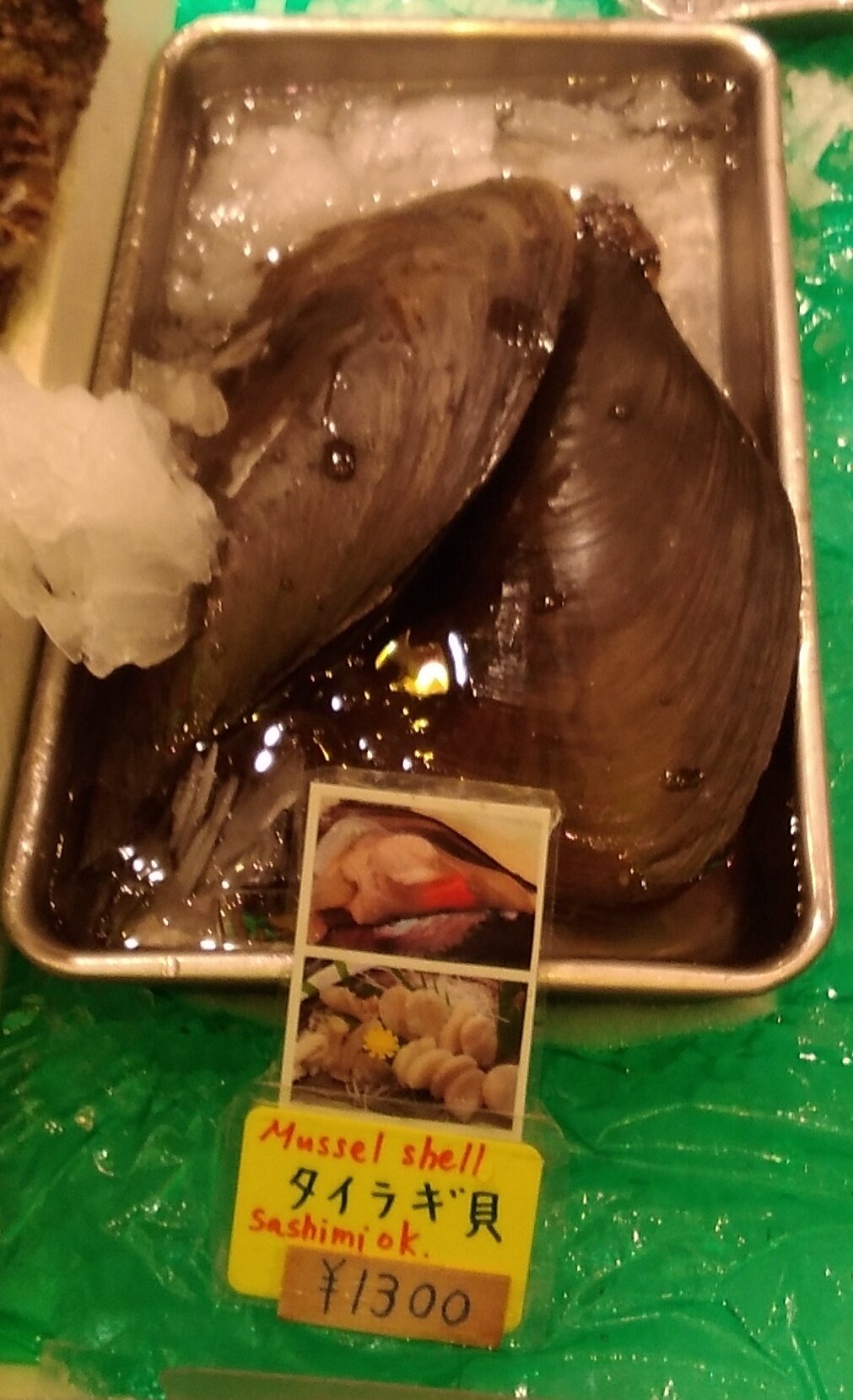
Also these muscles were the size of a small baby and could have fed a family of 6 for a week!
Hot and a tiny bit bothered in Kyoto.. Part 1

Didn’t have the best of sleeps as I think that during the night everything wanted a piece of me, ants, midges etc. I now have a body covered in various lumps, bumps, red patches and am incredibly itchy! Woke up at a ridiculous time but the bonus was being able to cool down in the lake one last time and feel it’s restorative effect.
We were heading to Kyoto but had much wrangling thinking about how to get there. Parking a camper van in a large, bustling, unknown city has its far degree of anxieties attached to it. We decided to look at the train line to Kyoto, find a place nearest to the city, park up and then use public transport from there. That’s how we ended up in Otso. All this would sound straightforward but once we parked up we had to try to work out exactly what the parking meter said…. After much head scratching and help from passers by we felt confident to leave the van, having worked out it would cost about 9 pounds for the day, right next to the train station. Much cheaper than Sheffield!
Climbing on board with the numerous commuters, there was a slight guilty pleasure knowing we were on holiday and not heading towards the daily grind.
I0kOne stop later and we were in Kyoto, bought an unlimited bus pass for 600 yen, about 4 pounds equivalent, and began our exploration of Kyoto. The whole transport system is very much geared to tourists and hopping on and off the bus to see various sights is fairly simple. On the downside as Kyoto is further south, the temperatures were much higher and at times it felt oppressive. We had plenty to drink and tried as often as possible to find shade, go into areas of air conditioning but today there were moments when I felt a bit overwhelmed by it.
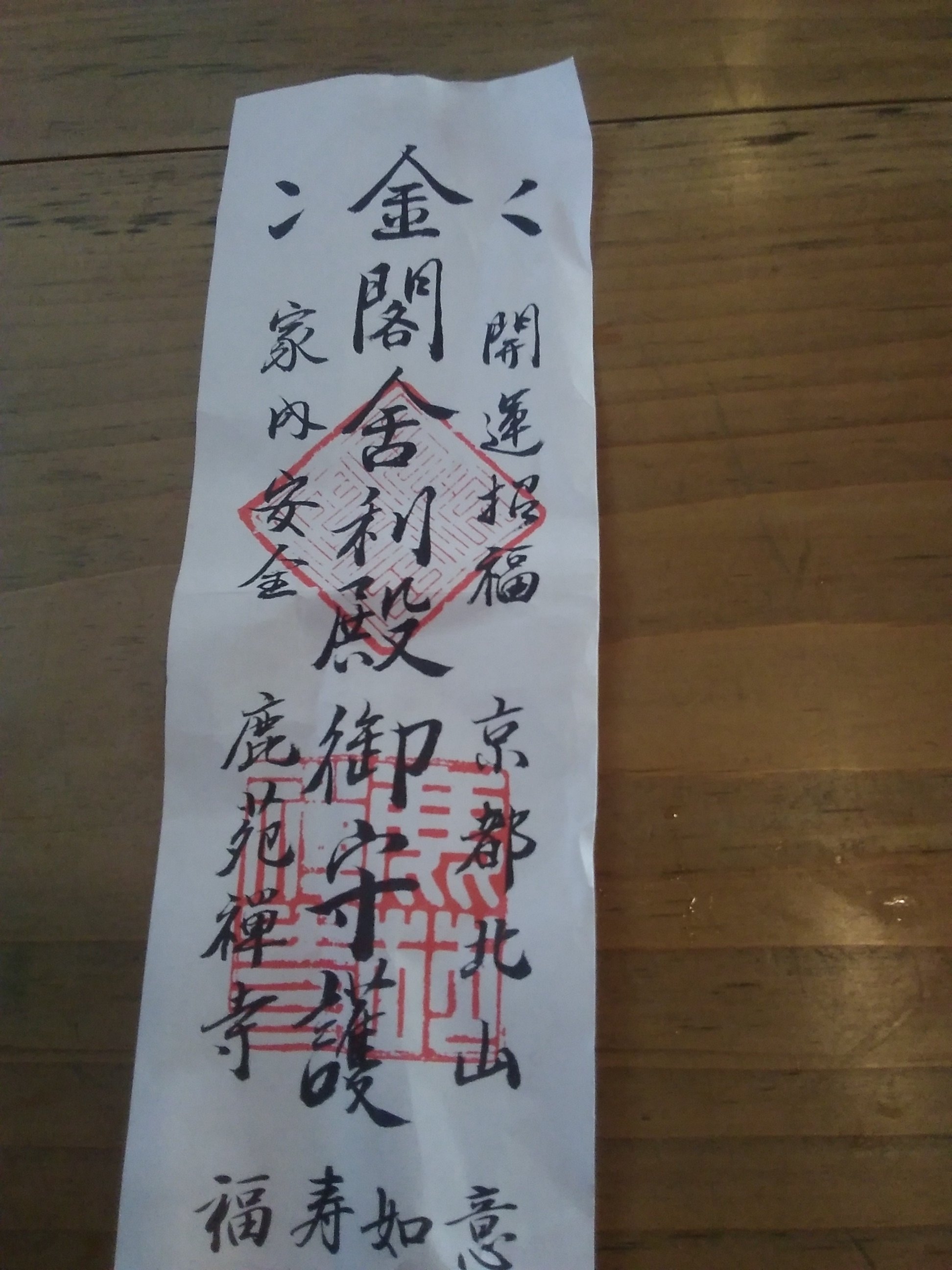
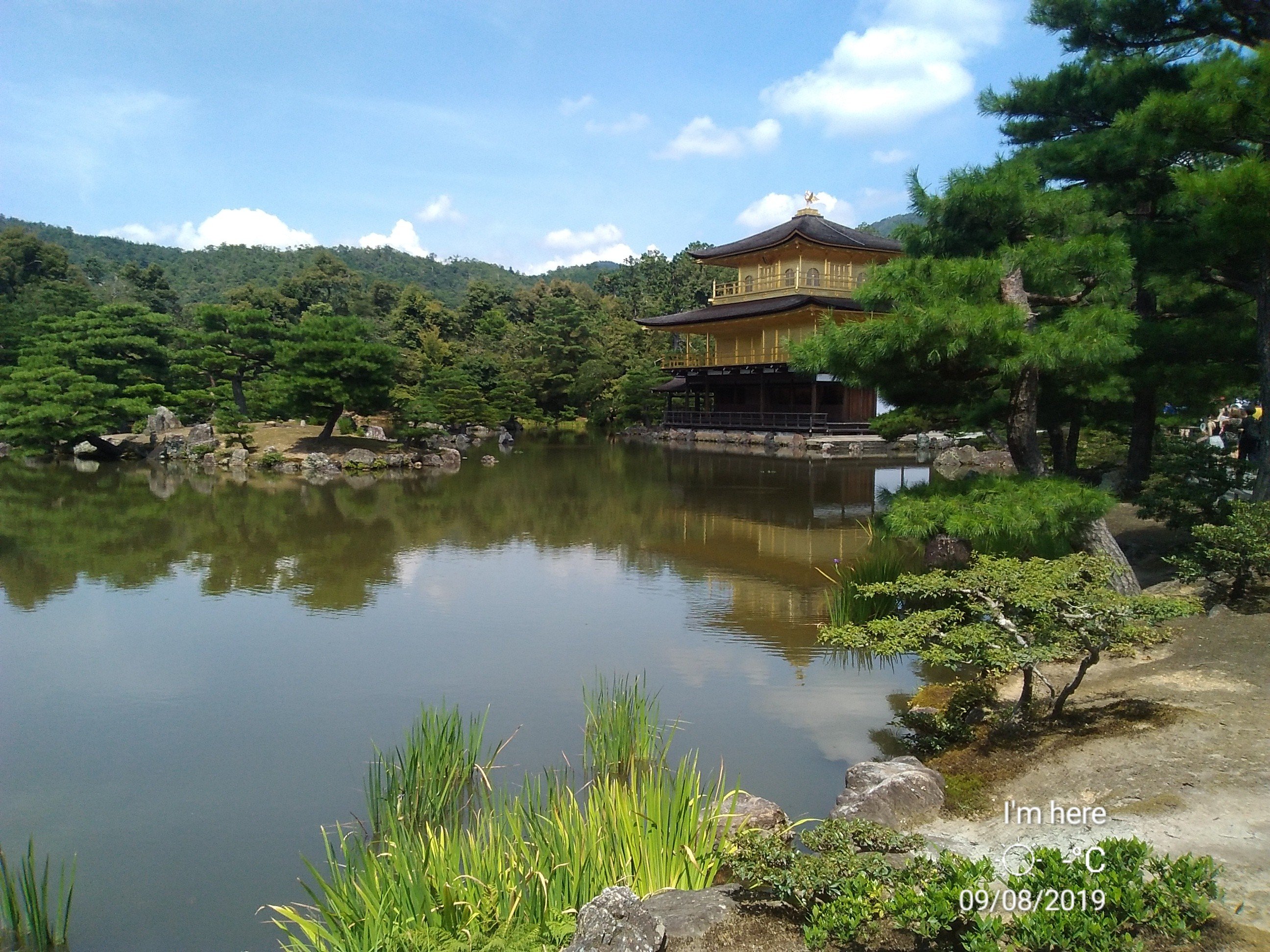
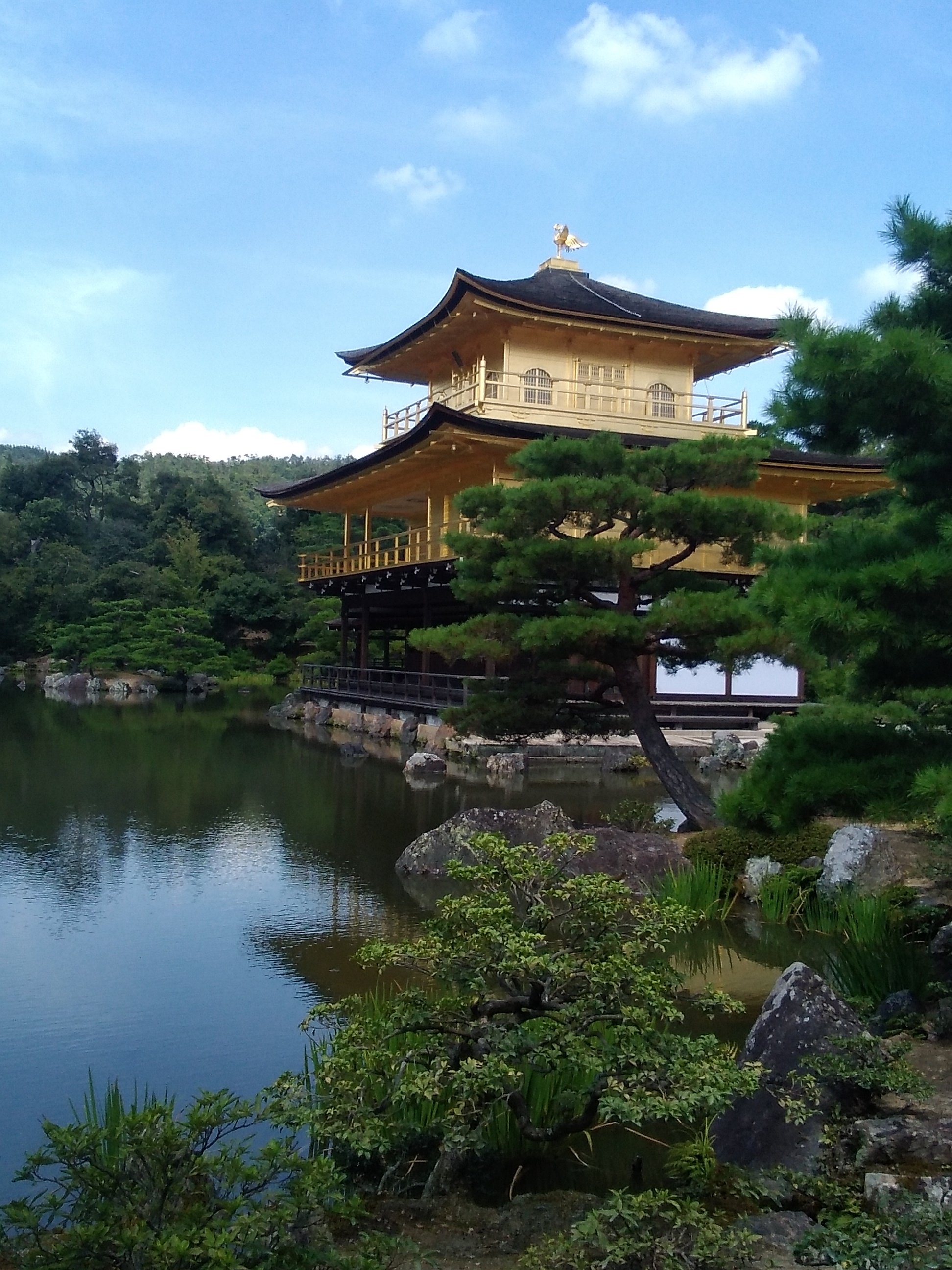
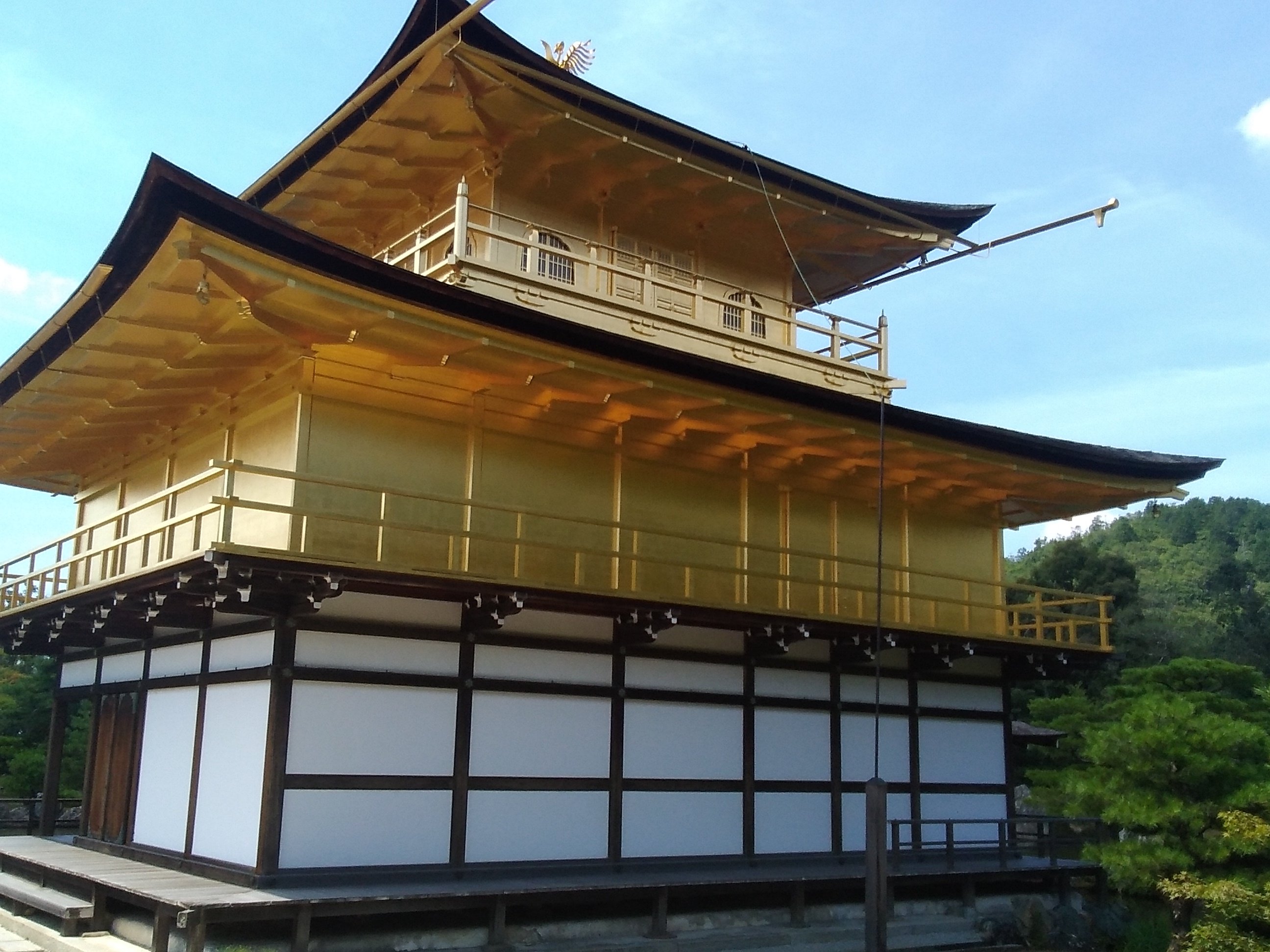
Our first stop was Kinkakuji ( Golden Pavilion) a a Zen temple in northern Kyoto, whose top two floors are completely covered in gold leaf. Formally known as Rokuonji, the temple was the retirement villa of a shogun, and according to his will it became a Zen temple of the Rinzai sect after his death. It is a world heritage site and one of the most visited places in Japan. We were lucky to get there early as very soon it was heaving with hoardes coming off tourist coaches.
Firstly the entrance ticket has to be the most impressive one we have had so far this trip! Beautiful and very large. Again to put it into perspective the costs of some things in Japan are not wildly extortionate – to enter it was 400 yen which is around about 3 pounds.
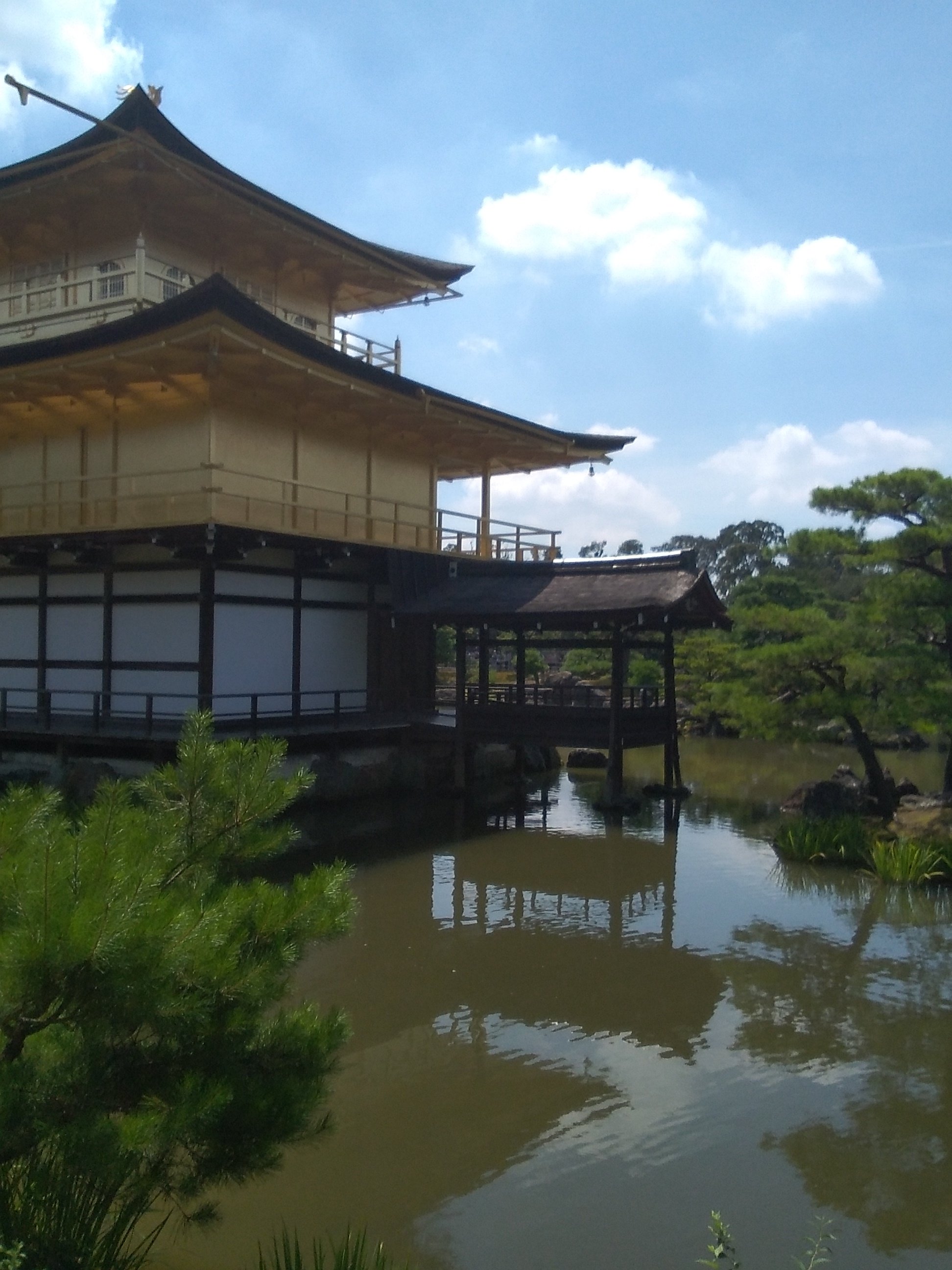
The first two levels are covered in gold leaf, sparkling in the sunlight it was a magnet for selfies and group poses. …. Of course we were no different!The gardens were also beautiful which set me off googling if there was a particular design. According to Wikipedia :
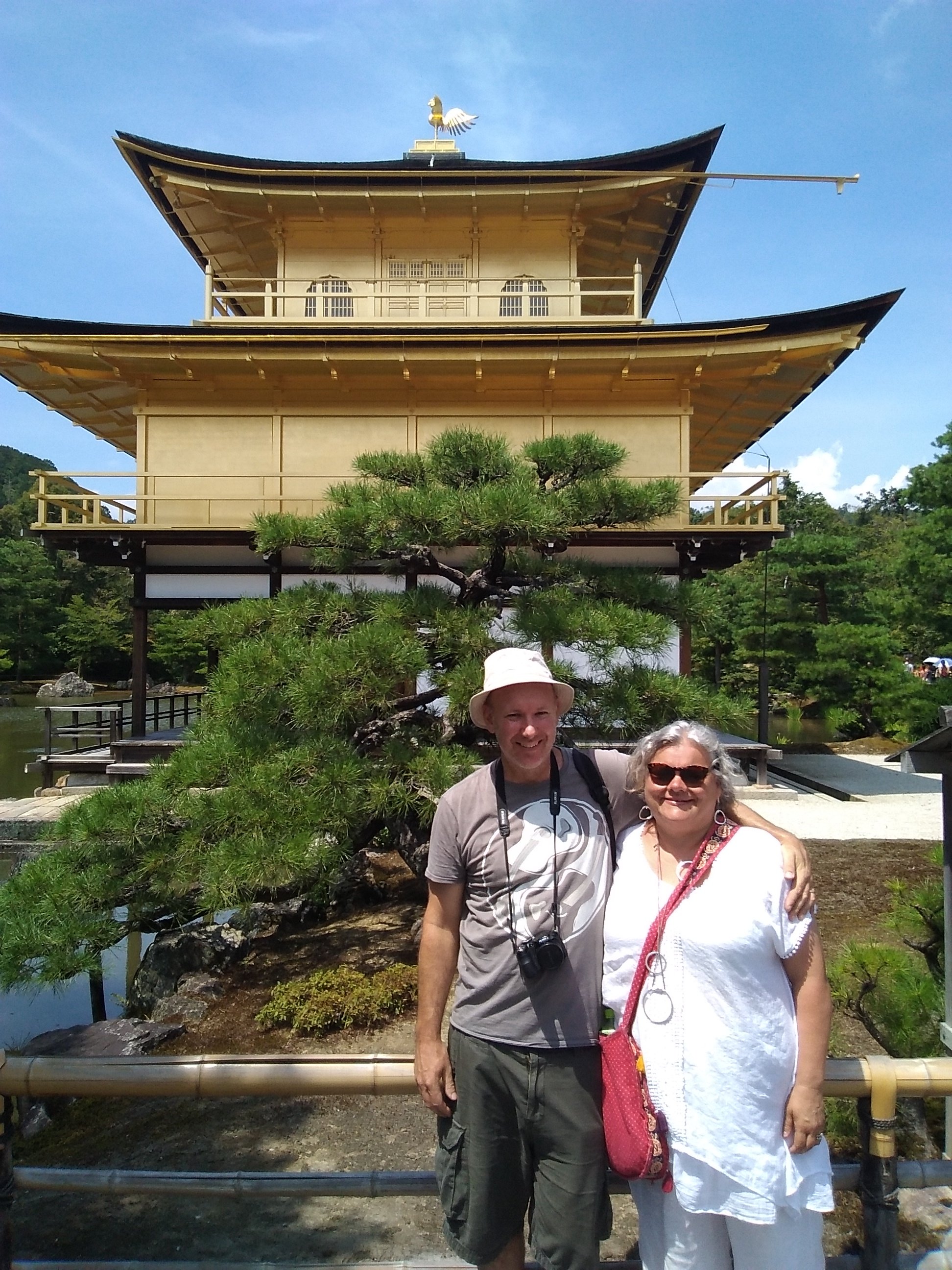
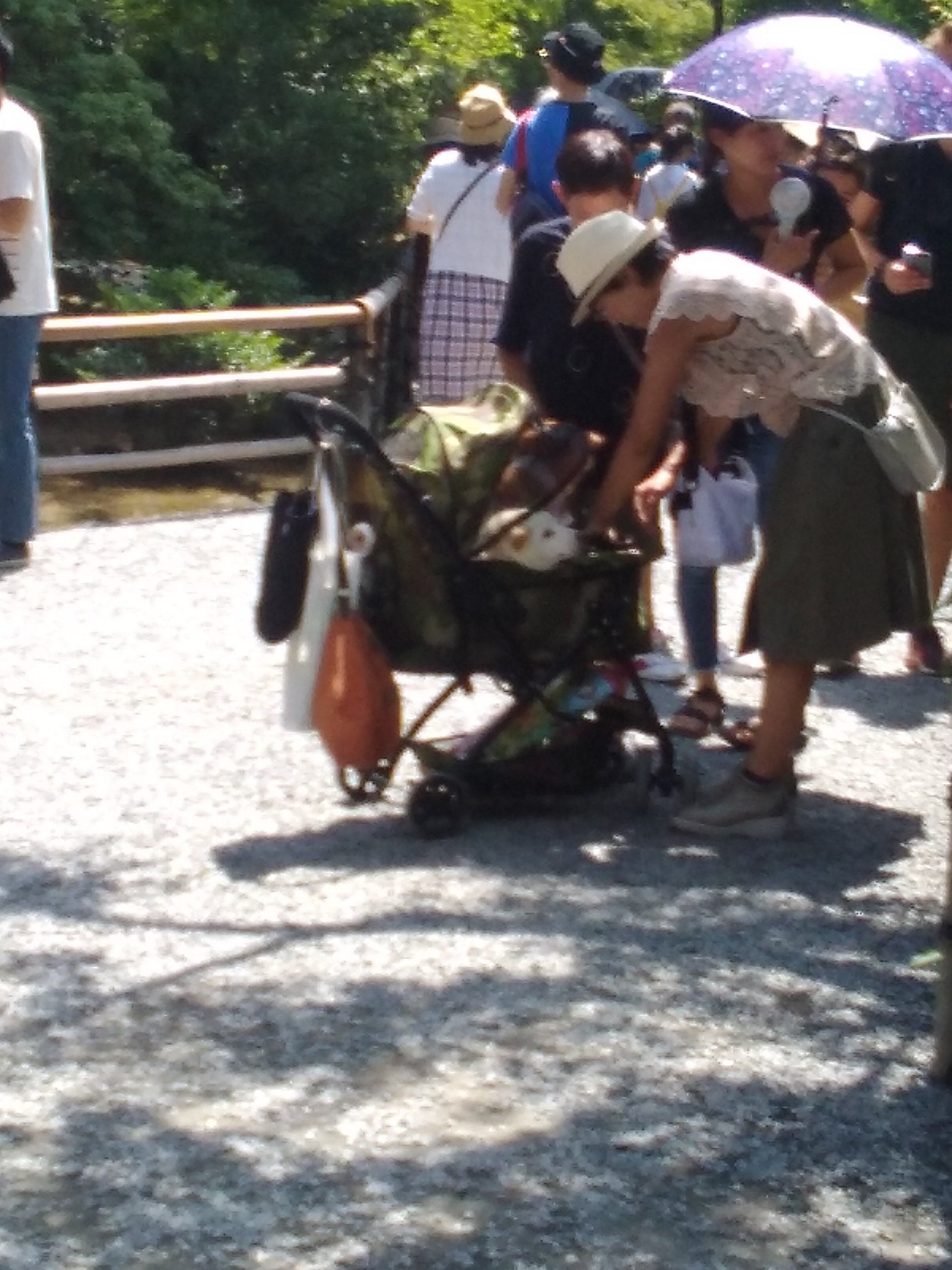
The Golden Pavilion is set in a Japanese strolling garden (回遊式庭園kaiyū-shiki-teien, lit. a landscape garden in the go-round style). The location implements the idea of borrowing of scenery (“shakkei”) that integrates the outside and the inside, creating an extension of the views surrounding the pavilion and connecting it with the outside world. The pavilion extends over a pond, called Kyōko-chi (鏡湖池Mirror Pond), that reflects the building. Not certain if I get all that but the design was beautiful and particularly as it relatively only covers a small space.Stopping in a shaded area gave me time to people watch, which is my wont. Since coming to Japan we have hardly seen any animals domestic or otherwise. According to the Japan Pet Food Association (JPFA), 18.3% of  Japanese households owned a pet in 2009: 12.3 million dogs and 10 million cats, up from 9.1 million and 6.2 million respectively in 1994. In fact, there are now more pers than children in Japan. The statistics now will undoubtedly be similar. But despite the numbers of domesticated animals we have haven’t really seen any. Until today… Two dogs in a pram with frocks on! Not necessarily a surprise as during one shopping excursion we had seen a aisle with dog dresses and a sizeable section of dog nappies. The pram part seemed surreal but before we left the shrine I saw the owner feeding them lovingly with 600 yen match green tea ice cream!
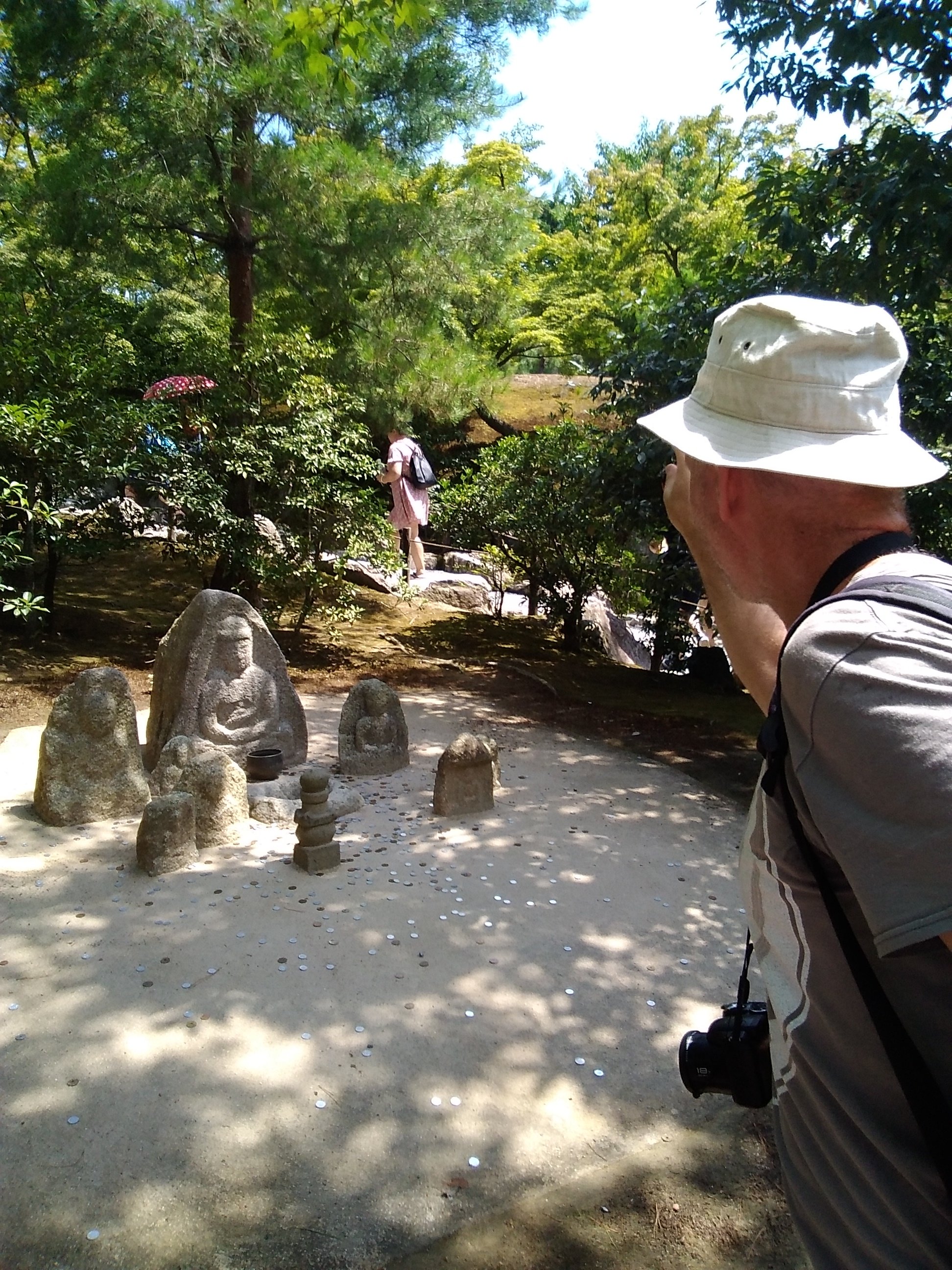
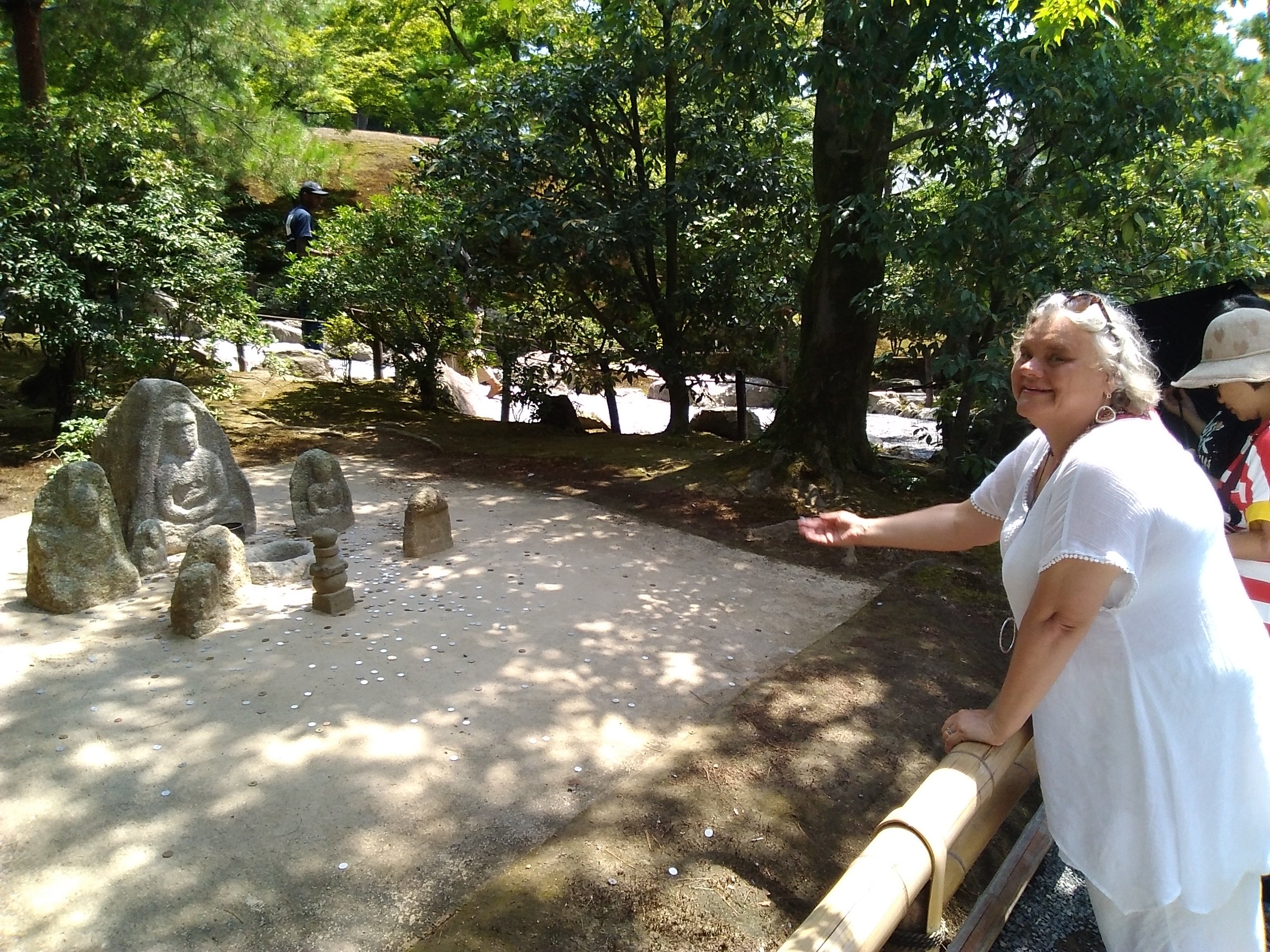
Many shrines and temples are said to be particularly good at bestowing certain types of blessings or goriyaku. In recent years, these temples and shrines have come to be known as “power spots.” I don’t know if this shrine is known for this but both Pete and I had a go throwing money towards one shrine within the park. Pete managed to get the ‘offering’ in the bowl and is now convinced that a million pounds is coming his way. I was not so lucky….. But hopefully he will share. But he also had two attempts so that may negate the ‘win’.

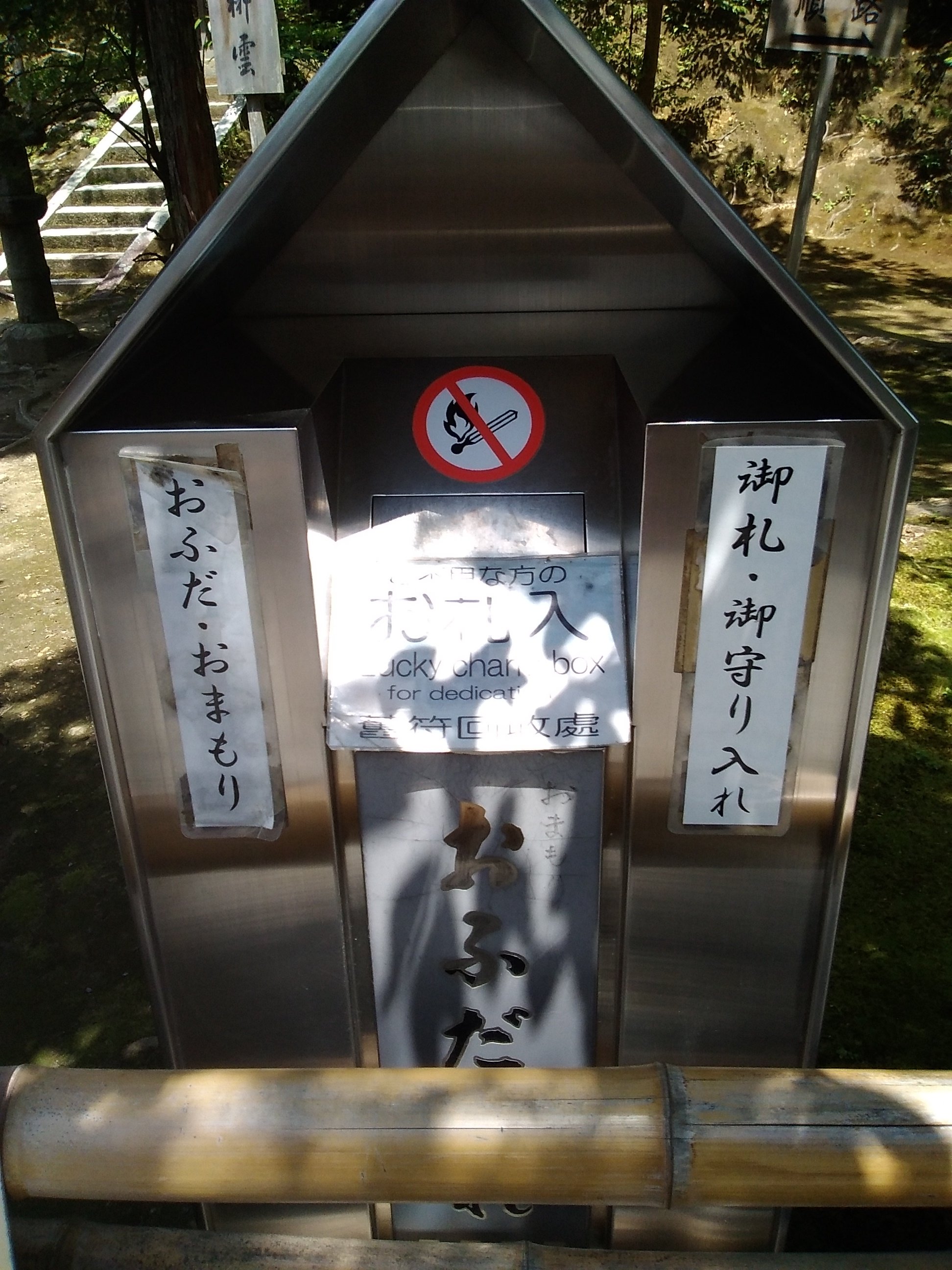
Another  thing that we have found at shrines are stalls which sell ‘offerings’ – you can’t take photos but they are linked to health, wealth and happiness.But after you have bought them there is a thing like a bin next to it. In fact there is a notice telling people it isn’t a bin. So my confusion is this, if you buy an offering (which are not cheap) and then put them in the ‘bin’…..what next? Do they collect them and re-sell them, is there a divine sanctified landfill specially for offerings? I mean they can’t really bin them can they?
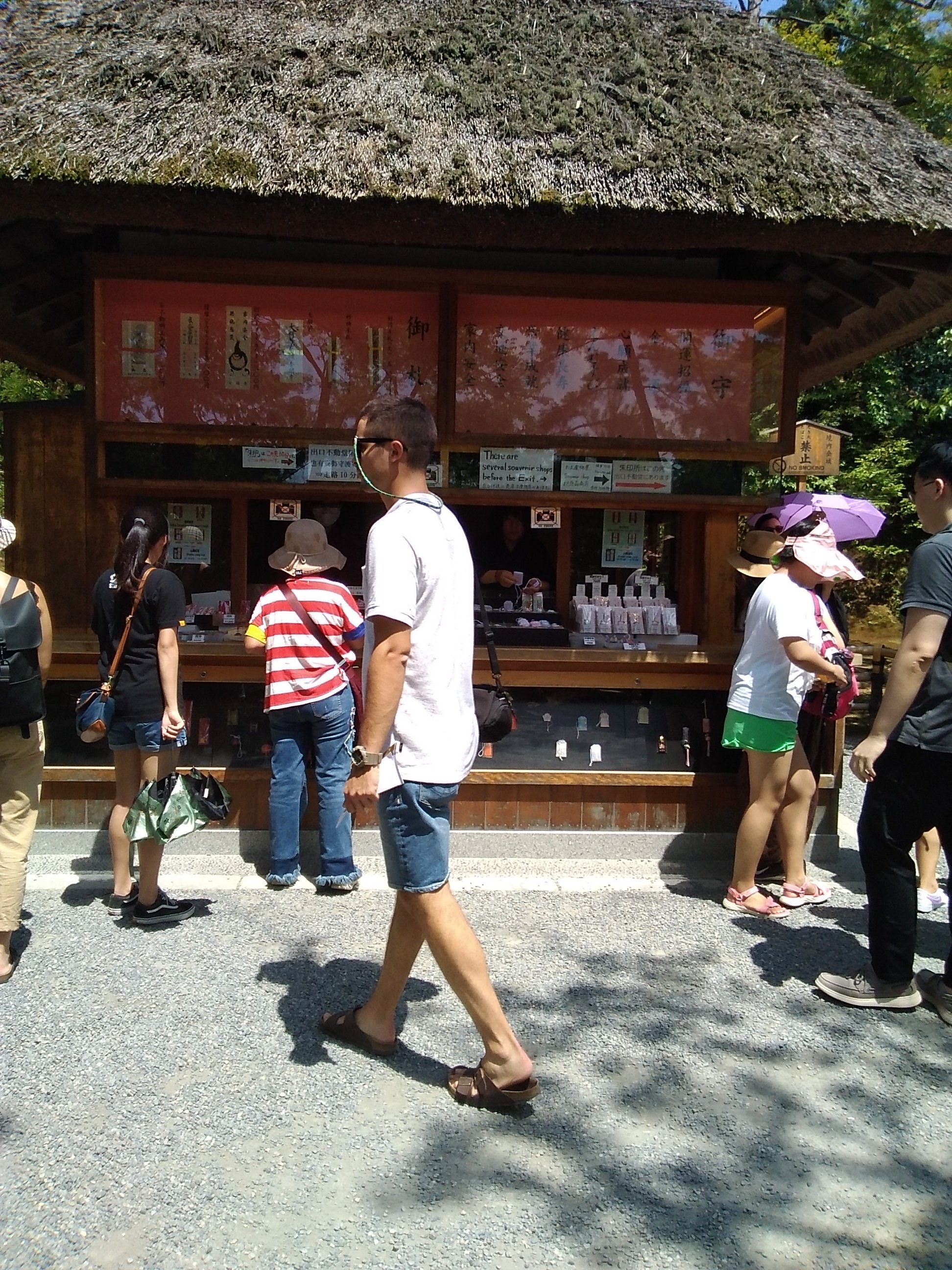
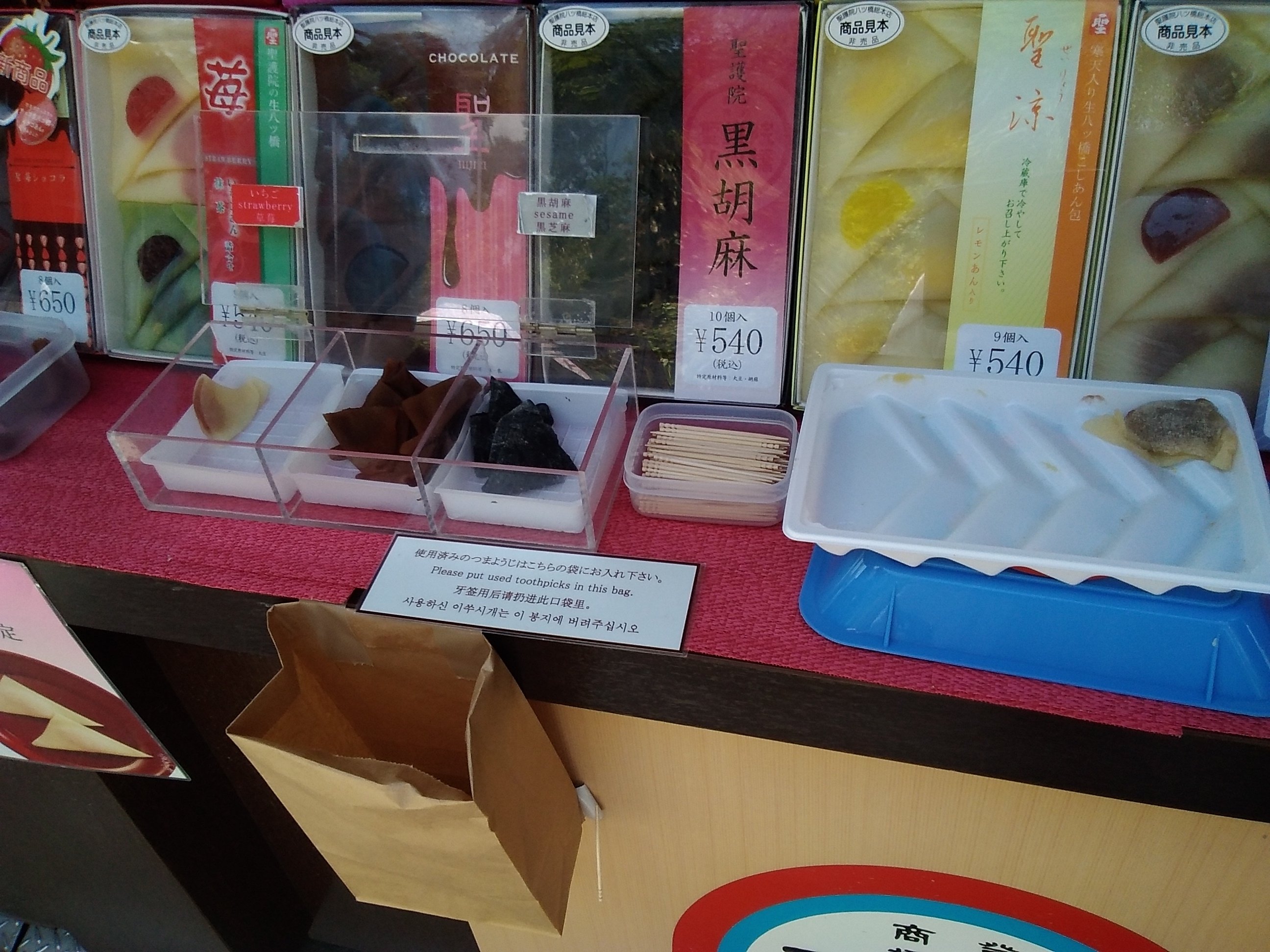
As we left the shrine there were lots of things to buy but what was great was that there were also lots of things to taste, yum yum! There were all kinds and the sample sizes were big, so we worked through about 8 or 9 different types. Round the corner they had more savoury type snacks, many with a fair dollop of wasabi. Having munched through both it felt like we had, had a light lunch. And then we headed to the next place on our list.
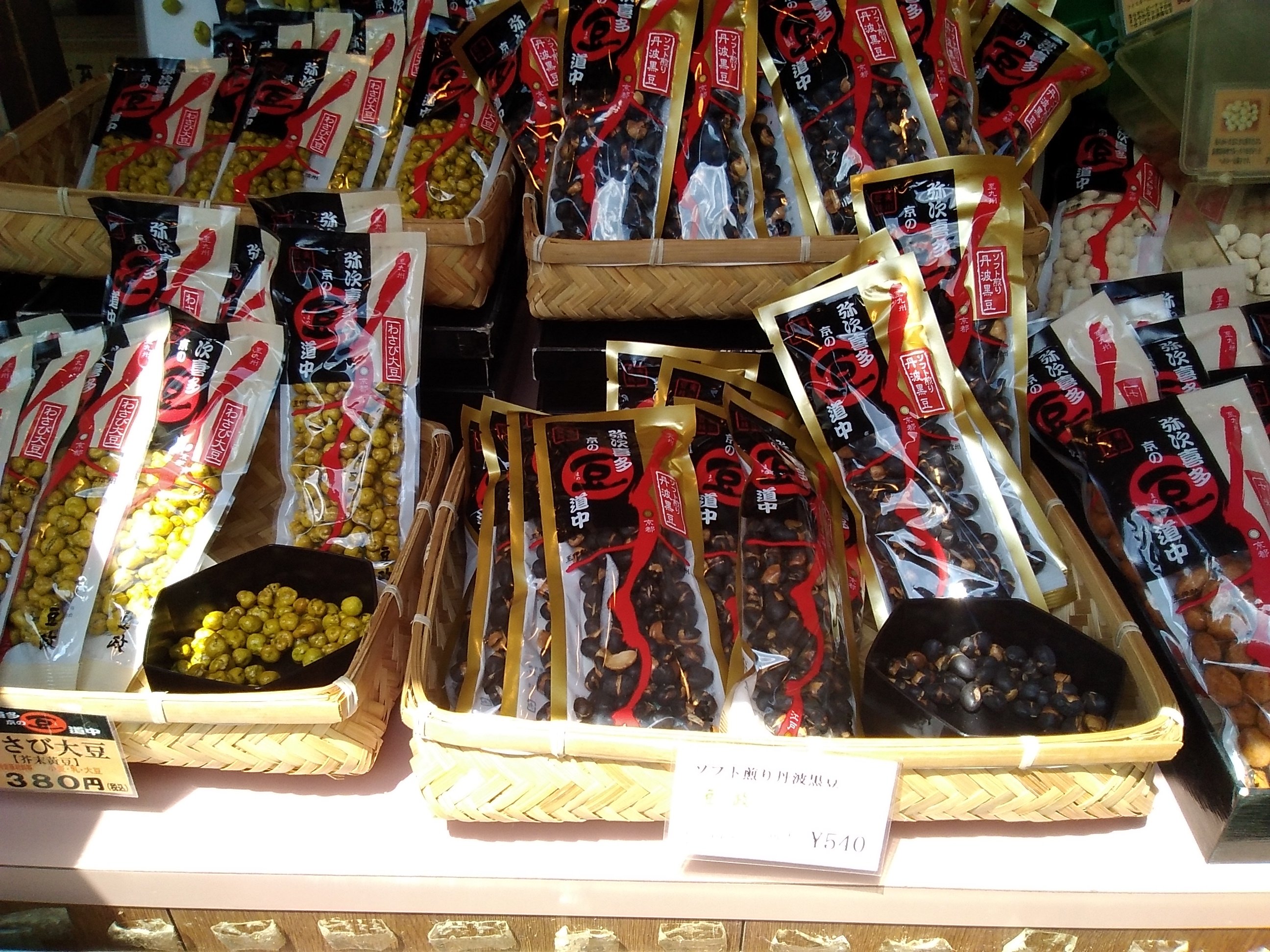
A mistake but a good one….

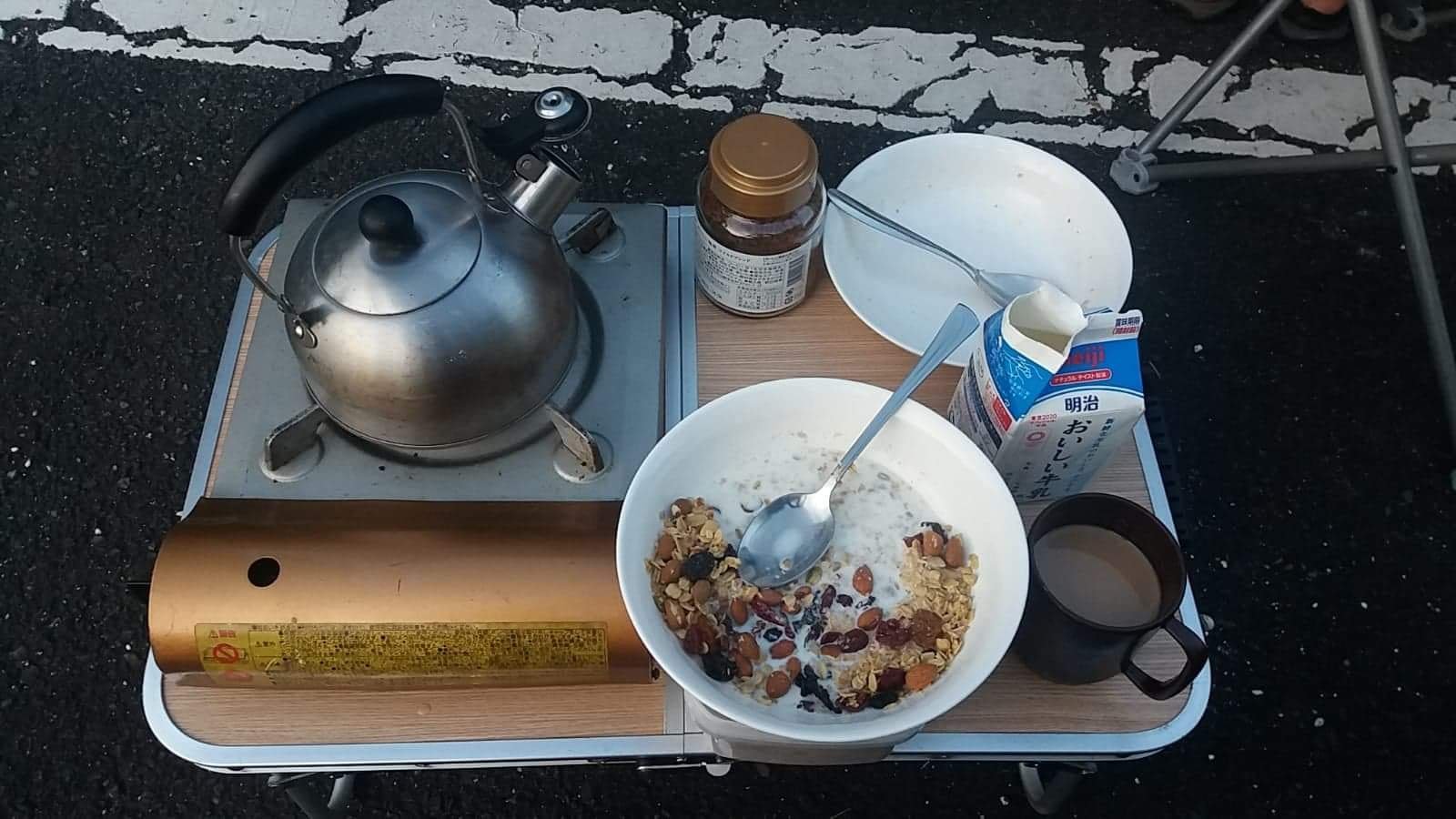
After the storm we decided to get up early and hit the road. We had a hearty bowl of cereal and left the camp at 6. 30am.

We were doing really good time as the roads were quiet. Our plan was to head towards Osaka via the west side of Lake Biwa, hopefully finding somewhere to camp near Omi-Maiko, Nakahama.

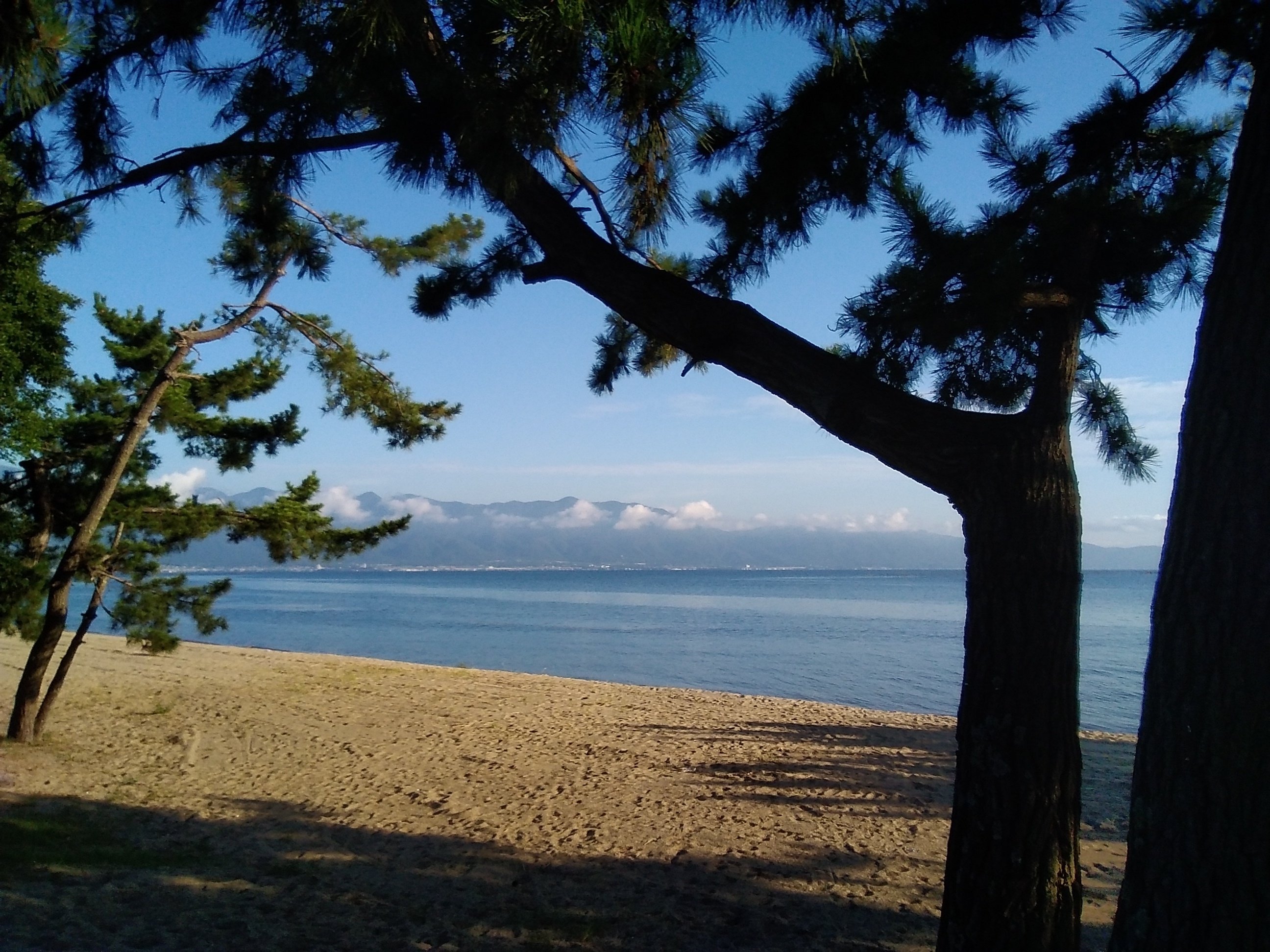
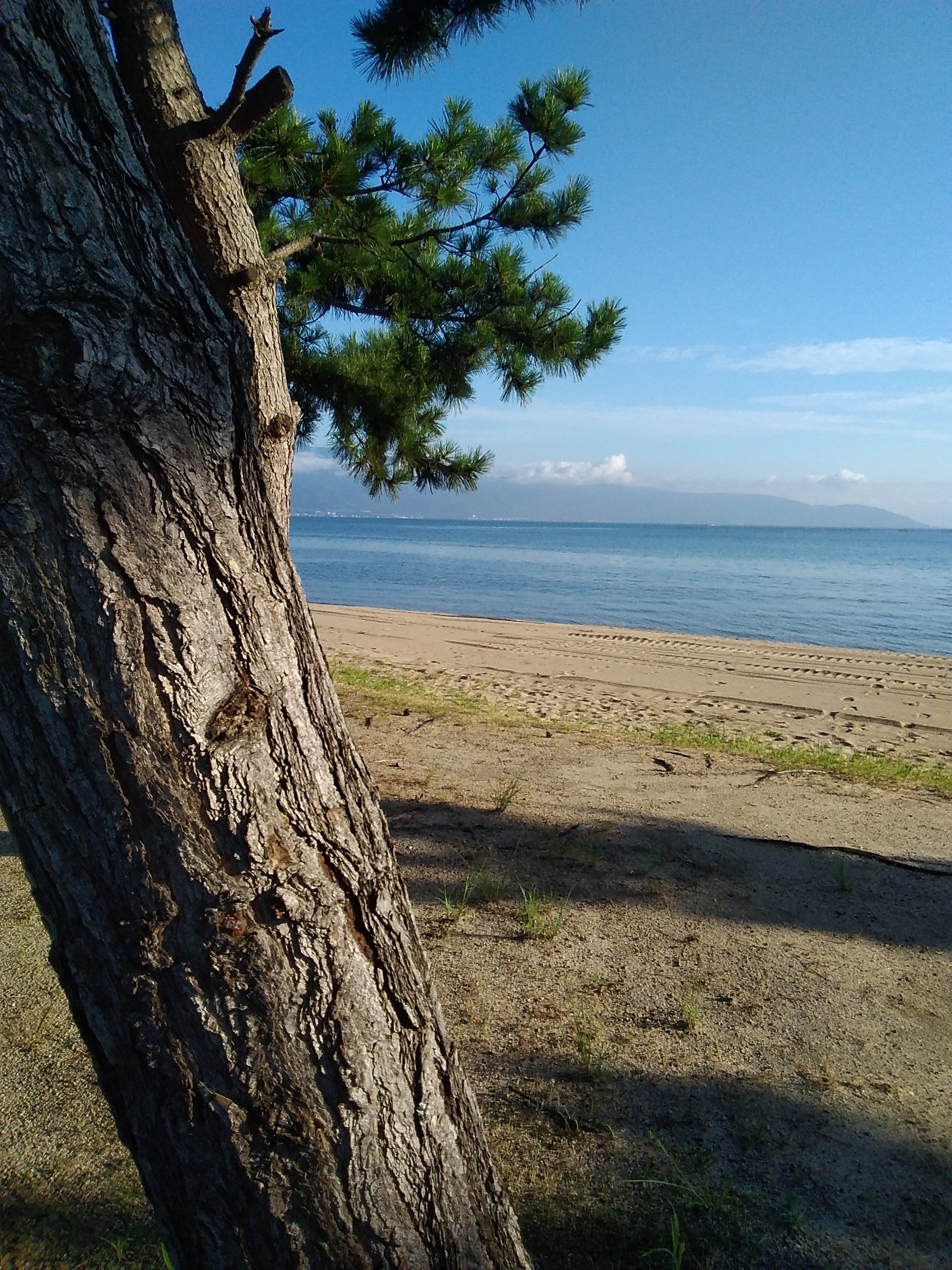
Lake Biwa is the largest freshwater lake in Japan, it’s 670 Square kilometres in area and maximum depth of a 104 metres. It is 4 million years old with a high biodiversity, including many molluscs. It’s globally protected with 1000 species living in the like but it has 11 fish species that are endemic to the lake, like the Biwa trout. It has 19 endemic species of snails. The name comes from looking like a Japanese instrument called a Biwa. But beyond all that it has many sandy beaches and the water is clear to swim in.

So we were traveling along and feeling really good as the journey was going quickly and we’d had some pleasant stop offs. Stop offs included beautiful scenery and odd things in the michi.

At one point on the journey we had to slow down for a Turtle crossing the road from one rice paddy to another…..only for a juggernaut to pass us on the other way, so hopeful that it survived.

Then it dawned on us we hadn’t actually seen any lake and by this point seeing as the lake is enormous we should have seen it. So we stopped, looked at the satnav and we were for some unknown technical glitch going the wrong way. So the only way we could get to the west side would be to travel even longer, go over a toll bridge and get quite bad tempered about it all.

With this in mind we decided to ditch the west and head to the east, quicker to get to and we were hoping just as good.

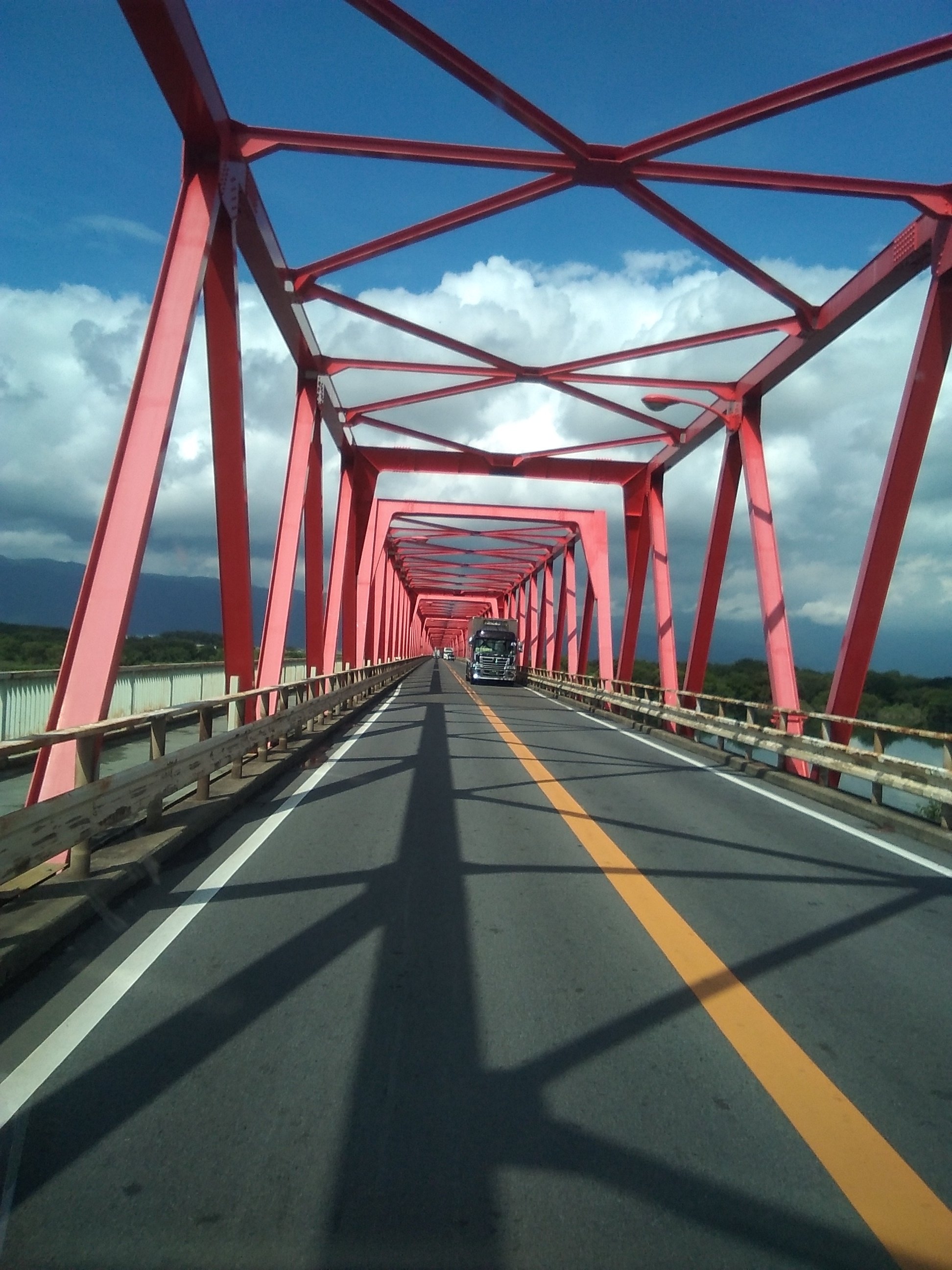
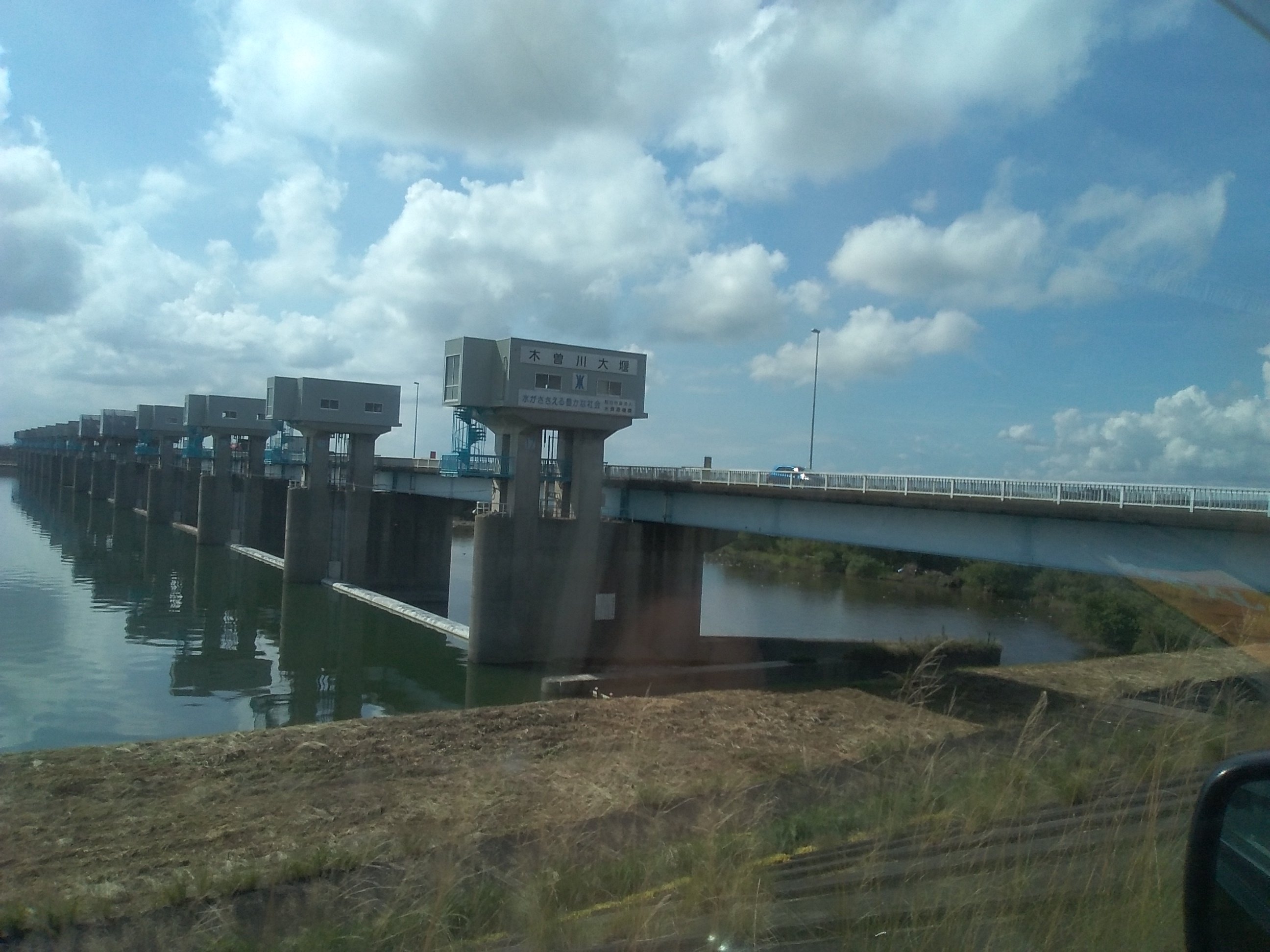
Lots of bridges later….


We reached the edge of Lake Biwa and started driving along the edge, looking for somewhere to stay. Despite the amazing scenery in Japan the camping scene is limited and in similar places in the UK there were be tonnes of them, here they are few and far between. Added to that there are some places called campsites but they are only geared up for what they call day visitors, or they are expensive, or we just couldn’t understand what they were. There are municipal ones but we couldn’t figure out what they have or don’t have.

We saw a sign for the Miami beach autovan campsite, this didn’t seem open to interpretation we felt we knew what we would be dealing with. Having traveled for some hours it was great to be told there was a place on the site (we found out there were very few people staying), the site had it’s own private beach, showers and toilets. We had pretty much won the lottery! This would be the first time we had paid for camping and because the place looked idyllic we decided to stay for two nights.

The camp owner had limited English and by this point of the day I wasn’t making the best sense so when we were rescued by a Canadian fellow camper who explained everythibg it was a relief to the owner and to us.

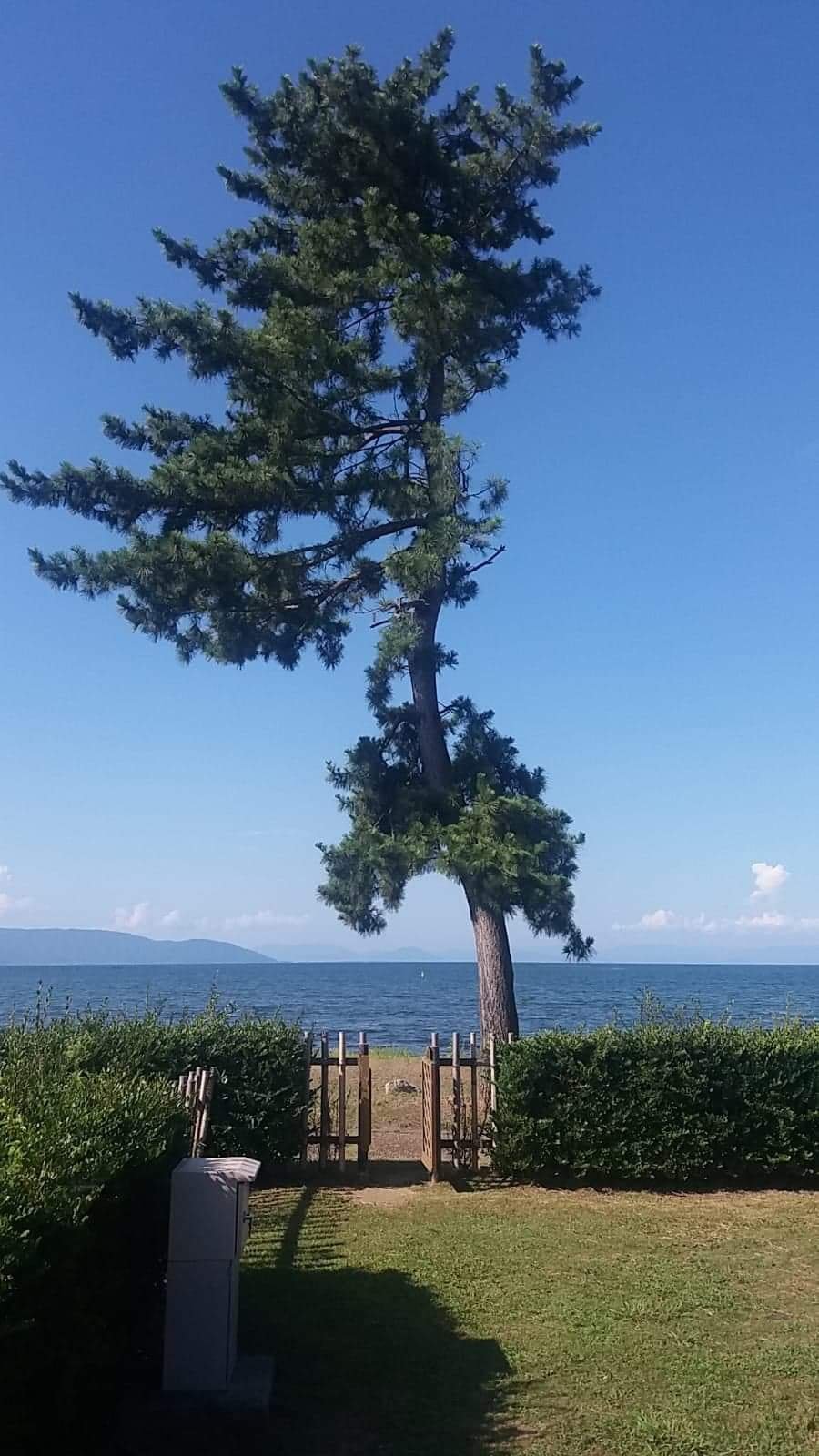
We quickly set up camp and jumped into the lake. It was clear, warm and the best thing ever!


It’s that case again in Japan when you look at the horizon etc it looks amazing but because of the lighting it often looks overcast but it is anything but.

So lovely was the water that we had a midnight dip too.
Setting up camp in one place and not a michi also meant that we could wash all our clothes, sort out the van and feel a bit less ‘off grid’. Having sorted everything out we had a visitor,Mike from Toronto invited us over to their campfire for the night, joining his wife Mel and son Colby.

In many ways we jumped at the chance because although in the great scheme of things we haven’t been here for very long, we haven’t had a conversation very easily with anyone here. They had been travelling pretty much the same route as us and whilst up in the mountains camping they had come across what he termed as a great piece of wood ‘waiting for an opportunity to have a fire’ throughout the night he kept saying ‘this is the best campfire I have ever had.’ Having said that he was by the end of the night pretty much three sheets to the wind.

They explained that they were having a few weeks traveling round Japan and that in a week they would be starting work at the International school in Osaka. They had been travelling with their son for 16 years working at various International schools, they were moving from Singapore and before that China. They had been pretty much everywhere, although we never heard mention that they had visited Sheffield, it all centred on places further afield like Vietnam and Cambodia etc.

It was a good evening and nice to have a relax. Conversation flowed, mostly around politics and how on earth had Boris Johnson become our Prime Minister.

Having decided to stay another night we decided to completely relax and recharge our batteries on site.

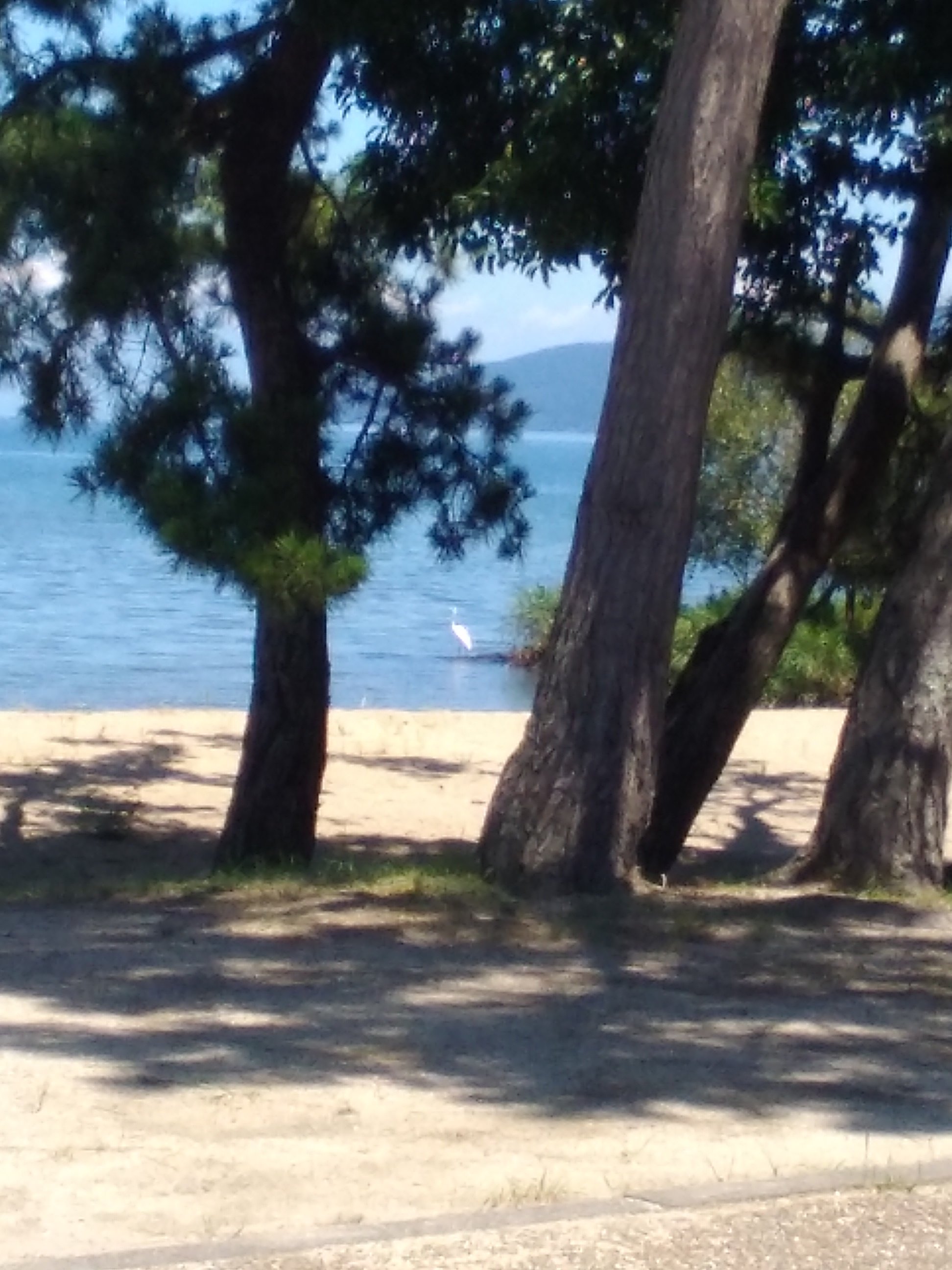
We walked around part of the lake and saw some wildlife too.

A bit dotty…..

We decided to stay another night at Matsumoto, where we were camping was quiet and we had everything we needed. Another reason we wanted to stay was because we wanted to visit the Matsomoto Art Gallery.

I like how things sound when they are translated into English from their website:
The Matsumoto City Museum of Art opened in April 2002 as an art museum of learning forest that opens up the heart of Gakuto Matsumoto, and is rooted in the region with four pillars: a place for appreciation, a place for expression, a place for learning, and a place for exchange. Aiming to be a general art museum.

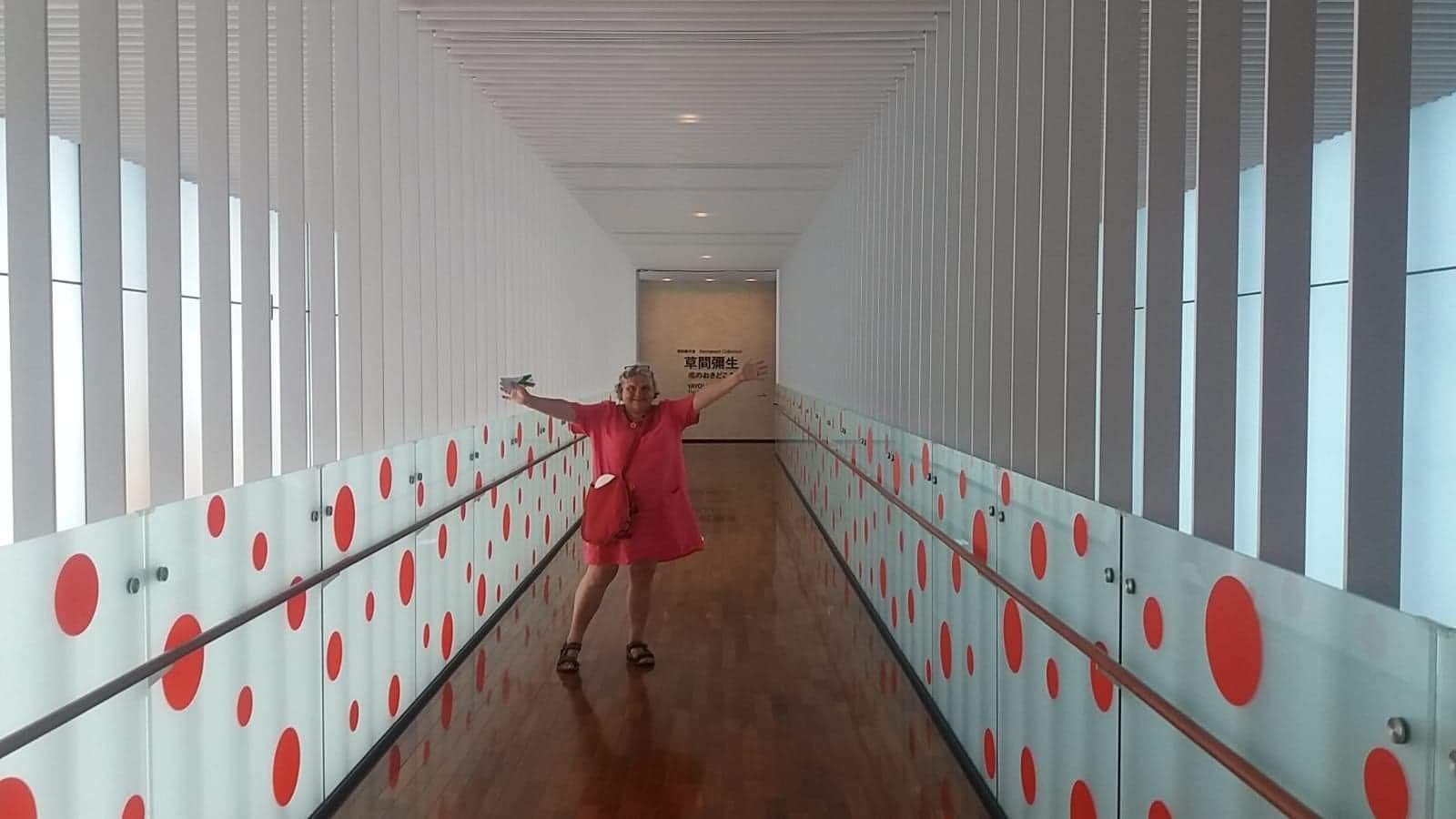
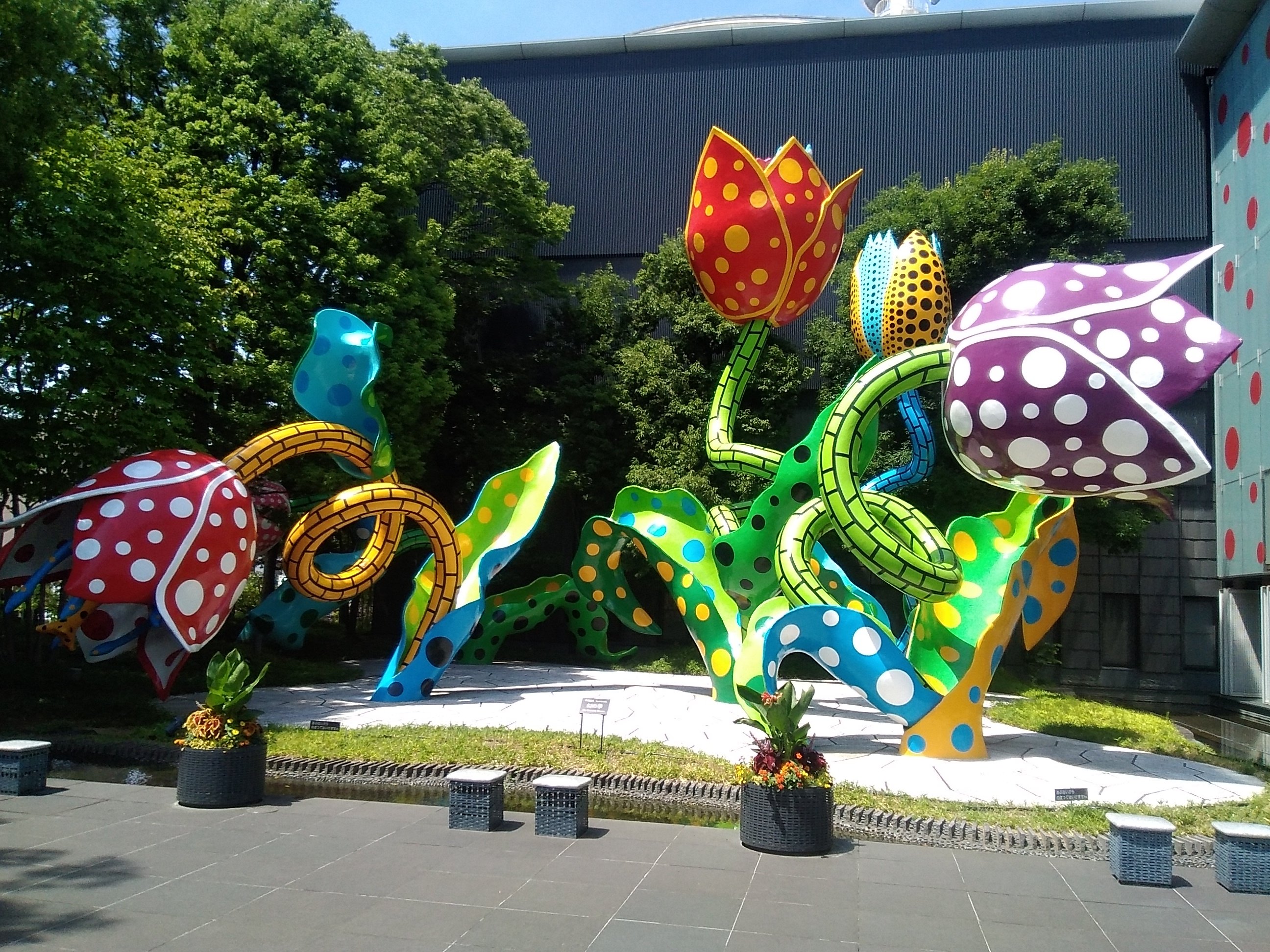
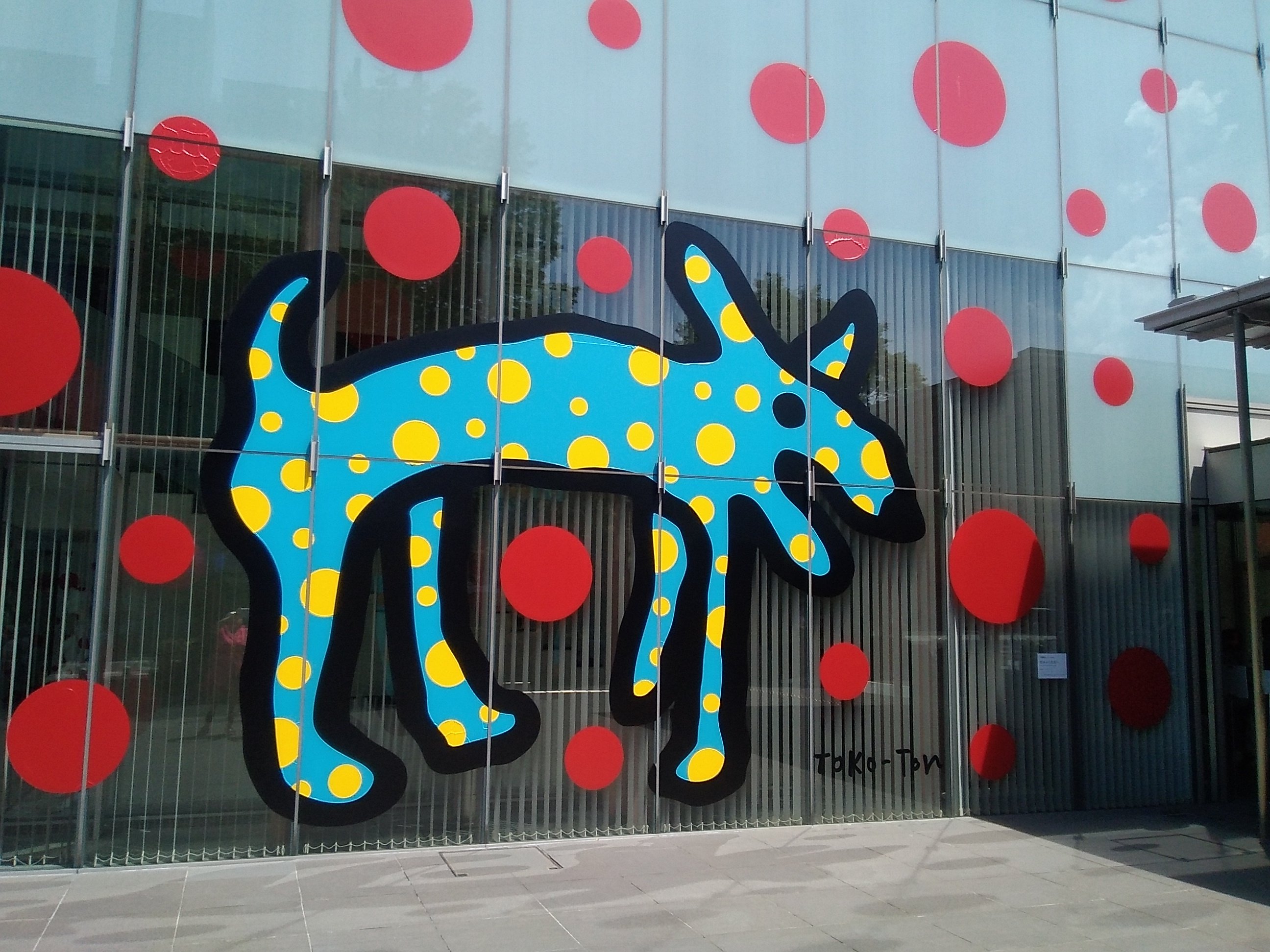
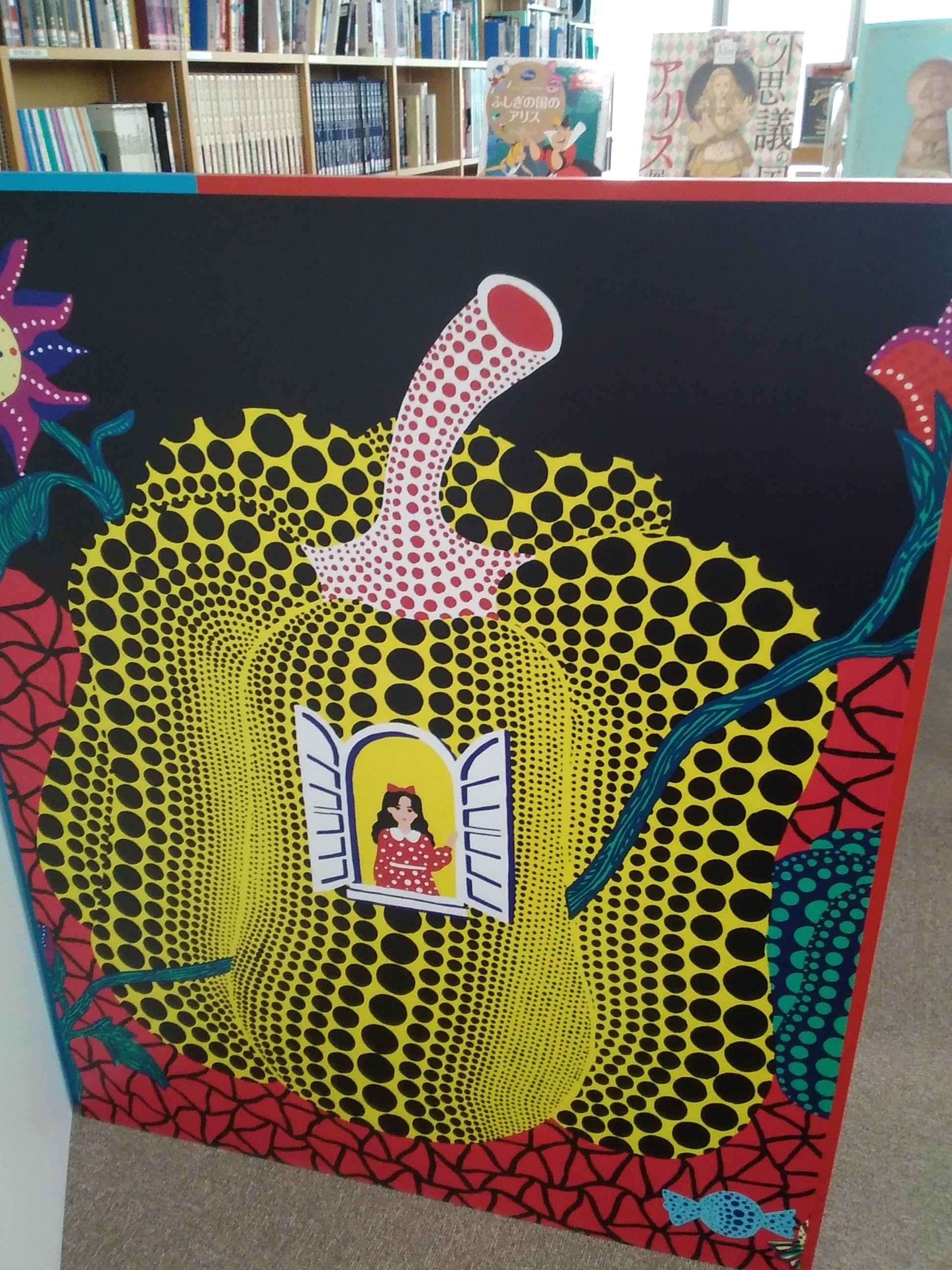
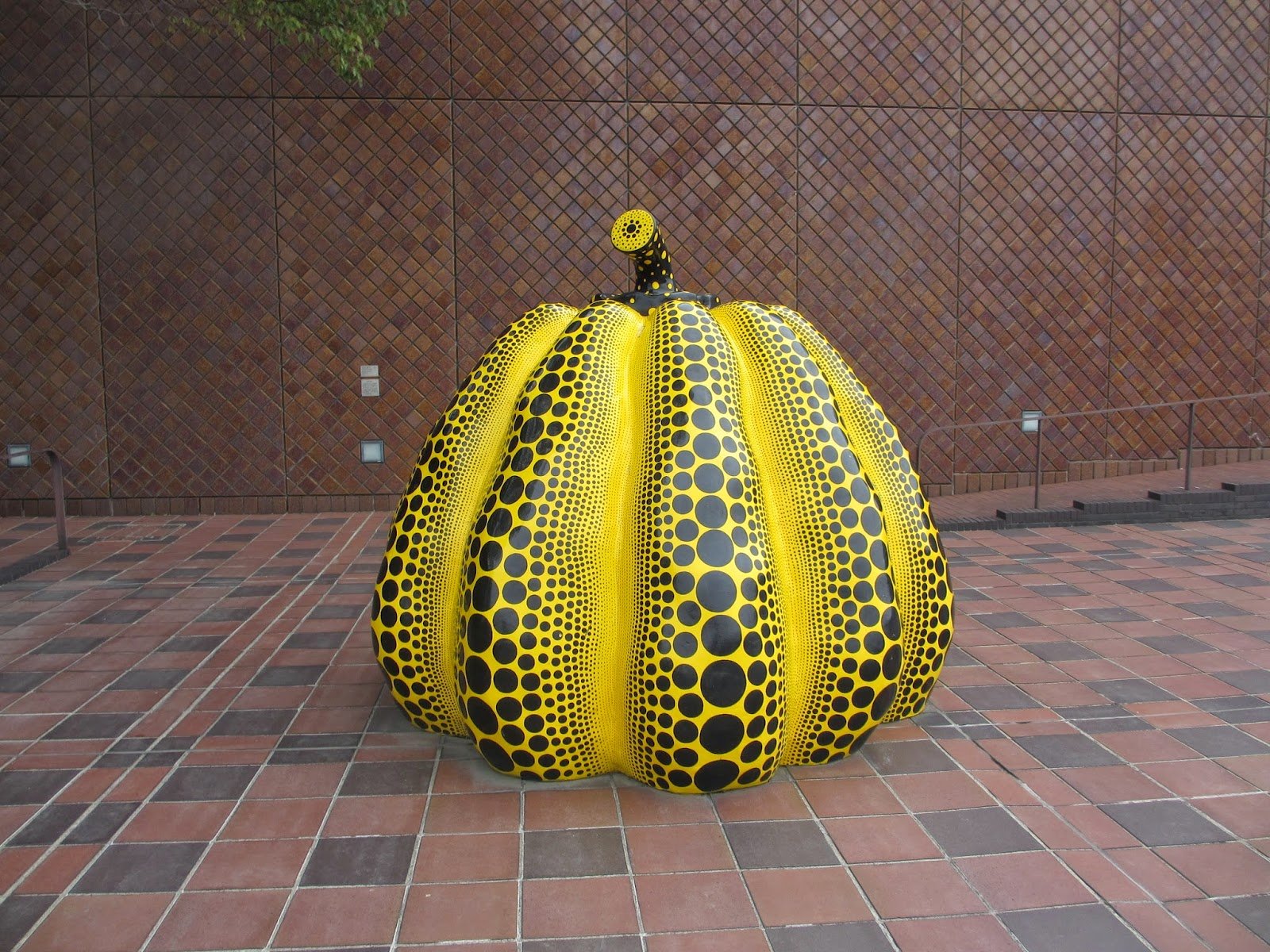
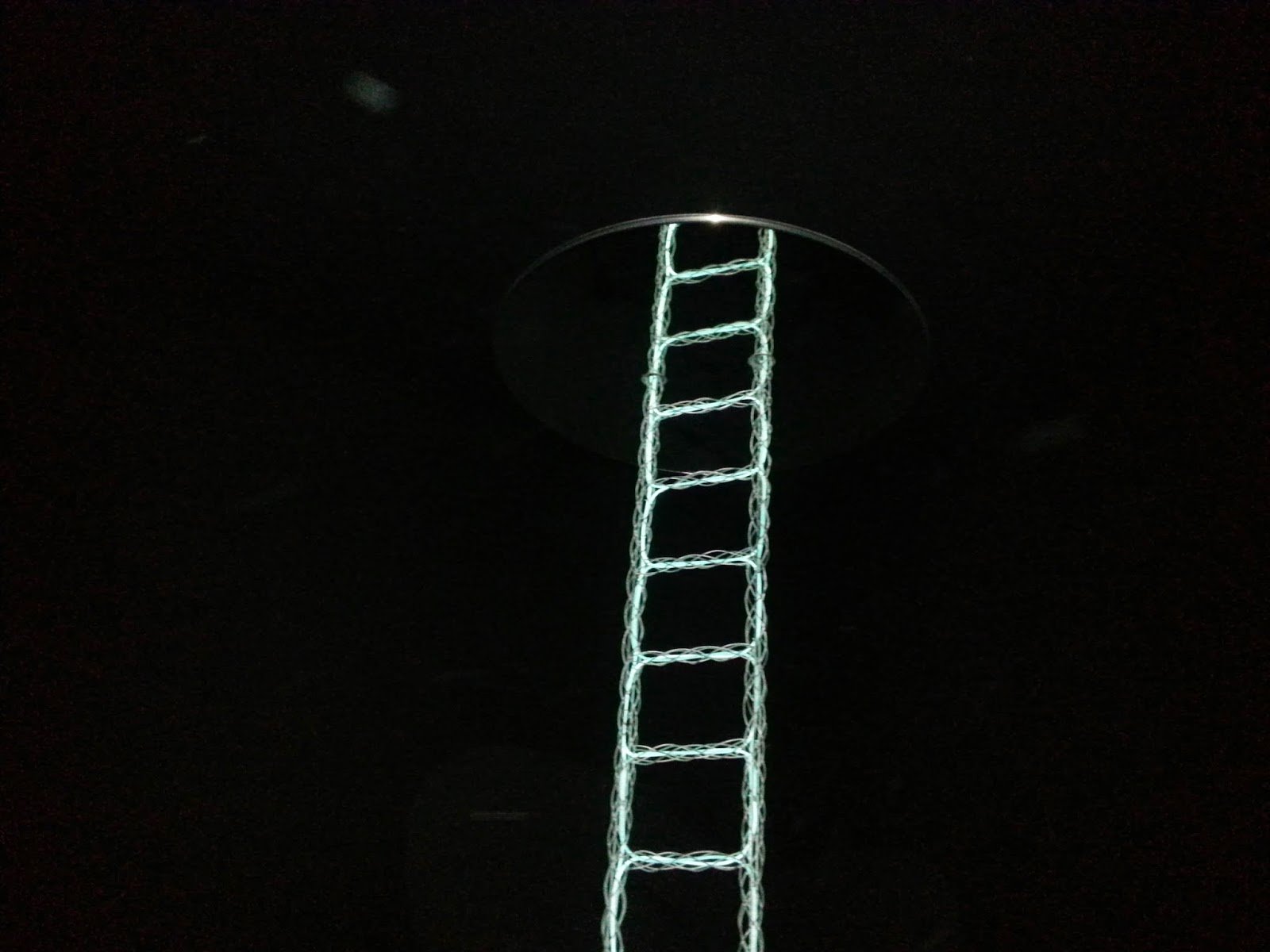
The art on show is from artists from the city, but I was particularly interested in the exhibition of Yayoi Kusama’s early work and her latest. It didn’t disappoint.

Marvelous Matsamoto

Following the Wasabi museum we went to a park where previously the Matsomoko guitar factory once stood. They don’t make them in that factory anymore but there are other guitar plants in the area, which is unusual.

They found ways of making mass produced electric guitars using computer controlled lathes which was unusual in the 60s and 70s. They could make and sell them cheaply. They weren’t seen as good as Fendors etc but as these guitars such as Westone became popular and people like Kurt Cobain played them, they became more popular.

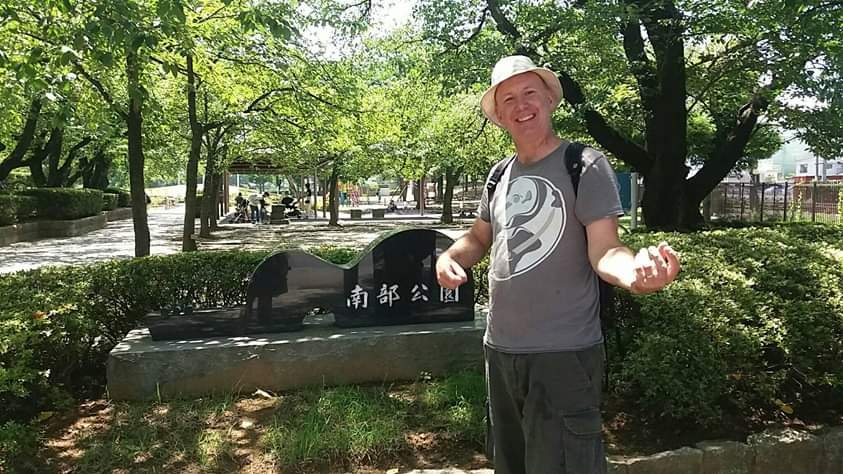
Anyway Peter’s first guitar that he still has now was an Aria Pro 2 made in the Matsomoko factory. So it was a pilgrimage of sorts. I don’t get it but I think guitar officienados would. The park is Nanbu Park and there is a marble guitar shaped statue there. Google translate did not help me find out what it said.

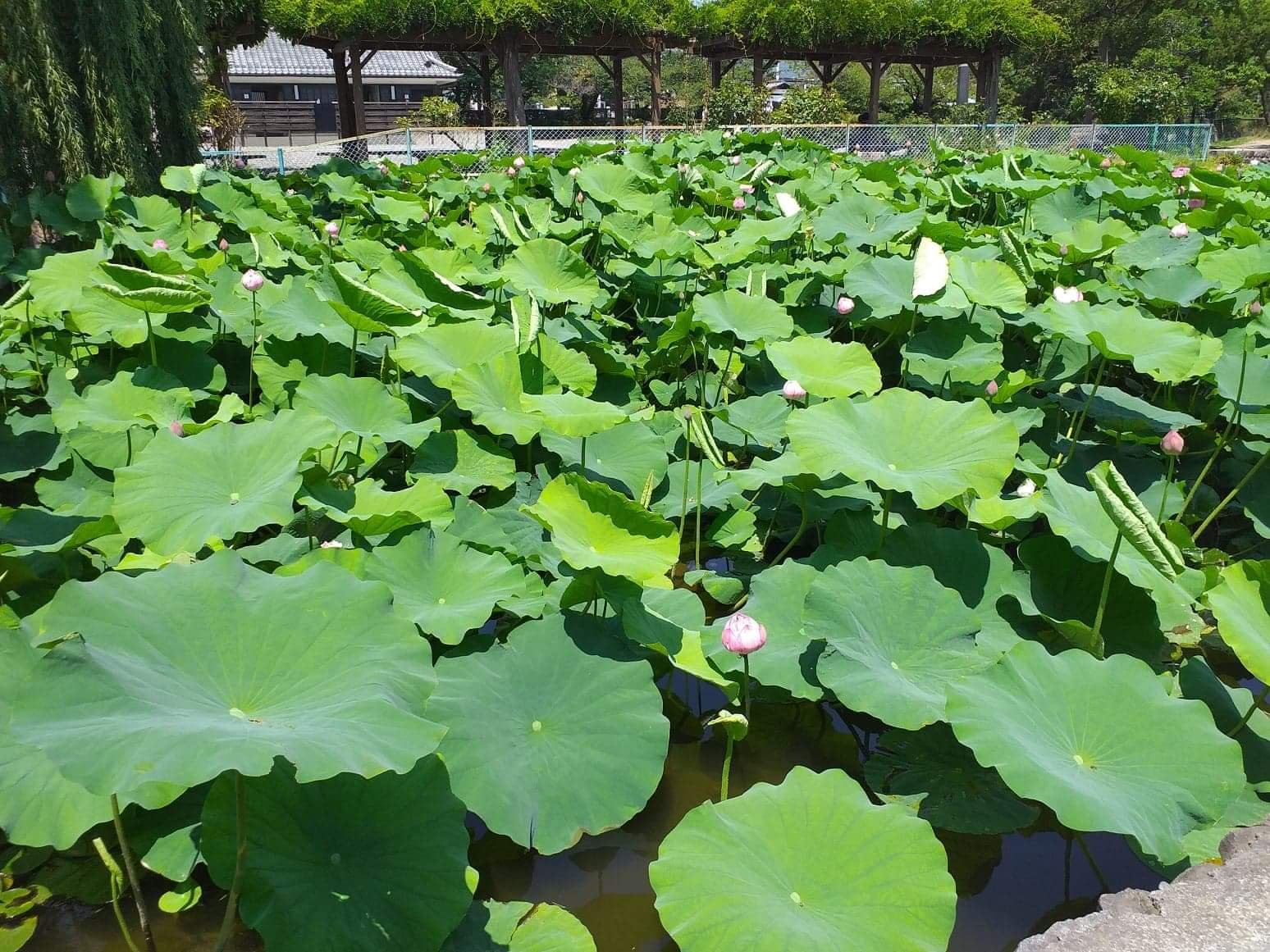
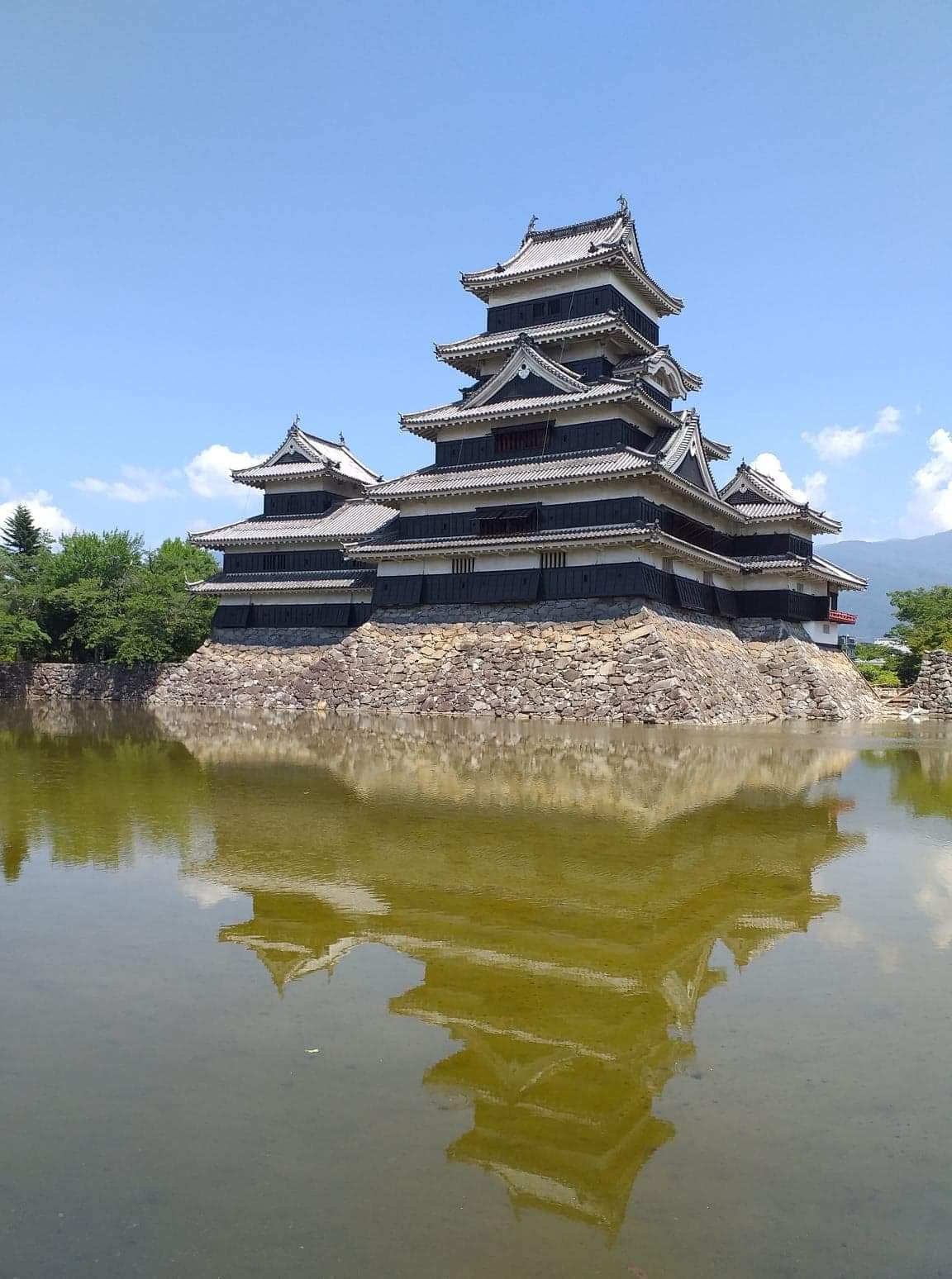
Following this we headed to the castle. The lotus flowers were just about to bloom which makes us hopeful that when we return to Tokyo there will be a quite la spectacular sight around Uneo Park.

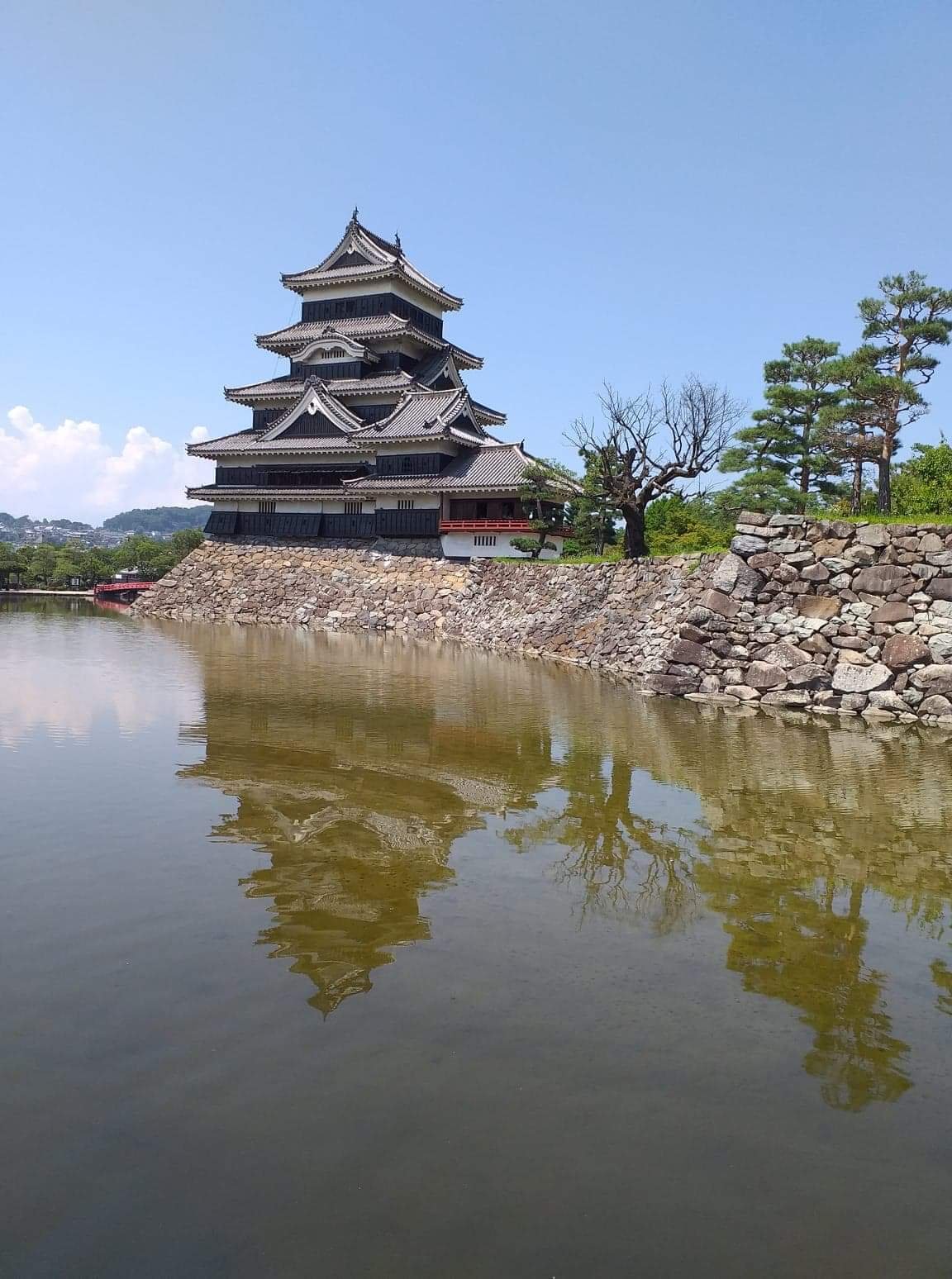
Matsomoto Castle is registered as a World Heritage Site, it is one of the most complete and oldest castles in Japan. Unusual as built on the plains and not on a hillside. Around the castle were many volunteers ready to explain things to visitors in their native language. We were approached and were ready to be regaled with lots of interesting facts. However, he just really wanted to talk about Japanese weather systems, but that was interesting. I think a lot of foreign dentists and professors visit as he wanted to know if Pete was one! (obviously not me!)

The castle or hirajiro did look like something from anime or manga…….. Not that I am really conversant in any of those two things.

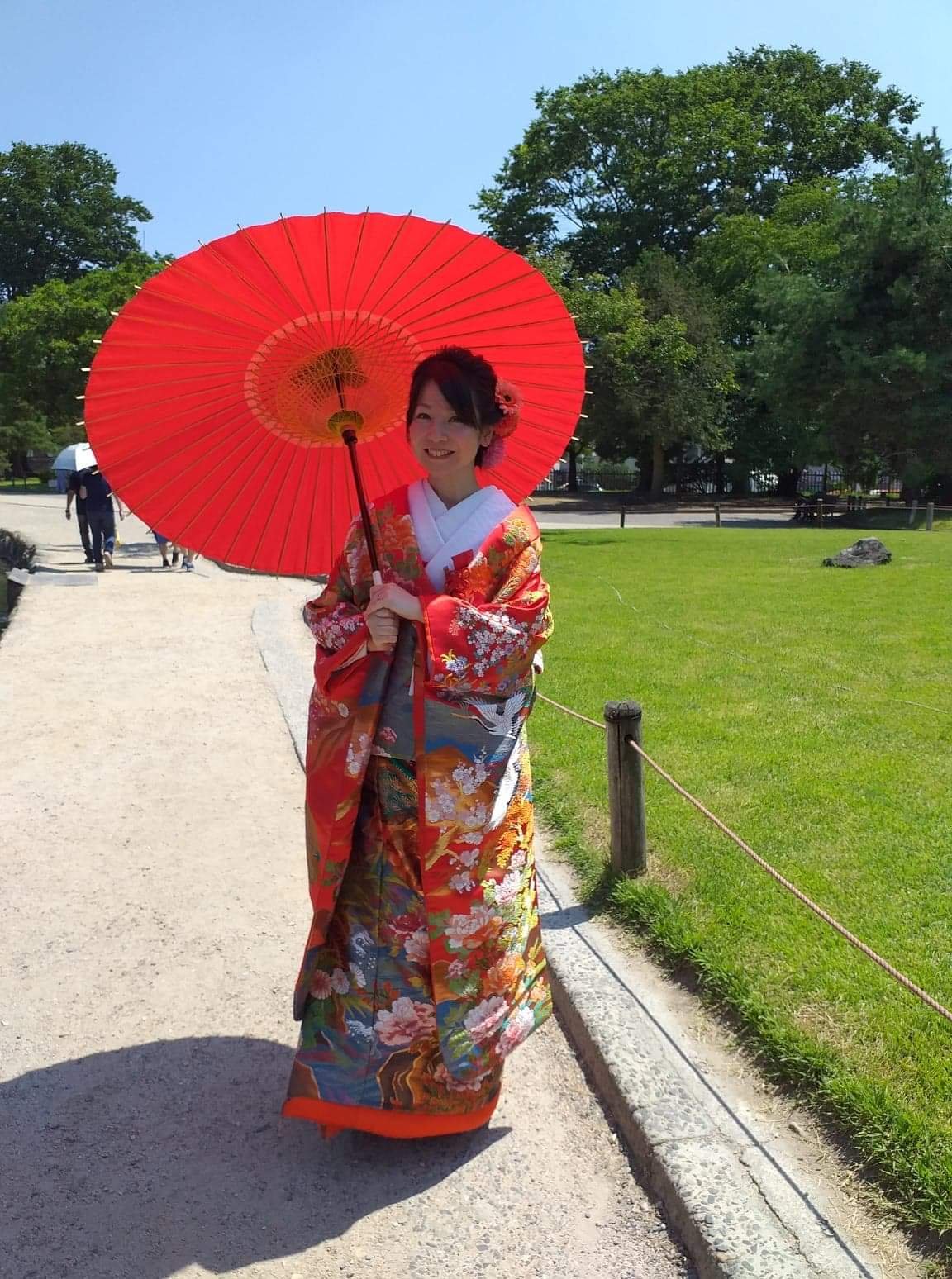
The setting was beautiful and we saw someone in traditional dress willing to be photographed.

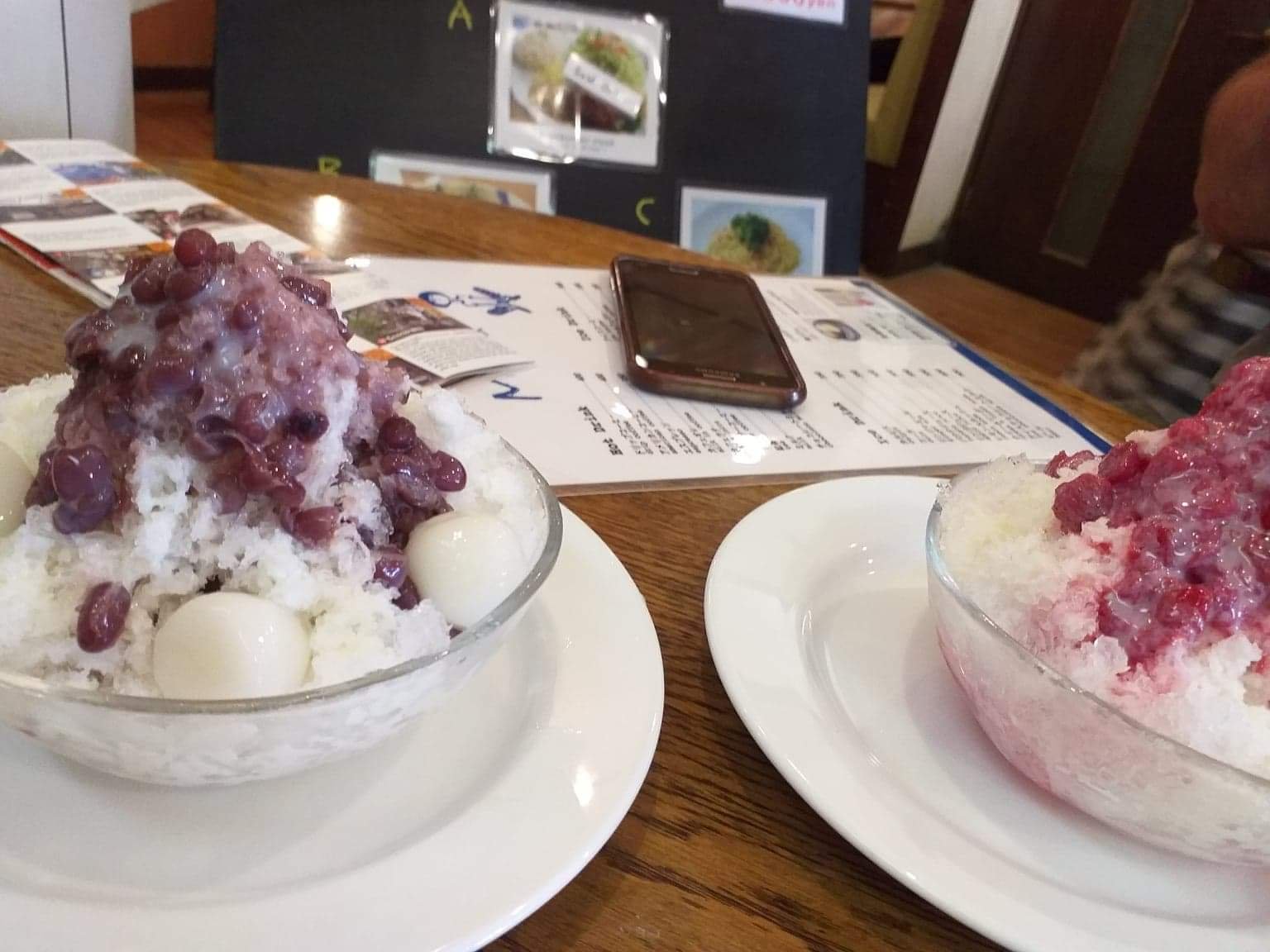
Getting really hot we decided to throw caution to the wind and have a shaved ice dessert. These are called kakigori and are sweetened with condensed milk and various flavours. Pete had one with strawberry syrup but I went a bit more traditional and had mine with sweetened red beans, with added rice balls. May sound odd and a bit alien but they were truly gorgeous!

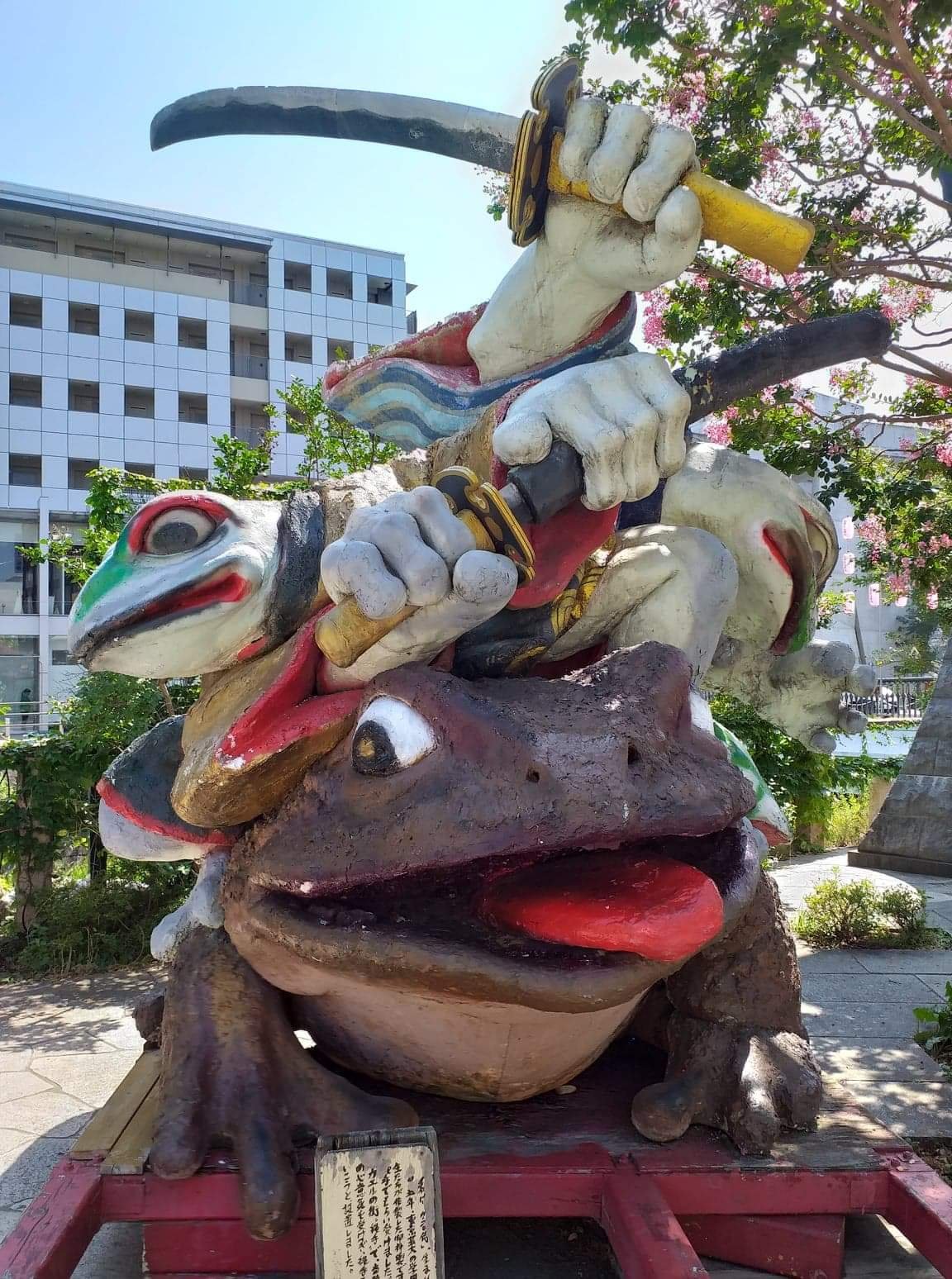
We walked along the northern banks of the Metoba River where there was a quaint pedestrian lane called Nawate-dori. This name, a combination of the words for rope (nawa, 縄) and riverbank (dote, 土手), comes from the fact that this was once a narrow spit of land running between the river and the southern moat of nearby Matsumoto Castle. You can’t escape frogs on this lane, frog sculptures and every shop selling something with a frog theme.

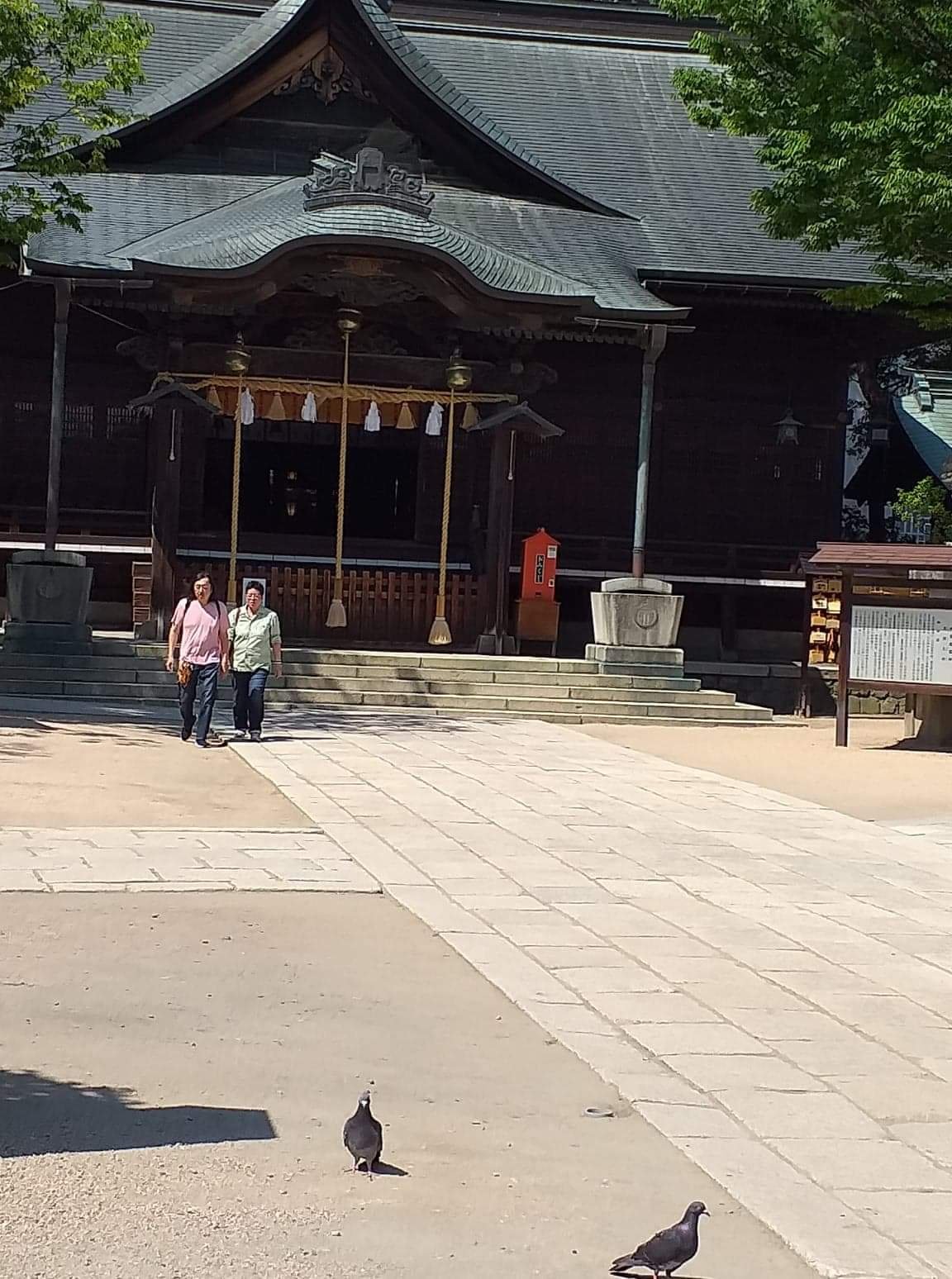
When the Yohashira Shrine was built:

The area between the river and shrine became a pathway for pilgrims. The shrine’s keepers, began promoting various forms of entertainment to attract visitors, it was apparently very noisy with the sound of croaking frogs from the river, music being played and children’s laughter. But in 1959 a typhoon hit the area and the river in this part of the city was full of debris, so the frogs moved further up where the water was cleaner.

They couldn’t bring the frogs back but they cleaned the area and named it Kaeru Machi’ (‘Frog Street’) to remember better times. I was a bit disappointed as I had thought there may be frogs coming onto the street from the river.

We headed to Nakamachi Street which is known for its traditional storehouses, called kura, which are characterized by their black-and-white, criss-cross patterned walls. The street was beautiful and we could have bought Japanese handicrafts, such as pottery, lacquerware, and wooden crafts if we had a small fortune on us.
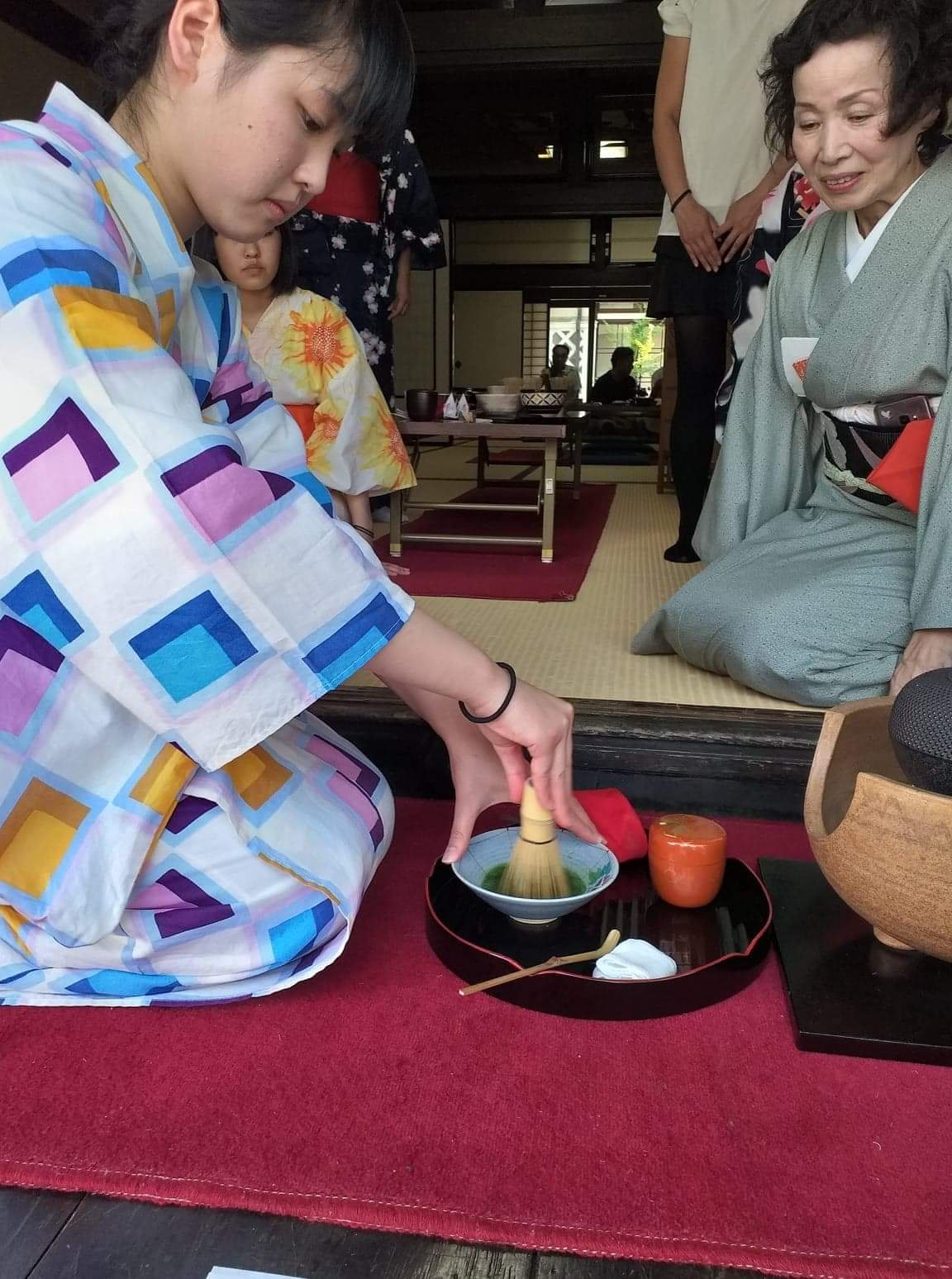
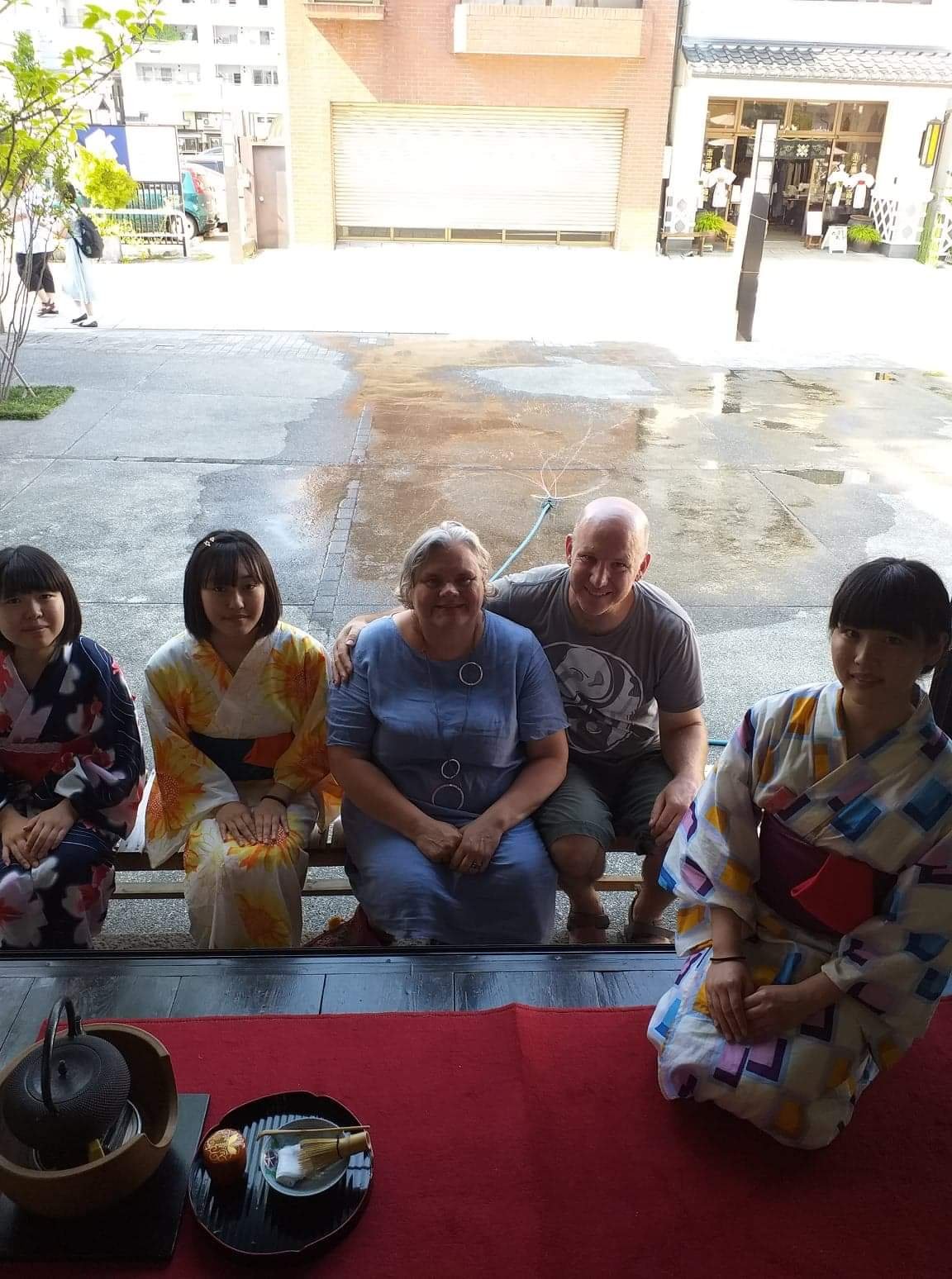
The landmark of Nakamachi is the kurassic-kan, a restored sake warehouse which is open to the public. Every so often they have culture days and we were so lucky to be there on that day. There was lots to choose from but we went for the tea ceremony. I was so excited as having experienced the coffee ceremony in Ethiopia this seemed to be another great beverage experience.

They had a volunteer who spoke English, Junka. Junka later told us she had studied English Literature at university but had gone on to work in finance for 48 years. Finishing work she had decided to return to her home city and put something back.

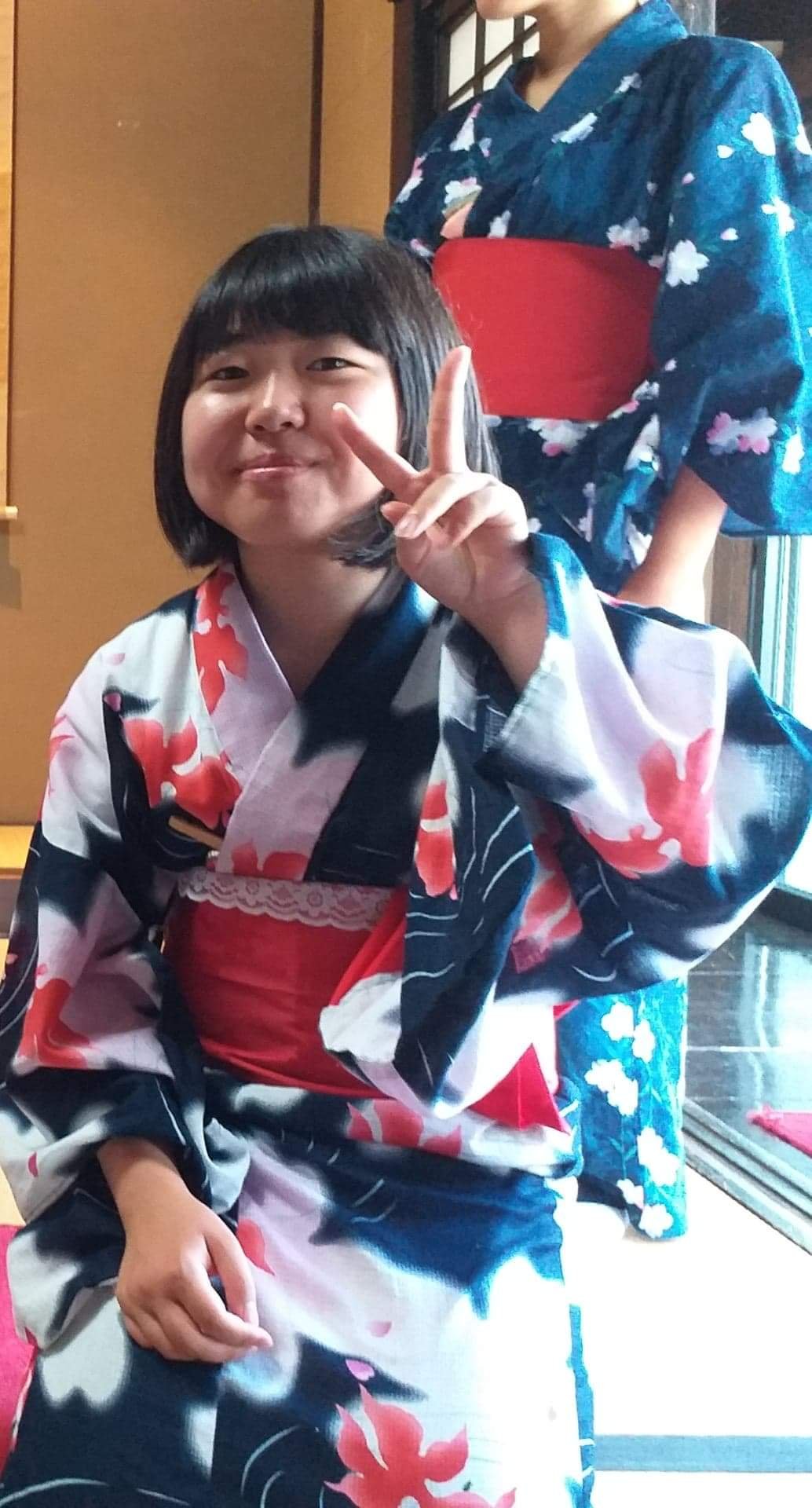
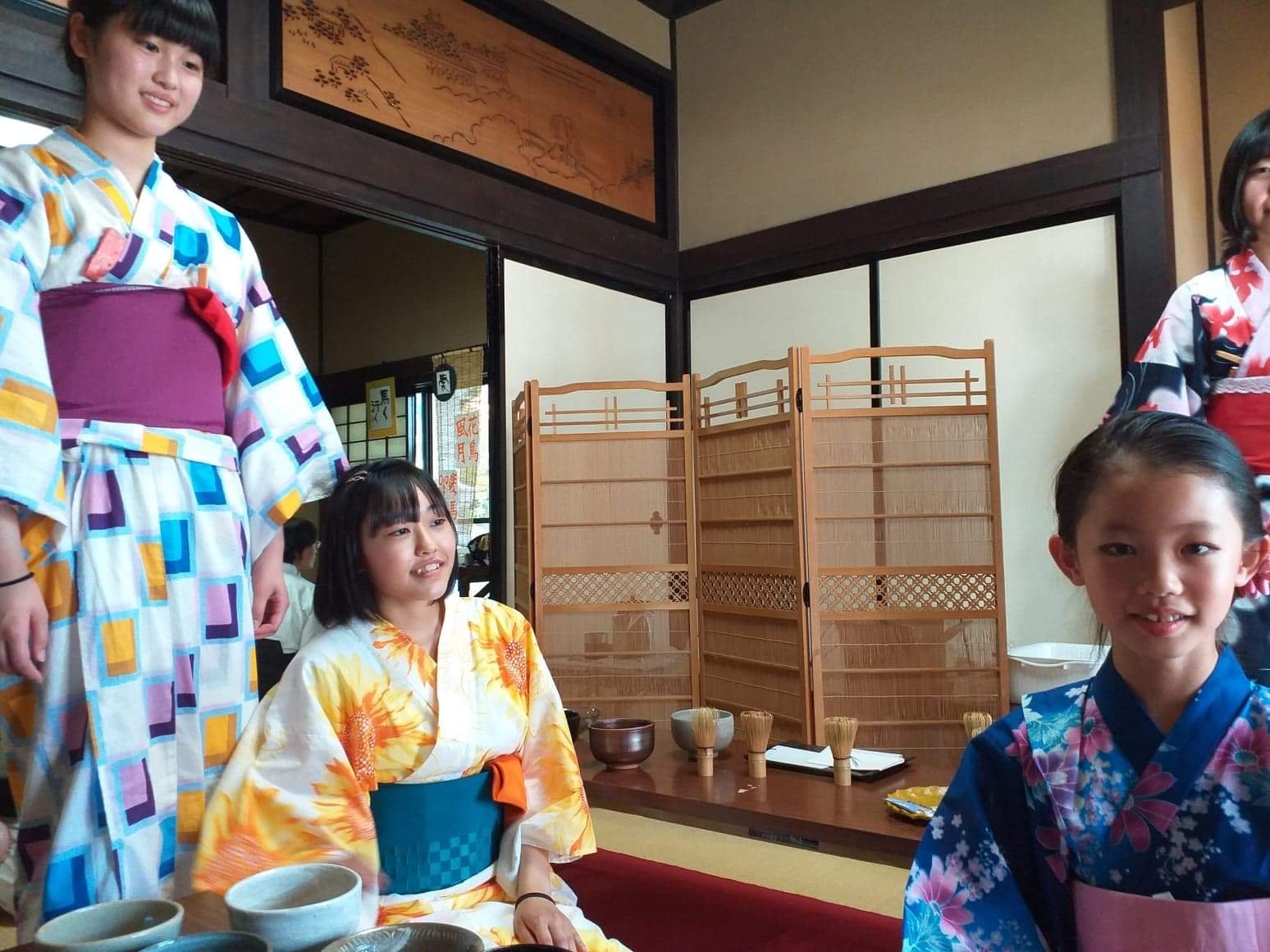
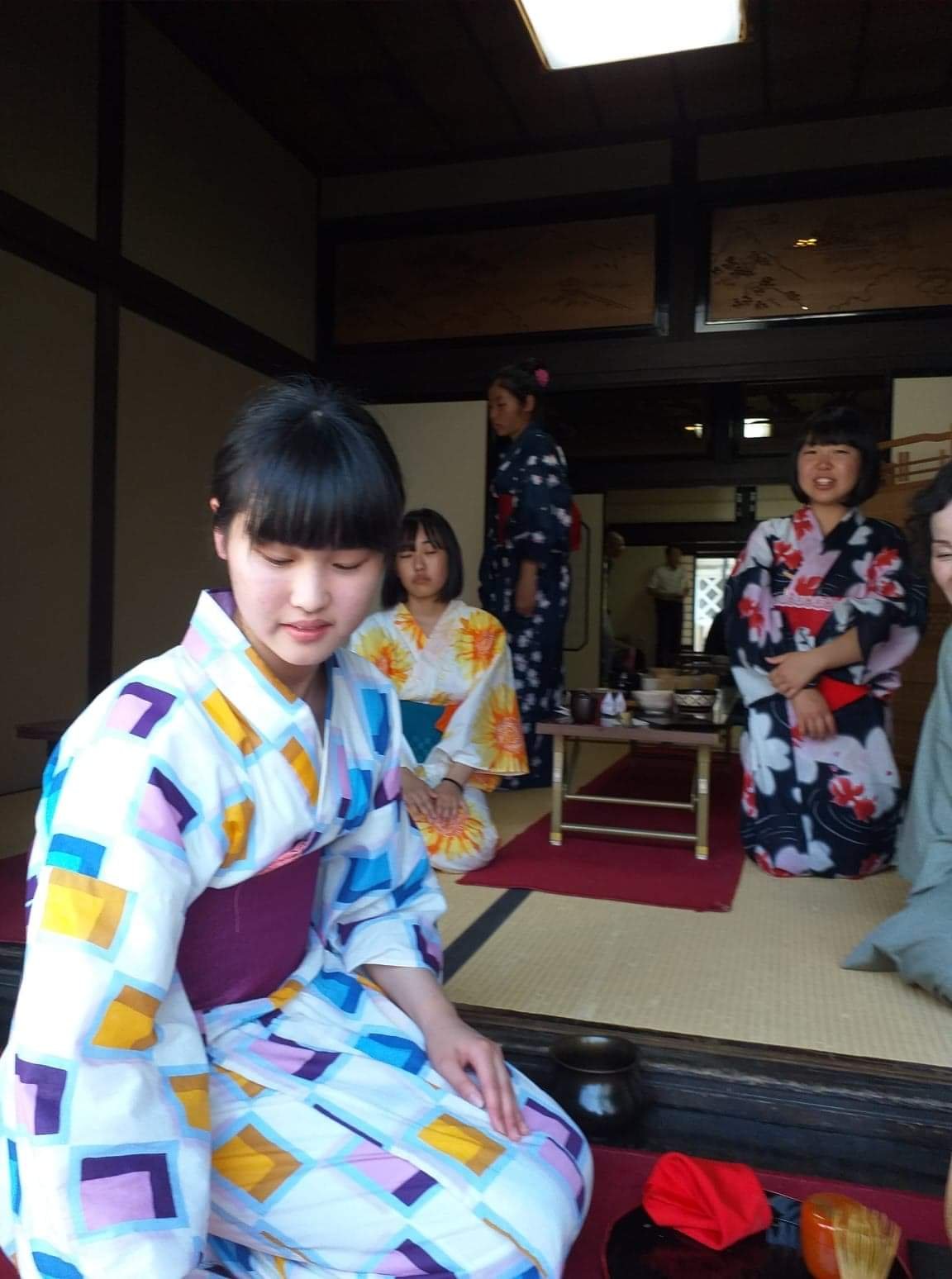
Junka led us into the kurassic-kan – which was just like images/films I had seen of old Japanese houses, with tatami mats on the floor and low lying tables. We were welcomed in by two other women, one who ran the kurassic-kan and another who taught a group of kimono clad girls the intracacies of the tea ceremony.

We were told that the process of learning about the tea ceremony took time and some of the girls had been studying the art for three years. Junka explained that she had never got the hang of it so if we struggled during our short snapshot into the art we shouldn’t worry too much.

First we had to go through the tea ceremony under their tuition and then we would have the chance to see it done properly.

They heaped praise on Pete, I was a bit all fingers and thumbs. We were told that it was essential every part was completed properly as every aspect of the tea ceremony is steeped with meaning.

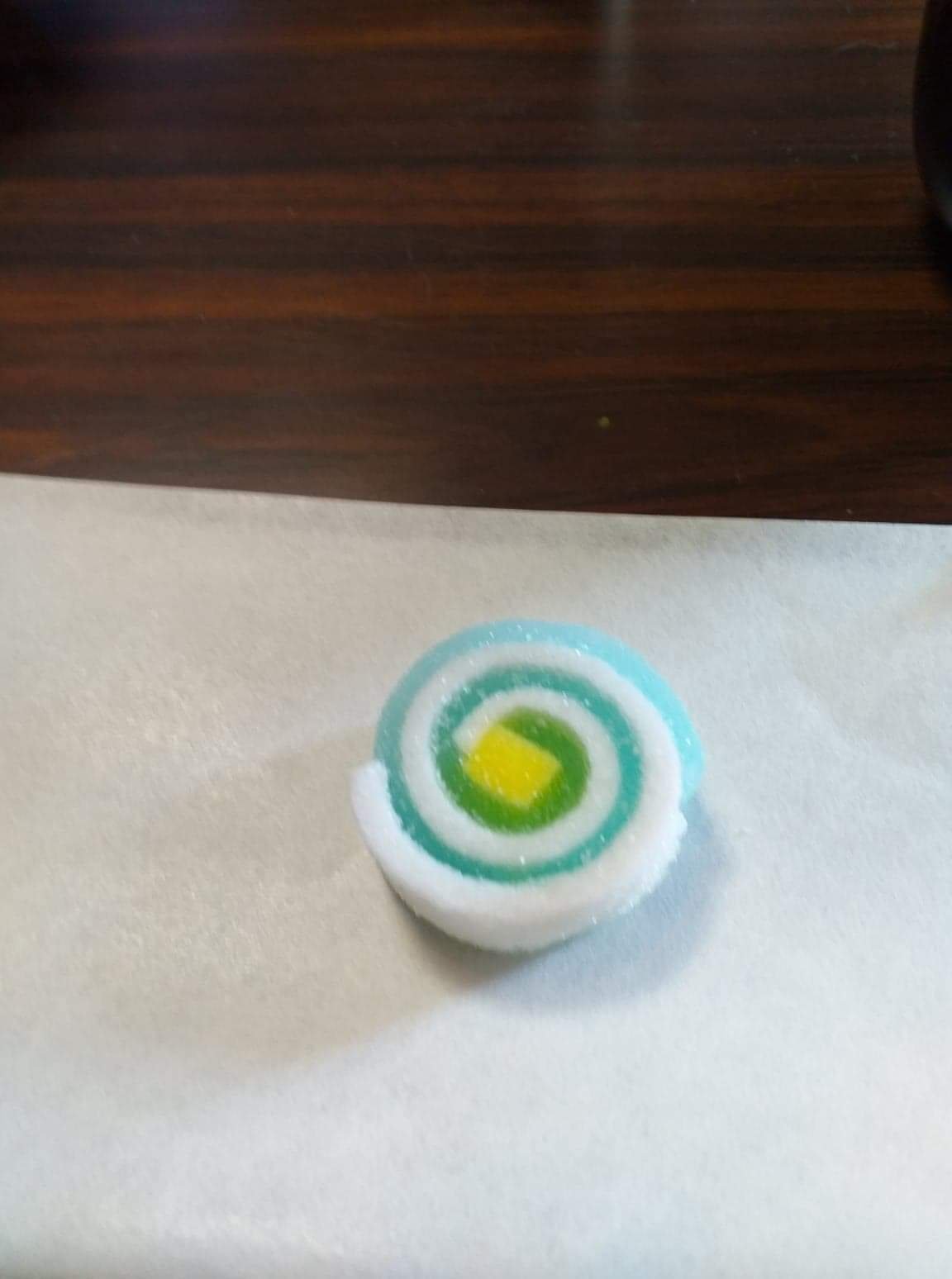
A sweet is eaten first….. When we watched them do it we had a far more superior sweet. The sweet is to off set the bitterness of the matcha.

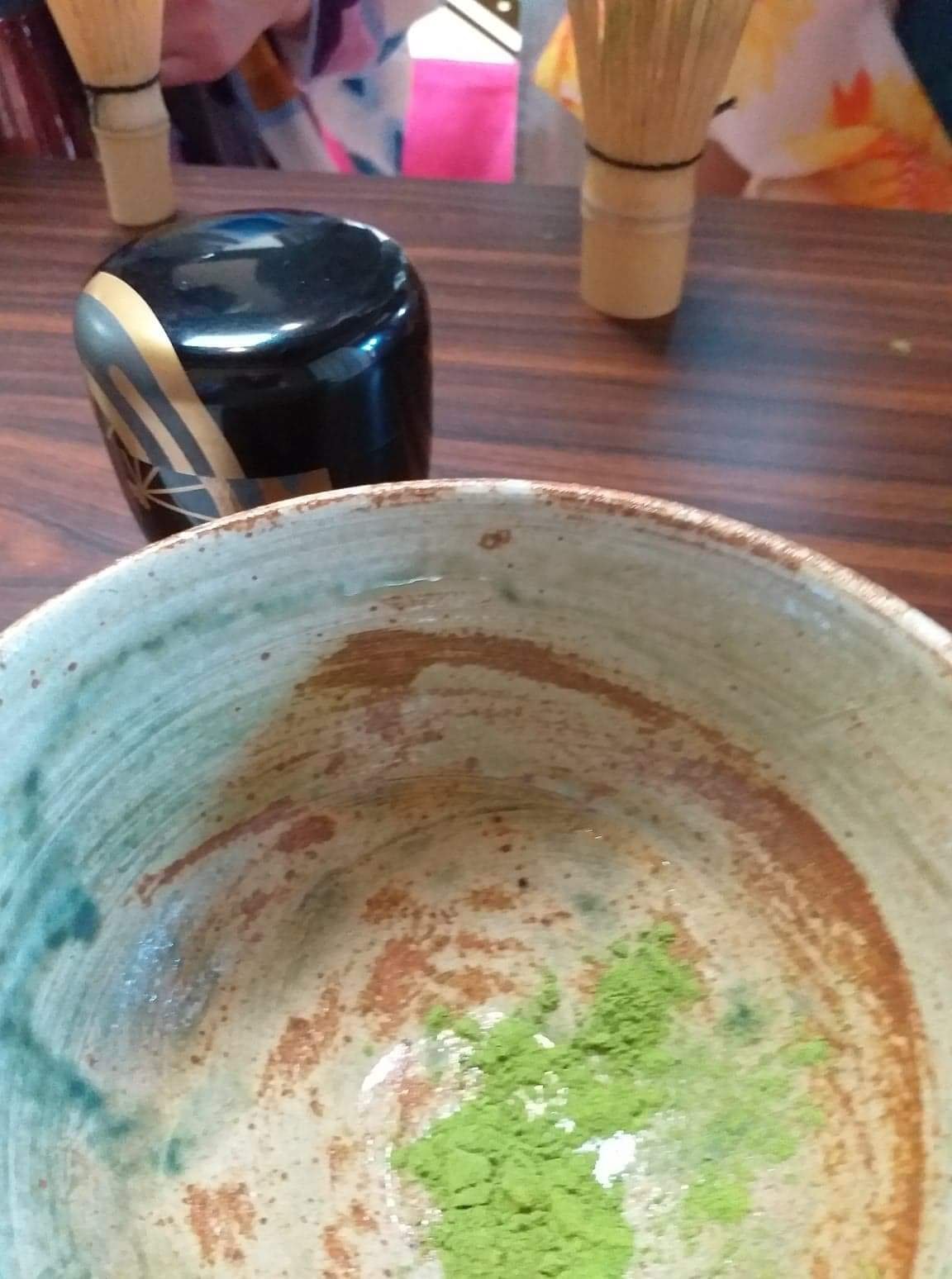
We then had to put the matcha tea in a bowl. Sounds pretty straightforward but you have to do it with a spatula type thing (chashaku) the matcha tea is stored in a special cannister, natsume . So how you hold the spatula etc is important and try as hard as I could I kept getting it wrong.

There are many places tourists can have traditional tea ceremony but how traditional they are varies. As this was part of the girls training and part of the city’s culture House every aspect had to be done correctly, not by us, they expected us to be rookies but by expected far more from the girls.

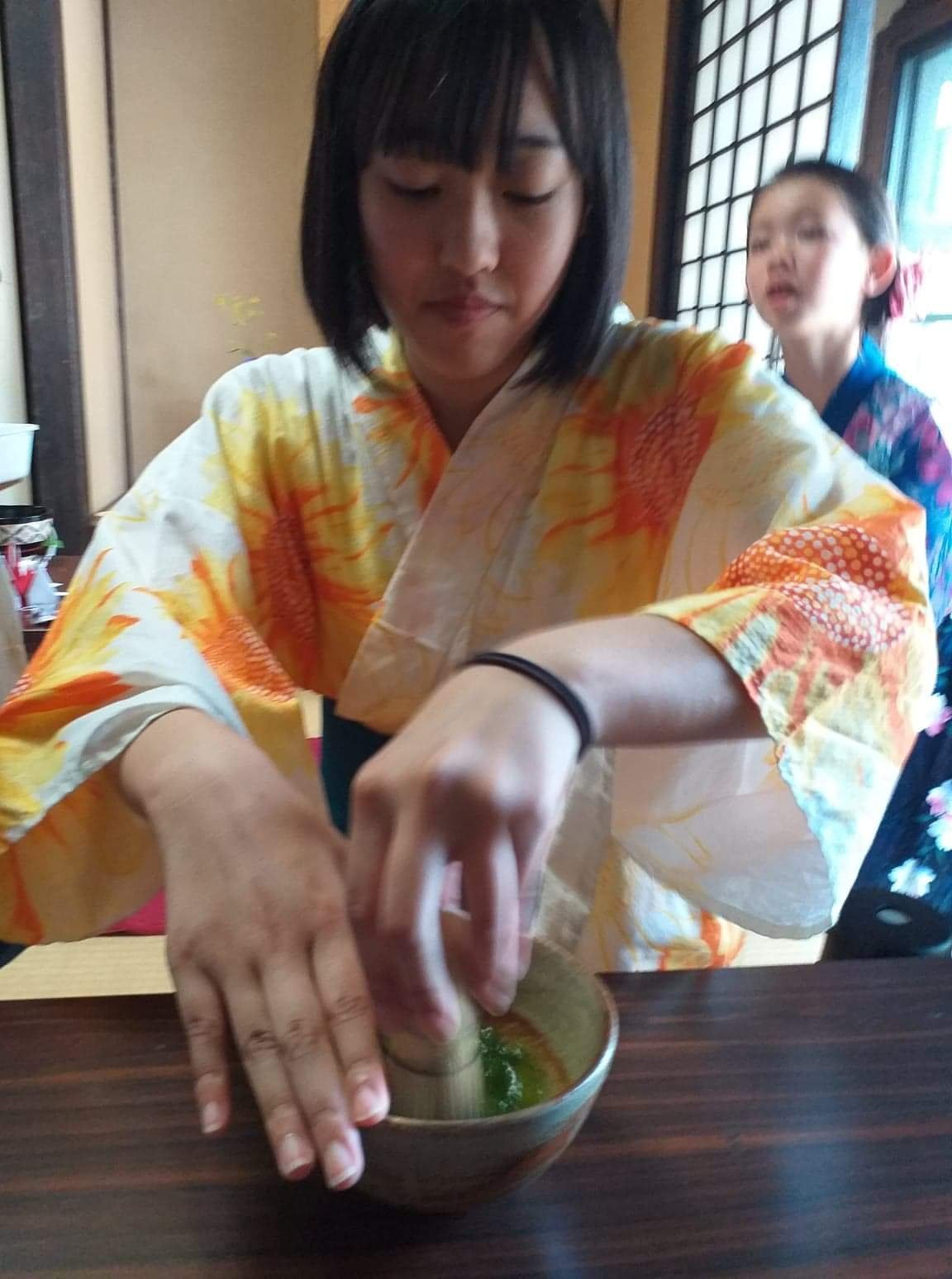
The next part is the water is added. Then it is whisked using a chasen. Again how this done is very prescriptive but Pete was again good at it.

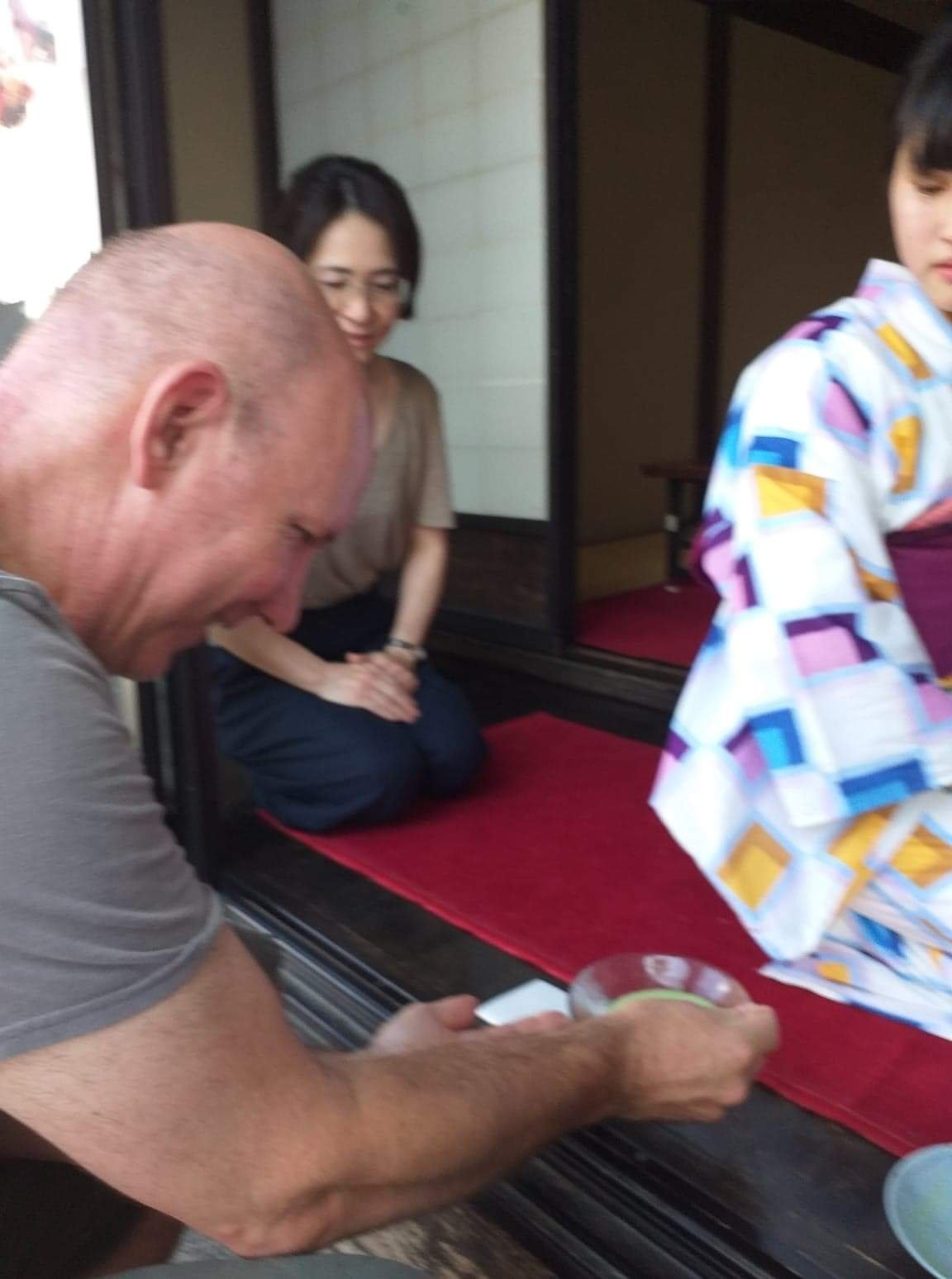
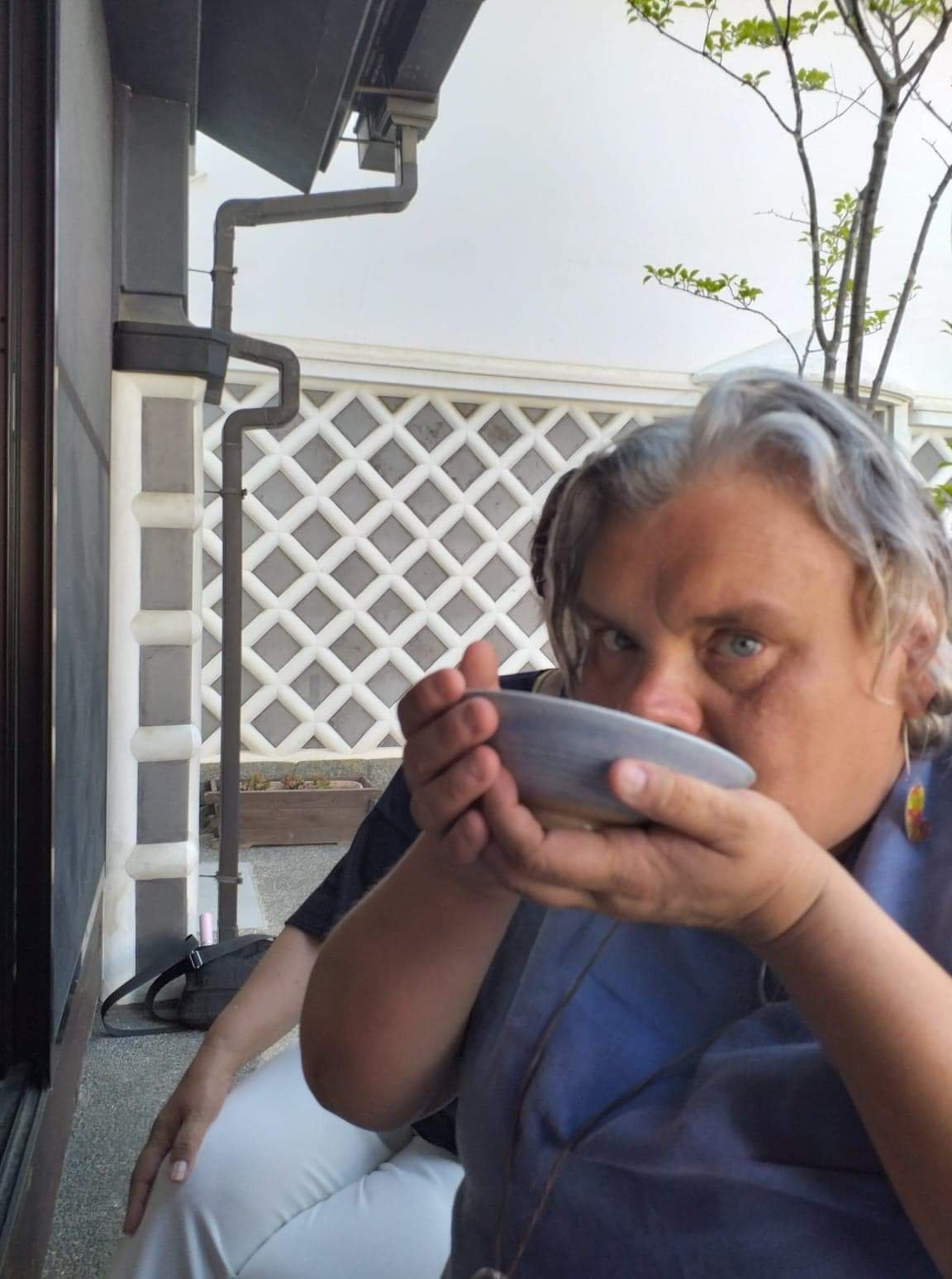
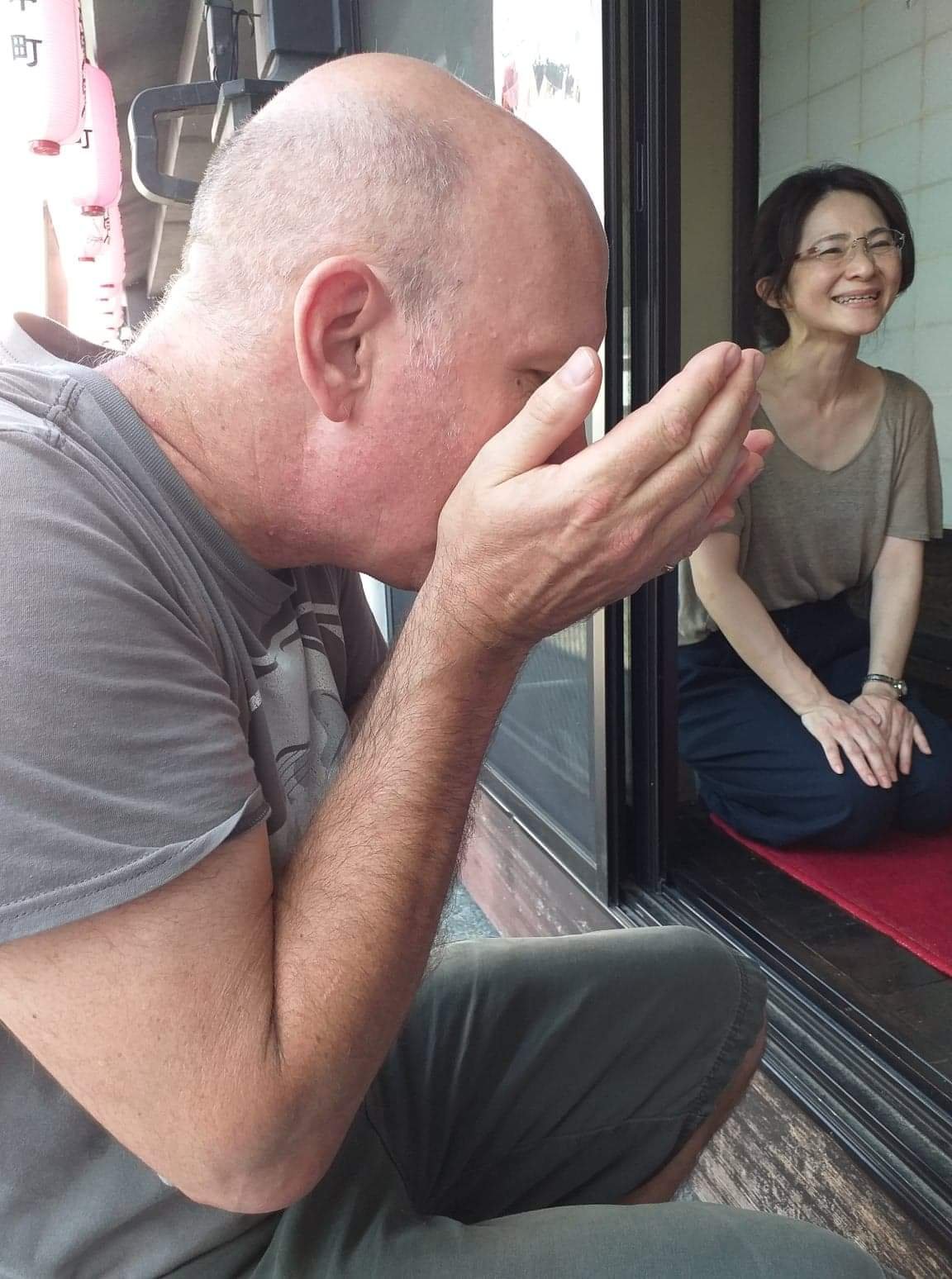
Then to drink it….. The tea bowl was placed in front of you, with its front facing us. We had to pick it up with our right hand and place it on our left palm. With our right hand, we had to turn it clockwise by around 90 degrees so that its front wasn’t facing us. There’s lots more to it but it was much better watching the girls doing it. In the photos you can see their teacher keeping a watchful eye and from time time correcting them when they hadn’t done it properly.

We paid a fraction of the price a ‘proper’ tea ceremony would cost but the experience was great as in was in some ways very formal and others informal, with lots of laughter. We were so lucky to be in Matsomoto on one of their culture days. Junka kept thanking us and we kept thanking her and the girls, which would then set off another round of thanking.
The day wasn’t done yet and there was still time to visit the Matsomoto City Museum.
The leaflet they have for the museum is funny it states Matsomoto Museum encourages all its citizens to make the most of the museum as a place of intellectual interaction….. Well we did go to the museum but I don’t think by this stage of the day there was much intellectual interaction going on!

What was great about the museum was that it was cold!


Having looked at all the exhibits, had a cold drink, felt chilled out enough we headed home.

Hot hot wasabi …

Travelling in a camper van can be problematic, things are basic and it will never be a luxury experience and there will be issues around showers etc. But the upside is you meet people, you can go off the beaten track and you create less ‘corporate’ experiences.

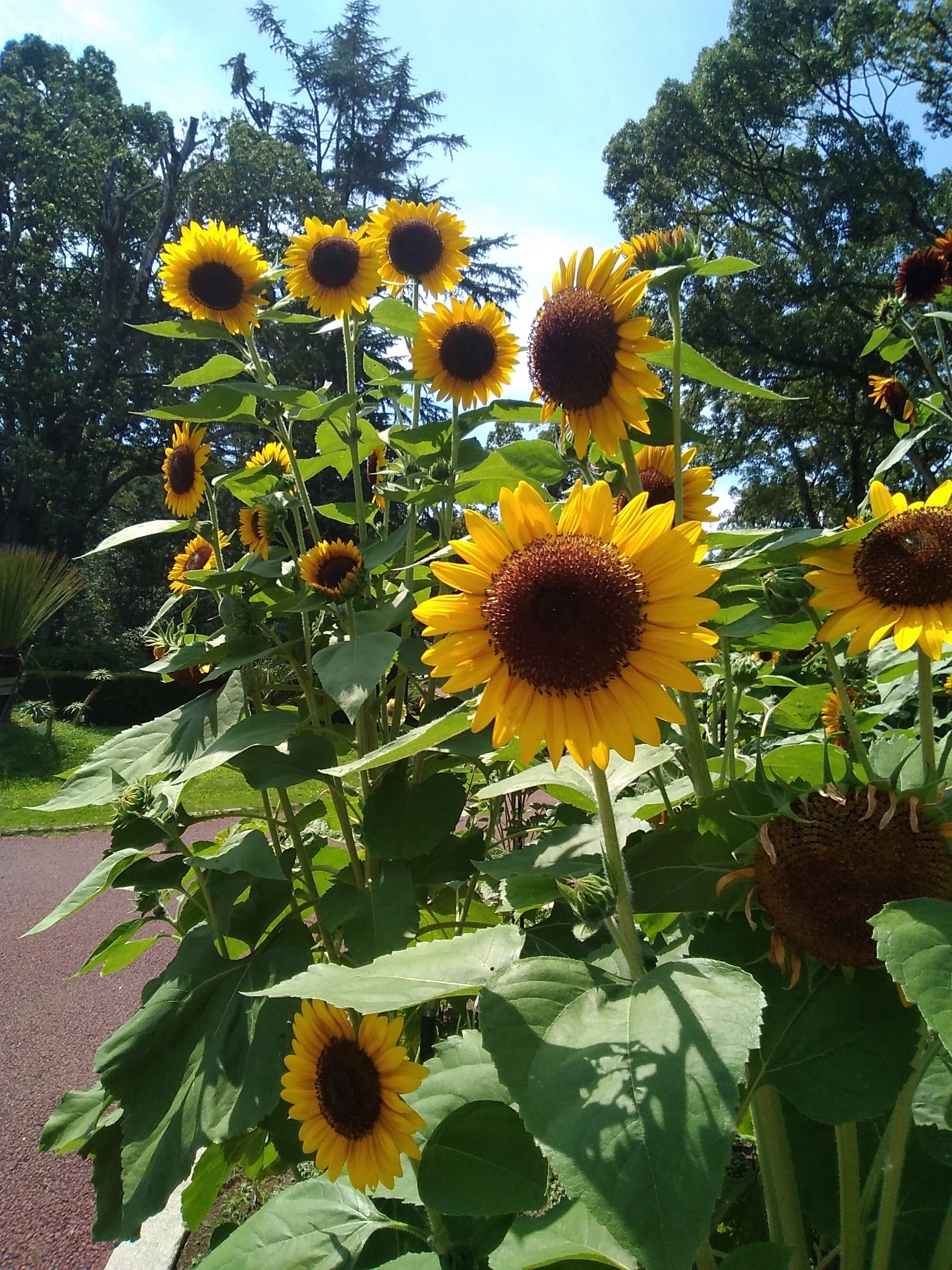
We arrived at the michi quite late, a good spot next to a field of sunflowers and a backdrop of mountains on both sides. We are fast seeing a different side of life in Japan through our stops in Michis.

Going to sleep that night we had a firm plan for the next day.

First on our list was to go to the wasabi farm.

Ok….. So not everyone’s idea of fun but it was a free experience and truly great! We have been really keen to try to vary what we see and do and most importantly be open to new experiences, no matter how oddball they seem.
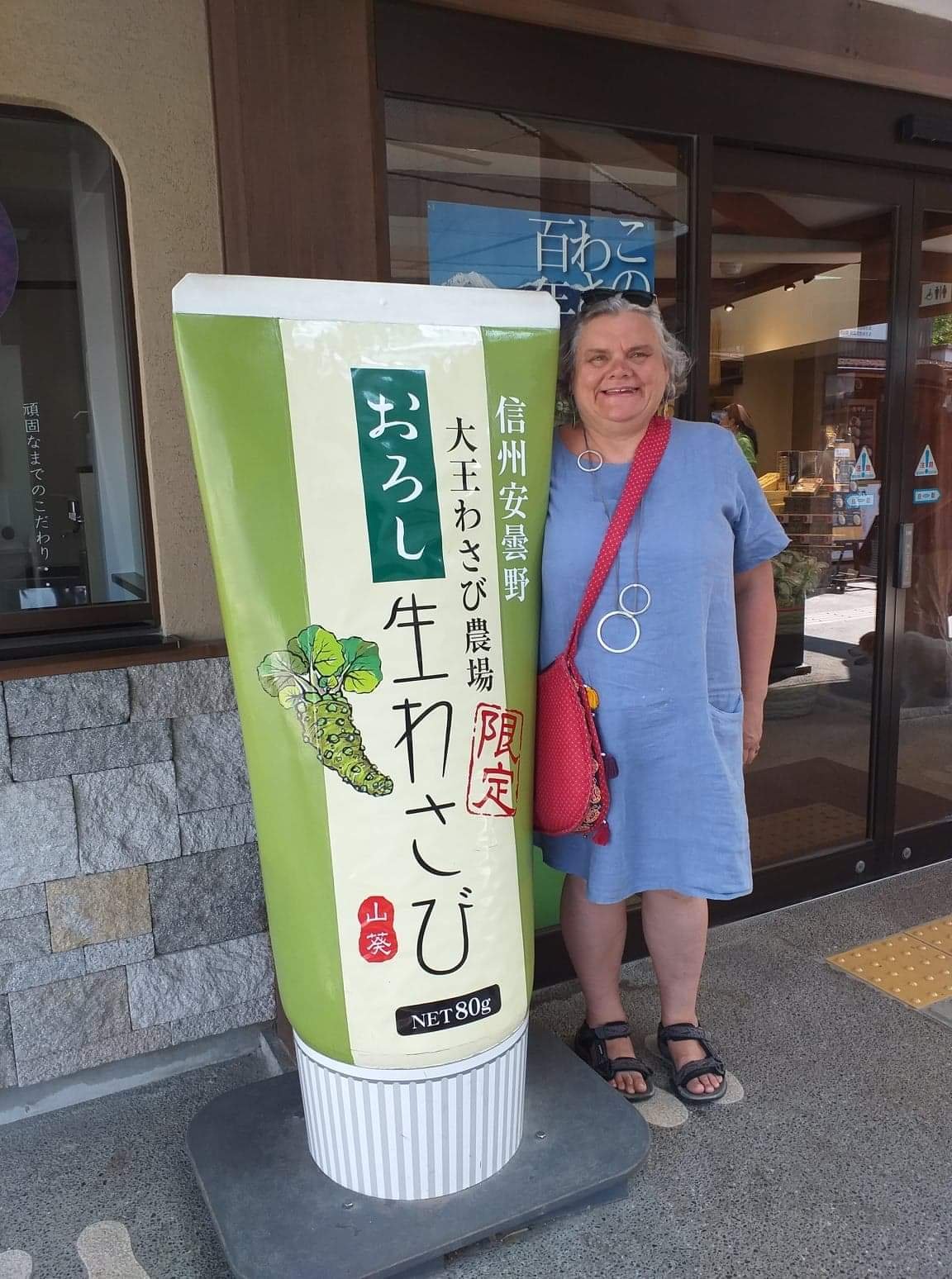
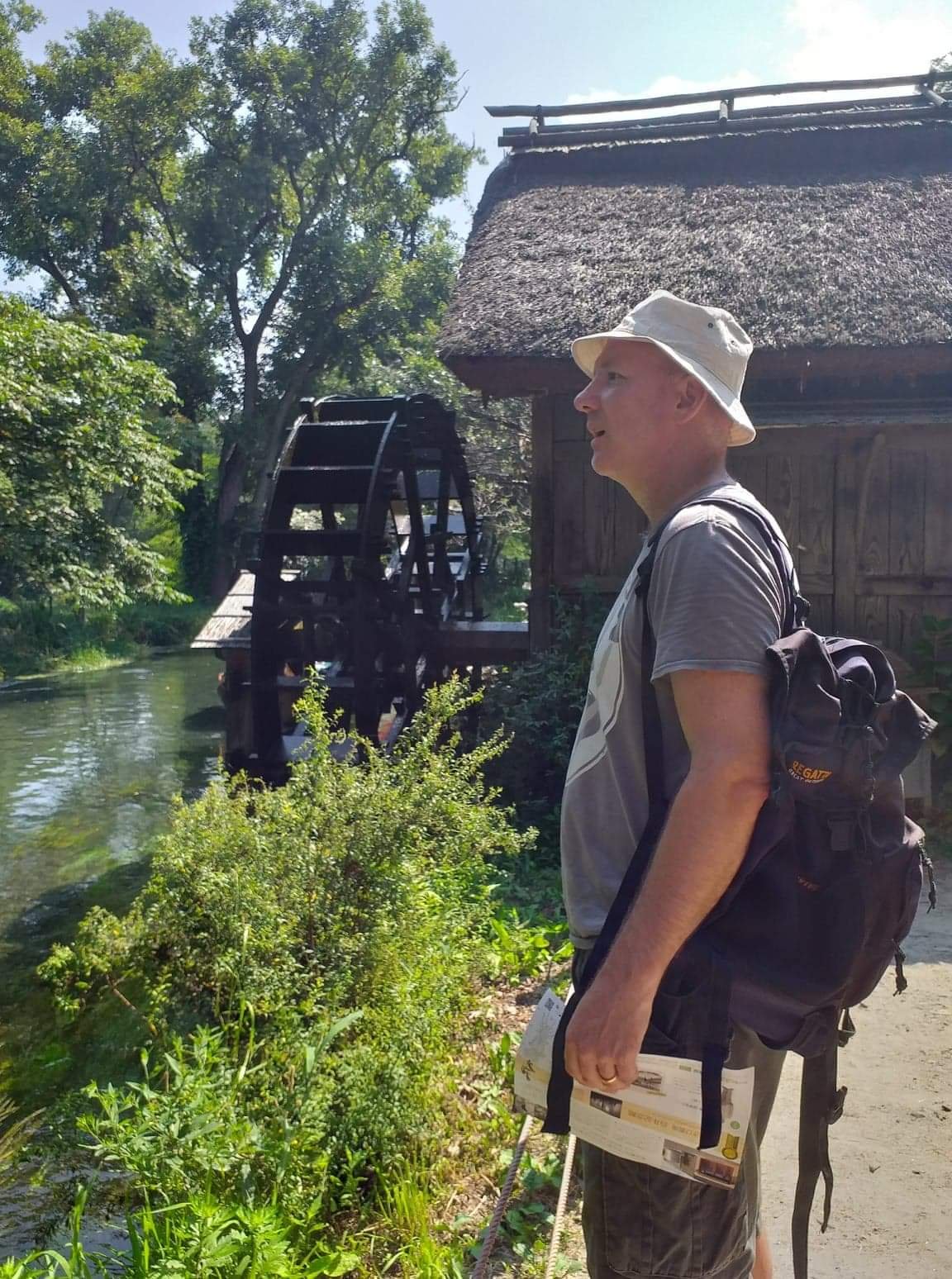
The Daio Wasabi Farm is in rural Azumino City near Matsomoto and is one of Japan’s largest wasabi farms and believe it or not a very popular tourist destination. We arrived really early, just after 9 and as we were leaving the car park was full and the coach park was pretty full too.

The company have taken this working farm and attractively developed it for tourists with walking trails between the fields and other features. Added to that they have milked every possible angle of the wasabi, but not in a way I could take offence to.

Added to that the place also takes on a spiritual feel as within the farm stands the Daio Shrine, which enshrines the spirit of an ancient local hero, Hachimen Daio, after which the farm has been named and who is considered the farm’s protector.


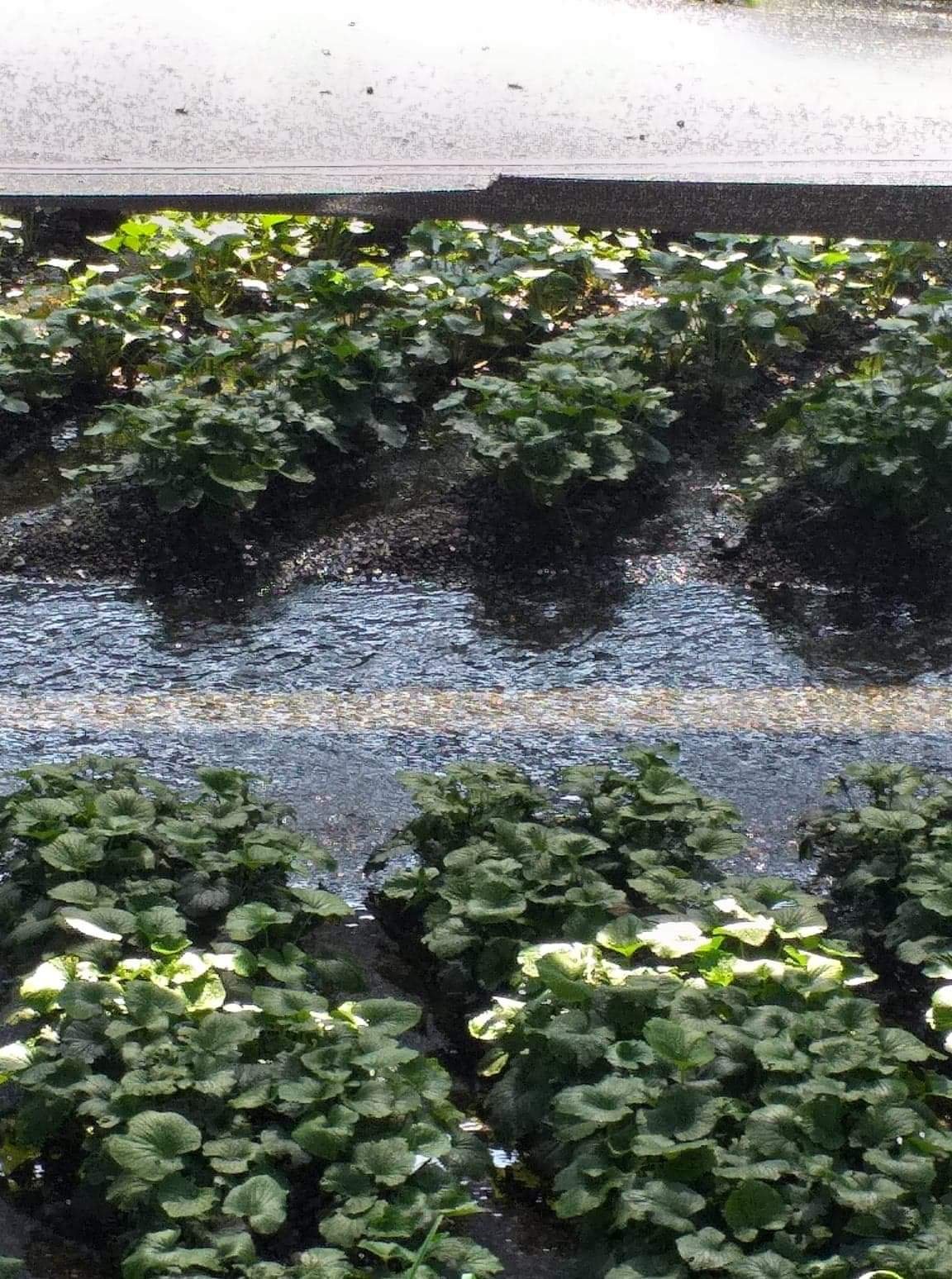
Wasabi prefers cool, shady conditions. It generally requires a climate with an air temperature between 8°C (46°F) and 20 °C (70°F), and prefers high humidity in summer. Since it is quite intolerant of direct sunlight, wasabi is typically grown under shade cloth. As far as the eye could see the black canopies covered the “river’. It’s also said that the water here is the purest of pure which is why wasabi thrives here.

7

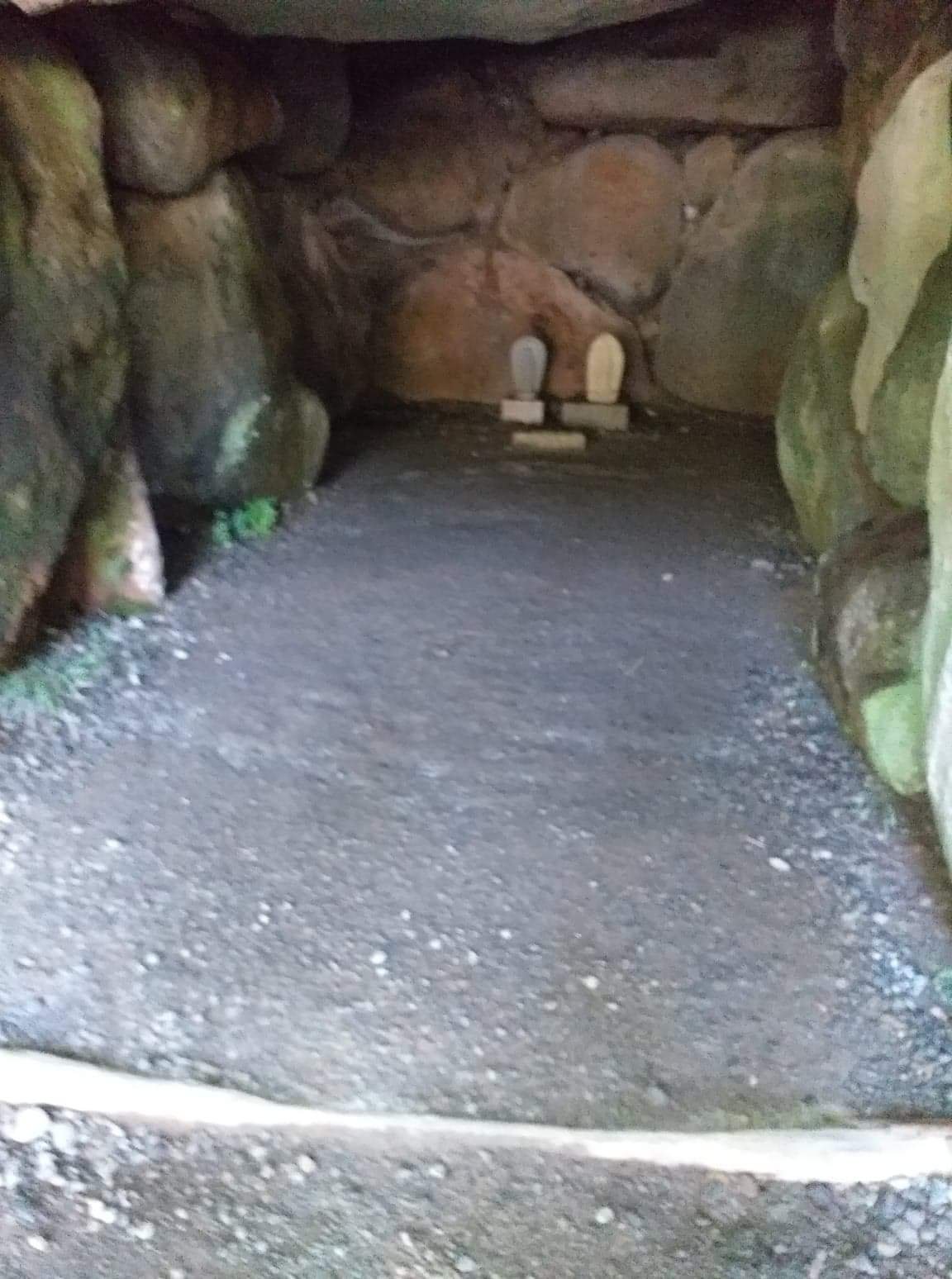
We found a cave in the shrine area where if you made an offering it would bring good luck.

We put in 1 yen as it’s the thought that counts so now who knows what riches await us.

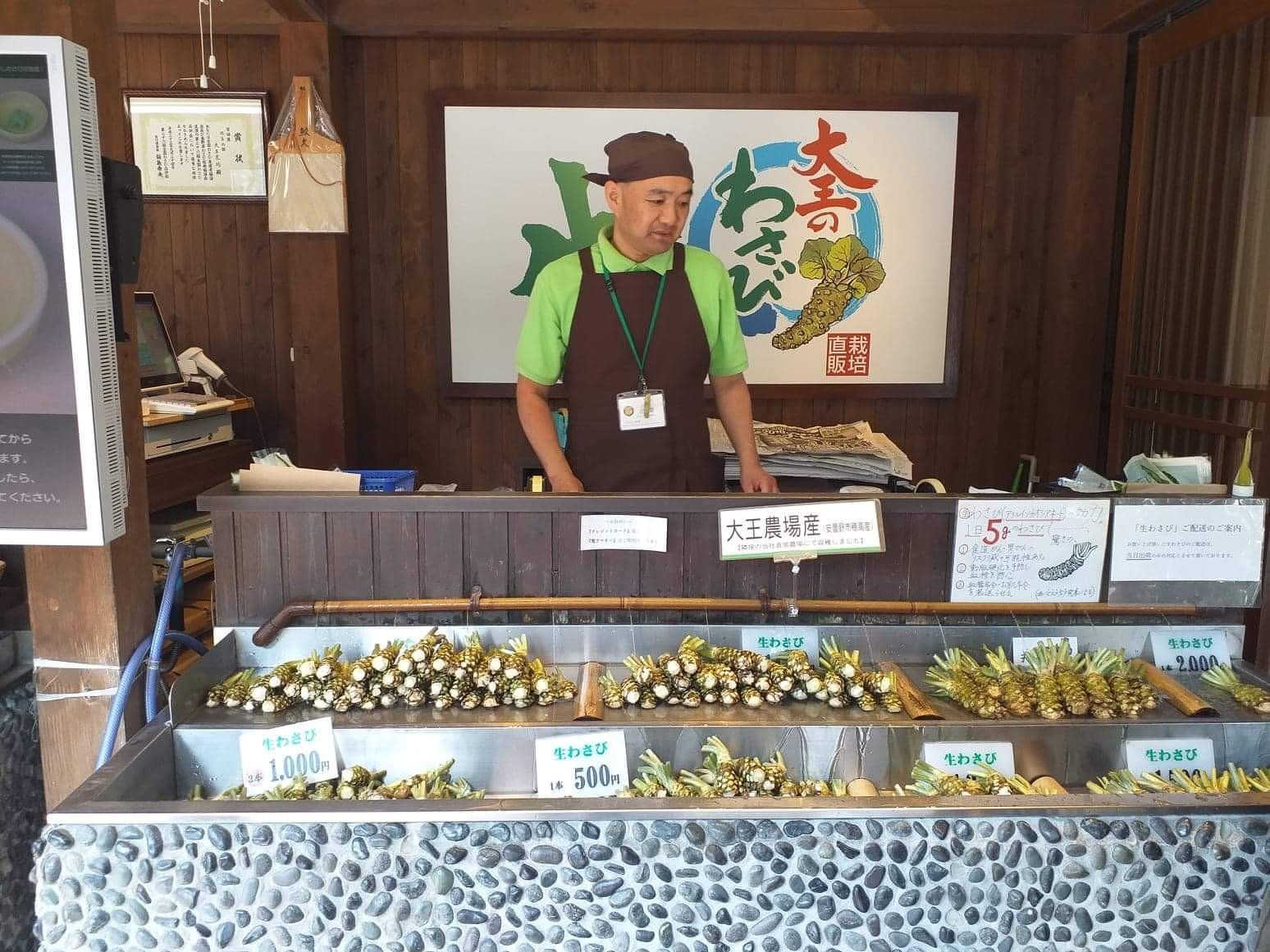
Going through the whole experience, looking at the processing plant, the museum etc it was time to hit the shops of which there were many. What was great was you could also have a sample – so we did of most things. I liked the wasabi cream cake and seaweed flavoured with wasabi.

They really had gone to town on all things wasabi, wasabi caramels, wasabi snacks, wasabi pretty much everything!

Cafes and restaurants also were sticking firmly to the wasabi theme, with wasabi flavoured drinks and ice cream etc. All the while advertising the health benefits of the wasabi.

There was also the chance to buy unadulterated wasabi with the largest wasabi fetching a hefty price tag of 2000 yen. In fact, wasabi is “deemed by most experts to be the most difficult plant in the world to grow commercially hence the price tag.

Because of the price when you go to places like Yo Sushi the actual amount of wasabi in it is generally no more than 1%-so really it’s a pretty big misnomer!

Monkey business….

Starting early we packed up ready to go to
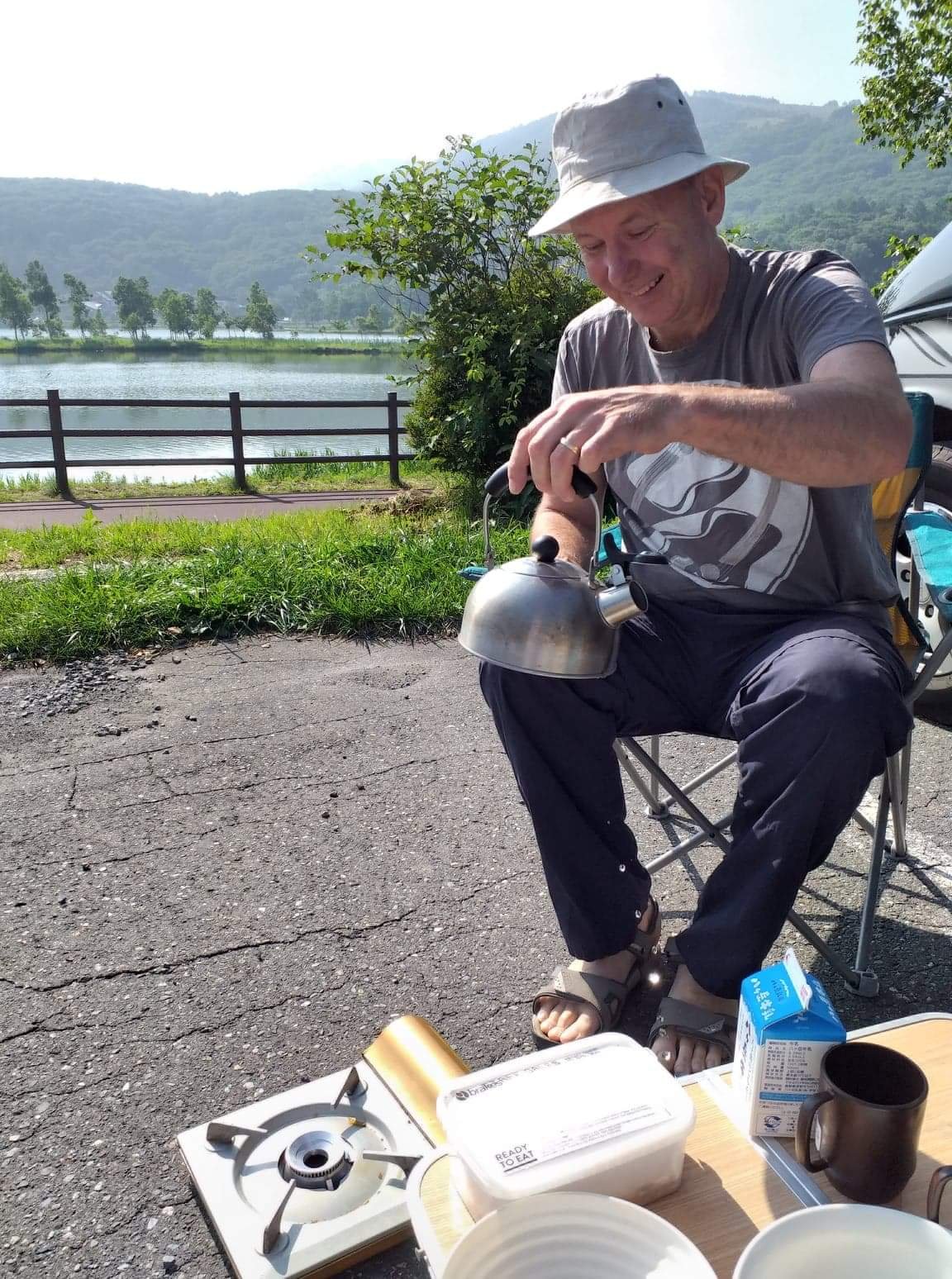
The Jigokudani Yaen-koen Monkey Park. A detour of a couple of hours but our excitement would keep us going. We stopped on route for a quick breakfast by a lake.

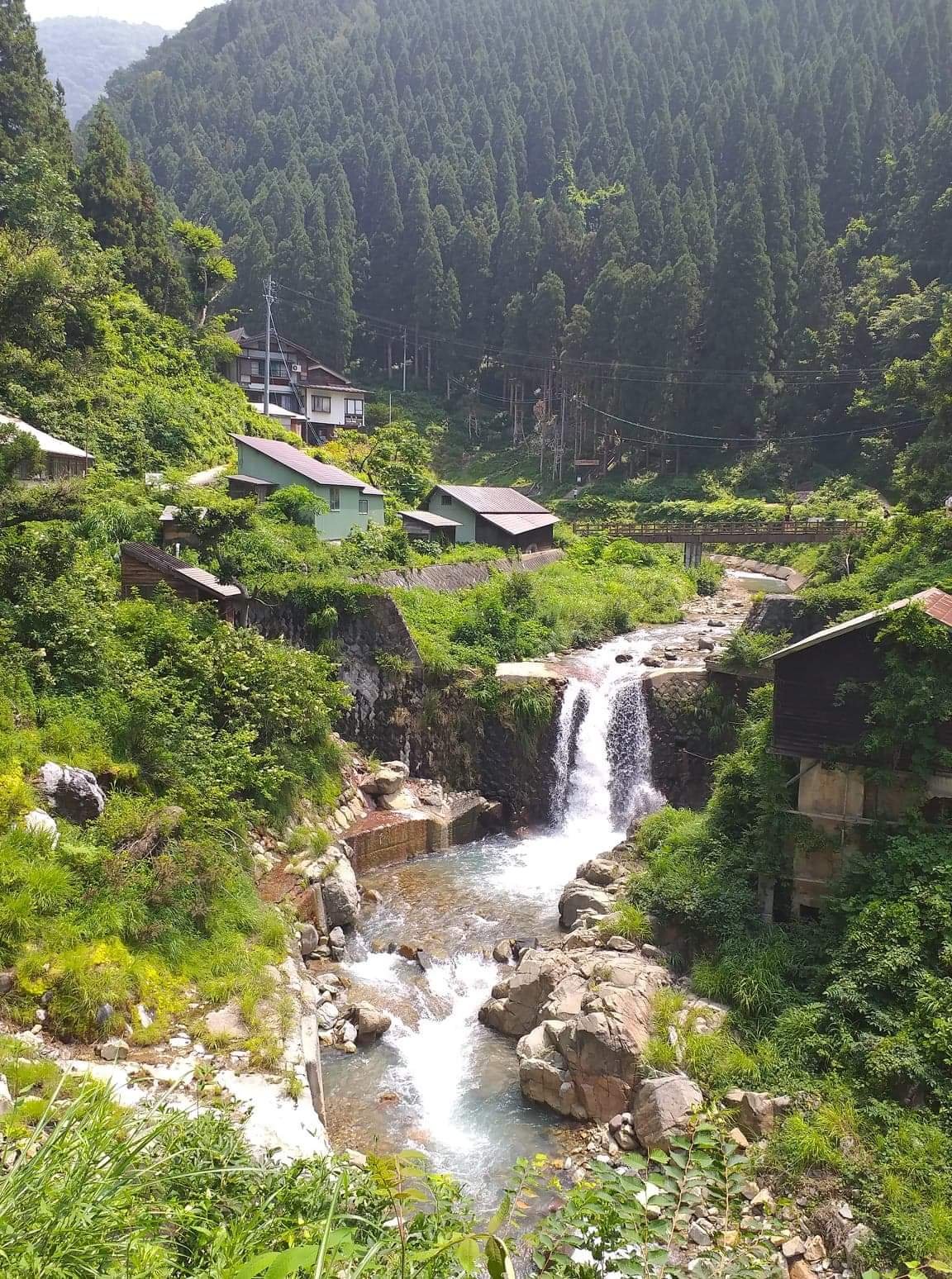
Joshinetsu-Kogen National Park is found in the northern part of Nagano prefecture. We traveled through stunning mountain scenery. Everything seems bigger in Japan. The escalators are longer and steeper, lifts fly up to dizzying heights and mountain ranges go on for ever. A fear of heights is fast developing I think. 75% of Japan is covered in mountains so if you live here you get used to the helter-skelter of getting from A to B.
Because of the very steep cliffs and the steam coming off the springs everywhere, ancient people called this valley ‘Jigokudani (Hell valley)’ .
But as we got nearer it looked nearer to heaven than hell.

As we completed the last 1. 4km we noticed a sign stating to be careful as bears were in the area. It’s hard to believe Japan has bears, but we saw an interesting documentary about them and how one professor has made it his life’s work to save them.

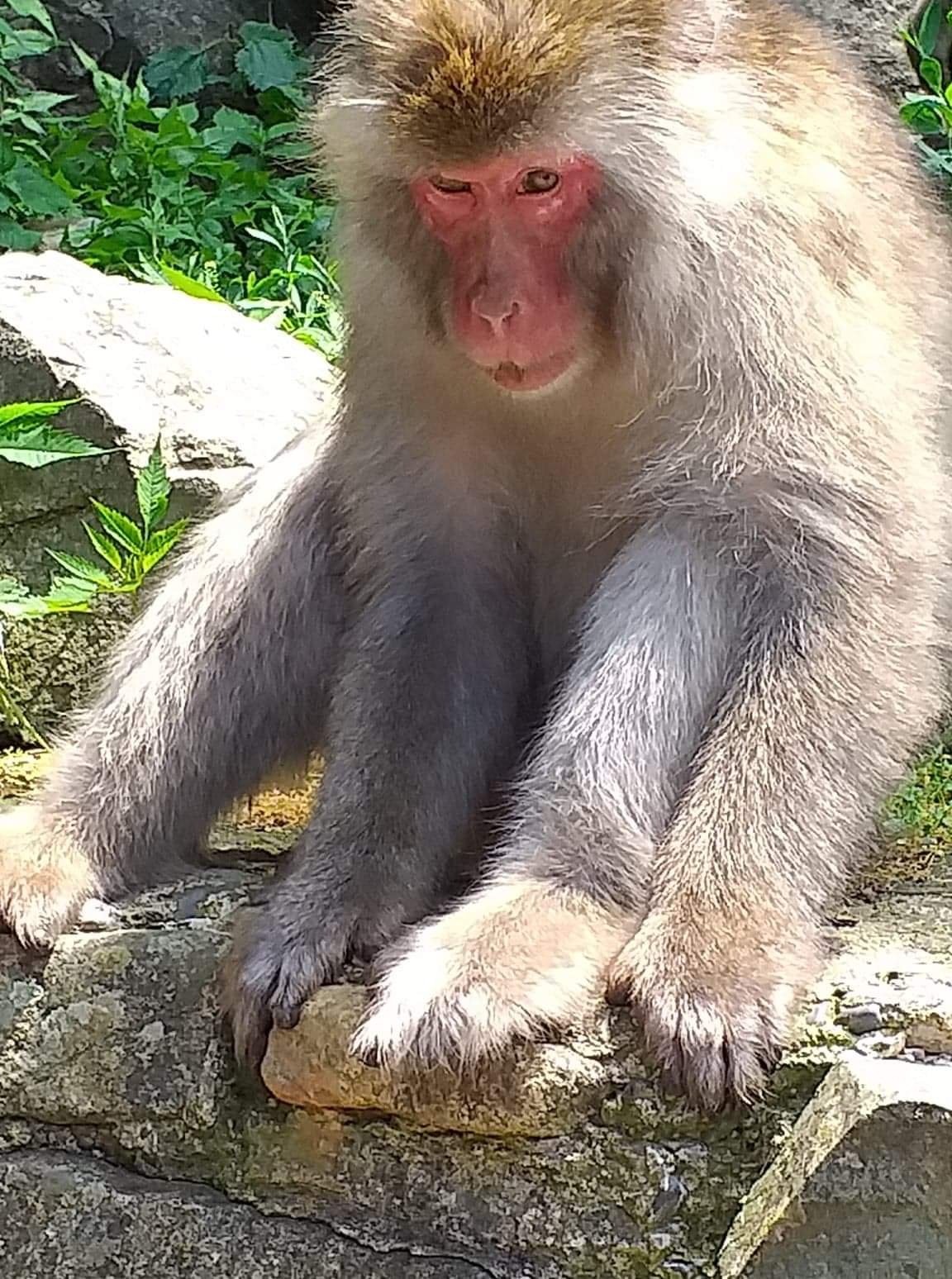
The car park is 1km away from where the monkeys are. The troops of wild Japanese macaque (they are popularly known as snow monkeys) have inhabited here naturally through the ages, undeterred by the often harsh environment. Seeing the place on a sweltering day it is hard to believe that the area is covered in snow for a third of the year. The altitude is 850 metres, winter seasons in Jigokudani are so harsh, for example, temperatures drop to 10 degrees below zero and snow falls over 1 metre.

I don’t think I have ever walked 1km up hill in ridiculous humidity as quickly as I did. I was fired up with anticipation. Some sites say that in the summer appearances are fewer as the monkeys are not drawn to the warmth of the hot springs as much. On route I asked a few people who were descending if they had seen any. I must have seem a tad rabid!

The park has no fences so that monkeys can come and go freely, so it really is hit or miss if you see them. There are also many rules accompanying the visit, all of which are in place to protect the monkeys. No food or drink etc.

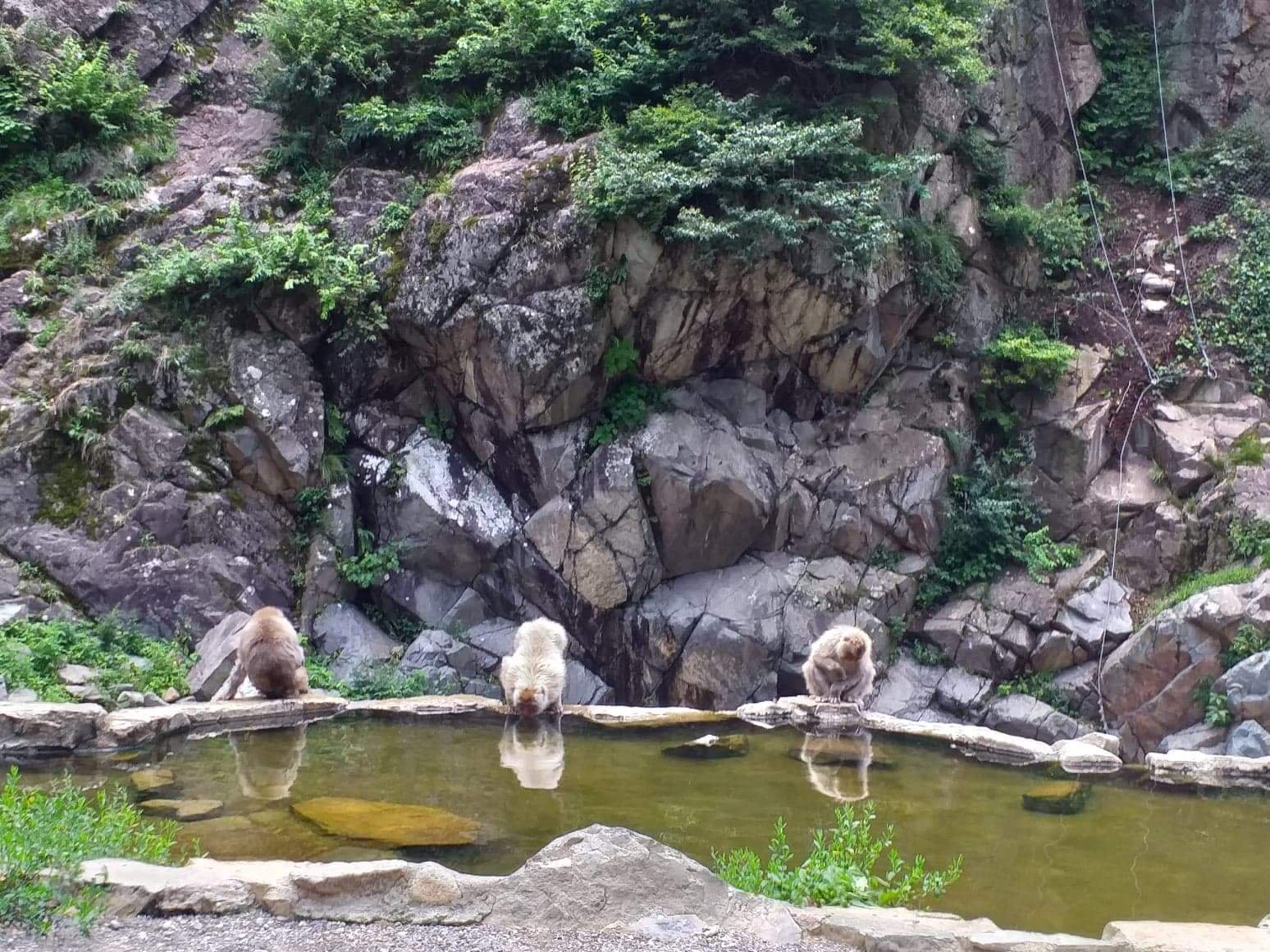
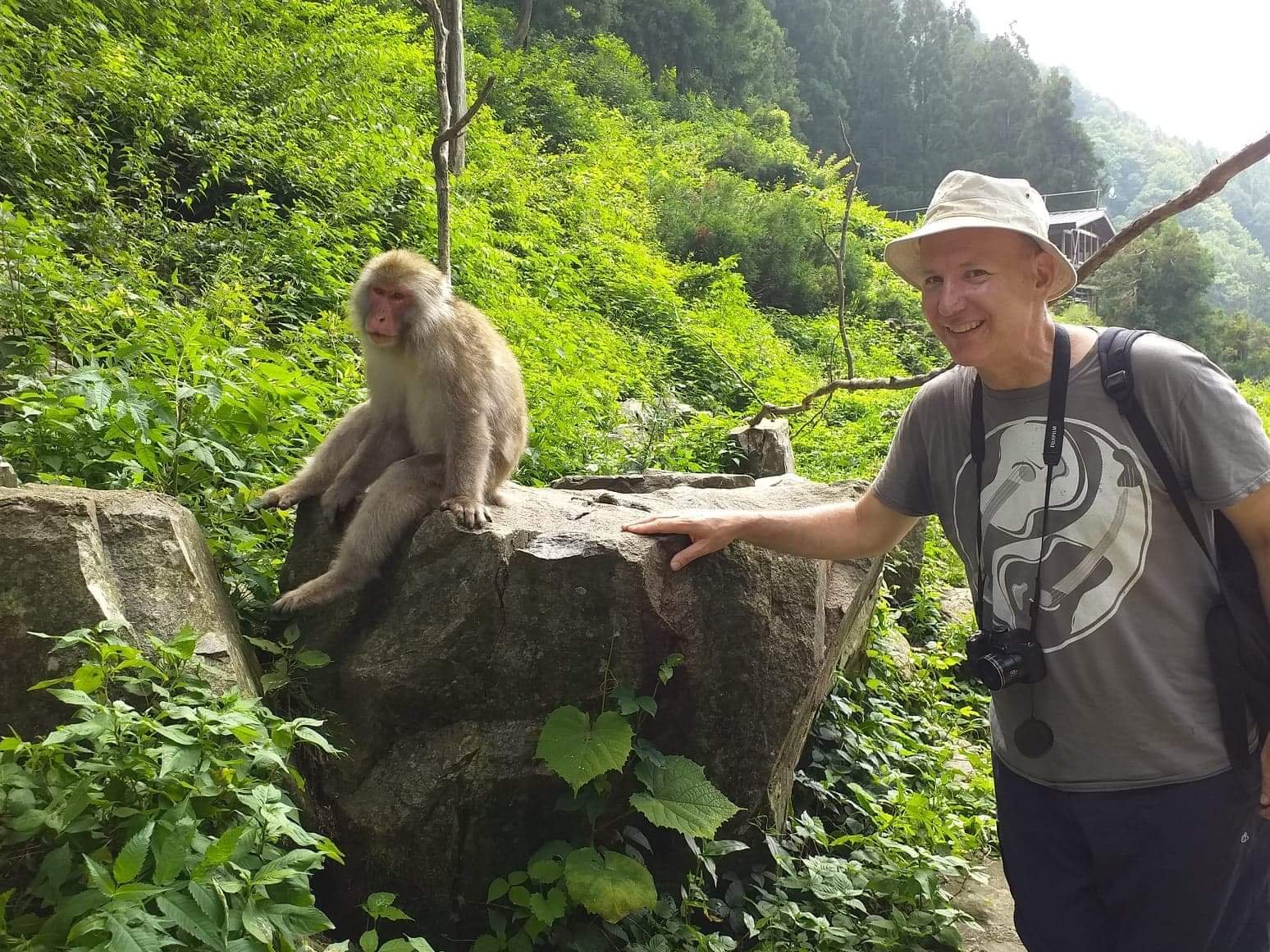
Rounding the corner as we got through the entrance we spied a lone monkey. Just seeing one completely raised my spirits but rounding the next corner the area was awash with them.

We spent hours just watching them. It was amazing, wonderful and emotional.

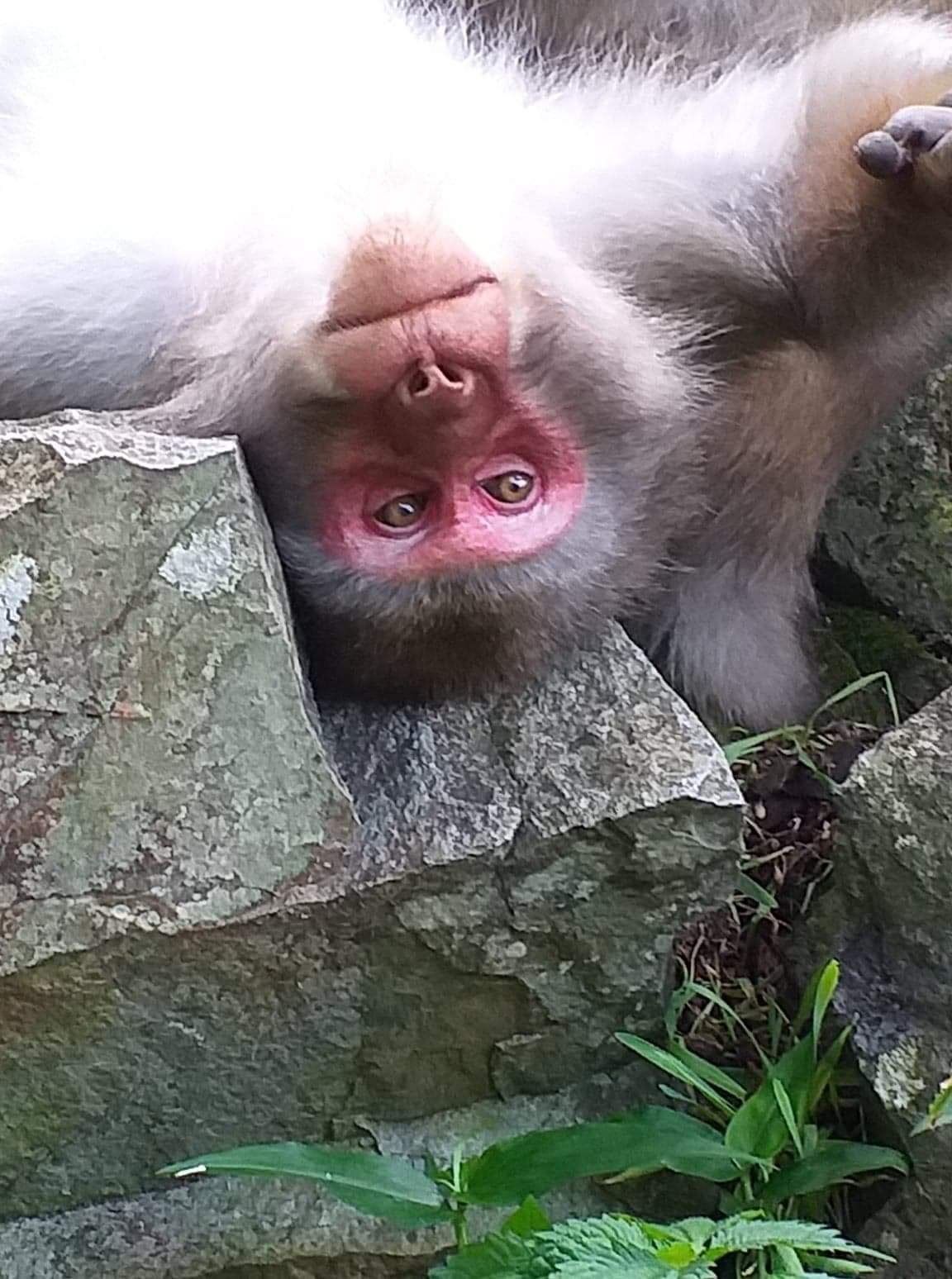
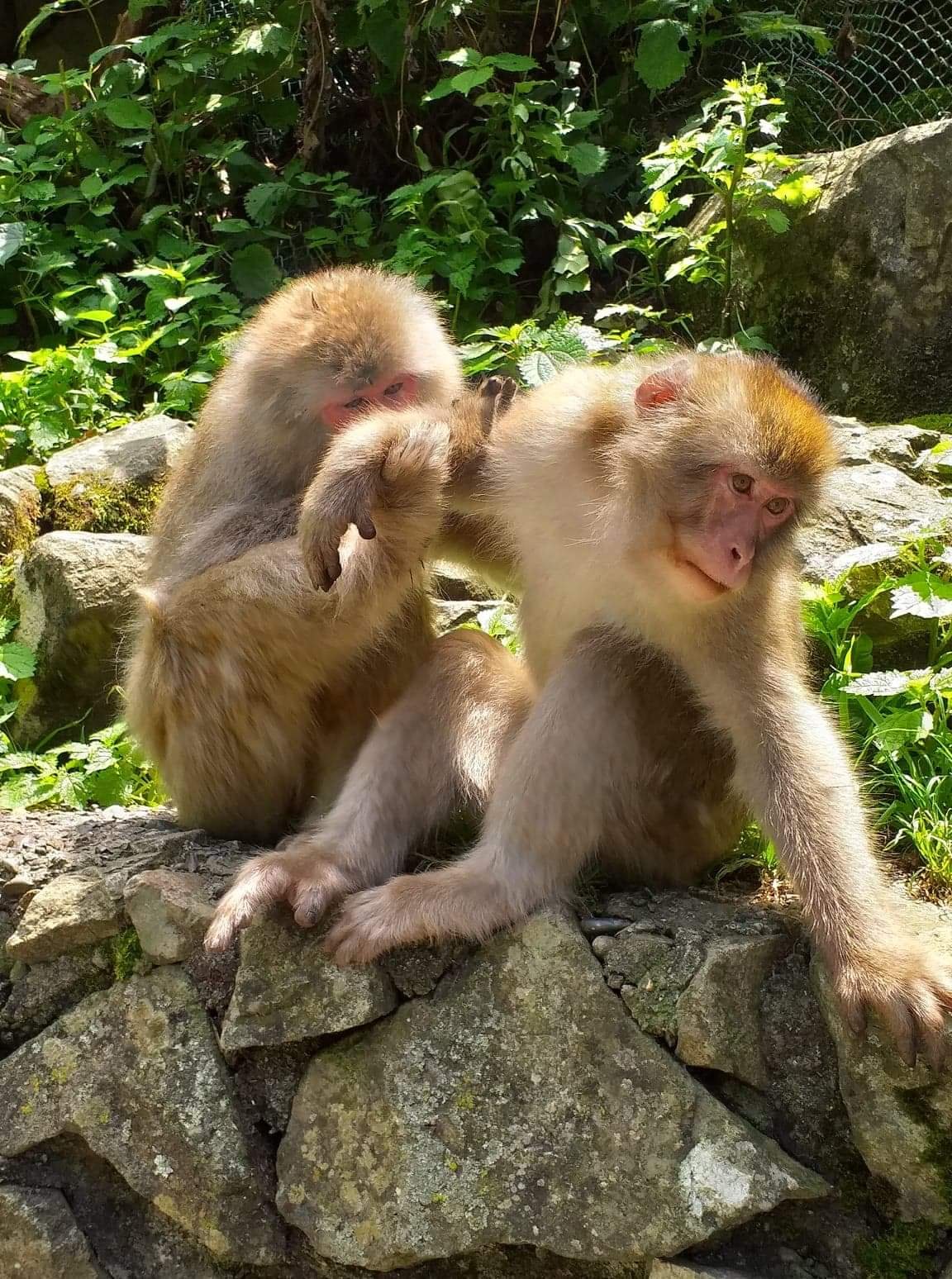
There were monkeys of all ages and sizes and they were just getting on with their normal business, paying no heed to us.
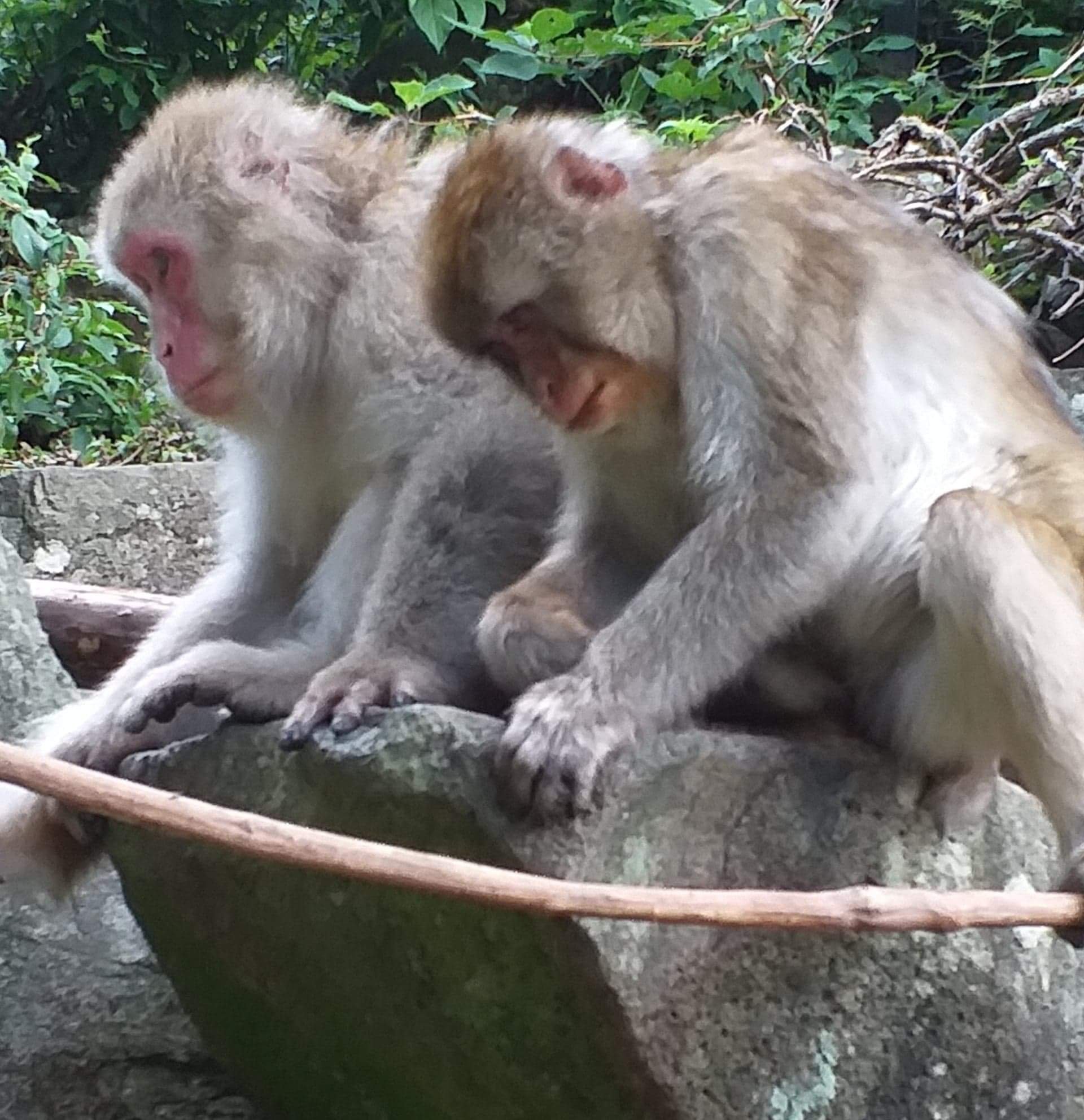
The Japanese Macaque is a diurnal animal. They start moving in the early morning and spend time for foraging or resting all day long. When night falls, they find the nest of the day and go to sleep. On the next day they repeat the same behaviours. They seemed to spend an inordinate time grooming each other, sometimes in groups of 5!

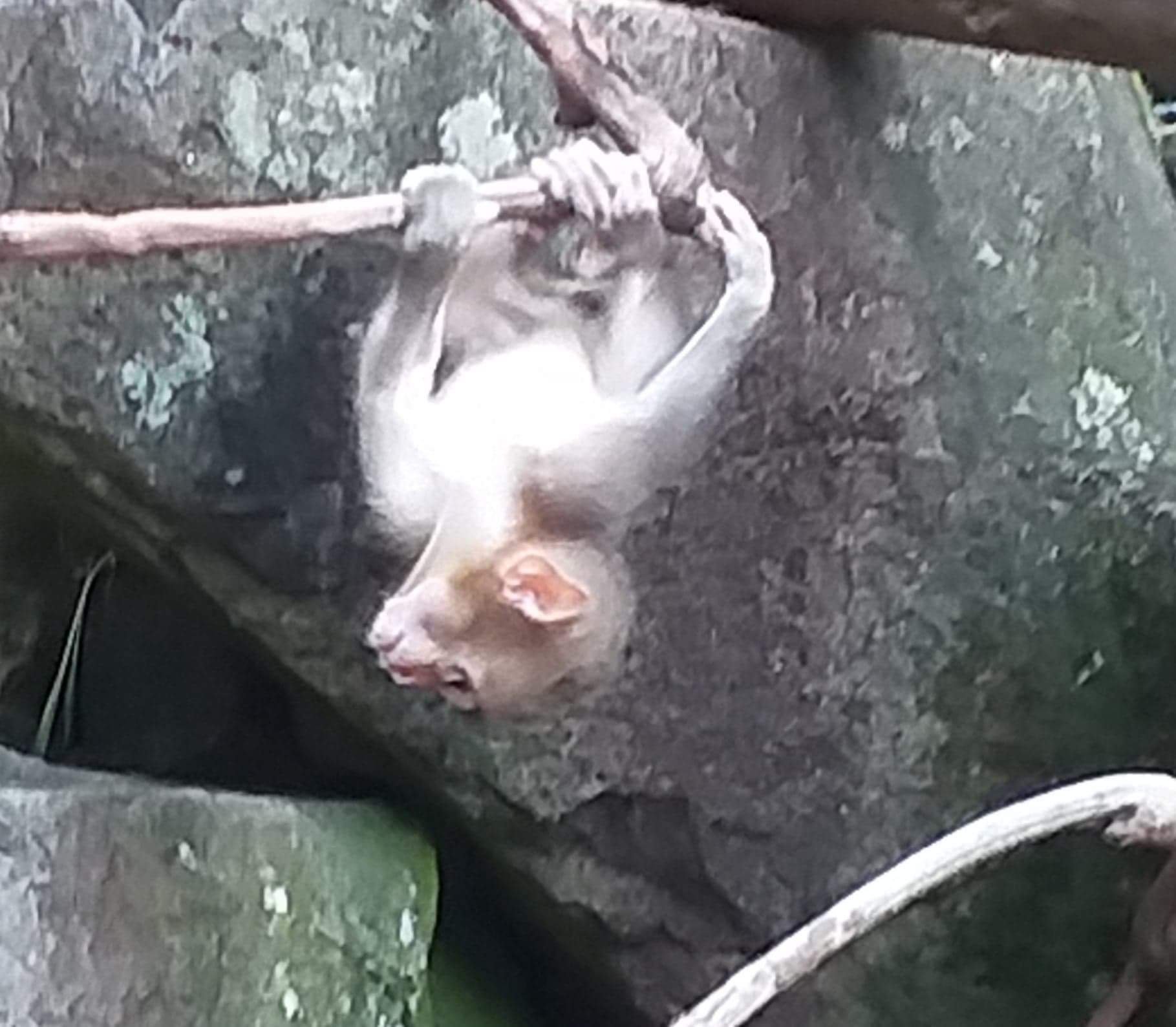
The smaller monkeys spent their time running around, play fighting and falling over. I wanted to pop one in my pock and bring it home. Thank god there are no monkey cafes!


It was an experience of a lifetime!

Design a site like this with WordPress.com
Get started